Automated food packaging equipment is the set of machines that fill, seal, label, inspect, case-pack, and palletize food products with little or no manual handling. It is the fastest place to get a return on your automation investment.
Here is why. Packaging is the most repetitive, labor-intensive step in food production, and it quietly drains more profit than almost any other stage. A single mislabeled batch can trigger a recall. A slow case-packing station can cap the output of a fast extrusion line you already paid for.
You already know manual packing is slow and error-prone. What you may not know is how to choose the right equipment, how to balance it with your upstream output, and where to start so the payback arrives quickly. This guide covers all of it. We’ll walk through every machine type, the inspection and quality assurance stack, robotics, costs, and the 2026 sustainability rules that are changing what film you can run.
Key Takeaways
- Packaging is the highest-payback first step in food automation because it is the most repetitive and labor-intensive stage.
- Match the machine to your product form first: dry granules, powders, liquids, pastes, and solids each need different filling and sealing equipment.
- Never buy a fast packer without checking it against upstream output. A mismatched line stops and starts constantly, and stop-starts cost more than the machine.
- A standard end-of-line quality stack is checkweigher plus metal detector or X-ray plus vision. Skipping it is how recalls happen.
- The food packaging equipment market will grow from about 24–29billionin2025toroughly24–29billionin2025toroughly41–50 billion by the mid-2030s, driven by robotics and mono-material film rules.
What Is Automated Food Packaging Equipment?
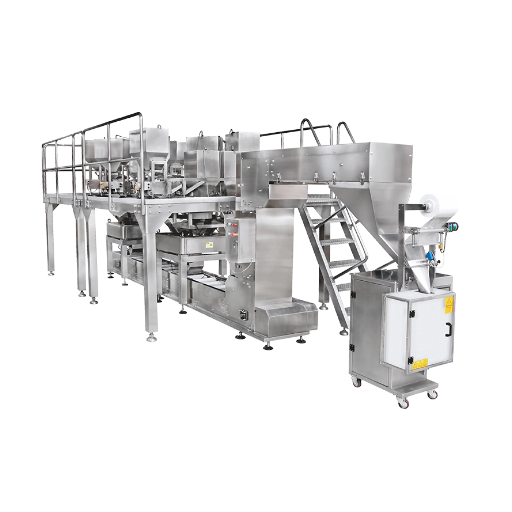
Automated food packaging equipment is any machinery that packages food products with minimal human handling. It spans primary packaging, which touches the product directly, and secondary packaging, which groups finished packs into cases and pallets.
The full line works as a synchronized chain. A feeding system moves product to a filler, which doses it into a bag, pouch, tray, or carton. A sealing station closes the pack, and a labeler applies branding and dates.
Inspection checks weight and foreign objects. A case packer loads finished packs into cartons, and a palletizer stacks them for shipping.
Think of it as a process decision, not an afterthought. The packer has to match the speed and format of what sits upstream.
Maria runs a snack factory in Guadalajara. Her corn puff line could already fry and season 900 kilograms an hour, but two workers at the end of the line could only hand-pack 600 kilograms in that same hour. Every shift ended with a backlog of finished product waiting to be bagged.
She automated the end of the line first, not the beginning. Case packing and palletizing went in first, and the line finally ran at full speed. That single change paid for itself in under a year.
If you are still running a partially manual line, see how a turnkey food production line removes these bottlenecks end to end.
Types of Automated Food Packaging Equipment
Most packaging equipment falls into a few clear categories, as MachPacking’s guide to fully automatic packaging machinery explains. The right choice depends almost entirely on your product form.
Filling and Dosing Machines
Filling equipment doses a precise amount of product into a pack. The machine type follows the product:
- Multihead weighers handle granules and irregular pieces such as snacks, kibble, cereal, and frozen foods, with accuracy around plus or minus 0.5 to 1.5 grams.
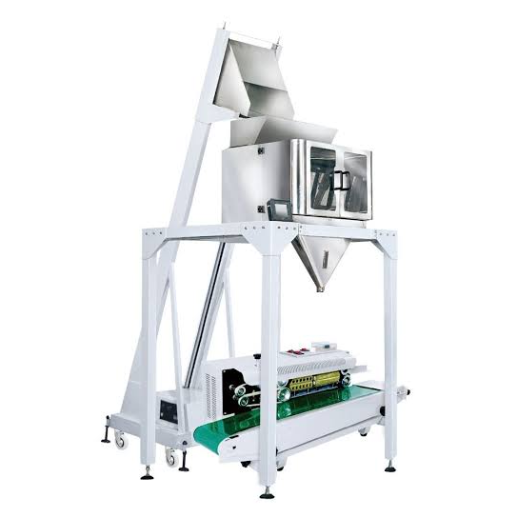
- Linear weighers suit larger, flowable solids at medium speed.
- Auger fillers dose powders such as protein powder, spice blends, and flour.
- Liquid and piston fillers handle sauces, dressings, oils, and pastes.
Matching the filler to the product is the single biggest decision. A multihead weigher is brilliant on chips and poor on sticky paste.
Form-Fill-Seal Machines: VFFS and HFFS
Form-fill-seal machines build the pack from roll film, fill it, and seal it in one continuous motion.
A vertical form-fill-seal (VFFS) machine forms a tube, drops product in, and seals it into a pillow or gusset bag. It is the workhorse for snacks, coffee, powders, and pet food, running 20 to 120 bags a minute. A horizontal form-fill-seal (HFFS) machine or flow wrapper handles bars, cookies, biscuits, and bakery items at speeds up to 800 packs a minute.
Sealing and Closure Equipment
Sealing locks in shelf life. Heat sealing is standard for films. Vacuum and modified atmosphere packaging (MAP) remove oxygen to slow spoilage in meat, cheese, and high-fat snacks.
Shrink and stretch wrapping protect grouped packs. Capping machines close bottles, jars, and jerry cans.
Nitrogen flushing is worth a special note. Flushing a bag with nitrogen before sealing drops residual oxygen to around 0.5 percent, which protects fats from going rancid.
Labeling and Coding Machines
Labeling applies the brand and the compliance information. Pressure-sensitive, sleeve, and cold-glue labelers each fit different pack shapes and speeds. Coding systems print dates, batch numbers, and barcodes using continuous inkjet, thermal transfer, or laser.
Secondary and End-of-Line Equipment
Once the primary pack is sealed, secondary equipment turns individual packs into shippable units.
Case packers and cartoners arrange finished packs and load them into cartons. This is the fastest-growing segment in packaging machinery, because labor here is the easiest to automate away.
Palletizers stack cases onto pallets. Robotic palletizers now dominate new installations. They handle mixed stock-keeping units, change formats quickly, and lift heavy loads without injury risk.
Robotics in Food Packaging
Robots have moved from the fringe to the default in food packaging. Three types cover most applications.
- Delta robots pick and place small items at very high speed, ideal for loading biscuits, bars, and trays.
- SCARA robots handle horizontal pick-and-place and assembly tasks.
- Collaborative robots (cobots) work safely beside people and are popular for palletizing and secondary packaging in small plants.
Vision-guided robots add a camera so the arm can find, orient, and place items that arrive in random positions. That matters for products that are hard to fixture.
Robots pay back fastest where the task is repetitive, heavy, or precise. Pick-and-place and palletizing are the classic wins, as JR Automation’s guide to food manufacturing automation explains. A robot doing gentle, irregular, judgment-heavy work usually pays back slower, so start with the repetitive tasks.
The Automated Inspection and QA Stack
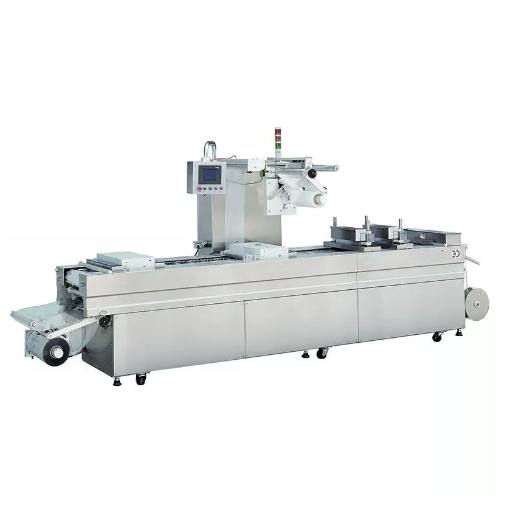
Inspection is not optional. It is the difference between shipping and recalling.
A standard end-of-line quality stack has three stations:
- Checkweigher verifies every pack is within weight tolerance and rejects underfills.
- Metal detector or X-ray catches metal, stone, glass, and dense foreign objects. X-ray also finds bone fragments and can verify fill level.
- Machine vision checks label position, print quality, seal integrity, and pack appearance.
Retailers and certification bodies such as BRCGS increasingly expect this stack as a baseline. Detection sensitivity depends on the aperture size, so a larger product channel is naturally coarser than a small one. Specify the detector for your actual product, not a generic rating.
Line Balancing and Full-Line Integration
The most expensive mistake in packaging automation is a line that does not balance.
Viktor runs a pasta line in Bulgaria. He bought a high-speed flow wrapper rated for 900 packs a minute, but his dryer delivered enough dried pasta for only 400 packs a minute. The wrapper ran in bursts, then idled. Those constant stop-starts wore the film rollers and produced more waste than the slower, correctly sized machine he eventually bought.
Balance works the other way too. If your upstream extruder, fryer, or dryer outpaces your packer, you get the backlog Maria had. The fix is to size every module to the same target and to leave headroom on the most expensive machine, not the cheapest one.
This is where a full-line manufacturer has a structural advantage over a packaging-only vendor. When one company engineers the extrusion, drying, coating, and packaging together, the throughput is matched from the start. You also get one controls platform, one commissioning team, and one point of responsibility. Compare that to assembling a line from three vendors and reconciling three different control systems.
For a concrete example, see how we match packaging to upstream output on an automated snack production line.
Food Packaging Automation Cost and ROI
Packaging automation is the best first investment for most food plants. It targets the most repetitive work, so labor savings and error reduction show up quickly. GM Insights pegs the food and beverage packaging machine market at about 24billionin2025,growingtoward24billionin2025,growingtoward41 billion by 2035.
Budget in tiers rather than a single number. A small plant moving a few hundred packs an hour can start with a semi-automatic filler for tens of thousands of dollars. A mid-size line running 500 to 1,000 packs an hour typically moves to an automatic VFFS or pouch machine. A high-volume line pushing 2,000 packs an hour or more justifies a high-speed rotary system with multihead weighing and robotic end-of-line.
Look at cost per pack, not headline price. A cheaper machine with slow changeovers and high film waste can cost more per finished pack than a pricier, well-matched one. Include changeover time, spare parts, and operator training in your math.
A simple payback estimate: take the labor cost you remove, add the scrap you stop generating, and divide that into the installed machine cost. End-of-line automation often pays back in 12 to 24 months, which is why it is the usual starting point.
Hygiene, Materials, and the 2026 Sustainability Rules
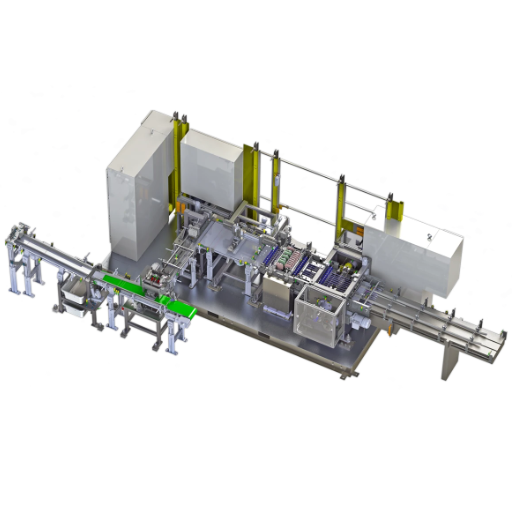
Packaging equipment has to survive washdown and meet food-safety standards. Look for food-grade stainless steel such as SUS304 or SUS316L, an ingress protection rating of IP65 or IP69K for washdown areas, and designs with sloped surfaces that shed water instead of pooling it. For material selection guidance, see our food-grade machinery materials guide.
Sustainability is now a hard requirement, not a trend. Europe’s Packaging and Packaging Waste Regulation (PPWR) pushes recyclable, mono-material films, and the European Union banned PFAS in food-contact packaging effective 12 August 2026. Mono-material polyethylene and recyclable films are replacing multi-layer laminates, but they often seal at different temperatures and need machine adjustments.
The team at a Michigan protein bar startup learned this the hard way. They switched to a mono-material film to meet a retailer’s requirement, then discovered their existing heat sealer ran too hot and melted the thinner material. They re-tuned the sealing jaws and cut scrap from 6 percent to 2 percent, but only after a month of trial runs. Budget for reformulation and re-tuning when you switch films.
How to Automate a Food Packaging Line
Follow these steps in order, and you’ll avoid the two classic failures: buying too fast a machine and skipping inspection.
- Audit your current line. Map every step from product exit to pallet, and time each one.
- Identify the bottleneck. Automate where labor, errors, or speed limits your output first.
- Match the machine to your product form. Granules, powders, liquids, and solids each need different fillers and sealers.
- Map the throughput. Size every module to one target, with headroom on the most expensive machine.
- Select primary, secondary, and end-of-line equipment together. A single supplier balances the line better than three vendors.
- Integrate the controls. Put the whole line on one PLC and HMI platform for recipe management and data logging.
- Commission with your own product and film. Run factory acceptance trials on your actual materials, not a generic sample.
- Validate and train. Confirm inspection rejects correctly, then train operators on changeover and cleaning.
Shandong Loyal’s Integrated Packaging Approach
Most packaging guides are written by packaging-only vendors who see the pack but not the line behind it. Shandong Loyal builds the whole line, so packaging is engineered as a matched stage rather than a bolt-on accessory.
We design packaging throughput to match your extruder, dryer, fryer, and coater from the start. Every system is CE-certified, built from food-grade stainless steel, and delivered turnkey with installation and training. We serve clients in more than 50 countries, from corn puff snack lines to automated pasta production lines and pet food production lines.
That full-line view is the difference. Tell us your production goals, and we’ll design a packaging solution that matches your line, your product, and your budget.
Frequently Asked Questions
What is automated food packaging equipment?
It is machinery that fills, seals, labels, inspects, case-packs, and palletizes food products with minimal manual handling, typically controlled by a PLC and HMI.
What is the difference between VFFS and HFFS?
VFFS forms a bag vertically from roll film and drops product in, suited to granules, snacks, and powders. HFFS wraps product horizontally and suits bars, bakery, and biscuits at higher speed.
Do I need a metal detector and a checkweigher?
Yes, in most cases. The two solve different problems: a checkweigher catches underfills, while a metal detector or X-ray catches foreign objects. Retailers expect both as a baseline.
Which robot should I use for palletizing?
A collaborative or six-axis articulated robot is the common choice for palletizing. It handles mixed SKUs and heavy loads with quick format changes.
How much does automated food packaging equipment cost?
It ranges from tens of thousands of dollars for a semi-automatic filler to several hundred thousand for a high-speed, fully integrated line. Calculate cost per pack, not purchase price.
How do I avoid buying the wrong speed?
Map your upstream output first and size every module to the same target. A packer faster than your dryer will stop-start constantly and create waste.
Conclusion
Automated food packaging equipment turns the most repetitive, labor-intensive stage of food production into a controlled, consistent, and measurable one. Match the machine to your product form, balance every module to one throughput target, and never skip the inspection stack.
Start where the payback is fastest, which is almost always end-of-line case packing and palletizing. Budget for the 2026 film changes now, and run trials on your own product before you buy.
The best packaging line is the one engineered as part of a complete production line, not bolted on after. With over a decade of expertise and CE-certified turnkey systems, Shandong Loyal helps you get there. Contact us for a quote, and we’ll design a packaging solution matched to your production goals.