
The right food machinery manufacturer delivers far more than metal and motors. A strong partner designs equipment around your recipes, installs full production lines, trains your operators, and supports your uptime for the next decade. Your budget will be exhausted through hidden downtime costs and slow spare parts delivery and equipment that never quite fits your process when you make the incorrect selection.
The same pattern must have appeared to you. A glossy catalog promises everything. The quote looks competitive. The machine arrives, and your team spends six months to solve integration problems which causes production goals to be missed.
Most buyers evaluate a food machinery manufacturer’s worth through their equipment pricing according to your research. They fail to see how total ownership expenses and the strength of their partnership determine actual worth.
The article demonstrates what food machinery manufacturers need to deliver and the seven key criteria which should be used for their assessment and the contractual red flags which should be investigated before signing. The 2026 industry trends about automation and modularity and traceability will show you how manufacturing partnerships have changed.
The framework you develop will help you select a manufacturer who safeguards your assets while expanding with your business needs.
Key Takeaways
- The initial purchase price of food processing machinery typically represents only 20 to 30 percent of the total cost over a decade, making total cost of ownership the critical metric.
- Seven criteria separate reliable manufacturers from risky ones: specialization, customization capability, certifications, technology level, TCO transparency, after-sales support, and global logistics experience.
- Specialized niche manufacturers often outperform enterprise giants for small and mid-size operations on flexibility, customization speed, and total lifecycle cost.
- AI-driven automation, modular processing lines, and enhanced traceability compliance are the dominant trends reshaping manufacturer capabilities in 2026.
- Warning signs include missing certifications, vague performance claims, no local spare parts network, and pressure to pay 100 percent upfront.
What Does a Food Machinery Manufacturer Actually Do?
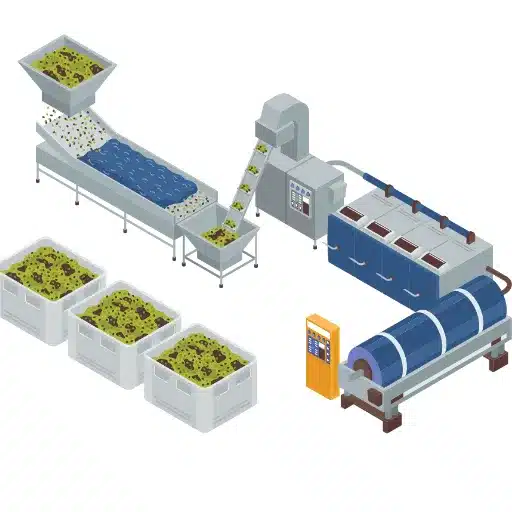
A food machinery manufacturer designs, engineers, builds, and supports equipment that transforms raw ingredients into finished food products at scale. This sounds straightforward, but the scope of what a true manufacturer delivers extends well beyond the machine itself.
Beyond Building Machines: The Full Manufacturer Scope
The main product that the company offers consists of equipment used for processing operations. The extrusion systems operate snack mixes through specific temperature conditions and pressure requirements to achieve their desired shape and cooking results. The drying systems eliminate moisture content to produce the desired mouthfeel and extended product shelf life.
The frying systems and baking systems use regulated heat output to create their cooking results. The cooling systems and packaging systems serve as the final stages of the production process. The operation depends on all units working together as one system because any disruption between two systems will result in operational problems.
Production activities continue throughout all facilities that the company owns. A food machinery manufacturer that possesses expertise can assist customers with their recipe development process. The validation process usually occurs at pilot testing facilities which allow you to test your formulations before you invest in complete equipment.
They create unique system designs to meet your product needs which include handling atypical ingredients and processing uncommon product shapes and preserving particular texture characteristics. The company manages all installation work, system activation tasks, and education programs for operators at your location. The company stocks spare parts and provides technical support to ensure your production line operates smoothly throughout its service life.
The machine serves as the initial component of your system. Your business receives a production solution which operates through the entire equipment lifecycle with your specific ingredients and at your expected output capacity.
Food Machinery Manufacturer vs. Equipment Distributor
Buyers who want to create customized solutions need to understand this distinction. A distributor operates as a middleman who sells products from manufacturing companies without any alterations to their original form. The company provides installation assistance to customers, yet they do not manage the engineering process because they rely on others for their technical expertise.
The manufacturer creates both the product design and the equipment manufacturing process. The company has the capability to change screw designs through extruder modifications while also adjusting die designs and control systems and determining optimal operational layouts for your production area.
A distributor relationship suits your business needs when you have consistent product requirements and stable production volumes. The food machinery manufacturer provides engineering support to you when you need recipe changes and capacity adjustments and special automation development which you cannot get from a distributor.
7 Essential Criteria for Choosing a Food Machinery Manufacturer
Every buyer asks about price, delivery time, and specifications. These seven criteria go deeper. They separate manufacturers who deliver long-term value from those who create long-term problems. Equipment selection experts at DC Norris emphasize similar criteria for buyers evaluating processing partners.
1. Industry Specialization and Track Record
The snack extrusion equipment manufacturer with ten years of experience understands ingredient behavior and heat transfer profiles and die wear patterns which are unknown to generalists. They have solved the problems you have not encountered yet. They know which steel grades resist corrosion from acidic ingredients. They understand how different cereals with different moisture content result in different expansion ratios.
Request references which apply to your particular product category. A pasta production line specialist should show you installations running macaroni, penne, or specialty shapes in facilities similar to yours. A protein bar production line expert should demonstrate experience with binding systems, cooling tunnels, and cutting accuracy for dense nutritional formulations.
Carlos started a corn puff snack company in Mexico City during 2022. He selected a general industrial equipment supplier because their quote was 15 percent lower than the price offered by a specialized extrusion manufacturer. His twin-screw extruder suffered barrel wear within eight months because the supplier had never processed corn grit formulations which were abrasive.
He lost $340 for every hour of downtime. It took four weeks to receive the replacement parts. The hidden costs had eliminated his total savings by the end of month fourteen.
He installed specialized equipment which replaced the existing line. The system generated enough revenue to cover its costs within eighteen months because it increased operational time and produced consistent product quality.
2. Customization Capabilities
The products which you offer show differences from the products which your competitor offers. Your facility layout has its own distinct design. Your target capacity may change. A food machinery manufacturer worth partnering with offers modular designs, interchangeable components, and scalable configurations.
Real custom food machinery should show complete capability beyond size adjustments according to your requirements. They need to change the extruder screw design for your specific ingredient blend. The system should allow them to change the die sets according to different seasonal product needs.
The company should enable packaging equipment from third-party suppliers to work with their existing line control system. The company can launch your investment process by implementing core processing equipment followed by subsequent automation upgrades.
Pilot testing capability is a strong signal. Manufacturers who invite you to test your actual ingredients in their facility before purchase are confident in their engineering and invested in your success.
3. Certifications and Compliance
The company needs to treat certifications as mandatory requirements instead of treating them like optional marketing badges. The equipment certification process provides evidence that the equipment meets safety and hygiene and performance standards which you will need to maintain.
CE marking on CE-certified food machinery indicates conformity with European health, safety, and environmental protection standards. The requirement applies to all manufacturers who want to ship products to the European Economic Area and all manufacturers who want to operate within that region. North American food contact surfaces must meet both FDA regulations and NSF/ANSI Standard 2 certification requirements. The ETL or UL listing function confirms the product design meets electrical safety standards.
The specifications for materials which are used in products hold equal importance to their functions. Food-contact surfaces need to be constructed with 304 or 316 stainless steel. The weld quality must show continuous smoothness which creates an environment where bacteria cannot thrive.
Surface finishes need to endure everyday cleaning procedures which include chemical sanitation. Material compliance documentation needs to be requested. A reliable food machinery manufacturer will provide material compliance documents without any delay.
4. Technology and Automation Level
The boundary which separates mechanical processing from intelligent manufacturing now experiences rapid expansion because both fields have become increasingly interconnected. The leading manufacturers of 2026 establish their facilities with programmable logic controllers (PLC) and human-machine interfaces (HMI) which support optional IoT connectivity for remote monitoring purposes.
The main advantage of predictive maintenance exists as its primary benefit. The sensors installed on motors and bearings and heating elements transmit operational information which algorithms use to identify wear patterns that precede equipment breakdowns.
The systems demonstrate a 30 percent decrease in unexpected downtime because they provide advance alerts about bearing temperature deviations and vibration irregularities and power consumption increases.
Energy efficiency serves as the primary factor which distinguishes this technology from other technologies. Organizations can achieve significant reductions in utility expenses during their ownership of advanced heat recovery systems and variable-frequency drives on motors and optimized drying curves.
Manufacturers who want to work with you should provide their projected energy consumption which they measure in kilowatt hours per ton of their completed products. The companies which possess accurate performance data have developed systems for energy-efficient operations. The companies which provide ambiguous information have not developed their operations.
5. Total Cost of Ownership
Here is the counterintuitive truth that experienced buyers learn the hard way. The sticker price on your quote is typically only 20 to 30 percent of what you will spend on that equipment over ten years of operation.
Energy, maintenance, spare parts, downtime, and eventual disposal add up fast. Industry analysis from Velec Systems confirms that purchase price typically represents only 20-30% of lifetime equipment cost.
A transparent food machinery manufacturer helps you model the full picture. They provide estimated energy consumption figures. They share maintenance schedules with projected part replacement intervals.
They calculate mean time between failures based on operating data from installed bases. They help you quantify the cost of one hour of lost production, so you can compare reliability across options honestly.
The calculation is straightforward. Add the purchase price, installation costs, estimated energy over the lifespan, projected maintenance and parts, estimated downtime cost, and residual value. Compare this total across manufacturers, not just the initial quote. The manufacturer with the higher upfront price and lower operating cost often wins by a wide margin.
6. After-Sales Support and Spare Parts Availability
Actual purchasing decisions break down at this point. A machine breaks on Tuesday morning. Your production schedule requires you to produce products by Wednesday.
Your initial purchase savings disappear because your critical wear part needs three weeks to arrive from its only source which exists on the opposite side of the globe.
The evaluation process needs to assess the service infrastructure which the food machinery manufacturer has established. Do they stock common wear parts in your region? Do they provide customers with guaranteed response times to their requests?
Can they provide remote diagnostics to troubleshoot without waiting for a technician to fly in? Do they include comprehensive operator training, or do they drop off a manual and disappear?
Service level agreements serve an essential function. Manufacturers need to provide documentation for their emergency response commitments and preventive maintenance programs and their technical consultation availability. The best partnerships need to include scheduled check-ins together with emergency support for equipment failures.
7. Global Shipping and Local Installation Experience
Your equipment needs to endure ocean transportation while passing through customs and reaching your facility for scheduled installation.
The food machinery manufacturer should answer your questions about their knowledge of your country’s import procedures. The company provides correct HS code classification along with packing lists and certificates of origin. The company provides engineers who speak your language for on-site commissioning. They have implemented equipment in locations which share the same electrical standards and voltage requirements and utility setups as your facility.
Maria operated a pasta production facility in São Paulo which required expansion into gluten-free and high-protein product lines. She pursued her first option which was a European manufacturer that possessed strong brand recognition. The total cost was high and the delivery period reached twenty-two weeks while they did not provide support for gluten-free recipes.
She then contacted an extrusion manufacturer that specialized in alternative pasta development. The engineering team spent six weeks to create custom screw profiles and die designs based on her specific flour blends. The team operated the line with local technicians who knew Portuguese.
The project required a total duration of fourteen weeks which started with consultation and ended with the first production run. The enterprise vendor required thirty days to deliver which exceeded the project deadline.
Types of Food Machinery Manufacturers: Finding Your Fit
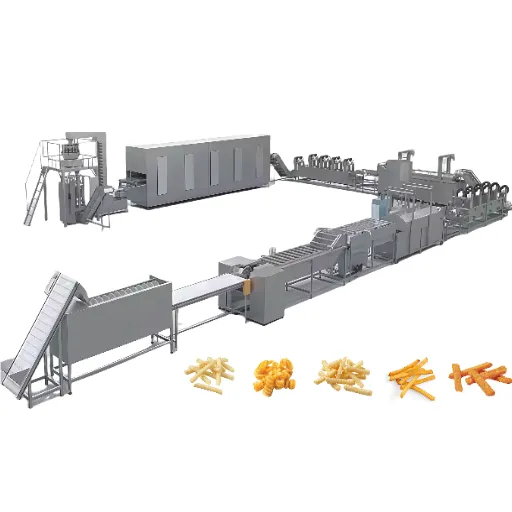
Not every food machinery manufacturer serves every buyer well. Understanding the three main categories helps you match your needs to their strengths.
| Manufacturer Type | Best For | Strengths | Trade-Offs |
|---|---|---|---|
| Enterprise-Scale (Bühler, GEA, Tetra Pak) | Multinationals with standardized, high-volume production | Global service networks, proven engineering, extensive R&D | Longer customization, higher minimums, brand premium pricing |
| Specialized Niche | SMEs, startups, and businesses needing recipe flexibility | Deep domain expertise, faster customization, better price-to-performance | Narrower product range, smaller global footprint |
| Turnkey Provider | New facilities, complete line overhauls, new product launches | Single-point accountability, seamless integration, unified support | Requires clear scope definition upfront |
Enterprise-Scale Manufacturers
Bühler, GEA, Tetra Pak, and similar global industrial food machinery suppliers dominate large-scale, highly standardized production. Their engineering shows exceptional quality. The company operates extensive service networks throughout the world.
The equipment has demonstrated its effectiveness in the largest facilities around the world. The system provides users with a flexible capacity for operation. Enterprise manufacturers optimize their production processes to achieve maximum output.
The process of creating customized products requires an extended period. The requirement for minimum order quantities will prevent smaller businesses from participating. The pricing system shows products from the brand which customers consider premium.
For a multinational food conglomerate running identical lines across continents, this model makes sense. For a growing business with unique recipes and evolving capacity needs, it can be overkill.
Specialized Niche Manufacturers
These food machinery manufacturers focus deeply on specific equipment categories. Extrusion specialists. Pasta production line experts. Protein bar production system builders.
They may not offer every type of food processing equipment, but they understand their domain at a granular level. The advantages are significant for small and mid-size operations.
Faster customization. More responsive engineering. Better price-to-performance ratios. Direct access to the people who designed the equipment.
A niche manufacturer can often deliver a tailored solution in half the time and at a lower total cost than an enterprise vendor offering a standard configuration. For buyers exploring snack food machinery, pasta production lines, or protein bar manufacturing systems, specialized manufacturers frequently deliver the best balance of capability, flexibility, and value.
Turnkey Production Line Providers
A turnkey food production line manufacturer delivers complete, ready-to-operate production lines rather than standalone machines. They handle design, equipment sourcing or manufacturing, integration, installation, commissioning, and training as a single project.
This model shines when you are building a new facility, launching a new product category, or replacing an entire aging line.
Single-point accountability eliminates the finger-pointing that happens when equipment from multiple vendors fails to communicate properly. The turnkey provider owns the full system performance.
Shandong Loyal Industrial specializes in turnkey food production lines for snack, pasta, protein bar, and bread crumb manufacturing. This integrated approach ensures that every component from mixing through packaging is engineered to work together, controlled through a unified system, and supported by a single technical team.
Food Machinery Manufacturer Trends Shaping 2026 and Beyond
The food processing machinery industry is evolving rapidly. These four trends are changing what buyers should expect from their manufacturing partners.
AI and Smart Automation
Artificial intelligence is entering its stage of practical implementation after existing for years as a popular term. The system uses machine learning algorithms to analyze sensor data which enables it to forecast equipment failures before they occur. The computer vision systems conduct product inspections to detect defects while maintaining production speed.
The adaptive control systems control the extrusion process by modifying its parameters in real time to produce uniform product dimensions from variable raw material components.
The food machinery manufacturer of smart automation technology solutions provides more value than the reduced labor costs. Their system delivers consistent results together with quality control and transparent business operations which automated systems can provide but human operations cannot.
A manufacturer evaluation process requires specific questions about the company’s automation development plans. Do they provide access to remote monitoring dashboards? Do their systems have the capability to work together with your current plant management system? What information do they gather about their operations and who has ownership of that information?
Modular and Flexible Processing Lines
Food manufacturers must increase their product changes because of customer demand for multiple product options. A production line that operates one stock keeping unit for six months has become less common. The modular processing equipment allows quick setup changes to handle various recipes and product shapes and packaging dimensions.
The system uses interchangeable dies along with quick-release tooling and recipe-stored control programs and flexible conveying systems to reduce changeover time from hours to minutes. The system provides contract manufacturers and startup vendors and established companies with special advantages that help them develop seasonal products and limited-time merchandise.
Sustainability and Energy Efficiency
Environmental regulations are becoming more stringent throughout the world. Energy expenses exhibit unpredictable patterns of change. Customers and businesses increasingly require proof of sustainable practices.
The food machinery industry develops machines that operate with less water use and produce less waste while achieving better energy efficiency.
Heat recovery systems capture thermal energy from exhaust streams and redirect it to preheat incoming ingredients. Variable-speed drives enable motors to use less energy when operating at less than their full capacity.
The manufacturing industry uses precision dosing and forming systems to reduce both product loss and production waste. When you evaluate different manufacturers, request their specific efficiency data and details about how their equipment has decreased environmental impact.
Enhanced Traceability and Food Safety Compliance
The United States FSMA 204 regulatory framework together with the EU Digital Product Passport initiative requires food supply chain operators to establish complete traceability systems. Equipment is becoming part of the compliance infrastructure.
Contemporary processing lines use serialization and lot tracking together with automated record-keeping systems to create traceability databases. Hyperspectral imaging and AI-based defect detection enhance food safety at speeds no human inspector can match.
The food machinery manufacturer develops equipment which will comply with regulations from the beginning rather than treating compliance as an afterthought.
Red Flags: Warning Signs When Evaluating a Food Machinery Manufacturer
The evaluation process of food machinery manufacturers shows two main types of warning signs which include obvious signs and hidden signs that require specific inquiries to identify. The manufacturer uses these warning signs to show which partnerships they cannot establish with you.
A business requires both a physical address and a business license because these elements serve as basic requirements. You need to request documentation of their facility. A legitimate manufacturer has nothing to hide.
The absence of required safety certifications together with the manufacturer’s refusal to share material compliance documents should result in immediate termination of discussions. The food industry demands food safety as an essential requirement while certified safety standards remain confidential to business proprietary information.
The absence of testing data together with demo videos and referenceable installations creates a situation where performance claims become unclear. A food machinery manufacturer should demonstrate how their equipment functions with your specific product.
The absence of warranties together with existing warranties that do not cover wear parts suggests the manufacturer doubts their equipment’s longevity. The industry standard requires one year of full protection for equipment which manufacturers extend beyond that period.
The demand for complete payment upfront together with the lack of payment milestones raises serious warning signals. Reputable manufacturers structure payments around design approval, production completion, shipment, and successful commissioning.
Operational hazards arise from both poorly translated technical manuals and the absence of local language support. Your maintenance team requires documentation which they need to read during emergency situations occurring at 2:00 a.m.
The absence of spare parts list together with missing regional stocking plan and service response documentation means you acquire equipment which lacks backing support. Any savings you achieve through upfront costs will become less valuable than the expenses of equipment downtime.
Why the Right Food Machinery Manufacturer Is a Long-Term Partnership
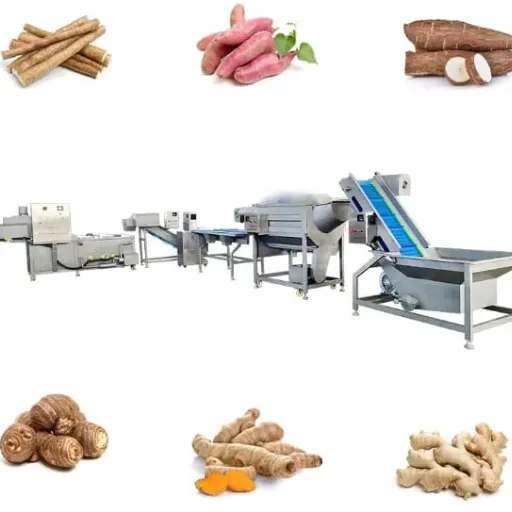
With proper maintenance, quality food processing equipment has a lifespan of ten to fifteen years. The period after you make your initial purchase of equipment will depend on how you maintain your relationship with your manufacturer.
Your food machinery manufacturer provides you with spare parts and technical assistance and capacity enhancements and process optimization services. They know your equipment’s history. They understand how your production has evolved.
The Southeast Asian protein bar production team learned this lesson through experience. Their initial manufacturing partner installed equipment and then vanished from the project.
The team spent six weeks to find replacement bearings because the cooling tunnel’s conveyor alignment problem stopped them from finding one vendor that had complete specifications.
After the company switched to a new manufacturer who maintained local spare parts and remote diagnostic capabilities, their operational uptime increased from 82 percent to 96 percent. The company achieved a 23 percent reduction in its annual maintenance expenses.
The difference happened because of the partnership instead of the equipment design. The partnership between us made all the difference.
Your decision should base itself on total cost of ownership because it represents a financial measurement that exceeds purchasing expense. The lowest quote rarely produces the lowest lifetime cost. Your investment will yield better returns when the manufacturer you choose supports your success through open communication and quick assistance and ongoing enhancements.
At Shandong Loyal Industrial, we have spent over a decade designing and delivering customizable food production lines for clients in more than fifty countries. Our approach starts with understanding your product goals, your facility constraints, and your growth plans. From there, we engineer solutions that fit, install them with your team, and support them for the long haul. Whether you need a corn puff snack production line, a complete pasta manufacturing system, or a protein bar production line tailored to your formulation, we bring the expertise and commitment to make it work.
Conclusion
The selection of a food machinery manufacturing partner represents the most important choice which a food producer must make. Your equipment selection will determine your production capabilities which will affect your business expenses and your ability to adapt to market demands during the upcoming ten years.
Making that choice on purchase price alone is a costly mistake.
The seven criteria in this article give you a practical framework for choosing the right food machinery manufacturer. You need to assess seven factors which include The manufacturer needs to be selected based on your business requirements and operational capacity.
You should identify warning signs which indicate potential dangers. The business relationship should receive more importance than the individual financial transaction.
The food processing machinery market is projected to exceed $88 billion in 2026, driven by automation, flexibility, and sustainability. The manufacturers who invest in these capabilities are the ones positioned to help you grow.
The right food machinery manufacturer does not just sell you a machine. They engineer your production success.
Ready to discuss your specific production goals? Contact our engineering team for a detailed consultation. We will review your product requirements, facility layout, and capacity targets, then propose a tailored solution that fits your budget and your ambitions. From consultation to commissioning, we keep you informed every step of the way.