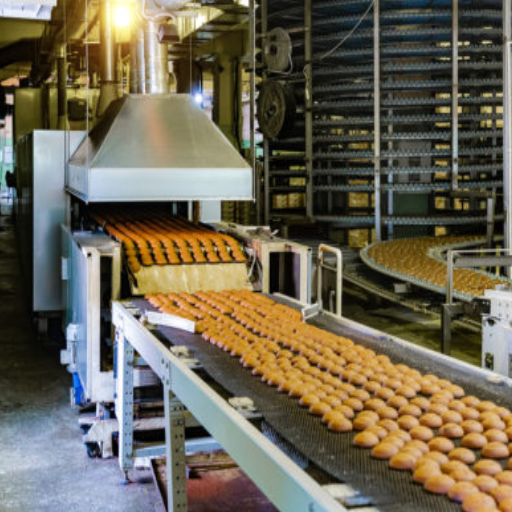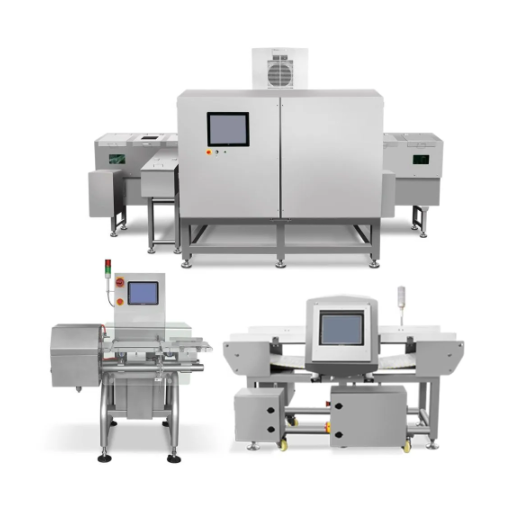
Created solely for food manufacturers looking to streamline their production process, a completely installed and fully operational food manufacturing system is exclusively designed, built, integrated, installed and commissioned. Operations are instantly started without much technical involvement. They are not like ordinary vendors that just provide separate sets of machinery but instead make the whole line work by taking responsibility for it themselves.
According to the Report, the Global Food Processing Machinery market would attain a market size of $66.37 billion by the year 2026. Several production lines do not succeed to curtail with the targets even during the commissioning phase. Pricing is subjective and unclear, scopes are not well defined, and machinery manufacturers are perceived as system integrators even without manufacturing equipment.
Also, one knows how difficult it is to handle two suppliers. Please treat this particular guide as a breakdown of the purpose and function of a turnkey food production line manufacturer. What criteria are used to appraise one and what are the top seven factors which reliable food processing line manufacturers have and risky ones lack- are answered in the text.
In this article, we will find out details about the variation between manufacturers, suppliers, and integrators. We will discuss what makes the turnkey approach more advantageous than piecemeal innovation. Actual costs and schedules are given as well as warning signs of problems.
Key Takeaways
- A turnkey food production line manufacturer handles design, engineering, integration, installation, and commissioning under one contract, eliminating vendor coordination headaches.
- Turnkey delivery reduces time-to-production by 30–40% compared to buying standalone machines and managing integration yourself.
- The initial purchase price represents only 20–30% of total cost over a decade; evaluate partners on total cost of ownership, not sticker price.
- Seven essential criteria separate reliable turnkey partners from risky ones: product category experience, in-house manufacturing, certifications, TCO transparency, commissioning protocols, after-sales support, and global logistics capability.
- Modular turnkey designs let you start with core capacity and expand later, protecting your investment as demand grows.
What Is a Turnkey Food Production Line Manufacturer?
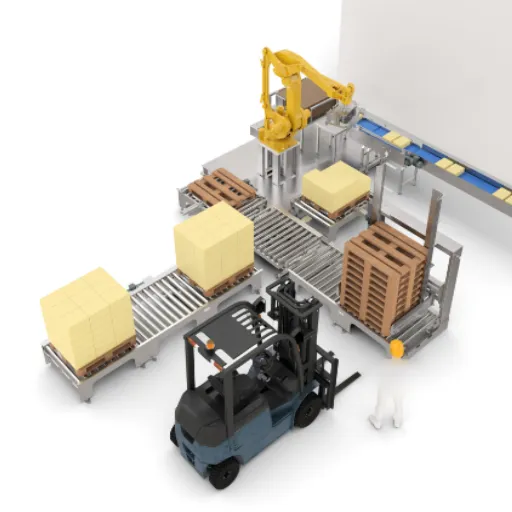
Beyond Equipment Sales: The Full Scope of Turnkey Delivery
When you choose to work with a turnkey food production line manufacturer, you do not simply make a purchase. You guarantee that your desired result will be designed, produced, installed, and commissioned.
The latter starts almost immediately with conducting feasibility studies and designing the layouts of the plants. They appraise the client’s product requirements, projected capacity, production floor limitations, and any applicable regulations. The production process is then represented by a flow chart, equipment is selected for each section of the flow, and layouts are prepared to show the machinery arrangement in relation to the production flow in a hygienic manner.
At this stage equipment is procured but with a crucial distinction; the manufacturer procures or manufactures equipment that can work with only that supplied by them as well. The operation of the mixers, extruders, dryers, fryers, coolers and packaging machines are aligned to the throughput and have the same control systems.
The next phase in construction is installation and commissioning. The utility connections, electrical integration, and programming of the control system are all completed by the manufacturer. They order the test batches, perform setting calibrations and make sure the line performances the required parameters in terms of capacity and quality. Each of them organizes operator training, hands in the technical documentation and assists in certification forwarding the machine further.
Turnkey Manufacturer vs. Equipment Supplier vs. System Integrator
Very often, the mentioned three (3) roles get mixed up. Nevertheless, there is a fine line drawn among them as it affects the party to be blamed when things go south.
An equipment supplier on the other hand is a seller of independent machines. This is when you get a mixer from one company. An extruder is from another company altogether. Tendering, supervising installation and operation and attending to problems are done in-house.
Assuming that the machines are not able to communicate, fixes are arranged with different vendors.
In the case of a food production line integrator, this is a person or company that takes in equipment from different sources and integrates them to form the functional line. Control also encompassed improvements and setups. They equally do not often manufacture the main processing machines themselves. For example, if there’s a problem with the performance of an extruder, the integrator can easily point fingers at the equipment manufacturer, whilst on the other hand, the manufacturer will also direct the problem to integration.
When a turnkey production line is configured, a manufacturer produces machines and puts them together fully assembled with other machines so that one complete production line is formed. All these aspects are within their control. This is to say that shall one unit malfunction, a single entity handles everything from the planning stage to the last stage, where the machinery is working, and nobody has to blame another. This mixed type is most useful for such difficult processing as extrusion, which is important in turn as such: designing a machine is a deposit and its specialist’s design, which will work well with a line, is very important for a machine with a turnkey food production line manufacturer.
Want to see how turnkey integration works in practice? Explore our food production lines to discover complete systems designed for snacks, pasta, protein bars, and more.
Why Choose a Turnkey Food Production Line Over a Piecemeal Approach?
The Hidden Costs of Self-Integration
The purchase of individual machines may seem to be less costly based on the numbers. The truth in practice however is far from this.
When Elena started her snack business in Jakarta, she bought a mixer machine from a local vendor, an extruder machine from a European company, and a fryer machine from a Chinese company. Each of the machines could operate on its own. When brought together, however, it was a different story.
The throughput of the extruder was 15% more than the fryer could take. The mixer’s batch capacity did not match either of the subsequent components. Before the line was in a steady condition Elena invested almost twenty-eight thousand dollars in exclusive conveyors customizations and controls and consultations with engineers for four months.
This is not a rare case. Where companies fail to integrate machines supplied by different vendors, the commissioning process may take between three to six more weeks than it would have been. Fragmented and split warranties about what gets fixed by whom plague such operations.
A properly integrated corn puff snacks production line eliminates these risks because every stage is engineered to work together.
Spare parts must be sourced from multiple countries with incompatible lead times. When a line underperforms, suppliers blame each other while production stalls.
The Turnkey Advantage
Turnkey delivery eliminates these risks. The manufacturer tests machine communication and control coordination before the line ever reaches your facility.
Unified control systems are a major advantage. One touchscreen manages the entire line. Operators monitor performance from a single station. Recipe changes happen with a few taps.
Coordinated warranty and spare parts simplify maintenance. One parts list. One support contact. One delivery timeline.
Turnkey delivery typically reduces time-to-production by 30–40% compared to piecemeal procurement and self-integration. That acceleration translates directly to revenue.
| Factor | Turnkey Approach | Piecemeal Approach |
|---|---|---|
| Accountability | Single partner owns everything | Multiple vendors, fragmented responsibility |
| Integration Risk | Pre-tested at manufacturer’s facility | Discovered during on-site commissioning |
| Timeline | 4–8 months typical | 7–14 months typical |
| Control Systems | Unified PLC/HMI across entire line | Multiple independent controls |
| Training | Comprehensive, line-wide program | Per-machine training from different vendors |
| Spare Parts | Single source, coordinated inventory | Multiple sources, incompatible lead times |
| Cost Predictability | Fixed or milestone-based pricing | Scope creep common during integration |
7 Essential Criteria for Choosing a Turnkey Food Production Line Manufacturer
Selecting the right partner requires looking beyond glossy brochures and initial quotes. These seven criteria reveal who will deliver real value.
1. Proven Experience in Your Specific Product Category
A manufacturer who excels in dairy processing may struggle with extrusion. A poultry line specialist might lack the recipe flexibility you need for snack production.
Ask for case studies in your exact product category. Request references from clients who have operated complete lines for six months or longer. A portfolio of ten successful pasta installations teaches lessons that no generalist can match.
At Shandong Loyal Industrial, we have delivered turnkey pasta production systems and snack food machinery across more than 50 countries. We have also built Doritos and corn tortilla chips production lines for clients worldwide. That depth matters when your recipe requires specific extrusion parameters or drying curves.
2. In-House Manufacturing and Engineering Capability
Can the firm create the machinery right from the basics or will they be essentially setting up and fitting others’ equipment together?
Manufacturing firms have an advantage over mere integrators because they build every single piece and system of extrusion, drying, and automation themselves. Such vendors know their machines inside out. It’s easy for them to change the screw shape to their customer’s requirements, take apart the barrel or locate there the required number and type of heating zones. However, pure integrators have to approach other companies to implement any modifications which increases the costs and extends the lead time.
Other features such as 3D visualization or features for the creation of a virtual plant layout are the same. Before any expensive cutting or welding takes place, you should look at the line layout as it will appear in your workshop and operation area. This avoids expensive outcomes during installation.
Degree and depth of modifications are two parameters that separate low level suppliers from high level partners. Recipe tolerances, scalability, and modularity should be expected in every meeting. Not as a post conversation point.
3. Certifications and Compliance Documentation
Obtaining certain certificates is a must when it comes to manufacturing food. Check if the concern possesses the certificates required.
A CE mark assures that the goods respect the health and safety requirements of the European Union. One must adhere to F. D. A. regulations when marketing to US citizens. Quality management is based on the ISO 9001 standard. When a system is designed to be HACCP compatible, it means that it will be able to fit into the food safety management system.
Certificates of materials should also be paid attention to. Food manufacturing stainless steel is a must. You may also request mill certificates that guarantee the specific alloy grade. Ratings of hygienic design as well as clean in place functionality will be appropriate to the cleaning system.
A detail that is oftentimes missed: certification of the entire fabricated line, as opposed to certification of each separate machine. A line with CE stamp on each machine is more secure than many machines with some undocumented units. Get the complete ready-to-go system with started and everything before making any orders.
4. Transparent Cost Structure and TCO Analysis
The initial price tag is quite appealing. However, it is deceiving.
As per the industry data, the cost of acquiring the food processing equipment is, in most cases, only 20-30 percent of the total cost for a period of 10 years. This is due to the fact that energy, water, maintenance labor, spare parts and downtime are the major operational costs that come during that period.
An efficient turnkey food production line manufacturer helps in the developmental stages by clearly showing the breakdown of cost. On top of providing this, they list various detailed elements that they intend to incorporate. Due to the production time and the price of raw materials, they calculate how much it will cost every year for refining.
You should ask for a long-term five-plus or even ten years total cost of ownership analysis. Use this to make a comparison among partners and not use first break offers as a comparison. As it is always the case, the cheapest proposal can be proved to be the most costly in the end.
5. Installation, Commissioning, and Training Protocol
For the next decade, seamless operation of a line depends on how it gets installed and commissioned.
The first level of quality assurance of any equipment is its Factory Acceptance Testing (FAT). That, a responsible manufacturer will be willing to show you the equipment in action in their facilities before dispatch. This can be a face to face interaction or via video conferencing. You check the integration of the capacity, yield, and quality of product produced against your values entered in them in the same scenario.
In cases where flaws are detected during a FAT, the cost to amend the problem is covered by the manufacturer. The issues detected after the installation process is complete belong to the other party involved-you .
Documentation should accompany the on- site commissioning process. Among important steps there is a mechanical assembly of a line, connection of utilities, integration of the control system and trial production. Every stage has specific criteria for assessment.
Training of the operators and also the maintenance team should be thorough, as opposed to a mere formality. Training helps to achieve a 50% reduction in the number of problems during the first year of production. A request for such a training program should be made with a plan of action, which includes the curriculum, the period and the necessary qualifications of the trainers.
The level of a client’s documentation speaks for the class of its business. Instruction manuals, preventative maintenance timetables, and part catalogs should be thorough. In this case they ought to be correct. These should come in the language of the reader.
6. After-Sales Support and Spare Parts Infrastructure
As soon as the equipment is handed over, your relationship with the turnkey food production line manufacturer will commence in great detail. It is supposed to last in between 10-15 years.
Do not wait for a breakdown rather assess the availability of spare parts before making any purchase decisions. Do common wear parts have a regional stock by the manufacturer or every replacement has to be ordered from overseas with an average lead time of 6 weeks? Is it possible for them to give a recommended spares list complete with prices and lead times?
Time brackets for reaching out to technical support should be given as proof. Remote troubleshooting effectively deals with 60-70 percent of faults to be fixed in a number of hours. Technicians are given access to your control system for troubleshooting purposes without moving from their location.
The warranty conditions should be looked into. In cases where the entire line is covered for a certain period, a joint warranty is prudent than all individual machinery warranties bearing different conditions and duration.
7. Global Logistics and Local Presence
Buying turnkey from overseas introduces legitimate concerns about shipping, customs, installation, and ongoing support.
An experienced global manufacturer handles international logistics routinely. They understand customs documentation and import regulations. They package equipment for safe ocean or air freight. They coordinate with local electricians and plumbers during installation.
Communication across time zones should be structured. Ask how the manufacturer handles project updates and routine inquiries. Dedicated project managers who speak your language make a measurable difference.
At Shandong Loyal Industrial, we have delivered protein bar production lines and extrusion systems to clients across Europe, Southeast Asia, the Middle East, Africa, and the Americas. That global experience shapes how we package, ship, install, and support every project.
Ready to evaluate turnkey partners with confidence? Download our project requirements template to document your specifications before contacting manufacturers.
Types of Turnkey Food Production Line Manufacturers: Finding Your Fit
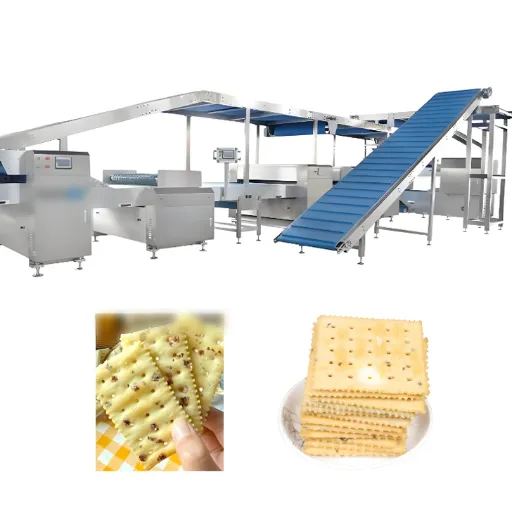
Not every turnkey partner serves every buyer. Understanding the landscape helps you match your needs to the right provider. Whether you need a complete food production line supplier or a specialized extrusion expert, the fit matters.
Enterprise-Scale Integrators
Companies like Syntegon, FPS Food Process Solutions, and GEA serve multinational FMCG brands with high-volume, standardized production requirements. They offer unmatched global service networks and massive engineering resources.
The trade-off is flexibility and price. Enterprise integrators excel at proven configurations. They are less agile when your recipe is unusual, your volumes are modest, or your budget is under $500,000. Lead times can stretch to twelve to fourteen months. For most small and mid-sized producers, a specialized turnkey food production line manufacturer offers better value.
Specialized Machinery Manufacturers with Turnkey Capability
These companies design and build core machinery for specific applications, then integrate complete lines around their expertise. They dominate niches like extrusion, pasta forming, or protein bar processing. A turnkey snack production line from a specialized extrusion manufacturer delivers better recipe flexibility and faster customization than a generalist integrator.
The advantage is depth. A specialized extrusion manufacturer understands screw geometry, barrel temperature profiles, and die design at a level no generalist can match. They customize faster, price more competitively for SME budgets, and provide direct access to the engineers who designed your equipment.
For snack producers, pasta manufacturers, and health food brands, this category often delivers the best price-to-performance ratio. Explore our fried snack production lines to see how specialized manufacturing delivers consistent quality.
Regional Turnkey Providers
Local or regional companies understand domestic regulations, utility standards, and supply chains intimately. They can install and service equipment faster than distant competitors.
The limitation is machinery design capability. Many regional providers resell equipment built by others rather than manufacturing core processing machines themselves. When customization is needed, they are constrained by their suppliers’ willingness to modify standard designs.
What to Expect From a Turnkey Food Production Line Manufacturer: Costs and Timelines
Realistic budgeting starts with understanding what different investment levels actually deliver.
Investment Tiers
Small-scale and semi-automatic lines (50,000–50,000–150,000) suit startups, pilot facilities, and niche product launches. A bread crumbs production line for regional bakery suppliers falls into this tier. These systems typically include core processing equipment, basic control systems, and manual packaging stations. Capacity ranges from 50 to 200 kilograms per hour. Timeline: four to six months.
Mid-range fully automatic lines (150,000–150,000–500,000) serve regional brands and growing manufacturers. They feature automated material handling, integrated packaging, and PLC control throughout. Capacity ranges from 200 to 800 kilograms per hour. Timeline: five to eight months.
High-capacity integrated lines (500,000–500,000–1,500,000+) support multinational production or highly specialized processes. These systems include advanced automation, quality monitoring, traceability systems, and comprehensive packaging integration. Capacity exceeds 1,000 kilograms per hour. Timeline: eight to fourteen months.
Typical turnkey budgets allocate roughly 45–50% to equipment, 20–25% to installation, 10–15% to engineering, and 10–15% to contingency.
Timeline Breakdown by Phase
It takes between four and eight weeks to complete the engineering and design. This covers the analysis of the product, development of the process, the choice of equipment and modeling of a factory layout.
The duration for manufacturing of equipment is between eight to sixteen weeks depending on the level of customization and complexity. Simple configurations are shipped faster with a considerable degree of customization of the extrusion or drying equipment which may take longer.
Exporting the equipment to other countries including customs procedures takes approximately two to six weeks again depending on the authorities involved. The paperwork is a provision which conquers the statement of the delay from the arrival at the port.
Onsite installation and commissioning lasts for about two to six weeks. Smaller lines without that much utilities are commissioned much faster. The longer lines which require large electrical, steam or ventilation systems commissioning will however take longer.
The entire training and handover process takes from one to two weeks. It is common for activities such as operator training, preventative maintenance, documentation of the machine and final assessments of operation to cover this period within the time frame given.
It is also advisable to size lines using 150 – 200 percent of current volume as per industry norm. This is convenient since it offers a breathing space without venturing into capacity reinvestment within the peak, seasonal or expansion periods.
Red Flags: Warning Signs When Evaluating a Turnkey Manufacturer
There are some subtle indicators of warning. Some others are more extreme, while all should be a reason to look at another option.
Lack of ability to trace a clear Factory Acceptance Testing protocol should be seen as a massive red flag. When a turnkey food production line manufacturer does not give you the opportunity for witnessing test-runs prior to shipment, the possibility is that they do not take it to its optimum lengths.
Any system delivered with scope in wards is a risky destination. How wide or limited each provider views, the ‘Turnkey’ solution differs per provider. To another, turnkey projects include equipment setup and staff induction. Others believe that their responsibility has been accomplished once they have delivered the items to you in a box.
Obtain a detailed extraction strategy or itemized offers that are clear on what is included and what is not included.
Absence of line warranties renders makes you liable. Supplying each machine with a warranty from a different manufacturer, supply your business only to integration issues.
The presence of no spare parts nor regional service network is a recipe for disaster. Get the parts list and prices upfront before making any commitments.
If one owns a company, the insistence to pay the full amount rather than milestones based payment system is rather suspicious. It is standard to pay in stages where records show the work performed for the relevant stage: the attachable pre-payment, satisfactory completion of design work, pre-inspection before the shipped goods, commencement of installation, and handover of work finally.
Whatever is often referred to as three recommendations, if the client does not provide at least three client recommendations in the segment of a product types inconclusively it says development. Here the given references must be transactions based and comparatively detailed regarding issues.
Capacity, productivity, or working time guarantees in commissioning or qualification of equipment are not given, which means that the turnkey food production line manufacturer is not convinced of his or her own ability to integrate. Require an approved list of acceptable deviations when the measurable performance criteria are not reached.
Turnkey Trends Shaping 2026 and Beyond
The turnkey landscape is evolving. These trends will influence how production lines are designed, delivered, and operated over the next five years.
Modular and Scalable Line Design
These days, employees of a turnkey food production line manufacturer know that the lines should no longer be stationary but instead be made as a COLLECTION OF MODULES. To understand this you have core capacity but modules, faster packaging units and greater processing stages will be added when necessary.
However, this engineering goes for 10-15% more. It helps to avoid its quickest write off. For instance, a snack manufacturer produces a 200 kg/hour for now and in future increases productivity to 600 kg/hour via Cantina Sever module remodeling process and gets a much cheaper control system as opposed to a replacement of the entire system every 3 years.
Remote FAT and Virtual Commissioning
Cost and because of a simple seasonality that makes people reluctant to travel or process visas timely, makes Remote Factory Acceptance Testing in nowadays to be well known and practiced. They will show practical examples of the functions performed rather than your team being flown over to the factory, instead, manufacturers will show a brief video of the test run and the images and graphs in real time.
3D virtual replica technology pushes the idea forward. It is possible to virtually “walk” around your level and check for any spatial conflicts and even improve operator access before having the equipment in place physically. This helps to avoid unexpected inconveniences on site, and even speeds up the startup process.
Smart Automation and IoT Integration
It is no longer acceptable to have predictive maintenance as an optional high-end feature. There are sensors installed which check for the temperatures of bearings, their vibration and also, the currents in the motors. The damage is done even before it happens by the application of machine learning which minimizes mechanical failure by as much as 30 per cent.
More so, one is able to obtain OEE (Overall Equipment Effectiveness) metrics for the entire plant in a matter of second. Problems that were in the past sometimes undetectable even after weeks of work, will before long come up in minutes.
Sustainability and Energy Efficiency
Energy-efficient components now deliver payback periods of two to three years through reduced electricity and water consumption. Water reclamation systems, heat recovery exchangers, and variable-frequency drives are becoming standard in new turnkey lines.
Regulatory pressure is accelerating this trend. The EU Digital Product Passport and similar frameworks will soon require documented environmental performance for production equipment.
Why the Right Turnkey Partner Is a Decade-Long Decision
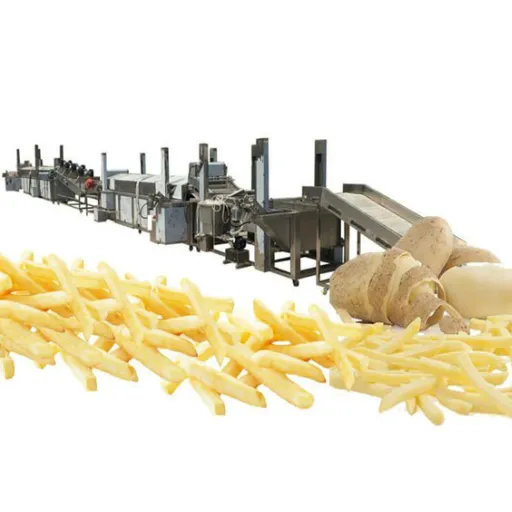
Marco’s venture that involved the purchase of ready-to-use machinery for pasta production for the family business in São Paulo was a five-year projection. It lasted 12 years.
The turnkey food production line manufacturer was quick to offer technical assistance in terms of recipes for healthy pasta products when he diversified into gluten-free versions. When the gearbox broke down at the height of the season, spare parts arrived within 48 hours and assistance was guaranteed. They did this by offshore upgrading of his operating platform with the aim of improving trackability in response to the new food handling rules.
This degree of continuity is what makes turnkey manufacturing appealing. If properly maintained, a production line will a minimum of 10 years, and a maximum of 15 years. Your chosen partner will affect your operation efficiency, time for shutting down and even the ability to adapt to the market environment, all for ten years from the moment you make your selection.
Unsupported equipment typically costs a lot, in the long-run! It is reasonable to say that just one day of unworkability creates a business loss of 5000 to 15 000 dollars in a medium sized food factory. When ten years of working relationship is considered, with a change of partner who honors their commitments, much less that is away and hundreds of thousands up.
They do so because manufacturers are interested in your success. For upper levels of performance they end have their books available for developments of other recipes. There is also for instance instructions on upgrade plans that avoid cannibalization of initial investments.
Since its establishment in this sector over 10 years ago, Shandong Loyal Industrial has been able to consistently design and build CE-compliant turnkey production lines in relation to your current production line design objectives. Our range of work includes manufacturing the extrusion systems and the integration of the complete line(s) to include installation and on-site training as long as the production line is operated successfully and other services. From present abilities involving snacks, pasta extrusion, or protein bars processing, tailored optional lines abound.
Conclusion
When we think about selecting a turnkey food production line manufacturer why it is important for the food producers, the consequences may be serious. The right choice enables the company to increase speed of launching new products, keeps the company’s money intact, and most importantly helps in the expansion of the business for a long time. The wrong selection can cause a lot of headaches, unforeseen costs, and overall production interruptions.
It’s key to consider seven areas: experience within the category due to delivery of similar lines, manufacturing carried out under one roof, strong certifying bodies, accurate costing which includes all kinds of expenses the customer is expected to incur, efficient handover and operator training, good after-sales service, and seamless logistics across the world.
Recognize three categories of providers: enterprise solution for huge scale, specialized manufacturers for efficiency and SME which delivers specialized attention and regional provider for such geographical location.
Be wise when budgeting. The cost of a simple turnkey project starts at approximately 50,000. Smarter systems are usually priced between 50,000. Smarter systems are usually priced between 150,000 and 500,000. Smarter systems are usually priced between 150,000 and 500,000. Complex systems incorporating all possible functions cost more than 500,000.
The lead time for this project can be as little as four months or as long as fourteen months depending on its complexity.
The warning sings to look out include but not limited to general scope, no acceptance test on delivery, different warranties, advance money, and no guarantees on commissioning.
Your current selection of the turnkey food production line manufacturer has an influential impact on how well you run your business in the next ten years. Find the person that makes you rethink your dreams into their purposes.
Ready to start your project? Contact Shandong Loyal Industrial for a consultation on your turnkey production goals. Tell us your product, your capacity targets, and your timeline. We’ll design a solution tailored to your needs.