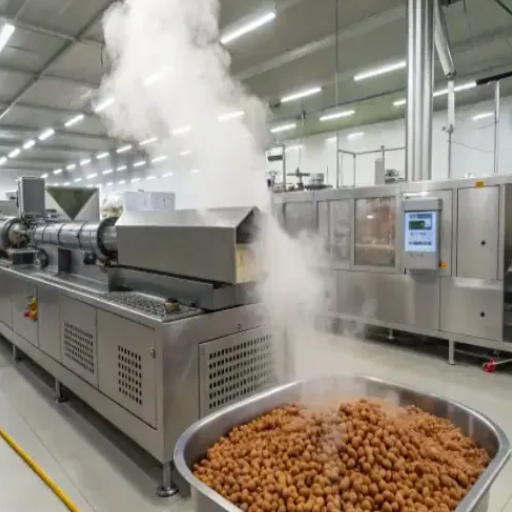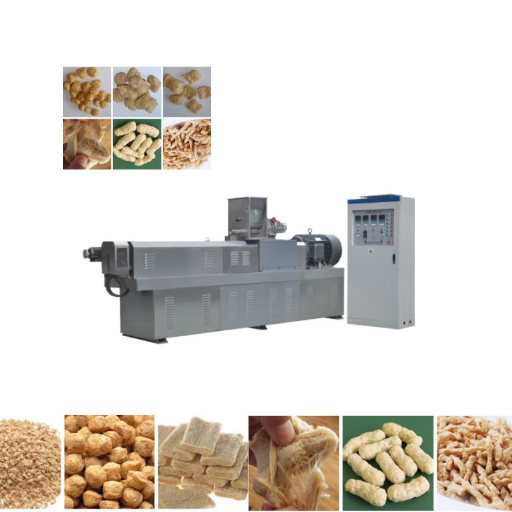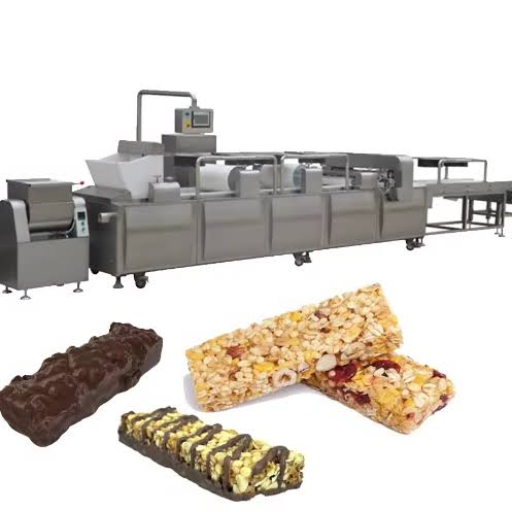
The custom food machinery manufacturer creates and constructs production equipment according to your unique recipe and production requirements and your facility limitations instead of using typical catalog equipment. The correct partner guides you through their defined seven-step method which begins with needs evaluation and concludes with factory acceptance testing while providing you with precise cost estimates.
You already suspect that “custom” is the most overused word on food machinery sales pages. Every vendor claims it. Few define what they actually mean by it. Some custom builds are full bespoke engineering projects. Others are standard lines with a longer conveyor and a different paint color.
This guide explains exactly what a custom food machinery manufacturer should deliver, how the design and build process really works, what custom lines cost and how long they take, and the ten questions you should ask any vendor before signing a purchase order. You will gain a practical decision-making structure to assess either a U. S. specialist or a European OEM or a worldwide manufacturer such as Shandong Loyal Industrial.
Key Takeaways
- Custom food machinery exists on a spectrum: fully bespoke engineering, configured-standard hybrids, and modified off-the-shelf lines, with different cost and lead-time implications for each.
- The full custom design process runs seven stages over 16 to 32 weeks, from RFQ through factory acceptance testing and on-site commissioning.
- Custom snack extrusion, pasta, and protein bar lines typically range from 120,000to120,000to2 million depending on throughput, automation level, and material selection.
- Buyers who select equipment on total cost of ownership rather than purchase price report roughly 40 percent higher five-year ROI and 30 percent fewer operational disruptions, according to industry research.
- A serious custom food machinery manufacturer welcomes a Factory Acceptance Test with your recipe, in person or by video, and signs an NDA covering your IP before engineering begins.
What Is a Custom Food Machinery Manufacturer?
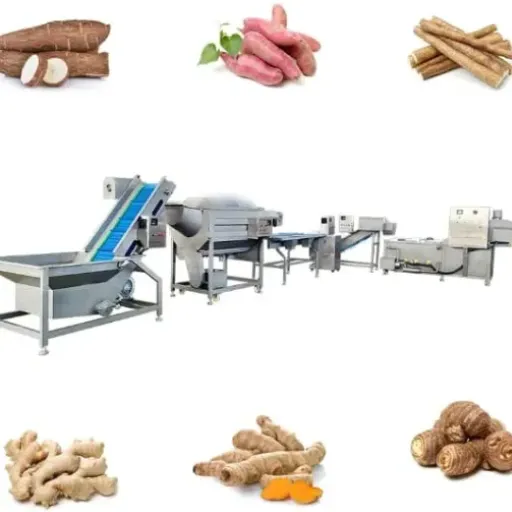
A custom food machinery manufacturer is a company that designs and fabricates food production equipment to your specifications, controlling engineering, fabrication, controls programming, and testing in-house. Unlike a distributor who resells third-party equipment, a true custom manufacturer can modify a die plate, rewrite PLC logic, or change a screw profile because their own engineers built the system.
The term “custom” exists between two extremes which define its meaning. The first extreme displays fully bespoke engineering: a design that starts from nothing and develops according to your specifications and measurements and building layout. The middle point of the spectrum displays configured-standard model which combines a validated base system that permits users to change three specific system parameters. The spectrum ends with modified off-the-shelf system which requires only small changes to existing catalog products.
Different buyers require each tier. The fully bespoke option matches products which require new development through hybrid recipes and unique geometric designs. The configured-standard system matches expanding producers who want adaptable solutions that do not require custom development costs. The modified off-the-shelf option matches customers who want standard products but require minor modifications. Your project needs assessment should occur before you contact vendors. When buyers request “custom” work without specifying their needs they end up paying for custom work that changes only surface details.
For a deeper view of how to evaluate any food machinery partner, our complete guide to choosing a food machinery manufacturer walks through the broader vendor selection criteria.
When Custom Food Machinery Beats Standard Equipment
Custom is not always the right answer. Sometimes a standard line ships in three weeks, costs 40 percent less, and runs your product perfectly. The decision depends on six specific scenarios.
Custom usually wins when:
- Your recipe is hybrid, for example a protein bar with a layered savory and sweet structure that needs two depositors and a precision cutter standard lines do not coordinate.
- Your product geometry is non-standard, like a 3D extruded pellet shape no off-the-shelf die produces.
- You must integrate with an existing line’s controls (Beckhoff, Allen-Bradley, Siemens) rather than running parallel systems.
- Your throughput target falls between two standard tiers, and oversizing wastes energy while undersizing caps growth.
- You face a regulatory layer beyond the basics, such as USDA, halal, kosher, or organic certification with specific equipment requirements.
- Your facility imposes a hard footprint constraint, like a 200 square meter space that needs a vertically stacked extrusion-to-packaging layout.
Standard usually wins when:
- You are launching fast and time-to-market matters more than perfect fit.
- Your product is a common SKU in a mature category, like plain corn puffs or short-cut pasta, where standard lines run reliably.
- Your budget is tight and ROI math favors lower upfront cost over long-term flexibility.
When David, a U.K. protein bar entrepreneur, prototyped his line in late 2024, he started with a standard extrusion platform from a regional supplier. Within six months his hybrid recipe (whey, oats, and a savory chili coating) hit a wall. The standard cooler could not hold the temperature differential the recipe required, and the changeover between savory and sweet flavors took 90 minutes. David replaced the cooler and feeder with a customized protein bar production line sized for his recipe portfolio. Changeover dropped to 22 minutes, and his contract manufacturer signed an exclusivity deal three months later.
Want to see what a customizable line looks like in practice? Explore Shandong Loyal’s turnkey food production lines and the configurations available across snack, pasta, protein, and bakery applications.
The 7-Stage Custom Food Machinery Design Process
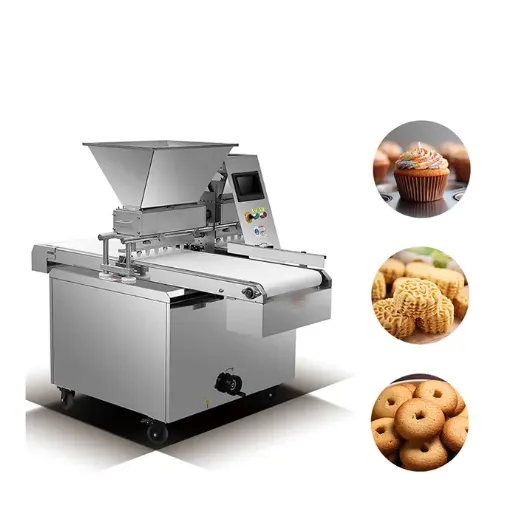
Every credible custom food machinery manufacturer follows a structured workflow. The names vary by company, but the deliverables and the buyer’s role at each stage do not.
Stage 1: Needs Assessment and RFQ (1 to 2 weeks)
The manufacturer collects your recipe (or recipe class), throughput targets, sanitation class, utility availability, and footprint dimensions. You should receive a structured questionnaire covering raw materials, target moisture content, finished product geometry, downstream packaging interfaces, and your country’s electrical standard (50 Hz vs 60 Hz, 380 V vs 480 V).
Stage 2: Conceptual Design and Quotation (2 to 4 weeks)
You receive a block diagram of the line, a written scope of supply, and a budgetary CapEx range. A serious vendor itemizes mechanical equipment, controls, installation, training, and freight separately. Watch for vague single-line quotes. Those almost always hide change orders later.
Stage 3: Engineering Approval (3 to 5 weeks)
Once you sign and pay the first milestone, engineering produces General Arrangement (GA) drawings, Process and Instrumentation Diagrams (P&IDs), electrical schematics, and material specification sheets. Review these with your in-house engineer or an external consultant. Approval at this stage locks design changes; later changes cost 5 to 10 times more.
Stage 4: Manufacturing and In-House Assembly (8 to 16 weeks)
Fabrication, welding, controls integration, and dry runs happen at the manufacturer’s facility. You should be able to request weekly photos or video updates. For longer projects, a mid-build factory visit is reasonable to verify progress.
Stage 5: Factory Acceptance Test (FAT) (1 to 2 weeks)
The manufacturer runs the line with water, then with a representative material, and ideally with your actual recipe. You attend in person or by live video. Document the throughput, surface temperatures, current draw, and any deviations against the contract specification. Do not pay the next milestone until FAT is signed off.
Stage 6: Shipment and On-Site Installation (4 to 12 weeks)
Crating, ocean or air freight, customs clearance, and mechanical installation. The manufacturer or a designated installation partner handles utility hookups, alignment, and pre-commissioning checks. Plan utility infrastructure before the line arrives. Most installation delays trace back to power, water, or compressed air not being ready.
Stage 7: Site Acceptance Test (SAT) and Operator Handover (1 to 2 weeks)
The line runs your recipe in your facility at contract throughput. Operators receive hands-on training. You receive operating manuals, spare parts lists, and electrical schematics in your language. Hold back a final payment milestone (typically 5 to 10 percent) until SAT performance is verified over multiple shifts.
This sequence applies whether you are buying a snack food machinery line, a bread crumbs production system, or a pasta extruder. The depth and duration of each stage scales with project complexity.
Custom Food Machinery Costs and Lead Times
Custom pricing is built from four cost buckets: engineering hours, fabricated mechanical equipment, controls and electrical systems, and commissioning labor. Most reputable manufacturers will share a rough cost split if you ask. Engineering typically runs 10 to 15 percent, mechanicals 50 to 60 percent, controls 15 to 25 percent, and commissioning 5 to 10 percent.
Realistic CapEx ranges for custom lines, before freight and installation, look like this:
| Line Type | Custom CapEx Range | Typical Lead Time |
|---|---|---|
| Snack extrusion (corn puffs, pellets) | 180,000to180,000to1.2 million | 18 to 26 weeks |
| Pasta and macaroni production | 250,000to250,000to2 million | 22 to 32 weeks |
| Protein and cereal bar production | 150,000to150,000to900,000 | 16 to 24 weeks |
| Bread crumbs (Panko and standard) | 120,000to120,000to600,000 | 14 to 22 weeks |
| Biscuit production (full line) | 300,000to300,000to2.5 million | 24 to 36 weeks |
Lead times include design through FAT but exclude ocean freight and on-site installation. Add 4 to 12 weeks depending on shipping origin and destination.
The ROI math is what justifies the premium over standard. Industry research summarized by procurement specialists indicates that buyers who select equipment based on total cost of ownership rather than purchase price report about 40 percent higher five-year ROI and 30 percent fewer operational disruptions. A bakery automating dough division, for example, can cut labor costs by 30 percent, raise output by 50 percent, and reduce waste by 20 percent within the first 18 months. For a deeper financial framework, see our forthcoming TCO guide on pasta production line economics.
Ready to test the difference custom engineering makes? Request a no-obligation cost range from Loyal’s engineering team. Share your recipe and target throughput; we will respond with a structured budgetary quote within 5 business days.
How to Vet a Custom Food Machinery Manufacturer
Most buyers ask about price and lead time. Both matter. Neither distinguishes a serious custom manufacturer from a glorified reseller. Use this 10-question pre-signature checklist.
- Show me a similar line you’ve built in the last 24 months. Photos, videos, client references. Vague portfolios are a red flag.
- Who owns the engineering, your in-house team or a subcontractor? Subcontracted engineering means change orders take 3 times as long.
- Can I attend FAT in person, or via video if I’m overseas? A vendor who hesitates here is hiding something.
- What is your standard payment milestone structure? A reasonable structure: 30 percent on PO, 30 percent on engineering approval, 30 percent on FAT, 10 percent on SAT. 100 percent upfront is a deal-killer.
- What CE, FDA, EHEDG, or 3-A documentation will you provide? Ask for sample certificates from a recent project.
- Materials: where does 304 versus 316 stainless steel go on this line? A vendor who can’t answer this in 60 seconds is improvising.
- What is your spare parts lead time after installation? Anything over 4 weeks for routine wear parts is a problem.
- How many of these machines have you commissioned outside your home country? Global commissioning experience matters more than home-country reputation.
- What happens at SAT if the line does not hit guaranteed throughput? Get the remediation clause in writing. “We will work with you” is not a clause.
- Will you sign an NDA covering my recipe and process IP before engineering begins? Refusal here ends the conversation.
For more on the materials question, see our companion guide to food grade machinery materials and the inspection points buyers commonly miss. The U.S.-based APEC team has a similar buyer’s framework worth reading alongside this list.
Buying Custom Food Machinery Internationally
Most published buyer guides assume you are sourcing within North America or Europe. The reality is different. Asia-Pacific manufacturers accounted for 38.21 percent of global food processing machinery sales in 2025, according to Mordor Intelligence, and the gap between Asian engineering quality and Western expectations has narrowed sharply over the past decade.
That does not mean every overseas vendor is safe to buy from. It means the risk-mitigation playbook is different. Use this checklist when evaluating an international custom food machinery manufacturer:
- Request a live video factory tour with the engineering manager, not a sales rep.
- Verify the business license number with the local commerce registry.
- Hire a third-party inspection firm (SGS, Bureau Veritas, TÜV) for a pre-shipment quality audit.
- Structure payments through a Letter of Credit at your bank rather than wire transfers.
- Insist that the manufacturer travel to your site for SAT, not just commissioning by your own staff.
- Confirm spare parts stocking arrangements in your region or with a regional distributor.
- Get all engineering deliverables (drawings, manuals, schematics) in your operating language.
- Verify that the line meets your country’s electrical standard before fabrication, not after delivery.
When Aisha sourced a custom pasta line for her facility in Lagos, she ran two parallel evaluations: a Spanish OEM at 1.4millionwitha28−weekleadtime,andaChinesecustommanufacturerat1.4millionwitha28−weekleadtime,andaChinesecustommanufacturerat850,000 with a 22-week lead time. She chose the Chinese vendor only after a third-party SGS audit, a video FAT attended by her process engineer, and a contract clause requiring the manufacturer’s senior engineer on site for two weeks of SAT support. Two years later, the line runs 22 hours a day with a 96 percent uptime rate. Her decision saved roughly $550,000 of CapEx, which she redeployed into a second packaging line.
Loyal Industrial has built and shipped custom lines to more than 50 countries. Read more about our engineering and manufacturing approach and how we structure international projects.
Custom Food Machinery Trends Worth Knowing in 2026
Four shifts are changing what “custom” means in 2026 and beyond.
- Modular swappable head and die systems let one line run multiple product geometries with under 30-minute changeovers. This is rapidly becoming the default request for new snack and pasta projects.
- AI-assisted recipe transfer uses machine learning to map pilot-scale process parameters onto commercial-scale equipment, cutting commissioning time by an estimated 25 to 35 percent.
- Predictive maintenance built into custom controls from day one, rather than retrofitted, is now standard on serious custom builds. Smart and AI-enabled systems are growing at a 7.24 percent CAGR, faster than the overall machinery market.
- Sustainability-driven design as a written specification, not a marketing line. Buyers increasingly require water and energy budgets per kilogram of finished product, and they hold vendors to those numbers at SAT.
These trends do not eliminate the need for the seven-stage process or the vetting checklist. They raise the bar for what a custom manufacturer must deliver inside that process.
Frequently Asked Questions
What’s the difference between custom and standard food machinery?
Standard food machinery comes from a fixed catalog with limited adjustments, typically conveyor length, voltage, or paint color. Custom food machinery is engineered around your recipe, throughput, geometry, and facility, with engineering deliverables (GA drawings, P&IDs, schematics) produced specifically for your project.
How much does custom food machinery cost compared to off-the-shelf?
Custom typically costs 30 to 75 percent more than the closest standard equivalent at purchase, but delivers higher throughput, lower changeover time, and better long-term ROI. For most food producers, custom pays back within 12 to 24 months on labor savings and yield improvements alone.
How long does it take to design and build a custom food production line?
Plan for 16 to 32 weeks from RFQ to factory acceptance testing, plus 4 to 12 weeks for shipping and on-site installation. Snack and bar lines run on the shorter end; large pasta and biscuit lines on the longer end.
Can a custom food machinery manufacturer work from just a recipe?
Yes, a competent manufacturer can develop a process design from a recipe, target throughput, and target finished product specifications. Most will request a small ingredient sample for pilot testing before finalizing the design.
What is a Factory Acceptance Test (FAT) and why does it matter?
A FAT is a pre-shipment performance test where the manufacturer runs your line at their facility, ideally with your recipe, and verifies it meets contract specifications for throughput, temperature, and product quality. It is the single most important risk-mitigation step in any custom build.
Are overseas custom food machinery manufacturers reliable?
Reliable overseas manufacturers exist, but the verification burden is higher. Use third-party inspections, video FAT, milestone-based payments, and on-site commissioning support to manage the risk.
Can custom food machinery be modified later?
Yes, well-designed custom lines are modular. Reputable manufacturers document control logic, mechanical interfaces, and spare part specifications so future modifications, including capacity expansions or new product introductions, are straightforward.
What certifications should a custom food machinery manufacturer hold?
At minimum, CE marking for European-bound equipment, food-contact compliance under EU 1935/2004 or FDA 21 CFR, and ideally EHEDG hygienic design certification for the line’s wetted parts. ISO 9001 for the manufacturer’s quality system is a strong additional signal.
Choosing the Custom Food Machinery Manufacturer That’s Right for You
Custom food machinery exists as a continuous range which does not establish two separate points. The buyers who get it right define exactly which tier they need before talking to vendors, demand a structured seven-stage workflow with clear deliverables, and verify everything from materials to FAT before signing the next milestone payment. The ten-question vetting checklist exists because every shortcut a buyer takes upfront becomes an expensive change order or a stalled commissioning later.
The right custom food machinery manufacturer treats your recipe, your facility, and your IP as engineering inputs, not negotiation points. The company provides pricing information through clear and understandable price ranges. The company allows customers to conduct FAT testing either through physical presence or through video connection. The company requires customers to sign an NDA before starting work on design drawings. Engineers operate your production line until they receive their SAT approval.
Shandong Loyal Industrial has built custom turnkey lines for snack, pasta, protein, bakery, and pet food producers in more than 50 countries since 2012. Ready to start your project? Get a custom quote from our engineering team by sharing your recipe, throughput target, and facility constraints. We respond with a structured budgetary range and a project timeline within 5 business days, no obligation.