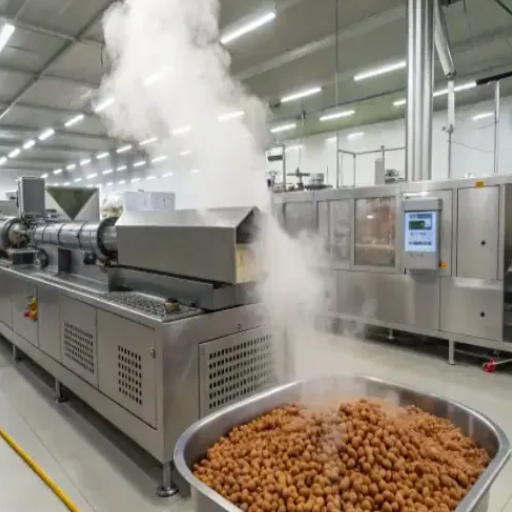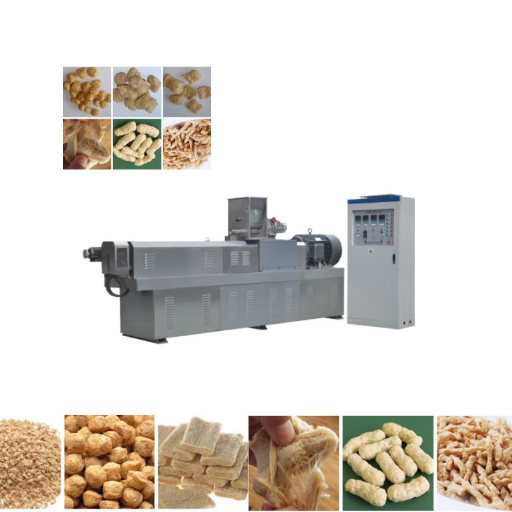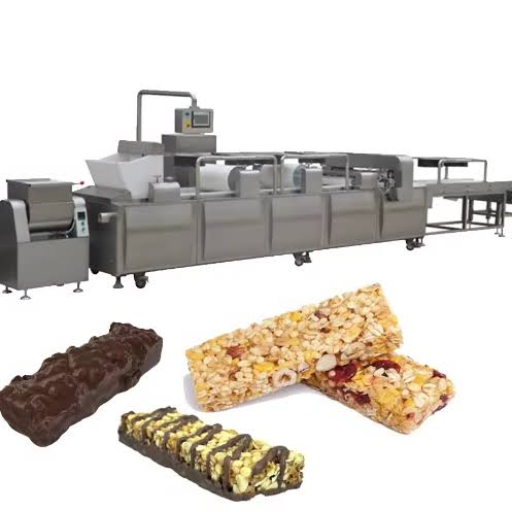
The most suitable materials for food grade machinery consist of 316 stainless steel which serves as food-contact surfaces in aggressive environments and 304 stainless steel which serves as standard material and food-grade plastics together with coatings and elastomers which function as specialized parts. The combination of materials that provides safe and compliant and cost-effective performance for your operations depends on your specific production environment and the foods you process and the cleaning chemicals you use and the location of your facility.
After his snack production line began developing rust spots within the seasoning drum six months following installation, Marcus Chen’s quality manager obtained a product sample for laboratory analysis. The “food grade” 304 stainless steel his supplier promised was actually a lower-grade alloy with barely 12% chromium. The entire drum assembly required replacement which resulted in equipment expenses of $28,000 and three weeks of production downtime.
Food manufacturers recognize that equipment breakdowns create more than temporary operational disruptions because these incidents endanger product safety while jeopardizing facility compliance and decreasing profits.
This guide describes the required materials for all production line components and the certifications which will be important in 2026 and the methods to identify suppliers who practice substandard work before making a purchase agreement. Our discussion will include stainless steel grades and surface finish requirements and the non-metal materials which most buyers ignore and machinery-specific recommendations and a supplier audit checklist which you can start using today.
Key Takeaways
- 316 stainless steel outperforms 304 in chloride-rich, acidic, or high-humidity environments, but 304 is sufficient for most general food applications at a lower cost.
- Surface finish (Ra ≤ 0.8 μm) and weld quality matter as much as the alloy grade for preventing bacterial harborage and passing audits.
- Food-grade plastics, coatings, seals, and lubricants are critical non-metal components that standard equipment guides often ignore.
- Hollow equipment legs and frames must be hermetically sealed to prevent them from becoming bacterial reservoirs.
- Always request mill test certificates and surface finish inspection reports before accepting equipment delivery.
What Makes a Material “Food Grade”?
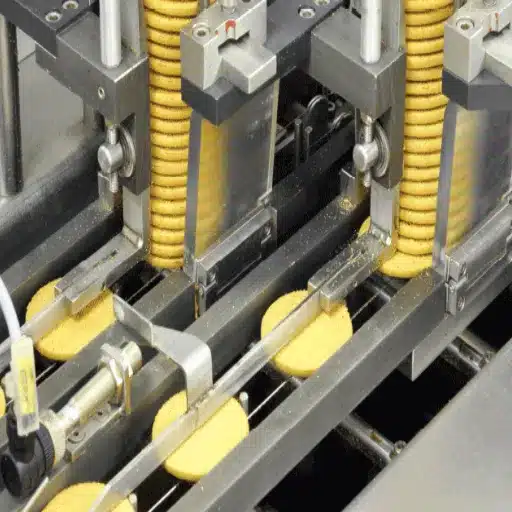
“Food grade” isn’t a marketing label you can slap on any shiny metal surface. It’s a specific classification that means a material is safe for direct or indirect contact with food under intended use conditions. The material must not leach harmful substances, alter the food’s taste or odor, or provide a surface where bacteria can establish permanent residence.
In the United States, the FDA governs this under 21 CFR Part 175, which covers indirect food additives. Stainless steel with at least 16% chromium is generally recognized as safe (GRAS) for food contact, provided the surface is properly finished.
The regulation applies to complete equipment systems which include all components beyond their basic metal parts.
Regulation (EC) No 1935/2004 establishes the basic framework which governs European markets. The materials must not release any substances into food at levels that would pose human health risks or cause changes to the food’s original composition.
France’s Arrêté du 13 janvier 1976 establishes approved stainless steel compositions for food contact which must meet designated chemical standards.
The 2026 landscape will experience two major regulatory changes which will transform its current state. The European Union will enforce its new BPA restrictions on food-contact materials beginning July 2026 while PFAS limits will take effect in August 2026. The regulations apply to all equipment which includes plastic parts and protective coatings and sealants in addition to its stainless steel structure. Singapore’s SAFE framework which began in January 2026 requires Food Safety Management Systems (FSMS) that determine equipment choices for high-risk facilities.
CE certification under the Machinery Directive 2006/42/EC also incorporates hygiene requirements. A machine needs to pass safety standards which include food-contact safety to obtain the CE mark. The CE sticker does not tell buyers everything because they need to verify technical documentation behind it.
Stainless Steel Grades for Food Processing Equipment
Stainless steel accounts for over 70% of all materials used in food-contact equipment manufacturing. But not all stainless steel is created equal, and choosing the wrong grade for your application can cut equipment lifespan in half.
304 Stainless Steel: The Industry Workhorse
304 stainless steel, also called 18/8 for its 18% chromium and 8% nickel content, is the standard choice for most food processing machinery. It resists corrosion in standard indoor environments, handles neutral pH foods well, and costs significantly less than higher grades.
We specify 304 for conveyor frames, hoppers, support structures, and any non-contact surface where the operating environment is controlled. For dry products like grains, baked goods, and standard pasta formulations, 304 delivers reliable performance at a reasonable price point.
The catch? 304 contains no molybdenum. That makes it vulnerable to pitting and crevice corrosion when exposed to chlorides, acids, or salt-laden environments. Using 304 for seafood processing, acidic sauce production, or coastal facilities is a costly mistake we’ve seen too many buyers make.
316 and 316L Stainless Steel: Superior Corrosion Resistance
316 stainless steel adds 2–3% molybdenum to the 304 formula. That single addition transforms the material’s performance in aggressive environments. Molybdenum provides roughly 20% greater corrosion resistance than 304 in chloride environments, which is why 316 is essential for seafood, pickles, tomato sauces, and any facility using chlorine-based sanitizers.
The low-carbon 316L variant is critical for welded product-contact surfaces. Standard 316 can form chromium carbide precipitates at weld boundaries during fabrication, a problem called sensitization that creates corrosion-prone zones. The “L” grade prevents this, maintaining corrosion resistance across the entire surface including welds.
In our food production lines, we specify 316L for extrusion barrels, die plates, mixing bowls, and any component that contacts acidic or saline food products. The upfront cost runs 20–30% higher than 304, but equipment life typically doubles in aggressive environments.
304 vs 316: A Practical Comparison
| Factor | 304 Stainless Steel | 316/316L Stainless Steel |
|---|---|---|
| Corrosion resistance | Good in neutral environments | Excellent in acidic, saline, or chloride-rich environments |
| Cost | Lower upfront | 20–30% higher upfront |
| Best applications | Frames, hoppers, dry product handling | Extrusion barrels, die plates, seafood, sauces, coastal facilities |
| Weld performance | Good with proper technique | Superior with 316L (sensitization-resistant) |
| Typical lifespan in harsh env. | 5–10 years | 10–20 years |
When Neither Is Enough: Nickel Alloys
For extreme environments, high-temperature thermal processing, highly acidic formulations, or aggressive cleaning cycles with strong acids, even 316 can fail. Nickel alloys like Alloy 625 or C-276 offer superior oxidation and acid resistance where stainless steel reaches its limits. These are specialized materials, but they’re worth knowing about if your process pushes beyond standard parameters.
Beyond Stainless Steel: Other Critical Food Grade Materials
Stainless steel gets all the attention, but a production line is only as food-safe as its weakest component. Seals, coatings, plastics, and lubricants matter just as much.
Food-Safe Coatings and Surface Treatments
Materials such as PTFE and non-stick coatings create less surface bond between products and molds which allows easier product release while diminishing product waste. Passivation uses an acid treatment method to restore protective chromium oxide coating which gets damaged during welding and machining processes. Electropolishing creates an extremely smooth surface which prevents bacteria attachment while making cleaning procedures easier.
Seals, Gaskets, and Elastomers
The combination of FDA-compliant silicone and EPDM and Viton seals provides protection against extreme temperatures and chemical substances at connection points. The incorrect seal material for a specific application will break down when exposed to high temperatures and cleaning chemicals which results in the creation of particulate contamination. Temperature compatibility and chemical resistance are non-negotiable selection criteria.
Engineering Plastics
Materials such as UHMW-PE and Nylon and PEEK surpass metal performance in particular applications which demand low loads and high wear for conveyor guides and bushings and wear strips. The materials provide lower friction and better resistance against moving part abrasion while their costs remain below those of machined metal products. Metal-detectable and X-ray-detectable formulations are increasingly popular for critical control points in HACCP plans.
Food-Grade Lubricants: The Overlooked Hazard
Here’s something most equipment guides won’t tell you: NSF H1-registered lubricants are required for any machinery where incidental food contact is possible. Chains, bearings, gearboxes, and hydraulics all need food-grade lubrication.
Yet food-grade lubricants and hydraulic fluids are frequently categorized as “engineering supplies” and left out of HACCP documentation entirely. That’s a compliance gap that auditors are catching more often. If your hazard analysis doesn’t account for lubricant contamination risks, your HACCP plan has a hole in it.
Want to see how these materials come together in real production environments? Explore our snack food machinery built with certified food grade components for every production stage.
Hygienic Design and Surface Finish Requirements
The smoothest 316L steel is worthless if the surface is poorly finished or the design creates bacterial hideouts. Hygienic design principles from EHEDG and the 3-A Sanitary Standards exist specifically to prevent these problems.
Understanding Surface Roughness (Ra Values)
The measurement of surface roughness uses Ra which represents the average surface profile deviation from a central line. The industry standard for food contact surfaces requires Ra measurements to remain below 0.8 μm which equals approximately 32 microinches.
Dairy and pharmaceutical processing applications which carry high hazards require Ra measurements to fall below 0.4 μm. The standard cleaning procedures fail to remove bacteria and biofilms which remain trapped on rough surfaces.
Microorganisms can reside within hidden microscopic valleys of surfaces which appear smooth to humans. Reputable suppliers provide surface finish inspection reports based on Ra values because visual claims alone lack sufficient evidence.
Design Principles That Support Material Performance
The design must remove all areas which create product accumulation through crevices and dead spaces and sharp internal angles. All continuous welds must undergo grinding until they reach a smooth finish which matches the level of adjacent surfaces. Welding procedure specifications (WPS) and qualified welders serve as essential requirements because excessive welding heat destroys the stainless steel passive layer.
Hollow Component Sealing: The Hidden Bacterial Risk
FSMA auditors discovered an unusual situation during their routine audit which took place at a mid-sized pasta plant in March 2025. The facility used 316 stainless steel on every food-contact surface, exemplary practice, but the hollow aluminum support legs beneath the mixing tanks were unsealed. The swab tests taken from the legs showed results which indicated bacterial contamination. The plant passed every visible inspection, yet harbored a hidden risk no cleaning protocol could reach.
All components which include hollow legs and rollers and frames need to maintain complete hermetic sealing. The FSMA standards and 3-A standards both cover this requirement, yet equipment guides fail to address it. Contact your supplier to obtain information about their methods for sealing hollow components. If they show confusion about this topic, you should treat it as a warning sign.
Material Selection by Machinery Type
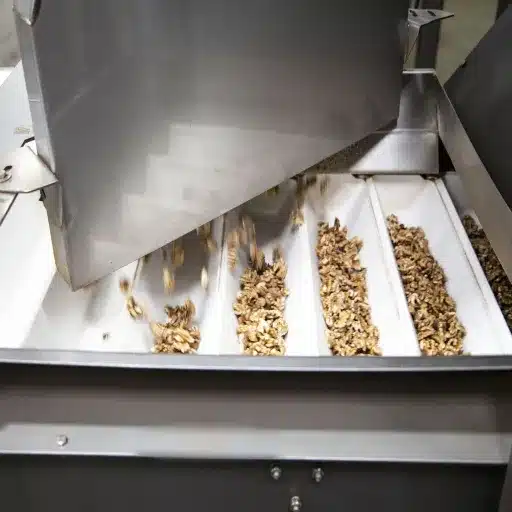
Different machines create different material stressors. A one-size-fits-all material specification wastes money on some components and creates failure points on others.
Extrusion Systems
The extrusion process produces extreme temperatures along with high pressure conditions and material erosion caused by ingredient fillers. The equipment experiences continuous friction from various materials which include cornmeal and rice flour and protein powders. For extrusion barrels we require 316L stainless steel or bimetallic materials that have hardened surfaces to protect against abrasive damage. The die plates and cutters need heat resistance together with precision tolerances which standard 304 material cannot maintain throughout its lifespan.
Snack Production Lines
Fryer and oven components experience extreme thermal cycling and direct oil exposure. Conveyor systems must balance hygiene requirements with mechanical strength for continuous operation. In our corn puff snacks production line, we use 304 for structural frames and 316L for any surface contacting oil, seasonings, or acidic flavor coatings.
For fried snack production equipment, thermal expansion coefficients matter. A material that handles 180°C frying temperatures without warping is essential for maintaining consistent product quality.
Pet Food Processing Equipment
Pet food formulations, especially high-protein, high-fat recipes, create unique corrosion challenges. Fatty residues cling to surfaces and oxidize, while mineral supplements and salt additives accelerate material degradation. Wet extrusion processes add moisture and heat to the equation. 316L is typically non-negotiable for pet food extrusion barrels and forming dies.
Pasta Production Lines
Dough is surprisingly abrasive, and moisture is constant. Contact surfaces need smooth finishes to prevent sticking, while drying racks and cutters prioritize moisture resistance. In our pasta macaroni production line, we specify electropolished 304 or 316L for dough contact zones depending on whether the facility also produces filled or flavored pasta varieties.
Galvanic Compatibility and Adjacent Metal Selection
The primary focus of inspection activities targets food-contact surfaces while investigators need to examine the metal components that secure these surfaces. When two different metals touch each other and moisture exists, the process of galvanic corrosion begins to take place. The assembly infrastructure experiences complete failure because the more active metal begins to dissolve, which creates pits and crevices.
The installation of a 316 stainless steel tank through bolting to an aluminum frame results in a galvanic couple. The aluminum begins to corrode through all the connection points as time goes by. The corrosion products migrate. Your 316 surface now suffers from contamination issues because of a completely different material that has entered the area.
Thermal stress cracking presents a related risk. Different metals exhibit distinct thermal expansion characteristics which result in different heating and cooling patterns. Equipment that undergoes constant temperature changes, which includes fryers and ovens and steam-jacketed kettles, experiences differential stresses that produce micro-cracks at joints and welds.
The project requires you to identify suitable metal materials for all components that will come into contact with each other while needing to protect dissimilar metals through insulation except for cases when direct contact must happen. The supplier needs to verify their understanding of galvanic series compatibility. If they don’t, find one who does.
How to Evaluate Your Supplier’s Material Claims
A spec sheet is only as trustworthy as the supplier behind it. Here’s how to verify that your machinery actually contains the materials you’re paying for.
Documentation to Request
The mill test certificates (MTCs) provide evidence which shows the chemical composition of raw steel materials. The third-party compliance certificates from recognized bodies confirm that finished equipment meets the applicable standards. The surface finish inspection reports which include measured Ra values present evidence that the surface meets hygienic requirements. The welding procedure specifications (WPS) together with welder qualification records prove that the fabrication process operated under established control methods.
The rules forbid you to accept either photocopies or screenshots as valid proof. The process requires you to obtain original documents which contain lot numbers that connect to your equipment’s serial number.
Red Flags to Watch For
The most frequent method which people use to cut expenses involves substituting 201 or 430 stainless steel for 304 or 316. The lower grade materials contain reduced amounts of chromium and nickel which results in lower corrosion resistance at a cheaper price. Some suppliers use thin stainless steel layers to plate non-food-grade substrates which lead to operational failure within months.
The term “food safe” lacks meaningfulness because it does not refer to any particular standard. A credible supplier can demonstrate their compliance with FDA regulations and NSF/ANSI 51 standards and EU 1935/2004 regulations. A company becomes disqualified when it cannot provide traceability documentation.
On-Site Verification Tips
Molybdenum detection kits offer a quick spot test to distinguish 304 from 316 in the field. A drop of reagent on the surface produces a color change if molybdenum is present. Visual inspection of weld quality reveals a lot, continuous, smooth welds with no pits or discoloration indicate proper technique. Check hollow components by tapping them, a sealed tube sounds different from an open one.
At Shandong Loyal Industrial, we provide full material traceability with every machine we deliver. Contact our engineering team for a customized solution with documented compliance from raw material to finished equipment.
Integrating Material Choices into Your HACCP Plan
Your Hazard Analysis and Critical Control Points (HACCP) plan should account for more than just biological, chemical, and physical hazards in the food itself. Auditors now focus their attention on two things which include equipment materials and lubricants and design features.
You need to include food-grade lubricants and hydraulic fluids in your hazard analysis along with their NSF registration numbers. Processing aids that contact equipment surfaces — cleaning agents, sanitizers, passivation chemicals — need documentation too. When you install new machinery or modify existing equipment, trigger a HACCP plan review to assess whether the change introduces new risks.
Equipment with hollow unsealed components, incompatible adjacent metals, or undocumented surface finishes creates audit vulnerabilities that have nothing to do with your food handling procedures. The process of selecting materials represents both an engineering choice and a vital decision that impacts food safety.
Frequently Asked Questions
What stainless steel is used in food processing equipment?
304 stainless steel is the most common grade for general food processing equipment. 316 or 316L stainless steel is used for aggressive environments involving acids, salts, or chlorides. The specific grade depends on the food product, cleaning chemicals, and facility location.
Is 304 or 316 stainless steel better for food machinery?
316 is better for chloride-rich, acidic, or high-humidity environments because its molybdenum content provides superior corrosion resistance. 304 is sufficient and more cost-effective for general applications with neutral pH foods in controlled indoor environments. Match the grade to the application rather than defaulting to the most expensive option.
What surface finish is required for food grade equipment?
Food contact surfaces typically require Ra ≤ 0.8 μm. High-risk applications like dairy and pharmaceutical processing may require Ra ≤ 0.4 μm. The finish must be smooth, continuous, and free from pits, cracks, or crevices that could harbor bacteria.
How do you verify food grade material compliance?
Request mill test certificates (MTCs) with chemical composition data, third-party compliance certificates, surface finish inspection reports, and welding procedure specifications. For stainless steel, spot testing with molybdenum detection kits can distinguish 304 from 316 in the field.
What is passivation in food grade equipment?
Passivation is a post-fabrication acid treatment, typically with nitric or citric acid, that removes free iron from the surface and restores the protective chromium oxide layer. It’s essential after welding, machining, or any fabrication process that disturbs the natural passive surface of stainless steel.
What is the difference between food grade and sanitary grade?
“Food grade” means the material is safe for food contact under intended use conditions. “Sanitary grade” adds design and construction requirements: smooth surfaces, crevice-free joints, complete drainability, and rounded corners. These features make the equipment cleanable to microbial standards. All sanitary equipment uses food-grade materials, but not all food-grade construction meets sanitary design standards.
Conclusion
The choice of materials for food processing equipment serves as a critical business choice that determines product safety and equipment durability and regulatory requirements and overall operational expenses.
The core principles remain simple. Your actual operational environment needs to determine which stainless steel grade to select. 304 serves general purposes while 316L remains essential for extreme environmental conditions.
You need to request surface finish documentation which includes measured Ra values instead of relying on visual proofs. You need to check that the hollow components maintain their sealed status. You need to confirm that the two metals present in the environment possess galvanic compatibility. You should obtain original mill test certificates which include lot traceability and you should include every material selection in your HACCP documentation.
After a Southeast Asian pet food manufacturer switched their extrusion barrels from 304 to 316L the company experienced an 80% reduction in corrosion-related maintenance costs over the next two years. The upfront cost increase became 18%. The change brought about an end to barrel replacements which happened every three months while all contamination-related operational interruptions stopped occurring.
The most affordable material option generally proves to be the least cost-effective solution across the entire equipment operational period of ten years. Choose the appropriate grade for your investment. Your supplier must prove their claims to you. You should integrate material quality into your food safety system starting from your initial operational day.
Ready to specify food grade machinery materials you can trust? Request a quote for food processing machinery built with certified grades, full traceability, and over 10 years of manufacturing expertise.