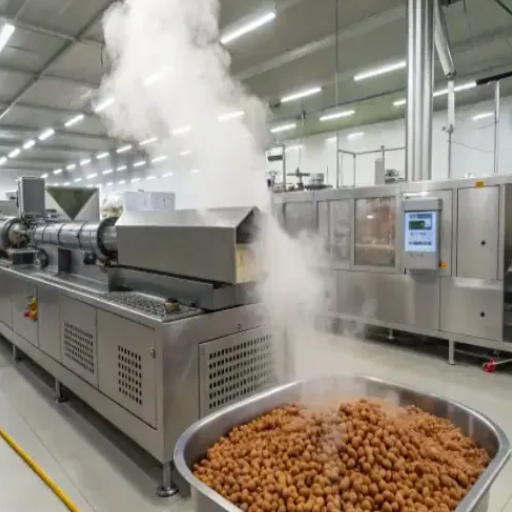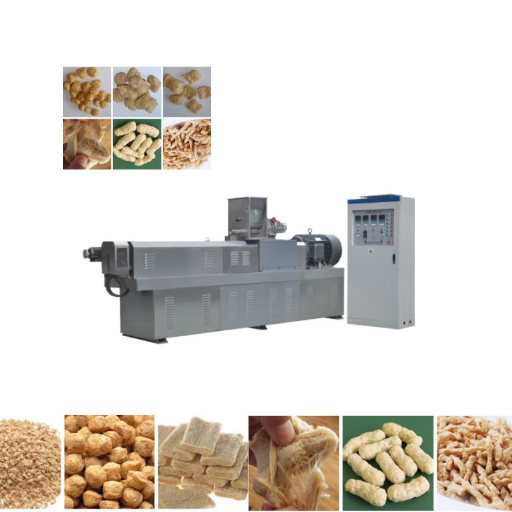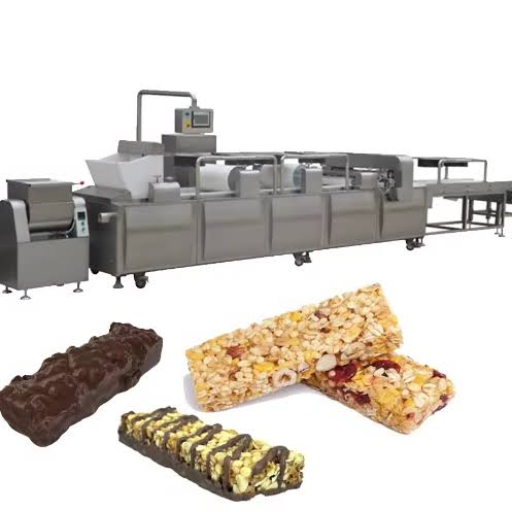
A mid-scale TVP production line costs 300,000–300,000–600,000 to install, while a comparable HMMA line can exceed $1,000,000. Beyond the sticker price, raw materials, energy, labor, and cold-chain logistics usually determine whether your plant-based meat operation turns a profit. In this guide, we break down every cost line so you can build a budget that matches your product goals.
When Raj Patel opened his first plant-based meat facility in Gujarat, he focused almost entirely on the extruder quote. Six months after startup, he discovered that soybean meal price swings and drying energy were eating 30% more cash than he had modeled. His story is common.
Buyers often compare equipment prices without seeing the full cost picture. By the end of this article, you’ll know exactly what drives soy protein meat production cost, how TVP and HMMA economics differ, and how to calculate a realistic payback period.
Key Takeaways
- A complete soy protein meat production line ranges from 150,000forentryTVPsystemsto150,000forentryTVPsystemsto1,200,000+ for large HMMA lines.
- Raw materials account for 70–85% of operating costs, with soy protein isolate prices ranging from 1,643to1,643to1,780 per metric ton in 2025.
- TVP lines require drying energy but ship ambient-stable products; HMMA lines save drying costs but need refrigeration and cooling-die technology.
- Total production costs for plant-based meat currently sit around 3.50–3.50–6.00 per pound, with industry targets near $2.92 per pound by 2030.
- Turnkey extrusion systems with CE certification and automation typically deliver faster ROI by cutting integration downtime and labor needs.
What Is Soy Protein Meat Production Cost?

Soy protein meat production cost is the total expense of converting soy-based raw materials into finished meat analog products. It includes capital expenditure, or capex, for equipment and facility setup. It also includes operating expenditure, or opex, for raw materials, energy, labor, maintenance, packaging, and distribution.
Many buyers fixate on the extruder price tag. That’s only one line item. The real question is cost per kilogram of finished product. Two identical extruders can produce very different economics depending on the recipe, moisture target, and local utility rates.
A TVP line making dry chunks for rehydration will have a different cost structure than an HMMA line making ready-to-cook patties.
Understanding the split between capex and opex matters for financing. Capex is paid upfront or financed over years. Opex repeats every production run. If your raw material and energy assumptions are wrong, even a low equipment price can’t save the project.
Key Factors That Affect Soy Protein Meat Production Costs
Equipment Technology: TVP vs. HMMA
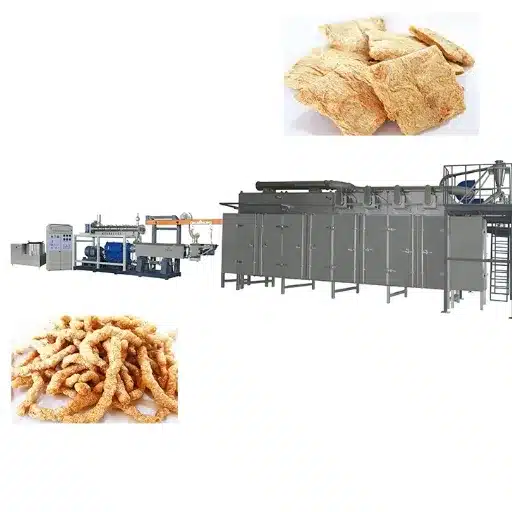
Textured vegetable protein, or TVP, uses low-moisture extrusion. The final product is dry, porous, and shelf stable. High-moisture meat analogues, or HMMA, use high-moisture extrusion with cooling dies to create fibrous whole cuts.
HMMA equipment costs more because of the cooling die, refrigeration, and tighter process control. TVP lines are generally cheaper to buy, which keeps textured vegetable protein production cost lower at smaller scales. HMMA lines require more capital but can deliver higher-margin retail products. The choice should be driven by your target product, not just your budget.
Production Scale and Automation
Small pilot lines running 10–30 kg/h cost 30,000–30,000–80,000. Entry industrial lines at 100–200 kg/h start around 150,000.Mid−scalelinesat200–500kg/hrangefrom150,000.Mid−scalelinesat200–500kg/hrangefrom300,000 to 600,000.LargeindustrialHMMAlinesabove500kg/hcanexceed600,000.LargeindustrialHMMAlinesabove500kg/hcanexceed1,200,000.
Automation reduces labor but adds upfront cost. A fully automated line with PLC controls and Siemens components may cost 20–40% more than a semi-automatic system. Over a five-year period, the savings in labor and consistency often justify the premium.
Raw Material Selection
Soy protein isolate, or SPI, delivers the best texture but costs the most. Soy protein concentrate, or SPC, offers a middle ground. Defatted soy flour is the cheapest input but produces a less meat-like texture. The protein content of your input directly affects yield and finished-product quality.
SPI prices traded between 1,643and1,643and1,780 per metric ton FOB China in 2025. Some forecasts for 2026 suggest a range of 2,800–2,800–4,200 per metric ton. Supply-chain volatility and biodiesel demand are the main drivers.
Your raw material contract terms can swing annual costs more than any equipment decision.
Energy and Utility Prices
Extrusion, drying, and cooling are energy intensive. Electricity, steam, and water together make up 10–15% of operating costs for a typical soy protein plant. Drying TVP is especially energy hungry because moisture must drop from roughly 25% to below 10%.
Regions with cheap electricity and natural gas have a clear advantage. Plants in areas with high utility rates should prioritize energy-efficient extruders and heat-recovery systems. Even a 10% reduction in energy use per kilogram can materially improve margins at scale.
Labor and Local Regulations
Labor accounts for roughly 5–10% of operating costs in automated facilities. In regions with high wages, automation pays back faster. In lower-wage markets, semi-automatic lines may be more cost effective.
Local food-safety regulations also add cost. Certifications such as CE, FDA registration, FSSC 22000, and HACCP require documentation and audits. Sometimes equipment upgrades are also needed. These costs are real but necessary for accessing retail and export markets.
Equipment Costs: TVP vs. HMMA Production Lines
Choosing the right line starts with honest capacity planning. Overbuying capacity ties up capital. Underbuying creates bottlenecks when demand grows. The following ranges reflect turnkey Chinese manufacturer pricing as of 2026.
| Production Scale | Capacity | TVP Line Cost | HMMA Line Cost |
|---|---|---|---|
| Pilot / R&D | 10–30 kg/h | 30,000–30,000–80,000 | 50,000–50,000–120,000 |
| Entry industrial | 100–200 kg/h | 150,000–150,000–300,000 | 250,000–250,000–450,000 |
| Mid-scale industrial | 200–500 kg/h | 300,000–300,000–600,000 | 450,000–450,000–900,000 |
| Large industrial | 500–1,000+ kg/h | 600,000–600,000–1,000,000 | 1,000,000–1,000,000–1,800,000+ |
Shandong Loyal Model Reference
Our LY-65 line handles 100–150 kg/h with 90 kW installed power, making it a practical entry point for regional TVP producers. The LY-70 scales to 150–200 kg/h at 110 kW, while the LY-80 reaches 300–350 kg/h with 150 kW. Each system can be configured for TVP or HMMA output depending on the cooling die and downstream equipment selected.
All lines include mixing, extrusion, forming, drying or cooling, and packaging integration. CE certification is available for European markets, and FDA-compliant food-contact materials can be specified for North American projects.
Want to see which capacity fits your forecast? Explore our complete soy protein meat production guide for equipment specs and process fundamentals.
Raw Material Costs: SPI, SPC, Defatted Flour, and TVP
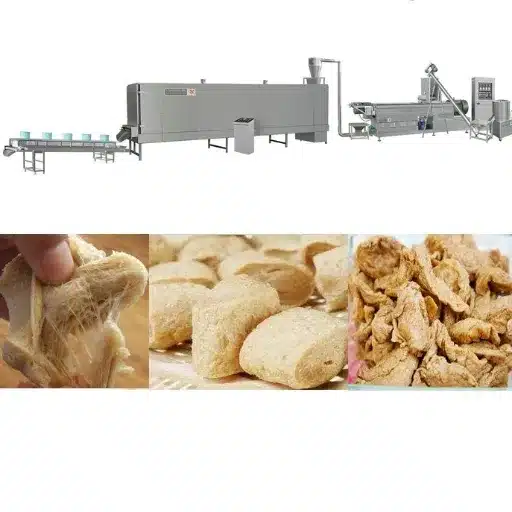
Raw materials dominate the cost sheet. According to Green Circle Capital’s protein pricing review, commodity soybeans traded near 0.46perkilograminearly2024.Soyproteinisolatesatatapproximately0.46perkilograminearly2024.Soyproteinisolatesatatapproximately2.52 per kilogram on a product basis.
On a 100% protein equivalent basis, SPI was about 2.68perkilogram.Inaddition,thatisstillwellbelowpeaproteinisolateatroughly2.68perkilogram.Inaddition,thatisstillwellbelowpeaproteinisolateatroughly7.02 per kilogram.
| Input | Protein Content | Typical Price Range | Best For |
|---|---|---|---|
| Commodity soybeans | ~36% | 0.40–0.40–0.50/kg | Crushing and upstream processing |
| Defatted soy flour | ~50% | 0.80–0.80–1.20/kg | Low-cost TVP and extenders |
| Soy protein concentrate | ~70% | 1.50–1.50–2.20/kg | Mid-tier chunks and patties |
| Soy protein isolate | ~90% | 2.50–2.50–4.20/kg | Premium whole cuts and clean labels |
2025–2026 Price Volatility
Soy protein isolate prices softened in mid-2025 to roughly 1,643permetricton.Theyreboundedtoward1,643permetricton.Theyreboundedtoward1,780 by year end. Forecasts for 2026 vary widely, from 2,800to2,800to4,200 per metric ton. Biodiesel demand, Brazilian harvest size, and U.S.-China trade flows are the main drivers.
For budget planning, model at least two scenarios. A stable-price case around 2,000pertonandahigh−pricecaseabove2,000pertonandahigh−pricecaseabove3,500 per ton will show how sensitive your margins are. If possible, negotiate annual contracts with flexible volume clauses rather than buying entirely on spot markets.
Operating Costs: Energy, Labor, Maintenance, and More
Once equipment is installed, operating costs determine profitability. A typical soy protein plant spends 70–85% of opex on raw materials, 10–15% on utilities, and the remainder on labor, maintenance, packaging, and quality control.
Energy and Utilities
Drying is usually the largest energy consumer in a TVP line. Flash dryers and belt dryers run at high temperature for long periods. HMMA lines avoid drying but use cooling water and refrigeration. Either way, energy efficiency should be a buying criterion, not an afterthought.
For example, electricity rates vary from 0.05perkWhinsomeindustrialzonesto0.05perkWhinsomeindustrialzonesto0.20 per kWh in others. A 300 kg/h line drawing 150 kW will consume roughly 1,200 kWh in a 16-hour shift. At 0.10perkWh,that′s0.10perkWh,that′s120 per day, or about $30,000 per year on a 250-day schedule.
Labor
A semi-automatic TVP line may need 8–10 operators per shift. A fully automated line can run with 3–4 operators. At 15perhour,thedifferenceisroughly15perhour,thedifferenceisroughly120,000–$200,000 per year per shift. Over five years, automation often pays for itself in labor savings alone.
Maintenance and Spare Parts
Plan for annual maintenance equal to 5–10% of equipment cost. Screws, barrels, and dies wear under heat and shear. Cooling dies for HMMA are precision parts and can be expensive to replace.
A spare parts inventory and a service contract reduce unplanned downtime.
Packaging, Cold Chain, and Logistics
TVP ships ambient and stores for 12 months or more. HMMA products require refrigerated or frozen distribution, which adds 0.20–0.20–0.50 per kilogram in logistics costs. Packaging with nitrogen flushing extends shelf life but adds film and gas costs.
TVP vs. HMMA: Total Cost of Ownership Comparison
Maria Chen, a product developer in Shanghai, tested both paths before choosing HMMA for her company’s retail burger line. TVP gave her a lower equipment cost and longer shelf life. However, her target retailers wanted a ready-to-cook patty with visible fibers. HMMA’s higher capex was justified by the premium price her customers would pay.
| Cost Factor | TVP | HMMA |
|---|---|---|
| Equipment capex | Lower | Higher |
| Raw material quality | SPC or defatted flour common | SPI or high-PDC concentrate preferred |
| Energy use | High for drying | Lower, but cooling/refrigeration added |
| Labor | Moderate | Moderate to high depending on automation |
| Distribution | Ambient, cheaper | Cold chain, more expensive |
| Shelf life | 12+ months | Days to weeks refrigerated; months frozen |
| End-product margin | Lower per kg | Higher per kg for premium products |
TVP wins when the goal is low-cost ingredient supply, long shelf life, or export to markets with weak cold chains. HMMA wins when the goal is a finished consumer product with meat-like texture and higher retail pricing.
Sample ROI Framework for Soy Protein Meat Production Cost
Real ROI depends on selling price, capacity utilization, and local costs. The following scenarios use realistic assumptions for Chinese-manufactured turnkey lines operating 250 days per year.
Scenario 1: Entry TVP Line
- Capex: $200,000
- Capacity: 150 kg/h
- Selling price: $3.00/kg
- Gross margin: 25%
- Margin per hour: $112.50
- Annual gross margin at 16 h/day: $450,000
- Estimated payback: 12–18 months
Scenario 2: Mid-Scale Industrial TVP Line
- Capex: $450,000
- Capacity: 300 kg/h
- Selling price: $3.00/kg
- Gross margin: 25%
- Margin per hour: $225
- Annual gross margin at 16 h/day: $900,000
- Estimated payback: 10–14 months
Scenario 3: HMMA Whole-Cut Line
- Capex: $900,000
- Capacity: 400 kg/h
- Selling price: $6.00/kg
- Gross margin: 35%
- Margin per hour: $840
- Annual gross margin at 16 h/day: $3,360,000
- Estimated payback: 8–12 months
These figures exclude financing costs, taxes, and SG&A. They also assume 80% uptime and stable raw material prices. Use them as starting points, not guarantees.
How to Reduce Soy Protein Meat Production Costs
Optimize Extrusion Parameters
Small changes in moisture, temperature, and screw speed affect yield and energy use. Run design-of-experiments trials to find the window that maximizes texture while minimizing energy and waste. A 2% improvement in yield can save tens of thousands of dollars annually at industrial scale.
Match Raw Material to Application
Don’t use SPI where SPC or defatted flour will suffice. If you’re making ground-meat extenders or dry chunks, lower-cost inputs may be acceptable. Reserve SPI for whole-cut products where texture justifies the premium.
Automate Where It Pays Back
Automation isn’t always the right call for small pilots. For lines above 200 kg/h, automated feeding, cutting, and packaging usually pay back within two years. Focus first on the steps that repeat most often and are most prone to human error.
Negotiate Maintenance Contracts
A fixed annual service contract helps you budget and prevents catastrophic failures. Ask suppliers for spare parts kits bundled with the initial purchase. Local service availability matters as much as equipment quality when downtime costs thousands per hour.
Choose Turnkey Lines
Buying components from multiple vendors often looks cheaper on paper. In practice, integration delays, incompatible controls, and blame-shifting during commissioning can add 20–30% to total project cost.
A turnkey line from one manufacturer includes factory layout, installation, training, and warranty support.
Ready to compare turnkey options for your facility? Contact our team for a customized layout and quote based on your target capacity and product.
Frequently Asked Questions
How much does a soy protein meat production line cost?
A complete line ranges from 150,000forentryTVPsystemsto150,000forentryTVPsystemsto1,200,000 or more for large HMMA lines. Pilot-scale R&D systems can start below $80,000.
What is the biggest cost in soy protein meat production?
Raw materials, especially soy protein isolate or concentrate, typically account for 70–85% of operating costs. Energy and labor are the next largest items.
Is TVP or HMMA cheaper to produce?
TVP has lower equipment and distribution costs but higher drying energy. HMMA has higher equipment and cold-chain costs but can command premium retail prices. The cheaper option depends on your product strategy.
What affects soy protein meat production cost the most?
Raw materials are the biggest driver, accounting for 70–85% of operating costs. Energy, labor, and distribution make up most of the remainder.
What is the payback period for a soy protein production line?
Payback periods commonly fall between 8 and 24 months, assuming good capacity utilization and stable raw material prices. Financing, taxes, and local costs will extend or shorten this range.
Conclusion
Soy protein meat production cost isn’t a single number. It’s the sum of equipment choices, raw material contracts, energy rates, labor models, and distribution requirements. Buyers who focus only on the extruder price often miss the factors that determine real profitability.
Start by defining your end product. Then work backward through raw material selection, extrusion technology, and capacity.
Compare TVP and HMMA on total cost of ownership, not just sticker price. Build scenarios for raw material volatility and utility costs. And consider turnkey equipment to reduce integration risk and speed up time to market.
The plant-based meat market is approaching price parity with conventional meat in several regions. Therefore, producers who control their soy protein meat production cost now will be best positioned when that tipping point arrives.
Want a detailed budget for your soy protein meat project? Request a quote and our engineers will prepare a capacity-matched proposal with equipment, layout, and ROI estimates.