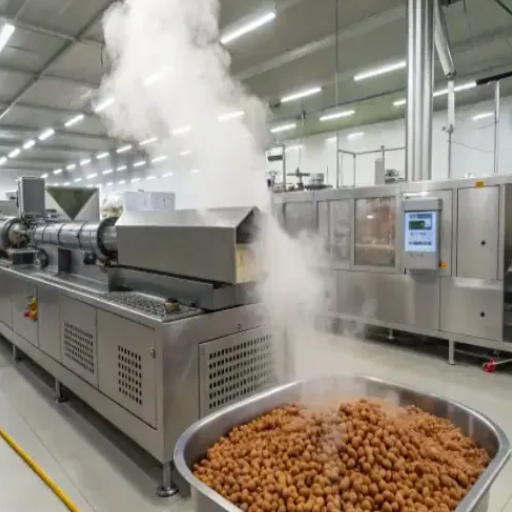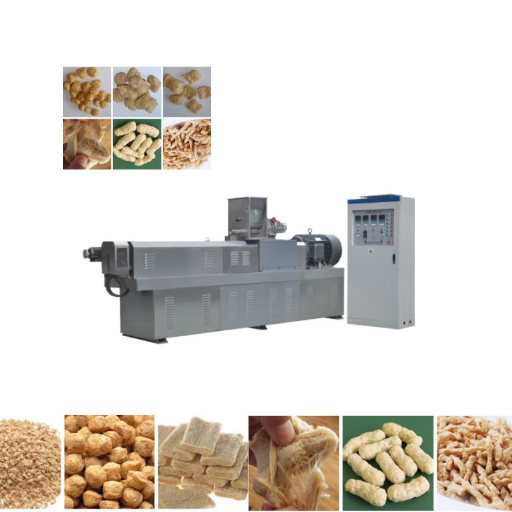
Soy protein meat production turns soy proteins into fibrous, meat-like products through thermo-mechanical extrusion. The two main technologies are low-moisture extrusion, which makes dry textured vegetable protein (TVP), and high-moisture extrusion, which creates ready-to-cook whole cuts known as high-moisture meat analogues (HMMA). If you’re planning a commercial line, choosing between TVP and HMMA will shape almost every equipment, raw-material, and costing decision that follows.
The global plant-based meat market is projected at roughly $8.11 billion in 2025, and soy remains the leading protein source behind most meat alternatives. That demand is pushing food manufacturers to move beyond small pilot batches and into industrial-scale production. However, scaling soy protein meat production isn’t just about buying a bigger extruder. It’s about matching the right raw material, moisture level, screw configuration, and cooling die to the product you want to sell.
In this guide, you’ll learn how the extrusion process works, what equipment a full production line needs, how to choose between TVP and HMMA, and what costs and certifications to expect. Whether you’re launching a new plant-based brand or adding soy meat to an existing portfolio, this article gives you a practical roadmap.
Want to see the equipment first? Explore our complete soy protein meat production line to view specifications, capacities, and layout options.
Key Takeaways
- Soy protein meat production relies on extrusion: low-moisture extrusion for dry TVP, high-moisture extrusion for juicy HMMA whole cuts.
- A complete line includes mixing, extrusion, cooling or drying, cutting, seasoning, and packaging.
- Raw material choice (SPI, SPC, or defatted flour) determines texture, protein content, and cost per kilogram.
- Production-scale twin-screw extrusion lines can range from roughly 150,000toover150,000toover1 million depending on capacity and configuration.
- CE marking, HACCP, and allergen control are non-negotiable for selling into most global markets.
What Is Soy Protein Meat Production?
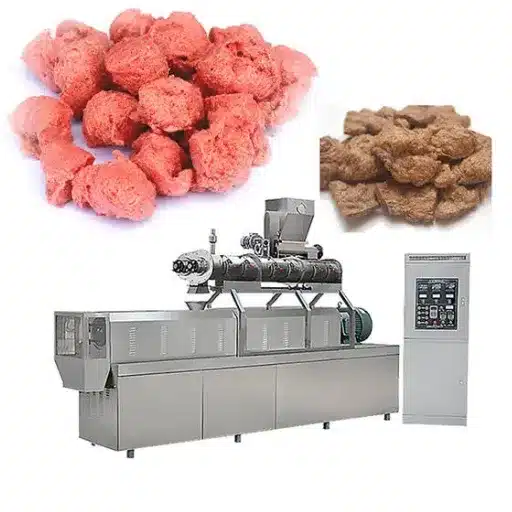
Soy protein meat production is the industrial process of converting soy protein into products that look, chew, and cook like animal meat. Manufacturers use thermo-mechanical extrusion to align protein molecules into long, fiber-like structures. The result can be a dry, shelf-stable crumb that rehydrates during cooking, or a moist whole-cut analog that goes straight into a pan. The full textured vegetable protein manufacturing process is explained in detail by Coperion, one of the leading extrusion engineering firms.
The two product families dominate the market:
- Textured vegetable protein (TVP), also called textured soy protein (TSP), is produced at low moisture. It is dry, porous, and rehydrates at a ratio of roughly 1:2 to 1:3 with water or broth before use.
- High-moisture meat analogues (HMMA) are produced at 50–80% moisture. They have a dense, fibrous structure and are sold refrigerated or frozen as burger patties, nuggets, chunks, or whole cuts.
The textured vegetable protein market alone is projected to reach $2.65 billion by 2030, according to MarketsandMarkets.
Li Wei, a product developer at a startup in Shenzhen, learned this distinction the hard way. In early 2025, his team ordered a TVP line hoping to make burger patties. The extruder worked perfectly, but the output was dry crumbs. They had to add a separate rehydration and forming step, which delayed their launch by four months. Once they switched to a high-moisture extrusion line with a cooling die, they produced ready-to-form patties in one continuous step.
The moral: the product you want to sell dictates the technology you need to buy.
The Science of Soy Protein Meat Production: How Extrusion Works
Extrusion cooking applies heat, pressure, and mechanical shear to a protein mixture inside a barrel. As the mixture moves along a rotating screw, the proteins unfold, align, and cross-link. When the melt exits through a die, the structure sets into a fibrous or spongy matrix depending on moisture content and cooling speed.
Low-Moisture vs. High-Moisture Extrusion
| Factor | Low-Moisture Extrusion (TVP) | High-Moisture Extrusion (HMMA) |
|---|---|---|
| Moisture content | 20–35% | 50–80% |
| Final product | Dry, porous, shelf-stable | Moist, dense, refrigerated/frozen |
| Texture | Spongy, rehydrates quickly | Fibrous, meat-like bite |
| Die type | Simple die with flash expansion | Long cooling die |
| Common uses | Ground meat extenders, nuggets, chunks | Patties, whole cuts, fillets |
In low-moisture extrusion, water flashes into steam as the product exits the die. The rapid expansion creates a porous structure that soaks up liquid later. In high-moisture extrusion, a long cooling die prevents expansion. The protein melt cools slowly under pressure, allowing fibers to align into layers that mimic muscle tissue.
Why Twin-Screw Extruders Dominate
Twin-screw extruders hold roughly 58% of the high-moisture extrusion equipment market. Their intermeshing screws provide better mixing, tighter temperature control, and more consistent shear than single-screw machines. That matters because soy protein is sensitive to heat history. A few degrees too hot can darken the product or damage its amino acid profile. A few degrees too cool can leave the texture rubbery.
For a visual walkthrough of cooling-die technology, watch how Bühler’s PolyCool system forms fibrous plant-based meat:
Raw Materials: SPI, SPC, Defatted Flour, and Blends
The raw material you feed into the extruder is the single biggest factor in product quality and cost. The question of soy protein isolate vs concentrate vs defatted flour shapes both texture and unit cost. Soy protein ingredients fall into three main categories.
Soy Protein Isolate (SPI)
SPI contains about 90% protein on a dry basis. It produces the firmest, most elastic texture and is the standard for HMMA whole cuts. The downside is price: SPI costs more per kilogram than concentrates or flours.
Soy Protein Concentrate (SPC)
SPC contains about 70% protein. It still gives a good fibrous texture and is a common choice for TVP chunks, nuggets, and budget-friendly patties. SPC contains more insoluble carbohydrates than SPI, which can affect color and water binding.
Defatted Soy Flour
Defatted flour contains roughly 50% protein. It is the cheapest option and works well as a filler or extender in blended products. On its own, it tends to produce softer textures with less bite.
Blends with Wheat Gluten, Pea, or Other Proteins
Many manufacturers blend soy with wheat gluten to boost elasticity, or with pea protein to create allergen-friendly or clean-label products. Each blend changes the screw configuration and moisture target, so recipe development should happen on the actual production extruder, not just in a lab.
Maria, a production manager at a co-manufacturer in São Paulo, ran trials with three SPI/SPC ratios before settling on a 70/30 blend. The pure SPI batch was too chewy. The pure SPC batch fell apart during slicing. The 70/30 blend held its shape, gave a clean bite, and cut her raw-material cost by 18%.
Need help matching a raw material to your product? Our engineers can test your recipe on a food extruder machine before you commit to a full line.
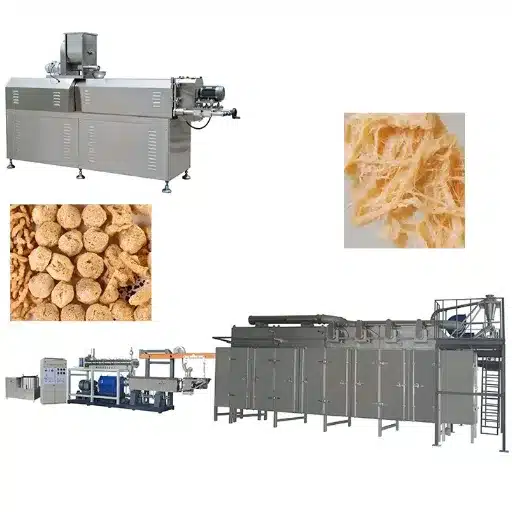
Key Equipment in a Soy Protein Production Line
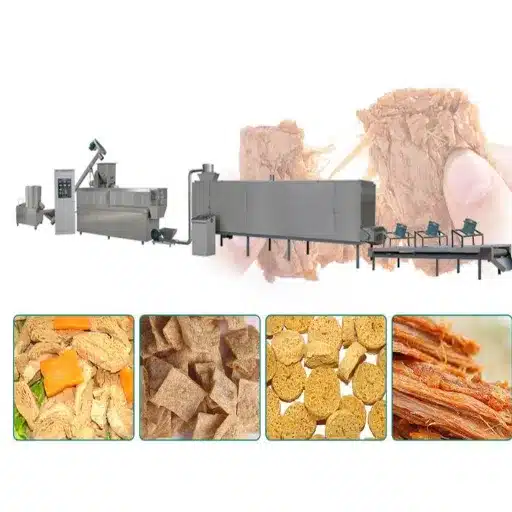
A complete TVP production line is more than a soy protein extruder machine. Each stage must handle heat, moisture, and protein sensitivity without introducing contamination.
1. Raw Material Handling and Mixing
Soy protein powders are hygroscopic and can cake if humidity isn’t controlled. A batching system with load cells feeds precise ratios of protein, water, oil, and additives into a preconditioner or mixer. Uniform hydration at this stage prevents lumps and uneven texture later.
2. Twin-Screw Extruder
The extruder is the heart of the line. Co-rotating twin-screw extruders are preferred for soy protein because they allow:
- Independent temperature zones along the barrel
- Adjustable screw elements for shear and mixing
- Vacuum venting to remove off-flavors
- High torque for dense HMMA formulations
3. Cooling Die (HMMA) or Cutter (TVP)
For HMMA, a long cooling die solidifies the fibrous structure before cutting. For TVP, a simple die plate with rotating knives cuts the expanded product into granules, chunks, or flakes.
4. Dryer and Cooler
TVP must be dried to below 10% moisture for shelf stability. A multi-pass belt dryer followed by a fluidized-bed cooler brings the product to ambient temperature without reabsorbing moisture.
5. Seasoning or Coating Line (Optional)
Some producers add color, flavor, or oil coatings after drying. This step requires gentle handling to avoid breaking delicate TVP granules.
6. Packaging
Nitrogen flushing extends shelf life by reducing oxidation. Package sizes range from retail pouches to 25 kg bulk bags for food-service customers.
Shandong Loyal Equipment Specifications
| Model | Capacity | Installed Power | Dimensions (L×W×H) |
|---|---|---|---|
| LY-65 | 100–150 kg/h | 90 kW | 19×2×3.5 m |
| LY-70 | 150–200 kg/h | 110 kW | 32×2.5×3.5 m |
| LY-80 | 300–350 kg/h | 150 kW | 38×4.5×6.5 m |
All contact parts use food-grade 304 stainless steel, and the control system runs on a Siemens PLC with a touch-screen interface.
TVP vs. HMMA: Which High Moisture Meat Analog Production Path Fits Your Business?
Choosing between TVP and HMMA comes down to product goals, distribution, and budget.
| Question | TVP Route | HMMA Route |
|---|---|---|
| What do you want to sell? | Crumbles, chunks, nuggets, mince | Patties, whole cuts, fillets, sausages |
| Shelf life | 12–24 months ambient | 30–180 days chilled/frozen |
| Customer rehydration? | Yes | No, ready to cook |
| Capital cost | Lower | Higher (cooling die adds cost) |
| Energy use per kg | Lower drying load | Higher cooling and refrigeration load |
| Best markets | Food service, ingredient supply, emerging markets | Retail branded products, QSR, premium channels |
If your customers are schools, hospitals, or food-service distributors that value long shelf life and low logistics cost, TVP is hard to beat. If you’re targeting supermarkets with branded burger patties or whole cuts, HMMA delivers the eating experience consumers expect.
How to Choose the Right Production Line for Your Factory
Buying a soy protein production line is a capital decision that should match your forecast, not just your ambition. Here’s a practical framework.
Match Capacity to Real Demand
A 100 kg/h line running two shifts produces about 1,600 kg per day. A 350 kg/h line produces about 5,600 kg per day. Over-sizing leads to idle depreciation. Under-sizing leads to overtime and missed orders.
Match Raw Material to Product
Don’t select an extruder based on capacity alone. Confirm it can process your chosen protein, whether that’s SPI, SPC, defatted flour, or a blend. Some machines handle high-protein isolates better than fibrous concentrates.
Plan for Automation
Manual feeding and packaging work at small scale. At 300 kg/h and above, you need automated batching, continuous extrusion, and robotic packaging to keep labor cost per kilogram low.
Evaluate the Supplier, Not Just the Machine
Ask potential suppliers:
- Can you run a trial with my recipe?
- Do you offer factory layout design and installation?
- What spare parts do you stock locally?
- Can you train my operators on-site?
- What certifications come with the line?
Ravi, a project engineer in Mumbai, shortlisted three suppliers in 2024. The lowest quote was 30% cheaper, but the vendor had no local service team and a six-week lead time for screws. He chose a mid-priced supplier with a regional engineer and a two-year warranty. Downtime in his first year was under 4%.
Not sure which line size fits your forecast? Contact Shandong Loyal for a free line configuration review and turnkey food production line proposal.
Soy Protein Meat Production Cost: Equipment, Raw Materials, and ROI
Cost transparency is one of the biggest gaps in competitor content. Below is a realistic breakdown for a mid-scale TVP or HMMA project.
Capital Expenditure
| Line Size | Estimated Equipment Cost | Typical Output |
|---|---|---|
| Small pilot/R&D | 30,000–30,000–80,000 | 10–30 kg/h |
| Entry production | 150,000–150,000–300,000 | 100–200 kg/h |
| Mid-scale industrial | 300,000–300,000–600,000 | 200–500 kg/h |
| Large industrial | 600,000–600,000–1,200,000+ | 500–1,000 kg/h |
HMMA lines sit at the upper end of each bracket because of the cooling die, refrigeration, and higher sanitary requirements. High-moisture extrusion equipment from major European suppliers can reach €1.2 million to €4.5 million per line.
Operating Costs
- Raw materials: SPI is the largest variable cost, often 40–60% of finished product cost.
- Energy: Extrusion, drying, and refrigeration are the main loads. Efficient lines recover heat from dryers to pre-heat incoming air.
- Labor: Automation can reduce headcount from 8–10 operators per shift to 3–4.
- Water and waste: HMMA uses more water. Okara and wastewater can be valorized as animal feed or biogas inputs.
Simple ROI Framework
If a 400,000lineproduces300kg/hoffinishedTVPandtheproductsellsfor400,000lineproduces300kg/hoffinishedTVPandtheproductsellsfor3 per kilogram with a 25% gross margin, the line generates roughly 1,800perhourofmargin.At16operatinghoursperdayand250daysperyear,that′s1,800perhourofmargin.At16operatinghoursperdayand250daysperyear,that′s7.2 million in gross margin. Even after subtracting labor, energy, and raw materials, most mid-scale lines pay back in 18–36 months.
Quality, Certification, and Operational Best Practices
Food safety and compliance are not afterthoughts. They should be designed into the line from the first layout drawing.
HACCP and Food-Safety Controls
A soy protein line needs critical control points for:
- Extrusion temperature and residence time
- Moisture content before and after drying
- Metal detection after cutting
- Foreign-body control in packaging
Certifications by Market
- CE marking: Required for sale in the European Economic Area.
- FDA registration: Needed for U. S. food-contact equipment.
- FSSC 22000 / ISO 22000: Food-safety management systems expected by most retailers.
- Kosher and halal: Important for Middle Eastern and Jewish markets.
Allergen Management
Soy is a major allergen. Lines that switch between soy and non-soy recipes need validated cleaning protocols. Dedicated screws, dies, and product-contact parts reduce cross-contact risk.
Maintenance Best Practices
- Inspect screws and barrel for wear every 2,000 operating hours.
- Check die plate alignment weekly to avoid uneven expansion.
- Calibrate temperature sensors and load cells quarterly.
- Keep a spare set of screw elements and die inserts on-site.
Common Production Challenges and Troubleshooting
Even experienced operators hit issues. Here are the most common problems and their usual causes.
Spongy or Rubbery Texture
This often means moisture is too high or shear is too low. Increase barrel temperature slightly or reduce water feed. For HMMA, check cooling die temperature and throughput.
Uneven Moisture Distribution
Lumpy pre-mix or inconsistent feeding causes wet and dry zones. Sieve powders before batching and verify feeder calibration.
Low Yield or Die Blockage
Protein buildup at the die restricts flow. Clean the die regularly and consider a different die-plate geometry. Low yield can also come from over-drying TVP.
Dark Color or Beany Flavor
Excessive heat creates Maillard browning and off-notes. Lower the final barrel temperature or add vacuum venting to remove volatile compounds.
Soy Protein Meat Production Applications: From TVP Crumbles to Whole-Cut Analogs
Soy protein meat production serves a wide range of end products.
Burgers and Patties
HMMA extrudate is often formed into patties immediately after the cooling die. The fibrous texture holds together on the grill and delivers a juicy bite.
Nuggets and Chunks
TVP is rehydrated, mixed with binders, coated, and formed into nuggets. It is also sold as dry chunks for food-service customers to rehydrate on site.
Sausages
Both TVP and HMMA can be ground and stuffed into casings. HMMA gives a firmer bite, while TVP creates a softer, more economical filling.
Whole Cuts
Steaks, fillets, and chicken-style breasts require high-moisture extrusion with precise cooling die design. This is the fastest-growing segment as brands move beyond ground-meat formats.
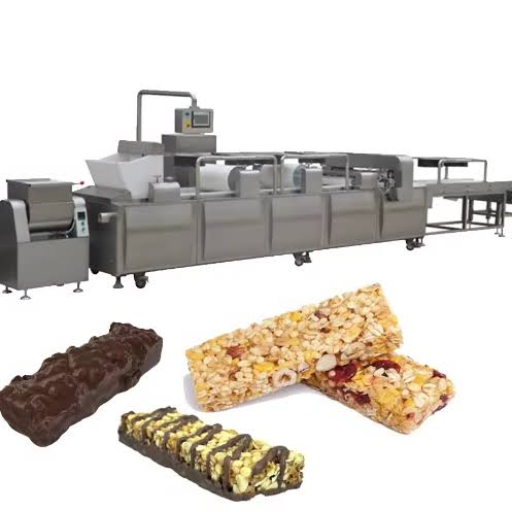
If you already produce protein bars or snacks, adding a soy protein line can open new revenue streams. Our protein bar production line and soy extrusion systems share common mixing and packaging skills, making diversification easier.
Sustainability and Future Trends
Soy protein meat production is often marketed as more sustainable than animal agriculture. The reality depends on energy use, water management, and byproduct handling.
Energy and Water Efficiency
Modern twin-screw extruders recover heat from the barrel and dryer exhaust. Closed-loop water systems reduce freshwater use. At scale, these efficiencies can cut operating cost by 10–15%.
Waste Recovery
Okara, the insoluble fiber left after protein extraction, can be sold as animal feed or processed into dietary fiber. Wastewater with high biological oxygen demand can feed anaerobic digesters.
Emerging Technologies
- 3D printing is being explored for structured whole cuts with fat and muscle layers.
- Fermentation can improve soy protein functionality before extrusion.
- Shear-cell technology promises lower-energy texturization but is not yet commercial at large scale.
Frequently Asked Questions
What’s the difference between TVP and HMMA?
TVP is a dry, shelf-stable product made with low-moisture extrusion. HMMA is a moist, ready-to-cook product made with high-moisture extrusion and a cooling die.
How much does a soy protein production line cost?
Entry production lines start around 150,000.Mid−scaleindustriallinesrangefrom150,000.Mid−scaleindustriallinesrangefrom300,000 to 600,000.LargeHMMAlinesfrompremiumsupplierscanexceed600,000.LargeHMMAlinesfrompremiumsupplierscanexceed1 million.
What raw material should I use?
Use SPI for firm whole cuts, SPC for budget-friendly chunks and patties, and defatted flour as a filler or extender. Blends are common for balancing cost and texture.
How long does TVP last?
When dried below 10% moisture and packed with nitrogen, TVP is stable for 12–24 months at ambient temperature.
Is soy protein production sustainable?
Compared with animal meat, soy protein uses less land and water and emits fewer greenhouse gases. The biggest sustainability levers inside the factory are energy efficiency, water recycling, and okara recovery.
Conclusion
Soy protein meat production sits at the intersection of food science, mechanical engineering, and changing consumer diets. The right line starts with a clear product decision: dry TVP for long shelf life and broad distribution, or moist HMMA for premium whole cuts and branded retail.
From there, success depends on matching raw materials, extrusion technology, and downstream equipment to your capacity and market. It also depends on working with a supplier who understands the process, not just the machine.
At Shandong Loyal Industrial, we design turnkey food production lines for manufacturers in more than 50 countries. Our soy protein extrusion systems are built with food-grade 304 stainless steel, Siemens PLC controls, and CE-certified components. We provide recipe testing, factory layout design, installation, training, and spare parts support.
Ready to move from recipe to full production? Contact our team for a customized soy protein meat production line quote and a free trial run with your raw materials.