NSF H1 food grade lubricants are lubricants formulated with FDA-approved ingredients that are safe for incidental, technically unavoidable contact with food up to 10 parts per million. If you manage a food processing plant, choosing the right classification for each gearbox, chain, and bearing is not a small maintenance detail. It is a direct line to food safety, audit success, and production uptime.
Last year, a snack producer in Southeast Asia discovered during a pre-shipment audit that a contractor had used a standard industrial grease on an extruder bearing directly above the product line. The finding was a critical non-conformance. One container of product was held, the line was stopped for deep cleaning, and the plant missed its delivery window. The wrong lubricant choice cost more than the entire annual lubricant budget.
You already know that food safety standards are getting stricter. What is less obvious is how much of that risk hides inside ordinary maintenance routines. This guide will show you what food grade lubricants NSF H1 actually mean, how they compare to H2 and H3 classifications, where to use them on your production line, and how to build a lubrication program that keeps auditors, customers, and your equipment happy.
Key Takeaways
- NSF H1 lubricants are the only safe choice for machinery points where incidental food contact could occur, with a legal limit of 10 ppm contamination.
- H2 lubricants are for non-food-contact zones only; using H2 where H1 belongs is a common cause of audit failures.
- A documented lubrication survey, color-coded tools, and live NSF registry verification are the foundation of a compliant program.
- Modern synthetic H1 lubricants (PAO and ester-based) can match or exceed industrial lubricant performance while meeting food safety requirements.
- ISO 21469 certification adds manufacturing facility audits and product testing on top of NSF H1 formulation review.
What Is an NSF H1 Food Grade Lubricant?
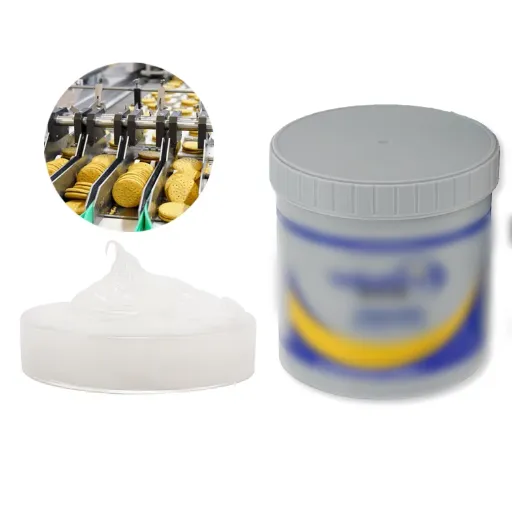
An NSF H1 food grade lubricant is a lubricant registered with NSF International for use in food processing environments where incidental contact with food may occur. The “incidental” part matters. H1 does not mean you can pour it into the product. It means that if a tiny amount migrates through a seal leak, spray drift, or human error, it is formulated to be safe at trace levels.
NSF International is an independent organization that reviews lubricant formulations against the ingredients listed in FDA 21 CFR 178.3570. That regulation specifies which base oils, additives, and thickeners are permitted for incidental food contact. H1 products must also be tasteless, odorless, and physiologically inert. You can verify any product’s registration in the live NSF White Book.
The legal contamination limit is 10 parts per million, or 10 mg of lubricant per kg of food. Good manufacturing practices still require you to minimize migration, but the H1 classification gives you a controlled safety margin. This is why H1 is the default standard for bearings, chains, gearboxes, and hydraulics located above or near open food.
A common misunderstanding is that “food grade” means edible. It does not. H1 lubricants are safe at incidental trace levels, not safe to consume directly. That distinction separates H1 from H3, which covers edible oils used for rust prevention on hooks and trolleys.
Why NSF H1 Matters in Food Processing Machinery
Every food production line has dozens of lubrication points. Extruder gearboxes, mixer bearings, conveyor chains, filler pumps, and packaging machine slides all need lubrication. Many of those points sit directly above open product zones. When a seal fails or a technician over-applies grease, the lubricant has only one place to go.
The consequences of using the wrong product go beyond product contamination. Regulatory bodies and third-party auditors treat lubricant misuse as a serious non-conformance. Under BRCGS Issue 9, SQF, and FSSC 22000, maintenance materials must be included in the food safety plan. A single unregistered industrial lubricant found in a food zone can trigger a critical finding, a failed audit, or in the worst cases, a product recall.
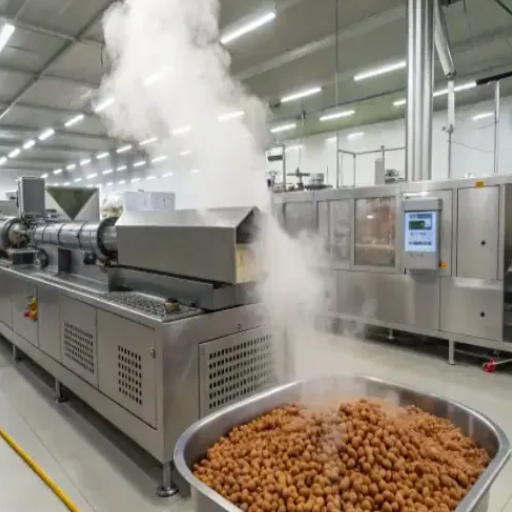
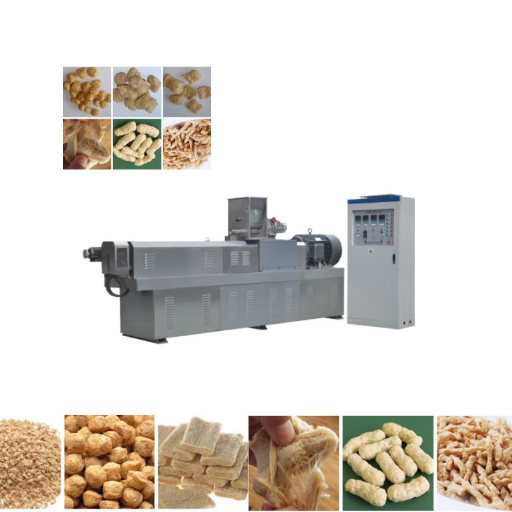
For snack food machinery, the risk is especially concentrated. Extruders run at high temperatures and pressures. Conveyor chains move product through ovens and fryers. Bearings on cutting and forming equipment sit centimeters above the product stream. In these environments, H1 is not a premium option. It is the baseline requirement.
There is also an equipment reliability angle. Modern synthetic H1 lubricants based on polyalphaolefins (PAO) or synthetic esters can deliver thermal stability, oxidation resistance, and service life comparable to high-quality industrial products. Choosing the right H1 grade protects both food safety and the lifespan of your capital equipment.
NSF H1 vs H2 vs H3 vs 3H: Choosing the Right Classification
The NSF classification system is simple once you understand the risk zones. The table below gives you the core decision framework.
| Classification | Food Contact Allowed | Typical Applications | Key Requirement |
|---|---|---|---|
| NSF H1 | Incidental contact only (≤10 ppm) | Bearings, chains, gearboxes, hydraulics near open food | FDA 21 CFR 178.3570 approved ingredients |
| NSF H2 | No food contact allowed | Forklifts, HVAC, compressors, motors away from food | Must be physically separated from food zones |
| NSF H3 | Direct contact (edible oils) | Hooks, trolleys, knives, rust prevention on equipment washed before use | Typically edible oils like soybean or corn oil |
| NSF 3H | Direct contact as release agent | Baking pans, molds, cooking surfaces | Most stringent formulation requirements |
The safest rule is this: if a lubrication point is above, near, or could reasonably migrate to open food, default to H1. Do not try to save money by using H2 in a questionable zone. The cost difference between H1 and H2 is small compared to the cost of a failed audit or held shipment.
H2 lubricants have their place. They work well on warehouse forklifts, external air compressors, and HVAC equipment located far from production. But they must never be stored, applied, or transported through food zones with the same tools used for H1 products. Cross-contamination of tools is one of the most common inspection findings.
H3 products are soluble or edible oils used for rust prevention on equipment that is washed before it touches food. They are not general-purpose lubricants. NSF 3H is a separate registration for release agents that intentionally contact food, such as pan sprays and mold release agents. Confusing H3 and 3H is another frequent mistake.
Selecting NSF H1 Lubricants for Key Food Machinery Applications
Choosing the right H1 product is about more than the classification. You also need the right base fluid, viscosity, and performance additives for each machine point. Here is how to match lubricant to application on a typical production line.
Conveyor Chains and Belts
Chains and belts move product through ovens, fryers, cooling tunnels, and packaging stations. They need H1 chain oils with good adhesion, thermal stability, and resistance to washout. For high-temperature oven chains, choose synthetic PAO or ester-based H1 oils with ISO VG 100 to 460 viscosity. For ambient conveyors, ISO VG 46 to 100 is usually sufficient.
Gearboxes and Enclosed Gears
Extruder gearboxes, mixer drives, and packaging machine gearboxes need H1 gear oils with adequate extreme pressure (EP) performance. Modern synthetic H1 gear oils can handle heavily loaded applications. Match viscosity to the manufacturer’s specification. Common ranges are ISO VG 68 to 1000, depending on gear size and speed.
Bearings, Slides, and Guides
General bearings and linear guides typically use H1 greases with NLGI Grade 2 consistency. For centralized grease systems or cold environments, NLGI Grade 1 or 00 may flow better. White mineral oil-based greases work for light loads. For high loads, high temperatures, or long regrease intervals, specify PAO or ester-based synthetic H1 greases.
Hydraulic Systems
Hydraulic units on fillers, cappers, and forming equipment should use H1 hydraulic fluids. These fluids must protect pumps and valves while meeting food safety requirements. Look for products with good oxidation stability and a wide operating temperature range, especially if your plant experiences seasonal temperature swings.
Mixers, Extruders, and Agitators
These machines combine heavy mechanical loads with proximity to open product. A pasta production line mixer, for example, needs an H1 grease that resists water washout and food particles. A snack extruder barrel and cutter assembly needs high-temperature H1 lubrication that will not break down under heat and pressure.
Packaging Machinery
Cartoners, labelers, and sealing machines have many small bearings, chains, and cams. They often run at high speeds with frequent start-stop cycles. Use H1 oils and greases with good anti-wear properties and low-temperature fluidity to prevent startup wear.
Best Practices for NSF H1 Lubricant Management

A compliant lubrication program is built on five pillars: survey, verification, segregation, documentation, and training.
Conduct a Lubrication Survey
Map every lubrication point in your plant. Record the equipment ID, location relative to open food, current product in use, and required frequency. Classify each point as H1, H2, or H3. When in doubt, classify as H1. This survey becomes the backbone of your preventive maintenance schedule and your food safety documentation.
Verify NSF Registration
Request the NSF registration number for every lubricant you purchase. Check it in the NSF White Book at purchase and again every quarter. Registrations can lapse, formulations can change, and counterfeit claims exist. A 2019 industry presentation noted multiple instances of unjustified “food-grade” claims in the market. Verification protects you from buying non-compliant products.
Segregate Storage and Application Tools
Store H1, H2, and H3 lubricants in separate, clearly labeled areas. Use color-coded grease guns, oil cans, funnels, and spray applicators. A common system is blue or green for H1, red for H2, and yellow for H3. Never share tools between classifications. This simple visual system prevents one of the most common causes of cross-contamination.
Maintain Complete Documentation
The lubricant register must contain details such as the name of the lubricant, the manufacturer, the NSF registration and classification number, safety data sheet, allergy information, application points where it is approved to use, and ordering details. For each lubrication, there should be documentation containing the asset tag number, lubricant and batch number used, amount of lubricant used, date and time, and technician’s name.
Train Staff and Contractors
All maintenance personnel, including contractors, must understand your lubrication program. They need to know why H1 matters, how to read labels, which tools to use, and where each product is approved. Contractor-related lubrication errors are a leading cause of contamination incidents because temporary staff may not know your plant’s risk zones.
When Chen, a maintenance supervisor at a pet food plant in East China, standardized his team’s training around color-coded tools and asset-specific work orders, his plant passed its next BRCGS audit with zero lubrication-related findings. More importantly, unplanned downtime from bearing failures dropped by nearly 30% in the following year because technicians were applying the right product, in the right amount, at the right interval.
ISO 21469: Going Beyond NSF H1
NSF H1 reviews the lubricant formulation. ISO 21469 goes further. It audits the manufacturing facility, tests the finished product, and verifies hygiene controls and traceability. An ISO 21469 certified lubricant starts with an H1-compliant formulation and adds independent assurance about how it was made.
For most food plants, NSF H1 is sufficient for day-to-day compliance. However, ISO 21469 becomes valuable when you face rigorous export customer audits, when you are pursuing the highest BRCGS grade, or when your customers specifically require it. The certification provides stronger, less-disputable evidence that your lubrication program meets global food safety expectations.
If you serve international markets, ask your lubricant supplier whether their H1 products also carry ISO 21469 certification. The combination gives you both formulation compliance and manufacturing assurance. That dual coverage is especially useful when auditors from different countries apply different interpretations of food safety standards.
Cost vs Value: Making the Business Case
It is true that H1 lubricants cost more than standard industrial products. White mineral oil-based H1 products are typically 1.5 to 3 times the price of equivalent industrial grades. Synthetic PAO or ester-based H1 products can run 6 to 12 times higher. But focusing only on purchase price misses most of the financial picture.
The real cost of the wrong lubricant includes failed audits, held product, emergency cleaning, bearing replacements, and lost customer confidence. A single critical finding during a third-party audit can cost far more than a year’s supply of premium H1 lubricant. On the positive side, a well-run H1 program extends bearing and chain life, reduces unplanned downtime, and simplifies audit preparation.
Many plants solve the cost question through lubricant consolidation. Instead of maintaining a complex mix of H1 and H2 products, they standardize on H1 for all points in food processing areas. This eliminates misapplication risk, reduces inventory complexity, and often simplifies purchasing. H2 is reserved for clearly separated non-food zones like warehouses and utilities.
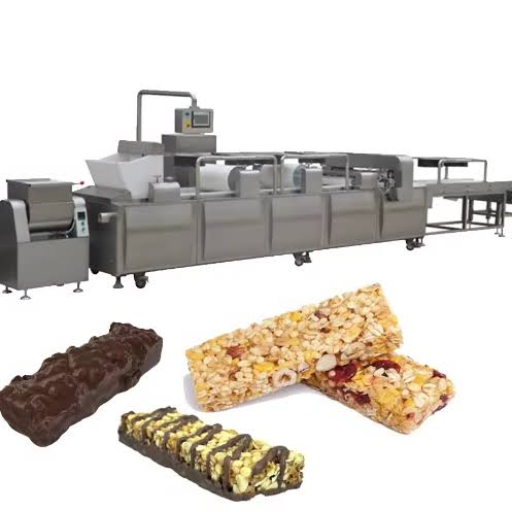
For a protein bar production line, consolidation makes particular sense. The mixing, extruding, cutting, cooling, and packaging stations are all in food-contact risk zones. Using one approved H1 product family across the line reduces the chance that a technician grabs the wrong grease during a night shift.
How to Start or Improve Your H1 Program This Quarter
If you are building a new program from scratch, follow this sequence. If you already have a program, use it as a review checklist.
- Audit your inventory. Gather every lubricant in the plant and verify its NSF status.
- Map every point. Classify each lubrication point by risk zone.
- Select replacements. Identify NSF H1 products for any non-compliant points.
- Flush before switching. When changing lubricant types, flush the system to avoid incompatibility.
- Update documentation. Revise your lubricant registry, HACCP plan, and preventive maintenance schedule.
- Train your team. Cover product selection, application methods, color-coding, and record-keeping.
- Schedule reviews. Re-verify NSF registrations quarterly and reassess risk zones annually.
Start with the highest-risk equipment. On most food processing lines, that means extruders, mixers, and conveyors above open product. Once those points are compliant, move to secondary equipment. Small improvements compound quickly when it comes to audit readiness.
Conclusion
Food grade lubricants NSF H1 are not a maintenance luxury. They are a food safety control point that protects your product, your customers, and your certification status. The difference between H1, H2, and H3 is not technical trivia. It determines whether a routine maintenance task becomes a contamination risk or a compliance win.
The best plants treat lubrication with the same discipline they apply to ingredient sourcing or sanitation. They survey every point, verify every product, segregate tools, document every application, and train every technician. When you do that, lubrication stops being a hidden risk and becomes a competitive advantage.
At Shandong Loyal Industrial Co., Ltd., we design food production lines with reliability, safety, and global compliance in mind. Whether you are expanding a snack plant or building a new pasta facility, our team can help you select equipment and maintenance practices that keep your production running smoothly. Contact us today for a consultation tailored to your product goals.
Have questions about lubrication points on your specific production line? Reach out to our engineering team for guidance on maintenance-friendly equipment design.
FAQ
What does NSF H1 mean on a lubricant?
NSF H1 means the lubricant is registered for use in food processing areas where incidental, technically unavoidable contact with food may occur. It is formulated with FDA-approved ingredients and is safe at trace levels up to 10 ppm.
Can I use NSF H2 lubricant on food processing equipment?
Only for equipment where there is zero risk of food contact. H2 lubricants are not safe for food zones and using them near open product is a common cause of audit failures.
How do I verify that a lubricant is truly NSF H1 registered?
Check the product’s registration number in the NSF White Book at info.nsf.org. Verify it at purchase and periodically thereafter, because registrations can change or lapse.
Is NSF H1 the same as ISO 21469?
No. NSF H1 reviews formulation compliance with FDA 21 CFR 178.3570. ISO 21469 adds a manufacturing facility audit, product testing, and hygiene controls. ISO 21469 certification provides stronger assurance for strict audits.
Are H1 lubricants as effective as industrial lubricants?
Modern synthetic H1 lubricants based on PAO or ester base stocks can match or exceed the performance of conventional industrial lubricants in most applications. White mineral oil-based H1 products are suitable for lighter-duty use.