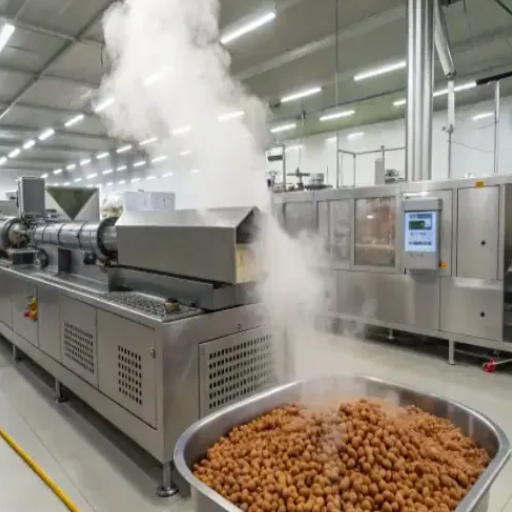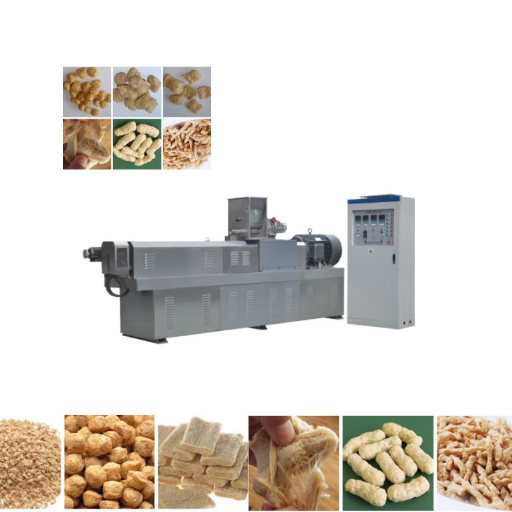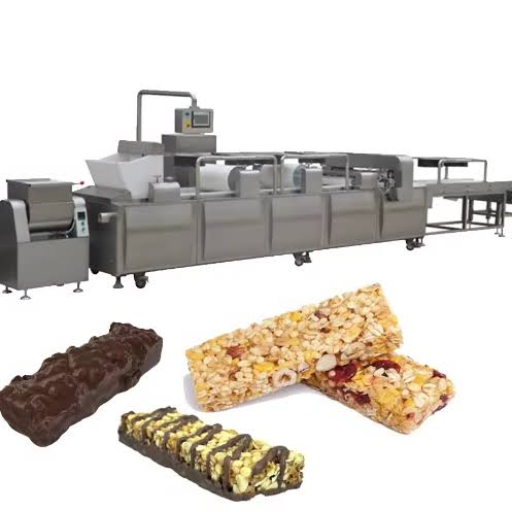
Food extrusion is revolutionizing food production, processing, and even consumption. At its core, extrusion is a versatile and highly efficient manufacturing process that converts raw ingredients into a wide range of products, including breakfast cereals, snack foods, pet treats, and plant-based meat alternatives. This innovative procedure can enhance food production possibilities as a side benefit for final products, improving consistency, texture, and safety.
In this comprehensive guide, we will delve into the fundamentals of food extrusion technology, its applications, and the benefits it provides to the food industry. If you want to know more about how your favorite snacks are made, improve production efficiency, or innovate in food product development, this article can be your one-stop resource. Let’s unlock some of the machinery, science, and innovations that forge ahead in this exciting field.
Introduction to Food Extrusion
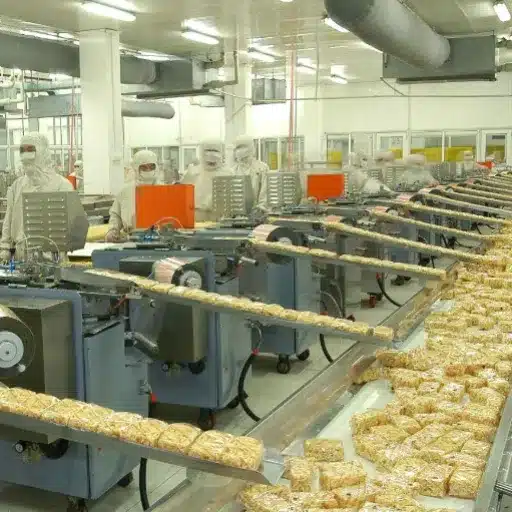
Food extrusion is a manufacturing process that shapes and structures food products by forcing raw materials through a specially designed machine called an extruder. The method integrates mixing, cooking, and shaping into one continuous operation through the use of heat, pressure, and mechanical force. In manufacturing snacks, extruding is employed to ensure uniform product quality, extended shelf life, and varied textures and shapes. The technology is highly flexible, fast, and enables innovation while satisfying industry demands of scalable production.
What is Food Extrusion?
Food extrusion is a highly efficient processing method in the food industry for producing a wide range of processed foods. It works by forcing a mixture of food ingredients under strictly controlled time-temperature-moisture input conditions and shaping, cooking, or forming the product in an extruder. Food extrusion products encompass a wide range of items, including snacks, breakfast cereals, pasta, pet foods, and meat substitutes. It offers control over texture, flavor, and nutrients. It is relatively environmentally friendly because it minimizes waste and increasingly uses alternative ingredients, such as plant proteins, to meet modern dietary needs.
History and Development of Food Extrusion Technology
The food extrusion technology dates back to the late 19th century. It was initially designed for various industrial applications, including those involved in the production of meat-based processed foods. The technology flourished in the 1930s, with the invention of pasta extrusion equipment that enabled the consistent and efficient manufacture of pasta shapes. In the late 1950s, food extrusion underwent another significant development, with the introduction of twin-screw extruders, which enabled better control of product quality and expanded the possibilities of applications, including puffed snacks and breakfast cereals.
While engineering and materials science provided an impetus to the precision and energy efficiency of extrusion machines during the 1980s and 1990s, new and revolutionary higher extrusions enabled the retention of nutrients more effectively during processing, thereby enhancing food quality considerations. These developments further enabled the creation of snacks that are low in fat and high in protein, providing greater freedom to use novel materials, including fiber and plant proteins.
According to a 2025 market report, the global food extrusion market was registering a compound annual growth rate (CAGR) of approximately 5-6%, driven by increasing demand for convenience foods, healthier snacks, and sustainable food production methods. Extrusion technology, continually evolving, serves as a fulcrum that balances the growing popularity of plant-based and alternative dietary choices. Current trends are geared towards addressing sustainability issues, with a focus on incorporating bio-based materials into extruder design and optimizing energy usage. With a tradition in its fold, modern food extrusion, therefore, remains the heart of contemporary food production.
Fundamental Principles of the Food Extrusion Process
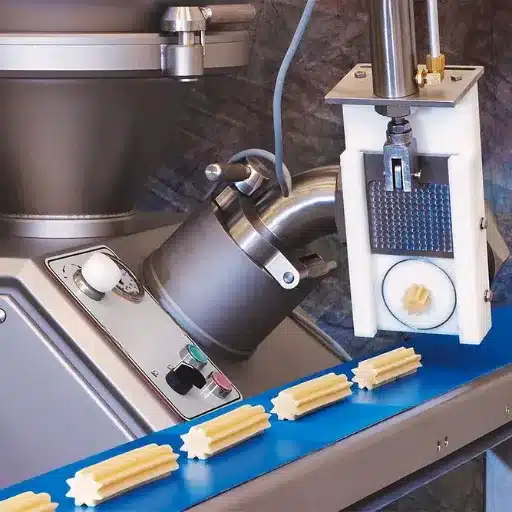
Extrusion shows the continuous transformation of materials using heat, pressure, and forces by a mechanical nature, whereby most extruders consist of the barrel comprising the main chamber and rotating screw mechanism. Initially, the ingredients are fed into the extruder where they are heated and mixed under controlled conditions, forming sometimes molten and sometimes semi-molten materials that are continuously pushed through a shaped die to obtain a given product.
Each parameter, such as temperature, pressure, moisture content, and screw speed, is carefully controlled to achieve the desired texture, shape, or cooking degree. It is a flexible process for making products such as cereals, snacks, pasta, feed, and meat analogues. It also helps improve digestibility and shelf life with the opposite direction of functionalization and minus protein incorporation, which makes it really a significant process in modern food manufacture.
Mechanics of the Food Extrusion Process
Step-by-Step Process:
- Ingredient Admission: Raw ingredients are admitted into the extrusion process
- Pre-conditioning: Materials get mixed and pre-conditioned with heat and water
- Barrel Processing: Material enters the extruder barrel with rotating screw pressure and shear force
- Controlled Heating: Controlled heating is applied to cook the mixture
- Die Formation: Material is forced through the die of the desired shape
- Expansion: Sudden pressure drop at die exit causes product expansion
- Final Processing: Product is cut, dried, or cooled depending on application
Types of Food Extruders and Their Mechanisms
There are two primary types of food extruders, distinguished by their mechanisms: single-screw extruders and twin-screw extruders.
Process Conditions in Food Extrusion
Several key factors in the extrusion process must be controlled with absolute precision to ensure excellent results. These conditions are:
- Temperature: Heat is necessary to create starch gelatinization, protein denaturation, and expansion. Extruder temperatures usually range from 100 to 200 °C, depending on the product.
- Water Content: The water level in the raw material determines the texture and expansion, ultimately affecting the properties of the extruded product. The water content may vary from 10 to 40%, with different values for different extruded foods.
- Pressure: High pressure is created inside extruders and forces the material through dies affecting the shape and density.
- Screw Speed: This directly affects mixing, cooking, and output. High speeds produce finer textures, but this may require counter-adjustments to other parameters.
- Feed Rate: The Material feeding rate ensures that the processing is always constant.
Key Takeaway: If these conditions are balanced accordingly, manufacturers are well-equipped to produce a diverse range of high-quality extruded foods.
Thermal Processing and Its Role in Extrusion
Thermal processing is a crucial stage during extrusion, as it is directly responsible for the physical and chemical changes in the raw ingredient. With controlled heat, the raw materials undergo gelatinization, protein denaturation, and other biochemical changes that impart the required texture, flavor, and appearance to the final product. The exact temperature for thermal application must be decided depending upon the product to manufacture and the properties of the ingredients involved. Thermal control phases not only contribute to efficient processing but also ensure that product quality is consistent and safe by eradicating any harmful pathogens.
Applications of Extrusion in the Food Industry
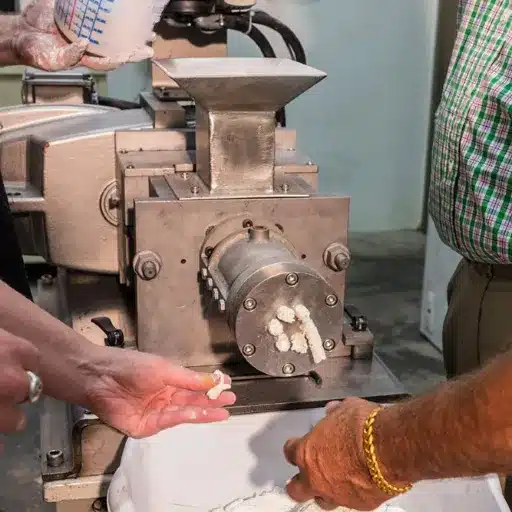
Extrusion processing is a widely used technology for manufacturing various food products. In common terminology, extrusion technologies are used for snack foods, ready-to-eat cereals, pasta, pet foods, and meat analogues. The process inherently provides possibilities for imparting various shapes, textures, fine sensory characteristics, and nutritional aspects, as well as shelf life. Additionally, extrusion technology is well-suited for fortifying foods with vitamins, minerals, and other functional ingredients in response to evolving consumer needs. Its versatility and efficiency make it highly valuable for contemporary food production.
Breakfast Cereals: From Raw Material to Extruded Product
Production Process:
- Raw Material Selection: Grains such as corn, rice, wheat, or oats are selected
- Preparation: Grains are cleaned, milled, and readied for extrusion
- Extrusion Processing: High temperatures and pressure are applied to gelatinize starches
- Shaping: Products are formed into characteristic shapes like flakes, puffs, or rings
- Drying: Products are dried to reduce moisture for extended shelf life
- Coating: Optional coating with sugars, vitamins, or minerals for flavor and nutrition
From these controlled processes, breakfast cereals are derived from basic grains, converted into convenient yet varied products available on supermarket shelves.
Pasta Production through Extrusion Technology
Pasta-making through extrusion technology represents a highly efficient and popular method in the food business. The dough is prepared by blending semolina or flour from durum wheat with water to give a homogeneous melt. This dough is then fed into extruders and forced out through dies with character shapes, allowing the pasta to take form, such as spaghetti, penne, or fusilli.
Key Benefits:
- Ensures uniformity in shapes and sizes
- Maintains pasta’s structural integrity
- Prevents microbial contamination due to high pressure and temperature
- Guarantees food safety
This pasta is cut into portions after extrusion, dried under well-controlled temperature and moisture levels, and packed for distribution. This technology not only facilitates production but also provides manufacturers with options to use different flours, additives, or colors to meet market needs and dietary preferences.
Snacks: Innovative Extruded Products
The snack industry has undergone a radical transformation with the introduction of extrusion techniques, enabling the creation of a vast array of innovative products that appeal to consumers. The extrusion technology contains mixing the starches and proteins with other ingredients and pushing the blend through a machine under high pressure and temperature so that it can take on a variety of textures, shapes, and flavors: puffed chips, crisps, or cereal-based bars.
Texture Control
Modulate expansion, crispness, and density for light and crunchy textures
Functional Ingredients
Include protein isolates, fiber, or vitamins for healthier options
Extrusion allows you to keep current trends in innovation while being efficient and cost-effective in the manufacturing process-from gluten-free snacks to the high-protein ones. With the advancement of newer technologies in this field, snack-product manufacturers can continually update their brands to appeal to a broad audience while addressing nutritional and sustainability concerns.
Effects of Extrusion on Food Materials
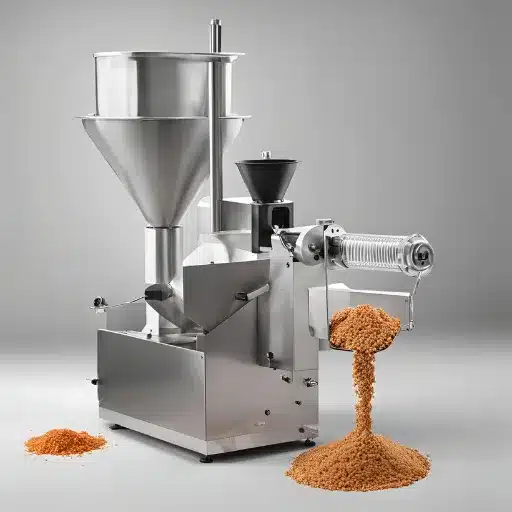
Extrusion primarily transforms food materials both physically and chemically. It alters the texture, shape, and structure of the ingredients to produce products such as crisp snacks or puffed cereals. Due to high temperatures and pressures, extrusion reduces the anti-nutrient effects and increases digestibility, or even preserves or enhances specific nutrients. However, with poor control of extrusion conditions, particular nutrients are lost while others impart adverse flavor and color changes. Thus, the process should be optimized to yield the desired product properties.
Impact of Extrusion on Nutritional Content
✓ Positive Effects
- Increases bioavailability of certain vitamins and minerals
- Reduces anti-nutritional factors
- Improves food digestibility
- Enhances protein efficiency
⚠ Potential Challenges
- Degradation of heat-sensitive nutrients
- Possible vitamin loss due to high temperatures
- Protein alterations from shear forces
- Requires careful process control
Balance is Key: A balance should be struck in choosing the temperature, pressure, and moisture content for extrusion processing to maximize nutritional benefits.
How Extrusion Affects Flavor and Texture
Flavor Development:
Extrusion significantly impacts flavor and texture, making it a truly versatile operation that can be applied to a wide range of culinary applications. Extruding at high temperatures and pressures can develop flavors through the Maillard reaction, wherein proteins and sugars, when heated, produce rich, savory, and browned flavors. Such reactions are especially valid in snack foods and breakfast cereals, thereby giving each product group a specific flavor profile.
Texture Control:
Texture, on the other hand, depends mainly on the feed base and process settings used during extrusion. For example, moisture content, die shape, and barrel temperature will determine if the product is light and crispy, or dense and chewy. This flexibility allows the manufacturer’s ability to adapt foods to suit specific consumer preferences from puffed and airy to firm and dense protein bars.
Important Note: Precise control, however, becomes imperative as overprocessing may result in undesired textures such as excessive hardness or brittleness.
Formulation Challenges in Food Extrusion Processing
In food extrusion processing, formulation problems often arise due to intricate ingredient interactions under high-temperature and high-pressure environments. Once proteins, carbohydrates, and fats in the mixtures undergo extrusion, any flaw in their specific percentage combinations can lead to texture, flavor, and aesthetic problems in the finished product.
Common Challenges:
- Excessive protein: May result in tough and rubbery texture
- Low starch content: Prevents adequate expansion and crispness
- Functional ingredients: Fiber or fortifiers can interfere with extrusion performance
- Product uniformity: Maintaining consistency across batches
Achieving the correct formulation requires a precise testing and optimization approach aimed at ensuring consistent, nutritious, and consumer-acceptable products.
Emerging Trends in Food Extrusion
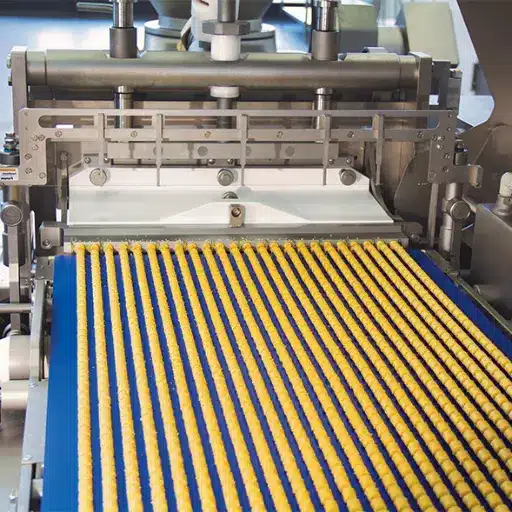
Extrusion, driven by the execution of several recent advancements, drives innovation and sustainability in the sector. Extruded pea and fava bean proteins find increased commercialization due to the rising demand for vegetarian and vegan-friendly foods. Special interest is given to the incorporation of functional ingredients, such as dietary fibers, probiotics, and natural fortifications, into recipes to enrich the nutritional profile of food materials. Another focus is sustenance when it comes to energy reduction, better waste management, and use of alternate raw materials like upcycled byproducts. These trends emphasize healthier food production practices and a greening of the food industry.
Food Innovation through Novel Ingredients
Novel ingredients are driving innovation in the food industry, providing new ways to enhance the taste, nutrition, and sustainability of food. Plant-based proteins, such as those from peas, soy, and mycoprotein, represent a diverse range of options compared to animal-derived foods, making them suitable for vegetarians and vegans.
Plant Proteins
Pea, soy, mycoprotein
Marine Sources
Algae and seaweed
Alternative Proteins
Edible insects
Thus, production involving these ingredients is repurposing itself to fulfill the new demand from consumers for healthier and more environmentally friendly foods, also offering variety in food choices.
Sustainability in Extrusion: Reducing Waste
With sustainability requirements being placed on the extrusion process to minimize environmental impact and resource waste, technological advancements and innovations are being implemented to rationalize the use of raw materials during production.
Sustainability Initiatives:
- Recycling processes to convert scraps into new products
- Reduced landfill waste and virgin resource demands
- Energy efficiency improvements in modern plants
- Use of renewable energy sources
Balancing efficiency with environmental responsibility, the advancement of extrusion technology significantly contributes to world sustainability efforts.
The Future of Extrusion Technology in Food Processing
With the evolving consumer demands on sustainable, healthy, and convenient food products, the extrusion technology of the future will entail innovation. Current advances are based on plant-based proteins, alternative ingredients, and texturization methods for the production of meat analogs and healthier snack foods.
Future Innovations:
- Automation and digitalization for increased precision
- Enhanced consistency and energy efficiency
- Modular and flexible designs for quick market response
- Reduced environmental impact aligned with sustainability goals
These advancements seek to provide high-quality food products simultaneously meeting with health and environmental concerns.
Reference Sources
-
Thermo Fisher Scientific: Guide to skilled food extrusion – A comprehensive document discussing the energy efficiency and applications of food extrusion technology.
-
Jieya Twin Screw Blog: Maximize Efficiency with Food Extruders – Covers the extensive use of extrusion in the food industry, including applications like breakfast cereals.
-
David Publisher: Engineering Review Food Extrusion Technology and Its Applications – Explores the process of food extrusion, including mixing, homogenizing, and shaping food materials.
-
Made-in-China Insights: Food Extruders: A Comprehensive Guide to Understanding Their Uses and Applications – Discusses how extrusion can alter food shape, texture, and flavor for innovation.
-
ScienceDirect: Food Extrusion – an overview – Provides an overview of food extrusion as a cooking technique, including its impact on biopolymers like starch.
Frequently Asked Questions (FAQs)
What does extrusion mean in food science?
The extrusion process in food science refers to the cooking and shaping of food material by means of heat, pressure, and mechanical shear. Raw food materials can be converted into a variety of extruded products, depending on the shape and texture they acquire when forced through an extrusion die, catering to different uses.
What are the effects of extrusion on food products?
The effects of extrusion on a food product include changes in texture, taste, and nutritional value. High temperatures and pressure involved during extrusion cooking might result in the gelatinization of starches and the denaturation of proteins, thereby improving the digestibility and functionality of the extruded foods.
What are the benefits of extrusion technology in food processing?
Extrusion technology in food processing offers several advantages such as improved consistency of the product, reduced time required for processing, and the ability to manufacture a wide range of food products. Above all, it allows the inclusion of almost any material or additive in the formulation procedure. Hence, this creates novel food composites that can be fine-tuned to appeal to consumer choice.
What are the processing methods in hot extrusion?
During hot extrusion, a considerable amount of heat is coupled with mechanical force and pressure generated by the rotating screw within the cylinder conduit. All these variables soften and melt the raw food materials. Such a method is well suited for the creation of extruded products such as snack foods and other intricate food formulations for which texture and flavor development require some consideration from the heat application during processing.
What materials are generally used in extrusion processing of raw foods?
Common raw foods for extrusion processing include grains, legumes, and starches. These raw foods are sometimes mixed with proteins and other ingredients to improve nutritional value or simply to vary the food products—a great example is baby food and various snack items.
What differentiates hot from cold extrusion processes in food?
The hot extrusion process softens and processes the material through heat, whereas cold extrusion operates at ambient temperatures without requiring significant heating. The cold extrusion process is used in the production of particular food and feed products, allowing them to retain their original nutritional properties.
What are the other uses of extruders in the food industry?
They play a major role in creating a continuous processing of raw materials into various kinds of extruded products. Moreover, they are chiefly concerned in the production of a wide range of food products, from snack foods to pet foods, giving manufacturers the flexibility to develop innovative food products that will fare well in the market.
Ready to Explore Food Extrusion Technology?
Food extrusion continues to revolutionize the way we process and consume food, offering endless possibilities for innovation in texture, nutrition, and sustainability.