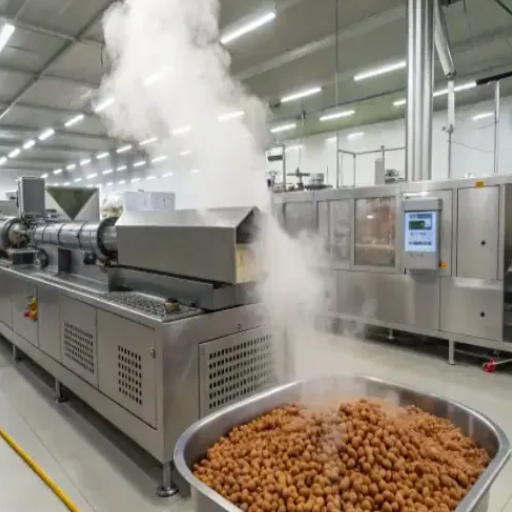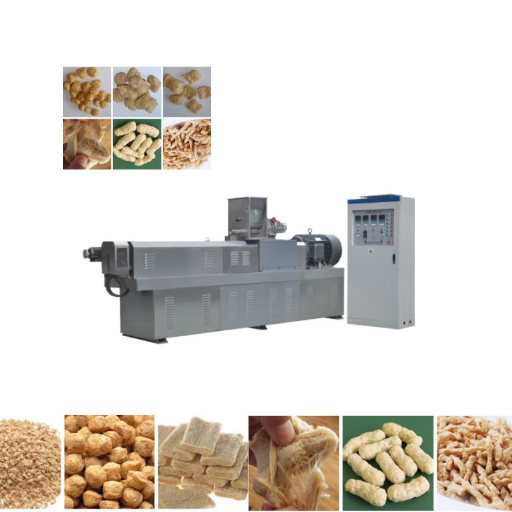
The best soy protein extruder machine for your plant depends on your product. Do you need dry textured vegetable protein (TVP), high-moisture meat analogs (HMMA), or both? Twin-screw extruders dominate commercial production. They deliver precise temperature, pressure, and shear control for consistent, meat-like texture. The right choice balances capacity, screw configuration, die design, automation, and total cost of ownership.
When Priya Sharma opened her plant-based protein startup in Mumbai in early 2025, she assumed any extruder labeled “soy protein” would produce the fibrous chunks her customers wanted. Three months later, she was stuck with a single-screw machine that turned out dense, rubbery pellets no food manufacturer would buy.
Her mistake wasn’t the supplier. It was buying equipment before she understood the difference between low-moisture TVP and high-moisture extrusion. Once she upgraded to a twin-screw extruder with a cooling die, her line began producing nuggets that rehydrated like real meat. Her first commercial order followed within weeks.
That story repeats in factories around the world. The global food extrusion equipment market is growing fast. It is projected to rise from 1.6billionin2025to1.6billionin2025to2.6 billion by 2034, according to Global Market Insights. Much of that growth is driven by plant-based protein. This guide will help you avoid Priya’s mistake. You will learn how soy protein extruders work, what specifications matter, how much they cost, and how to choose a supplier you can trust.
Key Takeaways
- Twin-screw extruders are the industry standard for premium TVP and HMMA because they control temperature, moisture, and shear better than single-screw machines.
- Low-moisture extrusion (15–25% moisture) makes dry, shelf-stable TVP/TSP; high-moisture extrusion (40–80% moisture) produces ready-to-cook meat analogs with fibrous texture.
- Commercial soy protein extruders range from roughly 8,000–8,000–20,000 for 150–300 kg/h systems to 25,000–25,000–80,000 for 300–500 kg/h industrial units.
- Total cost of ownership includes energy, water, labor, raw materials, maintenance, and spare parts—not just the purchase price.
- CE certification, food-grade 304 stainless steel construction, and reliable after-sales support are non-negotiables when evaluating suppliers.
What Is a Soy Protein Extruder Machine?

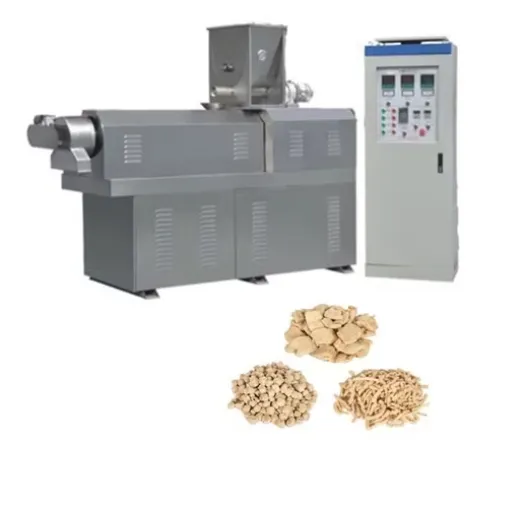
A soy protein extruder machine is specialized food processing equipment. It transforms defatted soy flour, soy protein concentrate, or soy protein isolate into textured protein products. A textured soy protein extruder specifically processes soy-based raw materials into fibrous or porous structures. It combines heat, pressure, and mechanical shear inside a barrel to reshape proteins.
The process is called extrusion cooking. Inside the extruder, rotating screws push the protein mixture through a heated barrel. Temperatures typically reach 140°C–180°C, while pressure builds to 40–60 bar.
When the material exits through a die, the sudden pressure drop creates expansion. This sets the final texture. The result can be dry TVP granules, soya chunks, nuggets, strips, or dense HMMA fillets.
This matters because extrusion is the core technology behind the plant-based meat industry. Without it, manufacturers could not produce affordable, scalable meat alternatives at commercial quality. Whether you are making ingredients for vegetarian curries or whole-cut vegan steaks, the extruder is the heart of your production line.
How Soy Protein Extrusion Works
Understanding how a soy protein extruder machine works helps you ask better questions when comparing equipment. A complete food production line usually includes raw material handling, mixing, extrusion, cutting, drying or cooling, and packaging. Each stage affects final product quality.
Preconditioning and Hydration
Dry soy protein powder can’t be extruded on its own. It must first be mixed with water or steam to reach the target moisture content. For TVP, this is typically 15–25%. For HMMA, moisture can exceed 40%. A preconditioner heats and hydrates the mixture before it enters the extruder barrel. This step improves consistency and reduces energy load on the main motor.
Thermomechanical Cooking Inside the Barrel
This is where the real transformation happens. Co-rotating twin screws knead, compress, and heat the protein mixture. The combination of shear and temperature unfolds globular soy proteins into linear polymers. These polymers then align and cross-link under directional flow, creating the fibrous structure that mimics meat.
The control parameters are critical. Barrel temperature, screw speed, moisture content, and residence time must match the raw material and target product. A machine with precise PID temperature control and variable frequency drive (VFD) motors gives operators flexibility. They can dial in the right profile for each recipe.
Texturization, Shaping, and Cutting
After cooking, the molten protein mass passes through a die. Die design determines product shape and texture. A simple die with multiple holes produces granules or chunks. A long cooling die, used in high-moisture extrusion, allows the product to set into dense, layered fibers without flash expansion.
Rotary cutters slice the extrudate as it exits the die. The cutting speed and blade configuration determine final piece length. Downstream, a dryer reduces TVP moisture below 10% for shelf stability, while HMMA products move to cooling and packaging.
Single-Screw vs. Twin-Screw Extruders: Which Do You Need?
The screw configuration is the first major decision when choosing a food extruder machine. Single-screw and twin-screw extruders can both process soy protein, but they deliver very different results.
Single-Screw Extruders
Single-screw extruders have one rotating screw inside a barrel. They are mechanically simpler, less expensive, and easier to maintain. However, their mixing ability is limited, and temperature control is less precise. They work best for basic low-moisture TVP with simple formulations.
For a small factory producing standard soya chunks or granules, a single-screw machine can be a cost-effective entry point. But if you plan to make premium meat analogs or use complex recipes with multiple proteins, a single-screw design will likely limit your product range.
Twin-Screw Extruders
Twin-screw extruders use two intermeshing screws that rotate in the same direction. This design provides superior mixing and more uniform heat distribution. It also gives precise control over shear and residence time. Twin-screw machines hold roughly 48.5% of food extruder market revenue in 2025. They dominate plant-based protein applications, according to Future Market Insights.
With a twin-screw extruder, you can produce both TVP and HMMA by changing screws, dies, and process parameters. A twin screw extruder soy protein configuration is the industry standard for premium plant-based meat. You can also handle higher moisture, add steam injection, and run more complex formulations that include pea protein, wheat gluten, or fiber.
| Feature | Single-Screw Extruder | Twin-Screw Extruder |
|---|---|---|
| Best for | Basic TVP, low-moisture granules | TVP, TSP, HMMA, complex formulations |
| Mixing quality | Moderate | Excellent |
| Temperature control | Less precise | ±1°C with PLC |
| Moisture range | Mainly low moisture | Low and high moisture |
| Capital cost | Lower | Higher |
| Maintenance | Simpler | More wear parts |
| Texture quality | Acceptable for extenders | Premium meat-like fibers |
Bottom line: If your budget is tight and your product is simple dry TVP, a single-screw extruder can work. If you want flexibility, premium texture, or HMMA capability, choose a twin-screw machine.
TVP vs. HMMA: Matching the Extruder to Your Product
Your end product determines the extruder configuration. TVP and HMMA use the same core technology but require different moisture levels, die designs, and downstream equipment.
Low-Moisture TVP and TSP
Textured vegetable protein (TVP) and textured soy protein (TSP) are dry, expanded products made with 15–25% moisture. A TVP extruder machine is configured for this low-moisture, expanded output. When the hot extrudate exits the die, the sudden pressure drop causes flash evaporation. This creates a porous, honeycomb structure that rehydrates quickly in soups, sauces, and ground-meat applications.
TVP extruders need a standard die, rotary cutter, and dryer. The product is shelf-stable for months when packed properly. It is the most common output for entry-level and commercial soya chunks manufacturing machine setups.
High-Moisture Meat Analogs (HMMA)
HMMA production uses 40–80% moisture and a long cooling die. A high moisture extruder soy protein system operates in this range. Instead of flash expansion, the product cools under pressure as it exits the barrel. This creates dense, layered fibers that mimic whole-muscle meat. HMMA is used for plant-based chicken breasts, steaks, fillets, and deli slices.
Because HMMA requires precise moisture and temperature control, it almost always demands a twin-screw extruder with a specialized cooling die and downstream forming or cutting equipment. The capital cost is higher, but so is the product margin.
Can One Extruder Produce Both?
Yes, with the right configuration. Many modern twin-screw extruders are designed as hybrid systems. By swapping screws, dies, and cutter setups, the same machine can switch between TVP and HMMA production. This flexibility is valuable for co-manufacturers and R&D facilities that need to serve multiple customers or test recipes.
When evaluating a supplier, ask whether the extruder supports hybrid operation and how long changeover takes. A well-designed line can move between product formats in under 30 minutes with recipe-managed PLC controls.
Key Specifications to Compare When Buying
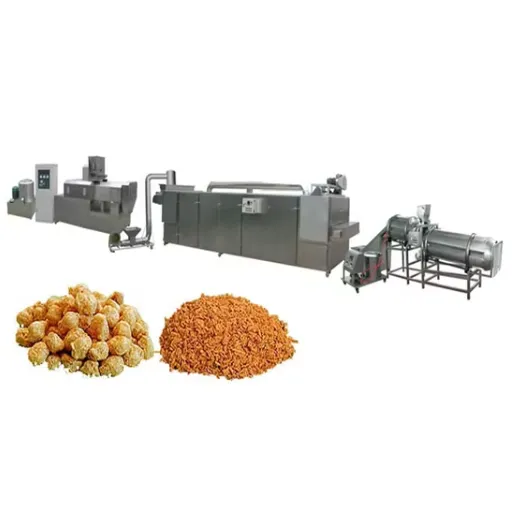
Once you know your product type, compare machines on these specs. Don’t rely on price alone. A cheaper machine with poor temperature control or weak after-sales support will cost more over its lifetime.
Capacity and Scale Tiers
Capacity is usually measured in kilograms per hour (kg/h). Match capacity to your current demand with room for growth. For emerging brands, small factory food machinery in the 150–300 kg/h range offers an ideal entry point.
- Pilot/R&D: 10–100 kg/h
- Small commercial: 150–300 kg/h
- Industrial: 300–500 kg/h
- Large turnkey plant: 500–2,000+ kg/h
Running an extruder far below its rated capacity wastes energy and produces inconsistent texture. Running it above capacity causes wear and quality problems.
Motor Power and Energy Consumption
Motor power ranges from about 22 kW for small machines to 250 kW or more for industrial lines. Look for VFD-driven motors. They adjust speed based on load and can reduce energy use by 15–20%. Ask for specific mechanical energy (SME) figures. These measure energy input per kilogram of product.
Screw Diameter, L/D Ratio, and Barrel Zones
Screw diameter and barrel length affect throughput and residence time. A longer length-to-diameter (L/D) ratio allows more cooking and texturization zones. Typical food extruders have L/D ratios from 15:1 to 25:1. More barrel heating and cooling zones give finer process control.
Temperature Control Precision
Look for PLC-integrated PID loops that maintain barrel temperature within ±1°C. Poor temperature control causes uneven cooking, burnt flavor, and inconsistent texture.
Die and Cutter Flexibility
Interchangeable dies let one machine produce chunks, nuggets, strips, flakes, or granules. Ask how many die options are included and how easy die changeover is. Tool-free die changes save significant downtime.
Materials of Construction
Food-grade 304 stainless steel is the minimum standard for contact surfaces. Wear-resistant screw materials such as 38CrMoAl or high-chrome alloy extend service life. For corrosive or acidic formulations, 316 stainless steel may be worth the upgrade.
Automation and HMI
A touchscreen HMI with recipe management, alarm logging, and remote monitoring simplifies operation and training. Modern lines also support Industry 4.0 features such as predictive maintenance and cloud-based monitoring.
| Capacity Tier | Typical Output | Motor Power | Approximate Price Range |
|---|---|---|---|
| Pilot/R&D | 10–100 kg/h | 22–45 kW | 2,000–2,000–6,000 |
| Small commercial | 150–300 kg/h | 55–90 kW | 8,000–8,000–20,000 |
| Industrial | 300–500 kg/h | 110–160 kW | 25,000–25,000–80,000 |
| Turnkey plant | 500–2,000+ kg/h | 180–250+ kW | 80,000–80,000–150,000+ |
Prices are indicative ranges based on Chinese and Indian market listings. Actual quotes vary by configuration, supplier, and destination.
Soy Protein Extruder Machine Price and Total Cost of Ownership
The purchase price is only part of the equation. To make a sound investment, calculate total cost of ownership over five years.
Capital Expenditure
Entry-level machines start around 2,000–2,000–6,000 for pilot-scale units. Small commercial twin-screw extruders in the 150–300 kg/h range typically cost 8,000–8,000–20,000. Industrial 300–500 kg/h systems run 25,000–25,000–80,000. Complete turnkey plants above 500 kg/h can exceed $150,000.
These ranges are wide because price depends on screw configuration, automation level, number of heating zones, materials, and included peripherals such as preconditioners, dryers, and packaging equipment.
Operating Costs
Energy is often the largest ongoing expense. A 110 kW extruder running 16 hours per day consumes significant electricity. Water, steam, labor, raw materials, and packaging also add up. Modern extruders with energy-efficient motors and heat recovery can reduce specific energy consumption by 25–35% compared with older designs.
Maintenance and Spare Parts
Screws, barrels, dies, and cutters wear over time. Ask suppliers for expected wear life and spare-part prices. A supplier with a local warehouse or fast international shipping can save weeks of downtime. Maintenance contracts and operator training also reduce long-term costs.
ROI Framework
A simple way to evaluate ROI is to estimate output value minus operating cost over the machine’s lifetime. Imagine a 50,000extruderproducing400kg/hofTVPata50,000extruderproducing400kg/hofTVPata1/kg margin. If it runs 250 days per year, it can generate $200,000 in annual gross margin. Even after operating costs, payback often occurs within 12–24 months for well-utilized lines.
When Marcus, a purchasing manager in São Paulo, compared two quotes in 2024, he focused only on the purchase price. The cheaper unit saved $12,000 upfront but consumed 20% more energy and needed die replacements every six months. After 18 months, the “savings” had disappeared. His second purchase prioritized energy efficiency and local spare-part availability. That line has run with minimal downtime for two years.
Certifications, Compliance, and Food Safety
Food manufacturing equipment must meet strict safety and hygiene standards. Do not treat certifications as optional.
CE Marking
CE marking confirms the machine meets European electrical, mechanical, and safety standards. It is essential for export to Europe and many other markets.
FDA, USDA, and EFSA
If you supply the United States or European Union, your equipment must support compliance with local food safety regulations. This includes hygienic design, cleanability, and material safety.
FSSC 22000, HACCP, and GMP
Your production facility—not just the machine—may need certification under FSSC 22000, HACCP, or Good Manufacturing Practice (GMP) standards. Equipment design should support these programs with smooth surfaces, accessible cleaning, and proper drainage.
Food-Grade Materials and Allergen Management
All product-contact surfaces should be food-grade 304 or 316 stainless steel. If you process multiple proteins, consider allergen cleaning protocols and dedicated production lines to avoid cross-contact.
Maintenance and Troubleshooting Essentials
Even the best extruder needs regular care. Build a maintenance schedule from day one.
Daily and Weekly Maintenance
- Inspect screws, barrel, and die for residue or damage.
- Lubricate bearings and drive components per the manufacturer schedule.
- Clean feed hoppers and conveyors to prevent contamination.
- Check temperature and pressure sensors for accuracy.
Common Wear Parts
Screws and barrels wear from abrasive protein blends and mineral content. Dies and cutters wear from friction. Budget for these replacements annually. Keep critical spare parts in stock to avoid unplanned downtime.
Troubleshooting Common Issues
| Problem | Likely Cause | Corrective Action |
|---|---|---|
| Spongy or rubbery texture | Moisture too high or shear too low | Adjust moisture and screw speed |
| Uneven moisture distribution | Poor preconditioning or feed inconsistency | Check mixer and feeder calibration |
| Low yield or die blockage | Incorrect die size or overheated product | Clean die and adjust temperature |
| Burnt flavor | Excessive barrel temperature | Reduce heat profile and residence time |
| Weak fiber structure | Insufficient protein or wrong screw configuration | Adjust formulation or screw design |
How to Evaluate a Soy Protein Extruder Machine Supplier
The machine is only as good as the company behind it. Before signing a contract, evaluate the supplier thoroughly.
Factory Audit Checklist
- Can they show you a working machine running your target product?
- Do they have in-house extrusion testing facilities?
- What materials and components do they use for screws, barrels, and electrical systems?
- Is the production facility organized and quality-controlled?
Anna, an R&D director in Warsaw, learned this lesson during a factory visit in 2025. One supplier offered a low price but could not run her soy-isolate recipe during the demo. Another supplier spent two days testing her formulation, adjusted the screw profile, and produced the fibrous texture she needed. She chose the second supplier. The extra upfront cost was repaid within months through consistent product quality and fewer rejected batches.
After-Sales Support
Ask about installation, commissioning, operator training, and warranty terms. A reliable supplier provides documentation, spare parts lists, and responsive technical support. Shandong Loyal Industrial, for example, offers turnkey support. This includes factory layout design, installation, and training across 50+ countries.
Customization and References
Every factory is different. Confirm that the supplier can customize screw profiles, die shapes, line layout, and automation level to your needs. Request references from customers in your region or product category.
Conclusion: Choose the Extruder That Fits Your Product Goals
A soy protein extruder machine is a major investment, but the right choice can transform your plant-based product line. Start by defining your end product. TVP requires different settings and equipment than HMMA. Then match capacity, screw configuration, die flexibility, and automation to your production goals. Finally, look beyond the sticker price to total cost of ownership, certifications, and supplier support.
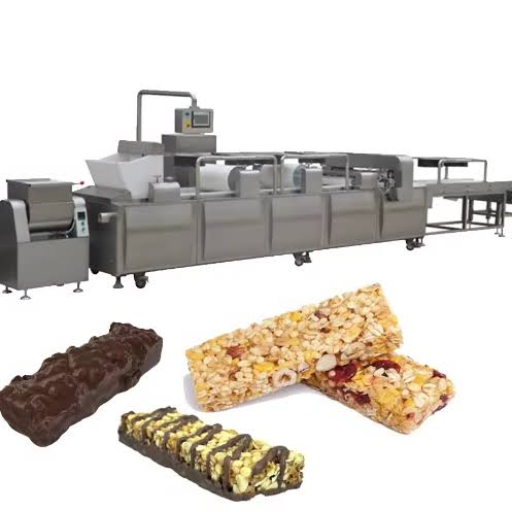
The textured soy protein market is growing fast. Estimates range from 6.01billionin2025toover6.01billionin2025toover10 billion by 2034, according to Fortune Business Insights. Manufacturers who invest in reliable, flexible extrusion technology now will capture that growth. Many producers also diversify into finished consumer products with a protein bar production line.
If you are planning a soy protein production line, start with a clear product specification. Find a supplier who can test your recipe before you buy. Contact Shandong Loyal Industrial for a customized extruder configuration and factory layout designed around your capacity, budget, and end-product goals.
FAQ
What is the difference between a soy protein extruder and a TVP extruder?
There is no fundamental difference. A TVP extruder is simply a soy protein extruder configured for low-moisture, expanded output. In many South Asian markets, this same equipment is sold as a soya badi making machine. Many twin-screw machines can produce both TVP and HMMA with the right die and process settings.
What is the soy protein extruder machine price range?
Pilot-scale units start around 2,000–2,000–6,000. Commercial 150–300 kg/h twin-screw extruders typically cost 8,000–8,000–20,000. Industrial 300–500 kg/h systems range from 25,000–25,000–80,000, and turnkey plants above 500 kg/h can exceed $150,000.
Can one extruder make both TVP and HMMA?
Yes, if it is a hybrid twin-screw extruder with interchangeable screws, dies, and downstream equipment. Changeover time depends on machine design and operator experience.
What capacity extruder do I need for a commercial plant?
Most small commercial plants start with 150–300 kg/h. Industrial operations typically use 300–500 kg/h or larger. Match capacity to realistic demand, not maximum theoretical output.
How long do extruder screws and barrels last?
Lifespan depends on raw materials, operating hours, and maintenance. With proper care, screws and barrels can last several thousand hours. Abrasive formulations or poor maintenance shorten life significantly.