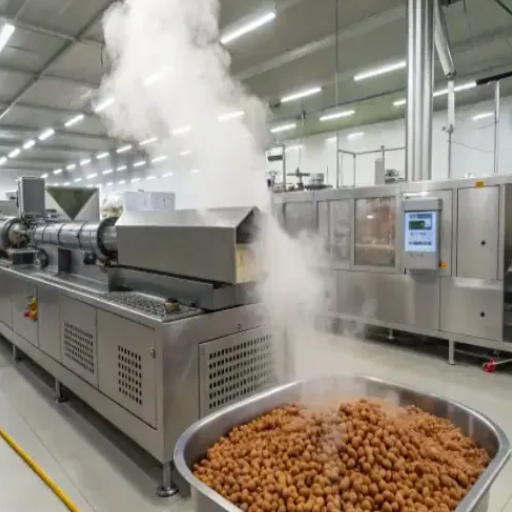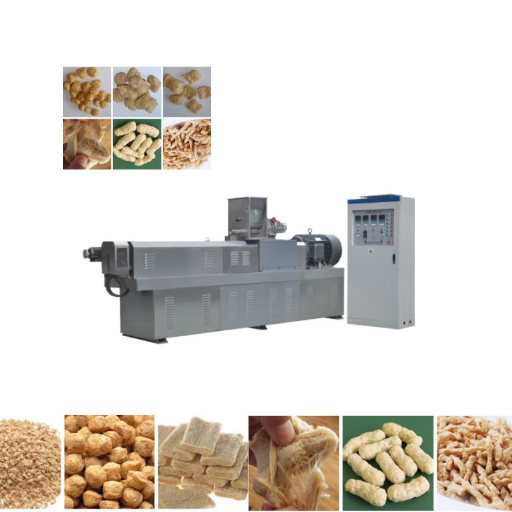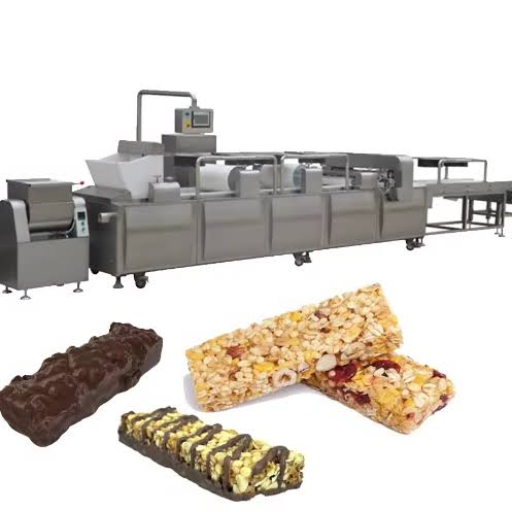
The best food safe coatings for industrial equipment are PTFE and fluoropolymers for non-stick release, epoxy and polyurethane systems for tanks and floors, electroless nickel and thin dense chrome for wear-prone metal parts, and NSF-certified powder coatings for equipment exteriors. The right choice depends on whether the surface touches food, withstands high temperatures, or faces harsh cleaning chemicals. Below is a practical guide to choosing, applying, and maintaining these coatings on your production line.
Last spring, Maria, a production manager at a snack plant in Southeast Asia, watched her team lose three hours scraping sticky masa out of an uncoated extruder die. The downtime cost more than the scheduled maintenance. Worse, the residue created a contamination risk that forced a full deep clean. She called her equipment supplier and asked a simple question: “Why wasn’t a release coating specified from the start?” That question is at the heart of every smart food machinery decision.
In practice, if you buy, specify, or maintain food production lines, you already know that coatings are not cosmetic. They protect metal from corrosion, reduce product buildup, speed up sanitation, and help you meet FDA, NSF, and global food-contact regulations. In this guide, you will learn the difference between “food safe” and “food grade,” which standards apply, the main coating families, where they are used on machinery, and how to avoid the most common specification mistakes.
Key Takeaways
- Food grade coatings are certified for direct or indirect food contact; food safe is a broader term that may not meet strict regulatory standards.
- FDA 21 CFR 175.300 governs the raw materials in food-contact coatings, while NSF certifies the final coating product through testing and audits.
- PTFE, PFA, epoxy, polyurethane, electroless nickel, thin dense chrome, and certified powder coatings each solve different equipment challenges.
- Choosing the wrong coating can increase downtime, trigger sanitation failures, and create compliance risk in export markets.
- Specifying coatings during equipment design, rather than retrofitting later, lowers lifetime cost and protects product safety.
What Are Food Safe Coatings for Industrial Equipment?
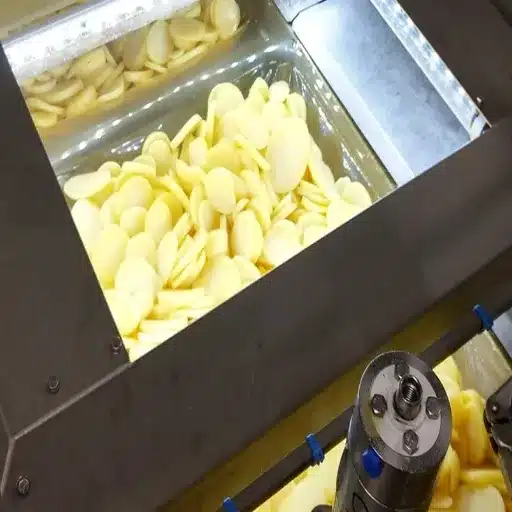
Food safe coatings are specialized protective layers applied to machinery, tools, and facility surfaces that operate near or in contact with food. Their job is to create a barrier between the metal substrate and the production environment. A well-chosen coating resists corrosion, prevents bacterial harborage, reduces friction, and makes cleaning faster.
The term covers a wide range of chemistries. Some coatings are designed for direct food contact, such as the lining of a mixing tank or the surface of a baking tray. Others are meant for splash zones or non-contact areas, such as equipment frames, legs, or facility floors. Knowing which category your surface falls into is the first step in choosing the right product.
Food Grade vs. Food Safe: What’s the Difference?
This distinction matters more than many buyers realize. Food grade means the coating has been formulated, tested, and certified for direct or indirect food contact under recognized standards. The raw materials are approved, migration limits are documented, and the finished coating meets cleanability and safety requirements.
Food safe is a looser term. It usually means the coating is non-toxic and suitable for incidental proximity to food, but it may not carry formal certification for direct contact. A food-safe powder on an equipment frame is acceptable. The same powder inside a hopper that touches product may not be.
Important: The FDA does not “approve” individual coatings. It regulates the raw materials and their acceptable quantities. NSF International certifies the final coating formulation and the manufacturer’s facility through testing and audits.
Getting this wrong can be expensive. A coating that looks correct on a data sheet may fail an audit if it lacks the right certificates for the zone where it is applied.
Why Coatings Matter on Food Processing Machinery
Bare metal is vulnerable. Moisture, salts, acids, and aggressive cleaners attack surfaces every day. Over time, corrosion creates pits where bacteria can hide. Product sticks to rough surfaces, forcing longer cleaning cycles and increasing waste. Moving parts wear faster when friction is not controlled.
Coatings solve these problems at the surface level. A fluoropolymer lining in an extruder barrel keeps dough from sticking. An epoxy lining in a tank prevents acidic sauces from reaching the steel. A thin dense chrome layer on a slicer blade extends edge life and resists galling. When coatings are specified during design, they become part of the hygienic design strategy rather than an afterthought.
Regulatory Standards Every Manufacturer Should Know
However, no coating decision should be made without understanding the standards that govern it. Requirements vary by region, product type, and equipment zone. The three most important frameworks for global food manufacturers are FDA regulations in the United States, NSF/ANSI standards, and the growing set of rules in the European Union and China.
FDA 21 CFR Requirements
In the United States, 21 CFR 175.300 is the key regulation for resinous and polymeric coatings used in repeated food contact. It lists acceptable raw materials, sets extraction limits, and restricts heavy metals such as lead. Related sections in 21 CFR Parts 174–181 cover indirect food additives, adhesives, and components.
The critical point for buyers is that compliance is material-based. Working with FDA compliant coatings for food processing means verifying that every raw material in the formulation is permitted and used within its limits. Ask for a declaration of compliance or a food-contact certificate rather than relying on a vague “FDA approved” claim.
NSF/ANSI Certification
While FDA rules focus on ingredients, NSF/ANSI 51 evaluates the finished coating as part of food equipment. The standard tests cleanability, corrosion resistance, abrasion resistance, heat resistance, and adhesion. NSF/ANSI 61 applies to drinking water system components such as tanks, pipes, and valves.
NSF also divides equipment into zones:
- Food zone: Surfaces that contact food or where food can drip, drain, or splash back. Coatings here face the strictest requirements.
- Splash zone: Surfaces soiled by spills and splashes but not in direct contact. Coatings must resist harboring pathogens and be easy to clean.
- Non-food zone: No expected food exposure. Standard industrial coatings are usually acceptable.
Specifying the right coating for the right zone is essential for passing third-party audits such as HACCP, SQF, BRC, and FSSC 22000.
USDA and Global Standards
USDA-FSIS historically maintained approved-product lists for meat and poultry plants. Today, it expects coatings in federally inspected facilities to conform to FDA standards. Exporters must also consider:
- European Union: Framework Regulation (EC) No. 1935/2004 and the Plastics Implementing Measure (EU) No. 10/2011 set migration limits and approved substance lists.
- China: GB 4806.10-2025, effective September 2026, expands approved raw materials for food-contact coatings from 105 to 346 substances and lowers BPA migration limits from 0.6 mg/kg to 0.05 mg/kg.
- Germany: BfR Recommendations, such as XXXVI for paper and board coatings, add national requirements.
A food machinery exporter targeting multiple markets should verify coating compliance for each destination before production begins.
Common Types of Food Safe Coatings
Each coating family has a distinct profile. The best choice depends on temperature, chemical exposure, abrasion risk, and whether the surface touches food.
PTFE and Fluoropolymer Coatings
PTFE, PFA, FEP, and ETFE belong to fluoropolymer group materials. They provide excellent release properties, low coefficient of friction, and chemical inertness. The maximum temperature range for PTFE and PFA is 260°C / 500°F, for FEP – 204°C / 400°F, and for ETFE – 149°C / 300°F.
These coatings are ideal for extruder dies, baking trays, conveyor belts, and sealing heads where product release is critical. However, PTFE is under increasing regulatory scrutiny because it belongs to the broader PFAS family. Some markets are tightening restrictions, and PFAS-free alternatives such as ceramic and sol-gel coatings are gaining attention.
According to industry analysis, the PTFE coatings market is projected to grow at a 6.7% CAGR through 2031, with food processing as a major demand driver.
Epoxy and Polyurethane Systems
Epoxy coatings form a hard, non-porous film with excellent chemical resistance. Modern food-grade epoxies use 80–100% volume solids, which means little or no solvent evaporates during cure. This reduces volatile organic compound (VOC) emissions and allows thick, protective builds of 20–40 mils.
Polyurethane and polyurea systems add flexibility. Elongation rates can exceed 200%, making them well suited for cold-storage floors and areas exposed to thermal cycling between -40°F and +40°F. Polyurea can also cure rapidly, minimizing downtime in active facilities.
Traditional solvent-borne coatings can contain 300–600 g/L VOC, while advanced high-solids or waterborne systems can fall below 100 g/L. For manufacturers focused on environmental compliance, low-VOC options are increasingly important.
Electroless Nickel and Thin Dense Chrome
These are metallic coatings rather than polymer films. Electroless nickel deposits a uniform layer of nickel-phosphorus alloy across complex shapes, providing strong corrosion resistance in wet or chemically aggressive environments. Thin dense chrome adds a hard, smooth, wear-resistant surface that is USDA-accepted and FDA-considered safe.
Both are used on slicer blades, cutting tools, gears, valves, and other metal components where abrasion and galling are concerns. They do not provide the same non-stick release as PTFE, but they excel at extending metal life under mechanical stress.
Powder Coatings and Emerging Ceramic Options
Food-safe powder coatings use epoxy, polyester, or hybrid resins applied electrostatically and oven-cured. They contain no solvents, produce minimal waste, and can include antimicrobial additives. NSF certified food equipment coatings in powder form are available for both NSF/ANSI 51 and NSF/ANSI 61 applications, often in multiple colors.
Ceramic and sol-gel coatings represent the next generation of PFAS-free release surfaces. They offer high heat resistance, scratch resistance, and compliance with tightening environmental rules. While still evolving, they are worth evaluating for applications where PTFE faces regulatory pressure.
Where Food Safe Coatings Are Used on Industrial Equipment
Coatings are specified by equipment zone and function. Here is how common industrial coatings for food processing map to machinery in snack food machinery, pasta production lines, protein bar production lines, and bread crumb production lines.
Mixers, Extruders, and Conveyors
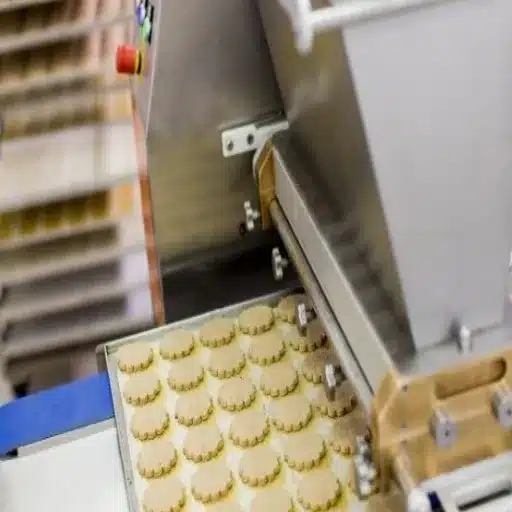
Screw flights, barrels, dies, belts, and rollers benefit from coatings that reduce product buildup and friction. In a snack extrusion line, a fluoropolymer-coated die helps sticky masa release cleanly, reducing changeover time. In a pasta production line, coated forming dies keep dough from tearing and extend cleaning intervals.
A bakery in Eastern Europe learned this the hard way. Its uncoated bread crumb conveyor collected sticky residue every shift. After switching to a PTFE-coated belt and side rails, the crew cut post-shift cleaning from 45 minutes to 15 minutes. The coating paid for itself in labor savings within three months.
Tanks, Hoppers, and Storage Vessels
Internal linings protect tanks and hoppers from acidic foods, dairy products, and aggressive cleaning agents. PFA and epoxy phenolic linings are common in dairy, beverage, and sauce applications. The coating must resist the specific food chemistry and the temperature of clean-in-place (CIP) cycles.
When specifying a tank lining, ask for migration test data relevant to your product category. A coating that performs well with neutral foods may not hold up under acidic or fatty conditions.
Cutting, Slicing, and Packaging Equipment
Blades, slicers, forming dies, and sealing heads need hard, smooth surfaces. Thin dense chrome and electroless nickel improve wear resistance and reduce galling. Fluoropolymer coatings on sealing bars prevent film sticking and improve package quality.
In a meat processing plant, thin dense chrome on slicer blades extended blade life by roughly 30% and reduced the frequency of blade changes. Fewer blade changes meant less downtime and lower risk of metal contamination from worn edges.
Facility Floors and Walls
While not part of the machine itself, facility coatings support the same hygiene goals. Seamless epoxy or polyurethane floors with coved bases eliminate grout lines where bacteria can hide. Antimicrobial additives add another layer of protection. The antimicrobial coatings market was valued at 13.1 billionin 2024 and is projected to reach 13.1 billion in 2024 and is projected to reach 39.8 billion by 2032, growing at a 14.90% CAGR, with food processing and packaging as key drivers.
Benefits Beyond Compliance
Beyond compliance, the real value of well-specified coatings shows up in daily operations.
Extended equipment life. Corrosion and abrasion are two of the biggest causes of premature equipment failure. A protective coating slows both.
Reduced downtime. Smooth, non-stick surfaces clean faster and require fewer unplanned stops. Operations that switch to properly coated equipment often report 20–25% reductions in cleaning-related downtime.
Easier sanitation. Non-porous coatings do not harbor bacteria the way pitted or cracked metal can. This supports faster, more effective sanitation and helps pass third-party audits.
Energy and waste savings. Less product sticking means less scrap. Better release can also reduce the energy needed to push product through dies and conveyors.
Lower total cost of ownership. The upfront cost of a certified coating is usually small compared with the cost of unplanned downtime, shortened equipment life, or a failed audit.
How to Choose the Right Food Safe Coatings for Industrial Equipment
Selecting a coating is a matching exercise. Start with your process conditions, then narrow the options.
- Identify the contact zone. Is the surface in the food zone, splash zone, or non-food zone? This determines the certification level required.
- Define temperature exposure. Daily operating temperature, peak temperature, and thermal cycling all affect coating choice.
- List cleaning chemistry. Caustic, acidic, quaternary ammonium, and peroxide-based cleaners attack coatings differently.
- Assess abrasion risk. Moving parts, sliding contact, and particle flow demand harder coatings such as thin dense chrome or ceramic-reinforced epoxy.
- Match the food type. Fatty, acidic, sugary, or salty foods create different chemical stresses.
- Check regulatory scope. Confirm which markets the equipment will serve and which certificates are needed.
- Review lifecycle cost. A lower-priced coating that fails early is rarely the cheapest option.
When talking to a coating supplier, request a declaration of compliance, migration test data, SDS sheets, and NSF certificates. If you are an equipment exporter, verify that the coating meets the rules of every destination country.
Maintenance Best Practices for Coated Equipment
Even so, the best coating will fail if it is abused. Build these habits into your maintenance plan.
Use approved cleaning agents. Aggressive chemicals outside the coating’s rated range can cause discoloration, softening, or delamination. Check the supplier’s chemical resistance guide.
Control temperature. Avoid heating coated surfaces above their maximum rated temperature. Thermal shock from rapid temperature swings can also damage coatings.
Inspect on a schedule. Look for chips, scratches, peeling, and discoloration. Catching damage early allows local repair instead of full re-coating.
Avoid metal tools and abrasive pads. Plastic or silicone scrapers are less likely to gouge the surface. Abrasive pads can remove coatings and create harborage points.
Plan re-coating before failure. Most coatings have a finite service life. Track run hours and cleaning cycles, and schedule re-coating during planned shutdowns.
Common Mistakes to Avoid
Unfortunately, mistakes in coating specification are expensive because they usually show up after equipment is installed. Avoid these pitfalls.
Treating “food safe” and “food grade” as interchangeable. They are not. Use food-grade certified coatings for any surface that contacts food or condensate.
Skipping surface preparation. A coating is only as good as the surface beneath it. Oil, rust, and poor blasting cause adhesion failures.
Using non-contact coatings in food zones. A durable industrial powder on an equipment frame is fine. Inside a hopper, it may not be.
Ignoring chemical compatibility. A coating that survives caustic cleaning may fail under acidic CIP cycles. Match the chemistry.
Failing to document compliance. Auditors will ask for certificates. Keep them organized and up to date.
Frequently Asked Questions
What are food safe coatings for industrial equipment?
Food safe coatings are protective layers applied to machinery and facility surfaces that operate near or in contact with food. They prevent corrosion, reduce bacterial harborage, improve release properties, and make cleaning easier. The right coating must match the equipment zone, food type, temperature, and cleaning chemistry.
What is the difference between food grade and food safe coatings?
Food grade coatings are certified for direct or indirect food contact under standards such as FDA 21 CFR and NSF/ANSI 51. Food safe is a broader term that usually means non-toxic and suitable for incidental proximity to food, but it may not carry formal certification for direct contact.
Are powder coatings safe for food processing equipment?
Yes, but only if these materials are specially engineered and approved for food contact. There are NSF/ANSI 51 and NSF/ANSI 61 certified powders for coating equipment used in the food industry and components for potable water. Verify that your coating is certified for particular equipment zone.
What temperature can food safe coatings withstand?
TThe temperature ranges differ depending on the chemistry. For example, PTFE and PFA are rated for temperatures up to 260°C / 500°F, FEP is good for up to 204°C / 400°F, ETFE is good for 149°C / 300°F. Always match the coating to peak operating and cleaning temperatures.
How do I know if a coating is FDA compliant?
Ask the coating supplier for a declaration of compliance or food-contact certificate. The FDA does not approve individual coatings; it regulates the raw materials. Verify that every ingredient is listed in 21 CFR and used within permitted limits.
When should I re-coat food processing equipment?
Re-coat when you see visible damage such as chipping, peeling, discoloration, or loss of release properties. Planning re-coating during scheduled shutdowns is far cheaper than emergency repairs after a coating failure.
Conclusion
Food safe coatings for industrial equipment are more than a finish. They are a compliance tool, a hygiene control, and a reliability investment rolled into one surface. The right coating keeps food from sticking, metal from corroding, and auditors from finding problems.
Start by defining the contact zone and the process conditions. Match the coating family to the challenge. Verify certifications for every market you serve. And specify coatings during equipment design rather than retrofitting them later. That is how you turn a surface decision into a production advantage.
At Shandong Loyal Industrial Co., Ltd., we design turnkey food production lines with surface finishes and coatings selected for real production environments. If you are planning a new line or upgrading existing equipment, contact our engineering team. We will help you specify coatings that protect your product, your equipment, and your compliance record.