Do you ever wonder when you pour a bowl of corn flakes in the morning how those golden, crispy flakes reached your kitchen table from cornfield? Corn flake cereal is a breakfast staple liked by millions across the globe, but few know the amazing process behind its making. This article will show you through the whole journey, revealing how corn flakes are produced and processed, starting from the harvesting of the raw corn to the final packaging that goes to the stores.
Whether you are a cereal lover, a curious person, or a content creator looking for manufacturing insights, this post promises a delightful and thorough uncovering of steps, innovations, and accuracy that are involved in the making of your favorite morning meal.
History of Corn Flakes
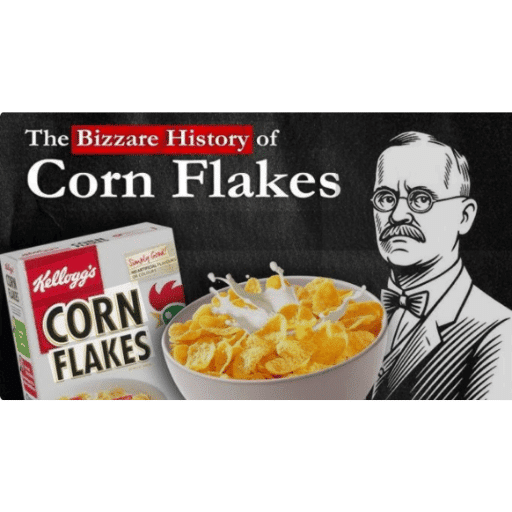
Corn flakes were first created in the late 19th century by Dr. John Harvey Kellogg and his brother, Will Keith Kellogg. The cereal, which was initially designed for a health-focused diet of the patients at the Battle Creek Sanitarium in Michigan, was accidentally made when boiled wheat was left to dry and then rolled into thin sheets.
The Kellogg brothers finally replaced wheat with corn, which gave birth to a new cereal with the crisp and flaky texture we know today. Will Keith Kellogg realized the commercial value of the product and started the Kellogg Company in 1906, thus making corn flakes accessible to all.
Their swift rise to popularity can be attributed to their simple nature, easy and fast preparation, plus they have always been considered a quick breakfast option, which eventually secured their place as a household staple for over a hundred years.
Invention and Origins
Corn flakes were invented in the late 1800s by Dr. John Harvey Kellogg and his brother Will Keith Kellogg, who made the cereal part of a vegetarian diet for patients in the Battle Creek Sanitarium, Michigan. The invention was unintentional and took place during an experiment with cooking wheat, which produced flakes that were very thin.
After that, they used corn instead of wheat which resulted in the crunchy texture that is characteristic of corn flakes. Will Keith Kellogg, seeing its potential, set up the Kellogg Company in 1906, thereby offering this easy and basic breakfast choice to every household across the globe.
Development Through the Years
Corn flakes have been through a major transformation in production and marketing since they were first made. Originally, they were marketed as a health food and eventually became a popular breakfast item through the innovative advertising campaigns of the Kellogg Company.
The recipe has gone through many changes and now includes different kinds such as frosted, flavored, and whole grain varieties, which have attracted and met the needs of varied consumers. Also, the improvements in production methods have made them of better quality, with a longer shelf life, and more accessible all over the world, thus maintaining their popularity among people from different eras.
Impact on Breakfast Culture
The effect of cereals on breakfast culture has been enormous, changing morning habits through its easy-to-use, affordable, and versatile character. It made fast, ready-to-eat meals normal, which matched the active lifestyle of modern societies. Cereal has offered a wide range of options to fulfill different dietary requirements and taste preferences, thus becoming a household item worldwide while simultaneously influencing food marketing and breakfast innovations.
Corn Flakes Manufacturing Process
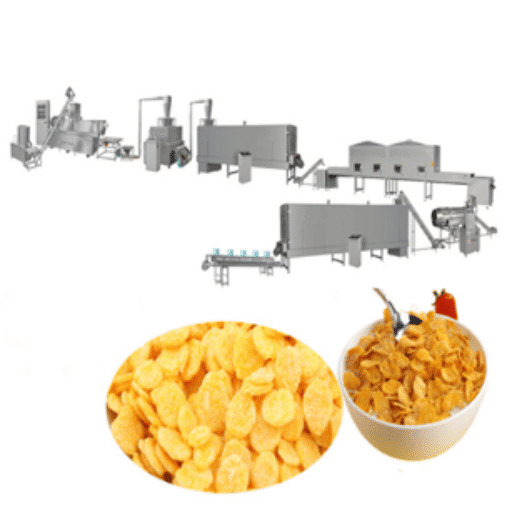
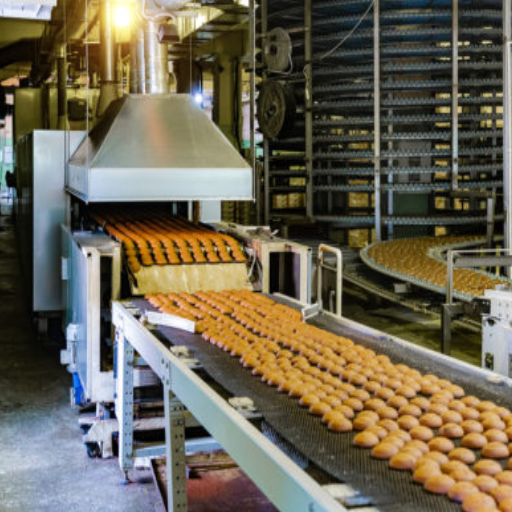
The first step in the process of making corn flakes is to mill the corn to get corn grits, which are the main ingredient. Grits are then softened by cooking them in water and flavoring agents. After the cooking process, the grits are dried, rolled, and shaped into thin flakes.
These flakes are then cooked in large ovens to get their famous crunchy texture. The last step is the packaging of the toasted flakes for distribution while keeping the freshness and quality high.
This efficient method guarantees the same texture and taste while keeping the traditional way intact that made corn flakes a reliable breakfast option.
Grain Selection and Preparation
The choice of excellent grains is pivotal to make the final product comply with the intended specifications. Only such grains are employed which are strictly examined and cleaned to get rid of impurities.
After the selection, the grains go through a rigorous washing and hulling process to remove the outer bran layer. This whole preparation process assures consistency and elevates the whole quality of corn flakes.
Extrusion Process Explained
The extrusion procedure comprises the cooking of the pre-treated cereals under very high heat and pressure, which results in a flexible paste. The paste is then pushed through unique molds to get the flake shape that is wanted.
The flakes are subsequently subjected to a flattening process which results in getting a uniform thickness that will allow them to cook properly during the next toasting stage. The process not only preserves the nutrition but also improves the texture and crunchiness of the final product.
Drying and Toasting Techniques
Drying and toasting are the essential stages in the processing of corn flakes that determine their ultimate flavor, texture, and stability. To begin with, the drying process eliminates the moisture that might otherwise lead to the spoiling of the flakes.
On the other hand, toasting at carefully regulated temperatures not only makes the flakes crispier but also gives them a rich golden-brown color. Ultimately, these methods of processing result in a product that is both attractive and durable.
Technologies and Machinery in Production
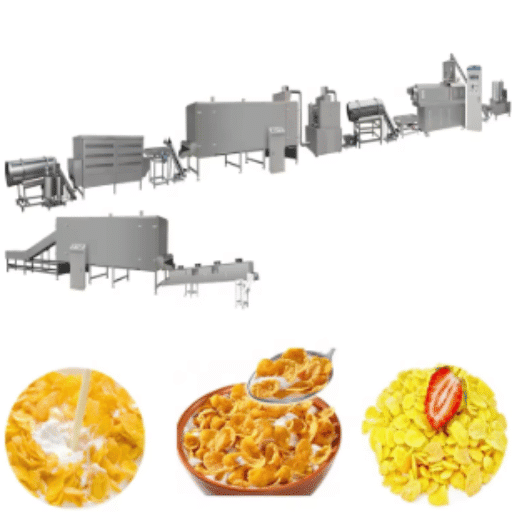
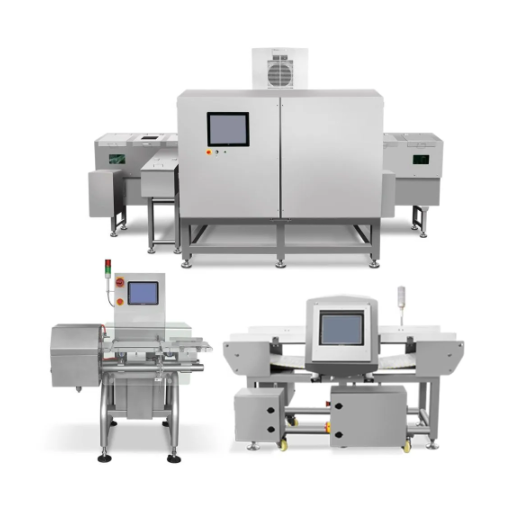
Corn flake production is a process that combines advanced technologies with specialized machinery to achieve both efficiency and quality. The main equipment that facilitates this process consists of:
- Grain Cleaning Machines: They get rid of all the impurities and make the raw grains ready for the next cooking process.
- Roller Mills: They roll the processed grains into very thin flakes with precision and uniformity.
- Extrusion Machines: They process and shape the grains in controlled heat and pressure to produce the flakes’ base.
- Dryers and Roasters: They give the flakes the wanted texture by drying and toasting them.
- Packaging Systems: They keep the product fresh by using vacuum sealing and automated packing processes.
The above-mentioned technologies work hand in hand to make the production process easier while still setting the highest standards for consistency, taste, and quality.
Machinery Used in Grain Processing
The processing of grains employs specific machines that are capable of reducing costs and improving the quality of the end product at the same time. The main pieces of equipment are:
- Cleaning Machines: Get rid of impurities including dirt, stones, and dust.
- Milling Equipment: Reduce the whole grains to flour or meal with very accurate control.
- Flaking Machines: Roll and compress the grains for cereals and snacks.
- Dryers: Lower moisture level in order to enhance the life of the product.
- Packaging Machines: Products are sealed and packed in a way that their freshness is preserved.
The individual functions of these machines are very important in the process of making products out of raw grains. Consistency is kept and the production workflows are optimized.
Extrusion Equipment Overview
Extrusion apparatus is a key part in the shaping and cooking of food products by pushing the material through a die with the desired shape at a controlled temperature and pressure. Due to its characteristics of uniformity, improved textures, and increased safety, this method is widely adopted for the production of snacks, cereals, pet foods, and pasta.
The contemporary extruders not only have technical advancements such as low power consumption, accurate parameter controls, and multi-use capability but also enable the manufacturers to produce high-quality products efficiently and quickly.
Packaging Technologies
Packaging technologies are essential for maintaining the quality of products, extending their shelf life, and securing safe transportation. Advanced packaging solutions, like vacuum sealing, modified atmosphere packaging (MAP), and smart packaging with sensors, are progressively being employed in order to boost product freshness and traceability.
Not only are these technologies compliant with the safety regulatory standards, but they also satisfy the consumers’ demands for sustainability and convenience.
Innovations in Corn Flakes Manufacturing
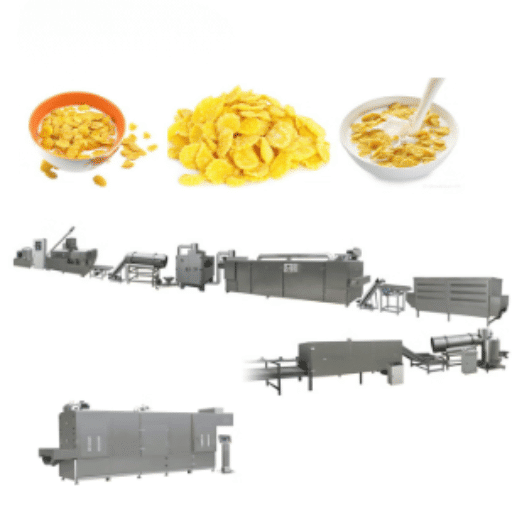
The latest developments in the production of corn flakes are aimed at improving the production process, sustainability, and the quality of the product. Modern extruders can now maintain every batch’s consistency by precisely controlling the texture and flavor profiles.
The automation of packaging systems has come a long way too, making it possible to have a quicker process while still doing airtight sealing to keep the product fresh. Also, energy-saving drying and roasting methods are cutting down both emissions and expense of manufacturing.
All these technologies work together to make the process more efficient, to have the products less varied and to keep meeting the consumers’ demand for eco-friendly practices in food production.
New Flavor Developments
Flavor development is a very dynamic area which continuously changes according to consumers’ demands for new and interesting tastes. Cutting-edge trends feature bold and wild mixes of flavors, such as sweet-spicy combinations, and hints of yuzu citrus or gochujang.
At the same time, the use of natural and organic flavoring has created a market for health-oriented customers. These days, companies can use AI and analytics to identify flavors even before they appear and to produce goods that will be accepted by specific groups while keeping the same standards and being able to scale.
Nutritional Enhancements
The progress in nutritional science has helped brands to go a step further by using bioactive substances that are capable of taking care of the health concerns of consumers. The above-mentioned upgrades make it possible to have not only vitamins, minerals, probiotics, and plant-based proteins in the products but also lower the sugar, sodium, and artificial ingredients.
Companies that utilize AI information can know the latest nutritional trends and formulate products that will be able to satisfy the future demands of the market, thus guaranteeing not only better health advantages but also consumer preference alignment.
Future of Cereal Products
Innovation, personalization, and sustainability are the main points around which the future of cereal products is going to revolve. The companies are probably going to direct their efforts toward producing nutrient-rich options that cater to special dietary needs like high-protein, gluten-free, or keto-friendly recipes.
The remarkable growth of AI and market analysis will enable companies to produce cereals that are extremely customizable, with unique ingredients and flavors made just according to individual preferences.
Besides, sustainability will be of prime importance with the reduced use of non-biodegradable packing materials or unreasonably sourced ingredients as a way to attract environmentally friendly consumers. The main impacts of these phenomena will be that cereals will be quite close to the new and modern health, convenience, and ethical values that will ensure their survival in the changing markets through constant adaptation.
Reference Sources
- Kellogg’s Target Audience Analysis – The audience that includes families, children, and health-conscious people, who are all focused on Kellogg’s flagship product, corn flakes.
- Maximize Market Research – Corn Flakes Market – Offers a comprehensive view of the corn flakes market, covering areas such as trends, target groups, and market predictions.
- Cambridge Journal – Targeted Advertising in the Breakfast Cereal Industry – Presents the tactics of advertising used in the cereal industry, with emphasis on kids and families.
- Food Machinery 2000 – A company in the field of machinery that deals with the sale and purchase of food processing machines, including the production line for corn flakes.
- Steep Hill Equipment – Provides buying and selling services for food processing machines, including cereal production lines.
Frequently Asked Questions (FAQs)
What are the main steps in corn flakes processing?
The whole procedure generally comprises cleaning and conditioning corn, cooking, flaking, toasting, and finally packing.
What equipment is used in corn flakes production?
The main machines used are corn cookers, flaking rollers, dryers, toasters, and packaging devices.
What type of corn is used for making corn flakes?
Dent corn is commonly the corn of choice due to its high-starch content and suitability for flaking.
Can corn flakes be made gluten-free?
Certainly, corn flakes can be gluten-free at their outset. However, during processing, utmost precautions should be taken to eliminate the risk of cross-contamination.
How are corn flakes flavored?
Flavoring is done as part of the coating process, wherein either a syrup or a powder is applied to the flakes.
From the accidental discovery in the late 1800s to today’s advanced manufacturing processes, corn flakes remain a testament to innovation and tradition in breakfast cereals.