To produce fish feed of the best quality is the first step, to guarantee the health and development of fish in any situation using either small aquaculture or big commercial fish farms. A fish feed production line is complete, providing nutrients that meet the specific requirements of different fish species. This blog article will thoroughly guide you through the setup of a fish feed production line, discussing each step of the process and providing you with insights into the technologies, equipment, and good practices used. Be you a novice in aquaculture or a seasoned operator striving for optimized output, this write-up will furnish you with the information required for elevating your fish farming to a new height.
Introduction to Fish Feed Production
Fish feed production is the procedure of making healthy and well-balanced diet solely designed to the fish species’ different dietary needs. It involves selecting the best quality raw materials, formulating the necessary feed mix, and transforming it into pellets or another form. The main objective is to promote excellent fish health, rapid growth, and efficient feed conversion in the aquaculture system while maintaining water quality. By understanding the production essentials, fish farmers can provide the right nutrition, thereby increasing the efficiency of the entire farming process.
Importance of Fish Feed in Aquaculture
The significance of fish feed in modern aquaculture cannot be overstated, as it provides the necessary nutrients to cultured fish in a balanced way, aiding their health, growth, and productivity. With the world looking for more seafood, the aquaculture industry will continue to grow and the quality and effectiveness of the fish feed will be of great importance. The main ingredient in the feed will be the high-protein fish meal and oil which is highly digestible and nutritious for the fish. Proper nutrition impacts not only the growth rate and health of fish but also the sustainability of aquaculture practices by reducing waste output and enhancing water quality. Therefore, the implementation and production of nutrient-rich fish feed are essential for the supportive sustainable aquaculture systems and global food security issues.
Overview of the Fish Feed Production Line
The production line for fish feed typically consists of several key phases through which high-quality feed pellets are produced for use in aquaculture. Initially, the grinding stage reduces the size of the raw materials, which includes fishmeal, soybean meal, corn, and other nutrients, into an excellent powder. By doing this, the right consistency for further processing is achieved. Afterwards, the mixing of the ingredients is done so well that a balanced nutritional composition is obtained. Then, the mixture is subjected to either extrusion or pelleting, where it is formed into pellets under extreme temperature and pressure. This method makes the feed more digestible and less microbiologically contaminated. The pellets are then subjected to a drying process which is meant for moisture removal in excess, thus prolonging shelf life, and eventually the pellets are cooled and packaged for later distribution. Modern fish feed production lines frequently take advantage of automation that improves efficiency and maintains uniformity in product quality, thereby promoting the adoption of sustainable aquaculture practices.
Types of Fish Feed: Floating vs. Sinking Pellets
Floating and sinking pellets are the two main types of fish feed, differing in buoyancy, feeding habits, water quality impact, and nutrient retention.
Components of a Fish Feed Production Line
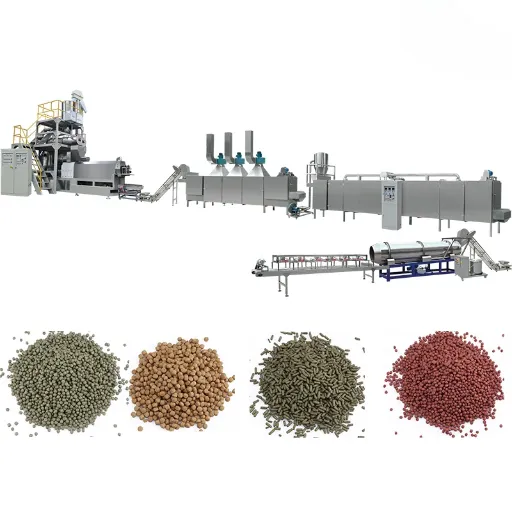
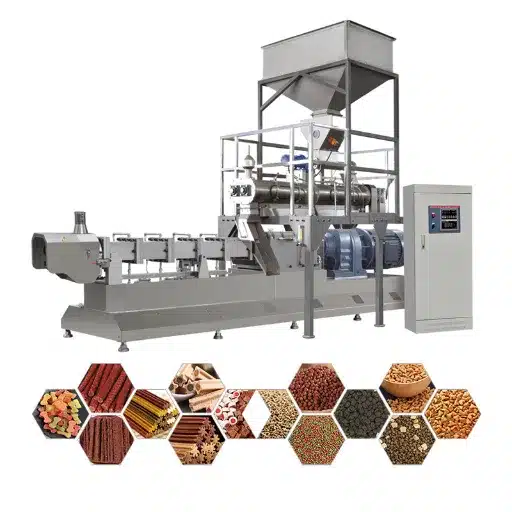
A fish feed production line generally comprises several essential parts, each of which plays an indispensable role in the manufacturing process. The main parts are:
- Raw Material Grinder – Turns raw materials into wonderful particles that feed production can be done uniformly.
- Mixer – Provides comprehensive mixing of ingredients, resulting in a consistent feed blend.
- Extruder – Forms the feed into pellets that either float or sink by means of high-temperature extrusion.
- Dryer – Takes moisture out of the pellets which improves their storage life.
- Oil Sprayer – Applies oil or nutrients to the pellets to enhance their nutritional value.
- Cooling System – Reduces the temperature of the pellets after drying to keep quality.
- Packaging Machine – Places the final feed product in bags or containers for storage and distribution.
The collaboration of these components results in the creation of superior-quality fish feed that has been customized for particular species and feeding requirements.
Raw Materials for Fish Feed
Fish feed is usually made up of a mixture of high-quality raw materials to cater to the different species’ nutritional needs. The main components are:
- Fish Meal – The primary protein source which is very important for the fish’s growth and development.
- Soybean Meal – A plant-based protein that is produced sustainably and is quite popular at the same time.
- Cereal Grains – Such as corn, wheat, etc., which are the sources of energy and also digestive starch.
- Fish Oil – Gives the required fatty acids that the fish need for their proper and healthy development.
- Vitamins and Minerals – These are added to keep the diet balanced and the fish to have good physiological conditions.
- Binders – Like starches, to make the pellets stick together better and therefore less waste.
They are not only the ingredients but also the ones that nature provides us with. Additionally, the selection is done perfectly, and the ratios are so matched as to come up with feed options that are nutritionally complete and sustainable.
Feed Mill Machinery Overview
The production of top-grade animal feed requires feed mill machinery that is indispensable. It mainly consists of essential parts like grinders or hammer mills for size reduction of raw materials, a mixer for uniform blending of ingredients, a pellet mill for making pellets of the same size and shape, and a cooler for reducing pellet temperature and preserving quality. Moreover, conveyors and storage systems facilitate the smooth movement and handling of materials in the production process. The entire setup of machines is aimed at efficiency, nutritional quality, and waste minimization, respectively.
Extruder Machine Functionality
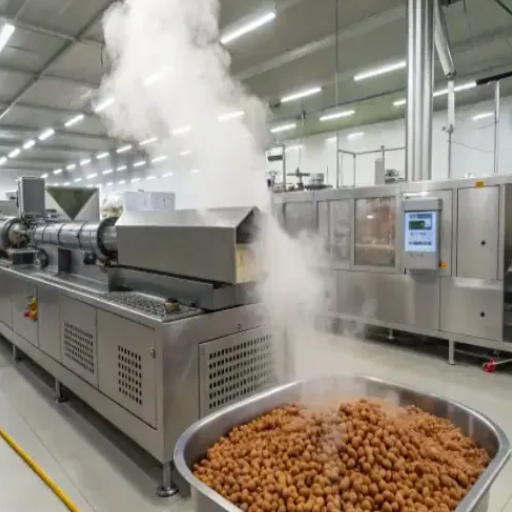
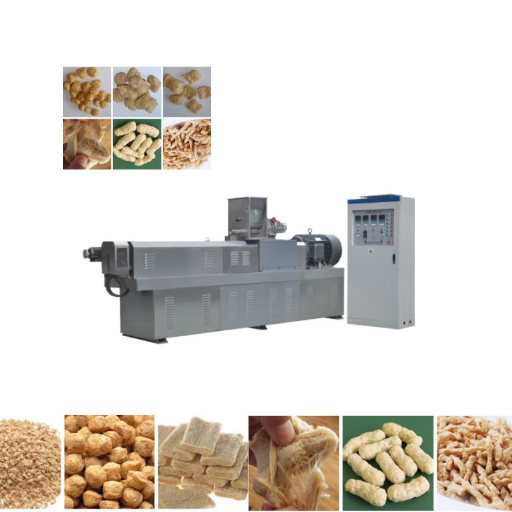
The extruder machine is key to the processing of animals’ food, pet food, and aquafeed since it first cooks the material by applying high temperature and pressure, then shapes it. The machine produces feed with a wide range of shapes and sizes, tailored to specific dietary requirements, by pushing raw materials through a die. The extruder works by cooking the starch, making the protein soluble, and killing the bacteria. This process, which enhances the nutritional quality and digestibility of the feed, is accomplished by the combined action of mechanical shear, moisture, and heat. In addition, modern machines for extrusion are equipped with control apparatus that allows the operator to make precise adjustments to process parameters, such as temperature, pressure, and screw rotation speed, to achieve the desired results with minimal power consumption. This feature positions the extruder as an irreplaceable and multi-functional device in the feed production area.
Process of Fish Feed Pellet Production
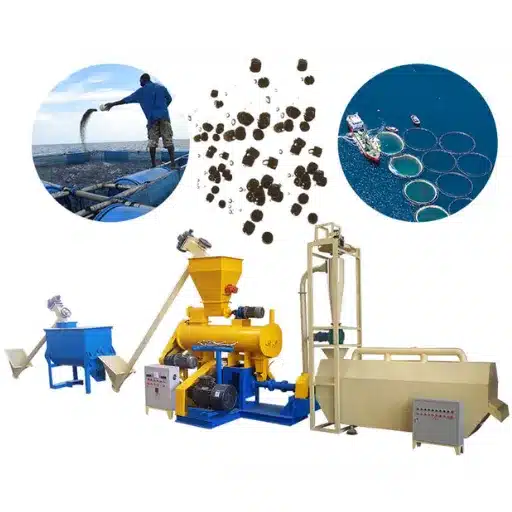
The stages of fish feed pellet production are crucial throughout the entire process. Initially, raw materials like grains, fishmeal, and other additives are ground very finely to ensure they are all the same size. Then, the components are taken, weighed, and mixed up together in a way that a well-balanced formulation is achieved. The next step is an extrusion where the combined feed goes into the extruder machine, undergoing high-temperature and pressure cooking to produce pellets. The pellets are sliced to the proper geometry, dried to remove excess water, and then cooled to ensure their structure is not affected. The pellets are then packed and kept in a controlled environment until they are sent out to distributors to maintain their quality.
Grinding and Mixing Raw Materials
Grinding and mixing are essential stages of the production process that ensure the feed achieves the correct consistency and the nutrients are evenly distributed. The first step involves grinding raw materials like grains, cereals, and protein sources using either hammer mills or roller mills into smaller particles. This procedure makes it easier for animals to digest the feed and improves the texture of the feed. Next, the finely ground powders are mixed in exact proportions according to the nutritional formula. The use of modern mixing equipment, such as paddle mixers or ribbon blenders, facilitates the uniform distribution of nutrients, which in turn positively affects the performance and health of the livestock.
Extrusion Process for Fish Feed Pellets
The extrusion process is one of the most essential methods in fish feed production, changing the raw materials into pellets of the same sound quality and shape. The process starts with preconditioning the feed mix, in which steam and heat are used to cook and lightly moisten the ingredients. Then, the conditioned feed is pushed through the extruder die at very high pressure and temperature. This process expertly combines mechanical shear and thermal energy to gelatinize starches, denature proteins, and decrease anti-nutritional factors, thus enhancing the digestibility and nutrient availability for the aquatic species. Following the extrusion process, the pellets undergo a drying stage, where part of the moisture is removed, extending the product’s shelf life. Depending on the formulation, pellets that float, slowly sink, or sink can be produced to meet the feeding behaviors of particular fish species.
Cooling and Drying of Pellets
The cooling and drying process is critical to the quality and stability of the pellets. By cooling, the temperature of the freshly extruded pellets is reduced, diminishing the likelihood of nutrient degradation and preserving the pellets’ conformation. Generally, counter-flow coolers will be employed, where the heat and moisture leave the pellets while keeping the condensation from forming. The cooling stage precedes drying and reduces the moisture content to a preferred level, typically between 8-12%, making the pellets stable for long-term storage and resistant to mold development. The critical nature of this stage to prolong the storage life and nutritional value of the feed before packaging and distribution cannot be overstated.
Types of Fish Feed Pellets
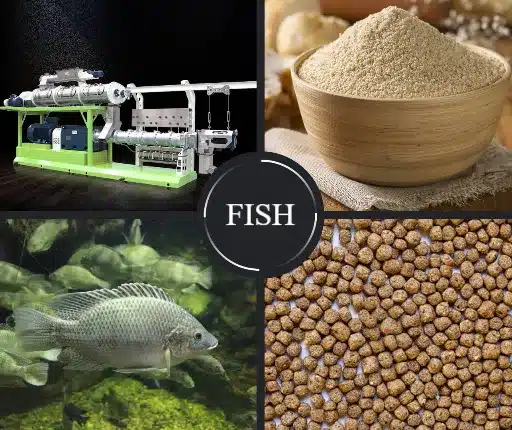
There are three primary types of fish feed pellets: floating, sinking, and slow-sinking pellets.
Floating Fish Feed Pellets
Pellets of fish feed that float have been specifically formulated to stay on the top layer of the water and therefore are great for fish that eat at the top. Fish farmers can easily monitor feeding behavior and the amount of food consumed with these pellets, which in turn helps reduce waste and improve feeding efficiency. Tilapia, catfish, and koi are some of the fish species that can be fed floating pellets, which not only provide the required nutrition but also stimulate the fish’s feeding habits. They are priced in a moderate range and are especially beneficial in aquaculture systems where monitoring is essential for proper management.
Sinking Fish Feed Pellets
Sinking fish feed pellets are designed in a way that they will sink quickly to the bottom of the water, making it very suitable for those fish species which live at the bottom of the water like shrimp, catfish, and some types of ornamental fish. Thus, these pellets will guarantee the fish species that stay at the lower levels of the water column getting adequate nutrition. Aquaculture systems where feeding is not easy to see from the surface or where food competition can happen among different species would often use sinking pellets. Sinking pellets are usually heavier than floating ones and might even contain special ingredients chosen for bottom feeders’ nutrition. Using sinking pellets appropriately leads to reduced feed losses and enhanced growth of specific fish species.
Aquatic Feed Pellet Variations
Aquatic feed pellets are available in diverse shapes and sizes, where each is specifically made to match particular species, their feeding behaviors, and the environment they live in. The floating, sinking, and slow-sinking pellets are the most common types. Floating pellets are suited for surface feeders, which means that the fish’s health and feeding habits can be observed easily. Sinking pellets are meant for bottom-dwelling species, as mentioned above, and they also help to keep a balanced spread of feed in the aquatic environment. Sinking pellets, on the other hand, are designed to take longer to settle, thus allowing use by mid-water feeders.
The choice of the pellet type is based on the cultivated species, their natural feeding behaviors, and the farming system applied. Innovative aquatic nutrition technology has also led to the creation of special pellets fortified with probiotics, vitamins, and other additives to support health, boost color, and increase immunity. By the selection of the right pellet type and formulation, aqua farmers can not only have control over growth rates but also reduce feed wastage and maintain a sustainably farming environment.
Setting Up a Fish Feed Mill
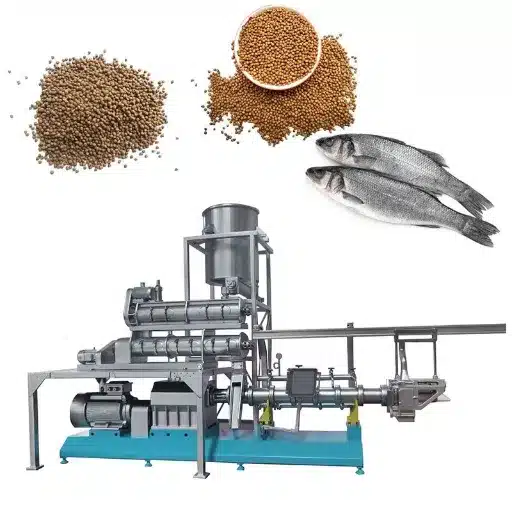
Establishing a fish feed mill is a complicated process that requires several critical steps to be executed correctly for the mill to be efficient and eco-friendly. First off, find a site that can be well-supplied with resources, have power and water supply. Then, purchase top-notch equipment, including grinders, mixers, pelletizers, and dryers, that correspond to the types of feed intended and the capacity of production required. Besides that, make arrangements to store raw materials and finished products properly to avoid affecting their quality. The location needs to obtain the proper licenses, carry out quality control, and train the workers in the appropriate production methods. A fish feed mill that is appropriately planned and run efficiently will be a success.
Designing the Feed Mill Plant Layout
Efficient feed mill plant layout has to be designed with meticulousness and detail-oriented to maximize productivity and minimize operational costs. The layout should embody a daily routine so that there is no disruption in moving raw materials, intermediate products, and finished feed. The main parts of the plant, including raw material intake and storage, grinding and mixing stations, pelleting and drying units, and finished product storage, should be arranged to facilitate the movement of materials through the process. It is essential to provide enough space for the equipment and access for maintenance as well as proper ventilation and dust control systems to create a safe working environment. Using automation technologies can be a factor in improving efficiency by lessening the manual handling and at the same time guaranteeing the production quality being consistent.
Choosing the Right Equipment
Choosing the right equipment for your operation involves thoroughly understanding your production needs, budget, and material specifications. To start, list the main processes that are part of your workflow, raw material handling, mixing, pelletizing, or drying. Then look for equipment solutions from well-known manufacturers, taking into account energy efficiency, durability, and capacity to fulfill your production needs. Assessing the equipment’s compatibility with automation systems is crucial for enhancing flexibility and scalability in the future. Discussions with industry experts or suppliers, along with reading customer testimonials, can provide the insights needed to choose equipment that will likely boost productivity and align with your operational goals.
Factors to Consider in Feed Production Line Setup
Raw Material Quality
Ensure the raw materials used are not only of the highest quality but also comply with industry standards, guaranteeing the consistency and safety of the feed products.
Equipment Efficiency
Buy machines with a high energy efficiency rating and low maintenance requirements, so that production costs can be optimized and downtime reduced.
Production Capacity
Choose the equipment that is suitable for your present production requirements but at the same time allows for future expansion as the market demand increases.
Automation and Control Systems
Automate the process and introduce sophisticated control systems to attain uniformity, decrease human error, and boost the overall efficiency of the operation.
Compliance with Regulations
Implement a system to ensure the production line complies with local and international regulations regarding safety, environment, and feed quality.
Reference Sources
-
Animal Feeds Production Information System – Discusses considerations for production processes and the role of computerized systems in the animal feeds industry.
-
Design of an Automatic Fish Processing Line Using Machine Learning – Explores the design and layout of a compact production line plant, which may include relevant insights for fish feed production.
-
Development and Evaluation of an Automated System to Deliver a Live-Attenuated Edwardsiella Ictaluri Vaccine in Commercial Catfish Production Systems – Includes information on adapting commercial feeder designs, which could be relevant to fish feed production setups.
Frequently Asked Questions (FAQs)
What is a fish feed production line and how does it actually work?
The fish feed production line represents a comprehensive gear installation conceived for the fabrication of fish feed in the form of pellets. Among the machines that it may comprise are feed extruders, feed pellet mills, and feed mixers. The method consists of the stages of mixing, extruding, cooling, and drying the finished product to make sure of its quality and longevity. The production line can be fully automated for maximum efficiency in production which is why it is often associated with large-scale production.
What are the pros of using a floating fish feed production line?
The floating fish feed production line brings many benefits to the table,among them are the production of high-quality pellets with the property of floating on water which makes their accessibility to the aquatic animals very easy. Such a feed not only reduces the wastage but also improves the efficiency of feeding. Furthermore, the extrusion method employed in the floating fish feed pellet production process guarantees the retention of nutrients, thus the fish are receiving the very best in terms of nutrition.
How do I make the right fish feed pellet machine choice?
Making the right judgement on the fish feed pellet machine depends among others on the rate of output, the species of fish being fed, and the size of pellets required. Machine capacity, feed quality and spare parts availability are factors that should be taken into consideration. High temperature and high extrusion capacity feed pellet mill could be a great enhancer for the quality of fish feed produced.
Is it possible to automate my fish feed production line?
Definitely, automatic fish feed production line is indeed a possibility and efficiency in productions can be greatly escalated. The implantation of automation systems will control and merge activities like mixing, extruding, and packing which in turn will lessen labor costs and human errors. This is an advantage especially for big feed factories with the objective of producing in large volumes.
What equipment is vital for a fish feed pellet production line?
The absolute necessity for fish feed pellet production line is feed extruder, feed pellet mill, feed mixer, and cooling system among others. Providing you with feed hammer mill for cutting down the size of particles and automatic packing machine for packing the final product are other essential equipment that might be required. Each unit of machinery is very important for the successful execution of the feed production process in terms of efficiency and quality.
In what ways does a fish feed processing line differ from a pet food production line?
The fish feed processing line has been tailored to the distinct dietary requirements and habitats of fish while the pet food line has a different overall processing succession and raw material input. Some common machines may exist in both lines like mixers and pellet mills but the differences in formulation and production technique would be significant enough to cater to fish and land-based pets respectively.