Proper feeding of your fish is germane to their health, growth, and well-being. There are varieties of fish food, from flakes to pellets and live to frozen ones. So, choosing amongst those may prove a bit taxing. Hence this guide aims to simplify the whole procedure for you. Whether you are an experienced fish keeper or a novice, we will look at the various kinds of fish food, their benefits, and how to choose the right kind for your aquatic chicken. By understanding what your fish require to eat and what constitutes feeding the options, you will obviously create a lively and thriving underwater eco-system.
Understanding Fish Feed
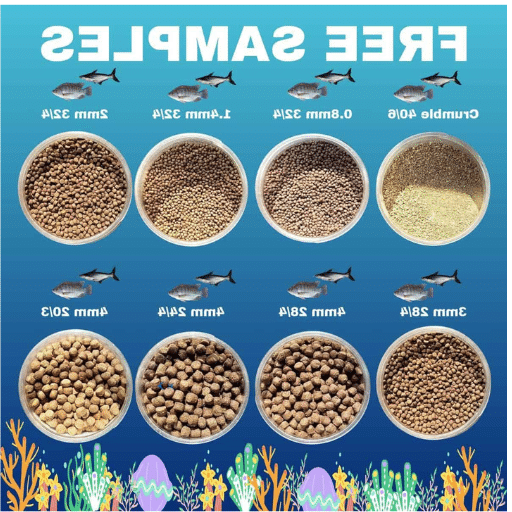
Generally, fish food can be put into three categories:
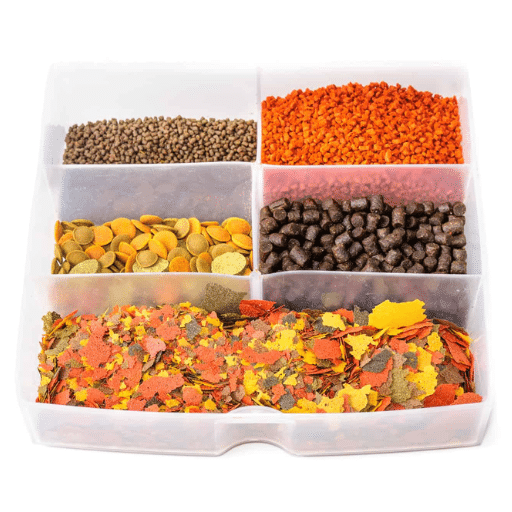
Flake Food
Best suited for most small to medium fish species. It floats on the water surface and is thus available for top feeders. Balanced nutritionally for daily feeding.
Pellets
They come in floating and sinking types; suitable for large fish or bottom feeders. They are loaded with concentrated nutrients for good growth and color enhancement.
Frozen or Live Food
These are great for carnivorous or omnivorous fish, providing a real diet and high in protein. Bloodworms, brine shrimp, and daphnia are just some of the choices.
Key Selection Factors: Choosing the right food depends on the species of fish, their feeding habits, and special dietary requirements. Ensure always that the food is fresh and uncontaminated to keep the aquatic environment healthy.
What is Fish Feed?
Fish feed constitutes a specifically formulated food given to fish in aquaculture or aquarium settings to meet the nutritional requirements for growth, reproduction, and overall health. The modern type of fish feed is formulated from a mixture of top-quality ingredients such as proteins, fats, vitamins, and minerals to simulate those in the natural diets of fishes. The fish feed, depending on or according to their species, may be in the form of pellets, flakes, granules, or live and frozen entertainments, including bloodworms and brine shrimp. Higher research and technological developments provide fish feed designed for maximizing the efficiency of utilization while simultaneously reducing its wastage and ensuring the health and sustainability of fish populations under both captive and controlled environmental conditions.
Importance of Quality Fish Food
Consistent quality fish food is of the essence as it guarantees the health, growth, and well-being of the fish. I believe quality feed promotes better nutrition and decreased wastage, which involves keeping water clean and being sustainable. Supporting thriving fish populations in both aquaculture and home aquariums will take this route.
Types of Food for Different Species
Different kinds of fish all have different diets necessary for their health and longevity. Fish food can broadly be classified into three main categories: herbivore, carnivore, and omnivore, depending on the eating habit of the species.
| Fish Type | Diet Requirements | Recommended Foods | Protein Content | Key Benefits |
|---|---|---|---|---|
| Herbivorous Fish (Goldfish, Plecos, Silver Dollars) |
Plant matter, algae, vegetable-based foods | Algae wafers, spirulina-based pellets, blanched vegetables (zucchini, spinach) | Lower protein, high fiber | Enhanced immunity and coloration, improved digestion |
| Carnivorous Fish (Bettas, Arowanas, Oscars) |
Protein-rich feed | Live brine shrimp, bloodworms, feeder fish, high-quality protein pellets | Above 40% | Muscle building, growth promotion, enhanced coloration |
| Omnivorous Fish (Guppies, Mollies, Cichlids) |
Balanced plant and protein diet | Quality flakes and pellets, occasional live/frozen foods | 30-40% | Better overall health and energy levels |
Specialized Diets
Certain exotic or unique species have very particular dietary requirements. For example, marine species such as clownfish or tangs would need a combination of algae-based and protein-rich marine foods. The bottom feeders such as catfish or loaches would, on the other hand, have sinking pellets or wafers to keep the feeding fair.
Research Insight: Recent research has shown that the provision of species-specific feeds tailored to their habits can increase survival rates by up to 20% in aquaculture systems.
Understanding the dietary needs of different fish species contributes to their well-being, whether in home aquariums or in larger aquaculture settings. Species-appropriate diversified feeds coupled with fresh and natural options go a long way toward ensuring healthy populations that flourish.
Different Types of Fish Feed
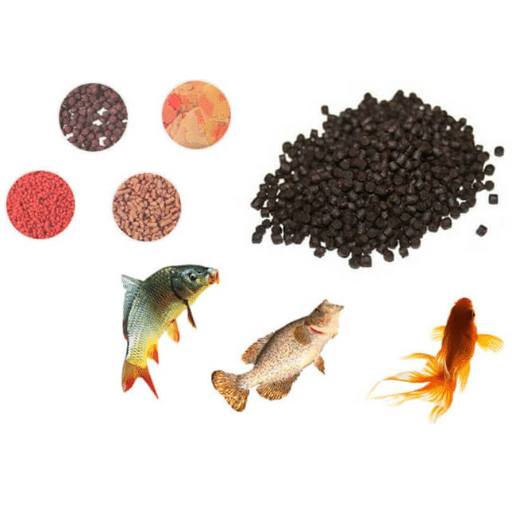
Feeds of all sorts are formulated today to meet the diverse dietary needs of various species and as a result of innovations in aquaculture nutrition. Below are the major classes of fish feed along with a little more detail:
Pellet Fish Feed
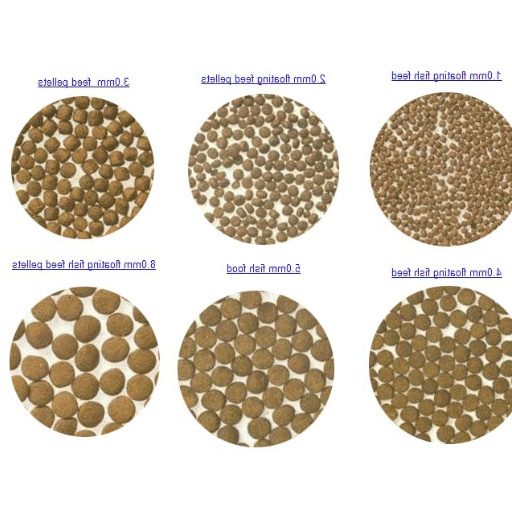
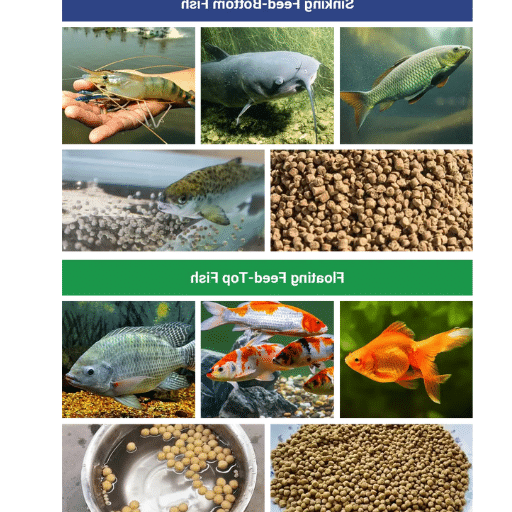
Pellet fish feed is the most widespread, coming as floating or sinking:
- Floating Pellets: Advantageous for surface feeders, who can watch feed uptake
- Sinking Pellets: Work very well for species on the bottom to ensure adequate food delivery
- Efficiency Boost: Research in 2023 demonstrated that floating pellets foster greater feeding efficiency through reduced waste by as much as 15%
Live Feed
Supplies of live feeds, such as brine shrimps, daphnia, and bloodworms, give almost every necessary nutritive element and protein. Especially during development stages, it is also vital that juvenile fish receive live feed, because the live feed represents natural prey.
Survival Rate Impact: Aquaculture researchers have demonstrated that early-stage fish undergoing live feed show about 25% greater survival rates than those fed only artificial feeds.
Frozen or Freeze-Dried Food
This is food rich in nutrition with the least retardation on shelf life, and they include several varieties such as frozen krill and freeze-dried tubifex worms. This type of feeding retains its vital vitamins while ensuring longer shelf life.
Nutritional Retention: Analysis from 2022 proves that freeze-dried feed keeps about 90% nutrients of its original kind and has been attracting more users.
Flake Feed
It is mostly used in home aquariums and ornamental aquariums. The flakes float initially and then at a slow rate of sinking, catering to feeding requirement of fishes at varying levels of the water column. While flakes are convenient to use, flakes can lose nutritional value on exposure to moisture and light, hence requiring flakes to be stored under proper conditions.
Gel-Type Feed
This feed style marries the benefit of customized nutrition with the advantage of an easily ingested texture suitable for variably feeding species. In some cases, gel-based feed is being used either for species with specialized dietary needs or as a vehicle for additives such as probiotics or medications.
Specialty Feeds
Specialized formulations for specific needs:
- Carnivorous fish feeds rich in protein
- Plant-based formulations rich in fiber and algae for herbivorous species
- Probiotic-enriched feeds for enhanced gut health and immunity
- Studies show fish given probiotics are about 10-25% more resistant to diseases
Pellet Feed: Benefits and Uses
Aquaculture farmer may choose pellet feed owing to the many advantages it affords in aquaculture systems targeted for optimum growth and sustainability. Among the benefits, it has been found that the use of pellet feed minimizes wastage. Every pellet is made ensuring that it has a well-balanced nutritional value with proteins, vitamins, and minerals required by the species. This right amount of nutrients ensures healthy growth and more efficient feed conversion while minimizing nutrients from being discharged into water systems and thus creating a big impact environmentally.
Storage & Transportation
Pellet food offers ease of storage and transportability; along with being a good alternative to manage small or large units.
Customization Options
Can be customized for particular species, growth stage, or farming conditions including temperature variance.
Enhanced Benefits
Probiotic-enriched pellets enhance immunity and survival rates by nearly 20%
Pellet feed plays a key role in providing higher yields without compromising sustainability, and, as such, its importance has gained traction globally.
Fishmeal and Fish Oil: Nutritional Advantages
With the exceptional nutritional value they offer, fishmeal and fish oil form two of the crucial ingredients in aquaculture feed. Among other things, fishmeal offers high-quality proteins and essential amino acids-an essential ingredient for the proper growth and development of farming aquatic species. Similar to fishmeal, fish oil offers omega-3 fatty acids essential for strengthening immune systems, ensuring better reproductive performance, and maintaining general health in fishes.
Sustainability Focus: Data recently demonstrated their sustainability when used properly in feed formulations. Recent studies assert that the introduction of fishmeal and fish oil in balanced proportions would further lessen feed waste and thus reduce environmental impact. Improvement of aquaculture techniques and other substitute ingredient mixes have furthered the optimization of these resources to retain a balanced approach with nutrition and ecology.
Natural Food Sources for Fish
Food sources from nature remain highly significant for aquaculture and the well-being of aquatic species. They confer nutrients and, in doing so, sustain a balanced ecosystem. Food sources for fish range from plankton, detritus, benthic algae, to insect larvae. Each of these plays a vital role in sustaining various fish species and ensuring their optimal growth.
| Natural Food Source | Primary Components | Target Fish Stage | Nutritional Contribution | Ecosystem Impact |
|---|---|---|---|---|
| Phytoplankton | Microscopic plants | Juvenile stages | Essential vitamins and minerals | Primary production base |
| Zooplankton | Tiny animals | All life stages | Protein-rich nutrition | Up to 50% of natural diet |
| Aquatic Plants & Algae | Plant matter | Herbivorous/Omnivorous | Fiber, protein, minerals | Ecosystem balance |
| Insect Larvae | Chironomids (bloodworms) | Various species | Up to 60% protein content | Alternative to expensive feeds |
Integration Benefits: Intensive research is going into supporting the natural productivity of the pond ecosystem to increase the efficiency of aquaculture systems. For this purpose, fertilization and application of probiotics are used to enhance the production of natural food such as algae or plankton, lessening the dependence upon external feeds.
It is generally agreed that sustainable aquaculture relies on maintaining a balance between natural food-stuffs and formulated feeds. An approach with such integration opens vistas to better fish health, faster growth rate, and mitigated environmental impacts, thereby fulfilling the global call for responsible aquaculture.
Feeding Techniques for Aquaculture
Importance of Feeding Strategy
Feeding strategies in aquaculture help in optimizing fish growth, improving feed conversion ratios, and minimizing environmental impacts. Efficient feeding is achieved in multiple ways, which are still improved through the introduction of new technologies.
Manual Feeding
Pros: Direct observation of fish behavior and health
Cons: Labor-intensive, inconsistent feed distribution
Best for: Small farms
Automated Feeding System
Benefits: Standardized meal routines, lower labor costs
Efficiency: 15% feed savings vs manual feeding
Environmental: Prevents water pollution from excess waste
Demand Feeding
Mechanism: Fish-triggered feed release
Advantage: Self-regulated feed intake
Best for: Intermittent feeding species
Advanced Feeding Technologies
Precision Feeding
Precision feeding has earned much favor owing to its correlation with modern technologies. By utilizing sensors, data analytics, and artificial intelligence (AI), precision feeding modifies feeding patterns automatically according to metrics measured in real-time, such as water temperature, oxygen levels, and fish biomass.
Performance Metrics: Research shows that precision feeding processes can increase feed efficiency by 20% and mitigate environmental nitrogen output by anywhere from 10% to 30%.
Integrated Feeding Practices
Integrated feeding practices include the use of natural food sources along with formulated feeds. For instance, systems promoting the algae or plankton growth that may complement feeding needs to reduce costs and environment.
Biofloc Technology Benefits: A study from 2023 documented that this mix of feeding with biofloc technology gives the advantage of enhanced fish growth and cutting feed costs by almost 25%.
Feeding Technology-to-Be
The future in aquaculture feeding lies in the further promotion of sustainable and intelligent systems. At some farms, technologies like machine vision and AI monitoring are already offering fish behavior knowledge and grasping the best feeding times. These developments, coupled with environmental monitoring solutions, are turning feeding strategies upside down for aquaculture as they close the sustainability gap.
Aquaculture, on the other hand, can further evolve in the direction of increased productivity and environmental protection and optimum resource use by adopting and merging with new-age feed technology.
How to Feed Your Fish Effectively
Efficient feeding in the fishery requires the nourishment from and the environment of the fish. Technology and data-driven information have revolutionized modern aquaculture practices. Try searching Google Trends and other resources to understand that effective feeding depends on the fish species’ nutritional requirements, observation of fish behavior, and an optimum feeding time.
Key Components of Effective Feeding:
- Use of sensors or monitoring systems to track fish activity and appetite
- Timely provisioning of food for maximum efficiency while minimizing waste
- Choosing high-quality, complete feed that complements dietary needs
- Balanced proteins, fats, and minerals for species-specific requirements
- Integration of real-time environmental data (water temperature, oxygen levels)
The application of the specified techniques together with state-of-the-art tools thus bottle promises productivity gains for fish farmers alongside promoting sustainability.
Optimal Feeding Schedules
Feeding schedules must be optimized concerning the health and growth of fish, with sustainability opportunities maintained for aquaculture. By taking advantage of up-to-date information coming through the search window of, say, the Google search engine with real-time-monitoring environmental parameters, fish farmers can fine-tune any type of feeding strategy according to the specific needs of the species.
Modern Feeding Principles: Newly developed theories are that fish should be given smaller meals more frequently during the day for better absorption and less waste in the water. Also, feeding should be done according to natural feeding times seen in the species for better results. Incorporating these methods with reactive data analytics will help farmers perfectly balance between productivity and eco-responsibility.
Adjusting Feed Based on Type of Fish
Data is crucial when determining aqua feed strategies for different fish species so as to enhance successful outcomes. From the current trends, it is more beneficial for carnivorous fish such as trout and salmon to be fed high-protein diets in the late afternoon custom-designed to match their natural hunting times. For herbivorous fish like tilapia, the compositions would be entirely different-one with plant-based diets fed more frequently and in much smaller amounts to simulate grazing.
Data-Driven Insights: Along with such search data and analytics from Google, fish farmers may also know up-trends and best practices in feed development for specific species. For instance, the searched words clearly showed a growing concern towards sustainable feed options, such as enriching feed with algae or alternative protein sources meant to minimize the ecological footprint. Merging these data trends with evolve feeding schedules would maximize the fish growth and cater to consumer demand on sustainability and eco-friendly practices.
Sustainable Fish Feed Options
Algae-Based Feed
Key Benefits: High omega-3 fatty acids, environmentally friendly
Types: Spirulina, Chlorella
Impact: 20% reduction in greenhouse gas emissions vs conventional fishmeal
Insect Protein Alternative
Primary Source: Black soldier fly larvae (BSFL)
Advantages: High protein content, short life cycle
Market Growth: 30% increase in search queries for “insect-based fish feed”
Zero-Waste Ingredients
Sources: Food waste, agricultural by-products, brewery grains
Benefits: Reduced production costs, decreased food waste
Application: Particularly effective for tilapia and catfish species
Consumer Preference for Sustainable Labels
Market Premium: Google trends highlighted the increased interest in eco-labeled or certified sustainable seafood. This change in consumer preference is so far forcing fish farmers to the sustainable feed options with minimum environmental impacts. It is estimated that global products with the label “sustainably fed,” attract a premium of up to 25%, thus providing a good opportunity for aquaculture businesses that are eco-friendly.
With these feed options, fish farming brings greater efficiency with the increasing market concern on environmental issues. This creates partnership opportunities that benefit both the industry and the environment.
Importance of Sustainability in Aquaculture
Aquaculture sustainability stands as a critical pillar addressing global food security along with the environment. With the Earth’s population predicted to reach 9.7 billion by 2050, sustainable seafood demand is thus expedited.
Search trends at Google indicate consumption patterns and demand whereby in the past 12 months, searches for the following have greatly increased:
- “Sustainable seafood practices”
- “Eco-friendly aquaculture”
- Water recycling systems
- Plant protein-based feed technologies
- Integrated Multi-Trophic Aquaculture (IMTA)
Sustainable aquaculture reduces, among other things, the impact on wild fish populations by fishing legally, maintaining biodiversity, and enabling resource use. By embracing new technologies such as water recycling systems, plant protein-based feed, IMTA, and so forth, industries can diminish their ecological footprint while satisfying market demands. Such a room aids long-term environmental health while designing pathways for the aquaculture sector to flourish amidst ever-changing consumer preferences.
Alternative Ingredients in Fish Feed
The search for alternative ingredients in fish feed has gained more momentum as the world aquaculture industry expands, thus putting pressure on traditional feed sources: fishmeal and fish oil. Recently growing awareness points to plant-based proteins, including soybeans, peas, and algae, which serve as sustainable alternatives. These alternative ingredients reduce the dependence on wild fish populations and thus minimize the environmental irrigation of aquaculture.
| Alternative Ingredient | Source Type | Key Benefits | Nutritional Profile | Market Trend |
|---|---|---|---|---|
| Plant-Based Proteins | Soybeans, peas, algae | Sustainable, reduced wild fish dependence | Moderate protein, high fiber | Steadily increasing adoption |
| Insect-Based Proteins | Black soldier flies, mealworms, crickets | High nutrition, cost-effective production | High protein content | Promising growth potential |
| Fermented Products | Yeast, single-cell protein | Biotechnological advancement | Enhanced digestibility | Growing acceptance |
Other options that the industry is looking at include insect-based proteins, considered promising from adult black soldier flies, larval stages, mealworms, and crickets because they are nutritionally very high and also made at a cheap rate. Other alternatives could be fermented products, including yeast and single-cell protein, whose acceptance is growing thanks to biotechnological progress.
Market Intelligence: Data collected from Google search engine trends show that interest in these alternative options has risen sharply over the past few years, as signified by an increase in search queries like “insect protein for fish feed” or “sustainable aquaculture feed”. This heightened interest amplifies the need for sustainable, environmentally friendly alternatives.
Using feed ingredients that are diverse and unique will enable aquaculture operations all around the world to become sturdy against resource paucity and ways that promise limited environmental impairment.
Impact of Sustainable Feeding on Farmed Fish
Sustainable feeding practices have a paramount effect on the health, growth, and the sustainability of the entire farmed-fish operation. By replacing conventional feed ingredients like fishmeal and fish oil with more sustainable alternatives like insect protein, algae-based feeds, and agricultural by-products, we allow aquaculture to reduce its dependence on dwindling wild fish stocks.
Environmental Impact Research: The Journal of Cleaner Production, in 2022, reported that even replacing 25% of fishmeal with insect protein brought about a 20% decline in greenhouse gas emissions linked with fish farming.
Sustainable feed alternatives provide a reduced environmental footprint, coupled with better nutritional constituents. For example, algae and microalgae are rich in Omega-3 fatty acids, which support the health and growth of farmed fish and increase the quality of fish for human consumption.
2023 Research Findings: Trends in Google search results for 2023 also show an increase in interest for the use of black soldier fly larvae as feed; this has been shown to offer environmental advantages and is high in protein—up to 60% on a dry matter basis.
Promoting sustainable feeding practices further builds resilience in the long term for the aquaculture sector. Therefore, diversification of feed ingredients buffers the aquaculture industry from the supply and price risks of more conventional feed components, with recent years providing ample evidence of this in record-price increases for fishmeal as concerns over overfishing and climate change mount. The shift to sustainable feed acknowledges such transformation as promoting the economic and environmental sustainability of contemporary aquaculture and hence marks a turning point toward global food security agendas.
Choosing the Best Fish Feed
While selecting the best fish feed, some factors are of utmost importance in maintaining optimum fish health, growth, and sustainability. Recent data trends show that good fish feed means a balanced amount of protein, fats, vitamins, and minerals that fulfill the dietary requirements of definite breeds and species of fish. Sustainable alternatives, including plant-based proteins, algae, or insect meal, are increasingly popular channels to cut back on the use of traditional fishmeal and fish oil resources, thus alleviating concerns of overfishing. Also, the feed efficiency, or the feed conversion ratio (FCR), is the parameter determining the economic feasibility and impact on the environment.
Probiotic Benefits: A Google search trend now reveals that aquaculture professionals are frequently searching questions about the benefits of probiotics in fish feed. Probiotics can, according to studies, enhance gut health, disease resistance, and growth performance in fish. Therefore, feeds that carry such additives are a winning factor in both small-scale and commercial aquaculture enterprises.
Fish feed manufacturers strive to provide products that help in securing the future of aquaculture in an environmentally responsible way by combining sustainability with cutting-edge nutritional knowledge.
Evaluating Nutritional Needs
The nutritional needs for a fish depend on many things, such as its species, its life stage, and the particular reason for the aquaculture. Are we growing it? Is it for reproduction? Or is it for the maintenance of health? Studies demonstrate that fish grow well on a balanced diet comprising proteins, lipids, carbohydrates, vitamins, and minerals.
Essential Nutritional Components:
- Protein: Primarily supports growth and tissue building; higher protein content with fishmeal or plant alternatives as primary sources
- Lipids: Provide concentrated energy form
- Vitamins and Minerals: Prevent deficiencies and help strengthen immunity
- Feed Conversion Ratios: Maximize efficiency while lessening environmental load
Moreover, innovations in aquafeeds, combined with insights provided by data solutions like Google’s search engine, signal considerable interest in preparing feed compositions that maximize feed conversion ratios yet lessen the environmental load. That would keep aquaculture efficiently productive and sustainable.
Factors to Consider When Selecting Fish Food
Many factors are at play while choosing fish food to maintain the health and growth of aquatic species and to promote sustainable aquaculture practices. According to recent data provided by Google’s search engine, feed selection primarily depends on the feed’s nutritional composition: there should be an adequate ratio of proteins, fats, carbohydrates, vitamins, and minerals to meet the needs of a particular species, in addition to digestibility: the best feed will be absorbed and digested by fish that can supply maximum nutrition toward their growth.
| Selection Factor | Key Considerations | Impact on Fish | Environmental Consideration |
|---|---|---|---|
| Nutritional Composition | Adequate ratio of proteins, fats, carbohydrates, vitamins, minerals | Optimal growth and health | Species-specific requirements |
| Digestibility | Easy absorption and digestion | Maximum nutrition utilization | Reduced waste output |
| Environmental Profile | Sustainable source ingredients | Long-term health benefits | Plant-based proteins preferred |
| Economic Factors | Cost vs Feed Conversion Ratio | Efficient body weight conversion | Reduced environmental impact |
Secondly, the environmental profile of the feed is also a criterion: if one can choose feed ingredients that are from sustainable sources, Plant-based proteins are always preferable, and other alternatives include industrial byproducts. Lastly, price contributes in combination with feed conversion ratios toward the selection process. Feed that has a higher feed conversion ratio is the best choice since it allows fish to turn most of their feed intake into body movement, which is good for the fish farmers economically, as well as for the environment.
Common Mistakes in Feeding Fish
⚠️ Critical Feeding Errors to Avoid
The Most Frequent Errors in Fish Feeding:
- Overfeeding: Wastes resources and affects water quality when uneaten food decays
- Ammonia Build-up: Increased ammonia levels create harmful conditions for fish
- Inappropriate Feed Selection: Wrong feeds for species or age can inhibit growth and cause health problems
- Irregular Feeding Schedules: Inconsistent timing disrupts fish behavior and health
Prevention Measures: These measures include regulating feed quantities, setting an even schedule, and using high-quality feed suited to the species. Proper feeding practices ensure optimal fish health while maintaining water quality and reducing waste.
References
-
ScienceDirect – Fish Feeds Overview: A comprehensive overview of fish feed ingredients, including marine-based and starch-rich components.
-
VTechWorks – Understanding Fish Nutrition, Feeds, and Feeding: Detailed insights into fish nutrition, feed types, and their manufacturing processes.
-
Ohio State University – Understanding Fish Nutrition, Feeds, and Feeding (PDF): A guide to commercial fish diets, including floating and sinking feed types.
-
University of Florida – Preparing Your Own Fish Feeds: Examples of nutrient-balanced fish feed formulas adaptable to specific conditions.
-
PubMed Central – Microorganisms in Fish Feeds, Technological Innovations: A scientific review of aquaculture feeds, including fishmeal, fish oil, and their ecological and economic impacts.
Frequently Asked Questions (FAQ)
What kinds of fish feeds are out there?
There are several types of feed to choose from when selecting fish feed. Some of these are pellets, flakes, and live food. Pellets are mainly for feeding large-sized fish, as they are usually sinking pellets, hence they are meant for bottom feeders. Flakes usually are fed for small fishes and surface feeders. Fish that eat brine shrimp or worms love live food, giving them their natural diet. Some feed formulas also include fish meal and fish oil to enrich their nutritional components.
How do I feed my fish a balanced diet?
A balanced diet can be ensured for your fish if different types of foods are offered to them. High-quality pellets, flakes, and occasional live food can be used. Observe fish behavior to determine how much food they eat so you can adjust your feeding amount accordingly. Including items in their diet that can also be found in their natural prey will help simulate their diets and thus promote the general health of your fish.
What are the types of fish feed used in aquaculture?
Aquaculture uses specialized feedstuffs designed for cultured fish. These include fishmeal and fish oil as the basic compounds to build muscle, ensure the health, and promote growth of fish and shrimp. The quality of feed given to fishes in aquaculture is extremely important because it directly affects the growth and health of the fishes being raised.
How much food should I feed my fish?
How much food you should give your fish depends on their size and species and on the kind of food used. But for a general guideline, you should feed adult fish only an amount they can ingest in about five minutes. Feeding should also be adjusted according to their weight and activity level to avoid overfeeding and accumulation of food in tanks or ponds.
Can I feed the new fish the same diet as my existing fish?
When adding new fish into a tank, one must factor in dietary requirements. While many types of food may be eaten by most fish, certain species may require specific diets when it comes to its health. Slowly introducing new fish to the same feed as the existing ones may help acclimate this new batch; however, keep monitoring the fish’s health and make modifications if needed.
What is the role of fish meal in fish diets?
The importance of fish meal in many types of fish diet lies in its very high protein content and also essential nutrients. A fish should have fish meal incorporated into feeds so that they have a balanced diet for growth and health-being. By mixing fish meal into the feed, fish have the ability to absorb essential nutrients for healthy existence.
Are there types of food specific to freshwater fish?
There are. Fish foods come in several variations specially formulated for freshwater fish. These feeds often have ingredients that are adapted to cover species-specific nutritional requirements. For example, some feed formulations are for herbivorous fish, while others support carnivorous or omnivorous species to provide all fish with what they require for a healthy life.
How do I choose the right kind of fish food for my tank?
Right fish food is determined by the kind of fish you have in your tank, their size, and their feeding habits. Therefore, do some research to know what food the fish in your possession prefer and find good-quality feed to match their needs. The use of a mixture of feed types, such as pellets, flakes, and live food, will contribute to a balanced and diverse diet for your fish.