Have you ever wondered how those beautiful strands of spaghetti or spirals of fusilli reach your plate? Behind every tasty bite lies a fascinating process that begins with the simplest ingredient—durum wheat. This comprehensive guide takes you through the intricate journey of pasta-making, from ingredient harvesting to the final product that graces your dinner table.
Understanding Pasta and Its Types
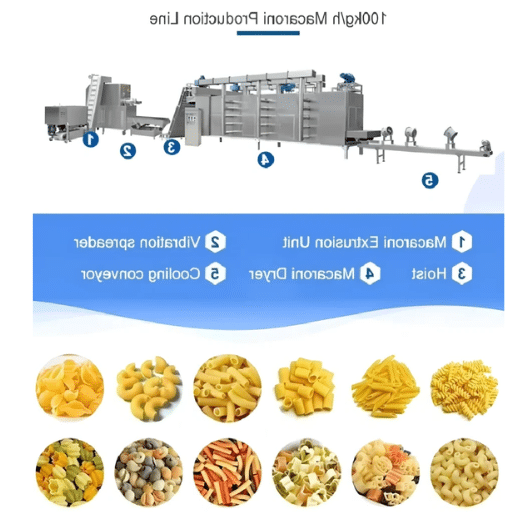
Pasta is a staple food made primarily from durum wheat flour and water, shaped into various forms. The two main categories are:
- Fresh Pasta: Softer texture, typically prepared with eggs, pairs well with delicate sauces
- Dried Pasta: Firm texture, made with durum wheat and water, complements heavy, robust sauces
Popular Types of Pasta
| Pasta Type | Shape Description | Best Sauce Pairings | Special Features |
|---|---|---|---|
| Spaghetti | Long, thin strands | Marinara, carbonara, garlic & olive oil | Most popular worldwide – 1.3M metric tons consumed annually |
| Penne | Tube-shaped with diagonal cuts | Alfredo, arrabbiata, baked dishes | Ridged version (penne rigate) holds sauces well |
| Rotini | Spiral/corkscrew shape | Herb dressings, tomato sauces | Perfect for pasta salads and casseroles |
| Lasagna Sheets | Flat, wide noodles | Layered with ricotta, meat, vegetables | “No-boil” versions available for convenience |
| Ravioli | Stuffed pasta pillows | Light butter or simple tomato sauces | Growing popularity in gourmet varieties |
| Fettuccine | Flat, thick ribbons | Alfredo, mushroom-based creamy sauces | Maintains structure with heavy ingredients |
Regional Variations in Pasta
Pasta takes on local characteristics worldwide, reflecting regional ingredients and traditions:
- Italy: Rich lasagna from Emilia-Romagna to simple carbonara from Rome
- America: Mac and cheese as a comfort food staple
- Japan: Wafu pasta with soy sauce and seafood
Trending Fact: Google search data shows pasta recipe searches peak during holidays and weekends, emphasizing its role as a comfort food for family gatherings.
Raw Materials for Pasta Production
Primary Ingredients
- Durum Wheat Semolina: High protein (12-15%) and gluten content for firm texture
- Water: Pure water for proper dough consistency
- Eggs: Added to fresh pasta for richness and smoothness
- Salt: Enhances flavor in the dough
Alternative and Specialty Ingredients
| Ingredient Type | Examples | Benefits | Target Market |
|---|---|---|---|
| Gluten-Free Flours | Rice, corn, chickpea flour | Dietary restriction accommodation | Celiac/gluten-sensitive consumers |
| Ancient Grains | Quinoa, spelt flour | Higher nutrition profile | Health-conscious consumers |
| Vegetable Additions | Spinach, beetroot, tomato puree | Natural coloring and nutrition | Visual appeal and health benefits |
| Protein-Rich Alternatives | Lentil, chickpea flour | 14.1g protein per 100g (quinoa) | Fitness and nutrition enthusiasts |
The Step-by-Step Pasta Production Process
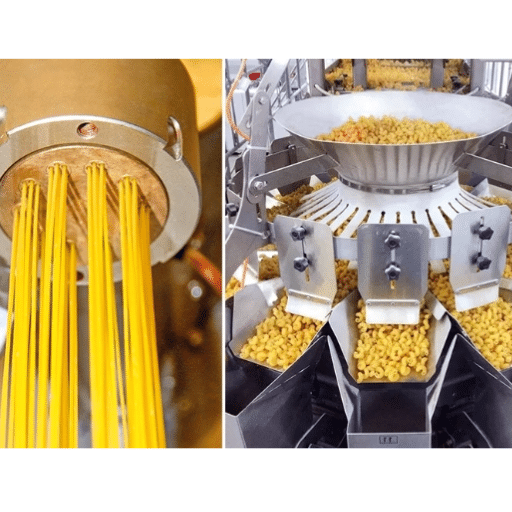
Step 1: Selection of Raw Ingredients
The process begins with careful selection of premium raw materials—durum wheat semolina or whole grain flour. Modern trends show increased consumer preference for organic and non-GMO ingredients.
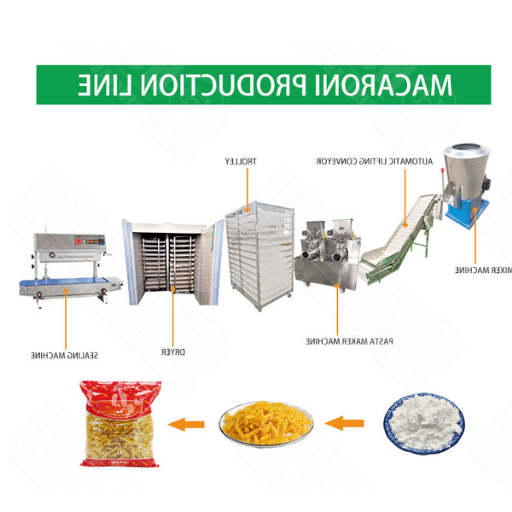
Step 2: Mixing and Kneading
Flour is mixed with water to form a consistent dough. This stage is crucial for developing the proper texture and elasticity needed for shaping.
Step 3: Shaping the Pasta
The dough is shaped into various pasta forms through:
- Extrusion: Dough is pushed through dies to create uniform shapes
- Rolling: Traditional method for flat pasta varieties
Step 4: The Drying Process
Critical for ensuring:
- Proper moisture reduction (preventing microbial growth)
- Extended shelf life
- Maintained texture and shape integrity
- Energy-efficient modern methods reduce consumption by 30-40%
Step 5: Packaging and Distribution
Final packaging using increasingly sustainable materials to meet environmental consumer demands. Modern packaging focuses on recyclable and biodegradable options.
Trends and Innovations in the Pasta Industry
Emerging Technologies
- AI and Machine Learning: 20% reduction in overproduction through predictive analytics
- Energy-Efficient Drying: 30-40% reduction in energy consumption
- 3D Printing: Custom pasta shapes with 15% less material waste
- Smart Factory Systems: IoT-enabled energy monitoring for 15-25% efficiency gains
Sustainability Practices
| Practice | Impact | Benefit |
|---|---|---|
| Closed-Loop Water Systems | 40% water savings | Reduced operational costs |
| Renewable Energy Sources | 30% reduction in CO₂ emissions | Environmental sustainability |
| Heat Recovery Systems | 30% energy savings | Lower production costs |
| Biodegradable Packaging | Reduced plastic waste | Consumer loyalty increase |
Health Trends Influencing Production
Market Growth: Gluten-free pasta market expected to grow at 9.2% CAGR from 2023-2030, driven by health consciousness.
Popular health-focused search terms include:
- “Low-carb pasta alternatives”
- “High-protein pasta recipes”
- “Organic whole grain pasta”
- “Plant-based pasta options”
Quality Control and Efficiency Improvements
Modern Manufacturing Benefits
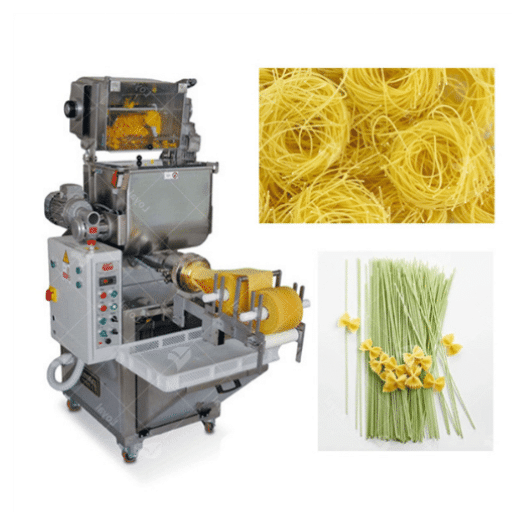
- Automation: 20% increase in production efficiency
- Real-time Monitoring: Sensors adjust mixing parameters automatically
- Waste Reduction: By-products like wheat bran used for animal feed
- Advanced Heat Exchange: 15% reduction in energy consumption during drying
References
-
Wikipedia – Pasta Processing: An overview of the pasta production process, including mixing, extrusion, drying, and packaging.
-
Made How – How Pasta is Made: A detailed explanation of the manufacturing process, covering steps like mixing, kneading, rolling, pasteurization, cutting, drying, and packaging.
-
Pasta Berruto – Pasta Production Phases: A breakdown of the seven crucial phases in the pasta production cycle, from ingredient selection to packaging.
-
Optimation – The Pasta Process: Mass Manufacturing in Food and Beverages: Insights into mass manufacturing steps, including dough preparation, extrusion, drying, and packaging.
-
PubMed Central – Pasta-Making Process: A Narrative Review: A scientific review discussing the pasta-making process, focusing on hydration, extrusion, and roll-sheeting techniques.
Frequently Asked Questions (FAQ)
What is the process to make pasta?
The pasta production process comprises a few take-home stages: select good raw materials, mix semolina with water, knead the dough, and shape it into different forms. Once pasta dough has been extruded or laminated, it is prepared for drying until it has attained its moisture content of value, ready for packaging.
How exactly is semolina used in pasta production?
The most important raw material is semolina made from durum wheat. The flour imbues the pasta with its unique texture and high protein content, which determines good quality in the final product. When semolina is mixed with water, it forms a dough in which anything can be shaped into different types of pasta.
How does extrusion form pasta?
In extrusion, pasta dough is pressed through a series of dies to obtain different shapes of pasta. The pasta formed in this manner maintains the same thickness and texture, which is crucial for cooking properties and aesthetics of the pasta. After extrusion, pasta is cut off at required length and dried.
What is the role played by the drying process in pasta production?
It is through drying that pasta achieves lower moisture content and hence a considerable lifespan with less deterioration. Therefore, drying helps in keeping the shape or texture of the pasta during cooking.
How does the durum wheat quality affect pasta?
It is the type of durum wheat one chooses that considerably affects pasta quality. For pasta to have good resistance to cooking, its semolina must contain more protein; this comes with high-quality durum wheat. This brings about good pasta that does not easily lose its shape and texture after cooking.
What are the various pasta shape designs?
There are many pasta shapes-from long pasta such as spaghetti, to short pasta such as macaroni. Each of these shapes has culinary uses that affect their cooking time and their ability to hold sauce. Thus, the choice of pasta shapes can just create or break your dining experience.
What are the different drying times?
Depending on the variety of pasta and drying mode, the drying time of pasta varies significantly. Normally, drying may take several hours, during which there is constant monitoring to ensure the pasta has adequate moisture content while retaining maximum quality.
How does fresh pasta differ from dry pasta?
Fresh pasta has eggs and a high moisture content, whereas dry pasta is made with mostly semolina and water, so it is stored longer. Fresh pasta can be cooked quickly, has a firm texture, and differs from dry one in other respects. The differences offer varied culinary solutions to each.
What is the extrusion or lamination process in pasta manufacture?
The choice of extrusion or lamination in the making of pasta significantly affects her texture and appearance. Extrusion provides a more uniform product, while lamination offers layered pasta types like lasagna. Both are crucial to industrial pasta production.