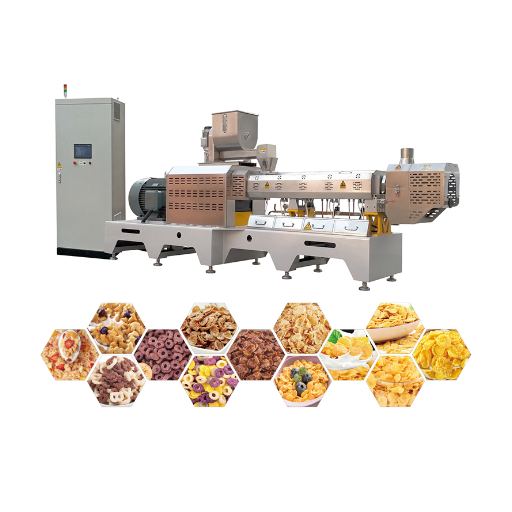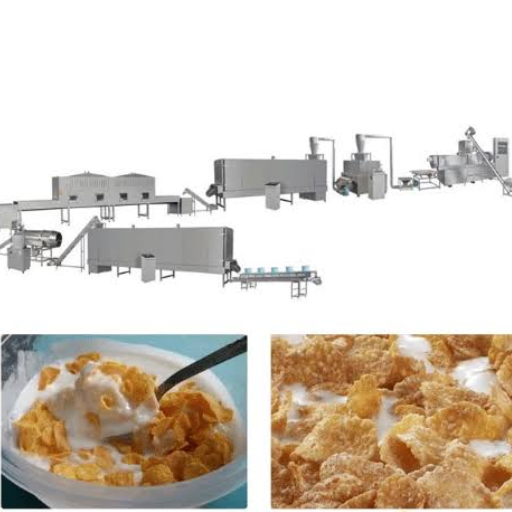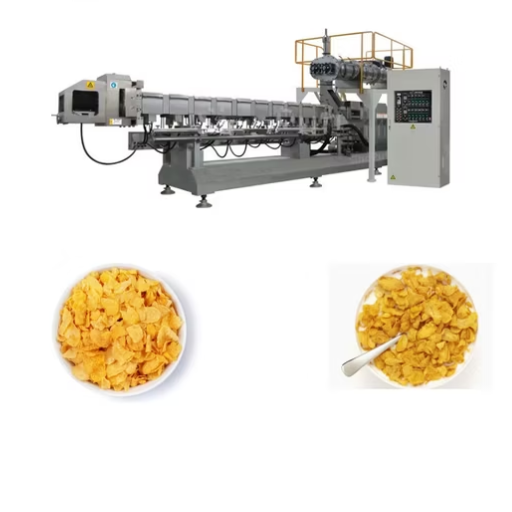
A complete biscuit production line costs roughly $40,000 to $150,000 at 40 to 200 kg/h, $120,000 to $450,000 at 200 to 800 kg/h, and $350,000 to $1 million or more at 800 to 1,500+ kg/h in 2026, equipment only. European lines and turnkey projects cost more. Those are planning bands, not quotes.
Imagine two quotes for the same 500 kg/h line: $180,000 and $900,000. Neither supplier is necessarily lying. One quote may include a longer oven, automatic packaging, installation, spares, and training. The other may include the machines and nothing else.
Most biscuit production line cost guides give you a number without the scope behind it. This guide shows the math: capacity bands, machine-level shares, operating cost, landed cost, and payback assumptions, plus a checklist for comparing suppliers.
Key Takeaways
- Equipment-only planning bands: $40k to $150k at 40 to 200 kg/h, $120k to $450k at 200 to 800 kg/h, and $350k to $1M+ at 800 to 1,500+ kg/h.
- The tunnel oven is usually the largest equipment line item and 60 to 75% of line energy use.
- Raw materials are 65 to 75% of operating cost; payback depends on utilization and margin, not sticker price.
How Much Does a Biscuit Production Line Cost?
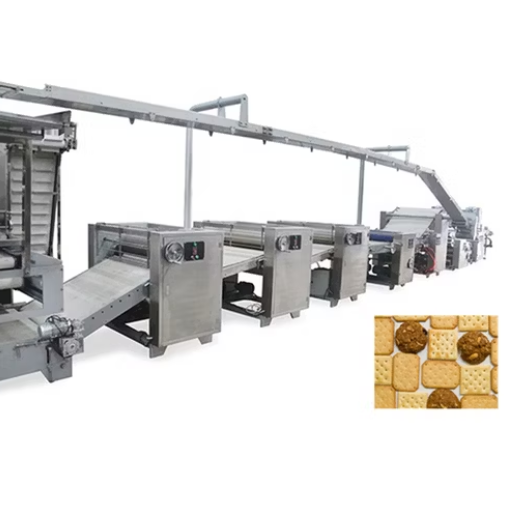
A complete biscuit production line costs roughly $40,000 to $150,000 at 40 to 200 kg/h, $120,000 to $450,000 at 200 to 800 kg/h, and $350,000 to $1 million or more at 800 to 1,500+ kg/h, equipment only. European lines and turnkey projects cost substantially more.
| Capacity | Planning band (China-origin, equipment only) | European-origin benchmark | Typical scope |
|---|---|---|---|
| 40 to 200 kg/h | $40k to $150k | $150k to $400k | Mixer, forming, tunnel oven, cooling, basic packing |
| 200 to 800 kg/h | $120k to $450k | $500k to $2M | Adds laminator, stacking, better controls, optional sandwiching |
| 800 to 1,500+ kg/h | $350k to $1M+ | $1.5M to $5M+ | Full automation, packaging integration, spares |
| Turnkey with building and utilities | Project-specific; can exceed $15M | Not comparable | Line plus civil works, utilities, installation, commissioning |
These bands are indicative. They assume a complete line, China-origin equipment, FOB terms, and 2026 pricing. They exclude freight, duty, installation, civil works, and working capital.
Get a specification-based quote first.
What a complete line includes
A complete line includes a mixer, forming (sheeter, laminator, rotary moulder, or cutter), tunnel oven, cooling, stacking, optional sandwiching, packaging, and controls. A quote that omits the oven, cooling, or packing is a partial line. That’s why $30,000 and $300,000 quotes are not comparable; define the scope in writing.
Line cost vs biscuit manufacturing plant cost
Line cost covers equipment, controls, installation, and commissioning. A biscuit factory cost includes the building, civil works, utilities, warehouse, licensing, working capital, and pre-operative expenses. A biscuit manufacturing plant cost can be several times the equipment cost once buildings and utilities are included.
Why published ranges differ by 3 to 10 times
Published ranges for similar capacity differ because they describe different things:
- Scope: oven length and zones, packaging, sandwiching, installation, spares, and training.
- Origin: China, Europe, India, Turkey, and domestic manufacturers carry different cost structures.
- Capacity definition: nameplate kg/h versus output at your product, size, moisture, and OEE.
- Date and terms: 2023 ranges don’t reflect 2026 costs, and FOB, CIF, and DDP are different numbers.
What Determines Biscuit Production Line Price?
Six variables explain the biscuit production line price gap: capacity, product type, oven, automation, materials, and origin.
Capacity and band width
Kilograms per hour is the headline number, but band width and oven length drive real cost. A 200 kg/h line may use a narrow band and short oven. An 800 kg/h line needs a wider band, longer oven, heavier frames, and larger utilities. Nameplate capacity is not output. Ask for guaranteed kg/h at your product, size, moisture, and OEE.
Product type and forming method
Hard biscuits, soda crackers, soft biscuits, sandwich biscuits, wire-cut cookies, and laminated biscuits use different forming equipment. Rotary moulders, cutters, and wire-cut machines have different mould costs, changeover times, and product ranges. A sandwich line adds a sandwiching machine, cream preparation, and alignment controls. Define the product range for the first three years, not every product you might make someday.
Oven type, length, and fuel
Direct gas, indirect gas, electric, and hybrid ovens have different capex and operating profiles. Oven length and zone count drive equipment cost and energy use. The oven is often 35 to 45% of the equipment budget and 60 to 75% of line energy use, according to HG Industry’s 2026 guide. Ask for fuel consumption per kilogram, not burner size.
Automation, materials, and hygiene
PLC and HMI controls, recipe management, remote monitoring, data logging, and safety interlocks are priced individually. Robotic packing and automated changeover add cost but reduce labor and giveaway. “Fully automatic” isn’t a standard, so define which machines are linked, which recipes are stored, and which faults are alarmed.
304 stainless steel, food-grade belts, smooth welds, and cleanable frames cost more than 201 stainless and open-frame construction. Ask for the material specification per contact part. CE marking, where required, is a manufacturer’s declaration that the equipment meets the applicable EU directives. Ask for the certificate number and the directive.
Origin, Incoterm, and scope
China-origin lines usually carry lower capex. European lines usually carry higher capex but often offer stronger energy efficiency, automation, documentation, and service networks. FOB, CIF, and DDP change the landed cost. “Turnkey” isn’t a scope, so ask for the list of machines, services, and site works included.
A buyer we will call Priya received two quotes for a 200 kg/h line in early 2026: $95,000 and $180,000. The cheaper quote looked like the obvious win until her engineer built a scope table.
It excluded automatic packing, installation supervision, a startup spare-parts kit, and the heat-recovery section on the oven. Once those were added, the landed gap shrank to about 15%. The sticker price was answering a different question. This is an illustrative composite, not a client case study.
Biscuit Production Line Cost Breakdown by Machine
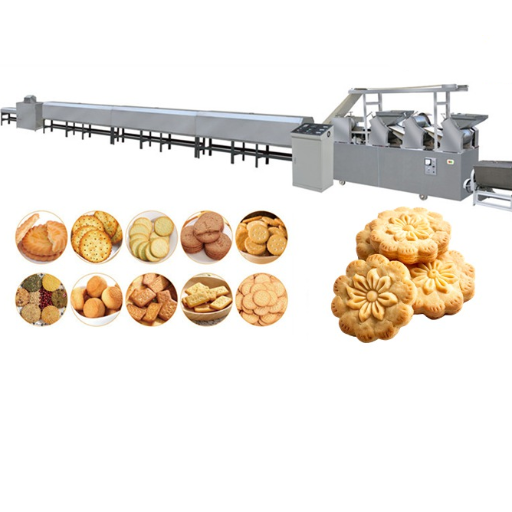
Budget shares are a planning estimate, not a market statistic. Validate them and any biscuit making machine price against the specification.
| Component | Share of equipment budget | What it does | What it costs to get wrong |
|---|---|---|---|
| Dough mixing and preparation | 8 to 12% | Batch consistency, hydration, gluten development | Inconsistent dough, downtime, waste |
| Forming (sheeter, laminator, rotary moulder, cutter) | 12 to 18% | Shape, weight, thickness, embossing | Weight giveaway, changeover time, scrap |
| Tunnel oven | 35 to 45% | Bake profile, moisture, colour, energy | Energy cost, cracking, colour variation, bottleneck |
| Cooling and conveying | 8 to 12% | Stabilise texture, prevent checking | Breakage, moisture variation, packaging jams |
| Sandwiching and cream filling, if included | 8 to 12% | Filling weight, alignment, hygiene | Giveaway, misalignment, allergen changeover |
| Packaging | 12 to 18% | Protect product, shelf life, giveaway | Breakage, film waste, speed mismatch |
| Controls, electrical, and installation | 8 to 12% | Line coordination, recipes, safety | Startup delays, spare parts, operator errors |
The tunnel oven is the cost centre
The oven is usually the largest single equipment item. It also determines capacity, bake profile, and product quality. Ask for oven length, zone count, burner type, fuel consumption, and heat-recovery options.
For a closer look at oven design and energy trade-offs, see our guide to the .
Packaging is the most under-specified line item
Many line quotes exclude packaging. Flow-wrap, pillow-pack, slug packs, nitrogen flushing, seal integrity, and case packing all change the price. Packaging speed must match the line.
If packaging is on your scope, compare the specification alongside the line quote. Ask for film cost per pack, changeover time, and spare-parts lead times.
Biscuit Production Line Operating Cost: What It Costs to Run One
Biscuit line cost is where the real budget lives. Equipment is one-time; raw materials, energy, labor, and maintenance repeat every month.
| Cost element | Benchmark or share | Source |
|---|---|---|
| Raw materials | 65 to 75% of operating cost | IMARC, July 2026 |
| Utilities | 10 to 15% of operating cost | IMARC, July 2026 |
| Labor | 5 to 8 operators automated; 20 to 30 semi-manual | HG Industry, March 2026 |
| Maintenance | 2 to 5% of equipment cost per year | HG Industry, March 2026 |
| Energy | Oven is 60 to 75% of line energy | HG Industry, March 2026 |
Cost per kg: use a formula, not a vendor benchmark
Use this formula with your own local numbers:
Cost per kg = (raw materials + packaging + energy + labor + maintenance + waste + overhead) ÷ good output in kg
A generic cost per kilogram from a vendor page is close to useless. The formula forces you to use your own ingredients, tariffs, wages, and yields.
Energy is the biggest controllable cost
The oven dominates energy use. Gas versus electric depends on local tariffs, availability, and emissions rules. Heat recovery, insulation, burner controls, and oven scheduling reduce cost without changing the product.
Ask for fuel consumption per kilogram at a defined product and moisture. Then compare that number across suppliers, not the burner model.
Labor: automation changes the headcount
An automated line may need 5 to 8 operators. A semi-manual line may need 20 to 30 for similar capacity, according to HG Industry. Labor cost per kilogram depends on local wages, shifts, and skill level.
For a fuller framework on operating cost, see our guide to .
ROI, Payback, and the Hidden Costs of a Biscuit Line
Payback is a model, not a promise. Utilization, contribution margin, and yield move the answer.
| Assumption | Value | Note |
|---|---|---|
| Line capacity | 500 kg/h | Example |
| Operating hours | 3,000 h/year | 300 days at 10 h |
| OEE | 80% | Example |
| Annual output | 1,200 t | 500 × 3,000 × 0.8 |
| Wholesale price | $2.00/kg | Varies by product |
| Total variable cost | $1.35/kg | Raw material $0.90, energy $0.12, labor $0.10, packaging $0.12, maintenance $0.05, other $0.06 |
| Contribution margin | $0.65/kg | $2.00 minus $1.35 |
| Annual contribution | $780,000 | 1,200 t × $0.65/kg |
| Equipment capex | $300,000 to $500,000 | Planning range |
| Simple payback | 5 to 8 months at full utilization; 12 to 24 months with ramp-up and fixed costs | Model, not a promise |
The model excludes fixed overhead, sales and distribution, financing, tax, and working capital. A real project needs a full profit and loss statement; a line at 50% utilization doesn’t pay back on the same schedule as one at 85%.
Hidden costs and landed cost
The equipment quote isn’t the project cost. The percentages are planning rules of thumb.
| Item | Typical allowance | Note |
|---|---|---|
| Freight and insurance | 3 to 8% of equipment | Depends on Incoterm and distance |
| Import duty and VAT | Destination-specific | Check HS 8438.10 in the official tariff and our guide |
| Installation and commissioning | 5 to 15% of equipment | Supervision, travel, accommodation |
| Civil works and utilities | 10 to 30% of equipment | Floors, drainage, power, gas, air |
| Spares and training | 2 to 5% of equipment | Startup spares, operator training |
| Working capital | 10 to 20% of annual revenue | Raw materials, packaging, receivables |
| Ramp-up scrap | 1 to 3% of first-year output | Commissioning and learning curve |
| Total project allowance | 25 to 50% above the equipment quote | Planning rule of thumb |
Compare the same Incoterm; DDP and FOB are different offers. Ask for the CE declaration and certificate number where CE applies, and check the EU CE marking rules. Confirm the HS code with your customs broker, not a supplier blog.
Second shift before a bigger line
A second shift often doubles output for a fraction of a larger line’s capex. The trade-off is more maintenance and less recovery time between shifts.
A bakery owner we will call Daniel compared a second shift on his 500 kg/h line with a new 1,000 kg/h line in 2026. The bigger line looked more efficient per kilogram, but it needed more working capital, floor space, and a second packaging crew. The second shift covered his forecast for 18 months at a fraction of the capex. This is an illustrative composite, not a case study.
How to Compare Biscuit Production Line Quotes
Use one checklist for every supplier.
| Item | What to ask | Why it matters |
|---|---|---|
| Scope | Which machines, controls, packaging, installation, training, and spares are included? | Prevents apples-to-oranges quotes |
| Capacity guarantee | kg/h at what product, size, moisture, and OEE? | Nameplate capacity is not output |
| Oven | Length, zones, burner type, fuel consumption, heat recovery? | Biggest capex and energy item |
| Controls | PLC brand, recipe storage, remote support, data logging? | Uptime and operator dependence |
| Materials | 304 versus 201 stainless, belt supplier, food-contact parts? | Hygiene, corrosion, lifespan |
| Packaging | Included? Flow-wrap, pillow, case packing, nitrogen? | Often excluded and a large cost |
| Installation | Supervision days, buyer scope, travel? | Hidden cost |
| Warranty | Duration, parts, labor, exclusions? | Risk |
| Spares | Recommended list, lead times, local stock? | Downtime |
| Lead time | Production, FAT, shipping, installation? | Cash flow |
| FAT and SAT | What is tested, with what product, what acceptance criteria? | Performance proof |
Five questions to ask every biscuit production line supplier
- What is the guaranteed output in kg/h for my product, at what OEE?
- What is included in the quote, and what will I have to buy separately?
- What is the oven’s fuel consumption per kg, and what is the guarantee?
- What is the changeover time and mould cost for my product range?
- What spare parts should I stock, and what is the lead time?
Red flags
- No capacity guarantee at a defined product and OEE.
- “Turnkey” with no scope list.
- No spare-parts list or lead times.
- No FAT or SAT acceptance criteria.
- No CE documentation, or refusal to provide certificate numbers.
Chinese versus European: compare landed cost, not sticker price
Chinese equipment usually has a lower sticker price. European equipment often costs more but may use less energy and offer stronger documentation and service. Compare landed cost, energy per kilogram, uptime, spare-parts lead time, and resale value. A $400,000 line at $0.12/kg in energy isn’t automatically cheaper than a $1.5 million line at $0.08/kg. The break-even depends on hours, utilization, and local energy prices.
Still shortlisting suppliers? Compare on scope and service, not just price.
Frequently Asked Questions
How much does a biscuit production line cost?
A complete line typically costs $40,000 to $150,000 at 40 to 200 kg/h, $120,000 to $450,000 at 200 to 800 kg/h, and $350,000 to $1 million or more at 800 to 1,500+ kg/h, equipment only. European lines and turnkey projects cost more. The exact price depends on capacity, oven, automation, materials, packaging, and scope.
Why do quotes for the same capacity differ so much?
Because “same capacity” rarely means the same scope. One quote may exclude automatic packaging, installation, spares, training, or the oven’s heat-recovery section. Another may use a longer oven, thicker stainless steel, or a different forming method. Compare the scope list before the price.
How much does it cost to run a biscuit production line?
Raw materials are 65 to 75% of operating cost, utilities are 10 to 15%, and labor and maintenance make up most of the rest. The oven is 60 to 75% of line energy. Use your local ingredient, energy, and wage costs to calculate cost per kilogram.
How long does a biscuit line take to pay for itself?
It depends on utilization, margin, and yield. A 500 kg/h line at 3,000 hours per year and 80% OEE produces about 1,200 tonnes. At a $0.65/kg contribution margin, that is $780,000 per year before fixed costs. Model your own assumptions; don’t rely on a vendor’s payback claim.
Is a Chinese or European biscuit line cheaper in the long run?
Chinese equipment usually has a lower sticker price. European equipment often costs more but may use less energy and offer stronger service and documentation. Compare landed cost plus energy, uptime, spares, and resale value, not the invoice alone.
Can I start with a used biscuit production line?
Yes, but budget 30 to 50% of the purchase price for inspection, transport, rebuild, controls, spares, and installation. Check the oven, burner, belts, gearboxes, control panel, spare-parts availability, CE file, and run a capacity test.
Conclusion
The sticker price is the least useful number in a biscuit production line cost decision. Scope, oven design, utilization, and contribution margin determine what you pay over five to ten years. A $95,000 quote that excludes packing and installation can cost more than a $180,000 quote that includes them.
Use the planning bands as a starting point, then build a scope table, a cost-per-kilogram model, and a landed-cost budget. Ask for a capacity guarantee at your product and OEE, a spare-parts list, and FAT and SAT criteria. Those documents separate a real quote from a brochure.
Tell us your product, capacity, and market. We will price the line and the project, not just the machines.