Pasta is among the most adored and adaptable foods in the world, and it is also a major ingredient in many different cuisines and dishes worldwide. But have you ever thought about how the exact penne or fine spaghetti gets from flour and water to your dinner? This article shows you the interesting world of pasta production and takes you to the essential equipment and processes used for high-quality pasta making. If you are a professional in the food industry, a pasta lover, or simply interested in the food sector, then this guide will lead you through the entire pasta production line, disclosing the technology and innovations that make this iconic staple a reality.
Introduction to Pasta Production
Importance of Pasta in Food Production
Due to its enormous consumption, versatility, and nutritious potency, pasta is considered to be one of the dominant factors in food production. It is a universal food that goes beyond the borders of different cultures and contributes significantly to the development of both new and traditional cuisines. The long storage and shelf life of dried pasta make it a very important commodity in food supply chains, thus making it available to millions of consumers around the globe.
Economically speaking, the whole pasta cycle, from production to distribution, is economically significant for the global food industry. Especially in Europe and North America, many areas have anime industries where pasta makes the major part of food production. It creates job opportunities in agricultural production, processing, transportation, and retail. Moreover, pasta is a cheap food and very effective to combat food insecurity among the poor.
Pasta is not only a cheap source of nutrition, but also a flexible product, because it is capable of creating balanced meals with complex carbohydrates that provide long-lasting energy. If eaten with proteins, vegetables, and healthy fats, pasta can help to cover the daily dietary needs. Its flexibility enables the food sector to satisfy the entire spectrum of consumers’ demands – from gluten-free and whole grain to fortified pasta, thus appealing to different health preferences and dietary restrictions. This attribute continues to underpin the importance of pasta in modern food production.
Overview of the Pasta Production Line
The pasta production line is undoubtedly a very complicated method of producing top-notch pasta in huge quantities. The process starts with the elaboration of the ingredients, which are usually durum wheat semolina or flour. The dough is formed when the water is mixed with the semolina or flour in proper proportions. The mixing and hydration parameters are strictly observed to maintain the final product’s quality. This first stage is crucial because it determines the dough’s texture and strength, which are necessary for the subsequent processes of shaping and drying.
Making the dough is now a step closer to the shaping process, and the shaping process includes the extrusion of the dough through molds or dies to obtain different pasta shapes, such as spaghetti, penne, or fusilli. Each die produces its corresponding shape, and thus uniformity and quality are guaranteed. The dough here at this stage is also cut into the desired lengths. State-of-the-art production lines use modern machines to perform this process very quickly and without wasting any material and with the same high precision. Furthermore, some lines use vacuum technology to extract the air bubbles and thus enhance the paste’s structural integrity.
Finally, the pasta goes through the drying and packaging stages. The controlled drying conditions for the shaped pasta usually include a series of temperature and humidity adjustments that are done in several stages. This process ensures that the pasta dries uniformly, has a good texture, and retains its nutrients. The dried pasta is then checked for quality before being wrapped for distribution. The latest packaging techniques provide the pasta with protection during storage and transportation. The pasta is thus fresh when it reaches the consumer. This rapidly evolving production method is a testament to the ongoing innovation in the food sector.
Types of Pasta Shapes and Their Popularity
Pasta offers a broad range of shapes, each possessing distinctive properties and culinary uses. The most well-known types of pasta shapes include spaghetti, penne, fusilli, and ravioli. Spaghetti, a long and cylindrical pasta, is a classic choice that almost any sauce can accompany, thus making it a favorite worldwide. Penne, which has a short tubular shape and ridges, is often used for baked dishes and goes nicely with meat-based and creamy sauces. Fusilli’s spiral shape makes it perfect for loading up with chunky sauces, whereas ravioli—a kind of pasta filled with)—is a versatile base for various flavorful fillings like cheese, meat, or vegetables.
The ranking of pasta shapes by popularity changes according to the different cultural backgrounds and areas. Spaghetti, for instance, is an Italian; it is liked around the world, especially in the case of spaghetti carbonara or spaghetti marinara dishes. Penne is generally connected with hearty, baked meals such as casseroles, while the playful shape of fusilli often attracts kids and adults and is frequently found in colorful pasta salads. Ravioli, however, is able to accommodate a variety of fillings and is thus a big deal in both gourmet and home cooking.
The factor of versatility of pasta shapes plays a major role in the enduring popularity of that feature. The different shapes give different textures and experiences, which contribute to the dish’s overall flavor and presentation. It is the case of the plainness of spaghetti or the complexity of ravioli design, each shape at the same time maintains its own spell on the audience and thus ensures that pasta remains a highly favored ingredient in the kitchens of the world.
Raw Material Handling and Selection
Quality of Ingredients for Dry Pasta Production
The groundwork of exceptional dry pasta lies in the selection of top-notch ingredients, with durum wheat semolina being the main one. This semolina, which is a rough grinding of durum wheat, is world-famous for its high protein content and strong gluten which provide the pasta with its hard texture and the capacity of standing still during cooking. The best semolina should have a vivid yellow color, which is a sign of the high level of carotenoids that contribute to the pasta’s attractive golden color. It is very important to use fresh and clean semolina as it has a direct effect on the flavor, texture, and overall quality of the product.
The quality of water is another factor that is very important in the production of dry pasta. Only clean drinking water should be used in the mixing and kneading stages because the presence of impurities or undesirable minerals can have a negative impact on the dough’s consistency and, consequently, the pasta’s look and taste. A lot of manufacturers even do water analysis to make sure the pH and the chemical composition are just right, thus securing the quality of their product. The water that is used not only mixes the durum wheat semolina well but also inhibits unwanted reactions between chemicals during the drying and storage process.
Besides the key ingredients, the use of optional additives like eggs or natural flavorings must be given proper consideration. Traditional dry pasta is made only from semolina and water while the modern variety includes ingredients such as spinach, tomato powder, or squid ink, which are purely for aesthetic or nutritional purposes. Producers must make sure that the quality of these additives is high and the purity is guaranteed so that they do not shorten the pasta’s life or cause differences in its quality. The mixing of these high-grade ingredients with accurate production procedures results in a product that is not only fit for consumption but also meets the required standards.
Grain Selection and Its Impact on Pasta Quality
The selection of wheat is among the most important factors that determine the quality of pasta. The pasta’s main ingredient, durum wheat, has a high protein content and a special gluten structure, thus making it the best grain for pasta production. Such characteristics make the pasta hard and the color of its raw material very much appealing to the consumer. However, durum wheats differ in strength and quality and growing conditions, soil and harvesting play a big part in it.
The method of grain granulation—finely or coarsely milled—also is a determining factor in pasta texture and its cooking properties. Semolina flour that is finely milled results in a very smooth dough that produces very uniform pasta; however, coarser grains are often the choice of designers of traditional pasta for a rougher surface that pairs with sauces more effectively. New technology, such as optical grain sorting and milling precision, ensures that only the best grains are used, so impurities and inconsistencies in the final flour mix are avoided completely. This technological intervention raises the overall standard of pasta production and reduces the waste generated during processing.
In addition, the quality of durum wheat across different regions reinforces the need for source traceability. Research indicates that soybean and corn harvested under conditions and in areas like the Mediterranean Basin or certain parts of North America have the desired levels of gluten and colors right. These factors determine the elasticity of the pasta, the time it requires for cooking and the taste. Producers often mix grains of different origins to maintain quality that is consistent, therefore balancing nutrition, texture, and taste. The selection and processing of grains is still a very sensitive but vital factor that determines the success of pasta making of high quality and it does not only fulfill the consumer market but meets strict industry standards.
Storage and Preparation of Raw Materials
Quality assurance of the final pasta product starts with the careful storage of raw materials which is a basic requirement. The grains, especially durum wheat, have to be kept in climate-controlled silos to keep their purity. These silos are made in such a way that they will not let any moisture, pests, or contaminants that could in one way or the other affect the chemical composition and overall quality of the grains in. The humidity and temperature levels are constantly monitored and controlled so that no bad effects like molding or loss of nutrients occur, especially proteins and carotenoids, which are the good yellow pigments in the grains.
The grains go through a thorough cleaning process before they are sent to be milled into semolina in order to get rid of very small impurities such as dust, very small stones, and foreign materials. This cleaning is usually done with a combination of mechanical and magnetic separation methods, ensuring the highest possible purity. The next step is the conditioning of the grains by bringing them up to the moisture content best suited—the moisture content here is very important as it helps milling process by softening the grains and letting the separation of the bran and endosperm and thus it is the accurate adjustment of moisture levels that helps in milling efficiency and at the same time, the nutrient integrity of the semolina is also preserved.
During preparation, more advanced technology has been incorporated at each stage up till now. High-performance milling machines are now installed with precise sensors to mill the grains into uniformly fine semolina thus cutting down on waste. Moreover, through the use of automated quality control systems, producers can monitor the raw material’s characteristics such as protein content and particle size distribution in real-time. All these innovations have made it possible for manufacturers to conform to the strict quality requirements of high-end pasta production and at the same time, using less resources and producing less waste as a result of consistency and the environmental impact of their operations being minimized. The combination of adequate storage and careful preparation is what the pasta industry has relied upon to provide high-quality products to consumers.
Pasta Production Stages
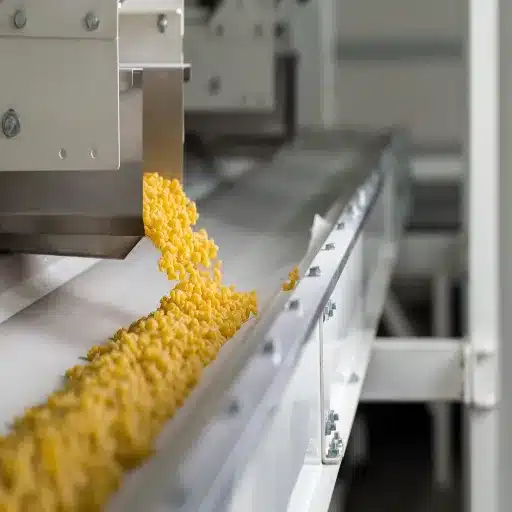
Mixing Ingredients: The Foundation of Pasta Making
The mixing stage is the prima donna among all the stages in pasta making; it is the first one and the most important one, and it is the one that sets the ground for the texture, flavor, and quality of the end product. A mixture of two major ingredients—semolina flour and water—is made to come together as one and form a dough ball during this process. The quality of semolina flour made out of durum wheat is one of the most important factors that determine the strength and elasticity of the pasta. Wheat with high protein content is suitable for pasta that can retain its shape even after being cooked. Water, on the other hand, is of great importance, too, as its impurities may negatively influence the dough’s taste and texture.
To get the best possible results, the use of precise measurements and uniform mixing is a must. The use of advanced industrial mixers has become quite common as they help to ensure consistency and increase productivity. Such mixers apply computer-managed technology to control parameters like dough temperature, mixing time, and water content. Keeping the mentioned variables under control is of utmost importance for the creation of gluten, the protein network responsible for imparting firmness, and chewiness to pasta. The slightest variation from the set norms can lead to a substandard product, thus underlining the criticality of precision during this phase of production.
Developments during this step have been key players in bringing pasta production to levels never experienced before in terms of sophistication. State-of-the-art sensors and AI-assisted systems now allow the monitoring of dough characteristics, like moisture content and structural integrity, to be done continuously. These improvements facilitate the early detection of inconsistencies in the manufacturing process, which leads to reduced waste and to every dough batch meeting the quality standards. The blending of tradition with technology in the mixing during the process will be the main character that plays the role of rendering high-quality pasta that the public expects and is willing to pay for.
Extrusion Process: Shaping the Dough
Extrusion is the process that shapes the dough into different forms with the help of machines in pasta making. The dough is forced into a die, which is a plate made of metal with small holes made with precision to let out the pasta of the same shape as spaghetti, penne, or fusilli. Modern extrusion techniques provide constant pressure and temperature throughout the process preventing any flaws like air bubbles and surface cracks. This is the reason why the pasta gets to have a uniform texture and quality which would guarantee that the cooking process is even and the pasta retains its shape.
Pasta extrusion is done with energy-efficient systems that have high output, hence the production of large pasta quantities with little resource waste. Most of these systems come with automation and high-tech restaurants for quality control in real-time. For instance, the instant adjustments of speed, pressure, or moisture can be done in accordance with sensor readings, thus helping manufacturers meet very strict industry standards. Besides that, the application of non-stick coatings on extrusion dies is a good measure of preventing dough sticking to the dies, therefore giving the pasta a smooth surface without reducing its strength.
The use of modern technology in the extrusion process not only increases productivity but also new possibilities for creativity. Producers can try to mix and match with alternative flours like that of lentils or quinoa which would lead to the potentials of gluten-free or high-protein pasta getting larger. Besides, the progress in 3D modeling and die designing has untied the creative and intricate pasta shapes of which the new consumer and culinary trends can easily convince and satisfy. The pasta extrusion process is thus characterized by the attributes of precision, versatility, and sustainability which are the very traits that a modern and globalized market demands.
Static Drying Techniques for Long-Cut Pasta
Static drying methods are one of the decisive elements in the production of high-quality long-cut pasta, since they guarantee the preservation of all the desired characteristics of the final product, which are texture, shape, and durability. In the course of the static drying, the pasta is put in the chambers with precise drying functionalities for better control of temperature, humidity, and airflow. The slow nature of this process contributes to the prevention of any occurrences of cracking, drying that is not uniform, or loss of the structure’s integrity.
The latest static drying technology is equipped with cutting-edge sensors and programmable controls which enable the drying conditions to be consistent and the processing times to be greatly cut down, while still maintaining the top quality of the product. Most of the time, the drying runs at a temperature that is between 122°F and 140°F (50°C and 60°C), which allows gradual moisture content reduction without the loss of the pasta’s nutritional and culinary qualities. Due to the growing demand for energy-saving measures, a few of the systems have begun to use solar panels as a source of power to reduce their ecological impact.
Long-cut pasta products like spaghetti and fettuccine are primarily the ones that could undergo static drying as such shapes require very careful treatment to not lose their form. By customizing the drying cycles according to the different pasta recipes, the manufacturers can guarantee that the products will be in line with the quality standards set by the consumers concerning flavor, visual appeal, and resistance to cooking. In this manner, traditional pasta-making is continuously being innovated through technology’s refinement.
Machinery and Equipment in Pasta Production
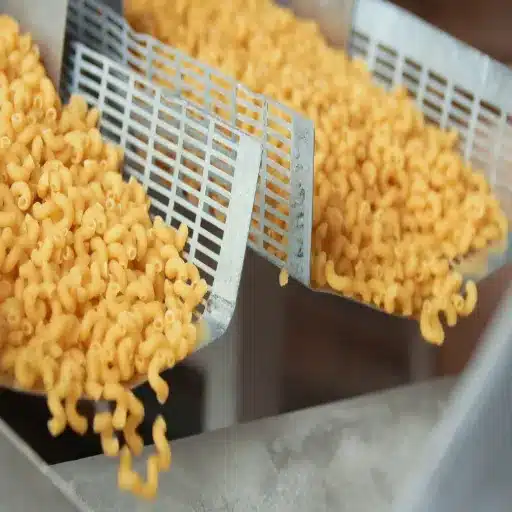
Pasta Machines: Types and Functions
The pasta production in the present day significantly depends on the different types of machines as well as their corresponding efficient tasks. The machines are the basic requirement for mass production that guarantees the same quality and quantity of the end product.
- Mixers and Kneaders: The dough-making process starts with the combining of semolina flour and water through mixers and kneaders. In the most advanced models, automated controls regulate the mixing speed and the time for the different recipes, which results in accuracy and uniformity of the dough.
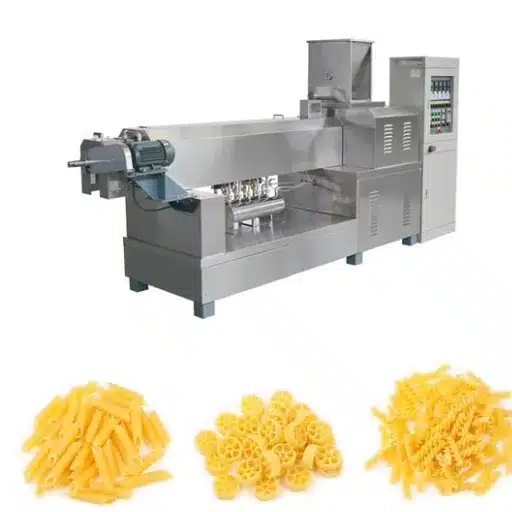
- Extruders: Extrusion machines, by means of forcing the dough through dies of different shapes and sizes, create various types of pasta. Some of the specialized extruders allow the manufacturers to produce a vast range of products from the conventional ones like penne to the artistic ones. A few of the systems even have cooling mechanisms attached to them that help maintain the dough’s strength during the extrusion process.
- Sheeters and Cutters: Sheeters first create very thin sheets of dough with uniform thickness for the flat pastas like lasagna and tagliatelle. Cutters then cut these sheets into the required sizes and shapes. The machines work with precision and thus the end product is a consistent one that passes the quality control.
- Drying Systems: Drying cabinets or tunnels play an important role in pasta stabilization for the shelf life of the product to be longer. The modern systems of drying are programmable and thus can have settings for controlling temperature, humidity, and airflow that would be preventing from occurring during the drying process.
- Packaging Machines:The packaging machines are the ones to carry out the whole process of measuring, sorting, and sealing into packets or boxes once the pasta reaches the stage of being ready. High-performance models generally provide features like vacuum sealing or modified atmosphere packaging as a means of extending freshness in addition to others.
The pasta-making machines have also invented energy-efficient systems and digital interfaces for monitoring the production in real-time. This development not only facilitates operations but also reduces waste and enhances product quality, thereby meeting the ever-changing market demand. The integration of cutting-edge technology into the machines is a way of ensuring that manufacturers enjoy their place in the fast-completing food industry.
Extruders and Their Role in Pasta Manufacturing
Extruders have a major impact on the pasta-producing sector as they not only provide the variety of pasta shapes to the market, but also they do it in a more consistent and efficient manner. The technology of the extruders consists of pushing the properly hydrated semolina or dough made from flour through extruder die sets that result in the pasta shapes like spaghetti, penne, fusilli, etc. The flexibility of these machine processes makes it possible for producers to play with the products extensively and to adapt to the tastes, trends, and other demands of the market.
The last few years have seen a general upgrade in extrusion technology which has, however, also in a big way, influenced production of which pasta is one of the products. For example, the precision in temperature and pressure controls provided in extruders are the reasons gluten is kept in the best manner possible which, in turn, affects the pasta’s quality in texture and cooking. Moreover, the new automating features that have been added to extruders are allowing for constant production supervision that in turn is eliminating mistakes and time lost during production. Powerful extruders are also responding to the needs of large-scale production that has been a driving factor behind the reduction of labor costs and, at the same time, the increase in throughput.
The combination of state-of-the-art extruder technology and real-time data analytics is making the usage of the resources more efficient, thus allowing for the maximization of the production. This blending not only fulfills the high-quality pasta requirement of the industry but also contributes to sustainability goals through energy and material savings.
Complete Production Lines: Automation in Pasta Processing
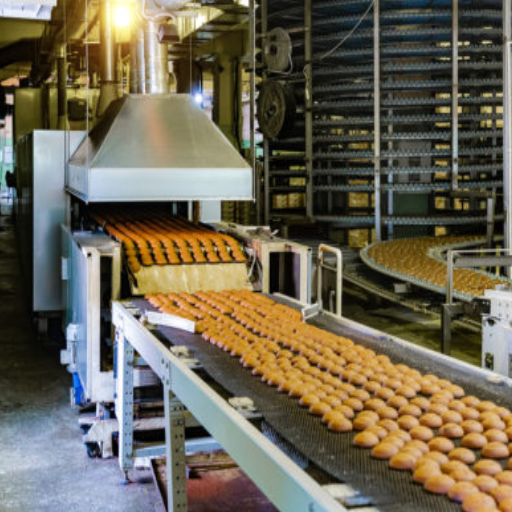
The pasta industry has undergone a major transformation due to the integration of automation in production lines that led to better efficiency, consistency, and scaling up. The new and modern automated systems control the entire production process moving from mixing and kneading the dough to shaping, drying, and finally, the packaging of the product. The systems come with high-tech sensors and monitoring devices that grant precise control over temperature, humidity, and drying time, which are the main critical factors needed for the production of quality pasta products.
Robotic arms and automated conveyors further contribute to the operational efficiency by making the workflow smoother and requiring less standing by the workers. This technological evolution reduces human error, maintains product quality at a constant level, and boosts the production rates to their maximum. Moreover, automated systems are made to be modular, so the manufacturers can easily change the production capacity and be quick to respond to the changing market needs.
Additionally, these systems for automation in production also focus on energy efficiency and material utilization, which is a good practice considering the industry’s aim to reduce the impact of their operations on climate change and waste generation. When manufacturers apply cutting-edge technologies, they do not only serve the demand for better pasta from their customers, but they also practice and promote environmentally friendly methods of production.
Final Packaging and Distribution
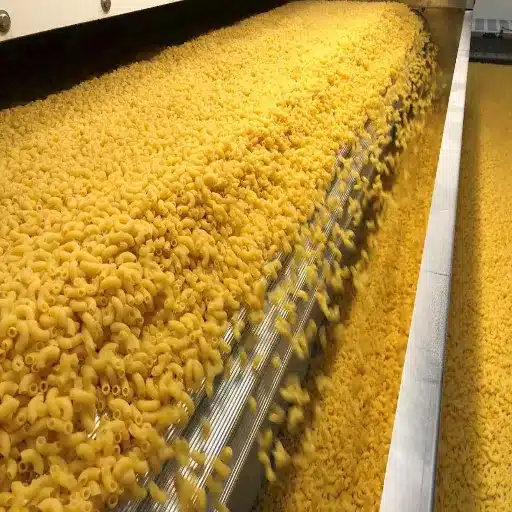
Types of Packaging for Pasta Products
The packaging of pasta products is very important in that it protects the product, maintains its freshness, and attracts consumers. The most common types of pasta packaging are plastic bags, cardboard boxes, and resealable pouches. Among these, plastic bags are the lightest and most affordable, and they are used mainly for the dried varieties of pasta. Cardboard boxes, on the other hand, constitute a stronger option and are often used for high-end or specialized pasta. Besides, they are preferred because of their recycling potential and their ability to effectively make the brand logos and designs visible.
Resealable pouches are becoming more widely adopted mainly due to the fact that they have great convenience, especially for customers who want single-serve portions or better product preservation after opening. Besides, eco-friendly packaging solutions, like biodegradable materials or compostable films, have been gaining more and more importance as the demand for sustainable options increases. Not only do these cutting-edge materials help to minimize the environmental impact, but they also maintain the protective properties that are necessary for pasta products.
Additionally, advanced printing technologies are being integrated into pasta packaging, making it possible to print quality designs and QR codes that lead customers to product information or recipes. To do so, manufacturers combine functionality, sustainability, and aesthetics in order to meet the changing expectations of modern consumers.
Considerations for Transporting Pasta
The quality of pasta relies heavily on proper transportation and so does the consumer’s satisfaction with the product being delivered in the best possible condition. First, it is necessary that the packaging be strong enough to endure the rough treatment and shipping processes, thus avoiding breakage or contamination. Usually, corrugated cardboard boxes or crates serve as outer packaging support during the shipping process.
Temperature and humidity, on the other hand, also have to be very well controlled, because pasta is quite vulnerable to moisture. It, therefore, needs to be kept, and at the same time, transported under a dry environment to stop the occurrence of molds and deteriorations of texture. For fresh or filled pastas, refrigerated transport is a must to keep the product fresh and prolong its shelf life.
Increased logistics planning significantly contributes to the transit time reduction and the environmental impact minimized. This has to do with delivery routes optimization, shipments consolidation, and the use of eco-friendly vehicles wherever it is possible. Furthermore, clear labeling and proper stacking methods can help make the supply chain more efficient and reduce the chances of the product being damaged during transport.
In the above manner, pizza manufacturers and distributors could notice not only the safe delivery of pasta but also the meeting of consumer expectations and the maintenance of sustainability standards.
Market Trends in Pasta Packaging
Pasta packaging is one of the most affected sectors where significant changes have occurred due to consumers’ changing tastes and sustainability efforts over the years. Among the most prominent trends is the increasing distribution of green packaging materials. To lessen the burden on nature, brands are more and more changing their usual plastic packaging with paper-based wraps and compostable films that are not only biodegradable but also recyclable. One more thing that has made the transparent packaging trend with pasta inside has given the shoppers an attractive and genuine preview of the product and thus has won over the market.
At the same time, there is a consumer demand for smaller, single-serve-packaging that can easily be carried by busy, health-conscious consumers looking for convenience and portion control. Digital printing technologies are being widely used in the pasta packaging sector to create not only eye-catching designs but also to provide the customers with the option of customizing them and using QR codes to access the product information and recipe suggestions. Moreover, using smart packaging solutions such as resealable pouches has become a standard for increasing freshness and reducing the waste of the product.
In addition to this, the trends indicate the changing priorities of consumers and at the same time show the pasta industry’s determination of being innovative and eco-friendly. If a brand is willing to adapt to these changes in consumers’ preferences, it can not only remain competitive in the ever-changing market but also support the environmental goals.
References
-
Pasta: Raw Materials, Processing, and Quality Improvement
This paper discusses the raw materials, processing techniques, and methods for enhancing pasta quality. -
A Mass-Produced Yet “Authentic” Food: A Transatlantic History of Pasta
This dissertation provides historical insights into pasta production and its cultural significance. - Click here to read more.
Frequently Asked Questions (FAQ)
Q: What is a complete pasta production line and what does “turnkey” mean in this context?
A: A complete pasta production line is a union of all necessary machines and components for a cereal-based pasta that starts with mixing, extrusion, drying, and then packaging. The “turnkey” denotes the entire automated production line supplied by the machine maker that is useable right after installation, comprising design, installation, commissioning, and operator training so that the purchaser can start pasta production right away.
Q: Can a complete pasta production line make both long-cut dry pasta and short-cut dry pasta?
A: Absolutely. Current automatic pasta production lines are designed to switch between long and short-cut dry pasta production by merely replacing dies, cutters and adjusting some process parameters. A lot of production lines and pasta macaroni making machines are modular which means manufacturers can easily change from spaghetti-style long-cut dry pasta to short macaroni shapes with practically no downtime.
Q: How does vacuum extrusion or a vacuum extruder improve pasta quality?
A: Vacuum extrusion or vacuum extruder technology is that it eliminates air from the dough before it is extruded. This results in less oxidation of the dough and eventually better hydration of the flours. The process which was once considered a drawback now has become an advantage and the doughs texture and shelf life very much favorable for both fresh and dried pasta. When the use of low protein content flours is involved in the processing, it becomes an absolute necessity as the dough would be weak otherwise. Besides, the food and the drying phases of the production process are more efficient since breakage and rework have been reduced.
Q: What production output can I expect from an industrial pasta production line?
A: The output of production is determined by the size of the machines and the level of automation used. The fully automatic complete pasta production line systems consist of a range of small industrial machines with the capacity of several hundred kilograms per hour up to large-scale lines that can produce several tons per hour. A well-known manufacturer of machines will indicate output based on the type of the product (short-cut, long-cut, filled pasta like tortellini or dumplings), protein content in the flour, and the desired drying capacity.
Q: How customizable are pasta lines for specialty products like fresh pasta, tortellini or filled products?
A: Highly customizable, indeed. Production equipment for pasta food can either be designed for artisanal fresh pasta or high-volume industrial pasta. Among the options are specialized filling modules for tortellini and dumpling production; vacuum extrusion systems for delicate fillings; and specific drying tunnels or chillers. As a common practice, manufacturers redesign layouts to fit plant constraints and product portfolios while ensuring energy and downtime costs are kept at a minimum.
Q: What are the main operational costs and how can a complete pasta production line reduce them?
A: Energy, labor, maintenance, and raw materials (cereal flours) are the main operational costs. The mixing, extrusion, cutting, and packaging processes are all fully automated in pasta production lines and complete turnkey automated manufacturing lines, thus boosting efficiency and cutting labor costs. Optimized drying systems and efficient vacuum extruders can both help to cut energy costs. Preventive maintenance carried out regularly results in less downtime and fewer unexpected repair costs.
Q: How do machine manufacturers address low-protein flours and ingredient variability?
A: An experienced food machinery manufacturer tailors extrusion and mixing systems to manage low-protein flours by altering hydration curves, changing extruder screw design, and using vacuum extrusion to ensure dough pulling together is successful. The controls at the processing line allow for the fine-tuning of parameters so that consistent pasta quality can be achieved despite fluctuations in protein percentage or changes in other raw materials.