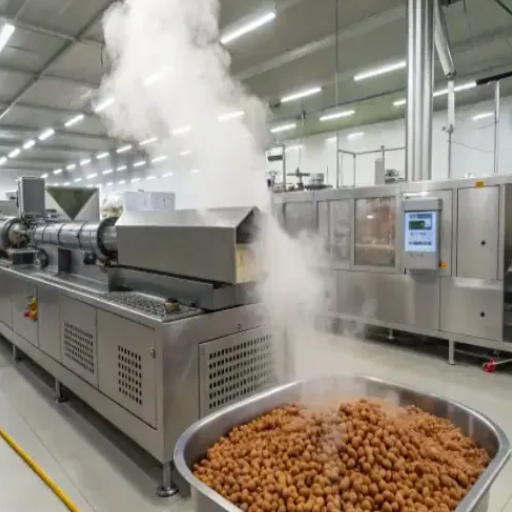
Because of this, Marcus believed that all the bases have been covered. In 2025’s January, the nascent snacks producing company of his which was established in Toronto, concluded a deal whereby a fully operational line for the production of corn puffs was procured from China. There were no questions about such valued cost. Absolutely, the equipment specifications met his requirement. Unexpectedly, one simple thing, Marcus never inquired about anything: how am I going to get all of this shipping food production lines to my facility?
That was three months ago, and still not received. One of the custom house agents suspected that there may be some CE papers missing. The sea freight container was idle in the Port for eleven days, due to the fact that the HS code indicated on the packing list is different from that of the commercial invoice. And when actually crating did happen, both the control panels had to be discarded because of water. As a result, Marcus could no longer make the launch in the second quarter as expected, and gained around $45, from the expected revenue.
If you are buying turnkey food production lines internationally, the shipping phase is not an afterthought. It is a complex logistics project that can make or break your launch timeline. This guide to shipping food production lines explains exactly how food processing equipment moves across borders, what documents you need, realistic costs and timelines, and how to avoid the mistakes that derail first-time buyers.
Ready to protect your investment? Contact our team for a transparent shipping and installation plan tailored to your market.
What “Shipping a Food Production Line” Actually Means
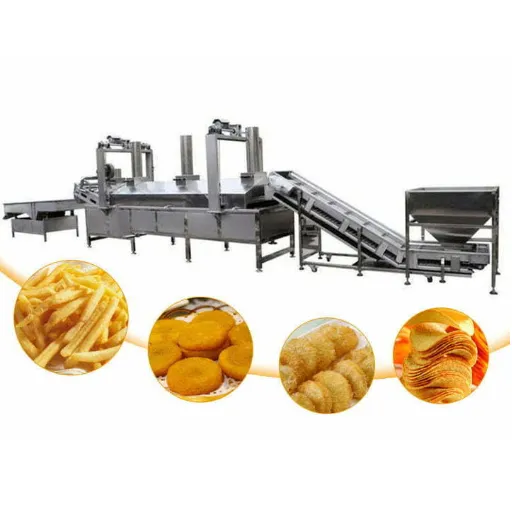
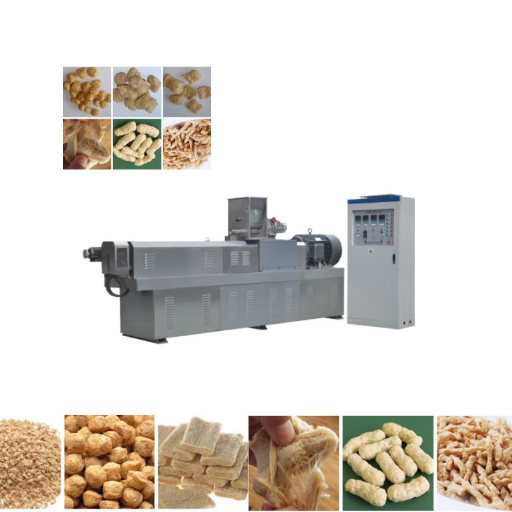
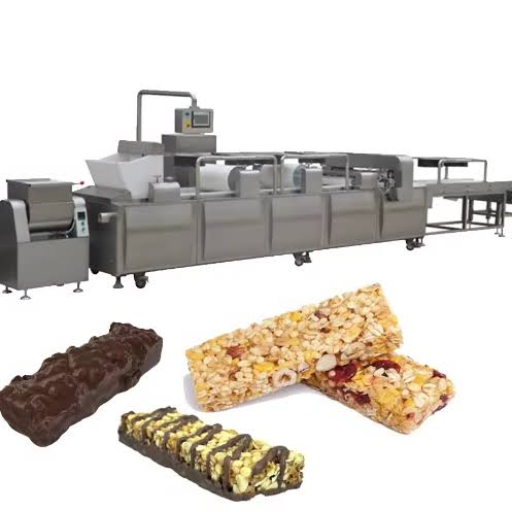
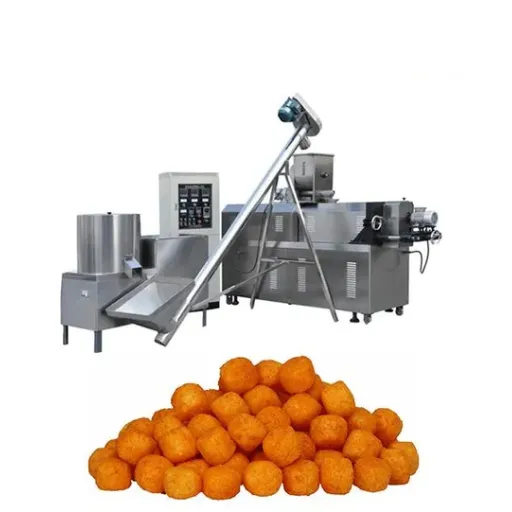
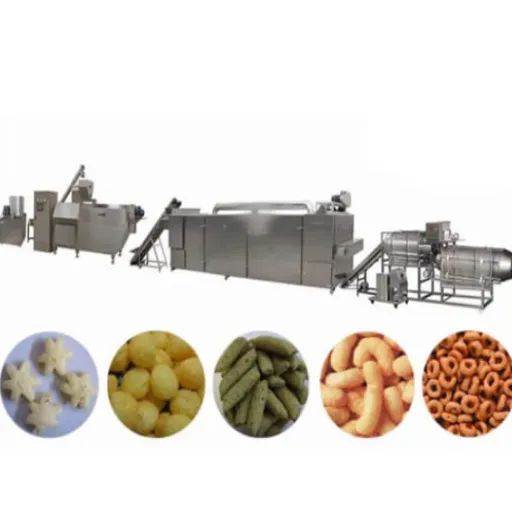
A food production factory is not just a single piece of equipment. There are many individual parts that need to work in coordination to produce food and these may include mixers, extruders, baking or frying machines, cooling conveyors, seasoning drums, packing machines, and other components. The size, energy consumption, and fragility of each such component varies. Hence transporting this kind of Equipment internationally does not simply mean loading it onto the vehicle. It necessitates the breakdown, possibly disassembling and then crating of heavy duty, optimizing container space, and ultimate documentation is written accurately.
Because of this particularized feature, shipping food production lines is unlike any other regular goods shipping. In the case of an extrusion system, only one out of the units may contain hundreds of kilograms of weight and include intricate parts, which do not withstand either vibration or moisture. Therefore, special equipment is necessary for transporting food machinery since the rigging takes place on the factory floor, cabotage is undertaken, or last spells deliveries are completed.
At Shandong Loyal Industrial, we design our snack food production lines and pasta production lines with modular shipping in mind. Large extrusion systems may need to be broken down into the barrel, screw, gearbox, and die sections. Conveyors often ship in segments. Control panels travel separately to reduce vibration damage. Understanding this modular approach helps you plan your receiving and installation schedule.
Pre-Shipping Preparation: Documentation and Compliance
Before any crate leaves the factory, documentation must be bulletproof. Customs officials do not guess. If your paperwork is inconsistent, your shipment stops.
Essential Export Documents
Every international shipment of food processing equipment requires these core documents:
- Commercial Invoice: Itemized list of every component, with exact quantities, unit prices, and total value.
- Packing List: Detailed breakdown of what is inside each crate, including net weight, gross weight, and dimensions.
- Bill of Lading (B/L): The contract between you and the ocean carrier. It proves ownership and must match the invoice and packing list exactly.
- Certificate of Origin (CO): Required to claim preferential duty rates under trade agreements.
Food processing machinery typically falls under HS Code 8438, while packaging machinery is usually classified under 8422. Using the wrong code can trigger inspections, duty disputes, or outright delays. A bakery in Poland once had a supplier misclassify a toast slicer’s HS code. The shipment sat in customs for 12 dayswhile the broker submitted corrections.
Certification Requirements
Different markets demand different compliance proofs:
- CE Marking (EU): Mandatory under the Machinery Directive 2006/42/EC. Self-declaration takes 4–8 weeks and costs €500–€1,500+. Notified Body routes take 9–24 weeks.
- FDA Compliance (USA): Required for food-contact materials. Inspectors often verify stainless steel grades (304 or 316L).
- EAC (Russia/CIS) and SASO (Middle East): Market-specific certifications that must be listed on shipping documents.
We provide complete technical files and valid CE certificates with every shipment. Buyers should verify the Notified Body number on official EU databases to avoid counterfeit compliance claims. For a detailed breakdown of the CE process for industrial machinery, see Alibaba’s B2B compliance guide.
Factory Acceptance Testing (FAT)
FAT is your last chance to confirm that the equipment runs correctly before it is crated. During FAT, we run production trials, measure output rates, and verify quality parameters. You or your representative can attend in person or review video documentation. Catching issues at the factory is always faster and cheaper than fixing them after installation.
Packaging and Container Loading for Food Machinery
Ocean freight is rough. Containers experience vibration, humidity shifts, and sudden movements. Food machinery contains precision alignments, delicate electronics, and polished stainless steel surfaces. Proper packaging is not optional. It is engineering.
Seaworthy Crating Standards
Our standard packaging protocol includes:
- Custom wooden crates: Built from treated plywood with reinforced corners, rated for heavy lifting and stacking.
- Anti-vibration padding: Foam and rubber mounts isolate motors, gearboxes, and control panels from road and sea vibrations.
- Waterproof film and desiccants: Prevents corrosion on stainless steel surfaces during long ocean transits.
- Component labeling: Every crate is numbered and cross-referenced to the packing list. Internal components are tagged for easy identification during reassembly.
FCL vs. LCL: Choosing the Right Container Strategy
| Shipment Size | Recommended Mode | Why |
|---|---|---|
| Full production line (14+ CBM) | FCL (Full Container Load) | Lower risk, faster transit, sealed at factory |
| Small equipment or spare parts (<14 CBM) | LCL (Less than Container Load) | Cost-effective for smaller volumes |
| Oversized extrusion systems | OOG (Out of Gauge) / Flat Rack | Required when standard container dimensions are exceeded |
FCL is almost always the better choice for complete protein bar production lines or biscuit lines. The container is sealed at our factory and opened only at your facility. That means no extra handling at consolidation warehouses and far lower damage risk.
Shipping Food Production Lines: Methods, Transit Times, and Costs
Understanding your options helps you balance speed, cost, and risk.
Sea Freight: The Standard Choice
Sea freight is the default method for shipping food production lines. In 2025, ocean freight rates for a 40ft container from Asia range from approximately 1,900–1,900–2,900 to the US West Coast and 2,000–2,000–3,200 to Northern Europe, according to Freightos and Unicargo market data.
Typical transit times by region:
- Asia to North America West Coast: 15–20 days
- Asia to North America East Coast: 25–35 days
- Asia to Europe: 20–30 days
- Asia to Africa or Latin America: 30–45 days
Nevertheless, lead times for the entire process door to door are usually longer. That includes the production lead time, the performance testing of the equipment at the production facility, crating, customs at both ends and delivery which mostly takes about 75 – 135 days.
It is crucial for organizations involved in shipping food production lines for the first time to ensure allocation of some extra time in the projects. This is because any possible delay at the initial port, on the vessels, or due to customs can increase the time and add weeks to the project.
Air Freight and Express
Air deliveries are generally impractical for full scale production lines since weight and dimension poses a restriction. However, when it comes to an intuitive repair, be it a spare part a sensor or a control panel of any sort, who wants to waste time shipping the item knowing the job can be done the same day. The delivery using express services such as DHL and FedEx is around 3-7 days in most cases. This is a great option when your time to install a specific component is a necessity as any late delivery will most likely affect the operations.
Customs Clearance: Where Timelines Slip
Accessible complete documentation allow clearing ocean transport customs two to five working days post vessel landing. This, however, is not usually the case with food-related equipment where extra checks and balances are the norm. Electrical safety checks, food contact material verification or cross-referencing prices from the documentation with those in the company’s database are additional steps that may be carried out.
In cases where it is the first time for importers or where the shipment requires intervention of regulatory authorities such as FDA or USDA for examination, the time required for clearance may be up to 10 to 15 business days.
The good news: A proactive customs broker can pre-file documents before the vessel even arrives. One bakery chain importing two containers into Canada used this approach and achieved 48-hour customs clearance.
Insurance, Risk Management, and Damage Prevention
Expensive equipment warrants more than just the coverage provided under a carriers’ liability insurance. Liability insurance tends to have low limits, usually $2-5 per kg. This is far from enough to pay for a destroyed extrusion machine or a burnt out control panel heater.
All-Risk Cargo Insurance
For food production lines worth more than $50,000 in value, we highly advise considering the purchase of an all-risk cargo insurance policy, or simply known as transit insurance, which is marketed by these words to some countries. These policies cover losses during transportation due to physical handling, water infiltration, loss from stealing or larceny, and damages to electrical parts. Prices range from 0.3% to 0.5% of overall value of the consignment. There are companies that provide protection which is valued at even two times what the goods cost themselves.
Pre- and Post-Shipment Inspections
Document everything. Take photos of the equipment before crating. Inspect every crate upon arrival and note any external damage on the delivery receipt before signing. If water damage or impact marks are visible, open the crate immediately and photograph the contents. This documentation is essential for filing insurance claims.
Common damage points include:
- Precision gearboxes and extruder screws knocked out of alignment
- Control panels cracked from vibration or impact
- Motors exposed to moisture due to inadequate sealing
- Electrical cables crushed by improper stacking
Installation Support and Post-Delivery Logistics
Getting the equipment to your facility is only half the battle. Reassembly, commissioning, and training are what transform a pile of crates into a functioning production line.
Coordinating Installation with Delivery
We recommend scheduling your installation team to arrive within 48 hours of container delivery. Delays between delivery and unpacking can lead to rust on unprotected steel surfaces or misplacement of small parts. For clients purchasing our turnkey food production lines, we provide detailed installation manuals, wiring diagrams, and video guides.
Remote Technical Support and Commissioning
Not every project requires an on-site engineer. For many clients, remote commissioning via video call is sufficient. Our technicians guide your team through mechanical assembly, electrical connections, and initial test runs. This approach reduces travel costs while still ensuring the line is configured correctly.
For complex installations, we recommend reviewing an electrical system checklist for moving production lines to verify grounding, voltage drops, and safety circuits before powering up.
Spare Parts Logistics
We advise every client to order a spare parts package with their initial shipment. This includes wearable items like belts, bearings, heating elements, and die inserts. Having these parts on hand prevents costly downtime while you establish local supply chains.
Common Mistakes to Avoid When Shipping Food Production Lines
After ten years of exporting machinery to over 50 countries, we have seen the same errors repeat themselves. Here is what to watch out for:
- Incorrect HS code classification: Always confirm the code with your broker, not just the supplier.
- Missing compliance certificates: Do not assume certifications are included automatically. Request them before production begins.
- Underestimating customs clearance time: Add a 50% buffer to your timeline, especially for first-time imports.
- Inadequate packaging: Cheap crating saves a few hundred dollars upfront but can cost thousands in damage.
- Failing to arrange installation support: Unpacking a production line without technical guidance leads to assembly errors and warranty disputes.
- Choosing the wrong shipping mode: A CE-certified food machinery export to Europe may require additional documentation that air freight brokers are less familiar with than sea freight specialists.
Conclusion
It’s true shipping food production lines requires several steps that are covered in all phases of the project. So you need to plan properly, provide documentation, and find an appropriate logistics partner for it. Everything from HS code classification and CE certification to seaworthy crating and customs clearance is effective concerning the timely delivery of equipment and its readiness for operation.
Shandong Loyal Industrial recognizes these challenges and has spent more than ten years perfecting its export system. We are not just engaged in the manufacture of plant and machinery. It is also involved in the entire process – from the factory to the customer’s site – in time and space, with all relevant documents, and the availability of support after the products have been delivered.
For a single extrusion system or a complete Turnkey line, navigating the logistics for shipping food production lines helps do all that strategically, avoid contention, and meet the deadline for commissioning.
Key takeaways:
- Plan for a 75–135 day door-to-door timeline.
- Use FCL shipping for complete production lines to minimize handling risk.
- Verify HS codes and certifications before production begins.
- Invest in all-risk cargo insurance for high-value equipment.
- Coordinate installation support before the container arrives.
Ready to start your project? Contact us today for a detailed quotation and shipping plan. Tell us your production goals, and we will design a solution that gets from our factory to your floor safely, on time, and ready to perform.