The growing use of TVP can be attributed to its versatility, nutritional value, and appeal in both vegan and non-vegan food items. And with this advanced product comes the backbone of its creation, an efficiently designed production line fitted with modern machinery. Herein lies the explanation: if you’re a food processor looking to venture into TVP development or simply want to learn how raw ingredients are transformed into protein-rich, meat-like textures, this article will provide you with valuable insights. From the essential equipment to the entire working setup, this tutorial will guide you through each vital aspect clearly and concisely, providing a comprehensive plan that you can use to either start a TVP line or enhance an existing one.
Understanding Textured Vegetable Protein (TVP)
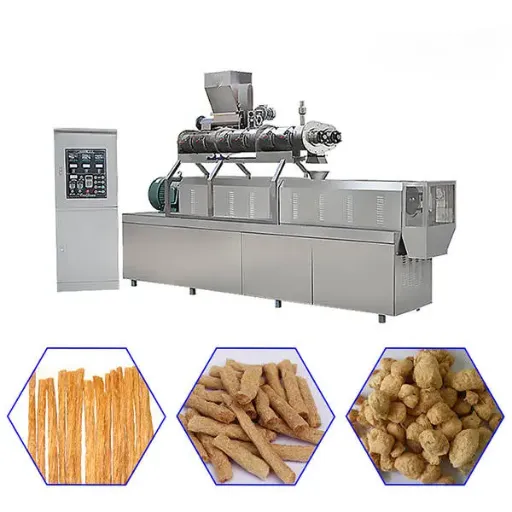
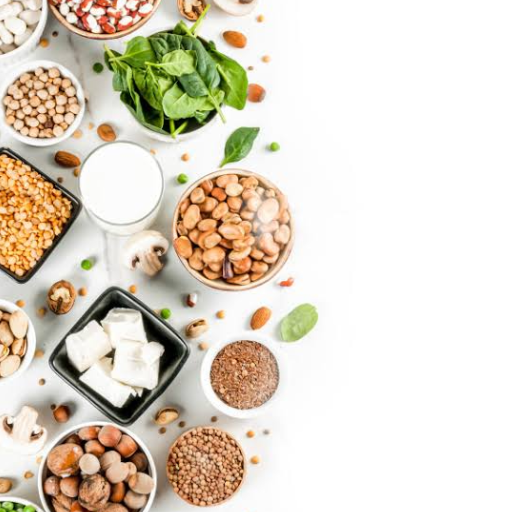
Textured Vegetable Protein (TVP) is a highly proteinaceous type of plant-based formulation made primarily of defatted soy flour, which is basically a waste byproduct obtained after definite extraction of oil from soybean. When hydrated, it makes a worthy companion for meat on account of mimicking the so said originality of ground meat. TVP is used in many vegetarian dishes thanks to its plant-based high protein content, cheap price, and ability to absorb flavors from seasonings and sauces. It is cataloged as granule, chunk, or strip form and is easy to prepare by simply rehydrating with water or broth. Its nutritional merit made it very popular with those seeking an alternative form of plant-based protein.
What is Textured Vegetable Protein Line?
A Textured Vegetable Protein (TVP) Line basically means the process and machinery utilized in making textured vegetable proteins. TVP production utilizes extrusion technologies, wherein defatted soy flour or other plant-based ingredients are subjected to high temperatures and pressure to yield a fibrous texture resembling meat. This converts one kind of raw material into versatile protein forms such as granules, chunks, or strips, which can then be used in various applications. The latest update attributes growing interests in plant-based protein to back innovations in TVP lines with a focus on efficiency, tailor-made textures, and new ingredient variations according to the changing tastes of consumers. Moreover, a modern TVP line is pivotal for ensuring consistency in quality and high output rates, alongside numerous customization opportunities to include other protein sources, such as pea protein, to meet the growing worldwide demand for sustainable and nutritious food alternatives.
Benefits of Using TVP in Vegan Diets
- Protein Packed – A nutrition profile such as found in TVP makes it an excellent plant-based source of protein to satisfy weight requirements on a vegan nutrition chart.
- Versatility – TVP can be put into a wide array of dishes such as burgers, stews, or tacos since it absorbs flavor and imitates the texture of meat.
- Low Fat Content – Being naturally low in fat makes TVP a great choice for healthy meals.
- Longevity – Since it is dehydrated, TVP stores well for longer periods without refrigeration, which aids in meal preparation and minimizes food waste.
- Affordable and Accessible – TVP is quite an economical alternative to protein, hence available to people or families seeking nutritious vegan ingredients on a tight budget.
Nutrition Facts of Textured Soy Protein
Textured Soy Protein (TVP) is one of the nutrient-rich foods incorporating various wheat components that should be better included in the human diet. In 100 g of dry TVP, approximate nutritional values are:
Low in fat, it is an ideal source of protein and fiber, as well as minerals, such as iron and calcium.
Key Components of a TVP Production Line
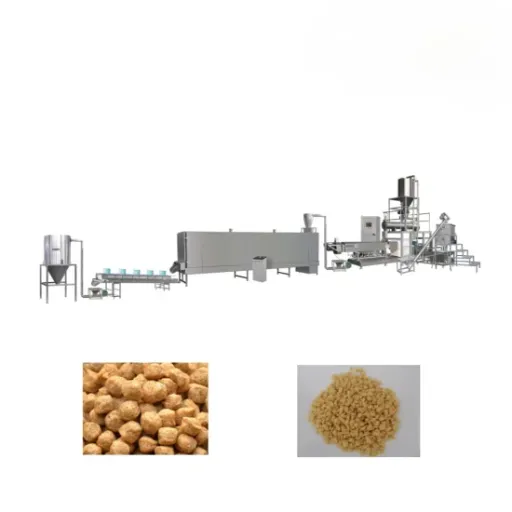
A TVP line generally consists of a number of other major components to bring about proper production. The main elements are:
Raw Material Mixer
It’s for mixing defatted soy flour with water and additives or other protein bases.
Extruder
The central unit where the actual processing under very high temperature and pressure with shaping and texturizing of the protein is performed.
Dryer
Helps remove moisture out of the extruded product to ensure shelf life.
Cooler
Cools the dried TVP to room temperature before packing.
Packaging System
Starts packing the finished product in bags or containers ready for marketing.
Each of these components is crucial to the smooth running of production with product quality.
Overview of the Production Process
The production of Textured Vegetable Protein (TVP) is a process of converting raw plant materials like soy protein or wheat gluten into a versatile meat-like product. Here is a short description of the major steps involved in the production of TVP:
- 1
Raw material preparing: Protein-rich plant-based materials are cleaned, milled, and defatted in order to set the protein content. This guarantees that the raw materials are suitable for extrusion processes and provide a base of constant quality for the product. - 2
Mixing: Raw materials prepared are put in a blender with water and some additives, which may include flavoring or binding agents, to give a homogeneous mixture. This gives unity to texture and taste in the end product. - 3
Extrusion Process: The mixture is fed into another twin-screw extruder. At elevated temperatures and high pressures, the protein denatures and rearranges to form fibrous meat-like structures. This constitutes the main step in imparting shape and texture to the product. - 4
Drying: Immediately after extrusion, the TVP is dried to strip away excess moisture. This process halts microbial activities and maintains the product through extended storage. - 5
Cooling and packaging: The dried product is cooled to ambient temperature to maintain structural integrity before it undergoes automatic packing into containers suitable for storage and distribution.
All these stages in the production line are designed for sustenance with efficiency and quality, hence becoming a productive and healthy alternative protein source. The incorporation of precision machinery and controlled process parameters renders consistent output in accordance with laid-down industry standards.
Extruders: The Heart of TVP Production
The extruders being the chief processing machinery enabling the conversion of raw plant-based ingredients into more advanced protein products are central in the production of TVP. Using a combination of heat, pressure, and mechanical shear, the extruders convert this proteinaceous raw material into a malleable form, wherein they can create a variety of textures to simulate meat. Modern types will often have controls for the temperature, moisture content, and extrusion speed to give the operator precise control for customization. By making the manufacture more efficient, extruders enable the rise of these new demands both in sustainable and plant protein options.
Mixers and Blenders for Textured Soy Protein
Mixers and blenders stand at the very center of creating textured soy proteins, which always entails the uniform distribution of ingredients and the adequate hydration of soy flour or concentrate. These equipments allow for a large diversity of formulations and so textures and flavors that can be fairly customized according to application. More advanced models of mixers are also equipped with special features such as variable speed, accurate temperature control, and strong mixing blades to prevent clumping, yielding a smooth mixture. By allowing the mixing and blending to be carried out more efficiently, these machines keep their output toward the production of quality material that manufacturers want, as well as consumers constantly demanding new innovations in the plant protein sector.
TVP Production Line Setup
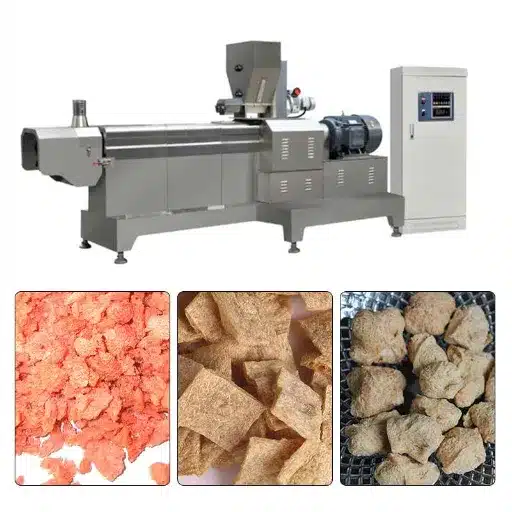
Setting up the production of TVP basically involves some important steps for efficiency in manufacturing-a product of good quality. Proper equipment must be selected for the expected final product, including twin-screw extruders, dryers, and modern mixers with accurate controls. The extruder must also be configured with the right preconditioner or barrel excluder to obtain maximum texture and expansion for the particular protein. Next, implement quality control procedures to maintain all parameters such as moisture, temperature, and texture during processing. Finally, start setting up facilities with a streamlined flow for ingredient preparation, extrusion, drying, and packaging that will allow production to proceed in the most cost- and time-efficient manner.
Essential Equipment for TVP Production
- Twin-screw extruders
- High-precision mixers
- Industrial-grade grinders
- Dryers with moisture control
- Ingredient feeders
- Cooling conveyors
- Storage hoppers
- Packaging machines
- Temperature and pressure monitors
- Cleaning systems for hygiene maintenance
Step-by-Step Setup Process
-
1. Site Preparation
Before preparing site production lines, ensure it meets sanitation and safety standards. Allow adequate space for equipment placement and workflow optimization.
-
2. Installation of Equipment
Installs all major machines, extruder, mixer, grinder, dryer, feeder, and conveyor, according to the production layout plan.
-
3. Utility Connections
Connect to the machines all utilities necessary, such as electricity, water, and compressed air. Set the voltage, pressure, and other requirements properly for good working.
-
4. Calibration of Machines
Calibrate temperature and pressure monitors of ingredient feeders and mixers for accurate handling and preparation of materials.
-
5. Material Preparation
Store all raw materials in their respective storage areas and load materials into either the ingredient feeders or the hoppers as required.
-
6. Testing and Trial Runs
Trial runs implemented in order to ascertain the efficiency of the apparatus, with adjustments to parameters for necessary texture, moisture content, and consistency of Products.
-
7. Process Enhancement
Enhance the production line by monitoring each operation, including mixing of ingredients, extrusion, drying, and cooling, and ensuring smooth integration of all processes.
-
8. Hygiene and Maintenance Check
Check that cleaning systems function well and schedule routine maintenance of the equipment to keep hygiene standards.
-
9. Packaging Setup
The packaging machines should be tested to prove they work correctly and that the labels on the pouches match.
-
10. Personnel Training
Train personnel in operating, monitoring, and troubleshooting machines to facilitate smooth production and ensure safety standards.
-
11. Final Quality Assurance
Perform a final inspection of the entire production line before starting the full production to ensure adherence to all agreed standards.
Key Considerations for Equipment Selection
Production Capacity Requirements
Ensure that the equipment can handle the desired production volume efficiently in order to satisfy business demands.
Flexibility and Scalability
Machines should be chosen based on their adaptability to different product types or the option to upgrade them as requirements evolve for increased production.
Energy Efficiency
Select equipment that will lessen energy consumption in other words; save on operational costs and also save the environment.
Ease of Maintenance
Choose machines that are easy to maintain and have readily available parts so as to reduce downtime.
Compliance with Regulations
Confirm that the equipment meets all industrial standards as well as requirements for safety and quality regulations.
Modern Advancements in TVP Production Technology
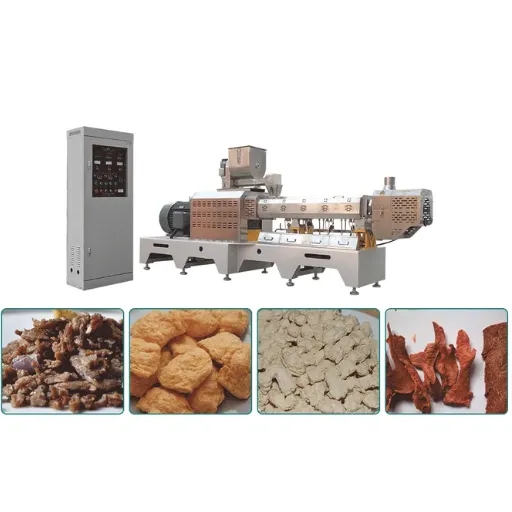
Modern advancements to the extrusion of Textured Vegetable Protein have tremendously positively impacted efficiency, quality, and ranging possibilities. Developments include extrusion machinery capable of large capacity production with precise control systems that ensure a constant texture and structure to TVP products. Energy-efficient processes and expert automation put into use minimize production costs while sustaining environmental conservation measures. Then, development of such machinery that can handle a variety of raw materials expanded what one could call the variety of TVP products, which addresses the consumer disposition to better taste, texture, and nutritious value. Thus, this advanced technology enables a manufacturer to pursue latest trends and be competitive in the arenas.
Automation in the Production Line
Automation embraced into any manufacturing process allows greater efficiency, consistency, and production scale. Mixing, extruding, and drying phases can be shortened with the facility of automated systems so that product quality can be adequately monitored. Advanced automation equipment keeps a close watch on temperature, moisture, and pressure monitor parameters in real time, making adjustments when needed to optimize the desired properties. Obviously, this leads to a decrease in human error, an increase in output, and retention of the desired texture and nutritional character of TVP. Given the rising demand worldwide, automation is now a necessity if sustainability needs to be established in the industry.
Energy Efficiency and Sustainability
Energy effectiveness and sustainability make for a big thunderbolt in present-day production processes for TVP. Manufacturers increasingly accept energy-efficient machinery that wastes least possible power and unsafe calls of the atmosphere for production. The advanced heat recovery system and optimized production processes have lessened the energy use, thus decreased the carbon footprint. On another note, solar or wind utilities are intervened in different plantations to reduce their dependency on fossil fuel.
In terms of sustainability, the production of TVPs would use soy, wheat, or pea protein from environmentally responsible agricultural practices that serve for water conservation, soil conservation, and minimization of polluting emissions. Other manufacturers strive to cut packaging waste or provide biodegradables or recyclable materials to coincide with global sustainability efforts. With the integration of energy-efficient technology and environmentally friendly sources and practices, the TVP industry is really stepping up in moving toward a sustainable future.
Innovative Machinery for Quality Control
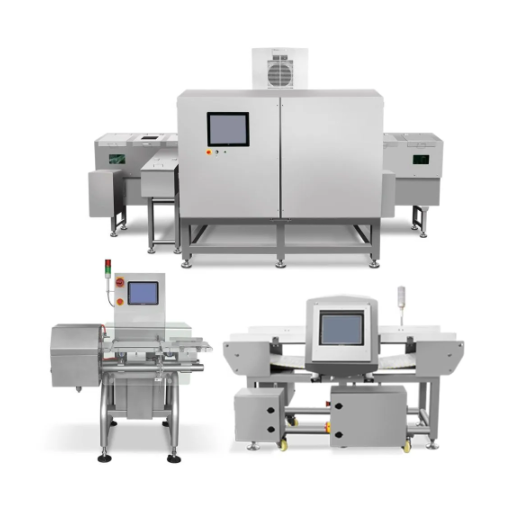
Innovative machinery is significant for meeting consistent quality standards in Textured Vegetable Protein (TVP) production. The modern laboratories have automated optical sorters and moisture detection devices that are used to maintain the quality of raw materials or that of the finished products. These machines detect foreign matter, control protein content, and maintain exacting standards for texture-all in real-time. Additionally, using advanced extrusion machinery lets operators vary temperature, pressure, and blending of ingredients for higher production reliability and quality. Using them together enables the manufacturers to have efficient production along with top-level quality for the consumers.
Selecting the Right Machinery for Your Textured Vegetable Protein Line
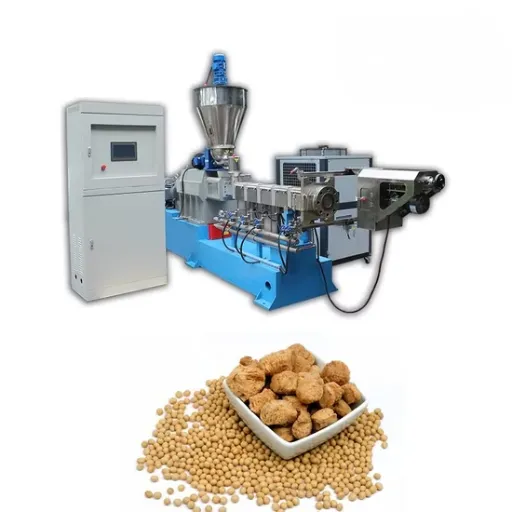
Precision, efficiency, and reliability should be the goals when considering machinery for a textured vegetable protein (TVP) production line. Production needs might include extrusion methods, levels of automation, and throughput considerations. Machinery should allow for precise control of temperatures, pressure, and the mixing of the materials and, by doing so, produce a very consistent quality of product. Look for manufacturers that have technical expertise in the machinery and can provide strong support—with the aim of optimizing the subsequent performance and maintenance of the machinery.
Factors to Consider When Choosing Equipment
- Production Capacity: Verify whether the given equipment is capable of meeting your required output volume while efficiently handling all demand, both present and future.
- Energy Efficiency: Choose production mechanisms that consume the least energy while maintaining optimum performance so as to cut operational costs and minimize harm to the environment.
- Flexibility and Customization: The equipment you consider should have adjustable settings and be flexible enough to manufacture different skeletal protein products.
- Durability and Material Quality: The slitting mechanism should be fabricated from food-grade material that can resist wear and tear and withstand prolonged usage in a rugged production environment.
- Easy Maintenance: Equipment should be easy to maintain, with replacement parts being readily available, thus reducing downtime and increasing the lifespan of the machine.
Understanding Production Capacity and Scalability
To assess production capacity, immediate operational needs as well as one’s scalabilty, in the real sense of it, must be taken into account. Some manufacturing equipment is based on anticipated production levels, with a buffer to accommodate flexibility for surge in demand. Scalable systems enable a business to change with market conditions without undergoing complete enginerings for efficiency and cost-effectiveness. Advanced data analytics and automation can also help track capacity utilization and forecast capacity requirements, in addition to pinpointing optimization opportunities. By investing in solutions that are versatile and scalable, manufacturers will put themselves there for a truly competitive long-term existence.
Cost Considerations and Investment Returns
The main idea when it comes to money considerations and potential investment yield is to look at the tradeoff between the upfront costs and the lift that can be attained with it in the future. Initial costs may include buying of equipment, setting systems, and training personnel. They are also an investment in major savings with efficiency, downtime reduction, and maximized use of resources. A sound cost-benefit analysis will help evaluate the value for money in the long run, thus assuring that the investment is in line with the organization’s goals. Companies may also look into government incentives and grants or some relevant tax benefits that could help offset a considerable chunk of the initial cost, thus upping the ROI. Working smart should therefore be the bastion of spend efficiency upon which sustainable growth and profitability shall be realized by any given organization.
Reference Sources
- Tvp Production Line | Textured Protein Food Process Equipment
This source provides details on core components like PLC, engine, gearbox, and motor, along with specifications like installed capacity and operating power. - Tvp Food Production Line
Features automated control systems, conveyor belts, and specialized processing equipment such as slicers and mixers. - Isolated Soya Protein TSP Soya TVP Extrusion Machine
Discusses flexible equipment configurations, raw material options, and the variety of final products. - Soya Meat Textured Vegetable Protein TVP Making Machine
Provides insights into production capacity (250-500kg/hr) and the ability to produce various products like soya nuggets and snacks. - China TVP Making Machine Manufacturers, Suppliers
Details the equipment setup, including powder mixer, feeding machine, extruder, cutting machine, and oven.
Frequently Asked Questions (FAQs)
Ready to start your TVP production journey? With the right equipment and setup, you can create high-quality textured vegetable protein that meets growing market demands for sustainable, nutritious food alternatives.