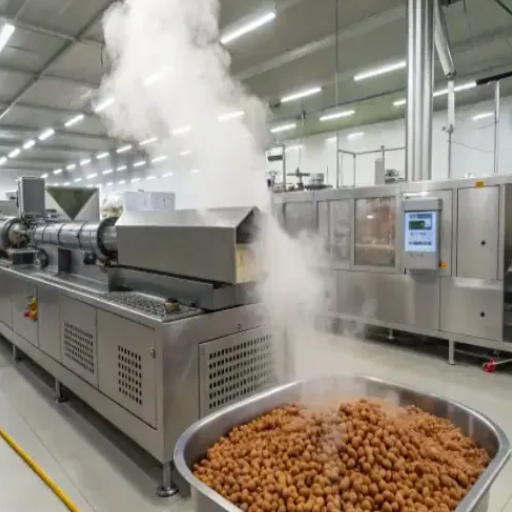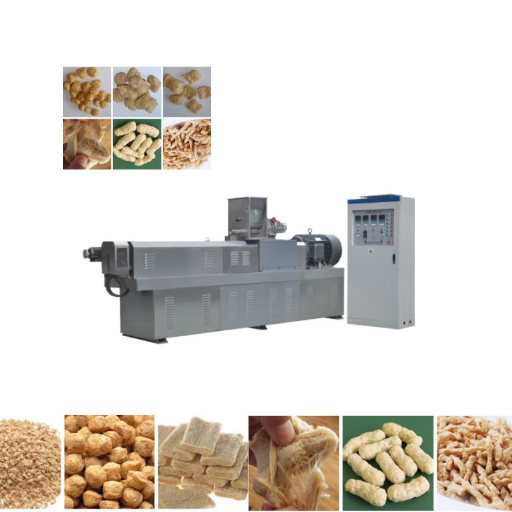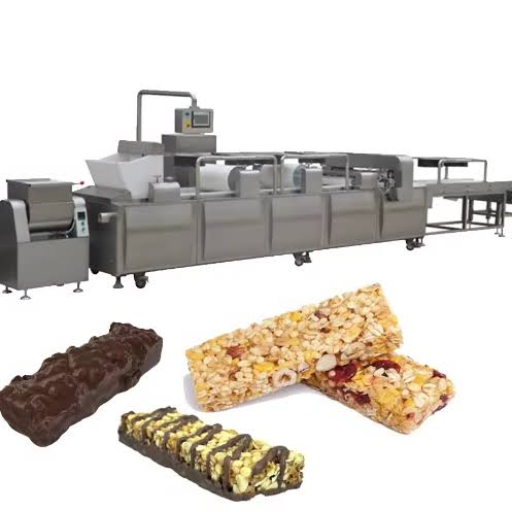
The equipment known as CE certified food machinery functions as legal selling equipment within European Union and European Economic Area territories because it satisfies all European Union health and safety standards together with environmental requirements. The mark itself shows only one small part of an extensive compliance system which organizations must meet. The system exists with multiple directives and standardized regulations and risk evaluation methods and technical records which organizations must use to obtain valid certification instead of receiving an empty certificate.
You already know that CE marking food machinery matters if you sell or buy equipment in Europe. The reality you do not understand yet is that incomplete paperwork occurs more frequently than people think. The machines which arrive at EU customs present themselves with forged certificates while they exhibit compliance deficiencies. The issues which customers face result in expense of thousands because they encounter both delays and mandatory equipment upgrades. The risks have increased. The new Machinery Regulation will become effective for all operations starting January 2027. The regulation establishes more rigorous standards for equipment connected to machinery with increased penalties for organizations that fail to meet those standards.
The guide provides information about CE certified food machinery which defines its meaning through its related directives and EN standards and details how manufacturers achieve compliance while buyers can verify certificates before making a purchase order. The 2027 regulatory shift will impact your business operations in particular ways which we will explain while showing you the steps you must take to prepare.
Key Takeaways
- CE marking is a legal declaration of compliance with EU directives, not a quality guarantee or voluntary certification.
- Food machinery must satisfy the Machinery Directive, EMC Directive, Low Voltage Directive, and Food Contact Materials Regulation simultaneously.
- The Machinery Regulation (EU) 2023/1230 replaces the current Directive in January 2027 and adds cybersecurity and stricter traceability rules.
- Buyers should always demand a Declaration of Conformity, technical file summary, and food-contact material documentation before accepting delivery.
- CE-certified turnkey production lines require holistic compliance across all integrated machines, not just individual components.
If you are planning a complete production line, understanding CE requirements early can save months of rework. You can explore how turnkey food production lines are designed for integrated compliance from the start.
What Does CE Certified Food Machinery Mean?
Beyond the Mark: The Legal Reality
CE stands for Conformité Européenne. The manufacturer uses this declaration to demonstrate that their product meets all European Union health and safety standards and environmental protection standards which apply to their product.
The food machinery equipment has to meet safety requirements for mechanical systems and electrical systems and electromagnetic protection standards and safety standards for materials that will touch food. The mark is mandatory. European Union law prohibits the sale and installation and operation of most food processing equipment until it receives proper CE markings and necessary documents.
Customs officials have the authority to stop shipments when they reach the border. Market surveillance authorities have the power to impose financial penalties and execute product recalls and completely ban product sales.
CE does not function as a quality certification. The certification does not prove that the machine produces high-quality snacks or makes uniform pasta products. The safety certification proves that the machine will not endanger workers and will not disrupt other electrical devices and will not use hazardous materials to contaminate food.
Why CE Certification Matters for Food Manufacturers
The food manufacturers must achieve CE compliance because it enables them to access the largest market according to worldwide measurement. The European food processing machinery market has an estimated worth between USD 15 billion and USD 21 billion. The total market value which includes both material handling systems and component systems reaches more than USD 60 billion.
The advantages of the product extend beyond its ability to create market opportunities. Insurance providers increasingly expect CE-marked equipment for their operations. Third-party audit schemes such as BRCGS and SQF also look for valid certification.
A missing or fraudulent certificate can trigger a failed audit. The process will make insurance coverage null and void. The process will make the facility responsible for all damages which occur when an operator sustains an injury.
Elena Kowalski, a procurement manager at a snack factory near Warsaw, learned this the hard way. The supplier claimed that the seasoning drum he provided to her in 2024 had received CE certification.
The Declaration of Conformity looked official. The issuing laboratory refuses to verify the registration number. The container remained with Hamburg customs for six weeks. Elena’s team worked urgently to secure independent evaluation. The delay cost her company EUR 12,000 because of storage fees and production interruptions.
The verification process holds crucial importance because of cases like Elena’s. The mark itself is easy to copy. The documentation behind it is what separates legitimate compliance from fraud.
Food Machinery CE Certification Requirements: Which EU Directives Apply?
CE certified food machinery rarely falls under a single rule. Manufacturers must assess and comply with every directive that applies to their equipment before affixing the CE mark.
Machinery Directive 2006/42/EC (Current Framework)
This is the cornerstone regulation for most powered food processing equipment. It establishes Essential Health and Safety Requirements. These cover mechanical design, guarding, emergency stops, maintenance access, and hygiene.
Manufacturers must perform a formal risk assessment per EN ISO 12100. They must also maintain a technical file for ten years after the product is placed on the market.
The 2027 Shift: Machinery Regulation (EU) 2023/1230
In January 2027, the Machinery Directive becomes a Regulation. Unlike a Directive, which EU member states transpose into national law, a Regulation applies directly and uniformly across the entire EU. This change eliminates gaps in how different countries enforce the rules.
The 2023/1230 Regulation introduces several important updates for food machinery buyers and manufacturers:
- Stricter risk assessment requirements with clearer documentation rules
- Mandatory cybersecurity provisions for connected and IoT-enabled equipment
- Expanded categories of high-risk machinery requiring Notified Body assessment
- Higher penalties for non-compliance, including fines up to ten percent of global turnover
- Permission for digital documentation, such as QR codes linking to technical files
If you are negotiating CE certified food machinery that will ship in late 2026 or beyond, confirm that your supplier is designing for the Regulation, not just the outgoing Directive. A machine compliant with 2006/42/EC today may need updates to satisfy 2023/1230 tomorrow.
Supporting Directives
Beyond the Machinery Directive or Regulation, food machinery typically must also comply with:
- EMC Directive 2014/30/EU: Ensures the machine does not emit excessive electromagnetic interference and is immune to interference from nearby equipment.
- Low Voltage Directive 2014/35/EU: Covers electrical safety for equipment operating between 50 and 1000 volts AC.
- Food Contact Materials Regulation (EC) 1935/2004: Requires that all materials contacting food are safe, inert, and do not release harmful substances.
A full list of applicable directives and current harmonized standards is maintained at Compliance Gate.
Key EN Standards for CE Certified Food Machinery Compliance
Directives set the legal goals. Harmonized EN standards provide the technical roadmap for food processing equipment CE compliance. Manufacturers who follow these standards gain a legal presumption of conformity. This saves time. It reduces testing costs.
Foundational Safety Standards
These apply to nearly all machinery:
- EN ISO 12100: Safety of machinery; general principles for design and risk assessment. This is the starting point for every CE compliance project.
- EN 60204-1: Safety of machinery; electrical equipment of machines. Covers wiring, grounding, overcurrent protection, and control circuit safety.
- EN ISO 14159: Safety of machinery; hygienic requirements for the design of machinery. Bridges general safety with food-specific cleanliness needs.
Food Processing Specific Standards (C-Type)
C-type standards address specific machine categories. Depending on your equipment, one or more of these may apply:
- EN 1672-1:2021: Food processing machinery; basic concepts, safety requirements.
- EN 1672-2:2021: Food processing machinery; basic concepts, hygiene requirements.
- EN 1678: Vegetable cutting machines.
- EN 12852: Food processing machines and blenders.
- EN 1974: Slicers.
- EN 415 series: Packaging machines.
A technical introduction to how these standards fit together is available from JJRLab.
How Standards Apply to Production Lines
Single machines present simple operation while integrated production lines introduce more difficult operational challenges.
The turnkey snack extrusion system contains complete production equipment which includes industrial mixers and extruders and dryers and flavoring drums and packaging machines. Different C-type standards apply to each component of the system. The integrator must ensure the entire line meets the Essential Health and Safety Requirements as a unified system.
Manufacturers with experience create CE compliance through their initial line design process. The construction of production line security features creates high expenses when businesses need to complete their production system. The process results in designs which are difficult to clean and create sanitary violations.
Our snack food machinery is engineered with these integrated standards in mind, so compliance flows naturally from the design rather than being patched on at the end.
Hygienic Design: The Food-Specific Layer
CE marking addresses safety. For CE certified snack food machinery, safety also means hygiene. A machine that is mechanically safe but impossible to clean is not truly safe for food production.
Materials of Construction
The kitchen surfaces that touch food need to be made from materials that resist corrosion and do not pose health risks and can withstand cleaning products. The most widely used material for surfaces that handle food is stainless steel 304/316. The basic standard for indoor food applications is established by stainless steel 304.
Stainless steel 316 provides better protection against corrosion in both acidic environments and intense cleaning procedures. The material has a cost premium that ranges between 20 percent to 30 percent.
All plastics and elastomers used in food zones must follow the regulations established by EU 10/2011. This regulation establishes precise limits for substance migration. Test data should be provided by manufacturers to demonstrate that their materials do not release dangerous substances into food when used as intended.
Surface and Geometry Requirements
The EN 1672-2 standard together with EHEDG guidelines define precise rules for hygienic design. The surfaces need to have both smooth texture and non-porous characteristics. The typical roughness level maintains its value below 0.8 micrometer.
All internal corners and angles require radiused edges instead of having pointed ends. The design enables both drainage and cleaning processes. The joints need to maintain a continuous and streamlined structure. The product zones must not contain any hidden spaces or crevices or threaded fasteners.
The design of bearings and seals needs to follow hygienic principles. The system needs to stop any lubricant or debris from entering the product stream.
Cleanability and Maintenance
Manufacturers must document recommended cleaning and disinfection procedures. For closed systems such as extruders or pasteurizers, Clean-in-Place compatibility is essential. The design must allow the equipment to be fully emptied, cleaned, rinsed, and inspected without disassembly.
Marcus Chen, a senior production engineer at Shandong Loyal Industrial, describes how his team approaches this. “When we design a pasta production line, we start with the cleaning cycle. If an operator cannot flush the extrusion barrel and drying loop in under 45 minutes, the design goes back to the drawing board. Hygiene is not an afterthought. It is the first constraint.”
The CE Compliance Process: A Manufacturer’s View
Understanding how responsible manufacturers produce CE certified food machinery helps buyers evaluate supplier credibility. The process follows a clear sequence.
Step 1: Risk Assessment (EN ISO 12100)
The engineering team creates a comprehensive list of potential dangers which they will face during the metal cutting process. The team creates a map which shows all mechanical pinch points that exist in the workspace. The team creates a complete list of all electrical shock hazards present in the system.
The team evaluates thermal burns which result from heated dies and noise exposure and ergonomic strain and hygiene-related contamination. The team assigns a risk rating that combines two elements which assess both the threat level and the possibility of occurrence. The system achieves reduced risk through design modifications and protection systems and alert mechanisms.
Step 2: Design and Testing
The team uses standardized procedures which operate across multiple countries to conduct their detailed design work after they identify all the potential risks that exist. The team creates electrical schematics according to EN 60204-1 standards. The system uses mechanical guards which block entry to hazardous areas. The system provides maintenance personnel with access to dangerous areas.
EMC testing shows that the machine neither creates disruptive signals nor becomes affected by such signals. Migration testing for food-contact components confirms that materials are safe to use. The team establishes surface finish requirements which undergo inspection. The team grinds all welds that occur in product areas until they become completely smooth. The items must succeed in all cleanability evaluations.
Step 3: Technical Documentation
Every manufacturer of CE certified food machinery must compile a technical file. It must be retained for ten years after the product is placed on the EU market. The file includes:
- Design drawings and electrical schematics
- The completed risk assessment report
- Test reports for EMC, electrical safety, and mechanical validation
- A bill of materials highlighting food-contact components
- User manuals in the language of the destination country
- Maintenance and cleaning instructions
Step 4: Declaration of Conformity and CE Marking
Once testing is complete and the technical file is assembled, the manufacturer issues the EU Declaration of Conformity. This legally binding document lists the manufacturer, product description, applicable directives, and harmonized standards used. The CE mark is then affixed to the machine nameplate along with traceability information such as serial numbers and the manufacturer?s address.
When a Notified Body Is Required
Most standard food processing equipment, such as mixers, cutters, and packaging lines, can be self-certified by the manufacturer under Module A. However, a notified body, an independent third-party assessor accredited by an EU member state, is mandatory for:
- High-risk machinery categories listed in Annex IV
- AI-enabled or machine-learning-controlled equipment (from January 2027)
- Connected machinery with significant cybersecurity risks (from January 2027)
Buyers should ask whether their CE certified food machinery requires Notified Body involvement. If it does, the certification timeline extends by several months and costs increase significantly.
If you are unsure whether your project requires third-party assessment, contact us for a consultation. We can review your production goals and advise on the fastest compliance path for your specific equipment mix.
How Buyers Can Verify CE Certification
Documentation to Demand
Verifying EU machinery directive food processing compliance is essential before accepting delivery or releasing final payment. Procure the following from your supplier:
- Declaration of Conformity: Verify it lists the correct directives and standards for your machine type.
- Technical File Summary: While you may not need the full file, confirm it exists and covers the required ten-year retention period.
- Food Contact Declaration of Compliance: Confirms that food contact materials meet EC 1935/2004.
- User Manual: Must be provided in the language of the operating country.
- Test Reports: Request EMC and electrical safety reports from accredited laboratories such as SGS, TÜV, Intertek, or Bureau Veritas.
Red Flags: Spotting Fake or Incomplete CE Claims
Be alert for these warning signs:
- A CE mark on the machine with no accompanying Declaration of Conformity
- A DoC that references incorrect or outdated directives
- Missing food-contact material documentation
- User manuals only in the supplier?s local language
- Certificate registration numbers that cannot be verified with the issuing laboratory
- Vague claims such as “CE standard compliant” instead of specific directive references
The Cost Reality
Understanding typical certification costs helps buyers evaluate supplier pricing. Here are the benchmarks:
- Basic machines via self-declaration: EUR 3,000 to 8,000
- Standard food processing equipment with testing: EUR 8,000 to 15,000
- Automated production lines with Notified Body involvement: EUR 15,000 to 25,000 or more
- AI-enabled or smart machinery from 2027: EUR 20,000 to 35,000 or more
Be wary of suppliers who treat CE marking as a surprise 20 percent surcharge on the base machine price. For most standard food processing equipment, compliance is built into the design and manufacturing process. Significant additional costs are only justified when third-party testing or complex multi-machine integration is required.
CE vs. Other Global Certifications
Food manufacturers sourcing CE certified food machinery for multi-market operations often juggle several certification schemes. Understanding how they relate prevents costly confusion.
CE (European Union)
CE marking is mandatory for CE certified food machinery sold and operated in the EU and EEA. It covers machinery safety, electrical safety, electromagnetic compatibility, and, for food equipment, material safety. No other certification replaces CE for the European market.
FDA (United States)
The U. S. Food and Drug Administration regulates food facilities and equipment under the Food Safety Modernization Act. FDA requirements focus on facility registration, preventive controls, and equipment materials. FDA compliance does not replace CE for EU markets, and vice versa.
NSF/ANSI (United States / Global Voluntary)
NSF International develops sanitation standards for food equipment. NSF certification is highly regarded in North American food service and is often required by health departments. In the EU, NSF is voluntary and does not substitute for CE marking.
How Shandong Loyal Industrial Addresses Multi-Market Needs
Our equipment is designed to meet CE requirements as the foundation. For clients who also serve North American markets, we can configure machines with FDA-compliant materials and NSF-recognized components. The core hygienic design, stainless steel construction, and rigorous testing satisfy multiple regulatory frameworks simultaneously.
If your product range includes nutrition bars, our protein bar production line can be supplied with documentation packages tailored to your target markets, whether that is the EU, North America, or both.
Preparing for the 2027 Machinery Regulation
The transition from Directive to Regulation in January 2027 affects every manufacturer of CE certified food machinery. It is not merely a paperwork update. It reflects how machinery has evolved. Modern production lines include sensors, programmable logic controllers, remote diagnostics, and sometimes artificial intelligence. The new rules account for these technologies.
Key actions for manufacturers and buyers to take now include:
- Review current technical files for gaps against the new Regulation?s stricter documentation requirements.
- Assess connected equipment for cybersecurity risks. From 2027, connected food machinery must meet mandatory cybersecurity standards.
- Verify supplier readiness. Ask whether your manufacturer is designing for 2023/1230, not just 2006/42/EC.
- Confirm EU Authorised Representative arrangements. Non-EU manufacturers must designate an EU-based representative for legal and regulatory correspondence.
- Budget for potential retesting. Machines already on the market under the Directive generally remain valid, but new models placed on the market after January 2027 must meet the Regulation.
More details on the transition timeline are available from the Alibaba exporter guide to 2027 Machinery Regulation compliance.
Conclusion
The CE certification of food machinery extends beyond its nameplate identification. The certification establishes a binding legal and technical obligation that includes mechanical safety requirements and electrical safety standards and electromagnetic compatibility specifications and food-contact material safety guidelines. The safest procurement method for buyers involves establishing partnerships with manufacturers who implement compliance measures during the initial design process.
Regulations are undergoing changes. The upcoming 2027 Machinery Regulation will enforce stricter requirements for connected devices and cybersecurity systems and traceability measures. Manufacturers who prepare now will avoid delays and costly retrofits. Buyers who understand what to ask for, what documentation to demand, and how to verify authenticity will protect their investment and their production schedule.
For more than ten years, we have developed CE-certified extrusion systems and snack production lines and pasta equipment and protein bar production equipment for clients across more than 50 countries at Shandong Loyal Industrial. We create compliance standards for every drawing we develop and we perform our tests according to EN harmonized standards and we maintain complete documentation from consultation to commissioning.
Contact us to discuss your production goals and CE compliance requirements if you are planning to establish a new production line or upgrade your current equipment. We will assist you in understanding the standards while achieving your deadlines to deliver dependable machinery that meets compliance standards to your factory.