Soy protein meat analog quality control is a four-layer system: raw-material verification, in-process extrusion monitoring, finished-product testing, and food-safety compliance. Mastering these layers lets manufacturers deliver repeatable texture, stable shelf life, and export-ready documentation for textured vegetable protein (TVP), textured soy protein (TSP), and high-moisture meat analogs (HMMA).
Last year, a plant-based startup in Southeast Asia lost a major retail contract after three consecutive batches of soy chicken strips failed texture tests. The problem was not their recipe; it was that no one had linked the cooling-die temperature to the finished-product chewiness. Once they mapped each quality attribute back to a specific extruder setting, complaints dropped by 40% in one quarter. That is the power of equipment-integrated QC.
In this guide, you will learn the quality attributes that matter most, the tests used to verify them, the extrusion parameters that control them, and the certifications required to sell into global markets. You will also see how the right turnkey food production line turns quality control from a guessing game into a repeatable process.
Key Takeaways
- The four QC layers are raw-material verification, in-process extrusion control, finished-product testing, and food-safety compliance.
- Moisture, texture, protein content, and color are the four most critical quality attributes for soy protein meat analogs.
- High-moisture meat analogs typically run at 50–70% moisture, while dry TVP/TSP is produced below 30% moisture.
- Texture profile analysis (TPA) and Warner-Bratzler shear tests are standard methods for measuring meat-like texture.
- ISO 22000, FSSC 22000, BRCGS, Halal, Kosher, and Non-GMO certifications are commonly required for export markets.
- In-line NIR spectroscopy, torque sensors, and thermocouples can catch deviations before a batch is wasted.
What Is Soy Protein Meat Analog Quality Control?

Soy protein meat analog quality control is the set of procedures, tests, and process controls used to ensure that soy-based meat alternatives meet specifications for texture, nutrition, safety, and appearance. It covers every stage of production, from the moment raw soy protein enters the facility to the moment packaged product leaves it.
The scope includes three main product categories:
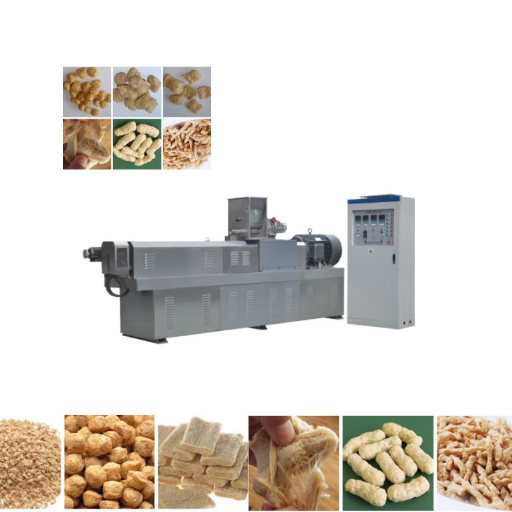
- Textured vegetable protein (TVP) / textured soy protein (TSP): Dry, expanded granules or chunks that are rehydrated before use.
- High-moisture meat analogs (HMMA): Juicy, fibrous products with 50–70% moisture that resemble whole muscle meat.
- Processed meat analogs: Burgers, nuggets, sausages, and strips made from rehydrated TVP or HMMA base material.
Quality control matters because these products are judged first by texture and appearance. A burger that crumbles wrong or a strip that lacks fiber will not win repeat customers, no matter how clean the ingredient list is. Strong QC also protects shelf life, reduces rework, and opens export markets that demand documented food-safety systems.
Key Quality Attributes for Soy Protein Meat Analogs
Texture and Fibrous Structure
Texture is the single most important quality attribute for meat analogs. Consumers expect a bite, chew, and pull that mimics animal meat. Manufacturers typically measure this with texture profile analysis (TPA), which reports hardness, springiness, cohesiveness, and chewiness, and with Warner-Bratzler shear tests, which measure the force needed to cut through the sample.
For HMMA, anisotropy, the degree of fibrous, directional structure, is also critical. A high anisotropy index means the product tears in meat-like strands rather than crumbling. This is controlled mainly by die geometry, cooling rate, and shear history inside the extruder.
Moisture Content and Water-Holding Capacity
Moisture affects juiciness, cooking yield, and microbial stability. According to the Good Food Institute, high-moisture extrusion runs at 50–70% moisture to create fibrous whole-muscle structures. Moisture above roughly 70% can limit fiber formation, while too little moisture produces a dry, brittle product.
Water-holding capacity (WHC) indicates how much water the product retains during cooking and storage. Higher WHC usually means better juiciness and less purge in packaging.
Protein Content and Quality
Protein content is verified by Dumas combustion or Kjeldahl nitrogen methods. A typical commercial soy protein isolate used for meat analogs contains at least 90% protein on a dry basis, with moisture below 7% and fat below 1%. For finished products, Japan’s JAS standard defines “soy meat” as containing at least 10% soy protein with an amino acid score of 100.
Protein quality can also be evaluated using PDCAAS or DIAAS scores, which measure how well the protein supports human nutrition.
Color, Appearance, and Sensory Acceptance
Color is measured with CIELAB values (L*, a*, b*). For meat analogs, the goal is usually a brownish-red cooked-meat appearance, sometimes achieved with beet juice, soy leghemoglobin, or caramel. Sensory panels evaluate flavor, juiciness, texture, and overall acceptability on structured scales.
Microbiological Safety and Contaminant Control
Plant proteins can carry physical, chemical, and biological hazards from the field. Standard tests include total plate count, yeasts and molds, E. coli, Salmonella, heavy metals, and mycotoxins. These tests protect both food safety and shelf life.
Raw Material Quality Control
Quality starts before extrusion. Incoming soy protein ingredients should arrive with a certificate of analysis (COA) that confirms protein content, moisture, fat, ash, microbial limits, and allergen status.
Incoming Soy Protein Specifications
| Material | Typical Protein (dry basis) | Typical Moisture | Common Uses |
|---|---|---|---|
| Soy protein isolate (SPI) | ≥90% | ≤7% | Emulsified meats, burgers, whole cuts |
| Soy protein concentrate (SPC) | 65–72% | 5–8% | Burgers, sausages, nuggets |
| Defatted soy flour | 50–55% | 7–10% | Dry TVP/TSP granules |
| Wheat gluten | 75–80% | 7–9% | Texture improvement, fiber formation |
Supplier Verification and Storage
Suppliers should be audited for ISO 22000 or FSSC 22000 certification, Non-GMO or organic status if required, and consistent lot-to-lot quality. Raw materials should be stored in cool, dry conditions, with first-in-first-out rotation and clear allergen segregation. Soy is a major allergen, so cross-contact controls begin in the warehouse.
When Chen, a QA manager at a Chinese soy protein plant, started requiring COAs for every SPI lot, he discovered that moisture variation from one supplier was causing 8% of his extrusion batches to miss texture targets. Switching to a single qualified supplier and adding an incoming moisture test cut his rework rate in half.
In-Process Quality Control During Extrusion
Extrusion is where protein transforms from powder into a fibrous, meat-like structure. The process parameters you control here determine almost every finished-product attribute.
Critical Control Points
The four most important extrusion parameters for soy protein meat analog quality control are:
- Moisture content, controlled by water/steam injection rate.
- Barrel temperature, typically 120–180°C depending on product type.
- Screw speed, affects shear rate, residence time, and degree of texturization.
- Die pressure and temperature, shapes fiber orientation and final density.
A review in Comprehensive Reviews in Food Science and Food Safety confirms that these parameters directly influence fiber formation, tensile strength, hardness, and chewiness in soy protein meat analogs.
In-Line Monitoring Tools
Modern extrusion lines use sensors to monitor quality in real time:
- NIR spectroscopy measures moisture, protein, and fat without stopping the line.
- Torque sensors detect changes in material viscosity and protein aggregation.
- Thermocouples and pressure transducers track barrel and die conditions.
- Flow meters ensure stable water and steam injection.
These tools let operators catch deviations early. If moisture drifts high, the operator can adjust the water pump before the batch becomes too soft. If torque drops, it may signal inconsistent raw material or worn screw elements.
Recording Batch Data and Trend Analysis
Every batch should record raw-material lot numbers, extrusion settings, in-line sensor readings, and finished-product test results. Trend analysis turns isolated measurements into early warnings. A slow drift in hardness over two weeks may indicate die wear or supplier changes long before customers complain.
Finished Product Testing and Acceptance Criteria

After extrusion, the product must pass a defined test panel before release.
Proximate Analysis
Moisture, protein, fat, ash, and fiber are measured using AOAC or equivalent methods. These values confirm that the product matches nutritional claims and formulation targets.
Texture Profile Analysis and Shear Tests
TPA gives a full texture fingerprint. Typical HMMA targets might include:
- Hardness: 15–40 N, depending on product type
- Chewiness: moderate to high for whole-muscle analogs
- Springiness: >0.80 for resilient, meat-like recovery
- Cohesiveness: 0.40–0.70 for good bite integrity
Shear force, measured with a Warner-Bratzler blade, should be reported both perpendicular and parallel to fiber direction to confirm anisotropy.
Water Absorption, Rehydration, and Cooking Yield
For TVP/TSP, the rehydration ratio, usually 1:1.5 to 1:3 dry product to water, determines how much finished yield the customer gets. For HMMA, cooking yield and cooking loss show how well the product holds moisture during pan-frying or grilling.
Color, Sensory, and Microbial Limits
CIELAB color values are compared to target standards. Trained sensory panels or consumer hedonic tests evaluate appearance, flavor, texture, and overall liking. Microbial testing follows regional limits; typical acceptance criteria include total plate count below 10,000–100,000 cfu/g depending on product and market.
Food Safety and Regulatory Compliance
Plant-based meat facilities must follow the same food-safety discipline as any other protein operation. The Trust20 guide on alternative proteins emphasizes treating all proteins the same: clean, separate, cook, and chill.
HACCP and Preventive Controls
A HACCP plan for soy protein meat analogs should identify hazards at each step:
- Receiving: allergen cross-contact, heavy metals, microbial contamination
- Storage: moisture uptake, pest control, allergen segregation
- Extrusion: time-temperature abuse, foreign material
- Cooling and drying: microbial growth if cooling is too slow
- Packaging: oxygen exposure, incorrect labeling
Allergen Management
Soy is one of the major food allergens globally. Wheat gluten and sesame are also common in meat analog formulations. Facilities need validated cleaning procedures, dedicated production sequences, and clear labeling. Some markets require precautionary allergen statements for shared equipment.
Certifications for Export
The certifications you need depend on your target market:
- ISO 22000 / FSSC 22000: Widely accepted global food safety management systems.
- BRCGS / IFS: Common for European retail customers.
- Halal / Kosher: Required for Middle Eastern, North African, and Jewish markets.
- Non-GMO Project / USDA Organic / EU Organic: Needed for clean-label positioning.
- CE marking: For the production equipment itself, confirming compliance with European machinery safety standards.
Regional Standards
- United States: FDA labeling and FSMA preventive controls.
- European Union: EU regulation on food information to consumers and novel food rules for new ingredients.
- China: GB 2715-2016, GB 2762 contaminant limits, and GB 28050 nutrition labeling.
- Japan: JAS standards for textured soy protein products, including protein thresholds and amino acid scores.
Common Quality Issues and Troubleshooting
Even well-run lines encounter defects. The key is linking each symptom to a root cause quickly.
| Issue | Likely Cause | Corrective Action |
|---|---|---|
| Poor fiber formation / low anisotropy | Insufficient shear, low cooling-die temperature, wrong protein blend | Increase screw speed, optimize cooling die, adjust SPI/SPC ratio |
| Inconsistent moisture | Unstable water injection, raw-material moisture variation | Calibrate pump, add preconditioning, tighten incoming specs |
| Dry, brittle texture | Too little moisture or excessive barrel temperature | Raise water rate, lower final barrel zone temperature |
| Off-flavors | Overheating, oxidized oils, poor raw material | Reduce peak temperature, improve storage, change supplier |
| Dark or gray color | Maillard browning too advanced, contamination | Lower temperature, check for burned deposits, clean die |
| High microbial load | Slow cooling, wet product entering packaging | Accelerate cooling, verify dryer performance, check seals |
A Brazilian TVP producer noticed their granules were expanding unevenly. After checking extruder logs, they found that screw speed had drifted 10% over a month due to a worn drive belt. Replacing the belt restored uniform density and water absorption.
How the Right Production Line Supports Quality Control

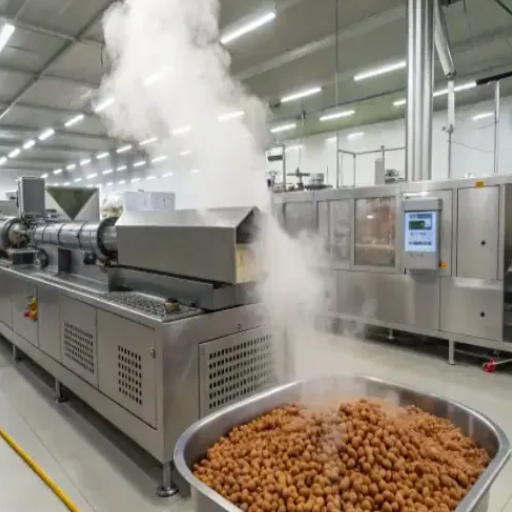
Quality control is easier when the equipment is designed for it. A well-engineered soybean protein production line integrates mixing, extrusion, drying or cooling, and packaging into one controlled workflow.
Precision Twin-Screw Extrusion
Twin-screw extruders dominate soy protein meat analog production because they offer better mixing, heat transfer, and process control than single-screw units. Independent screw speed, barrel temperature zones, and die pressure control let operators fine-tune texture and fiber formation for each recipe.
Automated Moisture and Temperature Control
Closed-loop water and steam injection, combined with NIR feedback, keeps moisture within target range batch after batch. This reduces reliance on manual sampling and catches deviations in real time.
Sanitary, CE-Certified Design
Food-grade stainless steel construction, smooth welds, and accessible clean-out points support HACCP and allergen management. CE certification confirms that the machinery meets European safety and hygiene standards.
Scalability from R&D to Industrial Production
Quality parameters developed on a pilot line must translate to industrial scale. Modular lines that use the same screw and die geometry across capacity ranges make scale-up predictable. A recipe that works at 150 kg/h should produce the same texture at 500 kg/h when the process controls are consistent.
If you are evaluating options, our TVP production line buyer’s guide breaks down capacities, configurations, and what to look for in extrusion quality control.
Frequently Asked Questions
What is the most important quality parameter in soy protein meat analogs?
Texture is usually the most important because it drives consumer acceptance. Moisture content and protein quality are close behind, since they affect texture, nutrition, and shelf life together.
How is meat analog texture tested?
The most common methods are texture profile analysis (TPA) for hardness, springiness, and chewiness, and Warner-Bratzler shear tests for cutting force. Microscopy and sensory panels are also used.
What moisture content should high-moisture meat analogs have?
High-moisture meat analogs typically contain 50–70% moisture. Moisture above 70% can reduce fiber formation, while moisture below 50% tends to produce drier, less juicy products.
Which certifications are required for plant-based meat exports?
Common requirements include ISO 22000 or FSSC 22000, BRCGS or IFS for Europe, Halal or Kosher for specific markets, and Non-GMO or organic certifications for clean-label products. Equipment should also carry CE marking for export to Europe.
How does extrusion temperature affect soy protein quality?
Barrel temperature controls protein denaturation and fiber formation. Temperatures that are too low may under-texturize the protein, while excessive heat can darken color, damage nutrition, and produce off-flavors.
Conclusion
Soy protein meat analog quality control is not a single test at the end of the line. It is a continuous system that starts with raw-material verification, runs through every extrusion parameter, and ends with documented finished-product release. Manufacturers who treat QC as an integrated part of extrusion, rather than a final inspection, gain more consistent texture, longer shelf life, fewer rejects, and access to stricter export markets.
The global plant-based meat market is projected to reach USD 12.2–13.1 billion in 2026, and soy protein remains one of the most proven raw materials for scaling production. Success will go to producers who can reliably convert that raw material into products that look, chew, and taste like meat every single batch.
If you are planning or upgrading a soy protein meat analog line, contact Shandong Loyal Industrial Co., Ltd. to discuss a customized, CE-certified production line with the process controls and support you need to meet your quality targets.