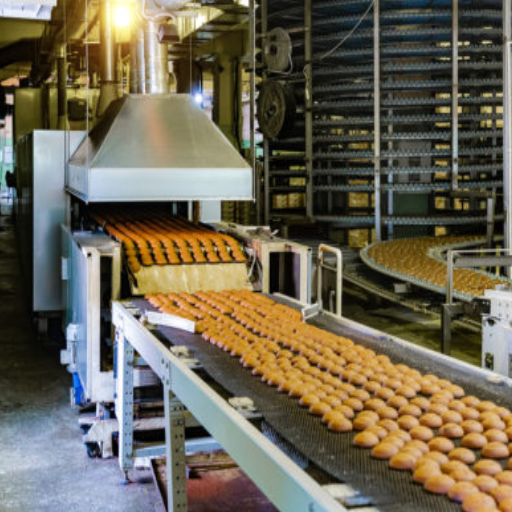
The right pet food manufacturing equipment for your operation depends on your product format, recipe complexity, and production scale, with the extruder, dryer, and coater being the three machines that most directly determine product quality and throughput. Whether you are launching a startup with 300 kg/h capacity or expanding an established facility to 3,000 kg/h, every purchase decision should start with engineering-grade selection criteria, not just a supplier catalog.
Here is a reality that keeps procurement managers awake at night: 68% of new pet food lines commissioned in 2025 included integrated PLC control systems, yet many buyers still choose equipment based on price alone. That approach creates a hidden cost. When Diego Herrera, a plant engineer in Colombia, upgraded his single-screw extruder to a twin-screw system in 2024, his die blockage incidents dropped by 80% and his line uptime jumped from 76% to 92%. The upgrade paid for itself in eleven months.
In this guide, you will learn how to evaluate each category of pet food manufacturing equipment, from grinders and mixers to extruders, dryers, coaters, and packaging lines. We will cover selection criteria, real specifications, and the red flags that signal a supplier to avoid. You will walk away with a clear framework for building a line that matches your recipe, capacity, and budget.
Key Takeaways
- Twin-screw extruders handle high-meat recipes (20%+) and complex formulations that single-screw machines cannot process reliably.
- Belt dryers are the industry standard for kibble, but fluidized bed dryers offer better uniformity for treats and premium products.
- Vacuum coaters deliver 20-30% better fat retention than drum coaters, extending shelf life and reducing oxidation complaints.
- 304 stainless steel is the minimum for food-contact surfaces; 316L is required for high-salt or acidic recipes.
- CE certification, reference installations, and spare parts availability are non-negotiable supplier criteria for export buyers.
What Is Pet Food Manufacturing Equipment?
Pet food manufacturing equipment refers to the specialized machines used to grind, mix, extrude, dry, coat, cool, and package pet food products into finished, shelf-stable form. A complete production line typically includes ten or more integrated machines, each designed to handle a specific transformation step.
The equipment falls into five functional categories:
- Pre-processing: Hammer mills, pulverizers, ribbon blenders, paddle mixers, and preconditioners that prepare raw materials.
- Forming: Single-screw and twin-screw extruders, moulders, and presses that shape and cook the product.
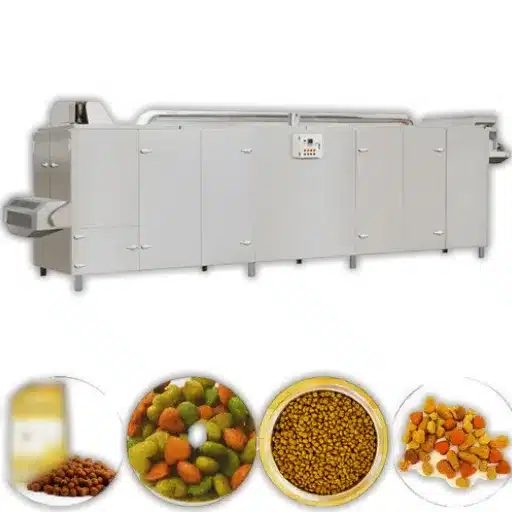
- Post-processing: Belt dryers, rotary dryers, fluidized bed dryers, and counter-flow coolers that reduce moisture.
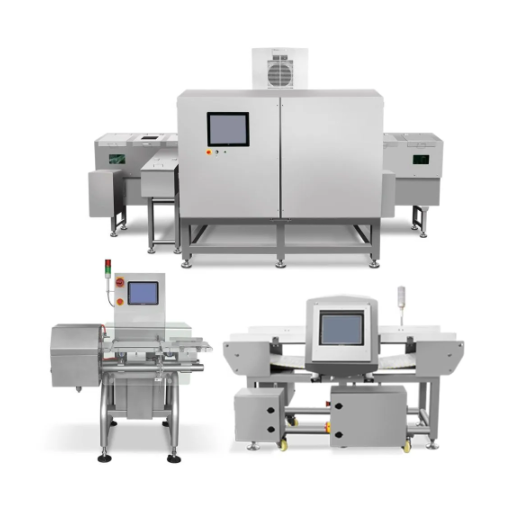
- Finishing: Drum coaters, vacuum coaters, vibratory sieves, metal detectors, and X-ray inspection systems.
- Automation: PLCs, HMIs, pneumatic conveyors, weighing systems, and form-fill-seal packaging lines.
Understanding how these categories of pet food manufacturing equipment connect matters. The grinder must feed the mixer at a rate that matches the extruder’s intake. The dryer must handle the extruder’s output without creating bottlenecks. And the coater must receive kibble cooled below 30 degrees Celsius to prevent fat melting and uneven distribution. A well-designed line is a system, not a collection of machines.
How to Evaluate Pet Food Manufacturing Equipment
Before comparing pet food manufacturing equipment quotes, establish a clear evaluation framework. The five criteria below separate a strategic purchase from a costly mistake.
Capacity Match
Design your line for 80% of peak demand, not average throughput. Running equipment at 100% capacity around the clock accelerates wear and leaves no margin for demand spikes. If your target is 500 kg/h, specify equipment rated for 625 kg/h. This buffer also accounts for recipe changes that temporarily reduce throughput.
Material Compatibility
Food-contact surfaces must use 304 stainless steel at minimum. For recipes with high salt content, acidic ingredients, or frequent wet cleaning, 316L stainless steel is the safer choice. Verify surface finish (Ra 0.8 micrometers or better) and welding quality. Rough surfaces trap bacteria and create contamination risks.
Recipe Flexibility
Your extruder should support quick die changes, multiple screw configurations, and clean-in-place (CIP) capability. A line that can switch between kibble, treats, and functional formats in under two hours delivers far more value than a single-purpose system.
Automation Level
Manual controls work for pilot operations, but commercial production demands PLC-based systems with recipe storage, batch logging, and alarm management. Look for HMI interfaces that allow operators to adjust temperature, screw speed, and moisture in real time.
Total Cost of Ownership
Purchase price is only the beginning. Calculate energy consumption (15-25% of operating costs), labor requirements, maintenance contracts, and spare parts lead times. A machine that costs 20% more upfront but consumes 30% less energy often delivers a faster payback.
Want to see how a complete line comes together? Explore our turnkey pet food production line solutions, designed for seamless integration from raw material intake to finished packaging.
Pre-Processing Equipment: Grinders and Mixers
Pre-processing equipment in your pet food manufacturing equipment line sets the foundation for extrusion quality. Uneven particle size or poor ingredient distribution creates surging, temperature swings, and inconsistent product density downstream.
Hammer Mills and Pulverizers
Hammer mills reduce raw materials to a uniform particle size of 250-600 microns (60-100 mesh). This range ensures proper hydration during preconditioning and prevents extruder barrel blockages. When specifying a grinder, match its throughput to the extruder feed rate plus a 15% buffer. A 500 kg/h extruder needs a grinder rated for at least 575 kg/h.
Mixers and Blenders
Ribbon blenders work well for simple dry mixes, but twin-shaft paddle mixers achieve a more uniform blend with a coefficient of variation at or below 5%. For continuous operations, consider batch mixers for recipe accuracy or continuous mixers for higher throughput. The choice depends on your batch size and how frequently you change formulations.
Preconditioners
A preconditioner is critical pet food manufacturing equipment that injects steam and water into the raw mix before extrusion, raising moisture to 20-30% and beginning starch gelatinization. This step increases extruder throughput by 10-15% without additional motor load. For any line above 300 kg/h, a jacketed preconditioner is one of the highest-ROI upgrades you can specify.
Extruders: The Heart of Pet Food Manufacturing
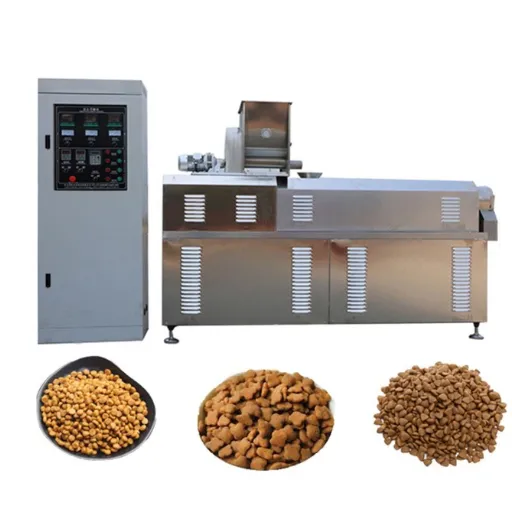
The extruder is the single most critical machine in any pet food manufacturing equipment setup. It cooks, sterilizes, and shapes the product in one continuous operation. Choosing the wrong extruder type creates problems that no downstream equipment can fix.
Single-Screw Extruders
Single-screw extruders are a common type of pet food manufacturing equipment that use one rotating screw to convey, compress, and shear material through a heated barrel. They are best suited for standard kibble with fresh meat content at or below 15%. Typical specifications include 75-200 kW motors and capacities from 100 to 1,500 kg/h.
The advantages are straightforward: lower capital cost, simpler maintenance, and fewer wear parts. However, single-screw machines struggle with high-fat or high-meat recipes. The lack of self-wiping action allows material to build up on the barrel wall, causing temperature spikes and inconsistent gelatinization.
Twin-Screw Extruders
Twin-screw extruders are advanced pet food manufacturing equipment that use two co-rotating, intermeshing screws to create a self-wiping profile. This design delivers superior mixing, better heat distribution, and the ability to process recipes with 20-40% fresh meat content. Specifications typically range from 90-315 kW motors and 150-3,500 kg/h capacity.
The intermeshing screw geometry forces material through high-shear zones with precise residence time control. That precision matters when you are adding heat-sensitive ingredients or switching between recipes with different starch-to-protein ratios. For premium kibble, functional treats, or novel protein formulations, a twin-screw extruder is the industry standard.
Single-Screw vs. Twin-Screw Selection
| Factor | Single-Screw | Twin-Screw |
|---|---|---|
| Best for | Standard kibble, ≤15% meat | Premium recipes, 20-40% meat |
| Motor range | 75-200 kW | 90-315 kW |
| Capacity | 100-1,500 kg/h | 150-3,500 kg/h |
| Capital cost | Lower | Higher |
| Maintenance | Simpler | Moderate |
| Recipe flexibility | Limited | High |
The decision rule is simple: if your recipe contains more than 20% fresh meat or you plan to produce functional treats with diverse raw materials, specify a twin-screw extruder. If your focus is economy kibble with grain-based formulations and tight capital constraints, a single-screw machine may suffice.
Key Extruder Specifications to Compare
When reviewing extruder proposals, compare these specifications directly:
- L/D ratio: The length-to-diameter ratio of the screw determines residence time and cooking intensity. Ratios of 15:1 to 20:1 are typical for pet food.
- Barrel heating zones: More zones allow finer temperature control along the extrusion path.
- Die configuration: The die plate determines kibble shape, size, and expansion ratio. Verify that the supplier offers die sets for your target product range.
- Torque rating: Higher torque enables processing of denser, higher-meat formulations without stalling.
Our advanced snack extrusion systems share the same twin-screw engineering principles, proven across diverse raw materials and high-throughput operations.
Drying and Cooling Equipment
Freshly extruded kibble contains 18-30% moisture. Drying reduces this to 2-12% for shelf stability. The drying technology you choose affects energy cost, product uniformity, and capacity.
Belt Dryers
Belt dryers are the most common pet food manufacturing equipment choice for drying kibble after extrusion. Multi-pass designs circulate heated air at 80-130 degrees Celsius across the product for 15-25 minutes. Energy consumption typically runs 180-250 kWh per ton of water evaporated.
The key selection criteria are airflow uniformity and temperature zoning. Uneven airflow creates wet spots that lead to mold or over-dried zones that create brittle, crumbly kibble. Select dryers with separate temperature control per zone and convenient belt cleaning facilities.
Rotary Dryers
Rotary dryers rotate the product inside a drum with hot air blown through it. They work best for high-volume operations with uniform particle size. The tradeoff is energy efficiency. Rotary dryers often consume 10-15% more energy per ton than belt dryers for pet food applications.
Fluidized Bed Dryers
Fluidized bed dryers suspend product in a stream of hot air, creating gentle handling ideal for treats and small-format products. They deliver superior moisture uniformity but carry higher capital costs. For premium SKUs where consistency justifies investment, this technology pays dividends.
Counter-Flow Coolers
Cooling must happen before coating. If kibble enters the coater above 30 degrees Celsius, surface fats melt and create uneven distribution. Counter-flow coolers bring product temperature down efficiently using ambient air. Specify coolers with sufficient residence time to match your line speed.
Coating and Flavoring Equipment
Coating applies fats, oils, palatants, and heat-sensitive nutrients after extrusion. Vitamins A, D, E, probiotics, and enzymes cannot survive extrusion temperatures, so they must be added post-process.
Drum Coaters
Drum coaters are basic pet food manufacturing equipment that rotate product in a sloped cylinder while spraying fats and flavors. They have lower capital costs and work adequately for basic applications. The limitation is surface-level coating. Fats sit on the kibble surface, increasing oxidation risk and shortening shelf life.
Vacuum Coaters
Vacuum coaters remove air from the drum, creating negative pressure that pulls fats and palatants deep into the kibble structure. This process achieves vacuum depths of -0.06 to -0.09 MPa. Premium brands using vacuum coaters report 20-30% better fat retention and reduced oxidation compared to drum coating.
For any pet food manufacturing equipment line producing premium or export-grade products, a vacuum coater is a strategic investment. The improved nutrient retention and extended shelf life directly impact your product’s market positioning.
Fat and Palatant Application Systems
Specify positive-displacement pumps with heated jackets for fat delivery. These pumps maintain consistent flow rates regardless of viscosity changes. Include inline filtration to prevent nozzle clogging and automatic spray nozzle arrangement for uniform coverage.
Packaging and Auxiliary Equipment
The final stage of pet food manufacturing equipment protects product quality and ensures compliance. Automation at this stage also reduces labor costs and improves throughput consistency.
Multi-Head Weighers and Form-Fill-Seal Lines
Multi-head weighers use computerized combination weighing to achieve accuracy within ±1-2% of target weight. Form-fill-seal machines create bags from roll film, fill them, and seal them in one continuous operation. Specify nitrogen flush capability to extend shelf life to 12-18 months.
Metal Detectors and X-Ray Systems
Metal detection is a critical control point for food safety. Sensitivity standards for pet food typically require detection of ferrous particles at 1.5 mm, non-ferrous at 2.0 mm, and stainless steel at 2.5 mm. X-ray systems add the ability to detect non-metallic contaminants like glass or dense plastics.
Conveying and Storage
Pneumatic conveying works well for dry powders and granular materials but can fracture delicate kibble. Mechanical conveying with bucket elevators or belt systems causes less damage. For raw material storage, specify silos with segregation capability for allergen control and lot traceability.
Interested in how extrusion expertise crosses into other food categories? Our pasta extrusion systems demonstrate the same precision die-forming and dough rheology control that underpin quality pet food production.
Equipment for Alternative Pet Food Formats
Not all pet food is extruded kibble. Your equipment needs change significantly if you produce treats, wet food, or premium air-dried products.
Semi-Moist Treats
Semi-moist products require lower-temperature extrusion or forming presses. Dryer specifications differ because target moisture is higher (15-25% versus 2-12% for dry kibble). Humidity control during cooling becomes more critical to prevent surface cracking.
Jerky and Meat Strips
Jerky production uses slicers, smokers, and dehydrators instead of extruders. The equipment train is entirely different, with batch smoking chambers and low-temperature drying cabinets replacing continuous extrusion lines.
Dental Chews
Dental chews often use cold extrusion or injection moulding. These processes operate at lower temperatures to preserve the dense, chewy texture that promotes dental health. Equipment specifications focus on pressure rather than heat.
Freeze-Dried and Air-Dried Premium Products
Freeze-dried pet food uses lyophilizers that remove moisture through sublimation. Air-dried products use low-temperature dehydrators. Both require completely different production lines from extruded kibble, with capital costs significantly higher per kilogram of capacity.
Automation and Integration Considerations
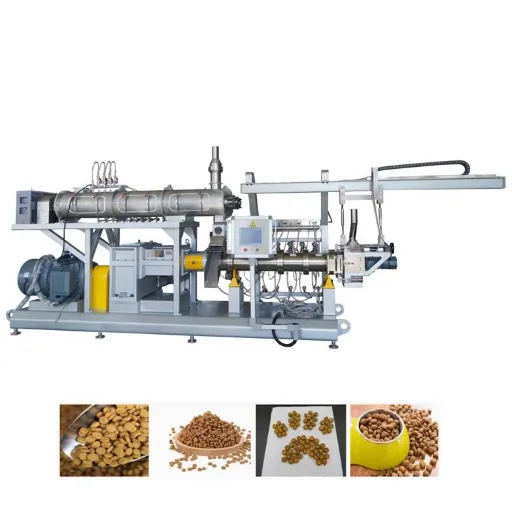
Modern pet food manufacturing equipment demands more than isolated machines. Integration across the line improves consistency, reduces waste, and lowers labor costs.
PLC and HMI Systems
A centralized PLC controls temperature, screw speed, conveyor rates, and dryer zones from a single interface. Recipe storage allows operators to recall complete parameter sets for different products. Batch logging creates traceability records for quality audits.
Remote Diagnostics
Internet-connected PLCs enable remote monitoring and predictive maintenance alerts. When a motor draws excess current or a dryer zone drifts outside tolerance, the system notifies your maintenance team before failure occurs. This capability reduces unplanned downtime by 15-25% according to supplier benchmarks.
Energy Management
Variable frequency drives on pet food manufacturing equipment motors reduce energy consumption during partial-load operation. Heat recovery systems capture waste heat from dryers and redirect it to preconditioners or space heating. Over a full year, these measures can reduce energy costs by 8-12%.
Buying Pet Food Manufacturing Equipment: Red Flags and Checklist
The supplier you choose for your pet food manufacturing equipment matters as much as the machines themselves. Use this checklist to evaluate pet food manufacturing equipment proposals and avoid common pitfalls.
Pre-Purchase Checklist
- Confirm material certificates for 304 or 316L stainless steel on all food-contact surfaces.
- Request video footage of the proposed machine running your specific recipe.
- Validate spare parts availability and typical lead times for wear components.
- Review the full scope of installation, commissioning, and operator training.
- Verify CE marking documentation validity for European market entry.
- Demand reference installations in your target market or a comparable region.
- Compare warranty terms and after-sales service level agreements.
Red Flags
- Vague specifications with missing motor ratings, screw dimensions, or throughput data.
- No material certificates or unverifiable claims about food-grade construction.
- Absence of CE marking when you plan to export to Europe.
- No operator training included in the quotation.
- Single-screw extruder recommended for high-meat recipes without technical justification.
- Refusal to allow a factory visit or pilot run with your formulation.
When Maria Santos evaluated suppliers for her Brazilian pet food startup in 2024, she visited three factories in Shandong Province. One supplier refused to let her see the welding shop. Another could not produce a CE certificate with a valid test report number. The third invited her to run a 50 kg batch of her own recipe on their twin-screw extruder. She chose the third supplier. Sixteen months later, her line is still hitting 94% uptime.
Conclusion
Selecting pet food manufacturing equipment requires matching each machine’s specifications to your recipe, capacity targets, and quality standards. The extruder is your most critical decision. Choose twin-screw for high-meat or complex formulations, and single-screw for economy grain-based kibble. Downstream, preconditioning and vacuum coating deliver the highest ROI upgrades for product quality. And throughout the line, automation and integration reduce labor costs while improving batch-to-batch consistency.
The global pet food market reached USD 134.46 billion in 2026, growing at over 5% annually. Manufacturers who invest in the right pet food manufacturing equipment now will capture that growth. Those who cut corners on specifications will spend their first two years fighting downtime and quality complaints instead of building market share.
At Shandong Loyal Industrial, we design complete food production lines with CE-certified extrusion systems, integrated controls, and full commissioning support. With over a decade of experience across snack, pasta, and pet food applications, we deliver machinery that meets international standards and your specific production goals. Contact us today for a customized equipment proposal, including extruder specs, line layout, and full installation support.