Fresh meat inclusion in pet food is the practice of adding unprocessed animal muscle tissue — typically 65% to 75% moisture — directly into extruded dry kibble formulations, with advanced twin-screw extrusion systems now capable of handling inclusion rates from 20% up to 40% at industrial scale. For pet food manufacturers, this is not simply an ingredient choice. It is a strategic response to one of the fastest-growing segments in the entire pet industry.
Chen Wei, operations director at a mid-size pet food plant in Bangkok, learned this the hard way. In early 2024, his company decided to launch a premium grain-free line with 30% fresh chicken content — double their usual recipe. They ran the first batch through their existing single-screw extruder. The result was a production floor covered in soft, sticky kibble that jammed the conveyor, warped in the dryer, and had to be scrapped entirely. Three weeks and $47,000 in lost output later, Chen understood what the industry publications had been warning about: fresh meat changes everything about extrusion.
This guide is for manufacturers like Chen who see the market opportunity but need the technical roadmap to execute it. You will learn exactly why fresh meat is the number-one trend reshaping pet food extrusion, what equipment capabilities you need at each inclusion level, and how to implement high-meat recipes without destroying your throughput or your margins.
Key Takeaways
- The fresh pet food market will grow from 1.51billionin2024to1.51billionin2024to4.82 billion by 2032 at a 17.2% CAGR, making fresh meat capability a competitive necessity, not a luxury.
- Fresh meat contains 65% to 75% moisture, which creates five critical extrusion challenges: moisture management, texture preservation, throughput reduction, protein degradation, and food safety risks.
- Advanced twin-screw extruders with dual-differential preconditioners can handle 20% to 40% fresh meat inclusion; traditional single-screw systems without preconditioning top out at 10% to 15%.
- Key equipment upgrades include high-viscosity meat slurry pumps, steam preconditioners with 120 to 180 seconds retention time, and dual-drying systems for post-extrusion moisture above 45%.
- Real-world implementation requires a three-phase roadmap: equipment assessment, pilot recipe trials, and scaled production validation with quality control protocols.
What Is Fresh Meat Inclusion in Pet Food?
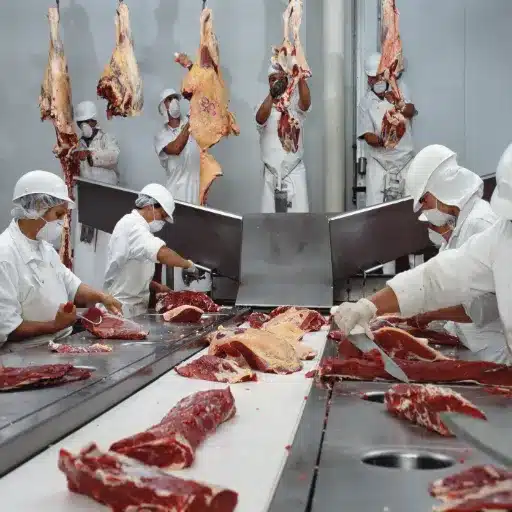
Under FEDIAF labeling regulations, “fresh” describes animal substances that have not been subjected to any treatment except maintaining the cold chain. Freezing is permitted. In practical manufacturing terms, this means clean muscle tissue from chicken, beef, lamb, pork, or fish that arrives at your plant with its natural cellular structure intact and its moisture content largely preserved.
Fresh meat is fundamentally different from meat meal. Meat meal has already been cooked and rendered to remove water and fat, leaving a dry powder that is 65% to 70% protein by weight but has undergone multiple heat treatments. Fresh meat, by contrast, enters your recipe with 65% to 75% water content and has experienced zero heat processing before it reaches your preconditioner. This single difference is what makes fresh meat both nutritionally superior and technically challenging to process.
The consumer appeal is unmistakable. According to industry surveys, over 65% of pet owners now view their animals as family members. They read ingredient labels the same way they read their own food labels. “Fresh chicken” on a pet food package triggers the same positive associations that it does on human food: less processed, more natural, closer to what nature intended. For manufacturers, this translates into premium pricing power and stronger shelf positioning.
Fresh Meat vs. Meat Meal: A Technical Comparison
Understanding the technical differences between fresh meat and meat meal is essential for recipe design and equipment selection. Each brings distinct advantages and trade-offs to the extrusion process.
Nutritional Differences
Fresh meat delivers protein in its most bioavailable form. Because it has undergone only one heat treatment — the extrusion process itself — it retains higher concentrations of essential amino acids. Research comparing fresh-meat-based kibble to meat-meal-based formulas shows significantly higher levels of taurine, arginine, histidine, isoleucine, leucine, and valine in the finished product. These amino acids are critical for cardiac health, muscle development, and immune function in dogs and cats.
Meat meal, while more concentrated in protein by weight, has already lost some nutritional value during rendering. The double heat exposure — rendering plus extrusion — compounds the damage.
Processing Impact
The most significant technical consideration is moisture. Fresh meat brings 65% to 75% water into your recipe. Meat meal brings virtually none. This extra moisture must be managed through every stage of production: mixing, preconditioning, extrusion, drying, and cooling. It is the root cause of most high-meat extrusion challenges.
Heat damage is another critical factor. Studies on extrusion processing show that lysine — an essential amino acid — can lose up to 80% of its availability under extreme temperature conditions. Fresh meat, having avoided the rendering step, preserves more of its lysine through to the final product.
Consumer Perception and Market Value
From a marketing perspective, fresh meat dominates. Consumers recognize it. They trust it. They will pay more for it. A 2024 industry analysis found that grain-free and high-meat formulations command price premiums of 20% to 40% over conventional kibble. For manufacturers, this margin justifies the equipment investment required to process fresh meat successfully.
| Factor | Fresh Meat | Meat Meal |
|---|---|---|
| Moisture content | 65% to 75% | 0% to 10% |
| Heat treatments before extrusion | 0 | 1 to 2 (rendering) |
| Protein concentration (as-is) | 18% to 22% | 65% to 70% |
| Amino acid retention | High | Moderate |
| Lysine availability | Higher | Lower (up to 80% loss possible) |
| Recipe complexity | Higher (moisture management) | Lower |
| Consumer appeal | Very high | Moderate |
| Cost per unit protein | Higher | Lower |
Market Opportunity: Why Fresh Meat Is Worth the Investment
The business case for fresh meat inclusion is built on numbers that are difficult to ignore.
According to Grand View Research, the global pet food market reached approximately 134.96billionin2026andisprojectedtogrowata5.1134.96billionin2026andisprojectedtogrowata5.11.51 billion in 2024, fresh pet food is forecast to reach $4.82 billion by 2032 — representing a 17.2% CAGR that far outpaces the overall industry.
The meat-based pet food category, which encompasses all formulations where meat is the primary ingredient, is projected to grow at a 14% CAGR between 2026 and 2033. Freeze-dried meat pet food, another premium segment, is expanding at 6.7% to 8.1% annually. Even the broader high-protein dog food category, which includes both fresh meat and high-quality meal-based products, sits at a solid 5.9% growth rate.
Several forces are driving this premiumization trend:
- Pet humanization: Over 65% of owners now consider pets family members, creating demand for human-grade ingredients.
- Health and wellness awareness: Fresh and minimally processed diets are perceived to improve digestion, reduce allergies, and support weight management.
- Clean label movement: Consumers want ingredient lists they can understand. “Fresh chicken” is more transparent than “poultry by-product meal.”
- E-commerce expansion: Direct-to-consumer subscription models now account for over 50% of fresh pet food sales channels.
- Cold chain improvements: Better refrigerated logistics are making fresh meat-based products accessible in markets where they were previously impractical.
For manufacturers, the message is clear. Fresh meat capability is not a niche offering for premium brands. It is rapidly becoming table stakes for competitive positioning across all market tiers.
The 5 Technical Challenges of High Fresh Meat Extrusion
Adding fresh meat to extruded pet food introduces challenges that simply do not exist in traditional dry-formula production. CFAM International, a leading extrusion consultancy, has identified these challenges as the primary barriers preventing manufacturers from capitalizing on the fresh meat trend. Here is what you need to know.
Challenge 1: Moisture Management
Fresh meat is 65% to 75% moisture. When you add 30% fresh chicken to your recipe, you are not just adding protein. You are adding roughly 20% additional water that must be controlled throughout the process. Post-extrusion moisture can exceed 45% in high-meat formulations, producing kibble that is soft, sticky, and structurally unstable.
Standard conveying and spreading equipment is not designed for this. Kibble that would normally flow freely through a dryer can clump, stick to belts, and create uneven moisture distribution that leads to mold risks and shortened shelf life.
Challenge 2: Texture and Shape Preservation
Kibble shape is a brand signature. Consumers recognize their preferred product by its size, color, and texture. At high fresh meat inclusion rates, maintaining that shape becomes increasingly difficult. The high moisture and fat content reduce starch gelatinization efficiency, which means less structural integrity in the final product.
At inclusion rates above 120% — the achievement recently demonstrated by Cargill and Famsun — post-extrusion moisture exceeds 45% and kibble structure begins to break down entirely without specialized drying systems.
Challenge 3: Throughput Reduction
High meat levels inherently reduce throughput compared to classic dry food production. The high-viscosity meat slurry is more difficult to pump, more challenging to mix uniformly, and requires longer residence time in the preconditioner to achieve proper hydration and temperature. Extruder manufacturers are actively working to develop methods that allow higher throughput for high-meat slurries without increasing equipment footprint.
Challenge 4: Protein and Nutrient Degradation
Extrusion involves extreme temperatures — typically 110 degrees Celsius to 180 degrees Celsius in the barrel, with localized hot spots reaching even higher. This heat causes protein denaturation. Essential amino acids like lysine can lose up to 80% of their availability. Vitamins degrade sharply. Omega-3 fatty acids are significantly reduced, and lipid oxidation increases, creating off-flavors and potentially harmful compounds.
The Maillard reaction — a chemical interaction between amino acids and reducing sugars under heat — forms advanced glycation end products (AGEs) and acrylamide. These compounds have been linked to various disease states and represent a growing concern for health-conscious pet owners.
Challenge 5: Shelf Life and Food Safety
Raw meat introduces microbiological risks. Salmonella, E. coli, and Listeria are all concerns when handling fresh animal tissue. The industry has shifted toward sanitary manufacturing methods similar to human food production. Equipment must be easily accessible and cleanable. Processing parameters must achieve reliable pathogen kill steps. And shelf life management becomes more complex when working with ingredients that have limited freshness windows.
Maria Santos, production manager at a pet food facility in São Paulo, faced these challenges head-on in 2023. Her team wanted to move from 15% to 28% fresh meat inclusion to meet a retailer’s new premium line requirements. “We thought the extruder was the problem,” she recalled. “But it was actually the preconditioner. Our old single-shaft unit could not get the meat slurry hot enough fast enough. The extruder was receiving cold, lumpy material, and the results were terrible.” After upgrading to a dual-differential steam preconditioner with 150 seconds retention time, Maria’s line achieved stable production at 28% fresh meat with throughput only 12% below their standard dry recipe.
Equipment Solutions: How to Overcome Fresh Meat Challenges
The good news is that each of the five challenges has a well-understood equipment solution. The key is matching your equipment configuration to your target fresh meat inclusion rate.
Advanced Preconditioning Systems
The preconditioner is the most critical piece of equipment for high fresh meat extrusion. This is where your meat slurry first meets heat and steam, and where moisture begins to be absorbed into the dry mix.
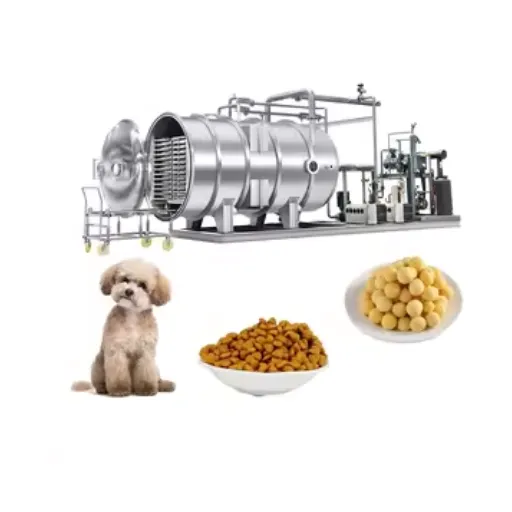
A dual-differential steam preconditioner provides 120 to 180 seconds of retention time at temperatures above 90 degrees Celsius. This extended conditioning period serves two purposes. First, it ensures proper hydration and starch gelatinization before material reaches the extruder barrel. Second, it provides a critical food safety step: the combination of heat and moisture effectively eliminates Salmonella and E. coli before extrusion.
High-viscosity meat slurry must be delivered to the preconditioner via positive displacement pumps with jacketed pipes. These pumps handle the thick, sticky consistency of ground fresh meat without clogging or shear damage that would compromise protein quality.
Twin-Screw Extruder Configuration
For fresh meat formulations above 15% to 20% inclusion, a co-rotating twin-screw extruder is strongly recommended. The intermeshing screws provide superior mixing, better heat distribution, and self-cleaning action that prevents material buildup — a common problem when processing high-fat, high-moisture recipes.
Twin-screw systems also offer Specific Mechanical Energy (SME) control, allowing online adjustment of kibble density and expansion rate. This adaptability is essential when working with variable fresh meat batches that may differ in fat-to-protein ratios.
The food-contact surfaces should be constructed from 304 stainless steel, with screws manufactured from bimetallic wear-resistant alloy hardened to HRC 60 to 62. Fresh meat is abrasive at high pressure, and premature screw wear will destroy your product consistency.
Dual-Drying Systems
When post-extrusion moisture exceeds 35% to 40% — which happens at fresh meat inclusion rates above 25% to 30% — a single conventional dryer is no longer sufficient. A dual-drying configuration, consisting of a pre-dryer followed by a conventional dryer, becomes necessary.
The pre-dryer handles the initial moisture shock, bringing kibble down to a manageable range before the precision drying stage. Cargill and Famsun’s recent industrial-scale achievement of 127% fresh meat inclusion for cat food relied on exactly this approach, achieving moisture uniformity within plus or minus 0.75%.
Hygienic Design Standards
Fresh meat processing demands equipment designed for sanitary manufacturing. This means smooth, sloped surfaces that drain effectively. Quick-release components that can be disassembled without tools. CIP — clean-in-place — capability for automated sanitation cycles. And full traceability of all product-contact materials.
Fresh Meat Inclusion Rates: What Equipment Can Deliver
Not all extrusion systems are created equal when it comes to fresh meat. Understanding the capability thresholds of different equipment configurations is essential for making the right investment.
Industry Benchmarks
The pet food extrusion industry has established rough benchmarks for fresh meat inclusion based on equipment type:
- Basic single-screw extruder without preconditioner: 10% to 15% fresh meat maximum
- Single-screw with basic steam conditioning: 15% to 20% fresh meat
- Twin-screw with dual-differential preconditioner: 20% to 40% fresh meat
- Advanced systems with dual-drying and specialized slurry handling: 40%+ fresh meat
- Cutting-edge achievements (Cargill/Famsun joint innovation): Above 120% with dual-drying systems
China’s fresh meat inclusion trajectory illustrates the rapid evolution: the market moved from 30% to 40% inclusion as standard, then to 60% to 70%, then 90% to 100%, and now beyond 120% at industrial scale.
Loyal’s Fresh Meat Capabilities
Shandong Loyal Industrial’s LY series twin-screw pet food production lines are designed specifically for the fresh meat formulation challenges described above. Our capacity by model:
| Model | Output Capacity | Max Fresh Meat | Preconditioner Type | Ideal For |
|---|---|---|---|---|
| LY-70 | 200 to 260 kg/h | 15% to 20% | Single Shaft | Entry-level premium recipes |
| LY-85 | 400 to 500 kg/h | 20% to 25% | Dual Differential | Mid-range grain-free lines |
| LY-95 | 800 to 1,000 kg/h | 30% to 35% | Dual Differential | High-meat premium production |
| LY-120 | 1,500 to 3,000 kg/h | Up to 40% | Advanced Dual Differential | Maximum fresh meat capability |
All LY-series lines feature 304 stainless steel food-contact construction, bimetallic wear-resistant screws, PLC touchscreen control, and CE certification. The dual-differential preconditioners deliver the 120 to 180 second retention time at above 90 degrees Celsius that is essential for both product quality and pathogen control.
How to Choose the Right Capacity for Your Recipes
Selecting equipment starts with your recipe portfolio. Ask these questions:
- What is your target fresh meat inclusion rate for your highest-meat product?
- Do you need flexibility to run both standard and high-meat recipes on the same line?
- What is your target daily or annual output volume?
- Will you process multiple protein sources (chicken, beef, fish) that may require different handling parameters?
A common mistake is buying equipment for your current needs without planning for portfolio expansion. If your market analysis suggests you may move from 20% to 35% fresh meat within two years, investing in a system that can handle the higher rate from day one will save you from a costly upgrade cycle.
Recipe Formulation for Fresh Meat Inclusion
Equipment solves the processing challenges, but recipe design determines whether your high-meat product will succeed in the market.
Balancing Moisture and Dry Matter
The target pre-extrusion moisture for most pet food extrusion is 25% to 35%. Fresh meat contributes significantly to this total. A recipe with 30% fresh chicken at 70% moisture adds approximately 21% water before you add any other ingredients. Your dry mix must be formulated to absorb this moisture while still achieving the target total moisture for stable extrusion.
Starch sources become critically important at high meat inclusion. Potato starch, pea starch, and tapioca are common choices for grain-free formulations. Each has different gelatinization temperatures and water-binding capacities that affect extrusion behavior.
Protein Source Selection
Different fresh proteins bring different characteristics to extrusion:
- Chicken: Highly digestible, cost-effective, mild flavor. The most common choice for high-meat recipes.
- Beef: Rich in iron and zinc. Higher fat content can create challenges in high-temperature extrusion.
- Lamb: Novel protein source useful for allergy-sensitive formulations. Rich in essential amino acids.
- Salmon: Excellent omega-3 profile. Premium positioning but higher cost and faster oxidation.
Grain-Free and Alternative Formulations
The grain-free trend intersects directly with fresh meat demand. Without wheat or corn to provide structural starch, grain-free recipes rely on legumes, tubers, or alternative starches for binding. These alternative starch sources often have different gelatinization behaviors than cereal grains, requiring adjusted extrusion parameters.
Fiber content also affects extrusion stability. Insoluble fiber can disrupt starch gelatinization and reduce expansion. Soluble fiber can increase water binding but may create gummy textures if not balanced properly.
Quality Control and Food Safety for Fresh Meat Processing
Quality control in high fresh meat production goes beyond the standard checks. The variability of fresh meat as a raw material demands more rigorous monitoring at every stage.
Raw Material Testing
Fresh meat is inherently variable. Fat-to-protein ratios differ between batches. Moisture content shifts with supplier, season, and storage conditions. Traditional FIFO — first in, first out — inventory management reduces waste but limits flexibility, forcing you to use batches in strict order regardless of quality variations.
Near-Infrared (NIR) spectroscopy systems enable real-time batch quality assessment. By measuring protein, fat, moisture, and ash content on the intake line, NIR allows immediate formulation adjustments before material enters the preconditioner. This technology is already gaining traction in leading production facilities, particularly in North America and Europe.
In-Line Process Monitoring
Critical control points for high fresh meat production include:
- Preconditioner exit temperature: Must exceed 90 degrees Celsius for effective pathogen reduction
- Extruder barrel temperature: 110 to 180 degrees Celsius depending on recipe and screw configuration
- Moisture content: Monitored at preconditioner exit, extruder die, and dryer exit
- Screw speed and SME: Adjusted in real time to maintain consistent expansion and density
Post-Production Testing
Finished product testing should include microbiological screening for Salmonella and E. coli, kibble density and expansion consistency, moisture content verification, and AAFCO or FEDIAF nutrient profile compliance. Kibble hardness and durability testing ensures the product will survive packaging, shipping, and shelf display without excessive breakage.
David Okonkwo, procurement director for a Nigerian pet food distributor, visited three equipment suppliers in 2024 before making his decision. “I looked at European brands first,” he explained. “Their technology was excellent, but the price difference was 60% higher than the Chinese manufacturer for equivalent fresh meat capacity. When I factored in shipping, installation support, and spare parts availability, the decision was clear. We installed an LY-95 line in March 2025, and we are running 32% fresh chicken with output matching the supplier’s specifications exactly.”
Cold Pressed vs. Extruded Fresh Meat: Which Is Right for You?
Cold pressing has emerged as an alternative processing method for high fresh meat pet food, and understanding the trade-offs is important for strategic positioning.
Cold pressing operates at ultra-low temperatures around 45 degrees Celsius with low mechanical pressure, followed by slow baking at under 90 degrees Celsius. This minimal heat exposure preserves more natural nutrients and allows meat content above 80%. However, throughput is significantly lower than extrusion, and the pathogen kill step is less reliable.
Extrusion, by contrast, uses higher temperatures and mechanical shear to cook, shape, and sterilize the product in a single continuous process. Throughput is higher. Cost per kilogram of finished product is lower. And the thermal profile provides a more reliable pathogen reduction step. The trade-off is greater nutrient degradation, though advanced preconditioning and precise temperature control can minimize this.
For most manufacturers, extrusion remains the preferred method for dry kibble production because of its scalability and cost efficiency. Cold pressing serves a specific niche: premium brands targeting the most health-conscious consumers who prioritize nutrient preservation above all else and are willing to pay the corresponding premium.
Implementation Roadmap: Transitioning to Fresh Meat Production
Moving from traditional recipes to high fresh meat formulations requires a structured approach. Rushing the transition invites the kind of production disasters that Chen Wei experienced in Bangkok.
Phase 1: Equipment Assessment
Begin with an honest audit of your current extrusion capabilities. Can your existing preconditioner handle high-viscosity meat slurry? Does your extruder have the torque and screw configuration for high-moisture recipes? Is your dryer adequate for the increased post-extrusion moisture?
If your current equipment cannot reach your target fresh meat inclusion rate, develop a capital investment plan. Consider not just the extruder and preconditioner, but also upstream equipment (meat grinding, slurry pumping, storage) and downstream systems (drying, cooling, coating).
Phase 2: Recipe Development
Run pilot trials on your target equipment before committing to full production. Start with your target fresh meat percentage and adjust dry mix composition, moisture targets, and extrusion parameters iteratively. Document every variable: preconditioner temperature and retention time, barrel zone temperatures, screw speed, die configuration, and dryer settings.
Work with your equipment supplier during this phase. A knowledgeable manufacturer can recommend starting parameters based on similar recipes they have processed, potentially saving weeks of trial and error.
Phase 3: Scale-Up and Validation
Once pilot trials produce consistent, high-quality kibble, move to production-scale trials at your target throughput. Monitor quality metrics continuously during the scale-up run. Validate that pathogen control targets are met. Verify shelf life projections through accelerated aging tests. And confirm that your packaging can handle the potentially higher oil migration associated with fresh meat recipes.
Conclusion
Fresh meat inclusion in pet food is not a passing trend. It is the defining formulation shift of this decade, driven by consumer demand for transparency, nutrition, and quality that matches what pet owners expect for themselves. The manufacturers who master fresh meat extrusion will capture disproportionate share of the fastest-growing segment in the industry.
The technical challenges are real: moisture management, texture control, throughput optimization, nutrient preservation, and food safety. But each challenge has a solution rooted in the right equipment configuration. Advanced preconditioning, twin-screw extrusion, dual-drying systems, and hygienic design standards have made industrial-scale fresh meat production not just possible, but profitable.
For manufacturers evaluating their next equipment investment, the question is no longer whether to add fresh meat capability. The question is how much fresh meat your market demands, and which equipment configuration will get you there efficiently and reliably. With the LY-series production lines offering fresh meat capacity from 15% up to 40%, Shandong Loyal Industrial provides scalable solutions that grow with your market ambitions.
The pet food industry is evolving. Your production line should evolve with it. Start planning your fresh meat transition today.