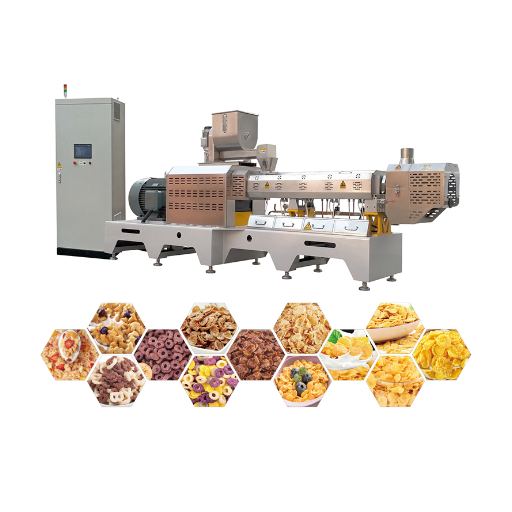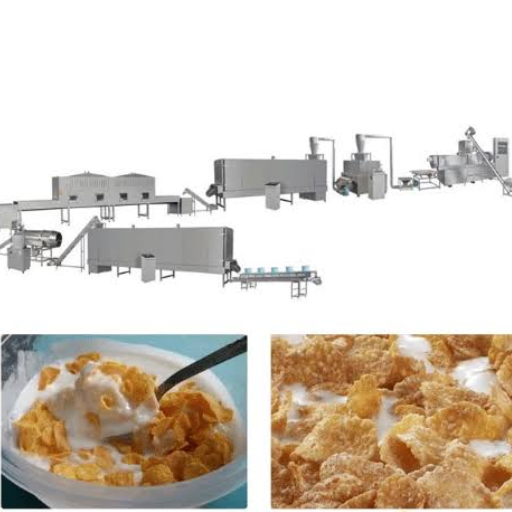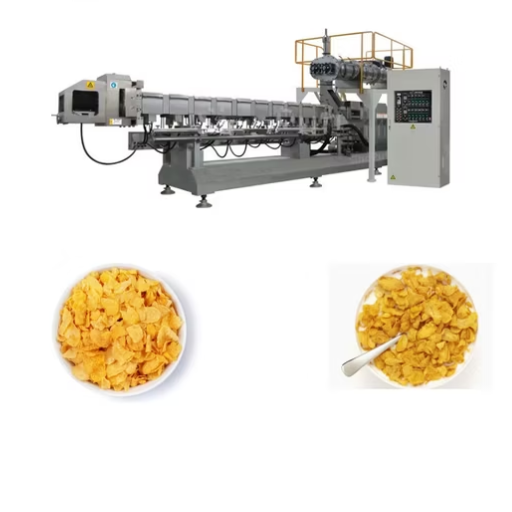
Extrusion die design is the engineering of the shaped plate at the end of an extruder that gives food its form and controls how it expands and texturizes. The die is the smallest and cheapest part of the extruder, yet it determines your product’s shape, density, and texture more than any other single component.
Here’s the problem most manufacturers run into. Type “extrusion die design” into a search engine and you land on research papers, patents, and PhD theses written for food scientists. If you are a plant manager trying to change a puff snack from a ball to a star, or fighting an extruder that won’t expand properly, that wall of engineering detail is no help at all.
You already suspect the die matters. You’re right. It’s the point where pressure, temperature, and product shape all come together. This guide explains how dies work in plain English, walks through the main types, and gives you a practical selection checklist so you can specify or choose the right die for your line.
Key Takeaways
- The extrusion die has two jobs: it shapes the product and acts as a restriction that builds the pressure needed for expansion.
- Short land length maximizes puffing; long land length produces denser, smoother products.
- Starch-heavy recipes need short, simple dies; protein-heavy recipes need longer, cooler dies that control fiber alignment.
- Quick-change and modular die systems let one extruder switch between product shapes in minutes, not hours.
- A worn or mis-sized die quietly steals expansion and yield every shift, so die condition is a quality-control issue.
What Is an Extrusion Die?
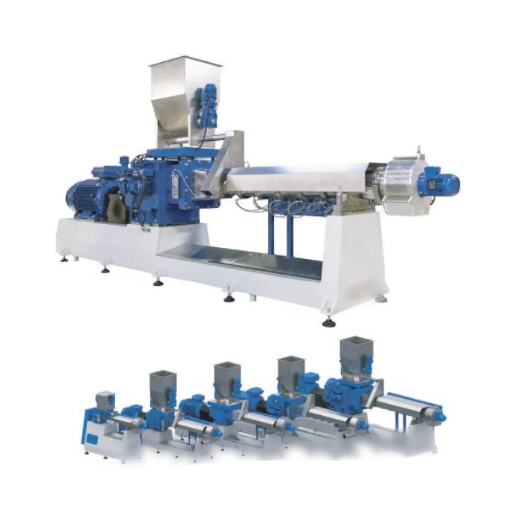
An extrusion die is a metal plate or shaped component mounted at the discharge end of an extruder that forces the cooked material into a specific cross-section as it exits. Its openings determine the shape, and its restriction determines the pressure, which together control how the product expands and texturizes.
Think of it as the nozzle on a piping bag. A chef pipes a star tip to make star-shaped icing; a round tip makes a smooth rope. The extruder die does the same job at industrial scale, but it also plays a second, less obvious role. Because the openings are narrow, the die resists the flow of material. That resistance builds back pressure in the barrel, and that pressure is what lets hot, moist material flash into steam and puff when it finally reaches open air.
There’s a governing equation behind all of this, and you don’t need to memorize it. For a simple cylindrical hole, the die constant is proportional to the hole radius to the fourth power divided by the hole length. In plain terms, a slightly wider hole lets dramatically more material through, and a longer hole restricts it more. That’s why tiny changes in die geometry can produce big changes in your product. The full engineering framework is documented in the Woodhead chapter on extruder screw, barrel, and die assembly.
How the Die Fits in the Extrusion Process
The die is the last stage of a continuous process, and understanding where it sits explains why it behaves the way it does.
Raw ingredients are mixed, moistened, and fed into the barrel. A rotating screw conveys the material forward while heat and friction cook it into a molten, plastic mass. By the time this mass reaches the die, it is hot, pressurized, and ready to form. The die shapes it, and a spinning cutter blade at the die face slices the emerging product into pieces.
Two points matter here. First, the product’s shape is set at the die aperture, not by anything downstream. Second, the die and the screw work together in different ways depending on your extruder type. In a single screw extruder, the die restriction is what builds the pressure, so the die must be carefully sized to prevent surging. A twin screw extruder provides positive displacement, so it can handle larger die openings and more complex shapes without the same risk.
Diego runs a corn puff line in Monterrey and learned this the hard way. His line produced perfect round balls for two years. Then a retail buyer asked for star-shaped puffs. He assumed the change was simple, but the new star die blocked within the first hour. The problem wasn’t the shape; it was that the star’s total open area was smaller than the old round plate, so back pressure spiked and the melt overheated. Matching the new die’s open area to the old one solved it in an afternoon.
Types of Extrusion Dies
There are several extrusion die types, each suited to different products and production needs.
- Face-cut (plate) dies. Orifices are arranged on a flat plate, and high-speed knives slice the expanding product. This is the standard for direct-expanded snacks, cereals, and pet food.
- Peripheral (radial) dies. Material flows outward through openings on the circumference of a cylindrical die. These suit complex shapes, pellets, and pasta, where face-cutting would cause sticking.
- Slit and multi-slit dies. A long, narrow opening produces sheet-like or fibrous structures. A rectangular slit die is central to high-moisture texturized protein.
- Cooling dies. A long channel with a cooling jacket that lets protein slowly align into fibers without expanding. This is the heart of modern plant-based meat production.
- Co-extrusion dies. Concentric tubes that combine two materials, such as a cereal casing with a center filling.
- Monolithic vs. modular dies. A monolithic die is a single solid plate; a modular die uses a carrier plate with interchangeable inserts so shapes can be swapped quickly.
For most snack producers, the face-cut die is the workhorse. But as products get more complex or more protein-heavy, the choice matters far more. Our snack food machinery is built around these die systems, so the right die can be specified from the start rather than retrofitted later.
Die Geometry: Land Length, L/D Ratio, and Die Swell
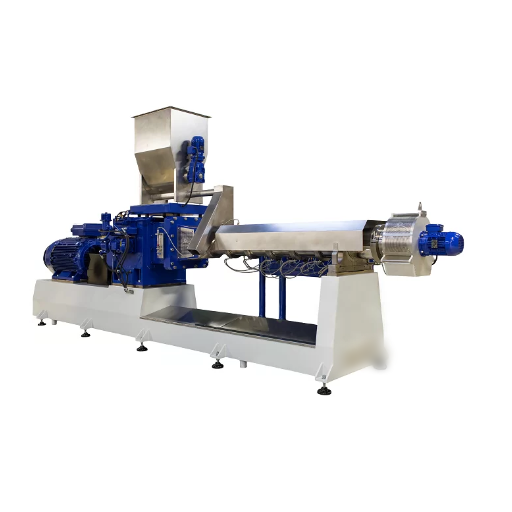
The single most important geometric decision in extrusion die design is the land length, the straight section of the opening where the material actually takes its final shape.
Short land length maximizes expansion. When the land is short, the material spends little time under restriction and flashes to steam quickly at the exit, producing a light, puffy product. This is what you want for corn puffs and breakfast cereals.
Long land length produces denser, smoother products. A longer land gives the melt more time to relax, which reduces elastic recovery and yields a more uniform, less expanded shape. This suits products like dense pellets, pasta, and texturized protein.
The land-to-diameter ratio, written as L/D, is how engineers express this. For puffed snack dies, a common land length is roughly a quarter inch, with die pressures from 500 to 2000 psi and extrudate temperatures from 320 to 410°F. Higher L/D ratios reduce expansion; lower ones increase it.
Then there’s die swell. When material exits the die, it relaxes and swells slightly, so the final shape isn’t exactly the die shape. A star-shaped die doesn’t always produce a crisp star. Designers compensate by adjusting the orifice angle and land length until the finished shape comes out right.
How Die Design Shapes Texture by Ingredient
The right die depends heavily on what you’re extruding. The same geometry that works for starch won’t work for protein or fiber.
| Ingredient Type | Die Behavior | Land Length | Typical Products |
|---|---|---|---|
| Starch-heavy | High viscosity, rapid gelatinization, strong expansion | Short | Corn puffs, cereals, curls |
| Protein-heavy | Fibrous cross-linking, low expansion, needs cooling | Long + cooling jacket | TVP, meat analogues, pet food |
| High-fiber / abrasive | Wear-prone, moderate expansion | Moderate + hardened steel | Bran snacks, whole-grain pellets |
Starch-heavy recipes expand aggressively, so they need short land lengths and compensation for die swell. Protein-heavy recipes don’t expand much on their own. Instead, they need a long, cooled die so the protein can align into fibers. That’s why a plant-based meat line looks very different from a corn puff line, even though both use a twin screw extruder.
The science is clear on how much this matters. A 2025 study on pea protein extrusion found that a rectangular cooling die produced a center-to-wall temperature difference of 12.4°C, compared with 7.8°C for a circular die, along with a 35% higher heat transfer coefficient. That steeper gradient is exactly what encourages protein fibers to align, which is the difference between a rubbery block and a meat-like texture. You can read the full study on PubMed.
Amara founded a plant-based brand in Nairobi and spent six months fighting a crumbly, dry texture. Her twin screw extruder was fine; the problem was a short, uncooled die designed for starch. When she switched to a longer rectangular slit die with a cooling jacket, the protein finally aligned into fibers, and her shreds went from “acceptable” to “chewy and meat-like.” Retail orders doubled within a quarter.
Die Materials, Surface Finish, and Wear
Die design isn’t just geometry. The material the die is made from determines how long it lasts and whether your product stays consistent.
Food extruder dies are typically machined from hardened 400-series stainless steel, such as 420 or 440C, chosen for wear resistance and food-grade compliance. For abrasive or high-fiber recipes, the surface is often hardened further with nitriding, hard chrome plating, or PVD and DLC coatings.
Surface finish matters for hygiene as much as for product quality. Food-contact die surfaces should target a roughness of Ra 0.8 micrometers or less. These material and finish criteria follow the selection guidance in Loomak’s food extrusion die guide. A smooth finish eliminates the microscopic crevices where bacteria can hide and where burnt material can accumulate. That’s why die plates need to be treated as a food-contact surface, not just a mechanical part.
Wear is the quiet killer here. A die that slowly widens its holes changes your expansion and density without any obvious failure. This is the same root cause that shows up in broader food extrusion troubleshooting, where die condition is one of the four variables behind most defects. Inspect die openings every batch, and replace plates before the wear changes your product.
Shape-Changing and Quick-Change Die Systems
Here’s where extrusion die design delivers real commercial value: the ability to change product shape without buying a new machine.
The simplest approach is the aperture plate. Swap the die plate and the same extruder produces balls, sticks, rings, stars, wheels, flowers, hearts, or chips. Shapes are limited only by what the die maker can machine.
More complex systems use multiple plates or inserts. A carrier plate holds a thinner shaping plate, so you change only the thin, inexpensive shaping plate to switch cross-sections. Insert-based dies use a small imprinting element plus a forming element to improve the dimensional accuracy of complex shapes like 2D and 3D snack pellets. Our 2D/3D snack pellet process line is engineered around this kind of precise die and cutter system.
Quick-change die systems and even 3D-printed dies are making product transitions faster and cheaper. For a manufacturer running multiple SKUs, a modular die with interchangeable inserts can cut changeover from hours to minutes. That flexibility is one reason our corn puff snack production line is designed to switch shapes with a straightforward die change rather than a full teardown.
How to Choose an Extrusion Die
Good extrusion die design starts with matching the die to three things: your extruder, your ingredient, and your target expansion. If you’re specifying a die for a new line or replacing one on an existing extruder, work through this checklist in order.
- Match the die to your extruder. Confirm the die’s total open area suits your screw type, throughput, and pressure capability. A single screw extruder needs a more carefully sized restriction than a twin screw.
- Match the die to your ingredient. Starch-heavy recipes need short land and swell compensation. Protein-heavy recipes need long, cooled channels. High-fiber recipes need hardened steel.
- Match the die to your target expansion. Want puffs? Go short on land length. Want density and smoothness? Go longer.
- Match the die to your changeover needs. If you switch shapes often, invest in a modular or quick-change system with interchangeable inserts.
- Confirm hygiene and certification. Choose food-grade stainless with a smooth finish, and make sure the die can be cleaned without dead zones.
- Think beyond the die. The cutter, dryer, and packaging must keep pace with the die, or the die becomes a bottleneck in a slower line.
The die doesn’t work alone. It’s one component in a continuous process that starts with mixing and ends with packaging. That’s why a matched turnkey food production line often outperforms a mix of separately purchased machines, every stage is sized and tested together.
Common Extrusion Die Problems and Fixes
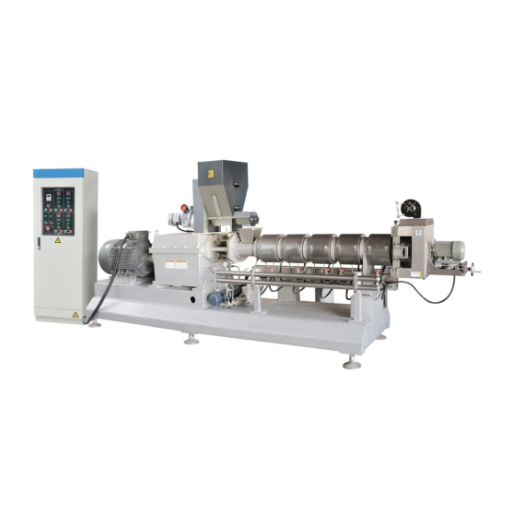
Even a well-designed die causes problems if it’s not run and maintained correctly.
Die blocking and port plugging. Blocked holes usually hold scorched material or a foreign particle. Clean them with a tool slightly smaller than the hole, and soak hardened material in hot water first. Never force it, because a gouged plate produces permanent surface defects.
Sharkskinning and melt fracture. A rough, scaly surface on the extrudate usually means the melt temperature is too low or the land is too short. Raise the melt temperature slightly or lengthen the land to let the material relax before it exits.
Die swell distortion. When the product loses its shape definition, increase the L/D ratio or adjust the orifice angle so the final shape comes out as designed.
Die wear. A worn die widens its holes and quietly changes expansion and density. Track output and product size against baseline, and replace the plate before the drift shows up in your finished goods.
Most of these problems are cheaper to prevent than to fix, which is the same lesson that runs through our guide to the broader food extrusion process.
Frequently Asked Questions About Extrusion Die Design
What is an extrusion die?
An extrusion die is a metal plate or shaped component at the discharge end of an extruder that forces cooked material into a specific cross-section as it exits. It shapes the product and builds the pressure needed for expansion.
How do I change the shape of my extruded snack?
Swap the die plate or the shaping insert. The same extruder can produce balls, sticks, rings, stars, and more by changing the die aperture, though you may need to match the new die’s open area to avoid pressure changes.
What is land length in a die?
Land length is the straight section of a die opening where material takes its final shape. A short land maximizes expansion, while a long land produces denser, smoother product.
What material are food extruder dies made of?
Food extruder dies are typically hardened 400-series stainless steel, with nitriding, chrome plating, or PVD and DLC coatings for wear resistance and food-grade compliance.
Why does my plant-based protein come out rubbery instead of fibrous?
Fiber alignment happens at a cooled, rectangular slit die, not in the screw. If you’re using a short, uncooled die, switch to a longer cooling die so the protein can align into fibers before it solidifies.
Conclusion
Extrusion die design comes down to one insight: the die is the smallest and cheapest part of the extruder, yet it controls your product’s shape, expansion, and texture more than any other component. It shapes the product and builds the pressure that lets it puff.
The key decisions are straightforward. Choose the die type based on your product, match the land length to your target expansion, and match the material and finish to your ingredient and hygiene needs. For starch, go short and simple. For protein, go long and cooled. And if you switch shapes often, invest in a modular quick-change system.
Get the die right and one extruder becomes a flexible platform for many products. Get it wrong and you’ll chase expansion, density, and texture problems that no amount of recipe tweaking will fix.
If you’re specifying a die for a new line or fighting die-related defects on an existing one, our engineering team can help you design the right solution. Contact Shandong Loyal Industrial for custom die design and extrusion support →