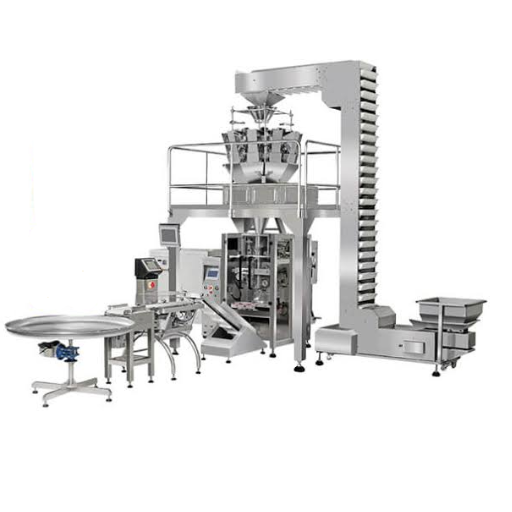
The top food machinery automation trends in 2026 are smart extrusion with automated recipe control, IoT-based predictive maintenance, AI-powered quality inspection, collaborative robots in packaging, and energy-efficient automated production lines. Each one is changing how food manufacturers compete on cost, consistency, and compliance.
Rising labor costs and stricter food safety rules are pushing manufacturers to rethink every workstation on the floor. If you run a snack, pasta, or protein bar plant, you’ve probably felt this pressure firsthand. The good news: today’s automated machinery is more affordable, more flexible, and easier to integrate than ever. This guide walks through the five biggest food machinery automation trends reshaping the industry, with practical guidance on what to prioritize for your operation.
We’ve designed and exported food production lines for clients in more than 50 countries over the past decade. The patterns below reflect what’s actually working on plant floors today, not just what looks good in trade-show demos.
Key Takeaways
- Automated recipe control on twin-screw extruders can cut product variability by 40% and reduce operator workload significantly.
- IoT-based predictive maintenance lowers unplanned downtime by 25-30% on continuous production lines.
- AI vision systems inspect up to 1,000 products per minute with 99%+ defect detection accuracy.
- Collaborative robots are now safe and affordable for mid-size snack and bakery plants, not just large CPG factories.
- Energy-efficient automated lines reduce kWh consumption by 15-20% through smart drives and heat recovery.
What Is Driving Automation in Food Machinery Today?
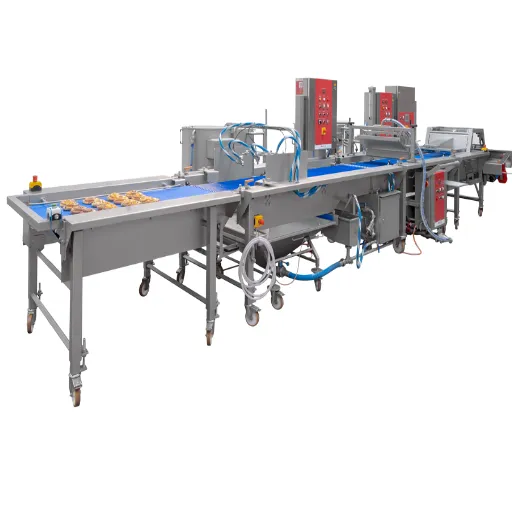
Three forces are accelerating food machinery automation trends across every region we ship to.
Labor Shortages and Rising Operational Costs
Since 2020, wages in food manufacturing have been increasing at an annual rate of 4.2% on average, as per data by the U. S. Bureau of Labor Statistics. Europe, North America, and gradually, even some parts of Asia are facing difficulties in recruiting qualified line operators. Your team will not be discounted with advanced machinery. It simply rids them of doing tedious work, work without which they cannot engage in quality assurance, developing recipes, or even customer centric designing.
Demand for Consistent Product Quality at Scale
Every customer, especially those using private labels, will want each and every item like a packet of corn puffs or a protein bar to be the same in appearance, weight and flavor. With growing volume comes a struggle by a large share of manually operated production lines to maintain such levels of uniformity. Advanced extrusion technology that incudes in-built packing tolerances that people could not reproduce over and over again.
Stricter Food Safety and Traceability Regulations
Regulators in the EU, U. S., and Gulf states are tightening expectations around traceability and process documentation. The FDA’s Food Safety Modernization Act rules, for example, push manufacturers toward continuous monitoring and digital recordkeeping. Automated systems generate that data without slowing production.
Trend 1: Smart Extrusion Systems With Automated Recipe Control
The first of the major food machinery automation trends starts at the heart of most snack and cereal lines: the extruder.
PLC-Based Recipe Management for Twin-Screw Extruders
In R&D centers, these Firms are producing next-gen dual-screw machines greater amount of research and operation work that use PLCs for the storage of plenty of formulations. Scrolling down the list on the touchscreen the operator may choose “corn puff – 2.3% moisture and touch it.” The system will automatically start, adjusting the screw speed, the temperature within the barrel, the feed rate and the amount of water injection. The operator doesn’t have to guess anymore what to do.
Real-Time Parameter Adjustment for Consistent Output
The automatic rollers are smart enough to adjust themselves. In-line sensor systems monitor the torque of the motors, the temperature of the melt and the expansion of the product. When the raw- grit moisture goes up by 1%, the system decreases the feed rate in order to keep the balance. This leads to improved control over product density and several units scrapped at the end of the production line.
Real-World Example: Mid-Size Snack Producer in Vietnam
When David, a plant manager at a 5-ton-per-day puff snack operation outside Ho Chi Minh City, switched to an automated extruder in early 2025, his daily reject rate dropped from 6.2% to 2.1%. He recovered the cost of the upgrade in 14 months. His night-shift supervisor, who used to babysit the extruder constantly, now manages two lines instead of one.
If you produce extruded snacks, our corn puff snacks production line ships with PLC recipe control built in. Request a configuration quote →
Trend 2: IoT Sensors and Predictive Maintenance
The second of the food machinery automation trends focuses on keeping your line running. Predictive maintenance uses IoT sensors to spot failures before they happen, rather than waiting for a breakdown.
Condition Monitoring for Critical Components
Vibration sensors on bearings, current sensors on motors, and thermal sensors on gearboxes feed data into a controller. The system learns what “healthy” looks like, then flags anything outside that pattern. A bearing that’s three weeks from failure shows up on the dashboard, not on a 2 a.m. emergency call.
Reducing Unplanned Downtime in Continuous Production
Industry data shows that food manufacturers using predictive maintenance see 25-30% less unplanned downtime. On a continuous pasta or biscuit line, that can mean dozens of extra production hours every month. For pasta producers, our pasta and macaroni production line supports vibration and current monitoring on the main extruder and dryer.
Remote Diagnostics for Global Machinery Installations
For overseas buyers, this matters even more. When your machine is in Lagos, Lima, or Karachi, flying an engineer in is expensive and slow. Connected machinery lets our engineers log in (with your permission), read sensor data, and walk a local technician through a fix in hours instead of days.
Trend 3: AI-Powered Quality Inspection Systems
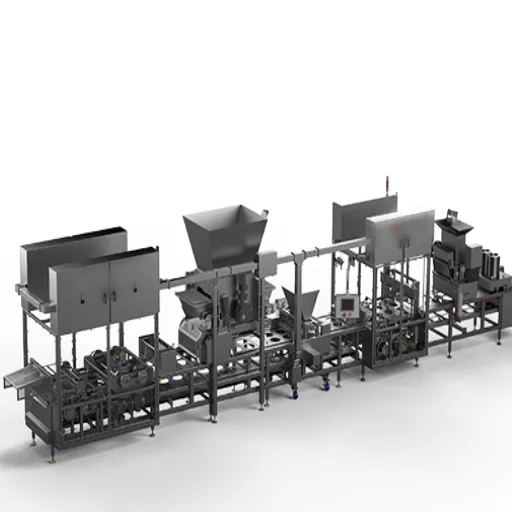
The third trend brings artificial intelligence onto the inspection station. AI vision is no longer experimental. It’s reliable, affordable, and standard on many premium production lines.
Machine Vision for Defect Detection
High-resolution cameras scan products as they pass on the conveyor. A trained AI model spots burnt edges, cracked biscuits, missing toppings, or misshapen pellets at speeds up to 1,000 items per minute, with accuracy above 99%. That’s faster and more consistent than even an experienced QA inspector.
Automated Weight and Dimension Control
Beyond visual defects, AI vision can check pack weight, snack length, and bar thickness. Out-of-spec units get diverted automatically. Your team only handles the exceptions.
Integrating Quality Data With Production Adjustments
The most useful AI inspection systems close the loop. When too many products fail in the same way, the system signals the extruder or oven to adjust. Quality control becomes part of the production logic, not an afterthought.
Real-World Example: Protein Bar Startup in Germany
Lisa, the operations lead at a Berlin protein-bar startup, told us last fall that her AI inspection system caught a slow oven-temperature drift on her protein bar production line over the course of two days. The system flagged a rising rate of bars with soft centers. Without that early warning, she would have shipped 12,000 substandard bars to a major supermarket buyer. Instead, she fixed the oven calibration before a single bar left the building.
Want to see how AI inspection fits into a complete snack line? Talk to our engineering team about your throughput and product mix.
Trend 4: Collaborative Robots in Packaging and Material Handling
Cobots, short for collaborative robots, are the fourth of the major food machinery automation trends. Unlike traditional industrial robots, cobots work safely alongside people without heavy safety cages.
Cobots for Flexible Packaging Configurations
Need to switch from 50-gram retail packs to 250-gram club-store packs by lunch? A cobot can be retrained in minutes. Pick-and-place cobots handle bars, pouches, and trays at consistent speed, freeing your team for tasks that need judgment.
Automated Palletizing and Depalletizing
End-of-line palletizing is one of the most physically demanding jobs in food plants. Cobots stack cases gently and accurately, reducing the kind of repetitive-strain injuries that drive up insurance costs and turnover.
Human-Robot Collaboration in Food-Grade Environments
The newest cobots come in stainless-steel, wash-down-rated bodies that handle the wet, sticky, and hot environments common in food plants. They meet hygienic-design standards required by EU and U. S. retailers.
For an overview of how robotics fits with the rest of your line, the team at Food Engineering Magazine publishes useful annual surveys on automation adoption.
[Embed YouTube video: “Inside a Loyal Industrial Smart Snack Production Line” – placeholder for company YouTube channel]
Trend 5: Energy-Efficient Automated Production Lines
Energy used to be a fixed cost. Smart automation is turning it into a variable you can manage. This fifth trend is rising fast as energy prices stay volatile and sustainability becomes a procurement requirement.
Smart Drives and Variable Frequency Motors
Variable Frequency Drives (VFDs) match motor speed to actual load. A mixing motor that used to run flat-out now slows down when the batch is lighter. Energy savings of 15-20% are common across mixers, conveyors, and fans.
Heat Recovery Systems in Baking and Frying Lines
Modern fryers and ovens recover heat from exhaust air and reuse it to preheat incoming product or water. On a high-volume fried snack line, that can shave thousands of dollars off the monthly gas bill.
Sustainability Metrics Through Automation
Automated lines log energy use per ton produced. That data feeds directly into ESG reports, retailer sustainability scorecards, and carbon disclosures. Several of our European clients now require this data before signing supply contracts.
How to Evaluate Automated Food Machinery for Your Operation
Knowing the food machinery automation trends is one thing. Choosing the right level of automation for your plant is another. Here’s a practical framework.
Assess Your Current Production Bottlenecks
Walk your line and ask: where do operators spend the most time on repetitive tasks? Where do quality issues recur? Where does downtime hurt most? Those are your automation targets, not whatever feature the salesperson is pushing.
Questions to Ask Machinery Suppliers About Automation
When you talk to suppliers, push for specifics:
- Which control system (PLC brand and model) does the machine use?
- What sensors come standard, and what’s optional?
- Can the system export data to our existing MES or ERP?
- What’s the training plan for our operators and maintenance team?
- How are firmware updates and remote support handled?
Total Cost of Ownership: Beyond the Purchase Price
A cheaper line that needs three operators and 18% scrap will cost you more in five years than a higher-priced automated line with one operator and 4% scrap. Build a five-year TCO model that includes labor, energy, maintenance, scrap, and downtime, not just the invoice.
Scalability: Start With Semi-Automation
You don’t have to go fully automated on day one. Most of our clients start with automated extrusion and packaging, then add AI inspection or cobots in year two or three. A modular turnkey food production line lets you scale automation as your volume and cash flow grow.
The Future: Industry 4.0 and Digital Twins in Food Manufacturing
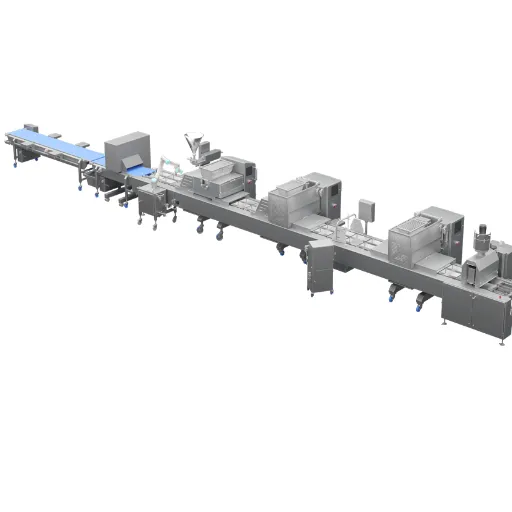
Looking past 2026, two technologies stand out as the next layer on top of these food machinery automation trends.
Digital Twin Technology for Line Optimization
A digital twin is essentially a virtual representation of the physical production line. What this means is that any modifications related to recipes, throughput, or even changes in layouts can be done on the software before making any changes on the actual plant. This is especially helpful for multi-product factories because it minimizes the risk of changeover.
Cloud-Based Production Analytics
The plant data is being made available on the internet on safe cloud portals for every site to share and analyze the data. An example of a snack manufacturing company that operates three factories in different countries can evaluate the performance in terms of yield, OEE and energy for each plant, and then implement the most effective processes in all of them.
Preparing Your Factory for the Next Decade
Even if you’re not ready for digital twins today, choose machinery that’s “Industry 4.0 ready.” That means open communication protocols (OPC UA, MQTT), structured data outputs, and modular control systems. Closed, proprietary equipment will lock you out of the next wave of snack food machinery innovation.
Frequently Asked Questions About Food Machinery Automation
What is food machinery automation?
Food processing involves the application of food machinery automation trends. Simply put, it’s the application of intelligent technologies such as PLCs, IoT sensors, robotics and AI in processing food machinery to enhance various processes. In turn, this helps reduce the inflexibility of manual processes, maintain the quality of production, carry out maintenance on the equipment and maximize production.
How much does an automated food production line cost?
The cost is affected by the capacity, what is produced and the efficiency of the machines. There are designs which have a capacity of 200 kg per hour, snack lines which are semi-automated and have prices that are less than 100,000 for one hundred dollars. Whereas a design with complete automation with AI inspection, including the use of turning bots, costs much more than that. For this reason, the total cost of the new system within the first five years is more critical than the initial purchase cost.
Can existing food machinery be retrofitted with automation?
That is possible in most instances. Existing machines such as extruders, fryers, and ovens can be fitted with basic PLC controllers and sensors and also IoT modules. A full artificial intelligence check and cobots implementation is possible only with newer machines with unified communication standards added.
What ROI should I expect from automation?
Most of our clients see payback within 12-24 months from labor savings, scrap reduction, and uptime gains. The exact figure depends on your current labor cost, scrap rate, and product mix. According to industry analysts at MarketsandMarkets, the global food automation market is projected to keep growing at over 7% annually through 2030, largely because the ROI is so consistent.
Conclusion: Build Tomorrow’s Production Line Today
The food machinery automation trends leading up to 2026 have been made clear: smart extrusion, predictive maintenance, AI inspection, cobots and energy efficient systems. There is no replacement for quality engineering and experienced operators. They help your personnel attain more than they are capable of.
Automation will not win the next decade for manufacturers with the largest plants. It’s manufacturers who will incorporate automation systematically in very production line, while guaranteeing a satisfactory return on investment coupled with an increment strategy, that will lead them to success. Improving a solitary extruder or envisioning an all new facility, is rarely the right question. One has to address the question “where” and “how” first, i.e. “how much time do we have to grow.”
Since inception at Shandong Loyal Industrial Limited, we have more than a decade of experience in designing automated production facilities that are more than 50 countries. Bottlenecks can be identified, levels of automation selected, and CE-conformant machines manufactured. Therefore, all that will not be a problem with us.
Ready to modernize your production line? Contact our engineering team for a free consultation → Tell us your product, your target capacity, and your biggest pain point. We’ll show you exactly how today’s food machinery automation trends can work in your plant.