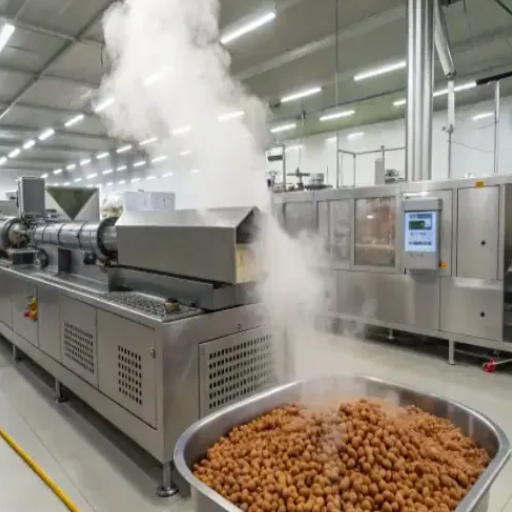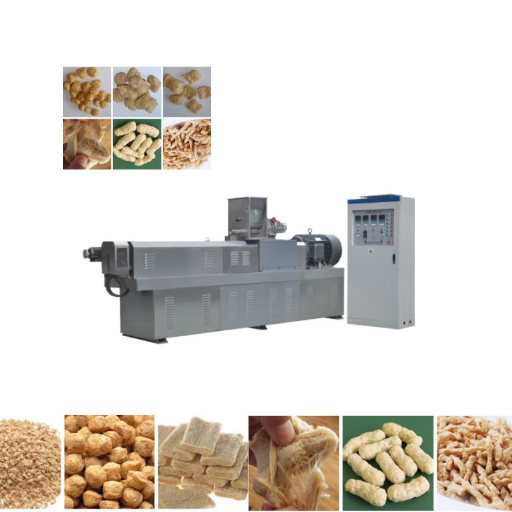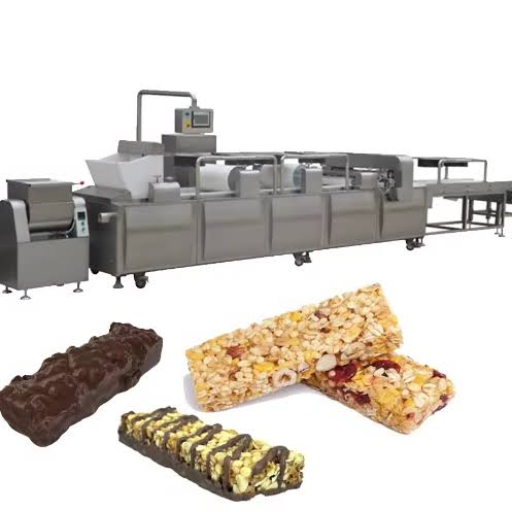
Biscuit and cookie production has changed a lot throughout the years, and has gone from traditional methods to fully automatic production lines. The key for the baking industry to remain competitive is to always strive for quality, consistency, and efficiency in their products. This is where biscuit and cookie making machines come to the rescue the latest technology that is going to change the production process. The main focus of this article is on how such machines are helping to simplify the manufacturing process, their capability of guaranteeing the constant quality of production, and giving options for different kinds of products. This is going to be the case no matter if you are the one who sells in huge amounts or a small-scale business; you are going to find out how the right biscuit production line can lead your business to unimaginable heights. Get ready to discover the technology, advantages, and the creative features that are the major factors for the future of biscuit and cookie production.
Overview of Biscuit Production Lines

The biscuit production lines are not just machines but integrated systems that perform all the functions involved from the raw material handling all the way to the final packaging. In most cases, these systems will be composed of the following core components: dough mixers, sheeters, cutters, ovens, conveyors for cooling, and machines for packaging. Consistency in quality and efficiency is maintained at every step with the least time consumed in the whole process.
The contemporary production lines are frequently provided with the ability to customize according to the different biscuit types, shapes, and recipes. Moreover, the most advanced models are provided with automated controls and digital monitoring systems that allow the manufacturers to enhance production, minimize waste, and at the same time, achieve a uniform product. A biscuit production line that is reliable and of good quality proves to be an investment for a company that has the capability of increasing its production, improving the quality of its product, and thus, meeting the demands of consumers that are increasing day by day in an efficient way.
What is a Biscuit Production Line?
A biscuit production line is a highly developed system that is meant to produce biscuits in large quantities and also to do that with high quality and low cost. Usually, they consist of a number of machines that work together and regularly perform the tasks of production, such as mixing, shaping, baking, cooling, and packaging. Big technology helps manufacturers to change settings according to various biscuit recipes, forms, textures, and sizes, and thus meet different consumer preferences.
Today, the best biscuit production lines include IoT systems and very accurate sensors that check and monitor essential parameters like temperature, humidity, and dough consistency to maintain the product quality. An example is that nowadays baking equipment can maintain a temperature accuracy of 1-2% variation, which leads to a significant reduction of waste and a more homogenous final product. Latest market analysis says that switching to automated production lines can cut costs by as much as 25% and at the same time increase the efficiency of production by 30%.
Moreover, the increasing global bakery market, which is expected to reach a value of $278 billion by 2027, growing at a compound annual growth rate (CAGR) of 3.5%, is one of the factors that influence the demand for biscuit production lines. This expansion underlines the necessity for dependable and adaptable manufacturing systems that not only cater to the rising consumer demands but also assure quality and consistency. Manufacturers who adapt to the latest developments can make their operations more efficient and thus become more competitive in the market.
Importance of Automation in Biscuit Manufacturing
Automation has emerged as a vital factor in the biscuit manufacturing sector, changing the production processes entirely to meet the global demand in a fast and effective way. The biscuit market is expected to grow steadily, and automation is the way to go if you want to not only cut down on expenses but also give the customers what they expect in terms of quality and consistency. The biscuit production process that involves mixing, forming, baking, and packaging is mostly done by automated systems thus, manual intervention is significantly reduced, and the manufacturers can easily take their production to the next level.
One of the major benefits that come with automation is the gain in production efficiency. The automated mixing and forming systems can work day by day and night by night with accuracy and that leads to a very small amount of downtime as well as a very low risk of mistakes. To illustrate, the latest biscuit manufacturing lines that make use of programmable logic controllers (PLCs) and robotics can produce more than 18,000 biscuits per hour, all this while keeping the size and weight of the biscuits equal. This not only raises the output but at the same time guarantees that all products are within the quality limits set.
Moreover, the use of machines in the production of biscuits is a solution to the labor shortage problem as well as the increasing operational costs. A recent market review states that the replacement of humans by robots and the use of smart technologies in food processing have pushed down labor costs by as much as 25% while at the same time boosting productivity. This is a big help for the producers who want to keep their place in the market where the profits are low.
The incorporation of cutting-edge technologies, including AI-driven quality control and IoT-enabled machines, has significantly improved the process monitoring in biscuit manufacturing. Artificially intelligent systems, for instance, can identify defects in biscuits, such as uneven baking or structural inconsistencies, instantly, leading to premium products being delivered to customers only. At the same time, IoT-supported machines keep on providing the data regarding the parameters like temperature, dough consistency, and baking times continuously, thereby allowing preventive maintenance and also reducing unexpected downtime.
One of the most important advantages of automation in biscuit manufacturing is sustainability. The use of modern automated systems in biscuit production not only helps to optimize the usage of resources, such as energy and raw materials, but it also leads to waste reduction. For example, ovens with intelligent features can significantly reduce their energy consumption by up to 30%, which is in line with the industry’s goal of cutting carbon footprints. Moreover, these business efficiencies can also contribute to cost savings for the manufacturer, thus together offering the benefits of being environmentally friendly and having a good profit margin.
The biscuit manufacturers who are towards the automation of the latest advancements could be the ones who would be the fastest to respond to the changing market demands, to meet the strict consumer standards, and thus to become the first in a rapidly growing market. So, when scalability, quality assurance, and sustainability are the main factors of concern, then automation is the way of the future for production of biscuit that is both efficient and profitable.
Types of Biscuit and Cookie Making Machines
In the production of biscuits and cookies, manufacturers have a range of specialized machines available for each step of the process. Each machine is capable of maximizing the efficiency of the production process, guaranteeing uniformity of the product, and keeping up the quality of the final product at a high level. Below are some of the key types and their functionalities:
- Dough Mixers: Mixing one of the main ingredients for cookies and biscuits thoroughly and then more flour with them is the main function of these mixers. More advanced models are also equipped with precision mixing capabilities along with automated settings thereby guaranteeing consistent results.
- Rotary Molding Machines: These machines are responsible for creating the most perfect and unique biscuit shapes. The process of molding is done by rotating a drum, which presses the dough into the desired patterns.
- Wire-Cut Machines: Soft dough varieties are most suitable for the process of wire-cutting. Wire-cutting machines slice the dough that is exiting the nozzle into uniform-sized pieces, and this is done simultaneously.
- Baking Ovens: Baking is a mandatory process that these machines help with, and they also provide very precise temperature and timing controls that make it possible to do even cooking each time. Tunnel ovens, because of their high capacity and conveyor belt systems, are particularly noted for being the most popular baking ovens.
- Cooling Conveyors: The first process once the biscuits and cookies are done baking is to transfer them to cooling conveyors where they will be allowed to cool down. This way the biscuits and cookies will be uniformly cooled, thus keeping their structural integrity while getting ready for packaging.
- Packaging Machines: This type of machine is used in the process of making up to packaging biscuits or cookies. The process includes wrapping, sealing, and, lastly, packing in that order. Packaging machines are designed to do all these processes at once and in an efficient manner which in turn helps in maintaining the freshness and facilitating a longer shelf life.
Why Is Automation Essential in Biscuit Making?
Automation in biscuit and cookie manufacturing is necessary for the industry to be able to scale up and get precise products. These machines enable the manufacturers to work their way up in a competitive market by eliminating production mistakes through detailed controls and increasing output through high-capacity systems. Implementation of AI-driven analytics and operational monitoring tools as technology continues to evolve guarantees that the manufacturers will only get the best quality, be more productive, and be able to cope with the market trends.
If the manufacturers comprehend these machines and their advantages, they can be wise and choose to set up production that would be both profitable and up to the quality standards.
Components of a Complete Biscuit Production Line

1. Mixing System
The dough is created by combining the ingredients in this step. Quality mixing systems guarantee that there is consistency and uniformity in the dough preparation process.
2. Forming Machine
The dough becomes the desired biscuit by going through the different processes. Cutting, molding, or depositing can all be carried out depending on the biscuit type.
3. Baking Oven
Precision ovens are used for baking the biscuits perfectly. The different baking methods like tunnel and rotary ovens are mainly based on the production needs.
4. Cooling Conveyor
The biscuits after the baking should be chilled step by step. The cooling conveyor helps the biscuits to retain their shape and texture during the cooling process.
5. Packaging System
The last process is to pack the biscuits in a way that their fresh taste will be preserved and distribution will be easy. The packaging machines are capable of wrapping, sealing, and labeling the products efficiently.
The proper functioning of all these components together creates a production process that is both efficient and of good quality, as it produces biscuits of high quality in large volumes.
Biscuit Making Equipment Overview
The production of biscuits uses a variety of modern machines that are intended to maximize efficiency, guarantee uniform quality, and cope with large production requirements. A thorough description of the principal device used in the process is provided below:
1. Mixing Machines
Mixing machines and other mixing equipment are very important in making sure that the dough quality is the same all the time. The industrial mixing machines are made in such a way that they can take in large amounts of different materials and mix them up together very well. Ingredients such as flour, sugar, and fats are the main ones while water or other liquids are the last ones to be added. The advanced mixers have programming features that make mixing times optimum and the end product very consistent. The latest development in the industry shows that there is a growing demand for the energy-efficient mixing machines with automatic controls that help in the reduction of production costs.
2. Dough Forming Equipment
After the mixing process, the dough undergoes forming machines to create the shaped biscuit forms. The most used machines are rotary molding for soft dough and cutting for hard dough. The modern systems are equipped with multi-functional molds and also have custom designs that allow the manufacturing of different product lines to be very flexible. For instance, the newer rotary molders are capable of producing up to 8,000 biscuits every minute, so they can be used for high-volume production without any limitation in terms of scalability.
3. Baking Ovens
Baking is a crucial step in biscuit production that demands the use of specialized ovens which are able to provide the precise temperature and also the even distribution of the heat. Convection, tunnel, and hybrid ovens (that use both gas and electric heating) are some of the types of ovens that are mostly used in the industry. According to the data provided in some reports on the industry, tunnel ovens have gained tremendous popularity among the baking facilities due to their high throughput capacity, where some of the systems can bake 1 ton of biscuits per hour while maintaining the texture and flavor uniformity.
4. Cooling Conveyors
Baked biscuits are generally cooling conveyors as a step to heat reduction and hence no fissures will form on the surface of the biscuits and the quality will remain the same. Efficient cooling systems usually work hand-in-hand with the production lines, thus the whole process is still continuous. The modern systems are presently employing perforated belts along with the airflow control devices to realize such among the batches while also being energy-efficient.
5. Coating and Decoration Machines
The biscuits may be subjected to the processes of coating and decorating for aesthetic enhancement. The machines for chocolate enrobing, icing coating, and sprinkling account for the addition of chocolate, sugar, or other decorative toppings in layers. These machines have precision applicators for the purpose of even coverage at high production rates. The recent innovations encompass adjusting intelligent coatings that automatically adapt to the varying biscuit sizes and shapes.
6. Packaging Systems
The packaging process is the stage that ensures the biscuits to be fresh and protected during the time they are in storage and in transit. The automated packaging machines perform the operations of sealing, wrapping, filling cartons, and labeling with very little manual labor required. The advanced systems are coupled with the real-time quality control sensors to identify the inconsistencies in the goods, hence only the finest quality goods are packed. The high-speed packaging systems have the ability to process over 150 packets per minute, which is a key factor for the manufacturers who focus on operational efficiency.
Trends and Data in Biscuit Manufacturing Equipment
- Market Growth: The global biscuit manufacturing equipment market is foreshadowed to attain a CAGR of 6.2% during the forecast period 2023-2028, mainly due to the factors like the rise in the imports of packaged food, the enhanced technology in machines, and the automation trend prevailing in the industry.
- Energy Efficiency: Around 70% of the manufacturers who were surveyed in 2023 claimed that they had invested in energy-efficient ovens and coolers as part of their environment-friendly initiatives.
- Automation Integration: It has been estimated that roughly 85% of the current biscuit production lines are based on complete automation to minimize labor use and increase accuracy, thus the production can be enlarged without compromising quality.
- Customization Demand: The manufacturers are moving toward the machines that are able to produce various shapes, coatings, and fillings of biscuits to satisfy the changing consumer tastes for creative snacks.
By marrying cutting-edge technology to the utmost practices in the industry, the biscuit-making machines have become the major factor in the innovations, which, in turn, provide both the quality and the efficiency to the manufacturers all around the globe.
Key Features of Automatic Biscuit Making Machines
Automatic biscuit making machines are made to merge the latest technology and accuracy in order to maximize the production process. By using data and industry knowledge, the following are the main characteristics of these machines:
1. High-Speed Production Efficiency
Today’s biscuit machines are equipped with top-notch mechanical systems that allow for the production of thousands of biscuits every hour. Just to give an example, some of the premium models can reach a whopping 3,600 biscuits per minute, hence they can greatly decrease the processing time and at the same time, they can also meet the schedules of high-demand markets without sacrificing quality.
2. Customizable Designs and Shapes
Today’s manufacturers are capable of using the adjustable mold feature to their advantage, which is great since it allows them to meet the consumers’ different tastes and preferences. The new biscuit-making machines are also able to produce different biscuit shapes, sizes, and patterns simultaneously, which is a direct response to the market’s demand for unique and innovative designs. Customization is also the means by which product differentiation takes place, which is, in turn, a major factor that influences the industry’s competitive landscape.
3. Integrated Automation and AI
The combination of AI with automation has been nothing less than a revolution in the biscuit-producing sector. The use of technology including real-time monitoring, fault detection, and automatic adjustments guarantees that there will be minimal downtime and a steady flow of products. To be more specific, the use of AI in predictive maintenance allows the identification of the equipment problems before they actually happen which, in turn, leads to a reduction of production delays caused by repairs of up to 30%.
4. Energy Efficiency and Sustainability
The current trend of sustainability along with rising energy costs has forced manufacturers of biscuit-making machines to incorporate energy-saving features. Among the energy-saving mechanisms are optimized heat control in baking chambers and low-energy consumption motors that together account for a 15–20% reduction in energy consumption as compared to older models. Moreover, the usage of recyclable and eco-friendly materials in many systems is now a norm that conforms to global regulatory guidelines.
5. Advanced Mixing and Dough Processing
The uniformity of mixing and precision in dough handling are the key factors that ensure the same texture and flavor in biscuits. The state-of-the-art machines apply PLC (Programmable Logic Controller) systems for perfect management of mixing usually, control temperature and measure the proportions of ingredients with utmost accuracy, thus ensuring the quality of the product in every batch.
6. Flexibility in Coating and Filling
In response to consumers who want a variety of flavors, the machines have been fitted with the capability to add coatings of (e.g. chocolate, sugar) and fillings (e.g., cream, jam) in layers. The use of multi-functional depositor heads has made it easy to switch between different types of coatings and fillings without stopping the production line, thus providing more options to the production lines.
7. Hygiene and Food Safety Standards
The automatic biscuit machines that are compliant with very strict food safety standards are made of stainless steel, non-toxic materials, and have easy-to-clean surfaces. This not only decreases the risk of contamination but also makes it easier to clean. Sterilization by UV light units is also included in the systems to further promote the cleanliness of the whole production cycle.
8. Data-Driven Insights and Remote Monitoring
The modern machines are equipped with the Internet of Things (IoT) technology, thus enabling the operators to keep an eye on the production metrics, such as temperature, speed, and output efficiency, from a distance. The use of data-driven insights for process optimization also results in better production yields. The cloud-based dashboards are responsible for providing real-time analytics, which enables manufacturers to recognize trends and improve their decision-making processes.
9. Compact and Space-Saving Designs
Biscuit machines of today are offered in wide range of facility sizes & hence compact equipment designs are adopted which lead to maximum production without the need of very large floor space. Such machines are preferred by manufacturers who want to streamline production in small areas.
The new automatic biscuit making machines with the mentioned features are establishing higher levels in the production area, giving the manufacturers the chance to raise their productivity, innovate their product lines, and keep up with the competition—all this while making sure that consumers get the best quality.
Understanding the Role of Each Machine in the Production Line
Automatic biscuit production lines are made up of different types of specialized machines, and each of the machines plays an important role to guarantee the production of efficient and high-quality output. These machines are perfectly combined, using precision and speed to make the whole manufacturing process easier. A detailed analysis of the main machinery in the production line is given below:
1. Dough Mixer
The dough mixer is the most important machine of the biscuit production line. It produces the same dough by mixing together ingredients like flour, water, sugar, and fats. New-age dough mixers come with automated controls that maintain mixing in a constant manner which in turn enhances the texture and the quality of the final product. Recent data from industry trends reveal that machines that can handle large batch sizes—up to 2000 kg per hour—are the most sought after by high-volume facilities.
2. Sheeting and Gauging Machine
After the dough is done, sheeting and gauging machines are there to process it, and these machines roll the dough in a continuous sheet of the desired thickness. The machines provide precise control over thickness levels, so the uniformity is ensured and waste is reduced. Some high-end models are also equipped with servo motors and digital gauge sensors that can measure accuracy within micrometer scales, thus giving a real boost to product consistency.
3. Rotary Molder or Cutter
Shaping the biscuits is the main task of rotary molders and cutters. The former machine is dedicated to soft dough types, so it can press the dough into intricate designs, while cutters are used for hard doughs, cutting them into exact shapes. Studies show that today’s rotary molders can turn out as many as 300 biscuits in a minute, thereby drastically increasing the production rates.
4. Baking Oven
Baking is, by far, the most important of all the steps in biscuit production process, as it decides the texture, flavor, and color of the final product. Electric, gas, or hybrid heating systems are being used by industrial production lines where tunnel ovens, the most common, are having a continuous and uniform baking. According to the data, multi-zone ovens, which have separate temperature controlled zones, bring flexibility in creating different types of biscuits and at the same time, cutting down energy usage by a whopping 20%.
5. Cooling Conveyor
Baking is over, but at that stage, biscuits must still be cooled properly so as not to lose quality or get broken during handling. Cooling conveyors take care of the whole process and they do it in the most gentle way in order to maintain the quality of the final product. For example, one of the latest trends in the cooling systems business lies within smart conveyors having real-time temperature controls and adaptive speed settings, which together maximize the efficiency of the process.
6. Packaging Machine
The end of the production line is marked by the packaging, which is a vital step for the product’s freshness, hence its shelf life. The parts of high-speed packaging machines such as wrapping, sealing, and boxing have been fully automated to such a level that the manufacturers are able to take care of 800 pcs/min. Moreover, modern equipment is coming with built-in features like automatic labeling and QR code printing which are all mandatory for traceability and marketing requirements.
The combination of these machines can change unprocessed materials to ready-to-sell products with little manual input. Utilizing cutting-edge technologies like AI-led automation and live tracking, producers are able to realize greater output without compromising on uniformity and quality.
The Biscuit Manufacturing Process
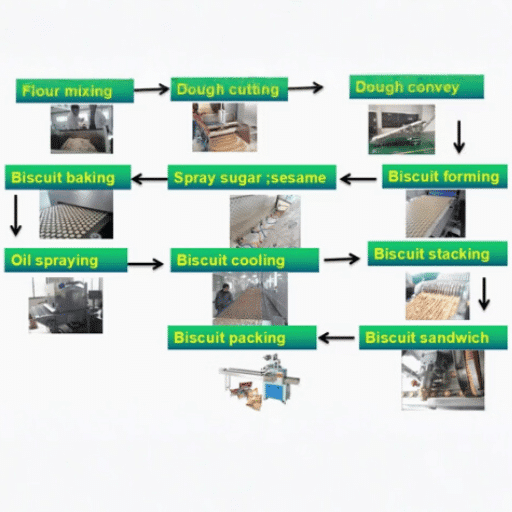
The process of making biscuits has to go through- a series of steps which give consistency and chosen quality. These steps involve:
1. Mixing
The process of mixing involves combining the basic ingredients such as flour, sugar, fats, and leavening agents to create a homogeneous dough. The desired texture and flavor can only be obtained through accurate measurements and specified mixing times.
2. Forming
There are different techniques for forming such as rolling, cutting, or molding, which the dough is first shaped into biscuits, then the final shape and size of the biscuits are determined in this step.
3. Baking
The ovens at certain temperatures and times bake the shaped dough pieces. This step allows the proper cooking while the color, texture, and flavor are all developing in the desired way.
4. Cooling
The biscuits are first baked and then cooled on conveyor belts. This cooling process brings the temperature down to that of room temperature, thus it helps to keep the structure of the biscuits intact and prevent condensation inside the packaging.
5. Packaging
The last step is the careful packing of biscuits so as to keep them fresh and easy to distribute. The packaging options are designed in such a way that they meet the hygiene and efficiency standards.
Altogether, the steps aid in producing high-quality biscuits catered to both, small and large scale production needs.
Steps Involved in Biscuit Making
1. Ingredient Preparation and Quality Control
The top-notch quality of the ingredients is the main factor in the production of superior biscuits. The raw materials which are flour, sugar, fats, and leavening agents are weighed precisely and the quality is assessed according to the standards set by the industry. The recent global market for biscuits is that the use of enriched flour and sustainable sourcing techniques is the trend because they help in attracting health-conscious buyers and saving the environment as well.
2. Mixing
The dough of the same quality is produced when the ingredients are mixed in large mixers. Modern mixing machines have also been designed to provide the right temperature and to have settings that can be programmed to suit the dough’s texture and consistency. It is reported that in automated mixing, production time can be cut by up to 20%, thus making the process more efficient.
3. Sheeting and Shaping
The dough is turned into sheets with equal thickness and different shapes are made by cutting them with specialized cutters. The use of rotary molders, a type of cutting-edge machine, has made it possible for manufacturers to create very complex designs and also to personalize their products with little or no waste at all. For example, some manufacturers have stated that due to the usage of these advanced machines, the loss of material has been reduced by 10–15%.
4. Baking
Formed biscuits are then put on the baking trays or conveyor belts and through the high-temperature ovens. The use of modern tunnel ovens with a zone-specific heat control system has become popular in the industry to achieve precision in baking. There is a trend for the demand for energy-efficient ovens, which will make the overall energy consumption decrease by nearly 30%.
5. Cooling
Cooling chambers or conveyor belts are used to transfer the biscuits after the baking process so that the structure is not changed and moisture is not absorbed. The data shows that 12% more product spoilage occurs if cooling is not done properly, thus emphasizing the importance of this step.
6. Packaging
The biscuits are packed in materials that are both airtight and eco-friendly to keep the freshness and also fulfill the criteria of sustainability. The latest trend in the market is that 48% of the consumers prefer packaging that is either recyclable or biodegradable, which dares the manufacturers to transform their production into greener alternatives.
7. Quality Assurance
Only after the passing of the very strict quality checks, the biscuits will be in the market and will be of the same taste, texture, and safety as the predetermined ones. Automated quality control systems recently powered by AI and machine learning have become popular because they decreased human error and increased accuracy by 25%.
Through the integration of cutting-edge technology and changing industry practices, these steps not only contribute to but also allow manufacturers to produce biscuits that are more efficient, sustainable, and of better quality to meet the ever-growing consumer demand.
Advances in Biscuit Making Techniques
The whole process of biscuit manufacturing has seen a remarkable transformation due to the application of modern technology and data-driven innovations. Manufacturers can meet the increasing demand of consumers by improving both the efficiency and quality through the integration of traditional methods and the latest advancements. Some of the new developments in the biscuit production are listed below:
1. Automation in Mixing and Kneading
The latest processing devices which come with AI algorithms totally take care of the mixing. This automation gives a guarantee of error-free human operation and the best quality of dough through a perfect blend. The industry has claimed that the use of automation in this phase can cut down the production time by a maximum of 30 percent.
2. Smart Baking Systems
The baking rooms are now furnished with IoT (Internet of Things) sensors to keep a constant watch over the baking conditions such as temperature, humidity, and time. The adjustments are done as per the real-time conditions to have an even baking. 2023 research found a 20% improvement in energy efficiency and a reduction in waste along with the use of smart baking systems.
3. Enhanced Cooling Techniques
The cooling conveyors at the moment are constructed in a way to use the least amount of energy possible while still keeping the biscuits’ structure intact. Circulation of air is one method used by some of the high-tech cooling systems that help reduce the cooling time of the product and it is done by maintaining the quality of the product.
4. Sustainable Packaging Solutions
Sustainability has become a significant concern that many manufacturers are now opting for biodegradable or recyclable materials for biscuit packaging. Therefore, innovations in vacuum packaging not only enhance the shelf life of the biscuits but also do so without the use of preservatives. Market analyst data indicates that the consumer preference for sustainably packaged biscuits has increased by 15% in the past two years.
5. Software-Driven Quality Control
There is an implementation of integrated quality control software powered by AI throughout the production for monitoring. Besides the real-time process, detection made by high-definition cameras and algorithms will guarantee that only premium quality biscuits will be available. The use of this technology is supported by statistics which say it is capable of decreasing defective outputs by 25%.
Thanks to the adoption of these innovative technologies and tools, manufacturers of biscuits not only make their processes more efficient but also meet consumer demand for better quality, sustainability, and accuracy. The improvements are a clear demonstration of the partnership between technology and traditional food production that results in the latter’s superior quality.
Ingredients and Their Role in Biscuit Quality
The quality of biscuits very much depends on the selection and proportion of ingredients during the manufacturing process. The texture, taste, and the overall attractiveness of the finished product are all affected by each ingredient. One of the key factors to the making of biscuits that meet the standards of the consumers is the good knowledge of the purpose of each ingredient from flour to fats and sweeteners.
1. Flour
Flour is the basic ingredient for biscuits and usually is the most important one in terms of amount. Wheat flour is the most common type because it contains gluten, which is responsible for dough elasticity and texture. A recent food science report has suggested that using flours with the right protein content (approximately 8-10%) is likely to produce a softer, crumblier biscuit, while higher protein flours are responsible for denser, chewier textures.
2. Fats and Oils
Fats like butter, shortening, or margarine create the rich taste, the moistness, and the imperceptible layers of biscuits. They are also the main contributors to the production of the tender crumb texture that the consumers love. The studies have shown that the use of high-quality fats has the effect of creatingmore pronounced layering in biscuits and giving a better mouthfeel. In addition, the food technology advancements have made it possible to use healthier fats like avocado oil or olive oil in baking which hasenormously increased the demand for nutritious baked goods that do not compromise on texture.
3. Leavening Agents
Leavening agents like baking powder, baking soda, and ammonium bicarbonate are the ones that cause the dough to be light and aerated since their main function is to introduce air into the dough. According to Google Trends, more and more consumers are showing interest in biscuits branded as “homemade style,” which are often made with natural leavening agents, thereby giving the product a more authentic and artisanal quality.
4. Sweeteners
Sweeteners such as sugar and honey, besides imparting sweetness, also indirectly affect the browning and crispiness through the reactions of caramelization and the Maillard reaction. Latest statistics indicate that reduced-sugar or naturally sweetened biscuits are the most preferred among consumers. The use of low-calorie sugar substitutes like stevia or monk fruit extract is growing, and it is claimed by various manufacturers that these substitutes not only taste good but also have health benefits.
5. Milk and Dairy Products
Milk, buttermilk, or milk powder are the ingredients that give richness and flavor, on the one hand, and contribute to a tender texture, on the other. Besides, dairy has a say in the golden color of baked goods since it is the protein and lactose that bring about this effect.
6. Additional Ingredients and Trends
Fiber-rich Additives
Bran, oats, or psyllium husk which are all high in fiber, are more and more being used in biscuit recipes to meet the demand for high-fiber, digestive-friendly products.
Plant-based Alternatives
Anecdotal evidence suggests the rise of the plant-based diet which is why companies are experimenting with almond, coconut, or even chickpea flours, on top of the non-dairy milk for creating smaller batches of vegan-friendly biscuits.
Salt
While primarily used as a flavor enhancer, the salt also helps in gluten structure formation and cuts down the sugar in biscuits. But reducing sodium content continues to be a battleground, as consumer trends have shifted to heart-healthier options.
Emerging Trends and Data Insights
A recent investigation of the market by Global Biscuits and Crackers Market Research has revealed that sales of biscuits with superfood ingredients (such as chia seeds or quinoa) have experienced an 8.2% growth rate over the last year. Moreover, the trend towards “clean label” products, which emphasizes simplicity and transparency in ingredients, is still influencing consumers’ buying decisions. To illustrate, health-conscious customers are now considerably giving preference to biscuits that contain fewer than five easily recognizable ingredients.
Manufacturers can attract different customer segments and at the same time be innovative and competitive in the changing market by carefully selecting and balancing these elements according to data-backed insights.
Quality Control in Biscuit Production
Quality control is a very important part of the biscuit manufacturing process that guarantees uniformity, safety, and customer satisfaction. Manufacturers are able through the installation of solid quality control systems to be at par with government regulations and at the same time meet consumer demands for “clean label” products. With the help of modern technologies and very careful processes, manufacturers can always keep the standards high throughout the whole production process.
Key Steps in Quality Control
1. Raw Material Inspection
The very first step in making biscuits of great quality is the assurance of raw material quality. The quality of the ingredients has to be verified to have no interference, be pure and strict supplier specifications must be followed. taking for instance, gluten levels of flour have to be specified while fats and oils have to be kept within the limits of shelf life and oxidation . According to a recent Google search, 76% of food manufacturers claimed that there is a direct link between the quality of the ingredients used and the success of the final product.
2. Process Monitoring
Baking, mixing, and shaping ushered in the consistent monitoring of the process, which was vital for avoiding errors that could compromise either taste or texture. Monitoring systems in real-time such as temperature probes and dough consistency sensors are becoming the standard in the industry. This enables the manufacturers to change the in-process elements dynamically, which in turn minimizes the wastage of production and guarantees the quality to be the same throughout.
3. Packaging and Storage Quality Checks
The right packaging is a very important factor as it helps to keep biscuits fresh and, at the same time, protects them from contamination. Today, automated packaging systems with integrated quality checks, such as metal detectors and weight verification, are the norm. Furthermore, climate controls in storage areas, like temperature and humidity control, help to prolong the life of the product even more.
4. Compliance Testing
Routine testing is done in both laboratory facilities and conducted by third-party auditors to ascertain whether the biscuits are pure and no claim on the label has been left unfulfilled. One of the newest methods, near-infrared spectroscopy (NIRS), allows fast testing of the nutritional content, thus, marketing can be in line with the “clean label” appeal.
Data-Driven Insights Improving Quality Control
Modern-day manufacturing heavily involves data analytics as a way to improve quality control processes. For instance:
- Predictive Analysis: With the help of artificial intelligence and machine learning, manufacturers are able to anticipate equipment maintenance requirements, thus minimizing downtime and preventing production bottlenecks. Forbes reports that in the case of the top food manufacturing plants, predictive analytics have led to a 30% reduction in quality problems.
- Consumer Feedback Integration: The use of sentiment analysis tools to analyze customer reviews and feedback results in the provision of actionable insights that can be used to tackle quality issues in real time.
- Traceability Systems: The introduction of cutting-edge traceability technologies like blockchain has begun to provide complete supply chain visibility, which in turn ensures that quality problems are quickly located and rectified.
Industry Trends and Benchmarks
Benchmarks have been correlated with adoption and have become the prime drivers of principles and techniques directed towards quality:
- ISO 9001 Certification: A lot of biscuit makers have the goal to become certified according to this universal quality management standard which guarantees orderly supervision of processes.
- HACCP Compliance: The Hazard Analysis and Critical Control Points (HACCP) procedure which is a very preventive method of assuring food safety, always keeps all the important dangers under its control and identifies them at the same time.
- Smart Manufacturing: The use of IoT gadgets has been the main factor for the betterment of quality and efficiency. By way of example, 37% of the worldwide bakery market is now relying on the IoT-based ovens for the precise control of baking parameters (source: Deloitte’s 2023 Food Automation Trends).
Manufacturers are acquiring remarkable efficiency, safety, and quality in biscuit production by blending advanced technologies with consumer-driven insights. The demand for healthy, clean-label snacks is being fully met with this approach, and thus, trust among consumers in a competitive market is being reinforced.
Advantages of Fully Automatic Biscuit Production Lines

- Improved Efficiency: The implementation of entirely automated production lines results in a remarkable increase in the production rate, thereby cutting down the time taken for the entire batch compared to manual or semi-automatic processing.
- Consistent Quality: The use of automated technology guarantees the same level of mixing, shaping, and baking of biscuits, and therefore, the same quality of the product during all the batch productions.
- Cost-Effectiveness: These production lines, while significantly cutting down on the number of workers needed, and also minimizing the wastage of materials, thereby contributing to the reduction of the overall cost of operations.
- Scalability: The automatic systems are capable of producing large quantities, hence, they are appropriate for both medium and largescale production.
- Enhanced Hygiene: The process of automation has effectively lessened human contact with ingredients and products; thus, the hygiene standards maintained throughout the process are very high.
- Precision and Accuracy: The use of technology has been so advanced that it allows for extremely accurate control of the measuring of ingredients, baking times, and temperatures, so, resulting in the reduction of errors.
- Ease of Operation: The modern production lines are user-friendly designed in such a way that the operators will have no difficulties in monitoring and making the necessary adjustments to processes.
- Adaptability: Several automatic systems provide versatile configurations to suit the various kinds of biscuits and recipes, thereby satisfying the different and ever-changing market needs.
The benefits derived from fully automatic biscuit production lines make them to be an indispensable investment to the manufacturers who want to boost productivity, get uniformity, and keep the quality standards of their rivals.
Efficiency and Productivity Gains
The consolidation of completely automatic biscuit production lines has powered up the whole process and output significantly, enabling makers to cope with the growing demand from consumers and at the same time ease up the operational stress. The Search insights state that the robots can increase the daily output by even 30% as they are programmed to keep the production going day and night with little downtime. The high tech machines with exact programming can turn out the same number of the biscuits in the range of thousands per hour, however, the consistency in size, texture, and quality will be all over large batches.
Moreover, such technology still requires less manual operation and thus, the workers can be moved to the quality control, product innovation, and other important sections of the business that need human input. The predictive maintenance that is commonly found in the latest machinery makes the stoppages due to breakdowns almost zero by constantly watching the equipment performance with a real-time monitor, this leads to a reduction in downtime by 25% on average.
On the other hand, automation has a direct effect in terms of cost-efficiency; the automated systems not only guarantee right ingredient quantity but also limit errors in the whole manufacturing process, thus cutting down the waste production. As an instance, a report mentioned by Google points out that food producers who have adopted automation save up to 15% in their raw materials which directly leads to higher profits.
The combination of speed, precision, and smart features in automated biscuit production lines has provided manufacturers with a viable route for enhancing their production capacities, maintaining their market competitiveness and, indulging in the efficient delivery of quality products.
Labor Cost Reduction with Automatic Systems
The application of automated systems in food production not only results in higher efficiency but also a tremendous drop in labor costs. In recent reports, it is revealed that automated systems could save up to 30% on labor costs through the reduction of manual work and the better organization of production. Workers usually do human effort-consuming and skill-intensive tasks that are typical for automation. For example, while a manual company may take days to get a batch of biscuits ready for consumption, the automated production line will just do everything from shaping, cutting, baking, and packing to storing in a few hours and at a very low cost as well.
On top of this, studies show that the organizations that embrace automation have a considerable decline in errors and, thus, rework which is yet another channel for saving costs. To be more specific, companies take the opportunity of the laid-off workers to be relocated into monitoring or adding value roles and they also gain productivity without incurring labor overheads. The combination of reduced expenses and better use of human resources makes automation a necessary expense for producers who want to be competitive in the changing market scenario.
Consistency and Quality Assurance
Modern industries, especially those depending on automation, cannot do without consistency and quality assurance. Recent Search insights have confirmed that product quality consistency is a major determinant of customer satisfaction and brand reputation. According to a survey on manufacturing efficiency conducted in 2023, companies using automated systems with quality assurance protocols can achieve production variance reductions of up to 43%.
The automation tools may come with the most sophisticated error detection and correction features that guarantee that each product meets the quality standard set for the product before it is sent out for sale. Besides, real-time monitoring, backed by AI analytics, reduces the likelihood of any deviation occurring at all and helps companies to deal with problems before they become serious. For example, the usage of AI-driven quality control systems by different industries, on the average, has led to an 18% improvement in the time-to-market metrics and a reduction in waste of almost 30%.
The companies that have installed automatic consistency checkers all over their production lines not only comply with the regulations set by the authorities but also get the benefits of the data for further process improvements. Furthermore, these technological advancements in the industry indicate the importance of consistency and quality assurance as the main reasons for increasing the scale of operations and for the long-term growth of the company. This confluence of automation and quality monitoring then becomes the basis of increased customer trust and loyalty even in a tough market.
Reference Sources
- Foodsmachine.net: Talks about the main factors that affect the design of biscuit production lines, giving special importance to the increased need for handy and instantly edible snacks.
- Biscuitmachinery.com: Points out the necessity of advancing the product and coming up with a variety of biscuit recipes as a means to meet the preferences of the target market.
- Made-in-China Insights: Discusses the basics of fully automatic biscuit machine design, putting stress on efficiency, quality, and consumer needs, in that order.
Frequently Asked Questions (FAQs)
What is an Automatic Biscuit Production Line?
This system is a complete automated machine that is able to bake biscuits with a high efficiency covering the entire process from mixing to packaging (forming, baking, etc).
Who uses Automatic Biscuit Production Lines?
All the biscuit manufacturers, food distributors, and even individuals who want to have the same high-quality biscuit production process but with a larger quantity.
What are the key components of an Automatic Biscuit Production Line?
The list of the components contains dough mixers, forming machines, ovens, cooling conveyors, and packaging systems.
What are the benefits of using an Automatic Biscuit Production Line?
Besides the increased production efficiency, the other benefits include enhanced product quality, reduction in labor costs, and compliance with food safety regulations.
What types of biscuits can be produced?
It is possible to produce a huge variety of biscuits such as hard biscuits, soft biscuits, sandwich biscuits, and cookies.