Food extrusion makes snacks, breakfast cereals, pasta, pet food, and plant-based proteins. It’s the quiet engine behind most of the packaged foods on grocery shelves today, and mapping out its food extrusion applications is the fastest way to see whether the technology fits your next product.
Here’s the part most people miss: the same twin-screw machine can puff a cheese snack in the morning and structure a meat-like chicken alternative by afternoon. That versatility is exactly why food extrusion has become a cornerstone of modern food manufacturing.
You probably already know extrusion cooks and shapes food under heat, pressure, and shear. What you may not have seen is the full map of what it can actually produce, and which turnkey line each product calls for. In this guide, you’ll get that map. We’ll walk through the major food extrusion applications, from snack to pasta to protein, and show you how to match a product idea to the right extruder.
Key Takeaways
- Food extrusion produces directly expanded snacks, breakfast cereals, pasta, textured vegetable protein, and pet food, all through one core process.
- The global puffed and extruded snack market alone reached USD 50.78 billion in 2023, so snacks are the largest single food extrusion application.
- Extrusion can cut anti-nutritional factors like phytic acid by 50 to 70 percent, improving digestibility and nutrition.
- Snack foods make up roughly 31 percent of food extrusion revenue, and twin-screw extruders hold about 64 percent of the market.
- Matching the product to the extruder type (hot vs. cold, single vs. twin screw) is the single most important decision you’ll make.
What Is Food Extrusion Used For?

Food extrusion is used to cook, shape, and texturize raw ingredients into ready-to-eat and ready-to-cook products. The process uses high-temperature short-time (HTST) conditions, meaning heat, pressure, and shear act on a dough for only seconds before it passes through a shaped die.
At its core, extrusion is a continuous process. Raw material enters, is conveyed and cooked inside a barrel, and emerges from a die as a formed product. That one process can deliver a surprising range of results. The most common food extrusion applications include:
- Directly expanded snacks, such as corn puffs and cheese puffs
- Breakfast cereals, including flaked, shredded, and puffed varieties
- Pasta and noodles, formed through cold or low-moisture extrusion
- Textured vegetable protein (TVP) and plant-based meat analogs
- Pet food kibble and aquafeed
- Confectionery, bread crumbs, protein bars, and instant rice
The reason extrusion shows up across so many categories is simple. It combines mixing, cooking, shaping, and drying into a single step, which lowers cost and boosts consistency. For a manufacturer, that means one flexible machine can serve several product lines.
If you’re evaluating what your own facility could make, start with the category that matches your market. Our turnkey food production lines are built around exactly this flexibility, so you can start with one product and expand later.
Extruded Snack Applications
Snacks are the biggest food extrusion application by both volume and revenue. Extruded snack production splits into two main routes: directly expanded and indirectly expanded. The difference comes down to when the puff happens.
Directly Expanded (Puffed) Snacks
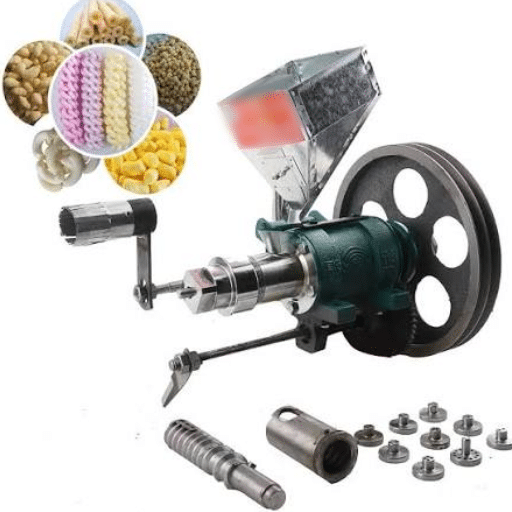
In directly expanded snacks, the dough puffs the instant it leaves the die. Rapid pressure drop turns moisture to steam, which expands the starch into a light, crispy structure. Corn puffs and cheese puffs are the classic examples.
This route is fast and economical. You extrude, cut, season, and package with minimal drying. The trade-off is that the product shape is locked to the die, so recipe and die changes drive variety rather than a downstream forming step.
Daniel, a snack brand owner in Nairobi, learned this the hard way in 2024. He bought a secondhand extruder to make corn puffs but didn’t match his die set to the recipe. The result was uneven expansion, and his first production run wasted four hours of raw material. Once he switched to a line with interchangeable dies, he cut changeover time and doubled his SKUs in six months.
Indirectly Expanded (Pellet) Snacks
Indirectly expanded snacks use a two-step process. First, the extruder forms dense, shelf-stable pellets. Later, those pellets are expanded by frying, baking, or hot-air puffing. This is how 2D and 3D snacks, Kurkure-style products, and many tortilla-style chips are made.
The benefit is control. Because expansion happens later, you can produce pellets in bulk, store them, and expand them close to market. That flexibility suits manufacturers who serve multiple regions or want to delay flavoring.
For snack producers, Shandong Loyal builds both routes. Our corn puff snack production line handles direct expansion, while our 2D/3D snack pellet machinery and fried snack production line cover the pellet and frying side. A Kurkure production line brings the two together for that specific snack format.
Explore our snack extrusion systems to see which route fits your product.
Breakfast Cereal Applications
Breakfast cereal was one of the first large-scale food extrusion applications, and it remains a steady one. Extrusion replaced slower traditional flaking and toasting steps with a continuous, high-throughput process.
The extruded breakfast cereal process typically works in one of three ways:
- Flaked cereals are extruded as pellets, then flaked, toasted, and coated.
- Puffed cereals are extruded at higher temperature so the dough expands directly at the die.
- Shredded cereals use a specialized die and cutting arrangement to create their distinctive strands.
What makes extrusion attractive here is control over texture and density. A manufacturer can dial in everything from a light puffed rice to a dense, crunchy granola cluster on the same platform. Extrusion also enables nutrition reformulation, since dry ingredients like protein, fiber, and micronutrients can be added to the dough before cooking.
This is where a key industry trend shows up. Conventional extruded cereals often rely on refined grains, which are high in rapidly digestible carbohydrates but low in fiber and protein. Adding soy protein or other legume flours to the extrusion mix is now a common way to produce a more balanced product without a separate blending step.
Pasta and Noodle Applications

Pasta is the food extrusion application most people don’t think of, because it uses cold extrusion instead of the hot cooking process used for snacks and cereals.
In cold or low-moisture extrusion, the dough is formed at low temperature and pressure, so the starch doesn’t gelatinize during extrusion. The pasta is then dried slowly to lock in its structure and shelf life. That’s what distinguishes a pasta extruder from a snack extruder, even though both push dough through a die.
Cold extrusion gives pasta its firm, dense texture and its ability to hold shape during boiling. It also allows for a huge range of shapes through interchangeable dies, from spaghetti and macaroni to spirals and shells. For high-volume producers, a dedicated pasta production line combines mixing, extrusion, cutting, and drying into one continuous flow.
A producer in Bucharest once assumed any extruder could handle his macaroni recipe. He ran the dough through a hot snack extruder and watched it puff into something closer to a crunchy stick than pasta. The mistake was temperature, not ingredients. Cold extrusion is what preserves the al dente bite consumers expect.
Plant-Based Protein and Meat Analog Applications
The fastest-growing food extrusion application is plant-based protein. Extrusion is the primary way to turn vegetable protein into something with meat-like texture, and it does so through two distinct methods.
Textured Vegetable Protein (TVP)
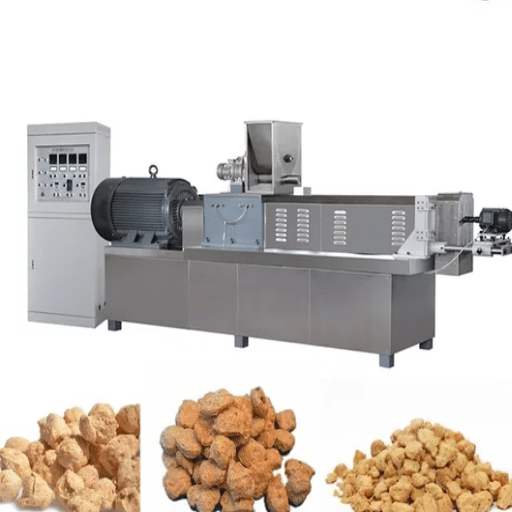
TVP is produced through low-moisture extrusion. Defatted soy flour or protein concentrate is cooked, texturized, and dried into spongy chunks or mince. The result is a shelf-stable product that rehydrates in minutes and absorbs flavor well. TVP has been used for decades as a meat extender in burgers, sausages, and stews.
High-Moisture Meat Analogs
High-moisture extrusion takes texturization further. Here the dough runs at 40 to 80 percent moisture and passes through a long cooling die. The cooling step aligns the protein into a fibrous, layered structure that mimics whole-muscle meat, such as chicken breast or pulled pork. This is the technology behind most premium plant-based meat products.
Extrusion also earns its keep nutritionally. The process can eliminate anti-nutritional factors like tannins and phytic acid by 50 to 70 percent, which improves protein digestibility. When the R&D team at a Lagos health food startup tried to make a chicken alternative, they struggled until they understood the cooling die. Adding that single component transformed a crumbly paste into a shreddable, fibrous product in one afternoon.
For health food brands, our protein bar production line applies the same extrusion principles to a different format, letting you combine protein, oats, and binders into a consistent bar.
Pet Food, Aquafeed, and Other Applications
Beyond human food, extrusion is the workhorse of pet food. Around 95 percent of dry pet diets are extruded, because the process cooks starches for digestibility and shapes kibble in one pass. The same technology produces aquafeed pellets, with screw configuration and density adjusted for floating versus sinking feed.
Extrusion also handles a long tail of smaller applications. Confectionery extrusion forms licorice, gum, and filled candies. Bread crumb lines use extrusion and drying to create uniform crumbs. Instant rice and fortified porridges rely on extrusion for quick rehydration. Even biodegradable packaging can be produced by extruding biopolymers.
This breadth is the reason extrusion is described as a flexible, energy-efficient technology. It’s also why our snack food machinery and bread crumbs production line share a common engineering backbone, even though the end products couldn’t be more different.
How to Choose an Extruder for Your Product

The right extruder depends on three things: the product you want to make, the moisture level it needs, and your production scale. Choosing wrong is expensive, so start with the product, not the machine.
| Application | Product examples | Typical extruder |
|---|---|---|
| Puffed snacks | Corn puffs, cheese puffs | Hot, single- or twin-screw |
| Pellet snacks | 2D/3D pellets, Kurkure | Hot extrusion, then frying |
| Breakfast cereal | Flakes, puffs, shreds | Hot, twin-screw (high control) |
| Pasta | Macaroni, spaghetti | Cold, low-moisture |
| Plant-based protein | TVP, meat analogs | Twin-screw, cooling die |
| Pet food | Kibble, aquafeed | Twin-screw, high meat inclusion |
Match the Machine to the Product
Start by identifying the moisture and temperature window your product requires. Snacks and cereals need hot extrusion for expansion. Pasta needs cold extrusion to stay firm. Plant-based meat needs a twin-screw extruder with a cooling die to build fibrous texture. Once you know the window, the machine options narrow quickly.
Single-Screw vs. Twin-Screw at a Glance
Single-screw extruders are simpler and less expensive. They work well for straightforward puffed snacks and pellets. Twin-screw extruders cost more but offer better mixing, more consistent shear, and the ability to handle high-fat or high-protein recipes. For plant-based protein and modern pet food, twin-screw is the standard.
A full comparison is beyond this guide, but the short version is this: if you need control and flexibility, go twin-screw. If you need volume on a single simple product, single-screw may be enough.
Turnkey Extrusion Lines from Shandong Loyal Industrial
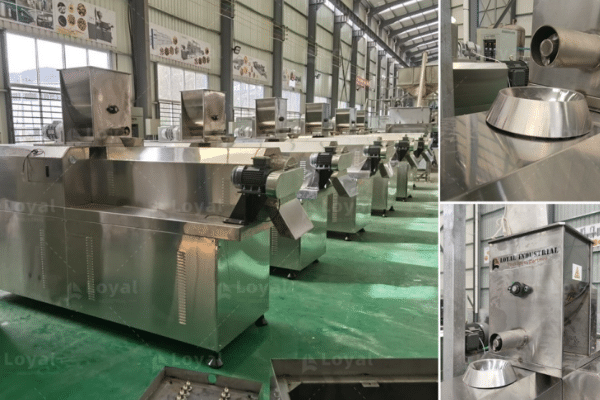
Most manufacturers don’t buy an extruder in isolation. They buy a complete line, from mixing and feeding through extrusion, drying, and packaging. That’s what we build at Shandong Loyal Industrial. With over 10 years of experience, CE-certified equipment, and clients in more than 50 countries, we design custom extrusion systems around your specific product.
Ready to test the difference? Request a custom quote and get a line designed for your product.
Conclusion
Food extrusion applications span snacks, breakfast cereals, pasta, plant-based protein, pet food, and far more. One core process, run at different temperatures and moisture levels, produces everything from a crisp corn puff to a shreddable chicken alternative.
The key is matching the process to the product. Hot extrusion creates puffed snacks and cereals. Cold extrusion shapes firm pasta. High-moisture twin-screw extrusion builds fibrous meat analogs. And because the technology is so flexible, one well-chosen line can often serve several products.
If you’re planning a new product or upgrading an existing line, start with the product, then choose the extruder type. Shandong Loyal Industrial helps food manufacturers turn a product idea into a complete, CE-certified turnkey production line.