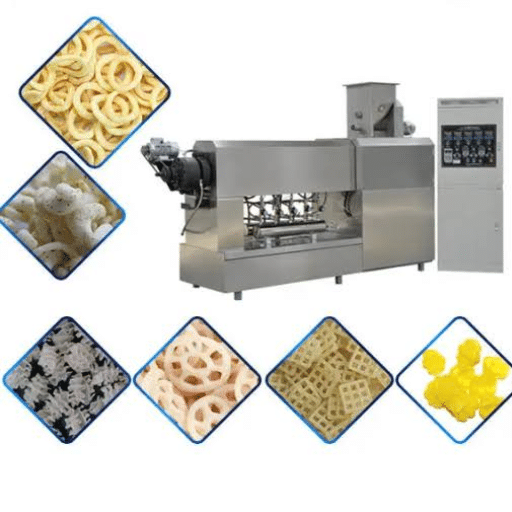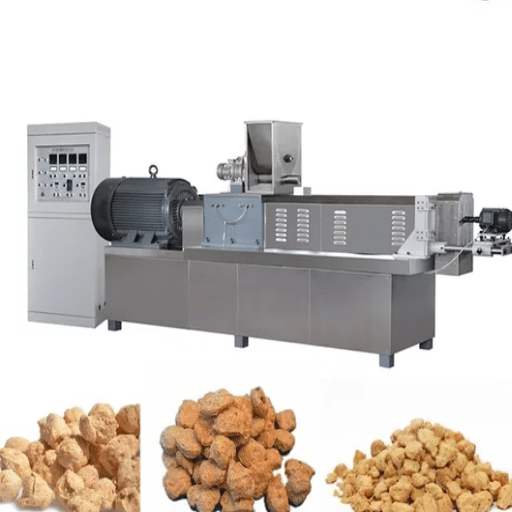
A food extruder machine typically costs 1,500to1,500to55,000 for a single-screw unit and 5,000to5,000to200,000 or more for a twin-screw extruder, while a complete snack or cereal production line runs 19,000to19,000to90,000 and a high-capacity automated line starts around $150,000. The spread is wide for a reason, and most of what moves the price has nothing to do with the machine’s shell.
Last year, a snack startup founder in Lagos sent us the same question three different suppliers answered three different ways. One quoted 680for”anextruder.”Anotherquoted680for“anextruder.”Anotherquoted42,000 for “a line.” Neither mentioned capacity, materials, delivery terms, or what happens after the invoice is paid. By the time he understood the gap, he had already nearly wired money to the wrong vendor.
You’re probably in the same position: budget in hand, quotes that don’t match, and no clear way to compare them. This guide gives you the real price bands, the seven factors that move them, the hidden costs most suppliers skip, and a checklist to compare quotes apples-to-apples.
Key Takeaways
- A food extruder machine price ranges from 1,500forasmallsingle−screwextruderto1,500forasmallsingle−screwextruderto300,000+ for a high-capacity automated line, the number is meaningless without capacity and scope.
- Seven factors drive the price: screw type, capacity, line completeness, automation, materials, certification, and origin.
- Chinese extruders cost roughly 1/3 to 1/2 of European machines for the same capacity, CE certification is the trust anchor that closes that gap.
- Hidden costs add 25% to 100%+ to the sticker price: import duty (10–25%), FX swings (10–30%), installation and training (25–40%), and spare parts (5–10% per year).
- Total cost of ownership beats purchase price: a quality twin-screw machine’s lower running costs can offset its higher upfront cost within a few years.
How Much Does a Food Extruder Machine Cost?

The honest, direct answer: a food extruder machine costs between 1,500and1,500and300,000, depending on what you’re actually buying. A bare single-screw extruder for simple corn puffs sits at the bottom. A fully automated turnkey production line with PLC control, food-grade stainless construction, and integrated packaging sits at the top.
Here’s the mistake most buyers make. They compare a 680″extruder”fromonelistingagainsta680″extruder“fromonelistingagainsta42,000 “line” from another and think one supplier is gouging them. They’re not comparing the same thing. The first is a small machine. The second is a complete system that mixes, cooks, extrudes, shapes, dries, and packages. Understanding that difference is the entire point of this guide.
Explore our food production lines to see what a complete turnkey system actually includes.
Food Extruder Machine Price by Type and Capacity
Price follows capacity and scope. Here are the real bands we see across the market, each tied to the output it buys.
| Tier | Extruder or Line | Typical Capacity | Indicative Price (USD) |
|---|---|---|---|
| Entry / lab | Small single-screw extruder (corn puff, soybean) | 30–100 kg/h | 1,500–1,500–8,500 |
| Standalone | Mid single-screw or small twin-screw extruder | 100–300 kg/h | 6,000–6,000–30,000 |
| Twin-screw | Co-rotating twin-screw extruder (texture control) | 100–1,500 kg/h | 30,000–30,000–200,000+ |
| Complete line | Turnkey snack or cereal line (mix, extrude, dry/fry, season, pack) | 100–300 kg/h | 19,000–19,000–90,000 |
| High-capacity | Fully automated industrial line | 500+ kg/h | 150,000–150,000–300,000+ |
Global averages put this in perspective. The average price for twin-screw food extrusion equipment in 2024 was about $236,000 per unit, with capacity from 100 kg/h to over 2,000 kg/h, according to market research. Used European lines, meanwhile, sell for 40–60% of new prices on marketplaces like Machinio.
A few things to notice. First, twin-screw extruders cost roughly 1.5 to 2.5 times a single-screw of the same output (Baker Perkins) because they give you far more control over texture, moisture, and ingredient flexibility. That trade-off is a decision on its own, and we’ll break it down in our single screw vs twin screw extruder guide.
Second, a complete line is not a bigger extruder; it’s the extruder plus the mixer, dryer or fryer, seasoning drum, and packaging equipment that turn raw flour into a finished, bagged product. That’s why the price jumps from the standalone tier to the complete-line tier even at similar capacity.
Third, these are indicative ranges, not firm quotes. A real quote depends on your product, your target output, and the seven factors below.
7 Factors That Determine Food Extruder Machine Price
Ask any honest manufacturer “how much is a food extruder?” and they’ll answer with a question: “What are you making, and how much of it?” Here are the seven variables behind that question.
1. Extruder type (single vs twin screw). A single-screw extruder is simpler and cheaper. A twin-screw extruder is more expensive but handles higher moisture, finer flours, higher protein, and co-extruded or filled products. The machine type alone can move the price by 2x or more.
2. Capacity and motor power. Output is measured in kilograms per hour (kg/h), and the motor is measured in kilowatts (kW). A 50 kg/h machine and a 500 kg/h machine aren’t the same product. Capacity is the single largest price lever.
3. Line completeness. A bare extruder is one machine. A turnkey line is a dozen: mixer, feeder, preconditioner, extruder, cutter, dryer or fryer, seasoning, and packaging. Scope, not size, is why “extruder” and “line” quotes differ so wildly.
4. Automation level. Manual controls cost less. PLC and HMI touchscreen control, servo motors, and variable-frequency drives (VFDs) cost more but cut labor, reduce scrap, and make the line repeatable. Automation is where modern lines earn back their premium.
5. Materials. Food-contact parts should be food-grade 304 or 316L stainless steel, and the screw and barrel should use wear-resistant, nitrided steel (like 38CrMoAl) to survive abrasive recipes. Cheap machines cut corners here, and you’ll pay for it in premature wear and contamination risk. See our food grade machinery materials guide for specifics.
6. Certification. CE certification (and FDA where required) adds cost but proves the machine meets safety and hygiene standards. It’s also what makes a machine legally importable into many markets, see our CE marking for food machinery guide.
7. Origin. Chinese extruders are typically one-third to one-half the price of equivalent European or Turkish machines. More on that below, because it’s the question every buyer eventually asks.
Why Chinese Food Extruder Prices Are Lower (and How to Buy Safely)

For the same capacity and spec, a Chinese food extruder machine price is often 50–67% lower than a European equivalent. That gap comes from lower labor costs, mature supply chains, and vertical integration, not from some mysterious shortcut. Chinese manufacturers produce the majority of food machinery imported into many markets, according to IndexBox, so the machines are proven at scale.
The concern buyers raise isn’t the price. It’s the trust. And the honest answer is that the gap is real but manageable, if you verify three things:
- Certification is genuine, not a sticker. Demand CE (and FDA, if applicable) documentation and confirm it applies to the exact machine, not just the company.
- Materials are specified. Ask for 304/316L stainless on food-contact surfaces and nitrided, wear-resistant screws. A vague answer is a red flag.
- Support survives the handover. Ask about installation, training, spare parts, and response time, not just the invoice. This is where cheap machines often hide their real cost.
Buying from China is a process with its own rules on delivery, inspection, and shipping terms. Our import machinery from China guide walks through it step by step.
Hidden Costs: The True Price of a Food Extruder
The sticker price is the beginning, not the end. Here’s where budgets quietly blow past their number.
- Import duty and customs clearance: typically 10–25% of landed cost, depending on your market and HS code.
- Foreign exchange volatility: if you pay in USD and your currency moves, the price can shift 10–30% between quote and delivery.
- Power, installation, and training: 25–40% of the equipment cost for a full line, especially if the site needs electrical upgrades or backup power.
- Spare parts: extrusion screws and dies wear and must be replaced, budget roughly 5–10% of equipment value per year for a line running continuously.
- Energy: the extruder is typically the single largest power load in the plant. This is a permanent, recurring cost most buyers never put in their spreadsheet.
- Shipping and delivery terms: FOB, CIF, and DDP move who pays for freight, insurance, and risk. Get this wrong and your “cheap” machine arrives with a surprise. Our FOB vs CIF vs DDP guide explains the difference.
Consider a buyer who locked in a 25,000linebutforgottheextras.Dutyadded25,000linebutforgottheextras.Dutyadded5,000. A currency dip added 3,000.Installation,electricalwork,andtrainingaddedanother3,000.Installation,electricalwork,andtrainingaddedanother8,000. His “twenty-five-thousand-dollar line” landed at $41,000 before it produced a single bag of product. None of it was a scam. All of it was predictable, if he had known to ask.
Total Cost of Ownership: Why the Cheapest Extruder Rarely Wins
Purchase price is one number. Total cost of ownership (TCO) is the number that matters: purchase price plus energy, screw wear, spare parts, downtime, and support, spread across the machine’s 5-to-10-year life.
Here’s how it plays out. A cheap single-screw machine saves you $15,000 upfront. But it wears its screw faster on abrasive recipes, runs hotter and less efficiently, and stalls when you try to run a new product. A quality twin-screw machine costs more today but gives you lower running costs, longer screw life, and the flexibility to launch premium or co-extruded products that a single-screw simply cannot make.
The lesson isn’t “always buy the expensive one.” It’s “budget the whole decade, not the down payment.” For simple, fixed, low-volume corn puffs, a single-screw is often the smarter economic call. For anything with higher protein, finer flours, or product variety, twin-screw wins on the lifetime numbers. The full trade-off is in our single screw vs twin screw extruder comparison.
Ready to see what your product actually needs? Tell us what you’re making and your target capacity, and we’ll specify the right machine, no guesswork.
How to Compare Food Extruder Quotes (Vendor Checklist)

When you have three quotes in front of you, compare them against this list. If a supplier can’t answer a line, treat it as a gap.
- Capacity and motor power stated in kg/h and kW, not “large” or “standard.”
- What is included: extruder only, or the full line (mixer, dryer, seasoning, packaging)?
- Material grade: 304/316L stainless on food-contact surfaces, nitrided wear-resistant screws.
- Certification: CE (and FDA) documentation for the exact machine.
- Delivery terms: FOB, CIF, or DDP, and who owns the risk in transit.
- Lead time: when does it actually ship, and when does it arrive?
- Warranty and spare parts: coverage period, parts availability, and typical lead time on a replacement screw.
- After-sales support: installation, training, and remote or on-site response.
- References: real customers running the same product you want to make.
A vendor who’s vague on several of these isn’t saving you money. They’re deferring the cost to you, after the invoice.
Frequently Asked Questions
How much does a food extruder machine cost?
A food extruder machine costs 1,500to1,500to55,000 for a single-screw unit and 5,000to5,000to200,000+ for a twin-screw, while a complete snack or cereal line runs 19,000to19,000to90,000 and a high-capacity automated line 150,000to150,000to300,000+.
What is the cheapest food extruder machine?
Small single-screw extruders for simple corn puffs or soybean products start around 1,500to1,500to8,500. They’re adequate for basic, low-volume direct-expanded snacks but limited on moisture range, ingredient flexibility, and product variety.
How much does a twin-screw extruder cost?
A twin-screw extruder typically costs 30,000to30,000to200,000 or more, roughly 1.5 to 2.5 times a single-screw of the same output, because it handles higher moisture, finer flours, higher protein, and co-extruded or filled products.
How much does a complete snack production line cost?
A turnkey snack line, mixing, extrusion, drying or frying, seasoning, and packaging, typically runs 19,000to19,000to90,000 at 100–300 kg/h, and 150,000to150,000to300,000+ for high-capacity automated versions.
Why are Chinese food extruders cheaper?
Chinese food extruders are typically 50–67% cheaper than European or Turkish machines for the same capacity, due to lower labor costs, mature supply chains, and vertical integration. The price gap is real, but verify CE certification, material grade, and after-sales support before buying.
What affects food extruder machine price?
Seven factors: extruder type (single vs twin screw), capacity and motor power, line completeness, automation level, materials, certification, and country of origin.
How do I get an accurate food extruder quote?
Give the supplier your product, target output in kg/h, desired automation level, and delivery market. A reliable manufacturer will quote a scoped, itemized price rather than a single number.
Build a Line That Costs What It Should
The food extruder machine price question doesn’t have one answer, because it’s really two questions: what are you making, and how much of it? Once you know those, the price becomes a range you can plan for, machine type, capacity, scope, automation, materials, certification, and origin.
Budget the whole decade, not the invoice. Hidden costs like duty, freight, installation, and spare parts will outrun the sticker price if you ignore them. And when you compare quotes, compare them against the same nine-point checklist, or you’re comparing guesses.
With over 10 years of extrusion expertise and CE-certified machines in more than 50 countries, we help snack and cereal manufacturers size the right line the first time, at a transparent, itemized price with no hidden costs.
Tell us your product and target capacity, and we’ll send a transparent, itemized quote for a CE-certified turnkey line. Get a quote today →