
Producing hardcake biscuits has been changed forever by state-of-the-art machinery, offering manufacturers levels of productivity, quality and versatility that were beyond imagining previously. This is regardless of whether the reader is in the food manufacturing industry or simply curiously interested in how his or her favorite biscuits come to be. Understanding the far-reaching innovations of the field is a must. This article explores the newest advancements and technologies in the hardcake biscuit production lines that are changing the way biscuits are made. Here you will find out how innovation has improved hardcake biscuit production—from extra-accurate baking to improved workflow.
Understanding Hard Biscuit Production
What are Hard Biscuits?
Hard biscuits are a type of baked products characterized by their low moisture content, crisp texture, and extended shelf life. They are typically made using simple ingredients such as flour, sugar, fat, and water along with little to no leavening agents. Such a composition ensures that, upon baking, the hard biscuits remain tight and crisp, being acceptable to an individual buyer or even for long-term storage.
These biscuits are appreciated for being versatile in use since they can be eaten as a snack, used as the main item for a meal, or as a foundation for other culinary creations. The “crisp” texture is fortuitously conceived because of a balance between crisp-soft baking and drying, keeping the biscuit largely intact while moisture is taken away. The right balance of sweetness and crunch makes hard biscuits attractive to a widely dispersed diversity of customers by culture, age, and background.
Symbolically speaking, biscuit production is a means by which food production can be relatively generative and cost-effective. Spurred by the intensity of industrial machinery and precise techniques, industries produce large quantities while maintaining consistency in form, taste, and structure. These features extend their availability and popularity worldwide, making them a dominant force in the global snack bar scenario.
💡 Key Insight
Hard biscuits combine simplicity with longevity—their low moisture content and crisp texture make them ideal for both immediate consumption and long-term storage, while their versatility allows them to serve multiple culinary purposes across diverse cultural contexts.
Importance of Hard Biscuit Production Line
The hard biscuit production line is of utmost significance in fulfilling the high demand for these favorite snacks in large amounts. Its agility ensures mass hard biscuit production in a quick and efficient manner without sacrificing quality. Furthermore, such scalability enables manufacturers to meet worldwide markets so that consumer preferences can be satisfied without variations in texture, taste, or appearance.
Modern production lines save money by automating and optimizing production processes. By cutting manual input to the bare minimum and increasing output, manufacturers are able to market hard biscuit products at competitive prices and make them available to a larger spectrum of consumers. Meanwhile, the employment of sophisticated machinery ensures accuracy in baking and packing, thus enhancing product quality and reducing material wastage.
A dependable assembly line inspires creativity in the field of snacks. Manufacturers are free to experiment with recipes, flavors, and ingredient combinations to meet ever-changing customer tastes. This gives brands a chance to thrive in the competitive marketplace, and it continues to solidify hard biscuits as a mainstay worldwide.
Comparison with Soft Biscuits
Hard cookies are made with dough of moderate moisture and formed by rotary cutting. In contrast, soft cookies are made with dough of high sugar content and baked by rotary molding.
Key Components of a Hard Biscuit Production Line
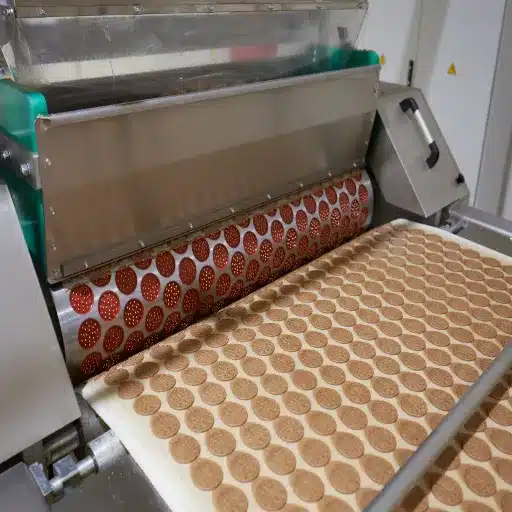
Essential Equipment for Biscuit Production
A rigid biscuit production line is made effective because of several key units requisite for efficient, consistent, and high-quality operation. Here are the various components and their performances:
1. Dough Mixer
For biscuit production, the dough mixer is the most fundamental piece of equipment. It aids in effectively mixing all the ingredients, which include flour, sugar, and fats. Modern models come equipped with automated controls, thus ensuring proper dough textures.
2. Rotary Molding or Cutting Machine
Depending on the planned size and design of the biscuits, this equipment shapes the biscuits into uniform sizing. Rotary molding is preferred for embossed biscuits, while cutting machines are used to give simple shapes and clean edges.
3. Oven Systems
Controlled baking is made possible with specialized types of ovens—tunnel or rotary rack ovens—which ensure uniform baking with even temperature zones and crisp texture. Tunnel ovens are highly pertinent for massive scale production.
4. Cooling Conveyor
Post baking, the cooling of the biscuit needs to be done in stages to keep them from crumbling and to maintain their structural integrity. Conveyor systems with proper air-flow control are used for cooling after baking and before packaging.
5. Packaging Machines
Automatic packaging machines are useful for efficiently packing biscuits while securing their freshness and quality. There are various techniques to pack them like flow wrappers, tray sealers, and multi-packs. Market capability must be considered for all options.
Each of these components contributes substantially to the process of biscuit production, and with the development of technology, continues to improve efficiency. Present-day production lines are increasingly connected through systems like IoT, with sensors and real-time monitoring contributing to precision in operations by reducing loss. Through implementing high-quality equipment with state-of-the-art technology, manufacturers can retain their competitive advantage in the growing snack industry.
Features of Automatic Hard Biscuit Machines
Hard cookie machines run effortlessly for accurate results and achieve high output scales. They have advanced lamination and dough preparation systems, providing an even finish within and across all batches. Equipped with a wealth of automated cutting and molding tools, these automatic hard biscuit machines produce various shapes and patterns that meet actual market demand, as different food industries favor unique shapes and designs.
✨ Advanced Features
- 🔹 High-speed baking oven configuration with precise temperature controls
- 🔹 IoT technology compatibility for real-time tracking and data collection
- 🔹 Built-in cooling and stacking systems for improved efficiency
- 🔹 Flexibility for small or large scale production requirements
To further ensure consistency, most machines now come with high-speed baking oven configurations featuring precise temperature controls for better consistency. The increasing number of these models are compatible with IoT technology for real-time tracking and data collection, allowing manufacturers to employ further efficiencies and diminish waste. Also, certain advanced models have built-in cooling and stacking systems to facilitate the packing operation and improve production speed.
Automatic hard biscuit machines provide great flexibility combined with a high user interface and facility for customization. Investing in these machines can provide productivity gains, labor reductions, and sustain a competitive advantage in the industry.
Role of Dough Preparation in Production
The dough preparation process carries significant weight in deciding the consistency and texture of the final biscuit product. A well-prepared dough ensures uniformity in each batch, lessens waste, and heightens the procedural efficiency of biscuit production. The breakdown of major factors and steps involved in dough preparation is discussed herewith:
1
Ingredient Measure and Mixing
Accurate measurement of ingredients—flour, water, sugar, and fats—is a prerequisite for the anticipated dough consistency. Precise mixing helps to blend all components uniformly and determines biscuit texture and flavor.
2
Temperature Control
Dough temperature controls humidity input and ingredient activation. Proper temperature management achieves viability and consistency in dough development without concerns of over-fermentation.
3
Kneading
The kneading process and time affect how gluten develops in the dough, influencing elasticity and structure. Proper kneading results in dough that’s strong enough to be shaped and cut.
4
Resting Period
Resting the dough after kneading allows it to relax and soften its gluten structure. This is an important step in achieving the desired texture and preventing cracks during shaping or baking.
5
Water Control
The amount of water in the dough matters significantly in maintaining uniformity in texture and consistency. Excess moisture makes dough sticky; insufficient moisture makes it crumbly and dry.
Each of these stages holds significance in the entire production process, ensuring that the final product meets superior standards and customer satisfaction.
The Production Process of Hard Biscuits
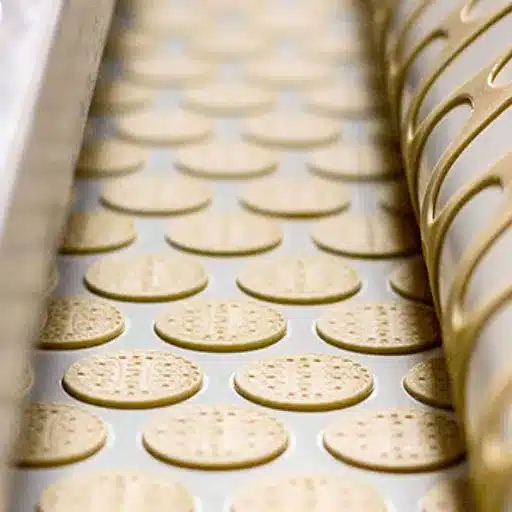
Step-by-Step Process in Hard Biscuit Production
Step 1
Mixing and Dough Preparation
Hard biscuit production begins with specific mixing of ingredients such as flour, water, fats, sugars, and other enhancing ingredients, providing for the best selection and configuration of dough. This stage is crucial, ensuring that the right consistency and texture are obtained. Modern automated mixing machines ensure precision and uniformity, greatly promoting efficiency in the process.
Step 2
Sheet Formation
When the dough is ready, a sheeting machine presses it into flat, uniform layers. Especially crucial at this point is maintaining thickness to a certain limit as the finished product’s hardness and structure depend on it. Advanced roller systems allow for the production of uniform biscuit thicknesses across large amounts.
Step 3
Cutting and Shaping
The flattened dough is passed through cutting machines for designing and forming various shapes to meet product requirements. Special molds are used to ensure that each product has consistent size, weight, and shape so that the product looks more enticing and fits well in packaging.
Step 4
Baking
The dough products are transferred into an oven to be baked at controlled high temperatures. Temperature zones are precisely managed so that biscuits are cooked evenly and consistently. This guarantees that the biscuits are crunchy in nature and golden in color.
Step 5
Cooling
Freshly baked biscuits are left to cool at room temperature or with the help of a cooling conveyor system. During the cooling process, the purpose is to set the right moisture content to avoid them going limp or becoming brittle.
Step 6
Packaging
The biscuits are fed automatically into machines capable of packaging them by wrapping them for keeping the desired freshness on the shelf and preventing destruction due to humidity or contamination. High-speed packaging lines are designed to reduce waste and maintain hygiene.
Manufactured goods are effectively scrutinized by specialized teams at various stages, ensuring they comply with consumer expectations and current industry regulations. In meeting relevant quality standards, significant new technologies, including inline sensors and the integration of quality assessment systems, have been instrumental.
Baking Techniques for Hard Dough Biscuits
Hard dough biscuits require specific techniques that need to be carefully combined with precise pacing—this is the recipe ensuring their signature texture and flavor. The dough is prepared with low fat and sugar content to achieve sturdy hardness and extended shelf life. The dough is then mixed at suitable speeds and for suitable periods to avoid excessive gluten development and consequently, textural errors.
When the dough is prepared, it can be sheeted and laminated multiple times to achieve an even thickness for better biscuit quality. Special rotary or reciprocating cutters are used to ensure cutting is even in size and shape, which moreover minimizes dough wastage.
🔥 Critical Baking Parameters
It is in the baking process where we achieve the proper cookie characteristics. The oven must be divided into several zones with independently adjustable temperatures. The zones closest to the dough entry are not overly hot, whereas the heat is applied gradually for baking the structure and uniformity of the biscuit. Biscuits are baked to a required moisture content of approximately 4% to ensure a shelf life of at least 5 months.
Following the baking, the biscuits are left to cool rapidly in ambient air or in a forced air system to ensure their structure is set. Temperature control and moisture conditions are achieved through the precise regulation of sensors and real-time monitoring, which makes it easier to maintain uniformity across batches. The continued development and introduction of concepts to the world of biscuit-making has seen giant leaps for manufacturers in the improvement of biscuit manufacturing while keeping up with the quality and integrity of the hard dough biscuit system.
Cooling and Packaging Procedures
The cooling process is crucial to ensure that hard-baked cookies keep their form and texture before going into the packaging phase. After the cookies are baked, they are channeled into slow-cooling conveyor belts to regulate the temperature. Controlled cooling prevents any possible cracking or warping of cookies by decreasing the intensity of thermal shock. Modern cooling technology offers modular cooling systems to expel heat evenly, thereby increasing the efficiency of the entire assembly line system. They are flexible enough to manage variations in production capacities and are adjusted to specific product requirements, making it a viable solution for manufacturers across the board.
After cooling, the cookies pass through high-speed camera and sensor inspection systems. As the machines check for discrepancies in broken edges and baking consistency, manufacturers can maintain stringent product quality standards. Machine-packed and sealed for longer-lasting freshness and shelf life, the cookies are packaged using automatic packing equipment. Implementation of eco-friendly materials like recyclable films and biodegradable boxes are increasingly being adopted amid a growing industry effort to protect the planet.
🤖 Modern Packaging Innovations
- ✓ Robot-based and intelligent sorting mechanisms for increased efficiency
- ✓ State-of-the-art algorithms ensuring proper safeguarding during handling
- ✓ Advanced laser printing for batch numbers and expiry dates
- ✓ Eco-friendly materials meeting sustainability standards
The whole packaging process features robotic arms governed by state-of-the-art algorithms to ensure proper safeguarding of the biscuit during handling. Besides, the advanced packaging machinery employs lasers for the printing of batch numbers and dates of expiry, ensuring compliance with regulations. Precision machines are being blended with eco-friendly materials to meet the expectations for both quality and sustainability. In this manner, technology works on the commitment of the food industry in offering quality-based premium products while observing environmental and quality standards.
Innovations and Trends in Biscuit Production
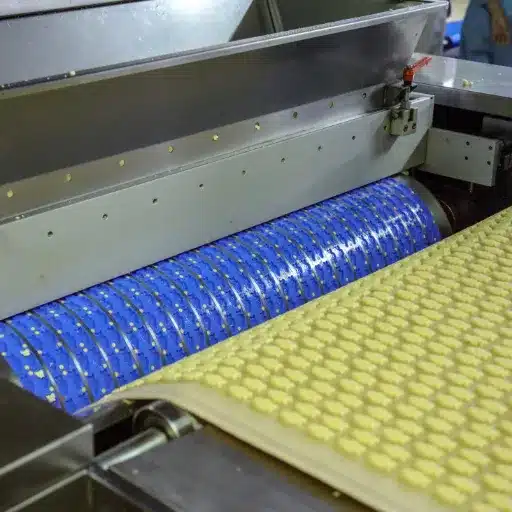
Advancements in Industrial Biscuit Production Equipment
Biscuit manufacturing equipment of today has undergone an intense transformation, thanks to which manufacturers can optimize efficiency and accuracy and meet increasingly exacting market expectations. One significant change involves automatic AI- and ML-powered systems that can provide real-time monitoring of production lines to ensure consistent quality and thereby minimize wastage. For example, vision systems empowered by AI can pinpoint any imperfections in biscuits and readjust operations at a fast pace to maintain uniformity.
🔬 AI & Machine Learning
Real-time monitoring systems ensure consistent quality and minimize wastage. Vision systems detect imperfections and readjust operations instantly to maintain uniformity.
⚡ Energy-Efficient Ovens
Advanced heat recovery systems utilize less energy while maintaining precise baking conditions, reducing operational costs significantly.
🔧 Modular Design
Easy-to-modify equipment specifications allow manufacturers to adapt flexible and scalable production lines for various production needs.
🧼 Hygienic Design
Enhanced equipment design eases cleaning and sanitization processes while ensuring consistency with global food safety norms.
Another great advantage is the development of energy-saving ovens with high standards of heat recovery, whereby less energy is utilized while making sure precise baking conditions persist. Of rising interest are the design specifications where machines feature modular design—the very thing manufacturers need for flexible and scalable production lines for various levels of production needs and kinds of items.
An additional aspect of the equipment includes renewed hygienic design, intended to ease cleaning and sanitization processes, all the while carefully ensuring consistency with global norms of food safety. Intelligent packaging systems currently being integrated in production lines may go further by contributing to more streamlined and efficient sealing of products and lead to needed maintenance enhancements.
By adapting to these altered conditions, businesses producing biscuits can enhance productivity, as well as contribute meaningfully toward creating products with desired and consistent quality that adhere to consumer needs and regulations.
Automation in Hard Biscuit Manufacturing
Through automation and the use of modern technology, there has been a clear transformation in the hard biscuit-making industry in the last decade. This transformation brings about a more streamlined, more efficient, and consistent approach to biscuit-making. Various machines and robots have been installed for controlling this process, and every step of hard biscuit-making from dough preparation to baking to packing relies heavily on them. Advanced mixers and laminators are very instrumental in achieving exact consistency of dough, while automated sheeting lines ensure an even layer, quite important for making hard biscuits. Intelligent ovens have control systems to achieve temperature and moisture profiles tailor-made for perfect baking of biscuits, with even texture and flavor throughout. These technologies cut down human errors, increase efficiency, eliminate wastage of ingredients, and stem from an excellent understanding of exact recipes.
IoT
Data-Driven Solutions
One vital aspect of automation technology in hard biscuit manufacturing is the integration of data-driven solutions. Through sensors and the Internet of Things (IoT), manufacturers monitor and analyze the performance in real-time. This helps to identify potential problems before they reach a harmful stage. Predictive maintenance keeps machine downtime to a minimum such that operators are alerted about any machine needing servicing before a breakdown occurs. Besides, automated quality control systems such as vision-based inspection ensure that all biscuits meet pre-defined size, shape, and surface texture standards before they are presented to consumers.
Automation in manufacturing has also been geared towards tackling environmental issues. Modern-day systems are designed to improve energy efficiency, optimize water use, and reduce carbon footprint. For example, heat-recovery systems in baking ovens reuse waste heat, thus lowering energy consumption by a significant margin. Further, automation minimizes raw materials’ consumption by ensuring that there is no overproduction or errors. Given that sustainable practices have become central both in consumers’ minds and legal compliance frameworks, these innovative automation advancements ensure that manufacturers are operating within environmentally friendly standards while at the same time being competitive in the market. This endeavor to be green and strong in the future for hard biscuit manufacturing is not only the hallmark for automation pushing productivity but also shaping an environmentally responsible future.
Challenges in Hard Biscuit Production
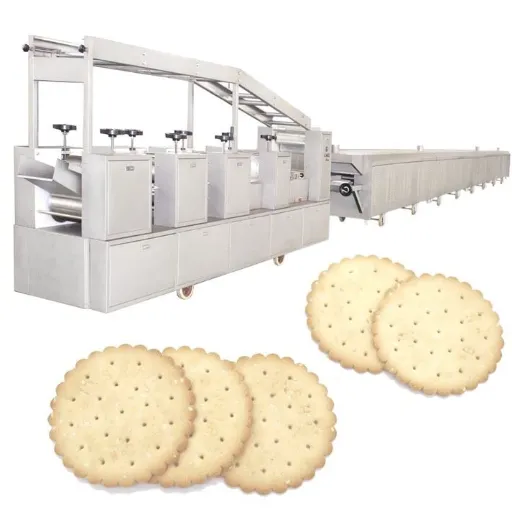
Practical Solutions for Production Challenges
Addressing the hardships encountered in hard biscuit production requires multifaceted solutions in technological advancements, process changes, and resource management. One of the most frequently seen problems is maintaining good, rigid dough consistency which ensures the development of proper texture and form for the biscuit. This may have emanated from raw material qualities, processing conditions, or environmental factors such as temperature and humidity. To ensure consistency, producers may implement modern dough monitoring systems and automatically controlled mixers equipped with sensors for coordinated quality from batch to batch. Such technologies maintain good quality and also reduce vast wastages resulting from product mistakes.
Challenge 1: Dough Consistency
Solution: Implement modern dough monitoring systems and automated mixers equipped with sensors to ensure coordinated quality from batch to batch.
Challenge 2: Energy Consumption
Solution: Switch to energy-efficient tunnel ovens or zoned heating systems. Invest in predictive maintenance tools and AI-powered energy management solutions.
Challenge 3: Storage & Packaging
Solution: Utilize water vapor barrier materials, modified atmosphere packaging (MAP), and eco-friendly biodegradable or recyclable packaging options.
Reducing energy use in baking equipment is another consideration. Producing large numbers of biscuits means using ovens that generate substantial power consumption and operational expenses. Switching to energy-efficient tunnel ovens or zoned heating systems could dramatically reduce energy usage. Moreover, investments in predictive maintenance tools could identify issues and control them before they result in downtime, thereby ensuring smooth operation. With energy management solutions powered by AI and IoT, manufacturers can monitor resource usage, cut costs, and work toward sustainability.
Storage and packaging also contribute to challenges, particularly when it comes to extending the shelf life of the biscuit while trying to maintain product appearance. Innovations in this area—for example, water vapor barrier materials, modified atmosphere packaging (MAP)—are raising prospects in the struggle against crushing biscuits. The trend in eco-friendly packaging is clear and surging upward. More and more producers have begun choosing biodegradable or recyclable packaging. This packaging has kept pace with consumer demands for sustainable methods of functioning. The adoption of innovative packaging can assist biscuit manufacturers to transcend these manufacturing hurdles to meet market expectations and the call for compliance with environmental regulation.
Future Trends and Market Insights
The biscuit sector is experiencing dynamic transition in line with shifting consumer food preferences, technological advancements, and global sustainability movements. One of the most significant consumer trends relevant in the industry is the shift toward healthier snack food options. These days, consumers demand wholegrain-fortified biscuits and biscuits with high protein content. Health-focused consumers tend to choose functional foods, as indicated by the consumption of high-protein and gluten-free products.
🌟 Emerging Market Trends
Health-Conscious Products
Wholegrain-fortified, high-protein, gluten-free, and vitamin-enriched biscuits reflecting the wellness-based consumer focus.
Plant-Based Ingredients
Organic principles and plant-derived ingredients are increasingly present, emphasizing progressive vegan and vegetarian approaches.
E-Commerce Growth
Direct-to-consumer models, social media marketing, personalized marketing, subscriptions, and rapid delivery alternatives.
Sustainability Focus
Renewable energy sources, sustainable agricultural supply chains, and waste management strategies toward zero-carbon status.
Moreover, according to organic principles, plant-derived ingredients have more presence in biscuits, emphasizing a progressive vegan and vegetarian approach. The multiplicity of fortified products—from vitamin-bearing lines to calcium-added goods—genuinely echoes the wellness-based consumer concern that revolves around nutritional value and the connection between nutrition and indulgence.
Technological upgrades will make the integration of artificial intelligence and automation more efficient, bringing yet another phase of optimization along with reduced wastage and enhanced quality control. Real-time monitoring programs help managers in companies to reach solutions where product integrity is not affected and efficiency is never compromised.
The marketing scenarios are changing with the rise of e-commerce and direct-to-consumer models worldwide. Companies now engage in developing platforms for social media marketing, personalized marketing, subscriptions, and more rapid delivery alternatives. This coexists with global logistics infrastructure to make products accessible to a growing buyer population.
The role each company plays in the industry to improve sustainability is significant. Manufacturers have started looking beyond packaging solutions to renewable energy sources, sustainable agricultural supply chains, and waste management strategies on the road to zero-carbon status and environmental responsibility.
Blending both enthusiasm and excitement to the traditional biscuit industry, its transformation and constant change are presenting a magnitude of innovation opportunities to encounter the expanding demand for lifestyles with greater convenience and sustainability trends.
References
- Kennesaw State University – Process Improvement in Biscuit Production: Process Improvement of Honeysuckle Biscuits and Bakery
Discusses production flow optimization and equipment expansion in biscuit manufacturing. - Rochester Institute of Technology – Moisture Gain in Biscuits: Moisture Gain of Biscuits in Hermetically-Sealed Packages
Explores the differences between hard and soft dough biscuits and the economic feasibility of production lines. - University of Southern California – Food Processing Methods: FOOD PROCESSING – USC Center for Effective Organizations
Covers modern continuous-flow production methods in cookie and biscuit manufacturing. - Click here to read more.
Frequently Asked Questions (FAQ)
Q
What is a hard biscuit production line, and for what biscuit variety can this line be used?
A: A hard biscuit production line consists of equipment intended for producing hard biscuits of different types, including plain, filled confectionery, and sandwich biscuits. The hard biscuit line can produce biscuits of different shapes by changing molds, forming machines, and production parameters. This enables food companies to offer different styles of hard biscuits to meet market demands.
Q
What components constitute a hard dough biscuit production line?
A: A typical hard dough biscuit production line consists of a dough formulation and dosing section, sheeting section, forming machine, conveyor and belt oven for baking, while a cooling conveyor and other packaging equipment are essential for cooling and packing the biscuits. Many lines are made of stainless steel for meeting hygiene and durability standards. A well-designed conveyor belt system ensures that the dough passes smoothly at each stage.
Q
How customizable is a hard biscuit production line for different types of biscuits?
A: The production line is highly customizable. Manufacturers can swap different mold sizes to get the desired result in biscuit types. Besides this, specifications can be adjusted including width (in mm), changing the forming machine, or changing the baking parameters, all depending on the biscuit type. This flexibility, coupled with optional modules, makes the hard biscuit line viable for small setups to cater for new product lines.
Q
From what materials do they make the machines, and why?
A: Most hard biscuit production lines are thus built of stainless steel for reasons concerning hygiene and long term faithful operation. The frames are made of steel supplying stainless steel mating surfaces, which make the machine automatically food-safe, anti-corrosive, and East-clean characteristics are essential for food product line activities.
Q
What considerable effects do the conveyor belts and belt widths have on the production capacity?
A: Аs for the overall parameters, belt and belt conveyer width feeds into productivity; wider belts (mm) with a firmly landing conveyor system carry larger dough sheets and equal a larger number of cookies for every cycle, hence bigger productions. Ministraition of steady belt runs and correct use of speed enable the conveyor to produce equal quality as well as constant baking processes.
Q
Can the production line be modernized for exceeding hygiene standards or product variety?
A: Yes — most of the time, the hard biscuit production lines are modular and could be upgraded. The factories may fit stainless steel walls, more cleaning access, more recent conveyor belts or new forming machines each with many molds in order to produce a variety of hard biscuit products. These improvements can make the compliance terms for tightest standards of hygiene and help the business to expand by meeting the current demand.


