A soft biscuit production line is a mixing, forming, baking and cooling line built for high-fat, high-sugar dough that is deliberately under-mixed. It forms with a rotary moulder, wire-cutter or depositor instead of a laminator, because short dough cannot be sheeted into a stable band.
Most buyers learn that after the line arrives. The catalogue says “soft biscuit,” the buyer pictures a soft bite, and the specification meeting never covers the difference.
Here’s the distinction that matters. “Soft” describes the dough, not the biscuit. A digestive, a shortbread and a butter cookie all come off a soft line, and all three are crisp when they cool.
Imagine a specification meeting we’ll call Daniel’s. Daniel runs a bakery in the Middle East and wants to add a Marie-style biscuit. He asks three suppliers for a soft biscuit production line. Two quote rotary moulders. The third asks what he is making, hears “Marie,” and quotes a sheeting line instead. Marie is a hard-dough, semi-sweet biscuit. The first two quotes would have produced the wrong product for years.
This guide covers what a soft biscuit production line is, what soft dough changes, and how to specify one without overbuying.
Key Takeaways
- “Soft” describes the dough, not the finished biscuit. Digestives and shortbread are soft-dough products that bake crisp.
- A soft line has no laminator. The forming choice is rotary moulder, wire-cutter or depositor.
- Dough temperature and mixing time drive spread and shape more than oven settings do.
- A 10 to 30 minute die change is not a soft-to-hard line conversion.
- Cool below about 35°C before sealed packing, or biscuits crack in the pack days later.
What Is a Soft Biscuit Production Line?

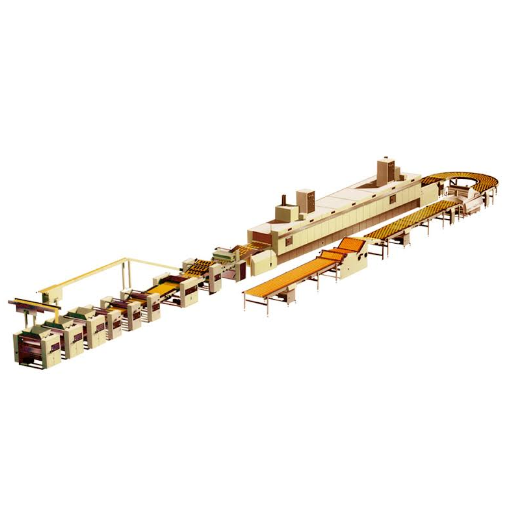
A soft biscuit production line, also called a soft dough biscuit production line, is an industrial line that mixes short dough, forms it by rotary moulding, wire-cutting or depositing, bakes it in a tunnel oven, then cools and packs it. It skips lamination because short dough has too little gluten development to form a stable sheet.
The line runs in eight stations:
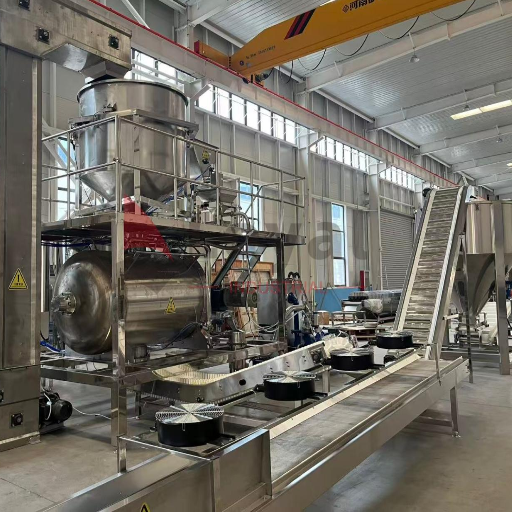
- Mixing. Fat and sugar are creamed first, then flour and minor ingredients are folded in.
- Dough feed. A kibbler or feed rolls move stiff dough to the moulder without warming it.
- Forming. A rotary moulder, wire-cutter or depositor shapes the pieces.
- Baking. A multi-zone tunnel oven sets structure, removes moisture and develops colour.
- Oil spraying. An optional station adds surface oil or flavour.
- Cooling. A cooling conveyor brings the biscuit below packing temperature.
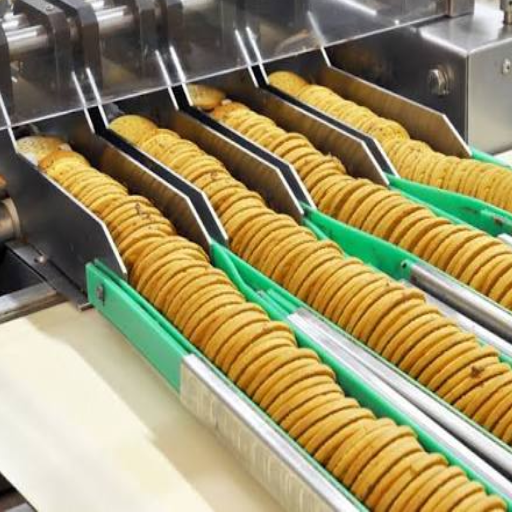
- Stacking. Star wheels or penny stackers arrange biscuits for packing.
- Packaging. Flow-wrap, pillow pack or slug pack, with metal detection and checkweighing.
The terminology trips up buyers because “soft dough,” “short dough” and “soft texture” get used as synonyms. They are not. Hard dough has developed gluten and is sheeted, laminated and cut: crackers, Marie, Rich Tea, Petit Beurre. Soft or short dough biscuit products have high fat and sugar, little water and weak gluten: glucose biscuits, digestives, shortbread, custard cream shells.
That difference decides the machine. A rotary moulder cannot make a laminated cracker. A sheeting line is an expensive way to make shortbread. If a supplier lists Marie under a rotary-moulding line, ask which dough they mean.
Specifying a line for a high-fat dough? See how a biscuit production line is configured before you compare quotations.
Soft vs Hard Biscuit Production Lines: What Actually Changes
The two lines share a mixer, an oven and a cooling conveyor. The differences sit in the dough, the former and the oven band.
| Element | Soft or short dough line | Hard dough line |
|---|---|---|
| Dough | High fat and sugar, low water, weak gluten | Lower fat and sugar, developed gluten |
| Mixing | Two-stage creaming, short mix | Longer mix to develop gluten |
| Forming | Rotary moulder, wire-cutter or depositor | Sheeter, gauging rolls, laminator, rotary cutter |
| Scrap | No cutting scrap | Trim scrap recovered and returned |
| Oven band | Solid steel band common | Wire mesh common |
| Heat control | Independent top and bottom zones | Zoned, often with more radiant heat |
| Typical products | Digestive, shortbread, glucose, butter cookie | Cracker, Marie, Rich Tea, Petit Beurre |
| Changeover | Die or die-roll swap | Forming train reconfiguration |
A hard line cuts shapes from a sheet and recovers the trim. A soft line forms dough inside engraved cavities, so there is no trim and no scrap system. The feed system gets simpler.
A rotary moulder presses dough into a die roll and lifts the pieces onto a web. The dough has to be firm, cool and crumbly. Warm dough sticks and leaves web-like strands. Dough temperature is a forming parameter, not a mixing preference.
High-fat, high-sugar pieces brown quickly on the base. A solid band with independent top and bottom heat protects the base. A wire mesh band and one heat profile produce dark bottoms and pale tops.
A soft-dough biscuit is not automatically a soft biscuit to eat. A digestive snaps. A shortbread crumbles. If you want a cake-like bite, you need a different formulation, a higher final moisture and a depositing process.
For the other side of this comparison, see hard sweet and cracker production lines.
Mixing and Dough Handling on a Soft Biscuit Production Line
The soft biscuit manufacturing process starts with dough that is deliberately under-developed. That sounds simple, and it is the step most rushed.
Two-stage mixing and weak gluten
Cream the fat and sugar first. Add flour and minor ingredients second, and mix only until the dough comes together. Use weak or low-protein flour, because strong flour fights the short texture you want.
Over-mixing produces a dough that stretches instead of snapping. It will stick to the moulder and spread further in the oven.
Temperature, moisture and fat
Aim for a dough temperature of 22-28°C. For short dough, hold it at or below about 25°C. Above that, fat softens, the dough turns sticky and the moulder stops releasing cleanly.
Dough moisture sits around 16-20%. Fat runs from about 18% to 45% of flour weight, and sugar from roughly 25 to 36 kg per 100 kg of flour. Those ranges move with the recipe, so confirm them against your own formulation.
Temperature control starts in the mixer. Warm fat or a long mix sends soft dough to the moulder. Chilled water and short mix cycles do more for shape consistency than oven adjustments.
Feeding the moulder
Move dough with a kibbler or feed rolls, and keep the hopper level steady. A deep hopper of warm dough builds heat and pressure, which shows up as weight variation and sticking.
With no scrap return, every piece of dough you mix has to become a product. Portion control and start-up waste become visible.
For the equipment side, see industrial dough mixing and handling.
Forming: Rotary Moulding, Wire-Cutting and Depositing

Forming is the decision that fixes your product range. Three methods cover most soft-dough products.
Rotary moulding
A forcing roll presses dough into the cavities of an engraved die roll. A scraper removes the excess, and an extraction web lifts the pieces onto the oven band.
Rotary moulding gives accurate weight, detailed surface patterns and no cutting scrap. It suits glucose biscuits, digestives, shortbread and custard cream shells.
Control the forcing-roll gap, die-roll speed, web tension and dough temperature. Get those wrong and you get sticking, weight drift or torn surfaces. Reading Bakery Systems publishes a description of the Thomas L. Green rotary moulder and its interchangeable die rolls.
Wire-cutting
An extruder pushes dough through a die, and a wire slices the rope. A wire-cut biscuit line handles inclusions such as chocolate chips, nuts and raisins, and gives the rough surface buyers associate with homemade cookies.
Servo-driven units can reach roughly 80 cuts per minute with weight accuracy around ±1 g. Those are vendor figures for high-end equipment, not an industry average.
Depositing
A depositor pushes the softest batters through nozzles. It makes 3D shapes, rings and twisted products that a moulder cannot. Depositing suits very soft dough that would collapse on a moulder.
| Method | Dough | Typical products | Shape flexibility | Changeover |
|---|---|---|---|---|
| Rotary moulding | Short, firm, low moisture | Digestive, shortbread, glucose, custard cream shell | High detail, fixed by die roll | Die-roll swap, about 10-30 minutes |
| Wire-cutting | Soft, sticky, with inclusions | Chocolate chip, oatmeal, chunk cookie | Simple shapes, no surface pattern | Die and wire change |
| Depositing | Very soft batter | Rings, twists, 3D shapes | High, set by nozzle | Nozzle change |
Defects here have clear causes. Sticking points to warm dough or a worn web. Weight variation points to an uneven hopper or a slipping feed. Shape loss points to soft dough or a fast die roll. Web-like strands point to excess dough and a mis-set scraper.
For a wider fault list, see diagnosing food equipment faults.
Baking, Cooling and Shelf Life
The oven gets blamed for problems that start at the mixer. It still has its own decisions to make.
The bake profile
There is no single set point for a soft biscuit. The profile falls from front to back. Early zones set structure and lift. Middle zones remove moisture. Final zones develop colour.
A working range for high-fat, high-sugar dough is roughly 200-260°C in the first zone, 180-220°C through the middle and 170-200°C at the end. Bake time runs about 5-12 minutes, depending on thickness, band speed and recipe.
The base browns first. Independent top and bottom heat, plus a solid band, lets you protect it. If the base is dark and the top is pale, the problem is heat balance, not bake time.
Coperion’s soft dough biscuit line uses the same zone logic at industrial scale. The profile still has to be set for your recipe.
Cooling and checking
Biscuits leave the oven near 100°C. They should be below about 35°C, or within 5°C of the packing room, before sealed packing.
Cooling time runs roughly 1.5 to 2.0 times the bake time. The first phase strips surface heat. The second lets moisture equalise from centre to surface. Skip it and the moisture gradient produces checking, the hairline cracks that appear days after packing. Iain Davidson’s Biscuit, Cookie and Cracker Production is the standard reference for the cooling curve.
Imagine a plant manager named Elena. Her line ran well for months, then cartons started arriving with broken biscuits. The oven was fine. The packing room was warm, and biscuits were wrapped at about 45°C. Steam condensed inside the film, the seals weakened, and the biscuits lost their snap.
Keep the packing room around 30-35% relative humidity. Biscuits are hygroscopic, and a humid room softens them before the wrapper is closed.
Packaging and shelf life
Flow-wrap, pillow pack and slug pack are the common formats for soft-dough biscuits. Nitrogen flushing helps where fat oxidation is a risk. Seal integrity and metal detection are control points, not optional extras.
Final moisture depends on the product. Crisp biscuits finish around 1.5-3%. Softer products run 3-5%. Water activity below about 0.75 keeps the product shelf-stable. Packaging barrier choice can matter more than a one-point moisture difference.
For the full stage-by-stage process, see the complete biscuit manufacturing process.
Configuring a Soft Biscuit Production Line

Soft biscuit lines run from about 100 kg/h to 2,000 kg/h. Working widths sit around 600-1,500 mm. Oven length, zone count and automation level move with those numbers.
Capacity figures disagree because they measure different things. Kilograms per hour, biscuits per minute and tonnes per shift are not interchangeable. Each assumes an uptime and a piece weight, so ask for both.
Imagine a plant manager named Marcus. He bought a line advertised with 15-minute changeovers. The die change was 15 minutes. Switching from short dough to a laminated cracker was not. That conversion needed sheeting, gauging and lamination, and it took two days of reconfiguration. Marcus had already promised his sales team both products in the first quarter.
Specify the product range you will actually run for five years, not the range the brochure lists. If the range includes hard dough, ask what the line-level conversion involves and how long it takes.
Settle four questions before the purchase order: which products and piece weights will you run in year one and year five, how often will you change products, will you add sandwiching or enrobing later, and what packaging speed do you need downstream?
If you’re comparing configurations, our guide to biscuit production line design covers the whole-line decisions.
Frequently Asked Questions
What is a soft biscuit production line?
A soft biscuit production line mixes high-fat, high-sugar short dough, forms it by rotary moulding, wire-cutting or depositing, bakes it in a tunnel oven, then cools and packs it. It has no laminator, because short dough cannot be sheeted into a stable band.
Does a soft biscuit line need a laminator?
No. A laminator develops layers in a sheeted dough, which is a hard-dough process. A soft line uses a rotary moulder, wire-cutter or depositor instead. If a supplier proposes a laminator for a short-dough product, ask which product they are designing for.
What is the difference between rotary moulding and wire-cutting?
Rotary moulding presses dough into engraved cavities and gives detailed shapes with no scrap. Wire-cutting extrudes dough and slices it with a wire, which suits inclusions and rough cookie surfaces. Rotary moulding fits firm short dough; wire-cutting fits softer cookie dough.
What capacity does a soft biscuit production line come in?
Most lines run from about 100 kg/h to 2,000 kg/h, with working widths around 600-1,500 mm. Capacity depends on band width, oven length and piece weight. Ask suppliers to state the uptime and piece weight behind any kg/h figure.
How long does it take to change products on a soft biscuit line?
A die-roll or die change takes about 10-30 minutes on a well-designed moulder. Changing from short dough to a hard dough product is a different job. It requires adding sheeting, gauging and lamination, and it can take hours or days.
Conclusion
A soft biscuit production line is built around one property: the dough is short. That single fact removes the laminator, changes the former, changes the oven band and changes how you cool and pack.
Three points are worth carrying into a quotation review. “Soft” describes the dough, not the bite. The forming method fixes your product range. A fast die change is not a line conversion.
If you’re specifying a soft biscuit production line, start with the product, not the brochure. Send your recipe, target piece weight, capacity and five-year product plan to our engineering team, and we’ll review the forming method and line configuration with you. You can also explore our turnkey food production lines to see how the stations fit together.