With its square profile and rich history, Tonnarelli is, undoubtedly, one of the key pastas of traditional Italian cuisine. This pasta is known for its ability to cling to thick sauces and flavorings, endearing itself to cooks and food lovers alike. So, off we go on a journey into the world of tonnarelli, wherein we will consider recipes with textural contrasts, the preparation methods that best highlight the excellent qualities, and pairings that will further amplify your dining experience. Whether you are an experienced chef or a novice with the kitchen arts, this guide will inspire you to bring out the best in tonnarelli pasta for your upcoming dinner. Now, let’s explore those intriguing tips, gadgets, and drool-worthy ideas that will put this Italian gem into an entirely different light.
What is Tonnarelli Pasta?
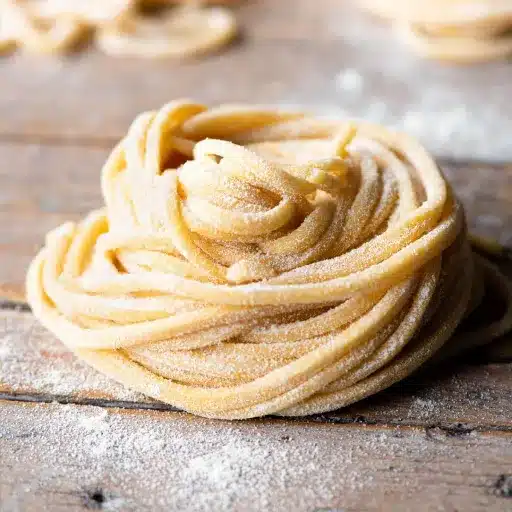
Tonnarelli pasta is a type of pasta characterized by thick, square-shaped strands with a rough texture. The dough consists basically of semolina flour and water, which is excellent for absorbing sauces and holding them. Coming from Lazio, it is often paired with traditional sauces like cacio e pepe or amatriciana and thus is famous in Italian foods. Thanks to its sturdy structure, this pasta is suited well for rich and delicious dishes that deliver the full argent gleam of the food.
History and Origins of Tonnarelli
Tonnarelli is an old traditional pasta dating back several centuries, to central Italy, especially Lazio. The square-shaped strands are, presumably, a legacy from ancient Roman cooking methods. The pasta was named after the Italian word “tonno” for its thick, squared profile. Traditionally, it was installed on a wooden frame strung with wires called a “chitarra,” which pressed the dough into the shapes that characterize the pasta today. Tonnarelli pasta still retains some of that rustic charm and pairs wonderfully with simple but punchy sauces that proclaim Italy’s rich culinary heritage.
Characteristics of Tonnarelli Pasta
Thicker Profile and Square-Shaped
Tonnarelli pasta has a distinctive, thick, and square profile, which sets it apart from other types of pasta.
Rough Texture
The rough texture of tonnarelli allows it to cling to sauces, ensuring that every bite is a burst of flavor.
Traditional Preparation
During traditional making, this type of pasta is worked on using a peculiar wooden implement called a “chitarra,” which cuts the dough into approximately 2mm-wide and square strands.
Versatile
Tonnarelli pasta pairs well with a wide range of sauces, especially those that are simple yet flavorful, such as cacio e pepe or amatriciana.
Rustic Appeal
The rustic quality of the pasta tells a story of the authentic, artisanal traditions that trace their lineage to Italy.
Comparison with Spaghetti alla Chitarra
Ingredients for Homemade Tonnarelli Pasta
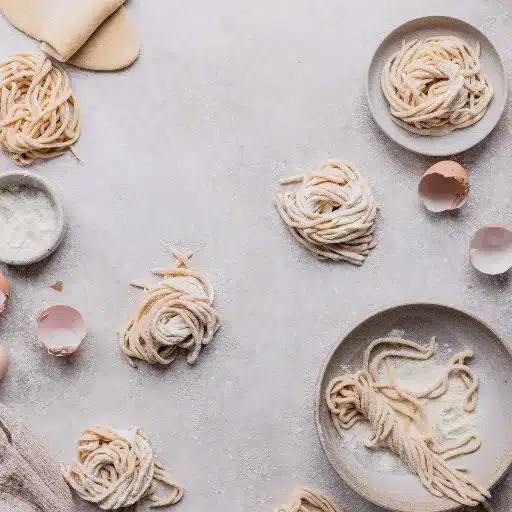
Ingredients Needed to Make Homemade Tonnarelli:
- 2 cups (250g) all-purpose flour or 00 flour
- 2 large eggs
- A pinch of salt
- Semolina flour for dusting
Simple ingredients make the dough perfect for making hand-cut Tonnarelli.
Types of Flour: Durum Wheat vs. Semolina Flour
Being derived from the same variety of hard wheat, durum wheat flour and semolina flour are two that differ in texture, processing, and use. Durum wheat flour is ground very finely, possessing a soft, powdery texture, and is used for making smooth doughs, which are perfect for pasta and bread. Semolina, on the contrary, is a little coarser and presents a sandy feel because this is how it is ground from the endosperm of the durum wheat grain. Its coarse grains make it very elastic and grippy, which is perfect for traditional Italian pasta, where it enhances the structure and helps the sauces cling better. Both are associated with Italian cooking; semolina particles are usually preferred when making fresh pasta such as Tonnarelli, while durum wheat flour yields a tender yet firm consistency in baked goods and noodles.
Choosing the Right Wheat for Tonnarelli
While making Tonnarelli, I prefer to use semolina. It is the coarse texture that ensures that the pasta is given the proper elasticity and an absolutely best surface for the sauces, making it an authentic and gratifying dish.
Essential Tools for Making Tonnarelli
Crafting Tonnarelli calls for the essential tools as follows:
Wooden Pasta Board
Provides the perfect surface for kneading and rolling.
Rolling Pin
Used to roll out the pasta dough evenly to the desired thickness.
Chitarra
A traditional form of pasta cutter: it consists of a wooden frame with tightly strung wires and is used to cut the dough into Tonnarelli strips.
Sharp Knife or Bench Scraper
It can be used to divide dough before rolling.
Mixing Bowl
Mix and knead the semolina and water until a smooth dough is formed.
These imperative but straightforward implements will guarantee that you obtain authentic results whenever making fresh Tonnarelli.
Step-by-Step Guide to Making Tonnarelli Pasta
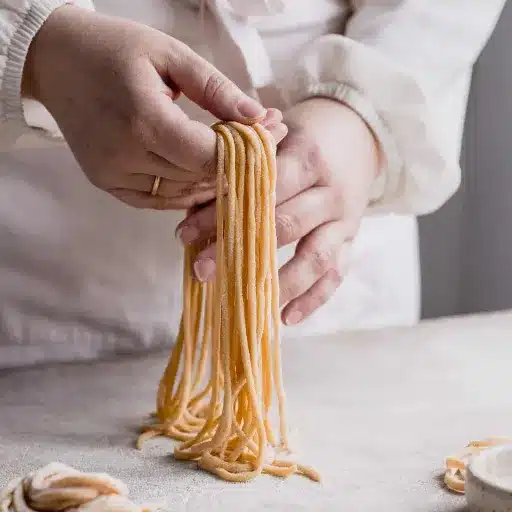
Complete Process Overview
Making and Preparing the Dough
Mix the semolina and water in a mixing bowl. When the dough starts to come together, work on a clean surface to knead thoroughly until it is smooth and elastic.
Let the Dough Rest
Wrap in cling wrap or cover it with a damp cloth, and let the kneaded dough rest for at least 30 minutes to relax the gluten.
Rolling the Dough
Flatten the dough a bit and roll it with a rolling pin or pasta roller to the desired thickness. Make sure this goes evenly onto the rolled dough.
Cutting the Pasta
Place a sheet of dough over the Chitarra and slowly roll a pin over it to press the dough through the wires and into uniform strips of Tonnarelli.
Dusting and Final Prep
Dust the cut Tonnarelli lightly with semolina flour to avoid their sticking to each other.
Cook and Serve
A pot of salted water is brought to boil. The Tonnarelli are dropped in and cooked for 2-3 minutes or until al dente. Drain and serve with your favorite sauce.
Detailed Preparation Steps
1. Combine the Ingredients
On a large, clean surface, build a mound of 2 cups of all-purpose flour or “00” flour. Use your fingers to create a well in the center and crack 3 large eggs into it.
2. Mixing and Kneading
Slowly draw the flour from the edges into the eggs with a fork or with one’s hands to produce a common mess of dough. Knead by hand for about 8-10 minutes, until the dough is smooth and elastic.
3. Rest the Dough
Wrap with cling film or place inside a container covered with a damp kitchen towel, and let it rest for a minimum of 30 minutes at room temperature. This allows the gluten to relax, which makes the dough grips much easier to roll and shape.
4. Cut for Use
After resting, cut the dough into small portions so that they will be easier to handle when rolling and cutting into strips of Tonnarelli.
Shaping Tonnarelli Pasta: Techniques and Tips
Step 1: Flour the Surface
To prevent the dough from sticking to the rolling surface, gently sprinkle flour on both the surface and the dough before you start rolling. Too much flour, however, is harder on the pasta, making it dry and brittle.
Step 2: Roll Out
Use a rolling pin to even out the dough to the desired thickness, typically around 2 or 3 millimeters for Tonnarelli, ensuring consistency throughout the sheet.
Step 3: Cut the Pasta
One would use a chitarra-type tool to cut the Tonnarelli into strips, ensuring they are all relatively even. If one does not have the luxury, then use the sharpest of knives or a clean pasta cutter.
Step 4: Final Touches
Aim for straight and evenly sized strips about 2 to 3 millimeters wide. Dust the strips with a bit of flour so that they do not stick together. Allow some handling time by gently separating the strands with fingers.
Cooking Tonnarelli Pasta to Perfection
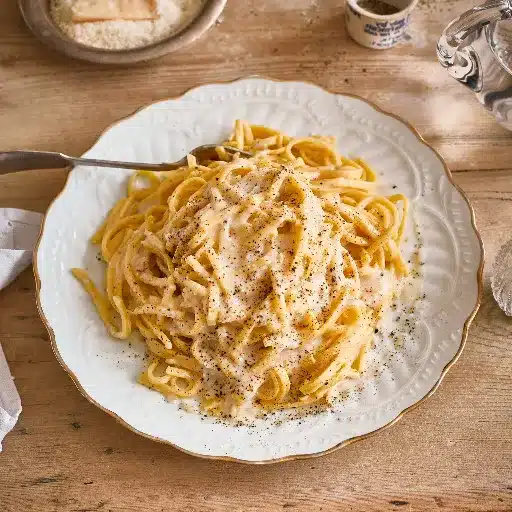
To cook Tonnarelli pasta perfectly, bring a large pot of water to a boil, ensuring the pasta will have enough room to move. Add a generous pinch of salt to the water—approximately one tablespoon per four quarts—for the purpose of seasoning the pasta. Once at a rolling boil, gently slide in the Tonnarelli and occasionally stir it around so that the strands do not stick to each other. Usually, fresh Tonnarelli cooks quickly, in about 2 to 4 minutes; hence, keep a close eye on it so it doesn’t overcook. The pasta should be cooked al dente, tender but still slightly firm when bitten.
💡 Pro Tip
Keep in mind that reserving a cup of starchy pasta water before draining the pasta is an excellent idea for the best results: you may use this water to loosen up your sauce and to help the sauce cling to the strands of Tonnarelli.
Classic Tonnarelli Pasta Recipes
Innovative Sauces for Tonnarelli Pasta
Lemon and Ricotta Sauce
For a fresh and light sauce, mix fresh ricotta with lemon zest, a drizzle of lemon juice, and a splash of olive oil. Add some freshly cracked black pepper and grated Parmesan to give it contrast.
Truffle Butter Sauce
Melt truffle butter in a pan, then toss the cooked tonnarelli for a rich and fragrant treatment. Finish with grated Pecorino for that extra depth.
Broccoli and Anchovy Sauce
Sauté garlic, anchovies, and steamed broccoli in olive oil, then blend into a smooth sauce. Toss with tonnarelli for a savory, nutrient-dense triumph.
Tomato and Burrata Sauce
Make a simple fresh tomato sauce and then top with creamy burrata right before serving. The interplay of textures elevates the dish to a new level.
Pistachio Pesto
Throw shelled pistachios into a blender with garlic, Parmesan, olive oil, and a handful of basil for an unusual twist on classic pesto. An ideal sauce for tonnarelli.
These sauces will refresh and provide creative pairings to underscore the flexibility of tonnarelli pasta.
Pairing Tonnarelli Pasta with Seasonal Ingredients
🌸 Spring
Fresh asparagus, peas, and a lemon cream sauce, with just enough weight to complement the rich, textural feel of the pasta.
☀️ Summer
Colourful choices: cherry tomatoes, zucchini, and basil, with a drizzle of extra-virgin olive oil for a sharp finish.
🍂 Autumn
Rich drops, like roasted butternut squash, sage, and brown butter, sit and emphasize the dense structure of the roast.
❄️ Winter
A blend of earthiness, truffle oil, and Parmesan, paired with tonnarelli, for a comforting embrace.
Seasonal ingredients turn tonnarelli pasta into a versatile centerpiece for all times of the year.
Tips for Cooking and Serving Tonnarelli
Cook in Well-Salted Water
Salt the pasta water generously. This ensures that tonnarelli will be seasoned by the time it comes out of the pot.
Fresh Ingredients
Marry the tonnarelli with fresh seasonal ingredients to impart maximum flavor and complement the texture of the pasta.
Keep Pasta Water
Before draining, save a cup or so of pasta water. This water allows you to thin the sauce out so it coats the tonnarelli like a dream.
Avoid Overcooking
The rule for tonnarelli is that it has to be al dente. Follow the instructions on the package perfectly and drain only after testing one strand for texture.
Serving
To enjoy tonnarelli at its best, serve it immediately after cooking and toss it with a sauce of your choice. This way it will remain hot, fresh, and flavorful.
Best Practices for Cooking Tonnarelli
Cooking tonnarelli to perfection definitely requires a fine eye for detail and a few expert tips which can take the dish a notch higher. Here are some more do’s and don’ts to get the very most flavor out of it:
Salt Water Well
The cooking water serves as the first seasoning for the pasta. Add so much salt that it almost tastes like a seawater solution.
Wide Pan for Tossing
Tossing the tonnarelli and sauce in a wide pan assures even coating of sauce and better integration of flavors.
Get Creative
Adapting fresh, seasonal ingredients with a sturdy texture of tonnarelli makes it a tasty one.
By following the above best practices you will be able to create restaurant-quality Tonnerilli that will satisfy the palate every time.
Serving Suggestions and Garnishes
Tonnarelli pasta, with its thick and sturdy strands, is suitable to hold just about any sauce or topping; thus, it is very adaptable to varying cooking styles. If following a more traditional Italian line of thought, try serving tonnarelli pasta with cacio e pepe, a creamy sauce made from Pecorino Romano cheese and generous amounts of cracked black pepper. Or lure it with the comforting traditional flavor of fresh basil-infused tomato sauce and Parmesan.
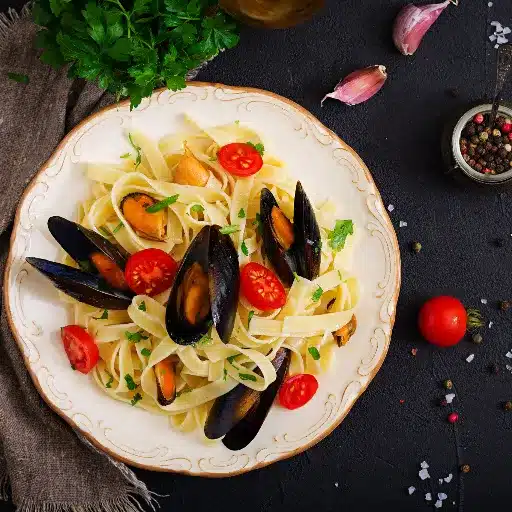
Tonnarelli pasta goes particularly well with decadence in the form of a mildly intoxicating truffle cream sauce or clam, mussel, and shrimp combinations. Garnish with fresh herbs to bring a hint of brightness and color to the plate. Drizzle in some good-quality olive oil or finish with a few dustings of lemon zest for clarity. Depending on the sauce, robust red or crisp white wines round out the whole experience.
Storing and Reheating Tonnarelli Pasta
Storage Guidelines
In the appropriate storing of tonnarelli pasta, it should be ensured that it is at room temperature before placing it in an airtight container. If the pasta is homemade, sprinkle it lightly with semolina flour to prevent sticking. Fresh tonnarelli can be stored in the refrigerator for up to 2-3 days. If you intend to preserve it longer, it should be frozen for approximately 2 months. When it comes to cooked pasta, however, it should be stored separately from sauces in an airtight container for a maximum of 3 to 4 days in the refrigerator.
Reheating Methods
Tonnarelli pasta should be reheated gently, as this way, its texture and flavor will be preserved. If refrigerated, let the pasta soak in boiling water for approximately 30 seconds to 1 minute, ensuring it is warmed through rather than overcooked. If the pasta is already coated in sauce, reheat it in a pan over low heat, adding water or broth to keep it moist. If the pasta was frozen, leave it in the refrigerator overnight to thaw, and then proceed with either of the above reheating methods.
Storage and reheating treatments contribute toward maintaining the delicious ambiance of tonnarelli pasta.
Reference Sources
-
Homemade Tonnarelli Pasta (Step by Step) – A detailed guide on making Tonnarelli pasta at home, even for beginners.
-
Tonnarelli Cacio e Pepe (with VIDEO) – A recipe for the classic Tonnarelli Cacio e Pepe, showcasing its creamy and peppery flavors.
-
What Type Of Pasta Is Tonnarelli And What Sauces Does It Pair Best With – Insights into the best sauces and dishes to pair with Tonnarelli pasta.
-
Tonnarelli (handmade pasta) with Mussels – A unique recipe combining Tonnarelli with mussels and pecorino cheese.
-
A Taste of Italy: Pasta Guide for Perfect Pairings – A guide to Italian pasta, including Tonnarelli, and its ideal pairings.