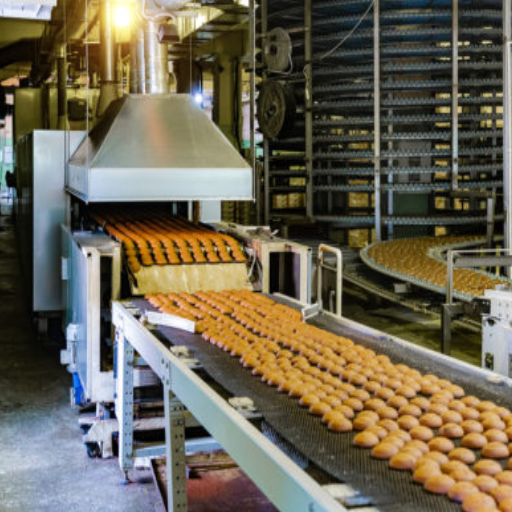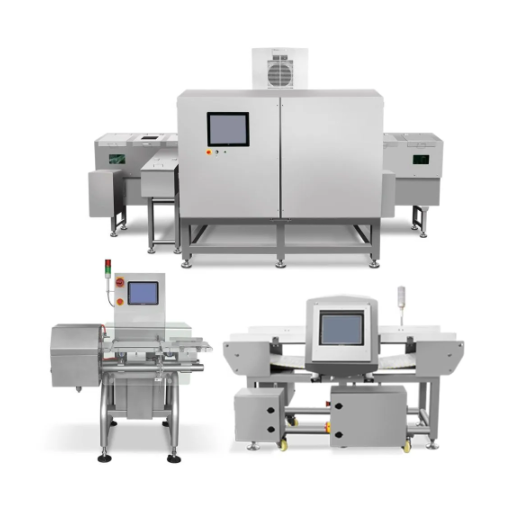
A pet food production line is an integrated set of machines that transforms raw ingredients into finished pet food through grinding, mixing, extrusion, drying, coating, cooling, and packaging. A complete line typically runs at capacities from 100 kg/h to 10,000+ kg/h and requires an equipment investment between 22,000and22,000and800,000, depending on automation, capacity, and certification.
You know the global pet food market crossed $134 billion in 2026 and grows at roughly 5 to 6 percent every year. You also know that owning the right production line is the difference between capturing that growth and watching competitors take it. The problem is, choosing equipment, designing the floor flow, and meeting export standards can feel overwhelming when every supplier insists their machine is the only right answer.
In this guide, we walk through how a modern pet food production line works, what equipment you actually need, the capacity tiers that match each business stage, and the real investment numbers behind the brochures. By the end, you will know exactly what to ask suppliers and how to plan a line that supports premium kibble, treats, and functional formats from day one.
Key Takeaways
- A complete pet food production line follows eight stages: receiving, grinding, mixing, pre-conditioning, extrusion, drying, coating, and cooling/packaging.
- Twin-screw extruders outperform single-screw machines for high-meat, premium, and functional pet food recipes.
- Compact turnkey lines start near 50,000,whilefullyautomatedindustriallinesexceed50,000,whilefullyautomatedindustriallinesexceed500,000.
- Pre-conditioning increases extruder throughput by 10 to 15 percent and is the single best efficiency upgrade.
- CE, ISO 22000, HACCP, and AAFCO compliance are non-negotiable for export-focused manufacturers.
What Is a Pet Food Production Line?
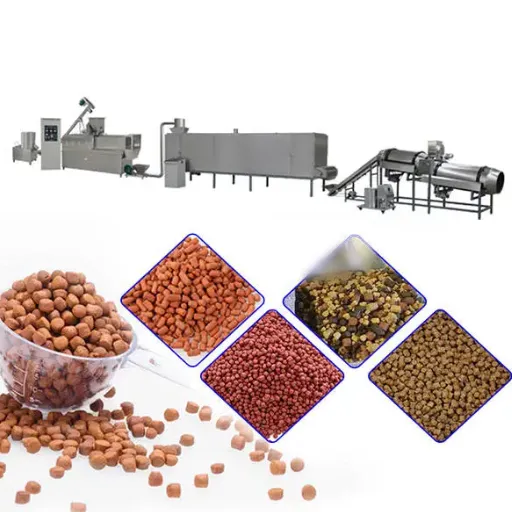
A pet food production line is a coordinated sequence of machines that converts raw materials such as meat meal, grains, fats, and vitamins into finished pet food products. The line handles every stage from ingredient intake to packaged kibble, treats, or chews. Most modern lines use extrusion as the core cooking step because it can sterilize ingredients, control texture, and deliver consistent shape at industrial speed.
Not all pet food lines look the same. The equipment configuration changes with the format you produce.
Common Pet Food Production Line Types
- Dry kibble lines: Account for 60 to 68 percent of global pet food volume.
- Wet and canned lines: Use cookers and retort sterilizers rather than extruders.
- Semi-moist treat lines: Blend extrusion with controlled moisture and humectants.
- Baked treat and biscuit lines: Use dough mixers, formers, and tunnel ovens.
- Freeze-dried and air-dried premium lines: Slow-drying systems that preserve raw nutrients.
Each format serves a different price point. A clear plan for which formats you want now, and which you might add in three years, is the single most useful decision you can make before you buy a single machine.
The 8-Step Pet Food Production Line Process Flow
Every dry pet food production line follows a similar sequence. Understanding each stage helps you spec equipment, estimate energy use, and design floor space.
Step 1: Raw Material Reception and Storage
Ingredients arrive in bulk bags, totes, or silos. Smart receiving zones separate animal proteins from grains and additives, which protects allergen-sensitive recipes. Tag every lot for traceability before it moves to grinding.
Step 2: Primary and Fine Grinding
A hammer mill performs primary grinding, then an ultra-fine grinder reduces particles to 60 to 100 mesh. Pet food recipes need a tighter grind than livestock feed because protein expansion depends on uniform particle size.
Step 3: Batching and Mixing
A ribbon mixer or twin-shaft paddle mixer blends the formula with a coefficient of variation below 5 percent. Vitamins and micro-ingredients are added at this stage so heat-stable components survive the extruder.
Step 4: Pre-Conditioning
Steam and water injection raise mash temperature to 60 to 80 degrees Celsius and lift moisture to 15 to 30 percent. Pre-conditioning is the highest-leverage upgrade in any pet food production line because it raises extruder throughput by 10 to 15 percent while improving starch gelatinization.
Step 5: Extrusion Cooking
The conditioned mash enters a single- or twin-screw extruder. Barrel pressure hits 3 to 15 MPa and temperature climbs to 110 to 180 degrees Celsius. Inside, starches gelatinize, proteins denature, and pathogens like Salmonella die off. The dough exits a die plate and a rotating knife cuts kibble into stars, bones, circles, or custom shapes.
Step 6: Drying
A multi-stage belt dryer at 80 to 130 degrees Celsius pulls moisture down to 8 to 12 percent. Multiple zones with independent temperature control prevent case hardening and protect color.
Step 7: Coating and Flavoring
A vacuum coater pushes liquid fats and palatants into the porous kibble for premium SKUs, while atmospheric sprayers handle standard recipes. Probiotics and heat-sensitive vitamins are layered on at this stage to avoid extrusion damage.
Step 8: Cooling, Sieving, and Packaging
A counter-flow cooler stabilizes the kibble, a vibratory sieve removes fines, and a multi-head weigher feeds a sealing line with optional nitrogen flush. Finished pallets move to a separate warehouse to maintain biosecurity.
Looking for a step-by-step layout that matches your capacity goals? Talk to our engineering team to receive a tailored process diagram and equipment proposal.
Core Equipment in a Pet Food Production Line
The eight process steps map to roughly ten machines. Knowing what each one does, and where suppliers cut corners, helps you avoid a line that bottlenecks the moment you scale.
Twin-Screw Extruder
The twin-screw extruder is the heart of any modern pet food production line. Two co-rotating screws give you finer control over shear, residence time, and moisture than a single-screw machine. Premium and high-meat recipes practically require twin-screw technology. Loyal’s twin-screw extruder, for example, handles meat meal, fish meal, bone powder, soya meal, and grain blends with a single platform and modular die changes.
Pre-Conditioner
A pre-conditioner sits directly above the extruder and prepares the mash with steam and water. Skip it, and your extruder will run 15 percent slower while consuming more motor power per kilo of finished product.
Multi-Stage Drying System
Belt dryers dominate pet food production because they handle large kibble at high throughput without crushing the product. Look for three or more independently controlled zones, air-recycling for energy efficiency, and stainless-steel construction throughout.
Coating System
Atmospheric sprayers work for budget kibble. For premium and functional products, a vacuum coater is the only choice because it pulls fat and palatants deep into the kibble matrix.
Packaging Line
Multi-head weighers, vertical form-fill-seal baggers, and case packers complete the line. Extended shelf life due to modified atmosphere packaging.
Control and Automation Layer
A modern line uses a PLC with HMI touchscreens, recipe storage, real-time temperature and moisture monitoring, and remote diagnostics. Energy use, downtime, and recipe changeover all live or die on the quality of the control system.
For a closer look at the extrusion technology behind Loyal’s pet food line, our snack food machinery and protein bar production line share the same twin-screw heritage and prove the platform across high-volume, high-protein applications.
Pet Food Production Line Capacity and Cost
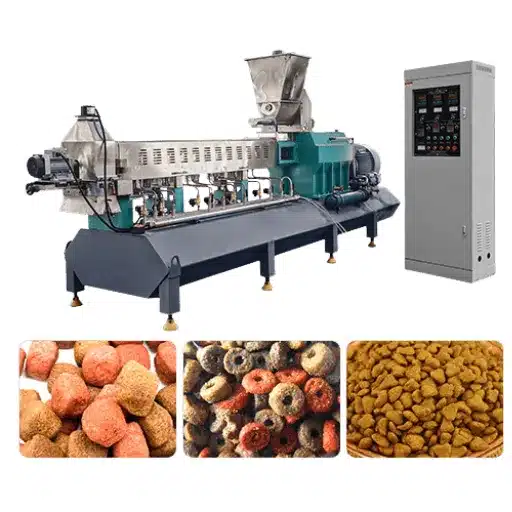
When Marcus founded an organic dog kibble brand in 2024, he assumed any 500 kg/h line would carry him for years. Six months after launch, his subscription base grew to 3,000 customers and his small extruder hit its ceiling. He spent the next eight months and roughly $90,000 retrofitting, which would have been zero if he had specified a modular line from the start. Capacity planning is not optional. It defines your cost ceiling and your scalability.
Capacity Tiers for a Pet Food Production Line
| Tier | Capacity (kg/h) | Typical Buyer | Floor Area |
|---|---|---|---|
| Pilot / Lab | 100 to 200 | R&D, startup | 200 to 300 m² |
| Small Commercial | 300 to 500 | Boutique brand | 400 to 600 m² |
| Medium | 500 to 1,200 | Regional brand | 800 to 1,200 m² |
| Large | 1,500 to 3,500 | National brand | 1,500 to 2,500 m² |
| Industrial | 4,000+ | Multinational | 3,000 m²+ |
Investment Ranges (Equipment Only, USD)
- Pilot turnkey: 22,000to22,000to50,000
- Small commercial: 60,000to60,000to120,000
- Medium turnkey: 120,000to120,000to300,000
- Large industrial: 300,000to300,000to800,000+
- Multi-line facility: 1Mto1Mto3M+
A 5,000 kg/h Argentinian pet food brand recently invested roughly 129,000inatwin−screwextruder,multi−stagedryer,andcoatingdrumfromaChinesemanufacturer.Thesameconfigurationfromatop−tierEuropeanbrandwouldhavepricedcloserto129,000inatwin−screwextruder,multi−stagedryer,andcoatingdrumfromaChinesemanufacturer.Thesameconfigurationfromatop−tierEuropeanbrandwouldhavepricedcloserto400,000, with similar throughput and comparable quality once CE certification is verified. According to industry pricing benchmarks reported by Pet Food Processing Magazine, the cost gap between Chinese and European twin-screw extruders ranges from 50 to 67 percent for equivalent capacity.
Operating Cost Drivers
Capital expense is only one part of the total cost of ownership. The bigger numbers show up monthly.
- Raw materials: 50 to 65 percent of total operating cost
- Energy: 15 to 25 percent, mostly from the extruder motor and dryer
- Labor: 10 to 20 percent, declining with automation
- Maintenance: 3 to 5 percent of capital cost per year
Run the math on energy before you sign. A pet food extruder that draws 110 kW costs roughly 10perhourtorun,orabout10perhourtorun,orabout48,000 per year on a two-shift schedule.
Plant Layout and Floor Planning
The right machines in the wrong layout still produces a slow, dirty plant. Good layout protects biosecurity, supports allergen control, and leaves room for the second extruder you will add in three years.
One-Way Flow from Raw to Finished
Raw materials enter on one side of the building. Finished pet food exits on the opposite side. People and forklifts move in the same one-way pattern. This eliminates cross-contamination between unprocessed meat meal and packaged kibble, which is the single biggest concern in any AAFCO or FEDIAF audit.
A 1,200 m² Layout Sketch
For a typical 800 kg/h medium-tier line:
- Receiving and silos (200 m²): ingredient intake and bulk storage.
- Grinding and batching (150 m²): hammer mill, fine grinder, mixer.
- Extrusion and drying (350 m²): pre-conditioner, twin-screw extruder, multi-stage dryer.
- Coating and cooling (150 m²): vacuum coater, counter-flow cooler.
- Packaging (200 m²): weighers, baggers, case packers.
- Finished goods warehouse (150 m²): palletized storage and dispatch.
Expansion Considerations
Stub out utilities for a second extruder line during the first build. Reserve floor space for a freeze-drying or treat module if your roadmap includes premium formats. A modular pet food production line will save you six figures the day you decide to scale.
International Standards and Certifications
A pet food production line that cannot meet export standards is a line that locks you out of the highest-margin markets. Standards are not bureaucracy. They are your passport into North America and Europe.
CE Marking for Pet Food Machinery
CE marking covers machinery safety, electromagnetic compatibility, and the EU Machinery Directive. EU and UK buyers require CE before they will sign a purchase order. Chinese manufacturers can certify equipment to CE standards, and Loyal’s pet food production line is built to CE-compliant specifications from the outset.
HACCP and ISO 22000
HACCP defines the critical control points in your process. In pet food, the extruder is the kill step. ISO 22000 wraps HACCP into a full food safety management system that buyers and retailers increasingly require.
AAFCO and FEDIAF
AAFCO sets the guaranteed analysis standards for the North American market. FEDIAF does the same job in Europe. Your equipment needs to support post-extrusion micro-ingredient addition so vitamins survive the heat.
Region-Specific Rules
China’s GB/T 13078 covers feed hygiene for the domestic market. The EU enforces Regulation (EC) No 767/2009 on the labeling and circulation of feed. According to the FEDIAF Code of Good Manufacturing Practice, every step from ingredient receipt to packaging must be documented and traceable. Building this into your line from day one is far cheaper than retrofitting later.
For a deeper look at how CE certification influences equipment design and export readiness, our team has documented best practices that cover both factory audits and shipping prep.
How to Buy a Pet Food Production Line
Sara runs procurement for a regional Vietnamese pet food brand. In 2025 she compared eight suppliers, signed with the cheapest, and lost four months when the equipment arrived without proper CE documentation. Her brand could not legally export to the EU until the supplier retrofitted the line, which cost an additional $42,000 in delays and travel. A clear evaluation framework would have saved her every dollar of that loss.
Pet Food Production Line Supplier Checklist
- Certifications: Demand the actual CE, ISO 9001, and ISO 22000 documents, not just claims.
- Reference installations: Ask for video walk-throughs of working lines at similar capacity.
- Engineering drawings: A serious supplier provides P&IDs and electrical schematics before quoting.
- Commissioning scope: Confirm whether installation, training, and trial production are included.
- Spare parts lead time: Single-source critical components like screws and dies need clear lead time commitments.
- Remote diagnostics: PLC-enabled remote support cuts downtime when your engineer is offline.
- Warranty terms: One year on parts is standard. Premium suppliers offer 18 to 24 months.
Red Flags to Walk Away From
- Vague pricing with no equipment list attached.
- No CE for any European buyer.
- No video of the actual machine running production.
- A single-screw extruder quoted for a high-meat or premium recipe.
- Refusal to provide reference contacts.
Ready to compare a Loyal pet food production line against your shortlist? Send your capacity targets and product mix to our engineering desk, and we will return a budget proposal, equipment list, and floor plan suggestion within five working days.
Pet Food Production Line Trends to Plan For
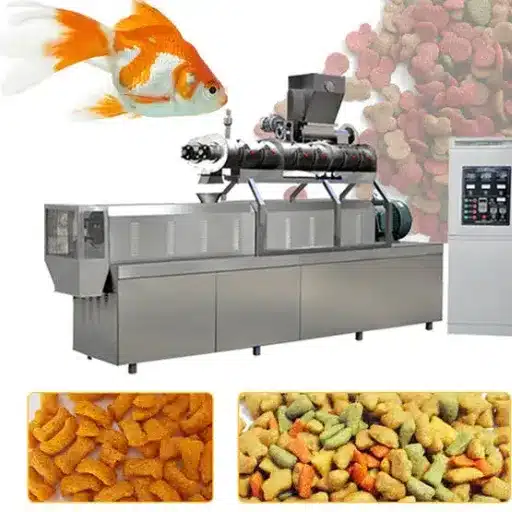
The industry is changing fast, and a line built for 2026 needs to plan for the next decade.
Premiumization
Freshpet and ZIWI prove that premium drying methods and high-meat recipes support price points three to five times higher than standard kibble. Lines that can run freeze-dried or air-dried formats alongside extruded kibble capture more of the premium segment without a second building.
Sustainability and Energy Efficiency
Energy reclamation systems on dryers, variable-frequency drives on extruder motors, and recyclable packaging design are now table stakes. According to Mordor Intelligence’s pet food market analysis, Asia-Pacific pet food production is growing at a 7.6 percent CAGR through 2031, with sustainability as a top buyer criterion in nearly every export market.
Recipe Flexibility
Modern brands launch four to six new SKUs every year. Quick-change dies, CIP systems for allergen control, and PLC-stored recipe programs let one line serve a diverse product portfolio without expensive downtime.
Conclusion
A well-designed pet food production line aligns your capacity, format, recipe flexibility, and certifications with the business you want to build five years from now. Choose a twin-screw extruder for premium and high-meat recipes. Specify a modular layout that can grow with your roadmap. Insist on CE, ISO 22000, and HACCP compliance from day one so global markets stay open to you.
The pet food market keeps expanding, and so does the technical bar for the equipment behind it. Working with an experienced manufacturer who has delivered turnkey extrusion lines across snack food, protein bars, pasta, and now pet food gives you a partner who has solved the same engineering challenges hundreds of times.
If you are planning a new factory, a capacity expansion, or a premium product launch, Loyal Industrial can design a CE-certified pet food production line tailored to your capacity, recipes, and budget. Request a customized proposal today and our engineering team will return a full equipment list, floor plan, and timeline so you can move from idea to first kibble with confidence.