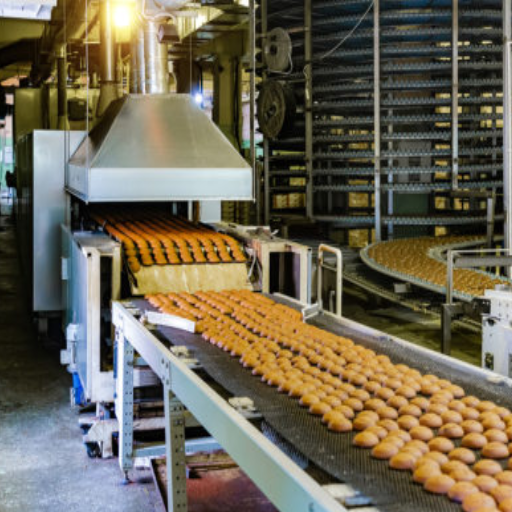
Automated food processing equipment is machinery that mixes, cooks, forms, and packages food with little human handling, using sensors, controls, and robotics to run a line end to end. For a scaling manufacturer, it is the most direct way to raise output, hold quality steady, and cut labor cost per unit.
That one sentence, though, hides a real decision. The market is crowded with premium systems, integrators, and reports that are locked behind paywalls. You still need to know which equipment fits your product, what it costs, and where to start without overspending. This guide answers those questions in plain language.
Here’s what you’ll get. First, a clear picture of what automated food processing equipment is and why the industry is automating so fast right now. Second, the equipment types, robots, and control systems that make up a modern line. Third, a step-by-step path to automate, the honest cost and ROI math, and where Shandong Loyal fits.
Key Takeaways
- Automated food processing equipment covers the whole line: cleaning, mixing, extruding, cooking, and packaging, all coordinated by PLC and SCADA controls.
- The food processing automation market is worth roughly 7to7to15 billion in 2025 and growing 8 to 11 percent a year, driven by labor shortages and food safety rules.
- Start with the highest-payback step, usually packaging and palletizing, before you automate mixing or cooking.
- A turnkey line from a CE-certified manufacturer like Shandong Loyal removes the integration risk that trips up first-time buyers.
- Most projects pay for themselves in 18 to 36 months through labor savings, fewer defects, and higher throughput.
What Is Automated Food Processing Equipment?
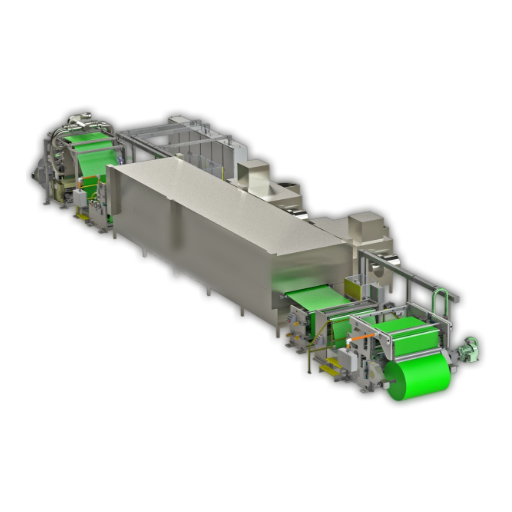
Automated food processing equipment is any machinery that performs a food production step with minimal manual labor, guided by programmable controls rather than constant operator input. It spans washing, sorting, mixing, forming, cooking, drying, and packaging.
Think of it as a stack. At the bottom sit the machines that physically touch food. Above them sit sensors that measure temperature, weight, and flow.
Above those sit controllers (PLCs, SCADA) that read the sensors and adjust the machines. At the top sits the data layer that logs every batch and flags problems early.
That stack is what separates automation from simple mechanization. A conveyor is mechanized; it still needs a person watching it. A line where a controller adjusts temperature on its own and stops the belt when a sensor trips is automated.
For a plant owner, the payoff is consistency. A machine does the same thing at 2 a.m. that it does at 2 p.m. Human fatigue, the quiet enemy of food safety, stops being a variable.
Ready to see what a fully integrated line looks like? Explore Shandong Loyal’s turnkey food production lines to understand how mixing, extrusion, and packaging connect into one system.
Why Food Manufacturers Are Automating Now
Three forces are pushing automation in food manufacturing faster than most people expect. The first is labor: wage costs in developed markets have climbed about 15 percent over the last five years, and open shifts go unfilled.
The second is food safety regulation, which rewards contactless handling and traceability. The third is demand for ready-to-eat and convenience foods, which pushes lines to run longer and faster.
Consider Priya, who runs a snack brand near Mumbai. In 2024 her team of 14 could just keep up with orders. By 2025, demand from two retail chains doubled her volume, but she could not hire fast enough. Her line ran three shifts with exhausted workers, and reject rates crept up. She automated packaging and palletizing first, then the frying stage. Output rose 60 percent with the same headcount, and she stopped losing orders she could not fill.
The market numbers back up Priya’s instinct. Depending on how you define the scope, the food processing automation market sits between 7billionand7billionand15 billion in 2025, with forecasts pointing to 8 to 11 percent annual growth through the early 2030s, according to Research and Markets.
Penetration tells the same story. Automation now touches around 51 percent of food operations in developed markets, versus 30 to 40 percent in emerging ones. Roughly 48 percent of major food makers’ capital spending now goes to automation projects. North America leads with about 40 percent of the market, while Asia-Pacific is growing fastest.
Types of Automated Food Processing Equipment
Most automated lines pull together machines from seven categories. Understanding them helps you talk to vendors without getting lost in jargon.
- Cleaning and sorting: washes raw material and rejects damaged pieces using water, air, or optical sorters.
- Mixing and blending: combines ingredients to a precise recipe, weighed automatically to the gram.
- Forming: presses dough through dies (extruders) or uses depositors and molds for bars, biscuits, and pellets.
- Cooking and frying: applies controlled heat through continuous fryers, ovens, and steam cookers.
- Drying and cooling: stabilizes the product for shelf life and packaging.
- Packaging: fills, seals, and labels at high speed.
- Material handling: conveyors and robots move product between every stage.
Not every plant needs all seven automated at once. A bakery might automate only mixing and baking. A snack plant might automate frying and packaging and leave sorting manual. The right question is not “how much can I automate” but “where does automation pay back fastest.”
That is why many buyers start with a complete, integrated automated food system rather than assembling machines from five suppliers. A turnkey food production line arrives with every stage matched to the next, so the controls talk to each other from day one.
Robots in Food Processing
Robots are the most visible part of modern food automation, and the fastest-growing. The food robotics market alone reached about $3.17 billion in 2025, with articulated arms holding roughly a third of that, according to Straits Research.
Four robot types do most of the work.
- Articulated arms: flex like a human arm and handle palletizing, cutting, and complex pick-and-place.
- Delta robots: fast three-armed spiders for high-speed picking of small items like cookies or chocolates.
- SCARA robots: move in a fixed plane and suit simple, repetitive placement.
- Collaborative robots (cobots): work safely beside people and are cheap enough for smaller plants.
Where robots earn their keep is the repetitive, heavy, or precise work: palletizing cases, loading trays, sorting by weight, and cutting with consistency. They rarely make sense where the product varies wildly or where a human’s judgment is cheaper than reprogramming.
The practical guide from MEPCA makes the same point: start with a task you can clearly define, then pick the robot that fits it. If you can describe the job in one sentence, a robot can probably do it.
Process Control Systems: PLC, SCADA, and DCS
Behind every automated line sits a control system, and buyers meet three acronyms: PLC, SCADA, and DCS. They do related jobs at different scales.
A programmable logic controller, or PLC, is the workhorse. It runs a single machine or a small group, reacting to sensors in real time. SCADA sits one level up, collecting data from many PLCs and giving operators a single screen to watch the whole line. A distributed control system, or DCS, does a similar job but spreads control across many controllers, which suits large, continuous plants.
| System | Scope | Best Fit | Cost Feel |
|---|---|---|---|
| PLC | One machine or cell | Most food machines, small lines | Lowest |
| SCADA | Whole line or plant | Mid-size and multi-line plants | Moderate |
| DCS | Large continuous process | Very large plants, utilities | Highest |
For most food manufacturers, the answer is PLCs at the machine level with SCADA on top. A DCS is overkill unless you run something like a huge continuous process.
The real value is recipe management and traceability. A SCADA system stores the exact settings for each product, so a line switch from a corn puff to a different shape is a tap, not an hour of manual adjustment. It also logs every batch, which regulators increasingly expect.
Hygienic Automation: Clean-in-Place and Food-Safe Design
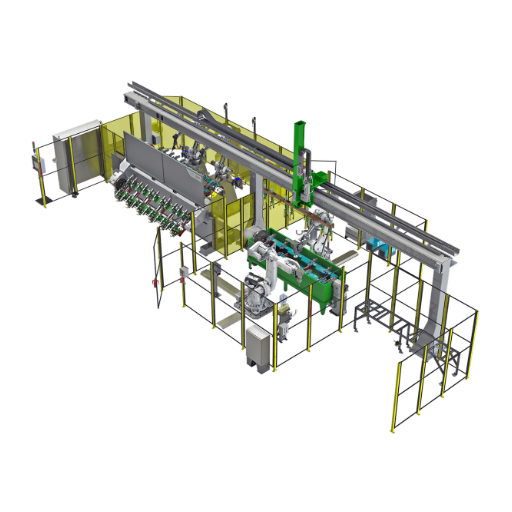
Automation changes how you clean, and cleaning is where food safety is won or lost. The tool here is clean-in-place, or CIP. Instead of disassembling a machine to scrub it, CIP pumps cleaning solution through the closed system on a schedule, then rinses and sanitizes.
CIP versus clean-out-of-place, or COP, is a real trade-off. CIP is faster and needs less labor but costs more upfront and only works on equipment designed for it. COP means taking parts apart to wash them, which is cheaper to build but slower and more labor-heavy.
Design matters as much as the cleaning method. Washdown-ready equipment uses smooth, sloped surfaces that shed water, sealed electronics, and food-safe materials that resist corrosion and bacteria. The right material choice is the whole game here, which is why food-grade machinery materials deserve their own close look.
Automated CIP also cuts waste. A well-tuned system uses less water and chemical than manual cleaning and returns the line to production faster. In a plant running three shifts, that recovered time is money.
Automated Packaging and End-of-Line Equipment
Packaging is where automation usually pays back first, so it deserves its own section. The equipment breaks into four stages: filling, sealing, labeling, and case packing with palletizing.
Filling and sealing handle the product itself, portioning it into pouches, trays, or cartons and sealing them airtight. Labeling applies codes and dates. Case packing groups finished units into boxes, and palletizing stacks those boxes onto pallets for shipment.
Packaging is also the single largest application for food robotics, at about 29.7 percent of the market. That is no accident: packaging tasks are repetitive, measurable, and easy to hand to a machine.
Automating packaging first gives you quick wins. It needs less integration than automating cooking, and it removes the most monotonous, injury-prone jobs from the floor. For a mid-size plant, that often frees enough labor to run a second shift on the rest of the line.
If you are already planning an automated snack line, see how packaging fits into the full automated snack production flow.
Automated Inspection and Quality Control
Automation does not just make food; it checks it. Inspection systems catch what human eyes miss at speed.
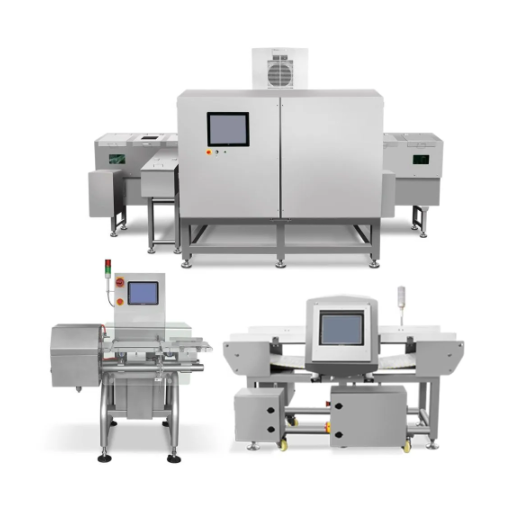
Metal detection and X-ray inspection find foreign objects, with X-ray also spotting bone, glass, and dense plastic that metal detectors miss. Checkweighers confirm every package hits its weight. Machine vision cameras inspect shape, color, and placement, rejecting a misaligned label or a burnt cracker in milliseconds.
This layer is where automation and food safety meet. A recall is far more expensive than an inspection system, so most buyers treat inspection as non-negotiable once volume grows.
The trade-off to know: metal detection is cheap and fast but limited to metal. X-ray costs more and sees far more. For a snack or pasta line, the common setup is a metal detector or X-ray on the packaging stage plus a checkweigher, with vision added where appearance matters.
How to Automate a Food Production Line
Automation works best as a sequence, not a single leap. Here is the path that avoids the most common mistakes.
- Audit your current process: map every step, measure cycle times, and note where labor, defects, or downtime concentrate.
- Pick your automation level: decide which steps to automate first, usually the ones with the clearest payback and the least variability.
- Map the equipment: choose machines that match your product and volume, and make sure their controls can connect.
- Integrate the controls: one system should read every sensor, or you will build a line of silos that never talk to each other.
- Install and commission: run test batches, tune settings, and document everything before you hand the line to production.
- Validate and train: prove the line hits quality and throughput targets, then train operators on the new workflow.
Consider a pasta producer in southern Italy who followed this path in 2025. Instead of replacing his whole line, he automated drying and packaging while keeping his trusted extruder. The phased approach kept production running through the change and spread the cost over two budget years. His line now runs 22 hours a day with fewer defects than his old 16-hour schedule.
The guide from JR Automation reaches the same conclusion: begin with a defined problem, not a vague desire to modernize. That keeps a project from ballooning.
Food Automation Cost and ROI
Cost is the question every buyer asks first, and the honest answer is “it depends.” A single automated packaging cell might run from tens of thousands of dollars. A complete turnkey snack or pasta line is a six-figure to seven-figure investment, scaled by capacity and customization.
| Scope | Typical Budget | Payback |
|---|---|---|
| Single packaging cell | Tens of thousands | About a year |
| One stage (e.g., frying) | Low six figures | 18 to 30 months |
| Complete turnkey line | Six to seven figures | 18 to 36 months |
The numbers that matter are the savings on the other side. Automated food production cuts labor cost per unit, reduces scrap and rework, and lifts throughput. Most well-scoped projects pay for themselves in 18 to 36 months. Here is the kind of math that shows up on a real plant floor:
- A palletizing robot that replaces two operators per shift can pay back within a year at typical labor rates.
- An automated inspection stage that prevents one recall can justify itself in a single quarter.
- A SCADA system that shortens changeovers by 20 minutes each can add hours of production every week.
The trap is treating automation as all-or-nothing. The plants that see the fastest return start small, measure the result, and reinvest the savings into the next stage. That compounding is what turns a pilot into a full line.
When you are ready to put a number on your project, the fastest step is a tailored quote. Shandong Loyal provides customized food processing solutions priced transparently, with no hidden costs in the proposal.
Industry 4.0: IoT, AI, and Digital Twins
The newest layer of food automation is software. Industry 4.0 wraps the physical line in data, and three tools matter most for food manufacturers.
Internet of Things, or IoT, sensors stream live data on temperature, vibration, and energy use from every machine. Predictive maintenance uses that data to flag a bearing before it fails, avoiding unplanned downtime. AI quality systems learn what a good product looks like and catch defects earlier than fixed rules.
Digital twins are the most forward-looking piece. A digital twin is a live software model of your line, so you can test a recipe change or a layout shift on the model before touching the real machines. That is especially useful for extrusion and other processes where settings interact in hard-to-predict ways.
None of this requires you to be a tech company. The tools are getting more accessible, and the point is simple: use data to run the line better today, and to plan tomorrow with confidence.
Why Choose Shandong Loyal for Your Automated Line
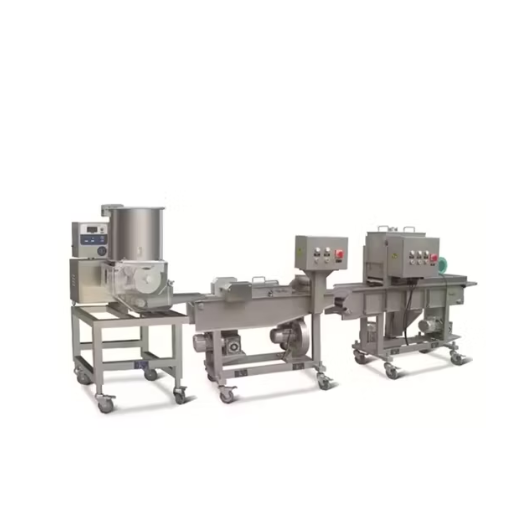
With more than 10 years in food machinery and clients in over 50 countries, Shandong Loyal builds the automated lines behind snacks, pasta, protein bars, bread crumbs, and more. Three things set us apart for the buyer who is scaling, not speculating.
First, we deliver turnkey systems. Mixing, extrusion, cooking, drying, and packaging arrive matched and pre-integrated, so you are not stitching together machines from five vendors. Second, our equipment is CE-certified and built for food-safe, washdown environments. Third, we customize to your product, so a line for protein bars looks different from one for pasta, and both look different from a corn puff snack line.
You get a partner, not just a supplier. From consultation through commissioning and operator training, we stay involved until your line hits its targets.
Frequently Asked Questions
What is food processing automation?
Food processing automation is the use of programmable machines, sensors, and controls to run food production steps with minimal human labor. It covers mixing, cooking, forming, and packaging, coordinated by systems like PLC and SCADA.
How much does it cost to automate a food production line?
A single automated cell can start in the tens of thousands of dollars, while a complete turnkey line runs from six figures to seven figures. Most projects pay back in 18 to 36 months through labor savings and higher throughput.
What is the difference between PLC, SCADA, and DCS?
A PLC controls one machine, SCADA supervises many PLCs across a line, and DCS distributes control across a large continuous plant. Most food plants use PLCs at the machine level with SCADA on top.
What is clean-in-place (CIP) in food processing?
Clean-in-place pumps cleaning solution through a closed system to sanitize it without disassembly. It saves labor and downtime but costs more upfront and requires equipment designed for it.
Where should I start when automating my food plant?
Start with the highest-payback, lowest-variability step, usually packaging and palletizing, then reinvest the savings into cooking, mixing, and inspection. A phased plan keeps production running and controls cost.
Can food processing machinery be customized?
Yes. A manufacturer like Shandong Loyal configures extrusion, cooking, and packaging stages to your specific recipe, shape, and capacity, so the line matches your product rather than forcing your product to fit a standard machine.
Get an Automated Line Quote
Automated food processing equipment is a big decision, but it does not have to be a confusing one. The path is the same whether you make snacks, pasta, or pet food: define your product and volume, start with the stage that pays back fastest, and choose a partner who delivers a complete, certified line rather than a pile of parts.
Shandong Loyal has helped food manufacturers in over 50 countries do exactly that. If you are ready to move from researching to planning, tell us your product and target capacity, and we will design a solution around your goals.