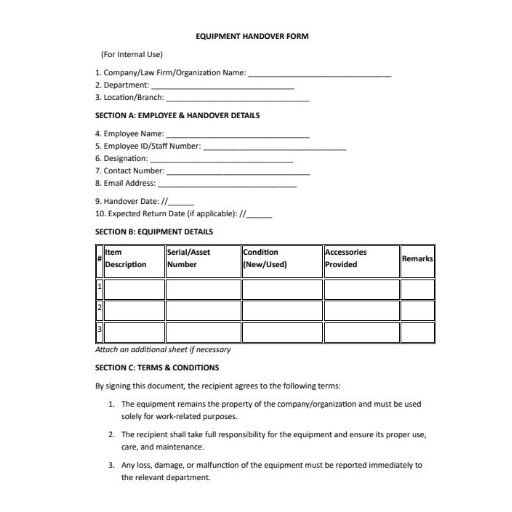
A food machinery utility requirements worksheet records what each machine needs, what the site can supply, and the evidence needed to confirm the two match. Use one record for each utility connection, tied to the approved equipment configuration and drawing revision.
“Water available” or “compressed air installed” leaves important questions unanswered. At what flow, pressure and quality? During which operating conditions? Who owns the connection between the building supply and the machine? The copyable worksheet below gives buyers, suppliers and plant engineers a shared place to record those answers before installation.
Key takeaways:
- Keep supplier requirements and measured site availability in separate fields.
- Record normal operation, startup and cleaning as distinct scenarios where applicable.
- Identify every connection, its document source and the person responsible for unresolved items.
- Treat completed fields as information for review. Final utility design and acceptance need project-specific engineering and agreed criteria.
Copy the utility requirements worksheet
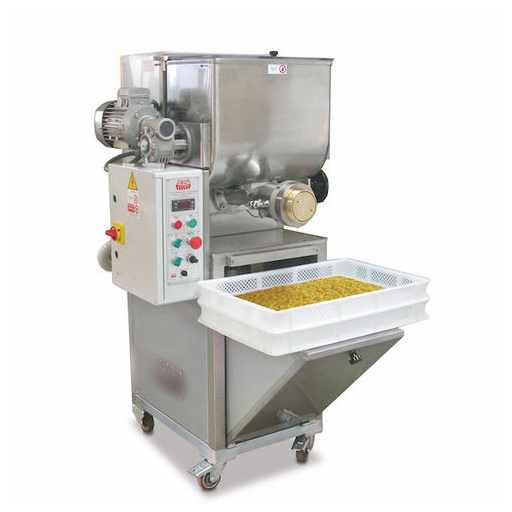
Copy these tables into your project document or spreadsheet. Duplicate tables B, C and D for every applicable connection, using the same machine tag and connection ID throughout. Their vertical format leaves room for notes without creating a wide, difficult-to-read schedule.
The blank cells are for project data. Enter “To be confirmed” for an unknown requirement. Use “Not applicable” only when the supplier or approved documentation confirms that the service is unnecessary for this configuration; record that confirmation too. An empty field or a zero should never stand for an unanswered question.
A. Equipment and source register
| Field | Project entry |
|---|---|
| Project / site / country | |
| Machine tag | |
| Manufacturer / model | |
| Approved configuration and options | |
| Product / process / planned operating scenario | |
| Applicable utility connection IDs | |
| Supplier utility schedule reference | |
| Connection drawing / installation instruction reference | |
| Document revision and date | |
| Document owner / review owner |
B. Required demand and conditions
| Field | Project entry |
|---|---|
| Machine tag / connection ID | |
| Service and intended use, including food-contact use | |
| Normal operating demand | |
| Peak / startup demand and duration | |
| Cleaning demand, duration and frequency | |
| Units and reference conditions | |
| Required minimum / maximum pressure or electrical conditions | |
| Required temperature range, where applicable | |
| Required quality / treatment specification | |
| Requirement source, revision and approving owner |
C. Physical interface and responsibility
| Field | Project entry |
|---|---|
| Machine tag / connection ID | |
| Connection size and type | |
| Connection location / elevation / drawing reference | |
| Return or discharge connection and conditions | |
| Supply boundary: equipment side / building side | |
| Isolation / treatment / metering scope and owner | |
| Final connection / return / discharge scope and owner | |
| Unresolved scope question and responsible party |
D. Site verification and open actions
| Field | Project entry |
|---|---|
| Machine tag / connection ID | |
| Available condition at the agreed point of use | |
| Measurement location and operating scenario | |
| Instrument ID / suitability or calibration reference | |
| Measurement date / person recording | |
| Agreed acceptance criterion and source revision | |
| Result / evidence file reference | |
| Status: information missing / awaiting verification / awaiting review / accepted | |
| Unresolved action / action owner / due date | |
| Reviewer / review date / worksheet revision |
Start by identifying the equipment you intend to buy. If you are comparing food production lines, keep separate records for different proposed configurations until the selected build is agreed.
Establish which machine configuration the data describes
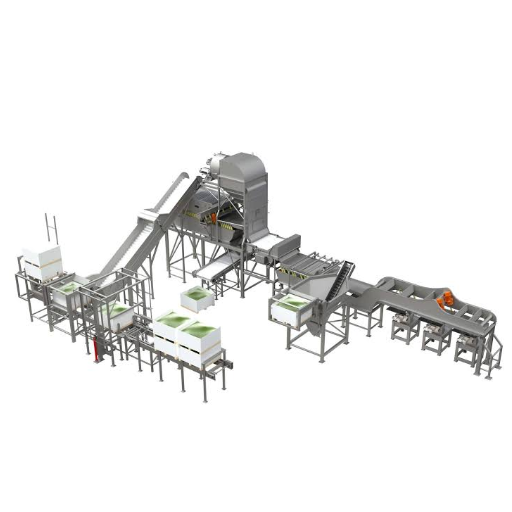
Use the supplier’s approved utility schedule, connection drawings, electrical documentation and installation instructions as the starting documents. A brochure can help identify a product, but ask for confirmation before treating its figures as the requirements for your ordered equipment.
A line description such as corn puff snacks production line identifies an application. It does not, by itself, establish the utility demand of every component or option in your project. Give individual machines their own tags so that requirements remain traceable within the line.
Where documents conflict, record both references and ask the document owner to resolve the difference in writing. Keep the affected field open until the agreed revision is available. This gives the site team a clear source to use when reviewing its supply.
If the build changes, identify which utility records need another review. Keep the previous revision with the project history and make the current one clear to everyone using the worksheet.
What to record for each applicable service
The following fields are requests for information, not standard operating values. Ask the supplier which services apply to the exact build and which conditions must be met at each interface.
Electrical supply
Request voltage, phase, frequency and connected-load information, together with the supplier’s stated operating and startup demand basis. Keep these descriptions separate in the record so the electrical reviewer knows what each figure represents.
Assign responsibility for reviewing the local supply, protective arrangements, earthing and final connection. Have the project’s qualified electrical engineer confirm the design from the approved documentation and applicable local requirements. The worksheet collects the inputs; it does not calculate cable, breaker or transformer sizes.
Process water and cleaning water
Record the intended use: ingredient addition, food-contact cleaning, indirect cooling or another stated duty. Ask for the required quality, flow or batch volume, time basis, pressure and temperature limits. Give cleaning its own entry or scenario when its demand differs from production.
As a US human-food regulatory example, 21 CFR 117.37(a) and (b) address adequate water supply, sanitary quality for contact uses, plumbing and drainage, including protection against backflow and cross-connections. Confirm applicability for the project; these provisions are not a worldwide specification or a set of universal machine setpoints.
For the worksheet, connect the water requirement to the relevant drain or return record. Ask the site reviewer to identify any unresolved water-quality, treatment or drainage question before accepting the interface.
Steam and condensate
Identify the duty and whether steam contacts the product directly or supplies indirect heating. Request the specified flow basis, pressure, temperature and quality at the machine connection. Record any condensate outlet, return conditions and responsibility for the return interface.
Spirax Sarco’s steam-quality tutorial explains why quantity, pressure, temperature and quality at the point of use matter. This supports recording conditions at the machine interface rather than relying only on a boilerhouse reading.
Have the responsible engineer define the application-specific quality and verification requirements. Leave unspecified conditions open instead of choosing a generic steam grade for every food machine.
Compressed air, vacuum and other gases
Record the service, intended use, pressure, flow basis and operating scenario. Ask the supplier to state reference conditions for flow figures, along with any quality, treatment and verification requirements. Identify separately any use involving food or the cleaning of food-contact surfaces or equipment.
For applicable US human-food operations, 21 CFR 117.40(g) addresses treatment of compressed air or other gases introduced into food or used for that cleaning, to prevent contamination with unlawful indirect food additives. It does not specify one universal air-purity class.
Ask the supplier and the site’s food-safety reviewer to agree the relevant quality criteria and evidence. A compressor description alone does not document the required condition at a particular machine connection.
Cooling, ventilation, extraction and drainage
For applicable cooling connections, request the demand basis, supply and return conditions, connection details and quality requirements. For ventilation or extraction, request the supplier’s duty and interface information for site review. Mark a service as not applicable only after confirming the selected build.
For drainage, collect the expected discharge rate or batch volume, timing, temperature and relevant product or cleaning characteristics. Assign a reviewer to confirm the discharge route and site requirements. Keep engineering decisions about refrigeration, ventilation, drainage and discharge permissions with the responsible project specialists.
Reconcile demand, available capacity and scope
Review the operating scenario across the line
Each machine record describes a demand. The plant capacity review must also consider which machines and cleaning operations are expected to run together. Give the utilities engineer that operating scenario alongside the individual records, including any proposed future allowance as an explicit assumption for review.
Avoid treating a list of connected loads or a sum of isolated figures as an approved plant utility design. Ask the responsible engineer to document the basis of the combined capacity assessment and any conditions attached to it.
Use the worksheet for this focused interface review, then refer to food machinery installation and commissioning for the surrounding installation process. Keeping the utility records distinct makes them easier to update when a requirement or site condition changes.
Assign an owner to every boundary
Name the party responsible for the equipment connection, upstream distribution, isolation, treatment, metering, final hookup and any return or discharge. Record both the scope and the party who will resolve an unanswered question.
Ask the parties to reconcile this allocation with the purchase agreement and drawings. Do not assume that a production-line supply includes every building service or utility component. The worksheet should show the agreed boundary and highlight anything still awaiting agreement.
Verify at the point of use and close open items
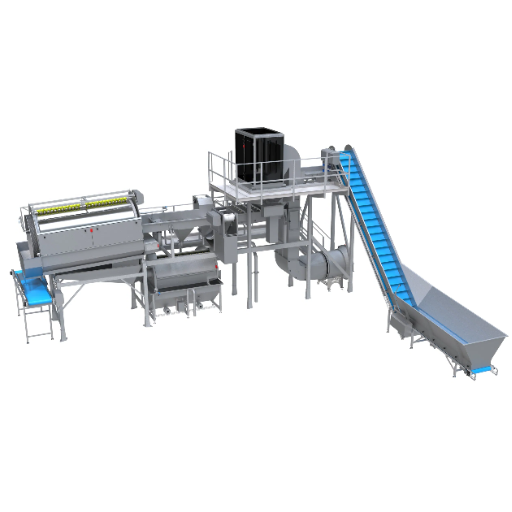
Before verification, agree the criterion, measurement point, operating scenario and evidence needed. Record the instrument, date and result against the relevant connection ID. Physical tests and connection work should be carried out by competent personnel under the project’s applicable procedures.
Keep three milestones distinct: the requirement document has been received; the available site condition has been recorded; the responsible reviewer has accepted the comparison. Receiving a drawing does not complete the other two steps.
Where a result does not meet the agreed criterion, keep the item open with an action owner and due date. Record the corrective action, revised evidence and review decision before changing its status to accepted. Use the agreed project release procedure for any unresolved item.
Illustrative scenario: “air available” needs clarification
A fictional project starts with “air available” in its site enquiry. The buyer leaves pressure, flow basis and quality as “To be confirmed” and assigns the supplier as the owner of the missing requirement information.
The supplier provides the approved connection requirements. The site team then records available conditions during the agreed operating scenario, keeping those results separate from the requirement fields. Any discrepancy remains open until the assigned parties resolve it and the reviewer records the decision against the current revision.
This example shows how to use the record. It is not a Loyal customer case or evidence of a production outcome.
Questions buyers ask before releasing the worksheet
Can I start an equipment enquiry with unknown utility fields?
Yes. Mark unknowns “To be confirmed,” state who needs to provide each answer and include the source documents already available. Keep preliminary enquiry information separate from approved requirements.
Does every food machine need steam or compressed air?
Confirm each service against the selected configuration. Do not add a requirement simply because the worksheet has a field for it. Record the source or owner confirming that a service is not applicable.
Why record cleaning separately from production?
The review needs to cover the intended cleaning operation as well as normal production. Ask for its demand and timing, and state whether it is expected to overlap with other equipment or cleaning activities.
Who confirms that the plant has enough capacity?
The equipment supplier provides the machine requirements; the responsible site engineers review the available services and combined operating scenario. Agree who accepts each interface and retain the supporting evidence.
What happens when the machine configuration changes?
Request revised requirements, identify the affected connection records and repeat the relevant site review. Record the new document revision and make any superseded assumptions visible in the project history.
Share your equipment list, project location and available utility information when you contact Loyal about a production line. Include the open worksheet questions so the enquiry identifies what still needs confirmation.