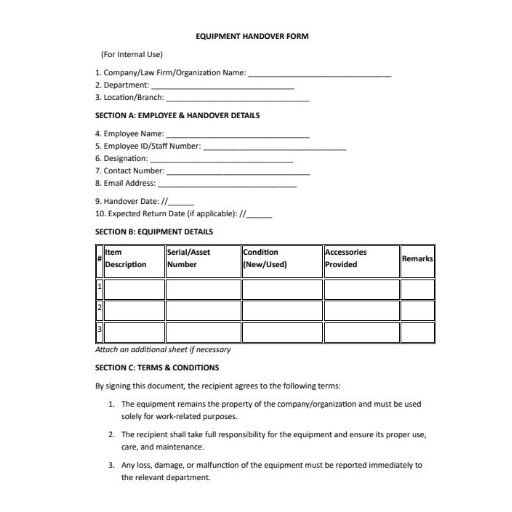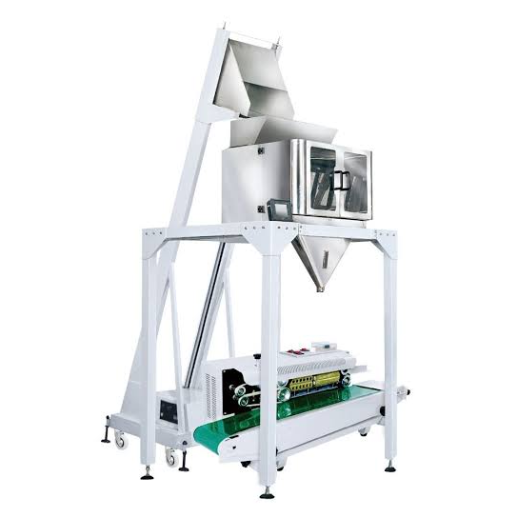
A food machinery factory acceptance test checklist should connect each agreed purchase requirement to a test, a measurable result and a release decision. Use it before equipment is packed, while the buyer and supplier can still inspect the assembled machine and resolve issues together.
The most useful question is not “Did the machine run?” Ask instead: did the agreed configuration make the agreed product, under recorded conditions, and what remains to be proved at your factory? A successful demonstration answers only the questions that its test conditions actually cover.
This guide provides a practical framework for extrusion, snack, pasta and other food production projects. Adapt it to the purchase specification with the supplier and your engineering, quality and operations teams. The examples below are planning examples, not universal test limits or promised Loyal machine performance.
Key takeaways
- Approve the test protocol before arranging a factory visit or remote witness session.
- Define the output measurement point, product specification and treatment of rejects before comparing capacity results.
- Record raw materials, settings, utilities and configuration so that the result can be understood later.
- Keep failed, untested and site-dependent requirements visible in the final report.
- Separate permission to ship from site acceptance and food-safety validation.
When discussing a food production line, send your product sample, expected output basis and acceptance requirements with the enquiry. That gives the supplier a clearer starting point for a useful trial.
Build the test around your purchase specification
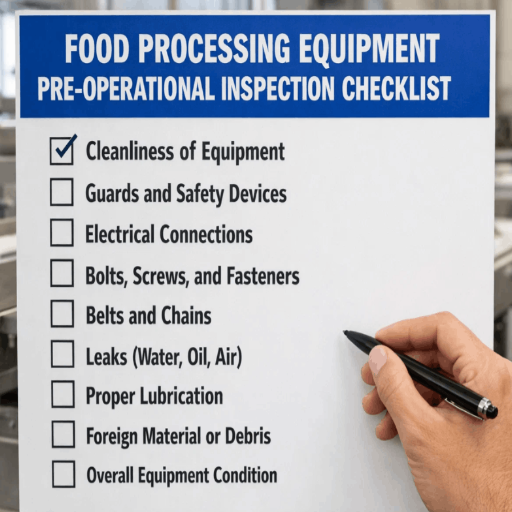
A factory acceptance test, or FAT, checks agreed equipment requirements before dispatch. A site acceptance test, or SAT, follows installation and addresses the agreed requirements under site conditions. The contract should define the boundary between them and how outstanding items move from one stage to the next.
The public description of IEC 62381:2024 covers acceptance and integration testing for process-industry automation systems. It emphasises agreed scope and responsibilities. It is a reference for applicable automation work, not a blanket legal requirement that every food machine must follow the same checklist.
Freeze the baseline before testing
Start with the purchase order, approved specification, layout and option list. Add revision numbers and approved changes. If the motor, control panel or dryer changed during manufacture, use the approved version for the test. An old sales drawing is not a reliable baseline.
Give each test a requirement reference. “Check the conveyor” is too vague. “Verify the ordered conveyor length and the agreed transfer arrangement against drawing revision C” gives the witnesses a clear comparison. The project document should contain the real drawing reference; this example illustrates the form of the check.
Agree who can decide
Nominate the supplier’s test lead and the buyer’s authorised witness. Include the people who can judge product quality, controls and documentation, either in person or remotely. Confirm who can approve deviations and authorise shipment. A signed attendance sheet should not accidentally become acceptance of unresolved issues.
Illustrative scenario: A buyer attends a demonstration with a purchasing colleague, but nobody present can approve a changed drying specification. The team records the measurements and leaves that requirement open for the authorised engineer’s review. The visit still produces useful evidence without treating silence as approval.
For supplier qualification before the machinery is built, use our separate food machinery supplier audit checklist. A supplier audit and an FAT answer related but different questions.
Set test conditions that make the result meaningful
Different ingredients and operating conditions can produce different results. Record the actual test basis, including any difference from the conditions in the order. If representative material is unavailable, agree what the substitute can demonstrate and what it cannot.
Product and raw materials
Identify the recipe or material specification, batch or lot, relevant preparation steps and any preconditioning included in the scope. For an extrusion trial, the feed blend and intended finished-product characteristics matter as much as the fact that the extruder is turning.
Arrange enough material for startup, stabilisation, the agreed measurement period and any planned repeat. Agree who supplies ingredients and how unused material will be handled. Do not set the test duration only after seeing how much material remains.
Utilities and surroundings
Record the available electrical supply and relevant water, air, steam, cooling or ventilation conditions. Note which downstream equipment is connected and which equipment is simulated or absent. A factory trial cannot prove the performance of a utility system that has not yet been installed at the customer’s site.
If a support system limits the test, record that limitation next to the affected result. Avoid reporting the line as accepted at a target rate when only an isolated machine was tested at that rate. For site planning, our installation and commissioning guide explains the broader project stages.
Measurement and evidence
Agree the instruments, units, sampling method and measurement interval. How will you check that the instruments are accurate enough for the test? Save the equipment identity and test date with the results. A later reader needs to know which build was tested.
A remote witness session needs the same discipline. Agree camera views, instrument displays and the records to be shared. Video should support the signed test record, not replace a missing measurement method or hide interruptions outside the frame.
Food machinery factory acceptance test checklist
Use the following matrix to draft your project protocol. Replace the suggested evidence with the actual requirement, method and acceptance limit agreed for your order. A row that does not apply should be marked not applicable with a reason, rather than silently deleted after the test.
| Check | What to establish | Useful evidence |
|---|---|---|
| Equipment identity | Model, project and serial identifiers match the approved order | Nameplate photos and equipment list |
| Scope and accessories | Ordered modules, tools and options are present | Signed scope reconciliation |
| Drawings and revisions | The tested build matches the approved configuration | Revision list and approved changes |
| Materials | Relevant supplied parts match the material specification | Parts list and applicable records |
| Workmanship and access | Inspection covers agreed build and access requirements | Annotated photos and findings |
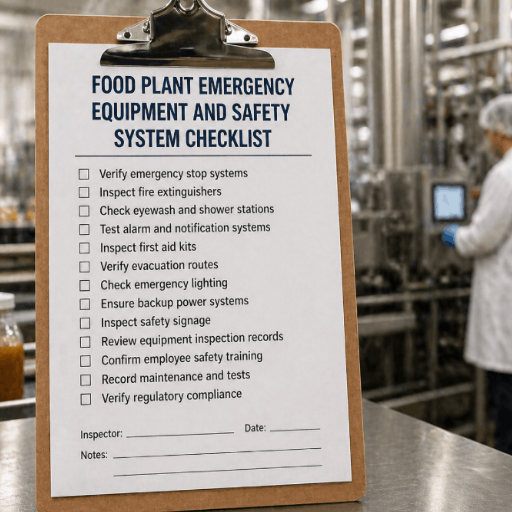
| Safety functions | Qualified personnel verify the agreed safety checks using an approved safe method | Functional test record |
| Controls and recipes | Screens, settings, versions and permissions match the scope | Version and parameter records |
| No-product operation | Agreed functions and sequences operate as specified | Operating log and observations |
| Loaded trial | Representative product runs under the agreed conditions | Recipe, material and settings record |
| Output and quality | Measured results meet the agreed limits and sampling plan | Weight, time and product results |
| Fault response | Selected alarms, recovery and restart sequences meet the protocol | Witnessed test records |
| Cleaning and changeover | Specified access and change tasks can be demonstrated | Task record and open issues |
| Interfaces | Transfers and connected equipment included in the FAT work together | Interface test list |
| Documents and spares | The handover package matches the contractual scope | Document and packing lists |
| Release decision | Open items have an agreed disposition and owner | Signed report and punch list |
Do not create a dangerous fault simply to fill a row. Safety-related demonstrations need competent personnel, suitable controls and an agreed procedure. If a check cannot be performed safely at FAT, document the alternative assessment and the remaining verification task.
Food-contact and cleaning checks
Observe the access tasks agreed for the equipment: opening covers, removing product-contact parts, inspecting seals and reassembly. Use the supplier’s approved procedure. Record where tools, lifting equipment or additional clearance are required, because these affect the plant’s later work instructions.
A mechanical access check does not prove microbial removal, allergen removal or the effectiveness of every cleaning chemical. FAO’s HACCP validation and verification guidance explains how these activities relate to the actual food operation. The site’s food-safety team still needs to evaluate its own products, hazards and process controls.
Where EU conformity is relevant, review the equipment evidence alongside our CE certified food machinery guide. Passing a commercial FAT does not replace the applicable conformity-assessment procedure.
Measure output without confusing feed rate and finished product
Capacity disputes often start with an undefined measurement boundary. Decide whether the specification refers to raw feed, extruder discharge, dryer discharge or acceptable packed product. These quantities can differ because water, coating, fines, rejects and work in progress move through the system.
For a pasta production line, an upstream output figure should not be presented as accepted dry finished-product output without the agreed basis. For a snack line, specify whether seasoning is included in the reported finished weight and how off-spec pieces are handled.
A simple calculation example
Illustrative calculation: During an agreed measurement period of 30 minutes, the team records 120 kg of acceptable finished product at the defined collection point. The measured acceptable-product rate for that period is:
120 kg ÷ 0.5 hour = 240 kg/hour.
If a further 8 kg was rejected, report it separately with the reason. Do not add it to acceptable output. Also record any interruptions, carryover or material retained between the start and end boundaries. The example demonstrates arithmetic only; it is not a machine rating or a recommended acceptance limit.
Define how quality is assessed
Decide which characteristics determine an acceptable product. Depending on the project, these could include dimensions, weight distribution, moisture, appearance or another agreed measure. Specify the method and who makes the decision. “Looks good” may be enough for a screening demonstration, but it is a weak contractual acceptance criterion.
Avoid selecting only the best handful of pieces from a long run. The protocol should describe where and when samples are taken and how the results are recorded. If a criterion requires laboratory analysis, identify whether shipment waits for the result or whether an agreed conditional decision is possible.
Illustrative scenario: A snack line meets its feed-rate target, but the collection sample contains more off-spec pieces than the contract allows. The team records both numbers, adjusts the relevant settings and repeats the affected test. It does not relabel feed rate as acceptable finished output.
Record deviations and make a clear release decision
A punch list is a controlled record of unresolved requirements. Give each item a reference, description, evidence, responsible owner, due date and closure method. Distinguish a measured failure from a test not performed; both may need action, but they are not the same result.
Agree categories before the FAT
Buyer and supplier can define practical categories for their project, such as issues that prevent shipment, items requiring retest before release and minor documentation actions with agreed dates. These are contractual categories, not universal regulatory classifications. Safety and compliance concerns require appropriate assessment; they should not be downgraded merely to meet a shipping date.
When an item is closed, retain evidence of the correction and any required retest. A photograph may close an identification-label issue, while a failed output or control test may need a witnessed repeat. The closure method should match the original issue.
Separate shipment release from final acceptance
The report should state whether the equipment is released, conditionally released under a signed agreement or held pending correction. Identify the authorised decision makers and list every remaining site task. Do not assume an FAT signature automatically settles warranty, payment or final acceptance; use the terms of the actual contract.
For the next project stage, see our food production line installation guide. Transfer the FAT configuration, settings, open items and agreed site tests to the installation team before the machinery arrives.
Keep a usable FAT record and handover package
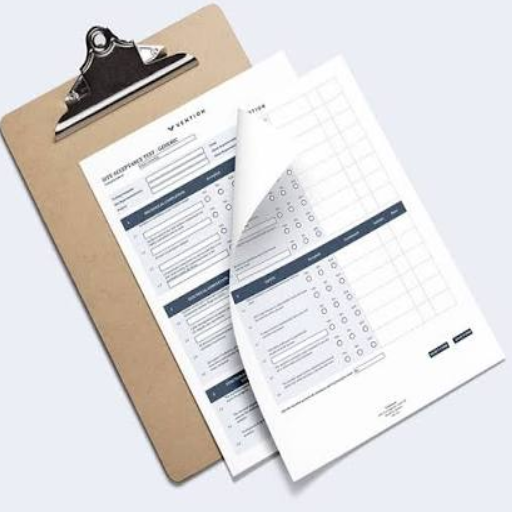
Your final record should let another engineer understand what was tested without relying on the memory of the people who attended. Use a clear folder structure and a short index that ties each result to the relevant requirement. Keep original measurements as well as the summary.
A practical handover package includes:
- The signed protocol and equipment list.
- Test conditions, settings and software versions.
- Original measurements and selected photographs or videos.
- The deviation log and signed release decision.
- Manuals, drawings, parts information and backups required by the contract.
Mark provisional documents clearly and record when the final revisions are due.
Keep the site-test list separate and visible. It may cover utilities, plant interfaces, installed access arrangements and performance conditions that could not be demonstrated at the supplier’s factory. This avoids the common problem of an untested requirement disappearing between packing and commissioning.
Illustrative scenario: The factory can demonstrate the equipment controls, but the buyer’s upstream conveyor is not available. The FAT report records that interface as a site task, names the responsible parties and carries its test requirement into the commissioning plan. No successful integration result is claimed before the equipment is connected.
Before ordering, contact Loyal with your product, line configuration, destination and proposed acceptance criteria. Ask which factory-trial conditions and records can be included in the equipment proposal, and which checks will remain for your site.
Frequently asked questions
How long should a food machinery FAT run?
Set the duration from the agreed functions, product changes, stabilisation needs, sampling plan and project risks. There is no single duration that proves every food machine or line. A short trial and an extended performance run answer different questions, so record exactly what each one demonstrates.
Can the buyer witness the test remotely?
Yes, when the parties agree a workable remote protocol. Define the views, live measurements, records, witnesses and treatment of connection gaps. If the remote session cannot establish a requirement clearly, keep that item open or arrange another suitable verification method.
What if my ingredients are unavailable at the supplier’s factory?
Agree a substitute and document its limits before testing. It may demonstrate mechanical operation without proving the final product specification. List any representative-product trial that must follow, the location, decision owner and consequences for release or acceptance.
Is FAT the same as food-safety validation?
No. FAT checks the agreed equipment requirements under defined factory conditions. Validation of a food-safety control requires appropriate evidence for the relevant product, hazard and process. The operator’s food-safety programme cannot be replaced by a generic machine acceptance checklist.
What happens when the equipment fails a test?
Record the failed requirement and evidence, agree corrective action and repeat the affected checks where required. Keep the original result in the record. Shipment should follow the release conditions agreed in the contract, with outstanding items explicitly addressed by authorised representatives.