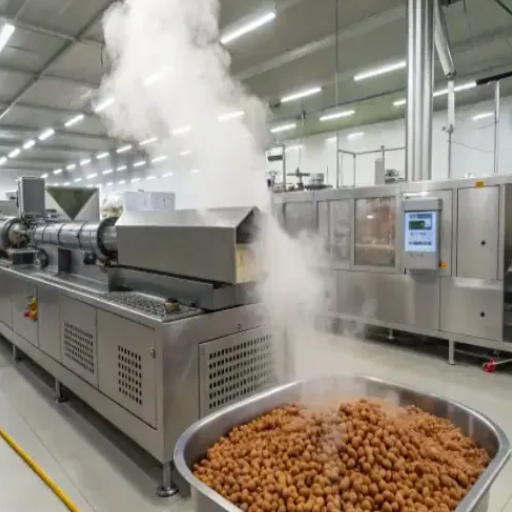
Food production line installation is the process of positioning, connecting, integrating, testing, and validating food processing equipment so it can operate safely at target capacity. A typical mid-sized line takes 4–8 weeks to install and commission, though timelines shrink when site preparation, utilities, and documentation are ready before the machines arrive.
What happens when those machines show up early? In 2024, a snack producer in Southeast Asia accepted delivery of a new extrusion line before their electrical room was upgraded. The equipment sat idle for three weeks while contractors ran new power drops. That delay cost the company its planned launch window and roughly $40,000 in lost revenue.
Most installation problems are not caused by the equipment. They are caused by gaps in planning, communication, and coordination. This guide gives you a clear roadmap for food production line installation, from pre-installation planning to first production run, with practical checklists and manufacturer insights you can use immediately.
Key Takeaways
- Food production line installation typically takes 4–8 weeks for mid-sized lines and requires careful pre-installation planning.
- The process includes delivery inspection, positioning, utility connections, system integration, commissioning, and operator training.
- Installation qualification (IQ), operational qualification (OQ), and performance qualification (PQ) validate that equipment is installed correctly and runs consistently.
- Common mistakes include under-sizing utilities, skipping factory acceptance tests, and inadequate operator training.
- Working closely with your equipment manufacturer reduces risk, shortens commissioning, and protects your investment.
What Is Food Production Line Installation?

Food production line installation is the phase of a capital project where individual machines become a single, coordinated production system. It follows equipment procurement and precedes full-scale production. The goal is to move from “machines on the floor” to “product running at specification.”
A well-managed installation covers mechanical positioning, electrical and utility connections, automation integration, safety system verification, cleaning validation, and staff training. It also produces the documentation regulators and auditors expect, such as commissioning reports, qualification records, and standard operating procedures.
For food manufacturers, installation is not only an engineering task. It is a food safety task. Equipment must be level, accessible for cleaning, correctly grounded, and validated before it can be released for routine production.
Installation vs. Turnkey Setup: What’s the Difference?
Not every company wants the same level of support during installation. Understanding the three common delivery models helps you choose the right approach for your team and budget.
Self-managed installation. Your internal team handles site prep, rigging, utility connections, and commissioning. This works when you have strong engineering resources and experience with similar equipment. It also carries the highest risk if something goes wrong.
Manufacturer-supervised installation. Your equipment supplier sends technicians to supervise or support key steps, such as alignment, automation programming, and commissioning. You retain local contractors for labor, but you benefit from the manufacturer’s expertise.
Turnkey food production line setup. A single provider manages design, equipment supply, installation, commissioning, training, and handover. This approach can cut setup time by 30–40% compared with traditional methods because one party owns coordination from start to finish. Source: Uyarli Synergy turnkey setup guide.
| Approach | Who Manages Installation | Best For | Key Risk |
|---|---|---|---|
| Self-managed | Your internal team | Strong engineering staff, simple lines | Highest coordination risk |
| Manufacturer-supervised | Local contractors + supplier technicians | Medium complexity, limited in-house expertise | Contractor-quality variation |
| Turnkey | Single provider end-to-end | Complex lines, tight deadlines, imports | Requires trusted partner |
If you are importing equipment internationally, manufacturer-supervised or turnkey delivery is often the safer choice. It reduces miscommunication between your local contractors and the equipment builder. Learn more about the full process in our guide to turnkey food production systems.
Pre-Installation Planning
The quality of your installation is largely decided before the first crate arrives. These four planning steps prevent the delays and cost overruns that derail too many projects.
Define Product, Capacity, and Quality Targets
Start with the end product in mind. What will you produce? At what hourly rate? What quality specifications must you hit consistently?
When a European biscuit manufacturer upgraded its line in 2023, the project team wrote down three numbers before anything else: target output of 800 kg/h, maximum giveaway of 2%, and zero metal contamination events. Those targets drove every downstream decision, from oven length to checkweigher placement. The line reached specification on the third product trial.
Facility Layout and Material Flow
A good layout moves raw materials forward with minimal backtracking. It separates raw and finished product zones, leaves room for cleaning and maintenance, and accounts for future expansion.
Design for 150–200% of your current volume if growth is likely. Reconfiguring a line after installation is expensive. Adding space for two or three future SKUs during initial layout costs far less.
Utility Requirements and Capacity Buffer
Every food production line needs reliable power, water, steam, compressed air, drainage, and ventilation. Underestimating any of these causes bottlenecks.
Add a 20–30% capacity buffer to utility specifications. If your line needs 200 amps, plan for 260. If it needs 50 cfm of compressed air, size the compressor for 65. That buffer covers peak demand, future equipment, and the reality that real-world conditions rarely match catalog ratings.
Regulatory and Food Safety Compliance
Identify the standards that apply to your product and market early. Common requirements include HACCP, FDA or USDA rules, CE marking for EU markets, ISO 22000, and EHEDG or NSF sanitary design guidelines.
Make compliance part of your purchase specifications. A machine that is difficult to clean will fail validation no matter how fast it runs. Specify food-contact materials, sealed bearings, sloped drains, and easy access panels from the start.
The Food Production Line Installation Process
Once planning is complete, installation follows a predictable sequence. Each step builds on the last, so skipping any of them increases the risk of hidden problems.
1. Equipment Delivery and Receiving Inspection
Verify every crate against the packing list before signing the bill of lading. Look for shipping damage, moisture intrusion, and missing components. Photograph any issues immediately.
This is also the time for the Site Acceptance Test (SAT). SAT confirms that equipment arrived in the condition specified in the purchase order. It is your first formal checkpoint after the Factory Acceptance Test (FAT) conducted at the supplier’s facility.
2. Site Preparation and Access Verification
Confirm that doorways, corridors, elevators, and rigging paths can handle the largest piece of equipment. Check floor load capacity, ceiling height, and crane or forklift access.
Prepare foundations, floor drains, utility stub-outs, and ventilation before rigging begins. Clean the installation area thoroughly. Dust and debris left behind can contaminate bearings, electrical panels, and food-contact surfaces.
3. Positioning, Leveling, and Anchoring
Place each machine according to the approved layout. Use precision leveling to prevent vibration, premature bearing wear, and misaligned transfer points. Anchor equipment securely, especially machines that generate significant motion or torque.
Leave adequate clearance around each unit for cleaning, inspection, and maintenance. A machine crammed against a wall may pass installation, but it will frustrate your maintenance team for years.
4. Utility Connections
Connect electrical power, water, steam, compressed air, and drainage. Confirm voltage, phase, and amperage match equipment nameplates. Test water pressure, steam quality, and air dryness before connecting to sensitive components.
In food zones, maintain drain slope of at least 2% so water and cleaning solutions flow away from equipment. Dead legs in piping and low spots in drains are common sources of contamination.
5. Mechanical Integration and Conveyor Linking
Link conveyors, transfer points, feeders, and packaging equipment. Adjust heights, speeds, and guides so product moves smoothly from one machine to the next. Even small misalignments cause jams, spills, and inconsistent weights.
Pay special attention to changeover points. A line that runs one SKU beautifully may struggle with a slightly different package size if transfer tooling cannot be adjusted quickly.
6. Automation, PLC, and Sensor Integration
Program PLCs, HMIs, sensors, and safety devices so the line operates as one system. Test communication between controllers. Verify that upstream and downstream equipment can stop and start in sequence.
Calibrate temperature probes, flow meters, load cells, and vision systems against known standards. Uncalibrated sensors produce unreliable data and can pass defective product.
7. Safety Systems and Interlocks
Install and test emergency stops, guard switches, light curtains, and lockout/tagout points. Verify that the line cannot restart while guards are open or while personnel are inside a protected zone.
Safety validation is not a one-time task. Build a schedule for regular testing and document every result.
8. Cleaning and Sanitation Validation
Run cleaning trials before production trials. Confirm that CIP systems reach every food-contact surface. Check for pooling water, inaccessible corners, and residue after cleaning.
This step is where many installations stumble. A line can be mechanically perfect yet fail food safety qualification if it cannot be cleaned and dried effectively.
Commissioning and Validation (IQ / OQ / PQ)

Commissioning proves that the line works. Validation proves it works consistently and meets specifications. Food manufacturers typically use three qualification stages.
Installation Qualification (IQ) confirms that equipment is installed according to the manufacturer’s requirements and design drawings. It covers location, utility connections, materials of construction, and documentation.
Operational Qualification (OQ) demonstrates that the line operates within defined limits. Tests include startup and shutdown sequences, alarm responses, safety interlocks, and cleaning cycles.
Performance Qualification (PQ) runs the line at production conditions, often for three consecutive lots or shifts, to prove it can consistently produce product that meets quality standards.
According to FoodIndustryHub, thorough commissioning documentation protects both food safety and regulatory compliance. Keep records organized from day one. For a practical checklist covering FAT, SAT, IQ, OQ, and PQ, see iFactory’s FMCG equipment commissioning guide.
Common Food Production Line Installation Mistakes
Even experienced teams make predictable errors. Recognizing them in advance saves time and money.
Designing only for today’s volume. A line built for current demand will need expensive retrofitting when volumes grow. Plan for 150–200% of current capacity if growth is part of your strategy.
Underestimating utilities. Inadequate power, compressed air, or drainage forces mid-project upgrades. Size utilities with a 20–30% buffer and confirm specifications before equipment ships.
Skipping FAT or SAT documentation. Factory and site acceptance tests are not formalities. They are the checkpoints that prove equipment matches the purchase agreement and arrived undamaged.
Ignoring hygienic design. Equipment that is hard to clean creates downtime and contamination risk. Specify EHEDG or NSF-compatible design, sloped surfaces, and accessible components.
Inadequate operator training. Operators who do not understand startup, shutdown, changeover, and cleaning procedures will struggle to keep the line running. Thorough training can reduce first-year operational issues by roughly 50%.
Weak spare-parts planning. A single specialized sensor or seal can shut down a line for days. Stock critical spares before handover.
Working With Your Equipment Manufacturer During Installation
Your equipment manufacturer should be a partner during installation, not just a supplier. A good manufacturer helps you avoid the mistakes that drive up total cost of ownership.
At Shandong Loyal Industrial Co., Ltd., we support clients through layout review, factory acceptance testing, shipping coordination, on-site or remote supervision, commissioning, and operator training. Our food processing lines are engineered for flexible recipes, consistent output, and straightforward maintenance.
Before equipment ships, we review your facility layout and utility specifications. During installation, our technicians guide positioning, automation integration, and safety checks. After commissioning, we provide documentation, spare-parts recommendations, and training so your team can operate confidently.
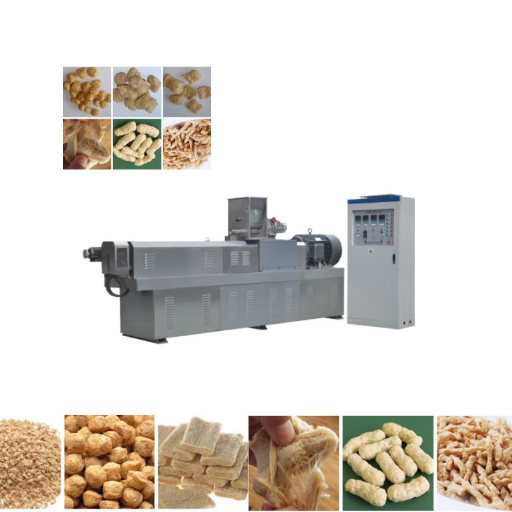
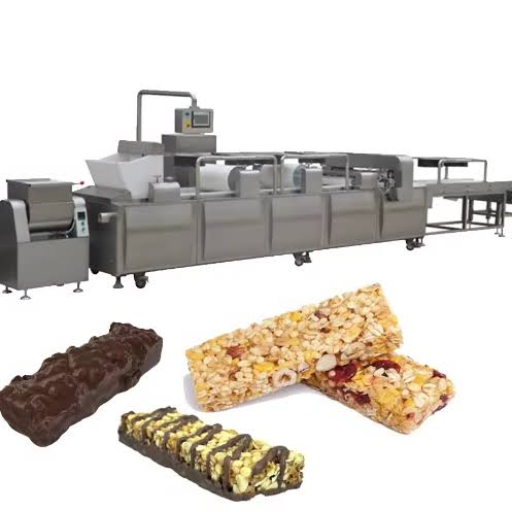
Whether you need a snack food production line, a pasta production line, or a protein bar production line, the principle is the same: clear planning and close collaboration produce a smoother installation.
Ready to plan your next line? Contact our team for a consultation and detailed proposal.
Post-Installation: First Production Run and Optimization

Commissioning is not the finish line. The first production run reveals how the line behaves under real conditions and gives you the baseline for continuous improvement.
Start with a slow, controlled run. Check weights, temperatures, seal integrity, and package appearance against your quality standards. Record every adjustment. Small changes made during first production prevent recurring defects later.
Establish key performance indicators from day one. Track throughput, yield, giveaway, downtime, and cleaning time. Review these metrics weekly during the first three months. Patterns will emerge quickly and guide your optimization efforts.
Build a preventive maintenance schedule before the line reaches full speed. Lubrication, belt tension, seal inspection, and sensor calibration should all have clear intervals. Condition monitoring, where sensors track vibration or temperature, can catch problems before they cause unplanned stops.
Finally, plan for SKU flexibility. Markets change. A modular line with quick-change tooling lets you introduce new products without another major installation project.
Frequently Asked Questions
How long does food production line installation take?
A mid-sized line typically requires 4–8 weeks for installation and commissioning. Small or simple lines may finish faster. Large, highly automated projects can take several months. Site readiness is usually the biggest factor.
How much does food production line installation cost?
Installation typically represents 20–25% of the total project budget. Total investment ranges from roughly 200,000forsmalllinesto200,000forsmalllinesto2 million or more for large, fully automated systems.
What certifications should food production equipment have?
Common certifications include CE marking for European markets, NSF or 3-A sanitary standards, FDA or USDA compliance for the United States, and ISO 22000 or FSSC 22000 for food safety management.
Can installation be phased?
Yes. Modular equipment allows you to install core machines first and add capacity or new capabilities later. Phasing spreads capital expenditure and reduces risk for growing businesses.
What is the difference between FAT and SAT?
Factory Acceptance Test (FAT) verifies equipment at the manufacturer’s facility before shipment. Site Acceptance Test (SAT) verifies equipment after it arrives at your facility and before installation begins.
Conclusion
Food production line installation is where planning becomes production. The process is complex, but it is manageable when you break it into clear phases: pre-installation planning, delivery and positioning, utility and mechanical integration, commissioning, and first-run optimization.
The manufacturers who get the best results do three things well. They prepare the site before equipment arrives, they validate every step with documentation, and they work closely with their equipment supplier throughout the project.
If you are planning a new line or upgrading an existing one, start with the details in this guide. Then partner with a manufacturer who understands both the machinery and the installation process. With the right preparation and support, your line can move from delivery to reliable production on schedule and on budget.
Get started today. Contact Shandong Loyal Industrial Co., Ltd. to discuss your food production line installation requirements and request a tailored quote.