Soft biscuits have a special place in kitchens and hearts around the globe, from the satisfying of sweet cravings to being a common snack with tea or coffee. But the smooth and delicate biscuit that is perfectly made, there is a complicated and efficient production process that uses specialized equipment. This intensive blog post takes us into the exciting world of soft biscuit production lines, revealing the main machinery, technology, and steps that are involved in the large-scale making of these delicious treats. If you are an entrepreneur in the food industry, a production manager, or just curious about how your favorite biscuits are made, this article will help you through the necessary elements and considerations for setting up or enhancing a high-performing biscuit production line.
Overview of Soft Biscuit Production Line

A production line for soft biscuits includes several major stages that are all interconnected and work together perfectly to convert raw materials into finished items. Mixing is the first step in this process, where flour, water, fats, and other ingredients are put together, and mixing is done to produce a uniform dough. The next step after mixing is dough forming, which is done either by molding or cutting machines to get biscuits of uniform size and shape.
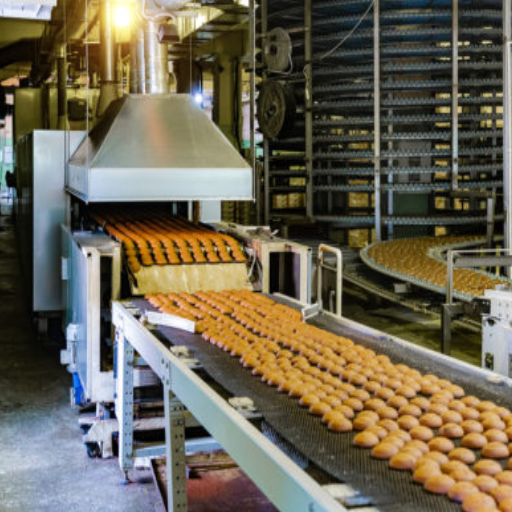
Tunnel ovens with precise temperature control for even cooking are used for baking the biscuits after shaping. The cooling process takes place after baking, and this step allows the biscuits to be set right and to keep their texture. To keep the production speed at its highest and to guarantee that the biscuits are very clean and safe to eat, robots are the ones doing the packaging, where the machines portion, seal, and get ready for distribution. The whole process involves each stage being optimized for some parameters like efficiency, consistency, and product quality.
Definition and Importance of Soft Biscuits
Soft biscuits are one of a kind due to their soft, crumbly texture and moist consistency, unlike their firmer mates. They are luxurious for their versatility, being able to be easily combined with different spreads, toppings, or even savored alone.
The significance of soft biscuits is in their universal attraction to different consumers’ tastes who will be offered comfort and luxury at the same time but with little effort. Their ability to come in sweet and salty ways has made them a part of many kitchens where they are used in making daily snacks or gourmet dishes, for instance.
Key Components of a Biscuit Production Line
The biscuit production line is generally divided into several main parts that make the process easier and faster. They are:
1. Mixing Equipment
Unites basic materials like flour, sugar, and fats in order to make a uniform dough mixture.
2. Forming Machines
Cuts dough into the shapes of desired biscuits by using cutters, molds, or extruders.
3. Baking Oven
Bakes the biscuits exactly and consistently by keeping temperatures under control thus offering the same texture and quality.
4. Cooling Conveyor
Gradually brings the temperature of freshly baked biscuits down so as not to lose their structural integrity and at the same time not to break any of them.
5. Packaging Unit
Uses vacuum packs to keep in the freshness and at the same time to prepare biscuits for sales.
Production Insight: Together, these parts work as well as a well-oiled machine in ensuring the biscuit production on a huge scale of high quality.
Advantages of a Specialized Soft Biscuit Production Line
Essential Equipment for Biscuit Production

Crafting first-class soft biscuits necessitates a specialized equipment setup that gives the process consistency, effectiveness, and excellent yield. The main equipment for the soft biscuit making is as follows:
1. Mixing Machines
This machine brings together the ingredients uniformly to make the dough, thus guaranteeing the texture and quality of the biscuits to be the same throughout.
2. Dough Formers
The dough is then shaped into same-size portions which makes it ready for baking.
3. Baking Ovens
The ovens at this stage are able to precisely control the temperature, and thus provide the exact heat that is necessary for perfect biscuit texture, all day long.
4. Cooling Conveyors
The cooling system is designed to give each biscuit that has just come out of the oven the same amount of cooling which is important to keep their shape and avoid any mishap.
5. Packaging Machines
The biscuits are then sealed and packaged at a very high speed and on a very hygienic basis so they can be sent out for distribution.
Equipment Note: The aforementioned machinery represents the significant core of an effective biscuit-making process with the quality being assured at every step.
Biscuit Making Machines Overview
By means of biscuit making machines, the entire production process is made simpler as they synergize the main procedures of mixing, forming, baking, cooling, and packaging. The use of these machines guarantees the control, uniformity, and productive use of resources, which are the cornerstones for the high-quality products that meet market demand. Each machine is significant in its function to provide smooth operation, waste reduction, and production enhancement that is why they are necessary for the biscuit industry that produces in large quantities.
Types of Mixers Used in Soft Biscuit Production
Different kinds of mixers are employed in the soft biscuit manufacturing process to ensure uniform quality of dough and texture. The most common mixers used are:
1. Horizontal Mixers
Perfect for very large production, these mixers guarantee the mixing of ingredients and the control of temperature in the mixing process.
2. Planetary Mixers
Best for very small batches, they give complete mixing, frequently used for premium biscuits.
3. Continuous Mixers
Made for very fast production, these mixers enable the nonstop making of dough which not only saves time but also ensures that the product is always the same.
Mixer Selection: All types of mixers have their own specific functions and thus contributing to the exactness and quality that are needed in the soft biscuit making process.
Role of Rotary Moulders in Biscuit Manufacturing
Rotary moulders are essential for the molding of biscuit dough into uniform and exact forms. The machine uses rollers that are engraved to press and slice the dough, thus guaranteeing uniformity in the dimensions, shapes, and designs. This method is perfect for making soft biscuits with complicated patterns or logos that not only improve the aesthetic value but also the efficiency of the manufacturing process in mass production.
Manufacturing Process of Soft Biscuits
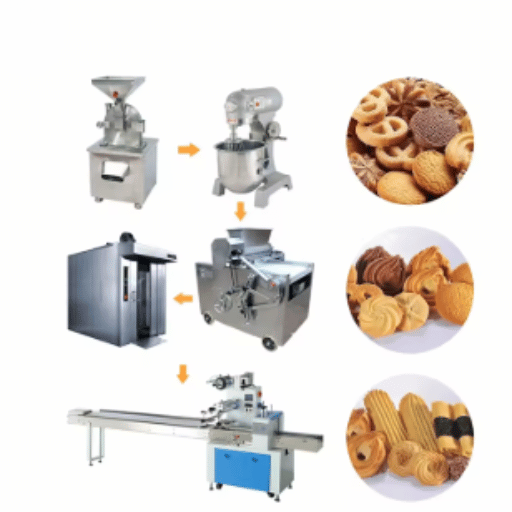
Soft biscuit manufacturing includes multiple main steps to obtain even quality and texture:
Step 1: Mixing
All ingredients, such as flour, sugar, fat, and leavening agents, are mixed in a way that the dough is uniform and has the desired consistency.
Step 2: Dough Forming
The dough that was prepared is shaped by means of rotary moulders or sheeters, which is chosen based on the biscuit design and specifications.
Step 3: Baking
The diced pieces of dough that have taken a shape are put into the ovens where the control of temperature is strict in order to allow the soft texture and flavor of the biscuits to be developed.
Step 4: Cooling
After the baking process, the biscuits are quickly cooled down through cooling conveyors, thus, reducing their temperature gradually and maintaining their structure at the same time.
Step 5: Packaging
The biscuits that are cool down are packed with the help of automatic machines encased in such a way that they are hygienic and fresh, thus, ready for storage and distribution.
Process Quality: This process, which is well organized, guarantees the production of soft biscuits that are of high quality and are in accordance with the requirements of consumers.
Preparation of Biscuit Dough
The mixing of biscuit dough requires the meticulous blending of top-notch raw materials in exactly the right amounts to obtain the needed feel and taste. This method usually begins with combining flour, sugar, fats, and other materials like baking powder and flavorings in large mixers. The blending of the components continues until a consistent and soft dough is obtained thus confirming the dough’s readiness for moulding and further stages of biscuit making.
Lamination and Moulding Techniques
The methods of lamination and moulding are important in biscuit making, as they guarantee perfect structure and design. When lamination is done the dough is folded into a number of layers, thus texture is improved and a light, crispy bite is formed. In the case of moulding the dough is either cut, stamped or rolled into shapes that have been pre-determined, thus accuracy and evenness are maintained throughout the production. Overall, these techniques result in biscuits that are not only of high quality but also, by their appearance, attractively appealing.
Fermentation Process in Biscuit Production
The fermentation process in biscuit production consists of the dough being allowed to rest, during which yeast or other leavening agents get together with the ingredients. The fermentation process benefits the dough by improving its taste, texture, and uniformity.
Fermentation causes the sugars to go to waste thereby forming a light and airy structure and at the same time giving the final biscuit its unique taste. The proper management of time, temperature, and humidity during fermentation secures the best results and the quality of the batch being uniform.
Customization and Flexibility in Biscuit Production

Customize and be flexible when producing cookies, since these two are the main factors that will help to meet different consumer preferences and market demands. Manufacturers can modify their recipes by mixing different types of flour, sweeteners, and flavorings to produce a large selection of goods, from traditional ones to new ones. The production lines are usually set up for flexibility, so the machines can be tuned for different biscuit forms, sizes, and textures. The use of state-of-the-art technology like programmable machinery allows the smooth change of product types while cutting down on inefficiency and inconsistency. The method guarantees that the manufacturers will be able to fulfill the diverse regional tastes, diets, and trends with quality production.
Customizing Equipment for Diverse Biscuit Varieties
Biscuit production equipment tailored to individual needs is built for a wide variety of product requirements, thus, allowing for high flexibility and precision. Manufacturers get to set the machines according to different recipes and customer preferences through adjustable molds for unique shapes, programmable settings for texture and bake time, etc. This customization allows for the effective production of biscuits that are in line with the tastes of different regions, the needs of people with special diets, and the current trends, besides being very consistent and of high quality.
Adjusting Production Lines for Scale and Efficiency
The adjustment of production lines in terms of size and efficiency consists of the optimization of machines and processes so that production does not get less quality. This would mean making the production of larger quantities or the renewal of technology for the higher production to be done automatically. The same way, the application of data analysis might point out the places of inefficiency in production where resources are not properly allocated or where wastage occurs, thus helping to improve these areas and cut down. The production lines that are based on flexibility and efficiency would move up and down with the demand shifts without dropping the quality of the products.
Handling and Packing Solutions for Finished Products
The quality of products and the efficiency of operations can be greatly influenced by the proper handling and packing of finished products. Among the various solutions are the installation of automated conveyor systems, the use of robotic arms for accurate handling, and the installation of advanced packaging machines customized for each product. Manual labor is reduced by these systems, consistent packing quality is ensured, and products are safeguarded during transportation. Moreover, the combination of smart tracking systems provides live monitoring that makes it possible to enhance inventory management and shipping processes in a way that is more efficient and satisfactory for the customers.
Reference Sources
1. Biscuit Machinery – Marketing Guide for Soft Biscuit Brand & Business
Gives suggestions on producing the package and making it correspond to the brand identity in order to attract the target audience.
Source: Biscuit Machinery
2. Biscuit Machinery – Resource
Talks about the process of identifying the target audience and getting the demographics’ picture clear for a biscuit brand.
Source: Biscuit Machinery
3. Foods Machine – A Step-by-Step Guide to Setting Up a Biscuit Production Line
Offers an extensive manual on biscuit production line installation, with the study of demand and target audience identification included.
Source: Foods Machine
Frequently Asked Questions (FAQs)
What is a production line for soft biscuits?
Soft biscuits production line is a combination of machines and equipment for soft biscuit making, which is very efficient and also very large.
What is a soft biscuits production line composed of?
Dough mixers, sheeters, cutters, ovens, cooling conveyors, and packaging machines are the most common components.
What kinds of biscuits are available on a soft biscuits production line?
Soft biscuits production lines can make a gamut of biscuits like filled, plain, and flavored ones.
What is the production output of a soft biscuits production line?
Output is machine-dependent and can be from small-scale to large-scale industrial production.
What are the necessary materials for a soft biscuits production line?
Basic ingredients such as flour, sugar, butter, and flavorings along with packaging materials are must-haves.
Conclusion
Setting up a soft biscuit production line requires careful consideration of equipment selection, process optimization, and quality control measures. From mixing and forming to baking and packaging, each stage plays a crucial role in delivering consistent, high-quality products that meet consumer expectations. By investing in specialized machinery and maintaining flexibility in production capabilities, manufacturers can adapt to changing market demands while ensuring efficiency and scalability. Whether you’re launching a new biscuit brand or upgrading existing operations, understanding the complete production process and equipment requirements is essential for success in the competitive biscuit manufacturing industry. With the right combination of technology, expertise, and quality ingredients, your soft biscuit production line can deliver delicious products that delight customers worldwide.