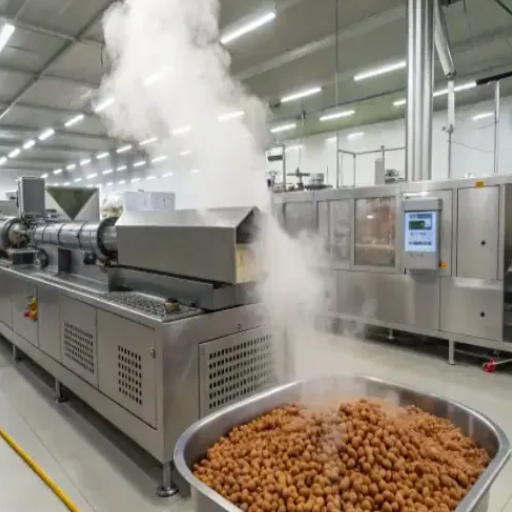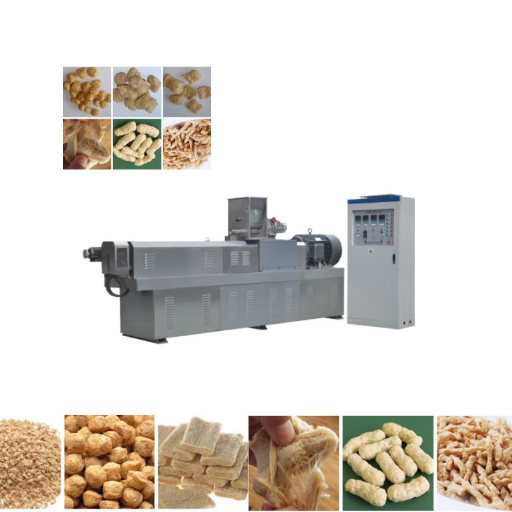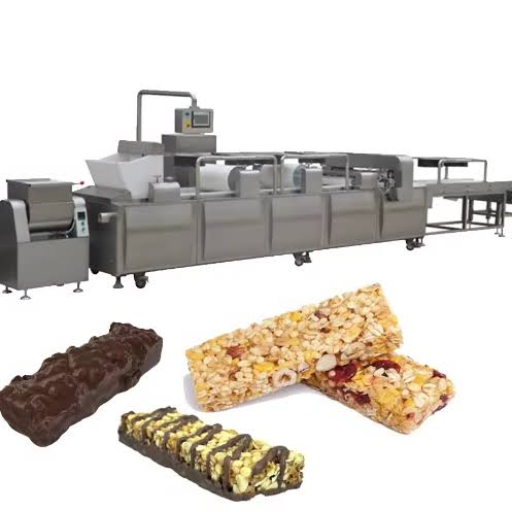
At present, biscuit manufacturing automation is no longer merely futuristic; it offers a major lifeline to manufacturers rushing to meet increasingly demanding consumer bases with assured quality and consistency. The infusion of high-end automated solutions in biscuit lines is a game-changer in the manufacturing process of cookies, crackers, and other tertiary baked confectionery products, offering massive efficiency, accuracy, and scalability. This guide highlights the transformative power of automation on the biscuit industry, providing an overview of significant technologies, their associated benefits, and strategies to streamline production processes. Whether you’re challenged with shortages in manpower, production wastage, or product uniformity, this article will position you well to compete in the market.
Introduction to Automated Biscuit Production
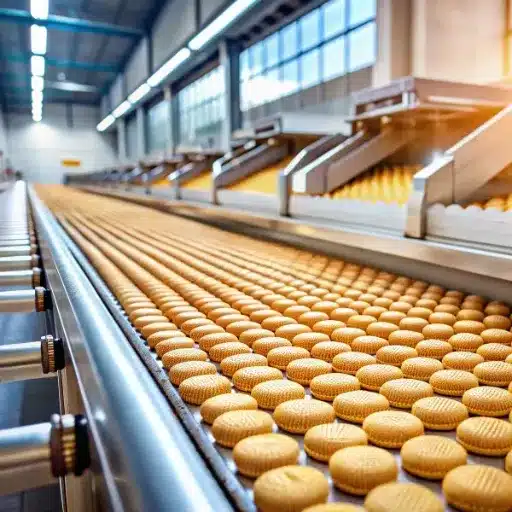
Automated biscuit production involves specific machines and systems that help reduce time and labor at almost every stage of manufacturing, such as ingredient mixing and product packaging. With the help of automation, manufacturers are sure to produce high-quality products quickly and in large quantities, while reducing labor costs. The main technologies are dough mixers, slicers, covering machines, ovens, and robotic packing machinery—all in tune with each other. Automation aids in preventing shortfalls by ensuring consistency and increasing efficiency, while also helping tackle challenges such as labor shortages and growing demand. For companies, such systems serve as an effective means of enhancing their operational capabilities and staying ahead of their competitors.
Overview of Biscuit Production
Production of biscuits involves a planned sequence of activities integrated to achieve the desired quality. The steps usually entail mixing of ingredients, preparing dough, forming or cutting into small shapes, baking, cooling, and finally packaging. Voluntary and functional automations in the present factories have removed man-made errors yet maintained pace. The operations are also brought under control at every stage to ensure that the finished product complies with the taste, appearance, and texture of the biscuits.
Importance of Automation in Biscuit Manufacturing
Automated, or robotic, biscuit production has transformed demand in the field for consistency, speed, and quality by enabling changes. Producers can incorporate robots, sensors, and specific AI-driven systems to reduce the workload and avoid any human intervention. It is worth noting that automation pays attention to every single gram of ingredients, symmetrical preparation of the dough, and even the baking temperature, resulting in good products. Moreover, in automated systems, the presence of quality checks allows defects to be identified, thereby reducing waste and increasing efficiency. In addition to that, it enhances production capacity because this method of manufacturing also reduces costs, making it imperative in this sectoral discipline.
Key Terms in Automated Biscuit Production
- Weighting of Components: Accurately weighing and measuring all elements helps maintain a standard, ensuring a product of equally impressive quality is obtained.
- Processes in Doughs: These involve cutting out or wyebbing single or multiple doughs at a time, which can be achieved using motion machines such as cutters and rotary molders.
- Band systems: Mechanically driven belt systems that carry out the transportation of Biscuits through several operations in the Factory.
- The Tunnular required During Baking: It is the structure used for baking the Biscuits at the requisite temperatures and times.
- Sensors for detecting quality: They are highly sensitive devices used to identify the quality of products, including those that are faulty.
- Packaging Systems: These are various equipment units that help fold, glue, or stick tape, wrap biscuits, and apply labels to make them ready for storage or transportation.
Stages of Biscuit Production Automation
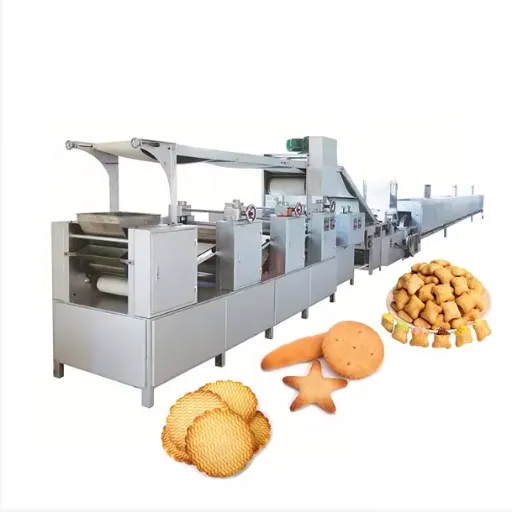
- Ingredient Weighing and Mixing: Automated systems make sure ingredients are weighed and mixed with very high precision.
- Dough Forming and Shaping: These machines cut dough into uniform shapes and sizes.
- Conveying and Transporting: Mechanized conveyor belts drive the biscuits from one stage to another.
- Baking: These baking tunnels give showers of heat at a specified temperature and duration for the biscuit.
- Cooling: The automated cooling systems quickly cool the biscuits, ensuring good quality and freshness.
- Quality Inspection: Advanced sensors and cameras are used to spot imperfections and eliminate defective biscuits.
- Packaging: Automated packaging equips to wrap, seal, and label the biscuits for distribution.
- Storage and Distribution: Mechanized systems organize and prepare packaged biscuits for storage or delivery.
Dough Preparation and Mixing
The mixing and preparation of dough generally imply carefully combining ingredients to produce a homogeneous, consistent dough. In a typical scenario, flour, water, sugar, fats, and other components are each measured out or weighed precisely; thorough blending by industrial mixers ensures that the dough is developed with the textures and elasticities required. Timing and prevailing roller speeds are carefully chosen, resulting in a dough formulation that, depending on its subsequent processing, is either ready to be shaped or baked.
Shaping and Cutting with Biscuit Making Machines
Once the dough is ready, it is sent to biscuit-making machines, where the dough is shaped and cut. Machines contain precision rollers and interchangeable molds, which allow different shapes, sizes, and patterns to be created. The latest technology has made it possible to run these machines at high speeds without compromising quality, ensuring each biscuit meets a given standard. The shaping method defines the product’s appearance, while cutting is performed with high accuracy and low wastage. This allows for the uniform baking and packaging of biscuits, and that is a significant aspect of any modern line.
Baking and Cooling Processes
This step involves actual baking, where the shaped dough is transformed into finished biscuits through the application of controlled heat. Baking takes place in a tunnel or rotary oven, where the heat is distributed evenly, to ensure consistent texture and color of the biscuits. Baking temperature and time vary with types of biscuit so that the essential chemical reactions of caramelization and Maillard browning can take place fully.
The cooling was started to set the structure of the biscuits after baking, and to prevent moisture from forming. Conveyors are utilized to move the baking through the cooling chambers, where the air is circulated to retain a crisp texture and quality. This step is crucial to ensure the biscuits can be safely packed and stored without losing texture or developing condensation.
Key Technologies in Biscuit Production Lines
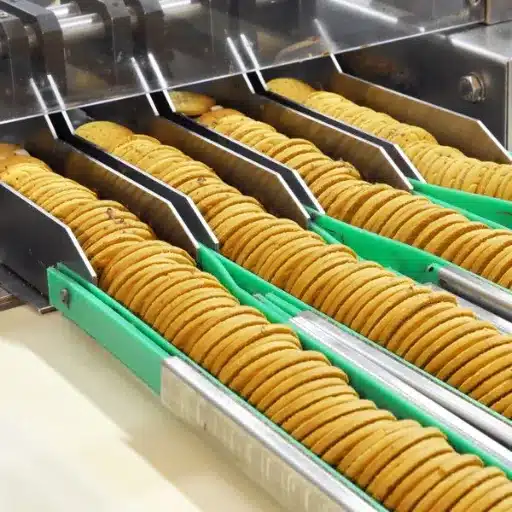
Current-day automated biscuit production includes several innovative technologies for greater productivity, product homogeneity, and consistent results. This can be achieved through a number of new designs, including but not limited to automatic batch makers for handling ingredient dosing, consistent dough rollers and forming cutters for specific shapes and designs, and baking ovens equipped with zones for optimizing temperature control. There is also the use of cooling belt conveyors, which aid in proper setting and enhance the effectiveness of wrapping and packing with machines. Moreover, quality assurance features such as sensors and vision in such equipment enhance the quality control function of every product before it hits the market. All these technologies, when combined, improve production efficiency without compromising the quality of the finished product.
Types of Automated Biscuit Making Machines
Automated biscuit-making machines can be categorized into rotary moulding machines, wire-cut machines, laminators, tunnel ovens, cooling conveyors, and packaging systems, which vary by scale and industrial purpose.
| Machine Type | Function | Scale | Key Feature | Use |
|---|---|---|---|---|
| Rotary Moulding | Shapes dough | Medium-Large | Precision | Soft biscuits |
| Wire-Cut | Cuts dough | Small-Large | Versatile | Cookies |
| Laminators | Layers dough | Large | Consistency | Puff biscuits |
| Tunnel Ovens | Bakes evenly | Large | Multi-temp zones | Mass production |
| Cooling Conveyors | Stabilizes | Medium-Large | Hygiene | Post-baking |
| Packaging Systems | Packs products | Any scale | Fast, sanitary | Final packaging |
Innovations in Biscuit Processing Equipment
The latest trends in biscuit-making equipment focus on energy efficiency, technology, and automation. Today, equipment designed for food production is more advanced, utilizing artificial intelligence and machine learning to control manufacturing operations better and, consequently, reduce the chances of producing unwanted materials. For instance, even advanced rotary molding machines are equipped with active controls that allow for alteration of the shape or dough parameters during operation. Today, the majority of the tunnel ovens have improved heat utilization and temperature regulation for separate segments, which in turn lowers power wastage while maximizing one’s ability to bake. Such improvements not only boost operational effectiveness but also contribute to environmental protection goals, in the face of the rapidly increasing clamor for clean and green production and consumption practices.
Energy-Efficient Solutions for Biscuit Manufacturing
Several innovative solutions allow manufacturers to improve energy efficiency in producing biscuits. One of the solutions is using high-performance ovens with fine temperature controls to minimize energy wastage and deliver high-quality products consistently. Waste heat recovery systems may also be installed so that the excess heat produced during the baking process may be utilized and overall energy consumption reduced. On the contrary, the other method involves using energy-efficient motors and conveyor systems, along with automating processes to reduce energy consumption in process flows. Periodically maintaining equipment to ensure it operates optimally will also save energy. These methods, subsequently, help cut operational costs and, therefore, contribute to sustainability in the industry.
Benefits of Automation in Biscuit Production
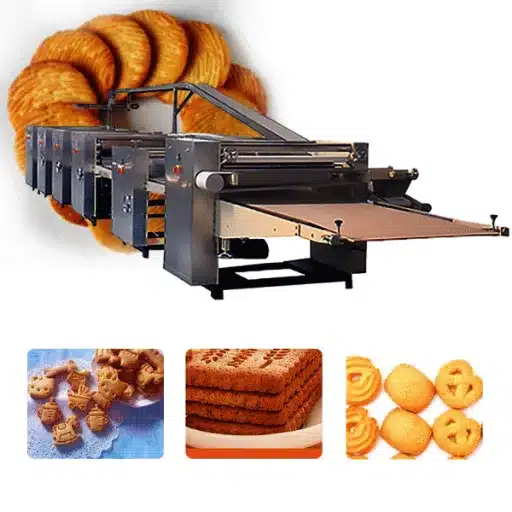
Enhanced Efficiency
Automation in the production process leads to steady and fast outputs with minimal downtime.
Improvement in Product Quality
Automated systems guarantee precision and consistency, ensuring that biscuits are baked uniformly with fewer defects.
Cost-Effective
Automation, while requiring less manual labor and being more efficient in the use of resources, significantly cuts down operational costs over time.
Scalability
Automating the production line makes it easier to scale up as demand increases without compromising in either efficiency or quality.
Worker Safety
Automation, through reducing man-hours for potentially dangerous tasks, creates safer working conditions for operators.
Reduction of Labor Costs
Automation of biscuit production drastically reduces labor costs, as it tackles the repetitive and lengthy tasks involved in the process. By mechanizing and automating several procedures, such as mixing, shaping, baking, and packaging, production speed increases while errors decrease. Therefore, a massive workforce is not required for output and quality. Besides, automation allows companies to channel their employees into tasks that add value, thus enhancing productivity and cutting costs further.
Consistency and Quality Control in Biscuit Making
The implementation of automated systems has a direct impact on biscuit production by making it more consistent and of better quality. Due to the use of precise machines and high-tech sensors, manufacturers can maintain the same size, shape, and texture of large batches of biscuits. The systems continuously monitor and adjust the variables such as temperature, mixing time, and baking duration, thereby eliminating human error and guaranteeing that every biscuit is of the desired standard.
The use of AI and machine learning technologies to quality control is another step taken in the right direction. These technologies assist in spotting the defects during production, for instance, the inconsistencies in color or cracks, and thus the necessary adjustments can be made quickly to reduce waste. By employing automation alongside quality checks, biscuit producers can ensure that the public retains confidence in them and that products meet standards in both appearance and taste.
Increased Production Efficiency
Automation in biscuit production has significantly improved the overall efficiency of the process by effectively applying technology in various areas. The use of automated systems allows high-speed mixing, rolling, and baking of dough thus taking less time in producing and getting more product overall. Moreover, the use of machines results to fewer faults and the production quality is always the same. This efficiency improvement benefits manufacturers by securing higher orders from consumers and helps companies reduce labor and waste costs, making the production process cheaper and more eco-friendly.
Future Trends in Automated Biscuit Production
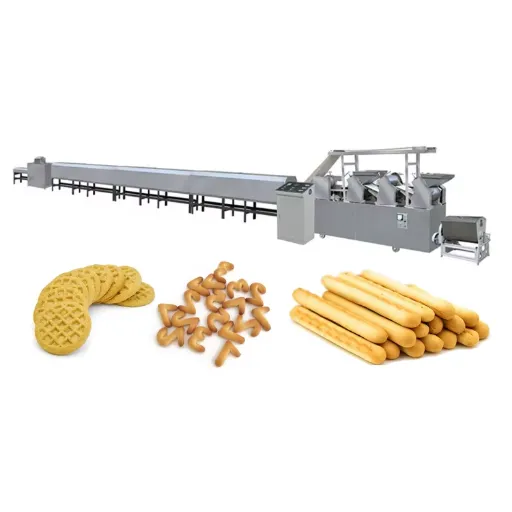
The future of automated biscuit production is characterized by the combination of Artificial Intelligence (AI) and the Internet of Things (IoT). AI-powered solutions will provide optimal production by forecasting maintenance requirements, controlling the quality of the ingredients, and making accurate changes throughout the process. In addition, IoT-enabled devices will facilitate uninterrupted communication between the machines, and the live data analysis will bring about increased efficiency and lowered waste. These innovations aim to come up with production lines that are more intelligent, eco-friendly and very flexible according to the changes in the consumer market.
Advancements in Automation Technology
Automation technology has wholly changed the biscuit-making process, making it more efficient and consistent through the use of machines. The new systems use robots for accurate dough handling, shaping, and cutting, ensuring consistent quality and size of biscuits in all batches. Some advanced sensors and cameras can monitor the entire baking process in real-time, ensuring the temperature and time are optimal to produce consistent biscuit quality. The packaging part of the process has also been handled by machines working at high speed, which sort, wrap, and seal the biscuits to reduce labor costs and errors. Moreover, the data analytics from the Internet of Things (IoT) devices enable the producers to see what steps in the production line can be improved and where wastage can be cut down, which eventually leads to increased profits and greater eco-friendliness. The latest technology has changed biscuit production into a highly efficient and versatile operation.
Trends Towards Fully Automatic Biscuit Production Lines
The use of state-of-the-art technologies in fully automated biscuit production lines is becoming more common, as manufacturers seek to simplify processes and increase output while keeping up with demands in large-scale manufacturing. The main trends that can be observed in this regard are the use of artificial intelligence (AI) for exact monitoring and control, the utilization of advanced robotics for quick and flawless material handling, and finally, energy-efficient machines that minimize the negative impact on the environment. Often, the design of automated systems is based on modularity, allowing them to be easily scaled up or down depending on market requirements, such as changing customer tastes and the introduction of new products. These technological advancements consequently steer industries towards better efficiency, lower costs, and greener practices.
Emerging Market Demands and Customization
The biscuit production industry is transforming due to emerging market demands that are focusing on personalization, quality, and sustainability. Present-day consumers are looking for a wide range of options, such as gluten-free, low-sugar, and organic biscuits, which in turn compels manufacturers to widen their product lines. Modern technology now links AI-powered customization to automated systems that allow quick adjustments to recipes, shapes, and sizes according to a specific customer’s liking. Predictive analytics is also being utilized so that manufacturers can not only see the trends but also respond to them quickly, thereby maintaining their position in the market. The entire industry scenario is such that the demand for customization and quick response, alongside automation, is not just about changing but also about setting the future of the industry.
Reference Sources
- 📚 “The Complete Guide to Automating Your Biscuit Production Line” – This guide explores the steps and considerations involved in automating biscuit production.
- 📚“Modern Biscuit Production Line: How Factories Make Millions of Cookies Daily” – A detailed look at how automated systems are used in large-scale biscuit production.
- 📚 “Biscuit Production Line – Loyal” – Information on high-quality biscuit production lines and how they streamline the process.
- 📚 “Automatic Biscuit Production Line Equipment” – Insights into automated systems that control every aspect of biscuit production, from dough mixing to packaging.
- 📚 “The Future of Cookie & Biscuit Production Lines: Innovations You Can’t Ignore” – Discusses innovations in automated systems for biscuit and cookie production.
Frequently Asked Questions (FAQs)
❓ What is automated biscuit production?
Automated biscuit production is the process of making biscuits using high-tech machines and equipment. This process involves different stages like mixing, forming, baking, and packaging, with each stage performed by machines designed explicitly for their speed and accuracy.
❓ How does a biscuit machine work?
A biscuit machine is a conveyor-like device that moves through an entire series of processes, designed to carry out the mixing, dough preparation, and biscuit forming tasks automatically. It uses cookie molds to shape the dough into different forms before baking, ensuring consistent quality throughout production.
❓ What are the benefits of using a biscuit production line?
A biscuit production line enhances productivity by eliminating manual labor from the biscuit-making process and ensuring consistency throughout the process. Thus, the result is an increase in output, savings in labor expenses, and improved hygiene, making a bakery a preferred choice when scaling up operations.
❓ What types of automated biscuit making machines are available?
There are various kinds of automated biscuit-making machines, such as those that produce only cookies, those that form machines, and completely automated systems that bring together all the processes of biscuit manufacturing. Each type is designed with different production capacities and product specifications in mind.
❓ What are turnkey solutions in biscuit manufacturing?
Turnkey solutions in biscuit manufacturing are complete setups where all the machines and equipment required for production are supplied and installed by a single source. This method simplifies the lives of bakers by providing them with everything needed for cost-effective production from the very first day.
❓ How does the production technology of automated baking improve food safety?
Production technology in automated baking includes features like sanitary designs and materials that help reduce contamination. Moreover, automated systems can also guarantee uniform temperatures and baking duration, which is necessary for food safety and quality control in the production of biscuits.
Ready to transform your biscuit production?
Embrace automation today to stay competitive in the ever-evolving biscuit manufacturing industry.