A food machinery supplier audit checklist is a structured set of criteria buyers use to evaluate whether an equipment manufacturer can consistently deliver safe, reliable, and compliant machinery for food production. It covers everything from quality certifications and hygienic design to after-sales support and spare parts availability.
Most procurement teams have a story like Maria’s. Maria, a QA manager at a mid-sized snack plant, once approved a new extrusion line based on price alone. Within six months, she discovered that the frame used non-food-grade fasteners, weld seams trapped product residue, and the supplier could not deliver spare parts within 12 weeks. A routine third-party audit flagged three major non-conformances, and the line sat idle for 18 days. The “cheaper” supplier cost her company more than $80,000 in lost output and rework.
That single experience shaped how Maria now qualifies every equipment vendor. This article gives you the same practical framework. You will learn what to inspect before you sign a contract, which documents to request, and how to score suppliers so you can choose a partner that protects your product, your brand, and your production schedule.
Key Takeaways
- A food machinery supplier audit checklist must go beyond generic food-safety questions and include equipment-specific criteria such as hygienic design, materials, and validation testing.
- The highest-risk audit gaps are usually poor weld quality, non-food-grade materials, missing spare parts plans, and weak after-sales support.
- Request key documents up front: ISO 9001/22000 certificates, material certificates, FAT/SAT protocols, and calibration records.
- Use a simple 1-to-5 scoring matrix to compare suppliers objectively rather than relying on price alone.
- Always verify hygienic design principles such as self-draining surfaces, smooth welds, and food-grade seals before purchase.
What Is a Food Machinery Supplier Audit Checklist?
A food machinery supplier audit checklist is a buyer-side tool used to assess an original equipment manufacturer (OEM) before and during the purchase of food processing equipment. You can also treat it as a food machinery supplier approval checklist that moves from paperwork to the factory floor. Compared with a general supplier audit checklist for food industry use, it focuses on engineering, construction, and service capabilities rather than only on ingredients or finished food safety programs.
The checklist typically covers ten core areas:
- Company legitimacy and financial stability
- Quality management system and certifications
- Hygienic design and food safety engineering
- Materials and construction standards
- Manufacturing capability and process control
- Equipment validation (FAT, SAT, IQ, OQ, PQ)
- Documentation, manuals, and spare parts
- Installation, commissioning, and training
- After-sales support and warranty terms
- Traceability, CAPA, and continuous improvement
Using this structure helps you compare suppliers on the factors that actually matter for long-term performance. If you are new to buying food production lines, this checklist becomes your first line of defense against costly mistakes.
Why a Food Machinery Supplier Audit Checklist Matters
Generic food supplier audits focus on HACCP plans, allergen controls, and pest management. A food safety supplier audit checklist covers those areas well, but it does not tell you whether an extruder barrel is built from food-grade stainless steel or whether a dryer can be cleaned without disassembly.
Poorly designed food machinery creates hidden risks:
- Product contamination: Cracks, crevices, and rough welds harbor bacteria and allergens.
- Regulatory non-conformances: Auditors may reject equipment that does not meet FDA food-contact or GFSI-recognized scheme requirements.
- Downtime: Low-quality components and slow spare parts delivery stop production.
- Rework costs: Retrofitting hygienic design flaws after installation is expensive and disruptive.
A 2023 review of food manufacturing audits found that equipment-related findings were among the top three root causes of critical non-conformances in GFSI-benchmarked schemes. The right checklist reduces these risks before you commit capital.
How to Prepare for a Food Machinery Supplier Audit
A strong food processing equipment supplier audit checklist is never one-size-fits-all. Tailor it to the equipment’s risk level and your plant’s specific requirements.
Define the Audit Scope
Start by classifying the equipment by risk. A packaging machine that touches open product is higher risk than a pallet wrapper. A line that processes ready-to-eat snacks needs stricter hygienic design criteria than one that handles dry grains. Use this risk tier to decide how deep the audit should go.
Build Your Audit Team
Include people who can ask the right questions:
- Quality/food safety manager: Reviews certifications, HACCP integration, and hygienic design.
- Engineering/ maintenance lead: Evaluates mechanical design, accessibility, and spare parts.
- Production manager: Assesses throughput, changeover time, and recipe flexibility.
- Procurement: Verifies business legitimacy, pricing structure, and contract terms.
Request Pre-Audit Documentation
Send a document request at least two weeks before the on-site or virtual audit. Key files include:
- ISO 9001, ISO 22000, or equivalent quality certificates
- Company registration, bank reference, and key customer references
- Equipment drawings and material specifications
- Welding and surface-finish standards
- Preventive maintenance and calibration programs
- FAT/SAT protocols and acceptance criteria
- Spare parts list with recommended stock levels
- Training plans and commissioning procedures
If a supplier cannot provide these documents quickly, treat that as a warning sign.
The Food Machinery Supplier Audit Checklist
1. Company Legitimacy and Business Stability
This step of your food equipment manufacturer audit checklist confirms the OEM is a real, stable business. Request the business license, export license, and financial references. Ask for three recent customers in your region and contact them directly. Check how long the company has manufactured the specific type of equipment you need.
For international buyers, confirm that the supplier understands your country’s electrical standards, voltage requirements, and import documentation. A supplier with experience shipping to your market will reduce customs and commissioning delays.
2. Quality Management System and Certifications
A strong supplier should have a documented quality management system. Look for:
- ISO 9001: General quality management.
- ISO 22000 or FSSC 22000: Food safety management.
- CE marking: Required for European markets; shows compliance with safety directives.
- FDA food-contact compliance: Important for U. S. buyers.
- GFSI-recognized scheme alignment: BRCGS, SQF, or IFS expectations often flow down to equipment suppliers.
Ask to see the supplier’s internal audit schedule and recent non-conformance records. A transparent supplier will share how they close corrective actions.
3. Hygienic Design and Food Safety Engineering
This is where most generic supplier audits fall short. Food machinery must be designed for cleanability and inspection. Evaluate the following:
- Materials: Food-contact surfaces should be SUS304 or SUS316L stainless steel. Avoid painted or galvanized surfaces near open product zones.
- Surface finish: Ra values should be appropriate for the product and cleaning method. Smooth finishes resist biofilm buildup.
- Welds: Continuous, smooth welds with no pits or cracks. Weld seams should be ground flush in product zones.
- Self-draining: Frames, hoppers, and conveyors should drain completely to prevent standing water.
- Seals and gaskets: Food-grade materials such as FDA-approved silicone or EPDM.
- Accessibility: Covers, guards, and panels should open without tools for cleaning and inspection.
- Dead spaces: Minimize corners, threads, and recesses where product can accumulate.
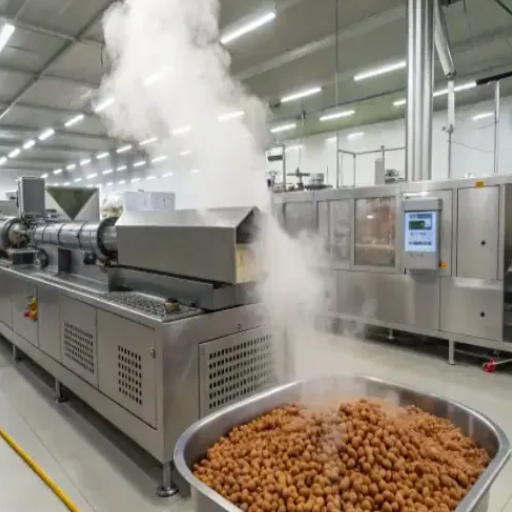
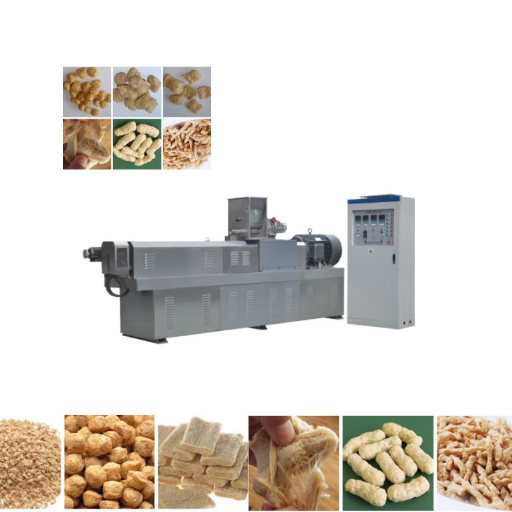
For extrusion and snack systems, pay special attention to die assemblies, cutter housings, and conveying transitions. These areas are common sources of contamination if not designed correctly. If you produce corn puff snacks, ask how the extruder barrel, die plate, and cutter are cleaned between flavor changes.
4. Materials and Construction Standards
Request material certificates for all food-contact parts. Confirm that:
- Stainless steel grades match the specification (SUS304 vs. SUS316L).
- Fasteners in product zones are stainless steel and secured to prevent falling into product.
- Lubricants and hydraulic fluids are food-grade where there is any risk of incidental contact.
- Electrical panels and motors meet your local standards and ingress protection ratings.
Take photos during the factory tour and compare them against the approved drawings. Any substitution of materials should be documented and approved in writing.
5. Manufacturing Capability and Process Control
Visit the production floor if possible. Look for:
- Organized material storage and incoming inspection records
- Defined welding procedures and qualified welders
- CNC machining or fabrication equipment appropriate for your project
- Clean assembly bays separated from raw material cutting areas
- In-process inspection checkpoints
- Final inspection and test records
Ask how the supplier controls design changes. A formal engineering change process protects you from undocumented modifications after approval.
6. Equipment Validation: FAT, SAT, IQ, OQ, PQ
Validation proves that the equipment works as intended. Define these tests in your purchase contract:
- Factory Acceptance Test (FAT): Conducted at the supplier’s facility before shipment. Verifies dimensions, speeds, utilities, and basic function.
- Site Acceptance Test (SAT): Done after installation at your site to ensure correct functioning under your conditions.
- Installation Qualification (IQ): Proves that the equipment has been installed correctly.
- Operational Qualification (OQ): Ensures that the equipment functions according to specifications.
- Performance Qualification (PQ): Demonstrates consistent performance over a defined production run.
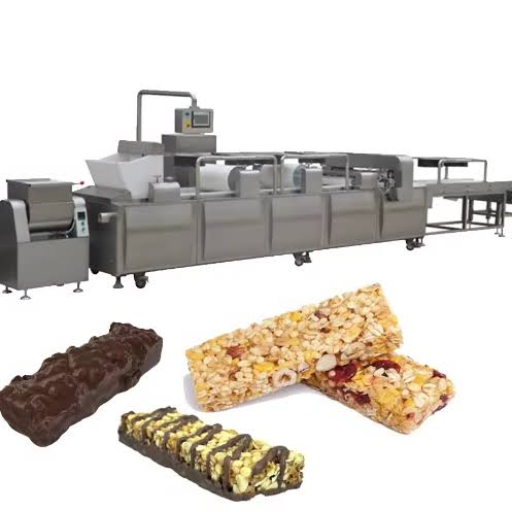
For a pasta production line, the FAT should include extrusion trials with your target recipe. For a protein bar production line, the PQ should verify weight consistency and bar dimensions across an eight-hour shift.
7. Documentation, Manuals, and Spare Parts
A machine without proper documentation is a long-term liability. Confirm that the supplier will provide:
- Operation manuals in your language
- Electrical, pneumatic, and mechanical drawings
- Preventive maintenance schedules
- Recommended spare parts list with part numbers and lead times
- Lubrication charts and food-grade lubricant specifications
- Troubleshooting guides and emergency stop procedures
Ask for a guaranteed spare parts availability period. A supplier that cannot support the machine for at least five to ten years may create future downtime risk.
8. Installation, Commissioning, and Training
Clarify who does what during installation:
- Does the supplier send technicians, or do you use local contractors?
- What is included in commissioning, and how is success measured?
- How many operators and maintenance staff will be trained?
- Is training hands-on at the machine, or only classroom-based?
Training should include hygiene-critical disassembly and reassembly procedures. Your sanitation team must know how to take apart and inspect the equipment safely.
9. After-Sales Support and Warranty
Strong after-sales support separates reliable partners from low-cost vendors. Evaluate:
- Warranty duration and what it covers
- Response time for technical support
- Availability of remote diagnostics
- Cost and lead time for on-site service visits
- Upgrade paths for automation or recipe changes
Ask for references from customers who needed after-hours support. Their experience will tell you more than any sales brochure.
10. Traceability, CAPA, and Continuous Improvement
Finally, assess how the supplier manages problems:
- Can they trace raw materials and components back to their own suppliers?
- Do they document non-conformances and corrective actions?
- Is there evidence of internal audits and management review?
- Do they seek customer feedback and use it to improve designs?
A supplier with a mature CAPA process is less likely to repeat the same defect across multiple machines.
How to Score and Rank Suppliers
A food machinery supplier audit checklist becomes most useful when you turn observations into numbers. Objective scoring prevents price from becoming the only decision factor. Use a simple matrix:
| Audit Area | Weight | Supplier A | Supplier B | Supplier C |
|---|---|---|---|---|
| Quality System | 15% | 4 | 5 | 3 |
| Hygienic Design | 20% | 5 | 4 | 2 |
| Materials/Construction | 15% | 4 | 4 | 3 |
| Validation Capability | 15% | 5 | 3 | 2 |
| Documentation/Spares | 15% | 4 | 3 | 2 |
| After-Sales Support | 15% | 3 | 4 | 2 |
| Business Stability | 5% | 4 | 4 | 3 |
| Weighted Total | 100% | 4.25 | 3.90 | 2.35 |
Score each area from 1 to 5, multiply by the weight, and add the results. Any supplier scoring below 3.0 in a critical area such as hygienic design or materials should be rejected, even if their price is attractive.
Common Mistakes to Avoid
Even a detailed food machinery supplier audit checklist will not protect you if you skip critical steps. Experienced buyers still make these errors:
- Skipping the FAT: Witnessing the factory acceptance test catches specification mismatches before shipment.
- Ignoring spare parts lead times: A broken gear with a 16-week lead time can halt your entire line.
- Accepting undocumented material substitutions: Always require written approval for any change.
- Relying only on price: The lowest bid often hides higher lifecycle costs.
- Neglecting operator training: A well-designed machine becomes a hazard if your team does not know how to clean and maintain it.
When Raj, a plant engineer in Bangalore, audited a snack food machinery supplier, he insisted on a full disassembly demo during the FAT. The supplier’s technician struggled to remove a cutter hub, revealing that the design was not tool-free as claimed. Raj asked for a redesign before acceptance and avoided weeks of future sanitation delays.
Frequently Asked Questions
What should a food machinery supplier audit checklist include?
It should cover company legitimacy, quality certifications, hygienic design, materials of construction, manufacturing capability, equipment validation, documentation and spare parts, installation and training, after-sales support, and traceability or CAPA processes.
How is a food machinery audit different from a food safety supplier audit?
A food safety supplier audit checks programs such as HACCP, allergen control, and sanitation. A food machinery audit adds engineering criteria such as stainless steel grades, weld quality, surface finish, cleanability, and validation testing.
What certifications should a food machinery supplier have?
Look for ISO 9001, ISO 22000 or FSSC 22000, CE marking for Europe, and FDA food-contact compliance for the United States. GFSI-recognized scheme alignment such as BRCGS or SQF is also valuable.
How often should you audit a food machinery supplier?
Audit new suppliers before the first purchase. Re-audit critical suppliers annually or after any major change such as a new facility, ownership change, or repeated quality issue.
Who should be on the audit team?
Include a quality or food safety manager, an engineering or maintenance lead, a production manager, and a procurement representative. Each member evaluates different risk areas.
Download the Checklist and Get Started
Use the framework above to build your own food machinery supplier audit checklist, or download our ready-to-use PDF version. A structured audit protects your investment, keeps your production line running, and helps you choose a supplier that acts as a long-term partner.
If you are evaluating a new food production line, our team can walk you through the key audit points for extrusion, drying, frying, cooling, and packaging equipment. We welcome factory audits and are happy to share our quality protocols, material certificates, and validation procedures.
Ready to audit your next supplier? Contact our team today for a free consultation or factory visit. We can review your requirements, answer your checklist questions, and prepare a tailored quotation for your project.
Conclusion
A food machinery supplier audit checklist is one of the most powerful tools a buyer can use. It turns a subjective purchase decision into an objective evaluation of quality, design, and support. Focus on the areas that matter most for food production: hygienic design, food-grade materials, validation testing, documentation, and after-sales service. Apply a weighted scoring matrix, avoid common pitfalls such as skipping the FAT or ignoring spare parts, and you will select a supplier that keeps your line safe, compliant, and productive.
At Shandong Loyal Industrial Co., Ltd., we have spent over a decade building CE-certified food machinery for manufacturers around the world. We design our extrusion systems, snack lines, and turnkey production lines with cleanability, durability, and customer support in mind. If you need a partner who welcomes audits and delivers reliable equipment, contact us today for a quote or factory visit.