
The best food grade machinery materials for food processing equipment are 304 stainless steel for general applications, 316 or 316L stainless steel for corrosive environments involving salt, acid, or aggressive cleaning chemicals, and food-grade plastics like UHMW-PE and HDPE for non-contact components. Your specific application, cleaning protocol, and regulatory requirements determine which combination is right for your production line.
When Raj Patel expanded his snack manufacturing facility in Gujarat last year, he faced a decision that would either save him 40,000upfrontorcosthimtriplethatinrepairswithinthreeyears.Hissupplierofferedtwoextrusionlines:onebuiltwithstandard304stainlesssteel,anotherwith316Lata3040,000upfrontorcosthimtriplethatinrepairswithinthreeyears.Hissupplierofferedtwoextrusionlines:onebuiltwithstandard304stainlesssteel,anotherwith316Lata30120,000. The replacement 316L drum? It is still running flawless shifts today.
This is the reality of food grade machinery materials. The choice is not just about meeting regulations. It is about protecting your product, your reputation, and your bottom line.
At Shandong Loyal Industrial Co., Ltd., we have spent over a decade building turnkey production lines for food manufacturers across more than 50 countries. We have seen what works, what fails, and what costs food processors far more than they expected. This guide shares what we have learned.
Key Takeaways
- 304 stainless steel handles 80% of food processing applications at the best cost-performance ratio
- 316/316L stainless steel is essential for salt, acid, or chlorine-sanitized environments and pays for itself through extended service life
- Surface finish (Ra ≤ 0.8 μm) and proper passivation matter as much as the alloy grade itself
- A mill test certificate (MTC) and surface finish report are non-negotiable documentation for compliance
- Total cost of ownership over 10-15 years often makes 316L the smarter investment despite a 25-35% upfront premium
What Are Food Grade Machinery Materials?
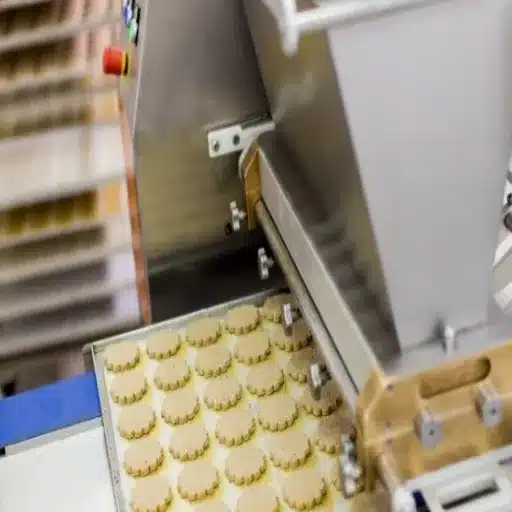
Food grade machinery materials are substances used in equipment construction that are safe for repeated food contact without degrading, leaching harmful compounds, or harboring bacteria. The term encompasses metals, plastics, elastomers, coatings, and lubricants that meet regulatory standards for food processing environments.
But here is where many buyers get confused: “food grade,” “food safe,” and “sanitary grade” are not interchangeable.
- Food safe means a material will not cause immediate harm if it contacts food. It is the minimum threshold.
- Food grade means a material is designed for repeated food contact without degradation or contamination over time. This is the standard for processing equipment.
- Sanitary grade adds design requirements on top of material safety: smooth surfaces, crevice-free joints, complete drainability, and rounded corners that prevent bacterial accumulation.
Your equipment needs food grade materials at minimum. For high-risk applications like dairy, ready-to-eat foods, or extended shelf-life products, sanitary grade design is essential.
Want to see how material selection integrates into a complete production line? Explore our turnkey food production lines designed with application-appropriate materials from intake to packaging.
Stainless Steel Grades: The Foundation of Food Processing Equipment
Stainless steel dominates food machinery construction for good reason. It resists corrosion, withstands aggressive cleaning, maintains structural integrity across temperature ranges, and presents a smooth surface that bacteria cannot easily colonize. But not all stainless steels are equal.
304 Stainless Steel: The Industry Workhorse
Type 304 stainless steel (also called 18/8 for its 18% chromium and 8% nickel content) is the most widely used food grade material in processing equipment. It offers excellent corrosion resistance for neutral pH foods, is readily available worldwide, and costs significantly less than higher grades.
304 is the right choice for:
- Dry ingredient handling (flour, grains, powders)
- Bakery and snack production with low moisture
- Neutral pH beverages and dairy
- Equipment frames, supports, and non-contact panels
- Indoor facilities with controlled humidity
The British Stainless Steel Association notes that 304 serves as “the basic grade from which the others are developed” for food processing applications. For general fabrication, it is hard to beat.
316 / 316L Stainless Steel: When Conditions Get Tough
Type 316 stainless steel adds 2-3% molybdenum to the 304 formula. That single addition transforms the material’s performance in corrosive environments. Molybdenum provides superior resistance to pitting and crevice corrosion caused by chlorides, salts, and acids.
Upgrade to 316 or 316L when your process involves:
- Salt, brine, or cured meats
- Acidic foods (tomato sauce, citrus, vinegar, pickles)
- Seafood processing (high chloride exposure)
- Frequent chlorine-based sanitizers (sodium hypochlorite bleach)
- High-temperature Clean-in-Place (CIP) cycles with caustic chemicals
- Coastal facilities with salt-laden ambient air
The “L” in 316L stands for low carbon. This matters enormously for welded equipment. During welding, heat can cause chromium carbide precipitation at grain boundaries in standard 316, reducing corrosion resistance in the heat-affected zone. The lower carbon content in 316L prevents this sensitization, making it the default choice for fabricated tanks, piping, and vessels.
430 and Other Specialty Grades
Type 430 is a ferritic stainless steel without nickel. It costs 20-30% less than 304 but offers only moderate corrosion resistance. Use it for dry, decorative, or non-contact components like equipment covers and paneling where corrosion risk is minimal.
For specialized applications, consider:
- 420 (martensitic): Hardenable steel for knives, cutting blades, and spatulas
- 2205 (duplex): Combines austenitic and ferritic structures for extreme corrosive environments and higher strength
- 6% Mo alloys: For the most aggressive conditions (hot brine, steam heating, severe chemical exposure)
Stainless Steel Comparison at a Glance
| Property | 304 / 304L | 316 / 316L | 430 |
|---|---|---|---|
| Chromium | 18-20% | 16-18% | 16-18% |
| Nickel | 8-11% | 10-14% | 0% |
| Molybdenum | None | 2-3% | None |
| Corrosion Resistance | Good (general food) | Superior (chlorides/acids) | Moderate (dry only) |
| Relative Cost | Baseline | +25-35% | -20-30% |
| Weldability | Good (use 304L) | Excellent (316L standard) | Fair |
| Best Applications | Dry goods, bakery, neutral pH | Seafood, acidic foods, CIP-heavy | Panels, covers, dry zones |
Beyond Metal: Non-Metal Materials in Food Machinery
Stainless steel gets the spotlight, but food grade machinery materials include a full spectrum of non-metal components. These often determine equipment performance in ways buyers overlook.
Food-Grade Plastics
Ultra-High Molecular Weight Polyethylene (UHMW-PE) is the workhorse plastic for food machinery. It is self-lubricating, resists impact, and handles water and chemicals without degradation. You will find it in conveyor guides, chutes, wear strips, and slider beds.
High-Density Polyethylene (HDPE) and Polypropylene (PP) serve as containers, bins, and cutting boards. They are lightweight, cost-effective, and chemically resistant. For high-temperature applications, Polyether Ether Ketone (PEEK) maintains stability up to 250°C.
A critical innovation for Hazard Analysis Critical Control Points (HACCP) compliance: metal-detectable and X-ray-detectable plastics. These contain embedded additives that trigger contamination detection systems. If a plastic component fractures during production, your metal detector or X-ray system flags it before contaminated product leaves the facility.
Elastomers and Seals
Gaskets, seals, and hoses flex, compress, and seal joints throughout your equipment. The wrong elastomer degrades, cracks, or leaches chemicals into your product.
- FDA-compliant silicone: Flexible, heat-resistant to 230°C, inert to most foods. Ideal for baking molds, gaskets, and transfer hoses.
- EPDM (Ethylene Propylene Diene Monomer): Excellent for steam and hot water applications. Not suitable for oils or fats.
- Viton/FFKM (fluorocarbon): Premium choice for aggressive chemicals, high temperatures, and oils. Costs significantly more but lasts longer in demanding environments.
Surface Treatments and Coatings
Even the correct alloy needs proper surface treatment. Passivation — a post-fabrication acid bath using nitric or citric acid — removes free iron from the surface and restores the protective chromium oxide layer. Without passivation, welded or machined stainless steel can develop surface rust that is not structural but contaminates product and fails inspections.
Electropolishing takes surface refinement further. It dissolves a thin outer layer of metal, producing a mirror-smooth finish with roughness average (Ra) values as low as 0.4 μm. This prevents bacterial adhesion and makes CIP validation easier. Expect a 30-40% cost premium over standard finishes.
Polytetrafluoroethylene (PTFE), commonly known as Teflon, provides non-stick properties for surfaces handling sticky or viscous products. It withstands temperatures to 260°C and resists virtually all chemicals.
Food-Grade Lubricants: The Hidden Compliance Risk
Here is a detail that trips up even experienced operators: the lubricants keeping your bearings, chains, and gears running smoothly must also be food grade.
- NSF H1: Lubricants for incidental food contact (the standard for most food machinery)
- NSF H2: Lubricants for equipment with no possibility of food contact
- NSF 3H: Release agents for direct food contact (mold release sprays)
The food grade lubricant market was valued at approximately 305millionin2024andisprojectedtoreach305millionin2024andisprojectedtoreach375 million by the early 2030s. That growth reflects both expanding food production and tightening enforcement of lubricant compliance in HACCP plans.
Surface Finish and Fabrication: Where Standards Meet Reality
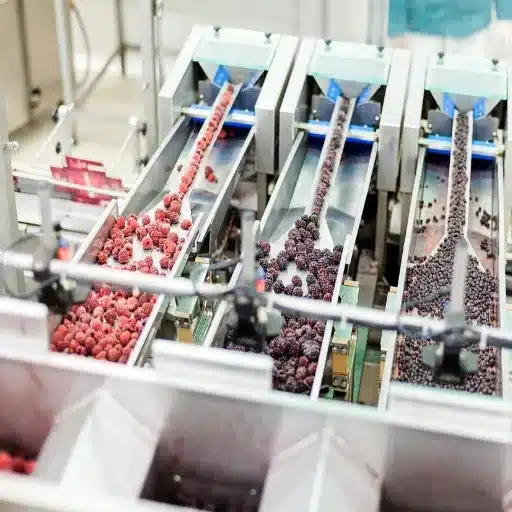
Your stainless steel grade means little if the surface is porous, welded poorly, or finished inadequately. Surface finish and fabrication quality directly impact cleanability, bacterial harborage risk, and equipment longevity.
Surface Roughness Requirements
Surface roughness is measured as Ra (roughness average) in micrometers. The lower the Ra, the smoother the surface.
| Application | Required Ra | Notes |
|---|---|---|
| General food contact | ≤ 0.8 μm (32 μin) | Standard for most processing equipment |
| Dairy and high-sanitary | ≤ 0.4 μm (16 μin) | Requires electropolishing or fine grinding |
| Pharmaceutical/aseptic | ≤ 0.25 μm (10 μin) | Mirror electropolish required |
The British Stainless Steel Association emphasizes that “a poorly finished 316 surface can perform worse hygienically than a properly passivated 304 surface.” Surface finish matters as much as alloy selection.
Welding Standards for Food Equipment
Welding is the most common source of corrosion failure in food machinery. Poor welds create crevices where bacteria hide and chlorides concentrate.
Best practices for food-grade welding:
- TIG (GTAW) welding with high-purity argon shielding gas
- Food-grade filler materials matching or exceeding the base metal grade
- Continuous, crevice-free welds with full penetration
- Post-weld grinding and polishing to smooth the weld bead flush with surrounding material
- Mandatory passivation after all welding and fabrication is complete
For 316L equipment, specify low-carbon filler wire to match the base metal’s corrosion resistance.
Hygienic Design Principles
Beyond materials, equipment design affects cleanability. The 3-A Sanitary Standards and EHEDG guidelines recommend:
- Minimum 3 mm internal corner radii to eliminate sharp corners
- Sloped surfaces (minimum 1°) to ensure complete drainage
- Elimination of dead-end holes, threads, or crevices where liquid accumulates
- Hermetically sealed hollow frames to prevent internal bacterial reservoirs
- Self-draining construction with no horizontal flat surfaces
Planning a new production line? Contact our engineering team for a free consultation on material selection and hygienic design for your specific application.
Regulatory Framework: What Compliance Actually Means
Food grade machinery materials operate under a complex web of regulations. Understanding which apply to your market prevents costly compliance failures.
U.S. Regulations
The U.S. Food and Drug Administration (FDA) does not certify, approve, or issue certificates for raw stainless steel grades. Instead, compliance is determined by the finished equipment system under regulations including:
- 21 CFR 175.300: Indirect food additives (resinous and polymeric coatings)
- 21 CFR 177.2600: Metallic materials used in food equipment
- NSF/ANSI 51: Evaluates food equipment materials for cleanability, corrosion resistance, and contamination prevention
- 3-A Sanitary Standards (SSI): Hygienic design requirements for dairy and liquid food processing
The USDA accepts both 304 and 316 for meat and poultry facilities but emphasizes cleanability and corrosion resistance in its facility guidelines.
In 2024, the FDA issued 127 warning letters to food facilities for equipment surface deficiencies under the Food Safety Modernization Act (FSMA). Stricter enforcement is making material compliance a frontline issue.
European Regulations
- EU Regulation 1935/2004: Framework regulation for all food contact materials. Requires Declaration of Compliance (DoC) and full traceability.
- EHEDG (European Hygienic Engineering & Design Group): Guidelines on materials of construction, strongly endorsing austenitic stainless steels with appropriate surface finishes.
- Regulation 852/2004: Hygiene of foodstuffs, requiring equipment to be “sufficiently durable” and “capable of being kept clean.”
Documentation Requirements
Reputable suppliers provide comprehensive documentation. Request these before accepting delivery:
- Mill Test Certificate (MTC) verifying alloy composition (minimum 16% chromium for FDA compliance)
- Surface finish test reports confirming Ra values
- Welding procedure specifications (WPS) and welder qualification records
- Passivation certificates documenting the acid treatment applied
- Third-party inspection certificates from recognized bodies (SGS, Bureau Veritas, TÜV)
- Declaration of Compliance for EU market access
- NSF/ANSI certification for complete equipment systems (not just raw materials)
Material Selection by Application: Matching Grade to Process
Different food products place different demands on equipment materials. Here is how we match grades to applications across Shandong Loyal’s core product lines.
Snack Extrusion Lines
Dry extrusion zones (mixing, preconditioning) operate well with 304 stainless steel. The real challenge is the seasoning and flavoring section. Salt, citric acid, vinegar powder, and spice extracts create a corrosive environment that attacks 304 within months.
Our recommendation: 304 for dry zones, 316L for seasoning drums, coating pans, and any surface contacting flavored product.
For producers in coastal facilities, consider 316L for all product-contact surfaces due to ambient salt exposure.
Pasta Production Lines
Pasta manufacturing spans dry mixing, hydration, extrusion, cooking, and drying. Each stage has different material demands.
- Dry flour handling: 304 standard
- Hydration and extrusion: 316L preferred for the acidic dough environment
- Cooking sections: 316L for hot, moist conditions
- Drying tunnels: 304 generally sufficient for the dry heat zone
Learn more about our pasta production line configurations with material specifications tailored to your recipe.
Pet Food Processing Equipment
Pet food presents unique material challenges. High-protein, high-moisture recipes with acid preservatives and mineral supplements create one of the most corrosive food processing environments.
Wet extrusion and cooking sections require 316L minimum. Dry kibble cooling and conveying can use 304. For facilities producing both wet and dry recipes, we recommend 316L for all product-contact surfaces to maintain flexibility.
Protein Bar Production
Protein bar manufacturing involves dry ingredients (protein powder, oats, nuts) combined with binding syrups. The dry mixing and forming sections use 304. The syrup preparation and coating zones, where sugars and acids concentrate, benefit from 316L.
Bread Crumb Production
Standard bread crumb processing uses 304 for most stages. The exception is high-humidity drying sections or facilities producing Panko-style crumbs with oil coating, where 316L prevents corrosion in moist, fatty environments.
How to Verify Your Supplier’s Material Claims
Not every supplier delivers what they specify. Counterfeit certifications and substandard materials are real problems in global food machinery procurement. Here is how to protect yourself.
The Supplier Verification Checklist
- Request Mill Test Certificates with heat numbers traceable to the mill. Verify chromium content is at least 16% and nickel content matches the specified grade.
- Conduct spot chemical testing. A molybdenum detection kit costs under $50 and can distinguish 304 (no molybdenum) from 316 in minutes.
- Inspect surface finish with a profilometer. A handheld Ra meter verifies surface roughness claims. If the supplier cannot provide measurement data, that is a red flag.
- Review welding documentation. Ask for WPS records and photos of representative welds. Look for smooth, continuous beads without porosity or undercut.
- Verify passivation records. The passivation date should be after all welding and machining, not before.
- Check third-party certifications. NSF, CE, and ISO certifications should be current and verifiable through the issuing body’s website.
- Request a material warranty. Reputable manufacturers stand behind their material specifications with written guarantees.
When a mid-sized sauce producer in Vietnam ordered a mixing tank from an overseas supplier, the documentation looked perfect. But their incoming inspection team used a simple molybdenum spot test and discovered the “316L” tank was actually 304 with falsified certificates. The supplier replaced the tank at no cost — but only because the buyer verified before installation.
Cost vs. Value: The True Economics of Material Selection
The upfront price difference between 304 and 316L is 25-35%. That gap tempts many buyers toward the cheaper option. But total cost of ownership over a 10-15 year equipment lifecycle tells a different story.
Consider a typical snack production line with five major product-contact components:
| Scenario | 304 Only | Mixed (304 + 316L) | 316L Throughout |
|---|---|---|---|
| Upfront Cost | $100,000 | $115,000 | $130,000 |
| Annual Maintenance | $4,000 | $2,500 | $2,000 |
| Replacement Parts (10 yrs) | $35,000 | $15,000 | $8,000 |
| Downtime Cost (est.) | $20,000 | $8,000 | $4,000 |
| 10-Year TCO | $195,000 | $168,000 | $174,000 |
The mixed approach — using 304 where sufficient and 316L where necessary — delivers the lowest total cost while maintaining full compliance. This is the approach we recommend and implement across our turnkey production lines.
Several factors are shifting the economics toward higher-grade materials:
- Replacement cycles are shortening: Evolving hygiene regulations mandate equipment upgrades every 10-15 years
- FSMA enforcement is intensifying: 127 FDA warning letters in 2024 for equipment surface deficiencies signal a new compliance era
- Global standards are converging: CE, NSF, and 3-A standards increasingly overlap, making multi-certification cost-effective
- Supply chain transparency is improving: Digital traceability makes material verification easier than ever
2026 Trends Shaping Food Grade Materials
The food grade machinery materials landscape is evolving rapidly. Here are the trends affecting procurement decisions this year.
PFAS Phase-Outs Affecting Coatings and Seals
Per- and polyfluoroalkyl substances (PFAS), once common in non-stick coatings and seal materials, are being phased out globally. The EU has restricted PFAS in food contact materials, and over one-third of U.S. states took regulatory action in 2025. Manufacturers must now specify PFAS-free alternatives for coatings, gaskets, and seal materials.
Metal-Detectable Plastics Gaining Adoption
As HACCP plans become more sophisticated, metal-detectable and X-ray-detectable plastics are becoming standard for components in critical control points. Expect this to become a default specification rather than an upgrade option within the next few years.
Antimicrobial Surface Treatments
Silver-ion and copper-alloy surface treatments are emerging as supplementary protection layers. While not replacements for proper material selection and cleaning, they offer additional microbial control in high-risk applications.
Stricter FSMA Enforcement
The FDA’s 2024 enforcement surge was not a one-time event. Expect continued scrutiny of equipment surfaces, material documentation, and HACCP plans. Full material traceability is becoming a competitive necessity, not a nice-to-have.
Extended Producer Responsibility
New regulations in Europe and emerging frameworks in North America hold equipment manufacturers responsible for end-of-life disposal. This is driving material choices toward recyclability and away from mixed-material assemblies that cannot be economically separated.
Conclusion: Material Selection Is a Strategic Decision
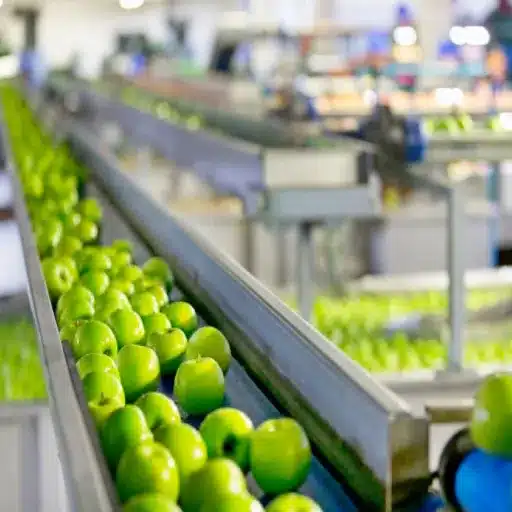
Food grade machinery materials are not a line item to minimize. They are a strategic investment that protects product safety, ensures regulatory compliance, and determines your equipment’s useful life.
Start with 304 stainless steel for general fabrication. Upgrade to 316L where chlorides, acids, or aggressive cleaning demand it. Verify every material claim with documentation and testing. And always factor total cost of ownership into your decision — not just the purchase price.
The global food processing machinery market is projected to grow from 69.7billionin2025toover69.7billionin2025toover109 billion by 2035. That growth brings both opportunity and competitive pressure. Equipment that performs reliably, meets evolving standards, and operates efficiently for its full design life will separate thriving producers from struggling ones.
At Shandong Loyal Industrial Co., Ltd., we do not just supply machinery. We engineer complete production systems with materials matched to your product, your environment, and your regulatory requirements. With over a decade of experience and equipment operating in more than 50 countries, we understand that material selection is where compliance, quality, and cost-efficiency converge.
Ready to spec the right materials for your next production line? Get in touch with our engineering team for a free material consultation and production line assessment.
Frequently Asked Questions
What is the difference between food grade and sanitary grade?
Food grade means a material is safe for repeated food contact without degradation. Sanitary grade adds design requirements: smooth surfaces, crevice-free joints, complete drainability, and rounded corners that meet microbial cleaning standards. All sanitary equipment uses food grade materials, but not all food grade equipment meets sanitary design standards.
Is 201 stainless steel food grade?
No. Type 201 stainless steel contains high manganese and low nickel content. It lacks the corrosion resistance and stability required for food processing environments. Never substitute 201 for 304 or 316 in food contact applications.
Does the FDA approve stainless steel grades?
No. The FDA does not certify or approve raw stainless steel grades. The agency regulates finished equipment systems under 21 CFR. Both 304 and 316 are generally recognized as safe for food contact when properly manufactured, finished, and documented. Compliance is determined by the equipment system, not the raw material alone.
What surface finish is required for food grade equipment?
Food contact surfaces typically require a roughness average (Ra) of 0.8 μm or smoother. High-sanitary applications like dairy and pharmaceutical processing may require 0.4 μm or better, often achieved through electropolishing. The finish matters as much as the alloy grade.
How can I tell if my supplier used 304 or 316?
Request the Mill Test Certificate (MTC) with heat numbers traceable to the steel mill. For field verification, use a molybdenum detection kit (304 contains no molybdenum; 316 contains 2-3%). Chemical spot testing services from third-party labs like SGS or Bureau Veritas provide definitive verification.
What is passivation and when is it required?
Passivation is a post-fabrication acid treatment using nitric or citric acid that removes free iron from the stainless steel surface and restores the protective chromium oxide layer. It is required after all welding, machining, and fabrication work on food contact surfaces. Without passivation, equipment can develop surface rust that contaminates product.
How often should food grade equipment be inspected for corrosion?
Inspect product-contact surfaces monthly for signs of pitting, staining, or surface degradation. Schedule comprehensive inspections annually, including weld integrity checks and surface roughness verification. High-chloride environments may require quarterly inspections.