To produce macaroni of the best quality in very large amounts, accuracy, effectiveness, and modern technology are necessary. For the pasta industry, getting the right macaroni production line supplier can be a key factor in making operations smoother and maintaining the same amount of cooked pasta. The following piece investigates the area of macaroni production line tools, and reveals the ways through which modern gadgets are changing the pasta sector. If you want to improve your present production line or find a trustworthy supplier, this manual will give you important information about how to make your pasta manufacturing process more efficient.
Understanding Macaroni Production Lines
Overview of Macaroni Pasta Production
The production of macaroni pasta requires a well-organized sequence of steps that are done in a precise way to change the basic ingredients such as durum wheat semolina and water into the dear pasta shapes which we all know. The processor starts with mixing the ingredients to form a homogeneous dough. This dough then undergoes a kneading process to give it the perfect texture and elasticity that are required for shaping.
After the dough is ready, it is forced through specific molds or dies that shape macaroni into its signature tubular shape. A tight control is exercised over the extrusion process in order to maintain uniformity of size and shape. After the shaping, the pasta is cut to the length required and prepared for the subsequent stage.
Drying and packaging is the last process of macaroni production. The drying process is crucial because it makes pasta stable, removes extra moisture, and gives the pasta a long shelf life. The macaroni is then packaged in protective materials at the point of distribution. State-of-the-art macaroni production lines are set up to carry out the whole process in an efficient manner, thus ensuring that high-quality output is available to meet the needs of consumers.
Types of Pasta Production Lines
Artisanal Production Lines
- Traditional production methods
- Focus on quality and workmanship
- Natural ingredients only
- Slow drying process
- Ideal for small markets and luxury brands
Industrial Production Lines
- High-level automation technology
- Large-scale production capacity
- Adaptable to various pasta shapes
- Fast production with quality control
- Perfect for global distribution
The selection of either of the two types of production lines depends mainly on the intended volume and purpose of production. Artisanal lines can be very useful for small companies or luxury brands that emphasize their overall quality, while the industrial lines can serve the purpose of companies that are planning to sell their pasta on a global scale. Each of the two categories has specific applications in the pasta industry that warrant the flexibility and diversity of the very different production processes.
Key Components of a Macaroni Production Line
The production line for macaroni consists of a number of key components that work together to convert raw materials into pasta of premium quality. A plate of these components was made taking into account the factors of efficiency, hygiene, and consistency all throughout the production process, for the sake of the manufacturer.
1Mixing Unit
The mixing unit is where the fundamental step of the whole process is taking place. Raw ingredients such as semolina flour and water are mixed into a single, homogeneous dough. The mixing unit has controls that are automated to ensure consistency in and through the mixing process which aids in determining the quality and the texture of the macaroni.
2Extrusion System
The extrusion system then takes over for the next step in the process and this is where the dough gets to take on the form of the macaroni. Forcing the dough through molds or dies gives the pasta the familiar tubular shape of macaroni. The system is flexible and can be modified to make macaroni of different shapes and sizes.
3Drying Equipment
Drying is a very important in the whole process and this especially so in the case of macaroni, which, if dried wrongly, could turn out to be of very poor quality. The drying equipment first of all gets rid of the moisture present in the pasta and brings it down to a safe level. Spoilage is thus prevented and on the other hand the structural integrity of the pasta is maintained. Controlled drying conditions do not only assure that there is no over-drying but also that the pasta retains its appearance and texture.
4Cutting and Packaging Machines
Drying completed, the macaroni is now subjected to the cutting process, where cutting machines cut it into the required lengths. The macaroni is then transferred to the packing machines where it will be getting ready for distribution. The packaging done by these machines is airtight sealing of the pasta thereby locking in its freshness and also making it easier to transport.
Key Takeaway: These components working in conjunction constitute a production line that is as efficient as it is smooth for macaroni, thus being able to supply both small and large manufacturers with the same quantity of output without compromising quality.
Selecting the Right Equipment for Macaroni Production
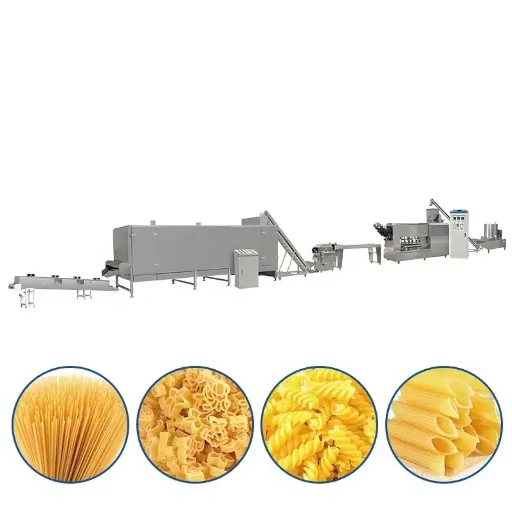
Top 15 Macaroni Production Line Suppliers
Features of High-Quality Macaroni Production Machines
Material Durability and Design
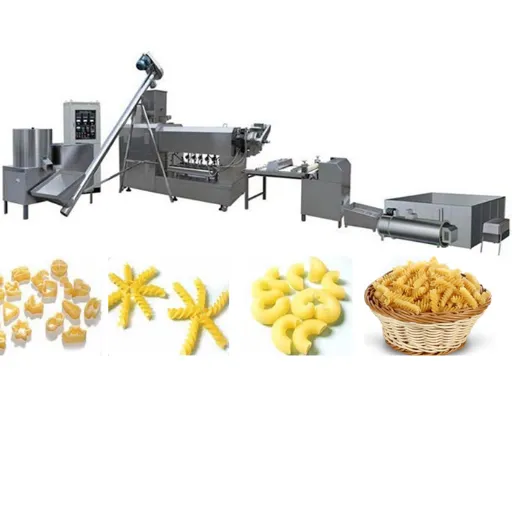
The strength and plan of macaroni production machines are the main factors that have a direct impact on their performance and durability. The best machines are usually made from food-grade stainless steel, which is both resistant to rust and easy to clean. This also makes sure that the equipment meets the high standards of food safety and is able to endure prolonged use without compromising its integrity. Moreover, the heavy-duty construction lessens the possibility of mechanical breakdowns, thereby reducing the maintenance and downtime costs for the manufacturers.
Modern-day macaroni production machines are also made with the user’s comfort in mind so that they can be operated easily and quickly. The smooth-flowing designs of the machines allow the operations to take place without hindrance while at the same time, the risk of contamination during processing is minimized. New design trends often come with modular parts that make it possible to disassemble the machine easily for cleaning and servicing. On top of that, the use of modern engineering methods like precision welding and non-porous surfaces make the machine more durable and improve the consistency of the high-quality product output.
Advanced Features in Modern Machines
- ✓Operator-friendly control systems with LCD screens
- ✓Intelligent detectors for real-time monitoring
- ✓Robotic systems for process optimization
- ✓Automated adjustments for optimal results
Energy Efficiency in Pasta Machinery
Sustainability and cost-effectiveness are the primary factors driving modern pasta manufacturing, and energy efficiency is the most important aspect among them. Manufacturers of pasta machinery are now more and more focusing on applying energy-saving technologies for the purpose of minimizing the consumption of both electricity and thermal energy in the whole production line. Take for example advanced heating systems, which ensure highly accurate temperature control during the drying and extrusion processes and thus a minimum of lost heat. On the other hand, innovations like heat recovery systems allow the capturing and reusing of excess heat, thus making the energy burden lighter. The investments in these modern upgrades not only result in lower operating costs but also subsequently lead to a lesser carbon footprint, which is within the global sustainability standards.
Variable Frequency Drives (VFDs) Benefits
Power Optimization
Adjusts motor speeds based on real-time production requirements
Energy Savings
Prevents unnecessary power consumption during low-demand periods
Flexibility
Adapts to varying power requirements throughout production
The quest for energy-saving solutions is not limited to the machinery as manufacturers are also investing in renewable energy sources for the power of their plants. To some extent, solar panels, biomass-based heating systems, and other green energy initiatives are lessening the dependency on fossil fuels and promoting the use of eco-friendly business practices. Powering advanced machinery with renewable energy means that not only the manufacturers are obtaining significant cost savings but also the buyers’ need for eco-friendly products is being satisfied. This dual strategy highlights the critical importance of energy-efficient pasta machinery in promoting both environmental responsibility and economic stability in the industry.
Automation Capabilities in Macaroni Machines
The evolution of macaroni machines has taken a giant leap in the direction of modernity, with the adoption of the latest technologies in automation, which have significantly increased efficiency and even more so, they have provided a way for the manufacturers to maintain quality. The like of PLCs and exalted sensors are some of high-tech features that have made it possible for the producers to do so and even more. It is this precision that the uniformity in the pasta shapes, textures, and moisture content, which is a must for both industry and consumer demands, is guaranteed. Use of machines has brought down human involvement to a great extent leading to operational costs to be reduced with the errors minimized while the output has been remarkably increased at the same time.
IoT Integration Benefits
Real-Time Monitoring
Track performance metrics continuously
Predictive Maintenance
Early detection of potential issues
Resource Control
Optimize energy and water usage
Waste Reduction
Efficient recycling of materials
In addition, automation is a strong ally in the sustainability battle, as it is possible to control the resources needed in a better way i.e. energy and water. The modern macaroni machines, with the help of smart monitoring systems, have the ability to set their operating conditions so that the least amount of energy is consumed while maintaining the same quality of the product. At the same time, the production is being made more environmentally friendly because of the efficient recycling of waste materials such as surplus dough or water back into the process. The above are the most recent proofs that the automation in macaroni machines does not only increase productivity but also helps in achieving the sustainable manufacturing goals that are closely in line with the demands of today’s eco-conscious market.
Optimizing Production Efficiency in the Pasta Industry
Strategies to Maximize Output
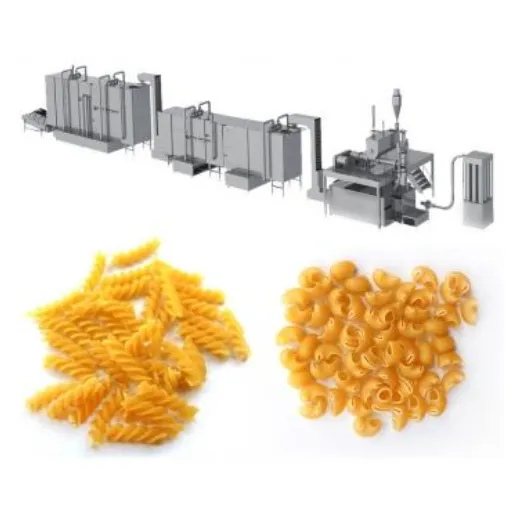
Pasta production industry aiming to get the most output out of their operations will have to employ a mix of modern technology and operational strategies that are made easier. The use of automation systems that are at the very front of the tech curveis one of the major ways to go. These systems can manage large-scale production accurately and quickly. Machines for mixing, extrusion, and drying that are automated not only produce consistently good quality but also cut down the time taken by each production cycle drastically. The up-front cost in predictive maintenance software can be outweighed by the reduction in unavailability as this software detects potential machine stoppages before they happen, thus ensuring smooth and efficient runs.
Key Optimization Strategies
Advanced Automation
Deploy cutting-edge automation systems for mixing, extrusion, and drying processes
Data-Driven Management
Utilize sensors and IoT for real-time monitoring and process optimization
Supply Chain Excellence
Build strong partnerships and implement just-in-time inventory practices
Good relations with supply chain partners are also a major factor that contributes to getting the most production output out of the process. Getting good suppliers will guarantee that there will be no delays in raw material deliveries and hence no interruptions in the production schedule. Also, embracing JIT (just-in-time) inventory practices will not only help in cutting down storage costs but also in reducing waste. When all these methods are complemented with a flexible workforce that is trained in lean production techniques, it results in an environment that is very adaptive and can easily cater to the increasing global demand for pasta products.
Reducing Operational Costs in Macaroni Production
The method for producing macaroni is capable of providing a variety of chances for reducing operational expenses via technological and procedural improvements. One such modern automating system can improve the production process by decreasing the manual labor, increasing the accuracy, and providing the same quality all the time. The use of high-grade machines like automatic extruders and drying systems can not only bring about faster production cycles but also consume less energy, thus, reducing the utility costs significantly. Moreover, predictive maintenance systems can early detect the potential failures of equipment thus avoiding the costly disruptions and prolonging the life span of the machinery.
💡 Cost Reduction Tips
- Transition to renewable energy sources (solar, biomass)
- Implement heat recovery systems and improved insulation
- Install LED lighting throughout facilities
- Develop partnerships with local suppliers
- Use data analytics for demand forecasting
The need to optimize the supply chain is urgent and must be addressed to cost cut. The transportation costs are decreased and the supply of raw materials is secured if macaroni producers develop long-term partnerships with local suppliers. Planning of routes and controlling of stocks are made easier with the help of logistics solutions that rely on data. Besides, the use of big data analytics gives a deeper understanding of the demand trends which allows accurate production planning and hence cuts down the chances of overproduction or wastage of the material. All these measures together result in the production of a less bulky and more economical operation capable of securing a lasting competitive advantage for the macaroni producers in the market.
Implementing Quality Control in Pasta Manufacturing
Achieving uniform product quality in pasta production is not possible without a well-organized method that combines stringent testing and the use of high-tech tools. The very first step of the quality control process sees the selection of top-notch raw materials like semolina flour that has a direct bearing on the texture, flavor, and cooking characteristics of the end product. The monitoring of the raw material quality is done continuously through standard tests, such as particle size analysis and protein content evaluation, which is done to ensure that the input quality is always consistent.
Quality Control Framework
1Raw Material Selection
Continuous monitoring through particle size analysis and protein content evaluation
2In-Process Monitoring
Real-time checks of moisture content, thickness, and extrusion temperature using advanced sensors
3NIR Spectroscopy
Non-invasive verification of product conformity without stopping production
4Post-Production Testing
Random sampling for cooking tests and microbiological examinations
Merging these practices with the use of data analytics can make the whole quality control process even more efficient, as it can detect trends from the production data and thus prevent potential quality problems. Such an all-encompassing approach not only ensures quality but also saves the cost of production and increases consumer satisfaction, thereby giving a competitive advantage in the market.
The Future of Macaroni Production Technology
Trends in Industrial Pasta Making Machines
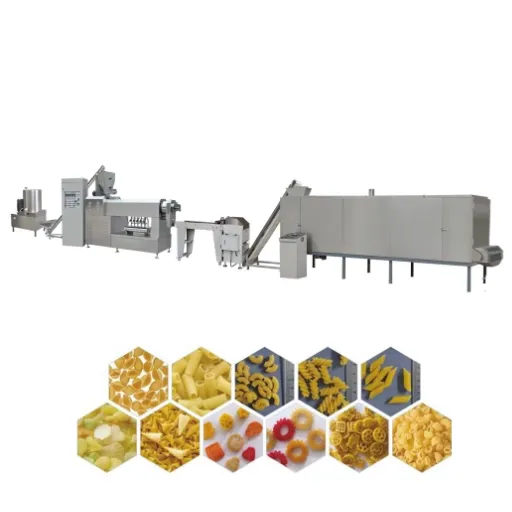
The pasta-making industry has made a big leap in terms of technology thus it has been able to improve its efficiency and accuracy in the production processes quite a lot. One thing contributing to the companies’ success is the use of automated machines and robotics in the pasta production lines. The use of automated machines ensures that there is very little human intervention, which in turn leads to the consistency of the output and makes the laborious operations like kneading, extruding, and cutting less tedious. The use of robotics in making is so precise that manufacturers can even create different shapes and sizes with almost no waste and at the same time keep up the high-quality standards throughout big-scale production.
🤖 Automation & Robotics
Minimal human intervention ensures consistency and precision across all production stages
🌱 Sustainability Focus
Energy-efficient machines with thermal control and waterless drying technologies
📡 IoT & AI Integration
Real-time monitoring and predictive analytics for optimal performance
In addition, data-driven technologies together with IoT (Internet of Things) and AI (Artificial Intelligence) are changing the game in the industrial pasta-making processes. Through IoT connectivity, real-time monitoring of equipment can be done with the assurance of minimal downtime and maintenance. At the same time, predictive analytics have been obtained with AI-powered algorithms for equipment malfunctions forecasting and ingredient optimization for new recipes. The technologies offer the manufacturers not only the opportunities for better product quality and less waste but also remaining competitive in a fast-changing market. The amalgamation of automation, sustainability, and data analytics has made the future of pasta production technology not only creative but also reflective of the needs of a modern, aware consumer base.
The Role of Automation in Pasta Production
Modern pasta production is heavily dependent on automation, which not only helps in moving the process faster but also delivers uniform quality even for large production volumes. The pasta manufacturing industry is if not the only one at the forefront of the market by adopting the new technologies, Such as saving time, and operation cost reduction in the market. The below aspects of automation in quality enhancement of pasta production convey the point clearer:
Automation Benefits Across Production Stages
Ingredient Mixing and Precision
Automated systems ensure ingredients are weighed and mixed with exact measurements, maintaining consistent quality across all batches
Extrusion and Shaping
High-end extrusion machines guarantee precision in shape, size, and production speed without exceeding limits
Drying Process Optimization
Automated drying systems monitor temperature and humidity, controlling moisture content for extended shelf life
Quality Control with Sensors and AI
AI-powered sensors detect defects in shape, weight, or density, enabling immediate production adjustments
Packaging Efficiency
Automated packaging lines enhance speed and precision while applying branding and monitoring quality
Industry Insight: By adopting these automated processes, pasta manufacturers can run their businesses with utmost efficiency and deliver high-quality products, making automation an inevitable part of the industry’s future.
Innovations in Macaroni and Pasta Shapes
The pasta sector keeps progressing by merging age-old skill with the latest technology which is to say creating new shapes and innovating ones. Using modern extrusion methods, it has become possible for the producers to implement unique and intricate designs that would satisfy not only the prevailing tastes and preferences in a particular area but also the trends in cooking. To illustrate, one can find gluten-free and high-protein variations presented in wide creative designs that would attract the attention of consumers with dietary restrictions or health-conscious lifestyle.
Cutting-Edge Innovations
3D Food Printing
Precise artistic designs limited only by creativity, enabling themed and personalized pasta
Alternative Flours
Innovative shapes made from lentil, quinoa, or chickpea flour for eco-conscious consumers
Sustainable Packaging
Environmentally responsible packaging solutions complementing innovative products
The innovators are working on and off in a multi-faceted manner to not only increase the process of visual transformation of pasta products and their variety but also to open exciting avenues for the global market, thus, ensuring that pasta stays versatile and remains a staple food item for people in the kitchens all around the world.