Microwave-assisted food processing has quickly ascended to the status of a revolutionary technique in the food sector, with advantages such as efficiency, accuracy, and sustainability that are beyond comparison. The change of consumer preferences towards healthier, less processed products and the active search for energy-efficient solutions by the manufacturers are forces that have to support the microwave-based systems in changing the usual way of producing food. This article will focus on the main technologies responsible for microwave-based food processing, their effects on the quality, safety, and speed of production. By an improvement in heat distribution along with the preservation of nutrients, we discuss the main reasons why this advanced technique is taking the central role in the food systems of the present day. No matter if you belong to the category of the food technologist, manufacturer, or are just interested in the latest industry practices, this detailed guide will give you the knowledge on how these technologies might transform the future.
Introduction to Microwave Food Processing
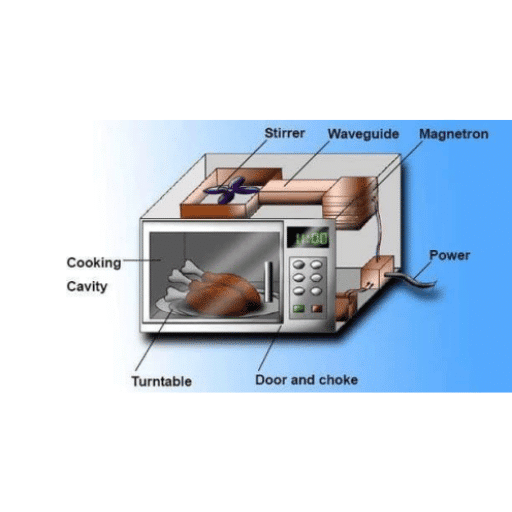
Microwave food processing is a tech that employs safe and effective heating techniques using microwaves. The process activates water particles in the food and their constant movement generates heat that permeates the entire food item. Since microwave heating operates on the principle of radiation, there is no need for conduction and thus, the process runs less slowly, so one can say that microwaves give quick and even heating (or heating in all parts simultaneously), hence, cutting down the processing time and saving energy simultaneously. This method dries, pasteurizes, and sterilizes food products very fast, besides the other advantages such as quality improvement and nutrition retention. Microwave processing is becoming more common and efficient in meeting the needs of the modern food supply chain that calls for quicker, safer, and more efficient production processes.
Overview of Microwave Heating
Microwave heating is one of the techniques that utilize electromagnetic waves to conduct energy directly to the molecules within a substance and as a result, to heat them up at a very fast rate. This process is not subject to the usual heat transfer mechanisms of conduction, radiation, and convection, leading to much quicker and more uniform thermal processing. Its quickness, efficiency, and capacity for quality improvement made it especially suitable for drying, pasteurization, and sterilization, among other applications. Additionally, the microwave method is known for its capability to maintain the nutritional quality of the product.
Importance of Microwave Technologies in Food Engineering
Microwave technologies have in a way turned upside down the food engineering process as they now become the first choice wall-to-wall these advantages which are tremendous in processing speed, less energy used, and good quality of the end product. When for example the heat was applied in a usual way, the microwaves got through the whole food mass all the same and this led to the decrease of processing time as well as the guarantee of uniformity of distribution of heat. By the Journal of Food Engineering data, for instance, microwaving could be one of the best thermal processing methods wherein the cooking time gets down to 50% thus gaining better productivity in industrial use.
💡 Key Research Finding
Research that compares 2023 year showed that amongst vegetables, vitamin C in the case of broccoli, for example, it was still 90% effective when microwaving was used, while it was only 60-70% in the case of traditional boiling. This makes the technology perfect not only for health-conscious consumers but also for the industries wanting to fulfill the nutritional standards.
The microwave technique is additionally a part of the sustainability wheel. Studies conducted in the food manufacturing industry mention that microwave systems use at least 30% less energy than traditional heating systems; thus, carbon emission is substantially reduced. The implementations of such innovations are not only in agreement with the worldwide environmental goals but also lead to a cut in the cost of the operations which makes the technologies pretty much irresistible in the case of the food that is being produced in the modern way.
Magnitudes of advantages provided by about, it has been the microwave technology which has been mainly used in such processes as pasteurization, sterilization, and dehydration. Taking for example, microwave-assisted pasteurization, it gives similar bacterial safety as traditional methods but on the other hand, it has the better product texture and flavor which is also supported by recent findings in the food safety studies. This efficiency-quality-sustainability trio is the very foundation of the increasing dependability on microwave technologies for the progress of the food engineering future.
Historical Development and Trends
Microwave technology evolution goes back to the mid-20th century, mainly, when it was incorporated in radar systems during World War II. Its gradually acceptance in the food industry started with the invention of the microwave oven in 1940s which changed the way people cooked by introducing speed and convenience. Along the years, the technology has kept on evolving becoming more and more widely used for daylight industrial processes such as drying, blanching, and pasteurization. At present, advanced energy efficiency, quality of the product, and sustainability are the main areas of focus and they have been triggered by the increasing demand for food processing solutions that are both efficient and eco-friendly.
Microwave Food Processing Techniques

Microwave food processing methods take advantage of electromagnetic energy to heat and process food fast and uniformly. The main techniques are as follows:
🌾 Drying
This process is applied to reduce the moisture content in food products, thus keeping their texture, flavor, and nutrients intact. The process is quicker and more energy-efficient than the traditional methods.
🔬 Pasteurization and Sterilization
These processes together ensure food safety by killing off harmful microorganisms without significant changes to food quality, hence making the processes suitable for ready-to-eat meals and packaged goods.
❄️ Thawing and Tempering
This process efficiently defrosts frozen foods, thus keeping the time shorter and preventing bacterial growth by making uniform the temperatures.
🍳 Cooking and Baking
This process allows rapid and consistent heating for the prepared meals, thus maintaining the taste and nutritional value.
The use of these techniques leads to increased efficiency, lower operational costs, and compliance with the modern food quality standards.
Microwave Drying Methods
Microwave drying techniques make use of electromagnetic energy for the removal of moisture from products in a way that is both fast and uniform. The methodology involves the direct heating of water molecules inside the material which leads to quicker evaporation than conventional drying methods. Among the major advantages are the significant reduction of drying periods, doubling energy efficiency and less thermal damage to the heat-sensitive products. These methods have found application in many sectors such as food processing, pharmaceuticals, and ceramics, where they provide quality and consistency in production.
Continuous Microwave Systems
The continuous microwave systems are made to give steady and efficient drying for large production processes. These systems work by applying uniform microwave energy to the materials moving through a controlled environment, which guarantees even heating and moisture removal. Continuous microwave systems, by controlling temperature and energy application with high precision, improve product quality, lower processing times, and utilize energy in an optimal way, thus making them suitable for agro, food, and pharmaceutical sectors among others.
Microwave Cooking vs. Conventional Methods
Microwave and traditional cooking methods are quite different regarding speed, energy consumption, and uniformity. Microwaves cook food by penetrating and heating it with electromagnetic waves, hence, cooking times are shorter and more nutrients are retained when compared to baking or frying. The downside of traditional methods is that they can be less time efficient and energy-consuming, but the upside is that they are able to deliver a better texture and browning, which microwaves cannot do because of the absence of dry heat. Conventional appliances still have the upper hand in certain culinary applications, whilst microwaves are top-notch in the convenience and energy savings departments.
Applications of Microwave Technologies in the Food Industry

In the food industry, microwave technologies have multiple applications all aimed at making processes more efficient, and at the same time, improving product quality and safety. Here are some of the main uses:
- Food Preservation: Microwaves are very good at pasteurizing and sterilizing, and thus they are able to greatly extend product shelf life while still keeping the flavors and nutrients intact.
- Drying and Dehydration: Microwave drying takes moisture off quicker, therefore, it reduces the drying time and at the same time keeps the texture and color of the product.
- Thawing and Reheating: Rapid thawing makes sure that there are no cold spots, thereby preventing bacterial growth and shortening the preparation time.
- Cooking and Prepared Meals: Microwave cooking gives out consistent heating, and thus, the taste is optimized while the nutritional value in the ready-to-eat meals is maintained.
These applications prove the fact that microwave technologies have made a great impact by assisting in the modernization of production processes and the realization of high food quality standards, among other things.
Microwave Sterilization Processes
In microwave sterilization methods, harmful microorganisms present in the food products are quickly heated and destroyed through the use of electromagnetic waves. As a result, this method is able to provide consistent and even heat distribution throughout the food, thus the texture, flavor, and nutritional quality of the food are preserved, and it is able to comply with even the most rigorous safety standards. Microwave treatment is a more effective and eco-friendly approach to guaranteeing the safety of food in today’s production systems as it takes less time and consumes less energy than traditional methods.
Utilizing Microwaves for Food Preservation
The preservation of food by microwave is a versatile method that guarantees food quality and safety. The method that uses electromagnetic waves for the control of heating not only eradicates the harmful microbes but also downplays the natural flavor, texture, and nutrients of the food to a large extent. This technique is beneficial not only in the case of reducing the time taken for processing but also in obtaining the energy efficiency and causing little or no harm to the environment. So, it is a new and effective way for the food industry to tackle the issues of today.
Innovative Applications in Food Research
Microwave preservation has been researched for various applications like the extension of shelf life, reduction of spoilage, and the improvement of safety for ready-to-eat meals. Heat-sensitive nutrients preservation, optimization of packaging materials for microwave processing, and the combination of preservation methods such as vacuum sealing to increase efficiency are also the focus of the investigators. This innovation is leading to the development of food products that are safer, longer-lasting, and more sustainable.
Benefits of Microwave Food Processing

Microwave food processing is a modern technology that actually has a lot of benefits including:
- 1
Energy Efficiency
Traditional heating methods use more energy than microwaves and, therefore, the total cost of production will be less. - 2
Reduced Processing Time
Because microwaves heat quickly the time for cooking and processing is greatly reduced thus making production more efficient. - 3
Enhanced Nutrient Retention
The heat penetration in foods is very short, which helps to keep the essential nutrients like vitamins and minerals in the foods. - 4
Improved Product Quality
The microwaves heat uniformly thus the texture, flavor, and appearance of food products are consistent. - 5
Extended Shelf Life
The microwave-assisted sterilization and pasteurization process kill all microorganisms that are harmful to humans and capable of spoiling food thus the safety and the freshness of the latter are prolonged. - 6
Versatility
The technology can be used for all types of products, such as from raw materials to fully cooked meals thus meeting the industry’s various needs.
With those advantages, the use of microwaves in food processing comes out as an innovative and practical solution for mixing hastening, safety, and quality in food production.
Efficiency in Thermal Processing
The use of microwaves in food processing has led to a great improvement in efficiency by cutting down the heating time when compared with traditional methods, thus assuring quick and even thermal treatment. The whole process is so fast that it uses less energy, maintains product quality, and caters to the needs of high-volume production, which is why it is the most suitable technology for the food industry of modern times.
Quality Retention in Food Products
Microwave food processing is a technique that has a lot of advantages such as the preservation of nutrients, flavors, and textures in the final products. The production of high-quality food is assured by the careful and even heating which reduces the cooking time and prevents the loss of nutrients. Moreover, the method of microwaving cuts down the amount of additives and preservatives used, which is in accordance with the customers’ demand for more natural, less processed, and fresher food.
Cost-Effectiveness and Sustainability
Microwave food processing stands out as an economical and eco-friendly method mainly because of its energy efficiency and short processing times. It not only significantly cuts the overhead costs by using less energy than traditional methods but also helps the environment by its accurate heating which leads to less food waste and thus, less resource use and lower environmental impact of food production processes.
📊 Key Statistics
- 50% reduction in cooking time compared to traditional thermal processing methods
- 90% vitamin C retention in broccoli when microwaving vs. 60-70% with traditional boiling
- 30% less energy consumption than traditional heating systems
- Substantial reduction in carbon emissions and operational costs
Reference Sources
- The Brainy Insights – Microwavable Foods Market: Discusses the market trends, the first of which is the supremacy of North America over the whole microwavable industry.
- SMETA Group – Proven Strategies to Boost Microwave Sales: People’s understanding of the target market for the different products related to the microwave has been underlined as the most crucial factor.
- Consegic Business Intelligence – Microwave Oven Market: Looks into the application of the microwaves in the food service area which comprises restaurants and hotels.
- Virginia Tech Extension – How is Microwave Technology Used to Process Foods?: Talks about the different uses of microwave technology in food processing which are making ready-to-eat meals and baking.
Frequently Asked Questions (FAQs)
Conclusion
Microwave food processing represents a transformative advancement in the food industry, offering unparalleled benefits in terms of efficiency, quality retention, and sustainability. From reducing processing times by up to 50% to preserving 90% of essential nutrients, this technology addresses the critical demands of modern food production while aligning with environmental goals. As consumer preferences continue to shift towards healthier, minimally processed foods, and as manufacturers seek cost-effective and eco-friendly solutions, microwave technologies stand poised to play an increasingly central role in shaping the future of food engineering and production systems worldwide.