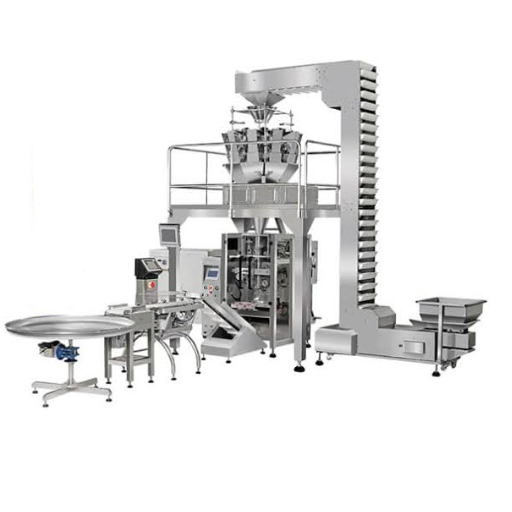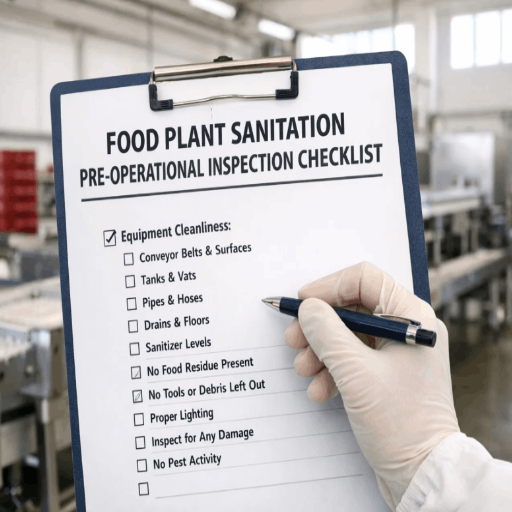
Robotic food processing is not one catch-all technology. It spans five distinct robots in food processing: Delta, SCARA, articulated (six-axis), collaborative (cobot), and portal/gantry. Each is built for a different job on the line, from high-speed pick-and-place to end-of-line palletizing. Knowing which one fits your product is the fastest way to avoid an expensive mistake.
The stakes are higher than they used to be. Food and beverage is now one of the fastest-growing buyers of industrial robots. The global food robotics market is on track to climb from about 3.1billionin2025to3.1billionin2025to13.2 billion by 2035, a 15.7% annual growth rate, according to Global Market Insights. In 2025 alone, US food and beverage manufacturers installed 2,900 new robots, a 30% jump from the year before, according to the International Federation of Robotics.
Here’s the problem most buyers face. A robot vendor will tell you their arm is the answer to everything. A machinery supplier might not mention robots at all. You are left guessing which robot type, if any, belongs on your snack, pasta, or pet food line.
That’s exactly what this guide clears up. By the end, you’ll know the five robot types, the jobs they do best, and the hygiene rules that make a robot food-safe. More importantly, you will know where a robot earns its keep and where it is a waste of money.
Key Takeaways
- There are five robot types in food processing: Delta, SCARA, articulated, collaborative (cobot), and portal/gantry. Each fits a different payload, speed, and task.
- Delta robots lead high-speed pick-and-place at 150+ picks per minute, while articulated and cobot arms dominate palletizing and inspection.
- Food-grade design is non-negotiable. Look for IP65/IP69K washdown ratings, stainless steel, and EHEDG-compliant surfaces before you buy.
- The best first robot is usually a packaging or palletizing task, which pays back fastest and carries the lowest risk.
- You don’t need a robot-only supplier. A turnkey production line with robotics built in avoids the integration headache entirely.
What Is Robotic Food Processing?
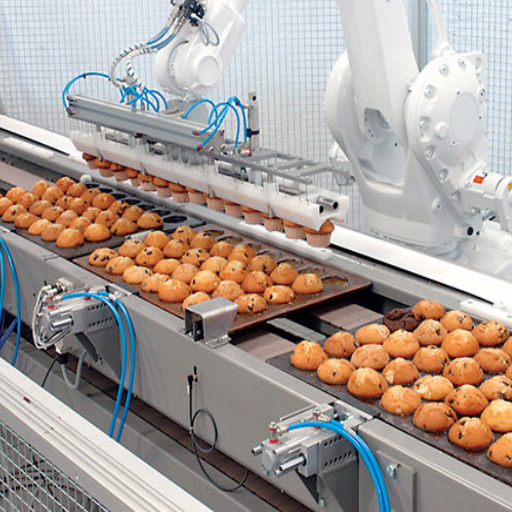
Robotic food processing is the use of programmable robot arms to handle, sort, cut, inspect, or package food products on a production line. It’s a specific slice of the wider food processing automation story. A robot is the arm and gripper; the automation is the full loop of sensors, controls, and conveyors around it.
A food robot works like any other industrial robot, with one big difference: it has to be clean enough to touch what people eat. That means smooth stainless surfaces, sealed joints, and food-grade lubricants instead of the standard industrial build.
The term confuses buyers because “robot” gets used loosely. A robotic packaging cell is a robot. A simple pneumatic picker is not. The real distinction is whether the machine can be reprogrammed to handle different products, shapes, and positions without a full rebuild.
Think of it as a simple loop. A vision camera spots a biscuit in the wrong position. A controller decides how to grip it. The arm places it in the tray, straight and centered, hundreds of times per hour. Repeat that loop with almost no drift, and you have the core value of robotic food processing.
Want to see how robots fit a complete line rather than a single arm? A turnkey food production line lets you buy the robotics and the machinery it feeds as one integrated, CE-certified system.
5 Types of Robots Used in Food Processing
Choosing the right robot starts with knowing the five main types and what each one is good at. Here they are, from the fastest to the strongest.
| Robot Type | Typical Payload | Speed | Best Applications | Cost Tier |
|---|---|---|---|---|
| Delta (parallel) | Up to ~3 kg | 150+ picks/min | High-speed pick-and-place, confectionery, biscuits, berries | Mid |
| SCARA | ~1–20 kg | Very fast, compact | Loading/unloading, sorting, assembly | Low–Mid |
| Articulated (6-axis) | 5–300 kg | Medium–high | Portioning, packaging, palletizing | Mid–High |
| Collaborative (cobot) | Up to ~25 kg | Slower, shares space | Labeling, inspection, light palletizing | Low–Mid |
| Portal/gantry | Up to ~500 kg | Medium | Bulk palletizing, heavy handling | High |
Delta (Parallel) Robots
Delta robots are the sprinters of food processing. Mounted above the line, they use three arms working together to pick and place light products at 150 picks per minute or more. You see them most on confectionery, biscuit, and berry lines, where speed matters more than strength.
The trade-off is payload and reach. A Delta arm lifts only a few kilograms and works best directly under its mounting frame. Overhead mounting also means the robot sits above the product, so food-grade design and careful guarding matter.
Best fit: very high-speed pick-and-place of small, light products into trays or flow-wrapping infeed.
SCARA Robots
SCARA robots are compact horizontal arms that excel at fast, precise, repetitive tasks. They sit beside the line rather than over it, which makes them easier to keep clean and easier to service.
You will find SCARA arms loading trays, orienting products, and assembling multi-part items like filled sandwiches or stacked bars. They are a favorite for sorting because they are quick, rigid in the horizontal plane, and relatively affordable.
Best fit: high-speed loading, unloading, sorting, and small-part assembly beside the line.
Articulated (Six-Axis) Robots
The six-axis articulated arm is the all-rounder. Its wrist can reach around corners and into awkward positions, which is why it handles everything from portioning raw product to packing cartons to stacking pallets.
Payloads range from 5 kg to over 300 kg, so a single platform can serve light handling and heavy end-of-line work. This versatility is why articulated robots hold the largest share of the food robotics market, about 31.6% according to Straits Research.
Best fit: palletizing, case packing, portioning, and any task that needs reach and flexibility.
Collaborative Robots (Cobots)
Cobots are built to work next to people without full safety fencing. They carry lighter payloads, move more slowly, and stop when they sense contact. That makes them ideal for stations where a human still adds value, like inspection, labeling, or semi-automated packing.
A food manufacturer with frequent product changes often starts here. You can wheel a cobot to a new station in minutes and reprogram it in hours, without a dedicated robotics engineer on staff.
Best fit: labeling, quality inspection, and light palletizing where products change often and floor space is tight.
Portal / Gantry Robots
Portal and gantry robots trade speed for strength and reach. A rail-mounted frame moves a gripper across a large area, lifting heavy loads that would overwhelm a smaller arm.
You mostly see them doing bulk palletizing and heavy depalletizing at the end of a line. They aren’t glamorous, but for moving full pallets of finished product, nothing beats their reach and capacity.
Best fit: high-payload palletizing and heavy handling over a large work area.
Applications of Robotic Food Processing
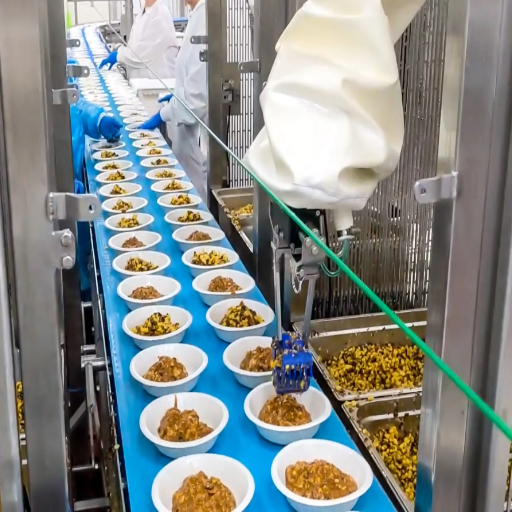
The robot type matters less than the job it is doing. Most food plants use robots in four places, and each one has its own payback logic.
Pick-and-Place and Handling
This is the classic first application. A vision-guided robot picks loose or oriented products and places them into trays, cartons, or a flow-wrapper infeed. It’s repetitive, fast, and boring for a human, which is exactly why it’s perfect for a machine.
Priya runs a snack plant in Pune and could not keep her packing line staffed. She added two Delta robots at the tray-loading station. The line now runs 24 hours with one operator watching the vision screen instead of five people standing at the belt. Pick-and-place is usually the quickest, cleanest win.
Palletizing and Depalletizing
End-of-line palletizing is the highest-volume robot application in food and beverage. Stacking cases onto a pallet is heavy, repetitive, and a leading source of back injuries, so it is an easy case to justify.
Marco, a production manager at a pasta facility in northern Italy, replaced two manual palletizers with one articulated arm. He freed four workers for changeover and quality tasks, cut palletizing errors, and recouped the equipment cost in under 18 months.
Sorting and Inspection with Machine Vision
Robots with machine vision can sort by size, shape, color, or defect at speeds no human can match. The camera feeds the robot, and the robot removes the rejects or routes products into the right lane.
This is where food safety and quality meet. A vision-guided robot removes a misshapen bar or a foreign object before it reaches a customer, with far more consistency than a tired operator on hour ten of a shift.
Cutting, Portioning, and Primary Processing
Robots also work earlier in the line, cutting, portioning, and deboning product. This is more common in meat and fish processing today, but the same approach applies to any task that needs repeatable cuts or exact weights.
Primary processing is the hardest robot application to get right. Product is variable, cutting is skilled, and hygiene demands are extreme. It is worth automating only when your volume and consistency justify the engineering.
Robots on a Real Food Production Line
Robots rarely work alone. The real value comes when a robot slots into a complete line, feeding and fed by the machinery around it. Here is how robotics shows up in the lines Shandong Loyal builds.
Snack and Cereal Extrusion Lines
On a corn puff snack line, Delta or SCARA robots most often handle the finished pieces, orienting them into trays or feeding a flow wrapper after extrusion, frying, and seasoning. Vision keeps the pieces straight and removes broken product before packaging.
Pasta and Macaroni Lines
A pasta production line uses robotics at the back end. Articulated arms palletize cases of finished macaroni, while SCARA arms often sort or orient short-cut pasta into packaging. The line itself handles mixing, extrusion, and drying automatically.
Protein and Cereal Bar Lines
On a protein bar production line, robots handle the awkward, sticky shapes that jam conveyors. A cobot or SCARA arm places cut bars into trays or a flow wrapper, with vision checking weight and position on the fly.
Pet Food Lines
Pet food processing runs in high volume with fewer changeovers, which favors fixed and articulated automation. Robots palletize and depalletize finished bags, while inspection arms check fill levels and seal integrity. For a manufacturer moving thousands of bags a shift, the palletizing robot alone can replace several full-time roles.
Not sure which line to start with? Our snack food machinery and protein bar lines can be specified with robotics built in, so you buy one integrated system instead of patching arms onto an existing line.
Hygienic and Washdown Design for Food Robots
A robot that isn’t food-safe is a liability, no matter how fast it is. Food processing environments are wet, greasy, and often cleaned with aggressive chemicals, so the robot has to survive all of it.
Look for these markers before you buy:
- IP65 or IP69K ratings. IP65 resists water jets; IP69K survives high-pressure, high-temperature washdown. Match the rating to your cleaning regime.
- Stainless steel and smooth surfaces. No crevices, threads, or retention zones where food can collect and bacteria can grow.
- Food-grade lubricants. Standard industrial grease can leak and contaminate product. Food robots use NSF-certified lubricants instead.
- EHEDG-compliant design. The European Hygienic Engineering and Design Group publishes guidelines, including a newer one specifically for robotics, that define cleanable, hygienic construction.
The safest path is a robot arm designed for food from the start, rather than a general industrial arm retrofitted with covers. Retrofits can work, but they cost more in validation and cleaning time than most buyers expect.
Where Robots Pay Back, and Where They Don’t
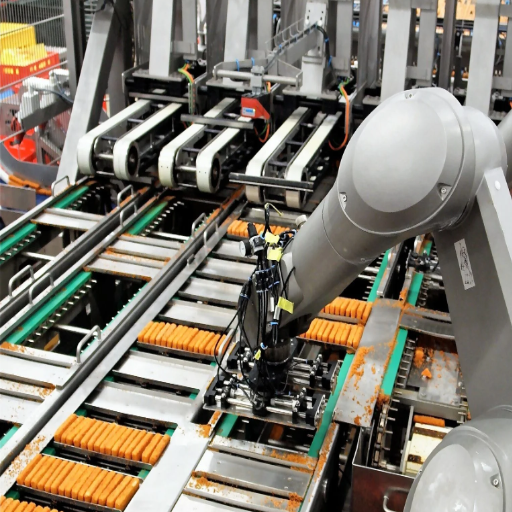
Robots aren’t automatically a good investment. The honest answer is that they pay back fastest on repetitive, high-volume, physically demanding tasks, and poorly on low-volume, high-variety work.
Where they pay back:
- Pick-and-place and tray loading at high speed
- End-of-line palletizing and depalletizing
- Inspection and sorting with machine vision
- Portioning where exact weight or repeatable cuts matter
Where they often don’t:
- Low-volume production with frequent, unpredictable changeovers
- Handling irregular, fragile, or highly variable product
- Processes where a skilled worker adjusts constantly based on feel
The team at a mid-size pet food plant learned this the expensive way. They bought an articulated arm for a variable product that changed shape every batch. The robot spent more time being reprogrammed than running. Six months later, they moved the same arm to palletizing, where it paid for itself in a year. The lesson is simple: match the robot to a job with consistent, predictable movement.
Cost and payback deserve their own look, including the math on labor savings, scrap reduction, and total cost of ownership. That is a topic we cover in depth in our food automation cost guide, so I will keep it brief here. In most plants, palletizing and packaging robots pay back in 12 to 24 months, while primary-processing robots take longer.
Frequently Asked Questions
How much does a food processing robot cost?
A basic cobot or SCARA arm starts in the tens of thousands of dollars, while a full articulated palletizing cell with grippers, vision, and guarding can run well into six figures. The real cost is the complete cell and integration, not just the arm. Turnkey lines with robotics built in often cost less than retrofitting because integration is designed in from the start.
Are robots safe to use around food?
Yes, when they are built for it. Choose arms with IP65 or IP69K washdown ratings, stainless steel contact surfaces, and food-grade lubricants. Look for EHEDG-compliant or 3-A design for direct product contact, and keep the right safety guarding in place for operators.
Can a small manufacturer afford robots?
Often yes, especially with cobots and SCARA arms. A small plant doesn’t need a full robotics department. Start with one packaging or palletizing task that is boring and hard to staff, and scale from there. Many small and mid-sized manufacturers automate a single station long before they automate a whole line.
Conclusion
Robotic food processing is not one technology. It spans five distinct robot types, each with a clear sweet spot. Delta arms win on speed, SCARA on compact precision, articulated arms on reach and strength, cobots on flexibility, and portal/gantry robots on heavy palletizing.
The applications that justify them are just as predictable: pick-and-place, palletizing, sorting and inspection, and, in the right volume, cutting and portioning. The food-safe build is non-negotiable, and the smartest first move is usually the boring one, a packaging or palletizing task that pays back in a year or two.
If you are weighing a robot, don’t buy an arm in isolation. Ask how it fits the line around it. A turnkey food production line with robotics built in removes the integration risk and gives you one supplier accountable for the whole system.
Ready to see what robotics can do on your specific line? Contact us with your product and target output. Our engineers will map the line, recommend the right robot type, and quote a complete, CE-certified solution.