
The fabrication of fried instant noodles is an enthralling combination of cutting-edge machines and accurate processing methods that metamorphose modest constituents into a worldwide food staple. Instant noodles have come a long way from the doorsteps of their high-speed production to the households of busy people, and they have become a fast and pleasing meal for innumerable individuals. However, have you ever been curious to know the entire process of making these favorite noodles?
This article takes you through the production of fried instant noodles, relying on the machinery and processes that define the good quality and great taste. Out of mere interest about food manufacturing or the call for industry insights, this guide is a way to see the technology and craftsmanship that characterize this iconic food product in close-up.
History and Evolution of Fried Instant Noodles
Origins of Instant Noodles
Instant noodles are thought to have originated in Japan during the late 1950s. In 1958, Momofuku Ando, who was the creator of Nissin Food Products, got the recognition for inventing the first instant noodle product “Chicken Ramen”. The motto behind the whole thing, to create a quick, affordable and long-lasting food product, was Japan’s post-war scarcity issues. The process that led to the frying of noodles was Ando’s revolution in that he made it easier for the noodles to be prepared and stored, thus being very convenient for mass production and distribution.
Instant noodles soon after became popular as a result of their easy preparation and their wide range of uses. The product was a direct reply to the increasingly hectic lifestyle of people who were looking for fast, no-fuss meals. In the 1970s, instant noodles were already in the global market with the U.S., China, and Southeast Asia being the leading countries in terms of consumption. Each of these areas had its own way of making the product more appealing with different flavors and variations, thus, boosting the worldwide market even more.
Instant noodles are among the most common products in many kitchens and they still go through constant changes regarding taste, packaging, and nutritional value. What was once a very simple solution to the problem of the lack of food has now grown into a billion-dollar business that is flexible enough to meet the requirements of modern people regarding tastes and diets. Instant noodles, therefore, are a purely modern symbol of culinary innovation that will never perish.
Growth into a Global Food Phenomenon
The main reasons for the global triumph of instant noodles are their affordability, convenience, and versatility. Instant noodles, the so-called “quick meal” have gained popularity all around the world and more so among the people of all social classes. Low prices and simple preparation have turned instant noodles into a common dish for students, busy employees, and families as well, thus confirming their place in the world food market.
Key Success Factors
- Regional flavor customization (spicy varieties in Southeast Asia, miso-based in Japan, curry flavors in India)
- Adaptation to local tastes and cultural preferences
- Evolution towards healthier options (low-sodium, whole-grain, organic)
- Eco-friendly packaging innovations
What also helped instant noodles flourish was the fact that they could be easily adjusted to different tastes and regional preferences. In order to attract the market, manufacturers frequently add the traditional flavors and local ingredients such as spicy varieties in Southeast Asia, miso or soy sauce-based flavors in Japan, and bold curry flavors in India. This customized approach has enabled instant noodles to take on a deep cultural presence in many countries, thus linking the global culinary tastes.
Key Milestones in Instant Noodle Production
The milestones show how the instant noodle production process has been moving continuously and hence has remained a relevant product in a changing world. The journey from innovation to global impact has made instant noodles a favorite of millions around the world today.
Understanding the Fried Instant Noodle Production Process
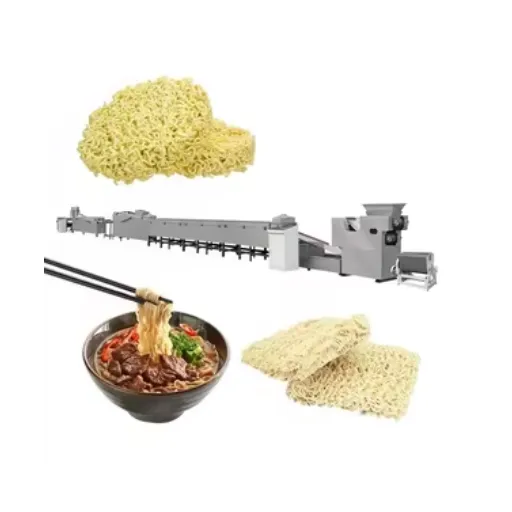
Ingredient Preparation for Instant Noodle Processing
The stage of preparation of the ingredients is the most important one in instant noodles production as it sets the basis for their texture, taste and quality in general. The main ingredients are wheat flour, water, salt, and an alkaline agent, either potassium carbonate or sodium carbonate, that makes the noodles more elastic and firm. These components are accurately measured and mixed to create a dough, providing the same quality in the end product every time.
Primary Ingredients
| Ingredient | Purpose |
|---|---|
| Wheat Flour | Base structure and texture |
| Water | Hydration and dough formation |
| Salt | Flavor enhancement |
| Alkaline Agent | Elasticity and firmness |
Modern food processing techniques have also led to the availability of fortified flours that contain essential nutrients such as iron and folic acid. The idea behind this is to eliminate the issue of nutritional deficiency that is common and to lure the health-conscious consumers. Not to mention, some producers also use plant-based proteins or a different type of flour such as rice or buckwheat in order to provide gluten-free or allergen-friendly alternatives.
Quality control is very important during this phase when the incoming materials are checked against safety and quality requirements. Utilising the precise equipment for both measuring and mixing, the producers cut down on the variations in their product thus helping to maintain the industry-wide high standards for instant noodles that are recognized all over the world.
Frying Techniques and Machinery
Frying is considered one of the main steps in the instant noodle making process since it dries the noodles and gives them the unique texture which the consumers look for. Initially, the noodles are taken through a frying tunnel where they get a quick dip in boiling hot oil at a temperature varying from 140°C-160°C (284°F-320°F). This process of frying gets the noodles to keep their form as well as develop a smooth and even thickness at the same time.
🔥 Frying Process Parameters
- Temperature Range: 140°C-160°C (284°F-320°F)
- Oil Type: Palm oil (high oxidative stability)
- Process Benefits: Shape retention, moisture removal, extended shelf life
- Modern Innovation: Vacuum frying (lower temperatures, reduced oil absorption)
The fatty substance which is used in this process e.g. palm oil greatly affects the end product’s flavor, feel, and life. Manufacturers usually go for oils that have high oxidative stability to keep the product fresh for a longer period of time.
Modern frying machines are crafted to deliver accuracy and effectiveness. The latest fryers are equipped with special features that not only efficiently control the temperature but also help in maintaining the quality of the oil, as optimal oil conditions are very crucial in attaining the desired standard of the product. Regular oil filtration and replacement not only preserves the flavor but also comply with the safety and health regulations. Automation in this stage has greatly lessened human mistakes, making it possible to have the mass production of the noodles while at the same time strictly controlling the quality.
Moreover, innovations regarding the frying process are being more and more dictated by environmental and health factors. Some producers are trying out different techniques, for example, vacuum frying which entails the use of lower temperatures, thus reducing the amount of oil that the noodles can absorb. The intended effect of these technological advancements is to make the production of healthier options as well as at the same time being less harmful to the environment. Where sustainability is viewed as a global issue, the frying of oils that are energy-efficient and the sourcing of oils that are sustainable are becoming common among the industry players and thus reflecting their dedication to the trade-off of quality, health, and environment friendliness.
Packaging Solutions for Fried Instant Noodles
The role of innovative packaging solutions has been important in terms of the storage, transportation, and the environmental impact of fried instant noodles. Modern packaging is using barrier technologies that protect the product from moisture, light, and oxygen, thus helping maintain freshness and quality. Durable yet sustainable, multi-layered films made from recyclable materials are being increasingly used. In addition to this, some manufacturers are also exploring the possibility of biodegradable and compostable packaging and thereby being in line with the global movement for less plastic waste.
📊 Consumer Demand Statistics
Over 60% of consumers demand sustainable packaging for food products, according to recent research. This trend is driving manufacturers to adopt eco-friendly packaging solutions that balance protection with environmental responsibility.
The trend lately has been to make the packaging less wasteful without sacrificing usability through the introduction of light-weight and less-material designs. One of the reasons is that the use of mono-materials makes recycling easier without affecting the packaging’s protective properties.
QR codes and augmented reality have also entered the scene in the form of smart packaging solutions, giving consumers more transparent information about the product’s origin, ingredients, and the sustainability measures taken. These developments prove that the combination of innovation and sustainability can profoundly change the packaging of fried instant noodles, thus making it a win-win situation for both consumers and nature.
Advancements in Production Line Technology
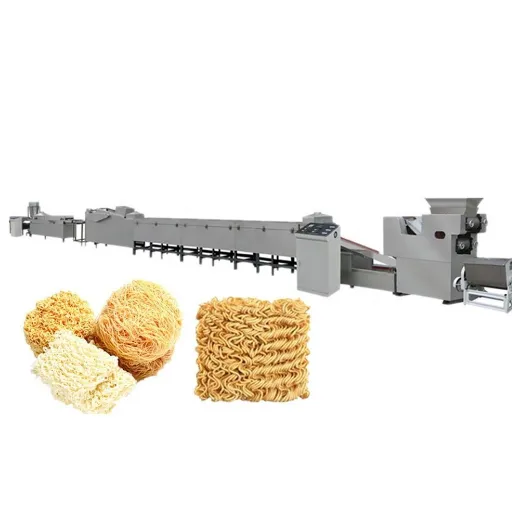
Automated Systems in Noodle Processing Lines
The use of automated technologies in the noodle-making process has changed the whole scenario for the fried instant noodle manufacturers, and at the same time, it has improved the quality and consistency of the products all through the different stages of production. The use of automated systems for processing dough, such as sheeters and cutters, leads to the production of noodle strands with the same thickness and size; thus, the production of substandard noodles is reduced, and the quality of the product is increased.
🤖 Benefits of Automation
| Feature | Impact |
|---|---|
| Real-time Monitoring | IoT sensors track temperature, humidity, and oil quality |
| AI Quality Control | Pattern recognition detects defects in noodles and packaging |
| Resource Optimization | Reduced waste and energy consumption |
| Safety Enhancement | Machines handle dangerous tasks, improving worker safety |
One of the remarkable features of the automated systems is that they can monitor and make adjustments to production parameters all at once (i.e. the exact time). For example, ground-breaking sensors, along with IoT-based technologies, can monitor the temperature, humidity, and the quality of frying oil throughout the production process. These timely adjustments result in a well-defined product in terms of texture, flavor, and safety standards. Moreover, the automated quality control systems which have AI-based imaging and pattern recognition are very much involved in the process of spotting the defects that might occur either in the noodle strands or in the packaging thus making sure that only the high-quality products get to the end consumer.
These systems, however, can do more than just increasing operational efficiency, as they are also completely in line with sustainability goals through the reduction of resource consumption and waste. The state-of-the-art machines come with the ability to control energy consumption, while the techniques like the recycling of water during steaming help in the preservation of the resource. The gradual move to automation increases workplace safety since the machines take over those labor-intensive tasks that often carry danger. In short, automated systems are the transforming factor for productivity, and at the same time, they play the role of being the environmental and ethical issue solver in the instant noodle industry, thus they are setting the standard for sustainable and tech-driven food production.
Energy-Efficient Fryers and Their Benefits
Energy-efficient fryers are changing the instant noodle manufacturing process to an extent that energy consumption is reduced to a great deal while the frying performance is still the same. These modern fryers make use of advanced technologies, including precise temperature control and heat recovery systems, to enhance their efficiency and minimize the waste generated. It is not only through the getting rid of the energy loss and making sure that the heat is evenly distributed that these systems reduce the power consumption; they also improve the quality of the noodles, which means the texture and flavor will be the same all the time.
✅ Key Advantages of Energy-Efficient Fryers
- Environmental Impact: Reduced carbon emissions and compliance with environmental regulations
- Cost Savings: Lower electricity bills enabling investment in innovation
- Operational Benefits: Automated controls reduce maintenance needs and human error
- Safety Features: Employee sensors, alarm systems, and automatic shutoff devices
- Enhanced Reputation: Positioning as industry leaders in sustainability
Among the benefits that make energy-efficient fryers attractive, one of them is contributing to the achievement of sustainability goals. Instant noodle production units are mainly in continuous operation, and this results in the consumption of a lot of energy and resources. If manufacturers make use of energy-saving equipment, they will not only be able to control their carbon emissions but also keep in line with the environmental rules which are becoming stricter every day.
Quality Control Innovations in Instant Noodle Processing
Through the use of the latest technologies, the recent quality control developments have not only produced noodles up to the highest standards but also kept them tasting the same, having the same texture and being safe. Today, the modern automated inspection systems are equipped with the latest machine vision technology to closely watch the noodle strands during production and catch any imperfections or inconsistencies. The high-definition cameras and AI-based algorithms detect all kinds of defects like broken strands or uneven thickness instantly and notify the manufacturers without stopping the operations, thus increasing the efficiency and minimizing the waste.
🔍 Quality Control Technologies
| Technology | Application | Benefit |
|---|---|---|
| Machine Vision | Defect detection | Real-time identification of imperfections |
| X-ray Detection | Contaminant screening | Microscopic-level safety assurance |
| Smart Sensors | Environmental monitoring | Optimal temperature and humidity control |
| Predictive Analytics | Risk management | Proactive quality assurance |
Another vital development is the contaminant detection systems. X-ray and metal detection technologies are among the most sophisticated ones that have found their way into many factories as standard equipment. They assure that the contaminants are caught at microscopic levels and not allowed to reach packaging stage. Besides, these systems guard consumer health and help maintain the brand’s reputation by minimizing product recall risks. Plus, the marrying with database systems makes it possible to practice full traceability, connecting every batch to comprehensive production records.
Environmental monitoring is another area of contributing factor. The introduction of smart sensors that are able to track humidity and temperature in production areas is among the major developments. The sensors ensure that the raw materials and the finished products are always in optimal conditions. They are part of a centralized system where the operators can be alerted immediately in case of environmental deviations. The combination of real-time monitoring with the use of predictive analytics allows noodle manufacturers to be one step ahead of any risk, thus guaranteeing that every packet of instant noodles is up to the strict quality standards before it is sent to the stores.
Benefits of Implementing Fried Instant Noodle Production Lines
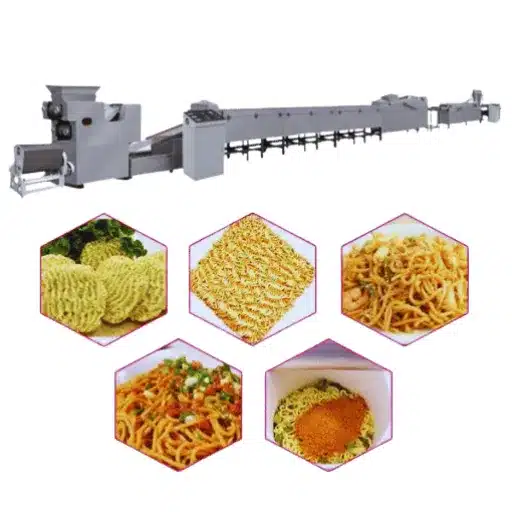
Cost Savings through Efficient Machinery
The deployment of modern machines in fried instant noodle production lines has the potential to yield substantial savings. The efficient machines are meant to boost production and thus increase the output by taking over the most important processes in the line, which are the dough mixing, frying, and packaging. The use of lesser manual labor is another plus as this could help the manufacturers to cut down on the number of workers and errors that occur during the production. Besides, the machines do operate with the help of power-saving techniques and hence their utility production is maximized while the quality and quantity of output are left unaffected and both the company’s efficiency and cost-effectiveness have increases as a result of this power consumption cutting down.
💰 Cost Reduction Strategies
| Strategy | Implementation | Outcome |
|---|---|---|
| Automation | Reduced manual labor requirements | Lower workforce costs, fewer errors |
| Waste Minimization | Precision dough sheeting and cutting | Reduced raw material waste |
| Predictive Maintenance | IoT monitoring systems | Prevented breakdowns, extended equipment life |
| Energy Efficiency | Power-saving techniques | Lower utility bills |
Apart from that, modern machines also lead to the cost-saving side of the coin because they decrease the amount of materials that will be wasted. With the help of such delicate mechanisms, it is guaranteed that the raw materials such as flour, oil, and seasonings will be used in the most efficient way possible so that there is very little fluctuation in the quality of the product and better control over the resources that are being utilized.
Moreover, the acquisition of state-of-the-art equipment usually comes equipped with the ability to perform predictive maintenance and the installation of IoT systems as well. These high-tech gadgets let the manufacturers monitor the conditions of their machines in real time and so they can fix potential problems with the machines before they turn into very expensive breaks or repairs. By reducing the number of unplanned service interruptions, the manufacturers can keep up their productivity and also prolong the life of their machines. It is indeed a matter of taking a little more investment now to get a big payoff in the future, considering that you have the added perks of being so competitive plus instant noodles are the main market.
Scalability of Production with Modern Equipment
Modern day tools are changing the whole dynamics of the instant noodles manufacturing market in respect to scalability. This means that producers will be able to satisfy the increase in consumer demand plus quality and efficiency will not be done away with. The ultra-modern production lines have been engineered to be extremely flexible in the face of ever-changing output requirements, thus, the producers will be able to turn the scale of their operations up or down with the least possible waste of time or resources. For example, the use of modular designs and fully automated systems would be able to handle a vast range of production volumes while product standardization remains unchanged.
📈 Scalability Statistics
Manufacturing plants equipped with smart technologies can achieve up to a 30% increase in output along with a reduction in operational costs, according to recent industry surveys.
Among the major advantages, modern equipment, and technologies like IoT (Internet of Things) and AI-driven analytics are the future-proofing of production facilities. To put it simply, IoT-enabled machinery can monitor in real-time production rates, equipment performance, and even the areas with potential issues, thus, ensuring constant optimization. On the other hand, AI analysts also study this entire data and spot patterns while suggesting operational changes that would render the units more efficient and their scalability higher.
The other essential aspect of scalability is the quick and easy transition to new product lines or variations. The requirement of modern equipment often comes with non-standardized configurations and parts which mean that for the introduction of new flavors, packaging, or noodle styles, there will be no need for changing the whole set up and this is what makes the whole process simple. Adaptability not only reduces the time and money spent but also ensures that the manufacturers are competitive by quickly responding to market trends. By integrating top-notch technology and data analytics, instant noodle manufacturers can attain unparalleled scalability and thus, would be able to claim their place as leaders in a cutting-edge and competitive global market.
Enhanced Production Speed and Output
Technology and automation have not only increased the speed of production but also the efficiency of the instant noodle industry remarkably. High-speed machines producing noodles in thousands of blocks per hour with accuracy and uniformity are now the norm in modern factories. This extraordinary production not only keeps up with the increasing global demand for instant noodles but also eliminates almost all maintenance time, thus cost related to delay or failure of equipment is less. The collaboration between human-made machines and new technological inventions enables the factories to keep producing a lot without cutting back on the quality of their products.
⚡ Smart Manufacturing Solutions
- Real-time Monitoring Systems: Track production schedules and identify bottlenecks
- Predictive Maintenance: Detect irregularities before they impact production
- Robotic Automation: Handle portioning, cutting, and packaging with precision
- AI-Powered Insights: Predict consumer demand with remarkable accuracy
- Digital Analytics: Align production rates with market intelligence
To reach such high levels of efficiency, companies adopt smart manufacturing solutions like real-time monitoring systems and predictive maintenance. The data generated by these systems is utilized to improve the production schedules, predict the places where bottleneck will be and wastage is reduced. For example, the sensors used on the production lines detect the irregularities in the noodle-shaping process leading to immediate adjustments thus ensuring that the output remains consistent.
Besides that, the use of digital analytics and AI-powered insights has allowed manufacturers to discern patterns and predict consumer demand with remarkable accuracy. By aligning the production rate with the market intelligence, companies can more easily spot the demand changes and modify their output in the same manner. This flexibility saves producers from overproduction on one hand and keeps supply in proportion with demand on the other. In the end, the joining of technology, data analytics, and automation forms a production ecosystem that is efficient and capable of enabling instant noodle manufacturers to take their operations to new heights in an already competitive market.
Environmental Considerations in Production Lines
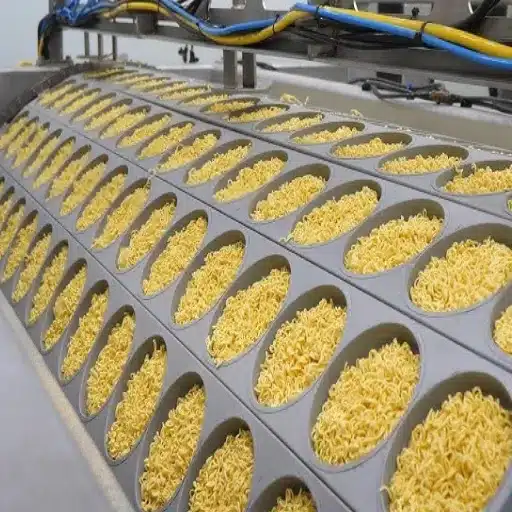
Energy Consumption in Fried Instant Noodle Production
Fried instant noodle production is a process that uses a lot of energy, because it has many stages and each of them needs a lot of power. The whole production line from steaming, frying to packaging requires a lot of energy and resources. Frying is one of the most energy-demanding stages because oil is heated in huge quantities to maintain the frying at the right temperature. This stage is a major contributor not just to the energy consumption but also to the carbon footprint of the entire production line. Manufacturers are always looking at areas like efficient heating systems and optimized frying processes for possible reductions in their energy consumption without jeopardizing their product quality.
🌱 Energy Efficiency Solutions
| Technology | Function | Environmental Benefit |
|---|---|---|
| Heat Recovery Systems | Recycle waste heat from frying/steaming | Significant energy consumption reduction |
| Solar Panels | Generate renewable energy | Non-fossil fuel energy source |
| High-Efficiency Boilers | Optimize steam generation | Reduced energy demand |
| Advanced Oil Filtration | Extend oil life and reduce waste | Lower resource consumption |
The adoption of energy-efficient technologies, along with a gradual shift towards alternative energy sources, is a common practice among manufacturers that care about the environment. For example, the use of heat recovery systems can bring down energy consumption levels by a huge margin because such systems work by taking the waste heat from the frying or steaming process and recycling it. Moreover, the this technology can further be complemented by the installation of solar panels or windmills which will provide non-fossil fuel energy for production. In this regard, automation and monitoring systems play a vital role because they ensure the efficiency of machines, avoid energy losses, and provide real-time updates on resource usage at each stage of the production process.
On the other hand, manufacturers that are seeking for new and innovative solutions have been able to report their success in the form of reduced energy footprint. The use of high-efficiency boilers and advanced oil filtration systems for example has caused a marked decline in energy demand for frying and at the same time lengthening the life of the oil. If the instant noodle brands win with cash by investing in such technologies and energy management strategies, they will not be far from attaining their sustainability goals. These initiatives not only help to tackle the problem of the environment but also harmonize with the increasing consumer trend of eco-friendly practices, thus, being a source of long-lasting benefits both to business and the environment.
Waste Management Practices
The instant noodle sector has to adopt effective waste management practices in order to reduce its environmental footprint and be more eco-friendly in their operations. The reduction of production waste is one of the most critical ways to achieve it. By implementing a program that improves raw material use and streamlines production lines, waste generation can be cut down to a great extent by the companies. Moreover, using smart packaging—continuously having fewer resources and not compromising on product quality—is one of the innovations that are slowly but surely becoming prevalent in the industry. It not only solves the issue related to the environment but also lessens the burden of costs that come with packaging waste disposal.
♻️ Circular Economy Approaches
- Material Recycling: Convert remaining starch into animal feed or biofuel
- Cardboard & Plastic Reuse: Separate and process materials for secondary use
- Waste-to-Energy: Use anaerobic digestion to convert organic waste into biogas
- Resource Optimization: Keep materials in use for longest possible time
- Landfill Reduction: Minimize waste sent to disposal sites
Recycling and the reuse of materials are essential to sustainable waste management. Some noodle production plants are taking steps to recycle byproducts, for example, turning remaining starch from the production lines into animal feed or biofuel. Other materials like cardboard and plastics can also be separated and processed for reuse. In this manner, they are already mirroring the circular economy approach, which ensures that resources are not only kept in use for the longest time possible but also that the need for virgin materials is decreased and waste is not sent to landfills.
Besides, bringing in waste-to-energy technologies in the plants gives the producers a chance to handle the organic waste in a very efficient manner. As an illustration, the anaerobic digestion system can handle the biodegradable waste, and in the process, of making biogas, the energy that can be used for powering operations is generated. Therefore, this results in a decrease in the organic waste as well as the consumption of fossil fuel energy, hence contributing to the reduction of the company’s carbon footprint. By embracing a mixture of these approaches, the instant noodle industry can profoundly impact the environment and adhere to the global standards designed for eco-friendliness.
Shifts Toward Eco-Friendly Production Techniques
The instant noodle business is progressively implementing creative green production techniques, the main reason being consumer preference and their insistence on the industry’s compliance with global sustainability objectives. One important change is the replacement of fossil fuels with renewable energy sources such as solar or wind at the manufacturing plants. Factories are getting equipped with energy-efficient production equipment to bring down the electricity used and ultimately, the greenhouse gases released.
🌍 Sustainable Production Initiatives
| Initiative | Description |
|---|---|
| Renewable Energy | Solar and wind power replacing fossil fuels |
| Biodegradable Packaging | Compostable and recyclable materials |
| Water Recycling | Systems to reduce water consumption and treat wastewater |
| Local Sourcing | Minimize transportation carbon emissions |
| Edible Packaging | Experimental materials that eliminate waste entirely |
In addition, another significant step forward is taken by the creation of sustainable packaging solutions. A large number of producers are now switching to biodegradable, compostable, or wholly recyclable packaging materials. This decision is helping to address the issue of plastic waste, which has been one of the most important environmental pollution factors. Some companies are even looking at packaging materials that can be eaten, thereby getting rid of waste entirely. These methods are in accordance with the circular economy principles, which mean that resources are used efficiently and ethically throughout their lifetime.
Moreover, manufacturers are also trying to minimize the consumption of water and resources during the production process. They are installing technologies like water recycling systems that will reduce the amount of water used and treat wastewater before it is released back into nature. The companies are also trying to buy the raw materials from the local producers whenever possible so that the carbon emissions due to the transportation of ingredients over long distances are minimized. By taking such steps, the instant noodle industry is proving to be eco-friendly and at the same time, it is satisfying the consumer’s need while contributing to the global struggle against climate change.
References
-
Quality Assurance Programs for Instant Noodle Production – Discusses quality control measures and contamination prevention in noodle production lines.
-
Identifying Key Factors and Strategies for Reducing Oil Content in Fried Instant Noodles – Explores production processes and strategies to minimize oil content in fried noodles.
-
Quality and Public Health Concerns of Instant Noodles – Examines the impact of raw materials and processing technology on noodle quality and health concerns.
-
Instant Noodles: Processing, Quality, and Nutritional Aspects – Provides insights into production methods, including frying and drying processes.
Frequently Asked Questions (FAQ)
❓ What is a fried instant noodle production line and how does it work?
A fried instant noodle production line is a set of machines for making instant noodles by mixing the dough, rolling, steaming, cutting, frying, cooling, and packing. The process of a common line starts with hauling flour to a mixer, and then a noodle machine or noodle-making machine gets the noodle block which is moved through roller and conveyor systems into a steamer for gelatinization and aging, frying in oil to get fried noodles, cooling with a cooling machine, and finally packing with a packing machine. Modern lines typically have PLC automatic control or full automatic operation to decrease labor intensity and maintain stable performance.
❓ What machines are included in a commercial automatic fried instant noodle production line?
A commercial automatic line usually has a flour conveying system, mixer, noodle machine (or instant noodle making machine), roller and sheeter, steamer, cutting machine to cut noodles to the desired width, fryer, cooling machine, conveyor systems, packing machine, and optional capping or soup sachet fittings. Food safety is the main reason for the stainless steel construction. Suppliers may offer a complete set of or modular noodle lines for manual or fully automated operations.
❓ How does frying affect the quality compared to non-fried instant noodle processing?
Fried noodles have a pelletized oil-fried noodle block that quickly absorbs water and has a different taste and feel than non-fried instant noodle products. Frying causes gelatinization as well as partial dehydration, which is what gives fried noodles their crispy structure that consumers expect. However, non-fried instant noodle lines rely on hot-air drying or vacuum drying instead, which results in lower oil content but sometimes greater need for different process control and equipment like specialized drying ovens and more precise aging to ensure shelf stability.
❓ Can an instant noodle plant be automatic and reduce labor intensity?
Indeed, a modern instant noodle plant can be commercial automatic with PLC-based automatic control, which reduces manual operation and labor intensity to a minimum. Full automatic noodle lines can process mixing, forming, steaming, frying, cooling, and packing with synchronized conveyors and automatic instant noodle packing machines. Suppliers of complete fried instant noodle production line systems often provide turnkey solutions to arrange equipment layout and training to minimize operator intervention.
❓ What technical considerations should be evaluated when selecting a fried instant noodle supplier?
The main technical considerations include the noodle lines’ stable performance, stainless steel contact surfaces, capacity (kg/hr or blocks/hr), degree of automation (manual operation vs. full automatic), availability of spare parts like rollers and mixers, energy consumption for frying and steaming, and compatibility with the packing and capping systems. Also evaluate after-sales service, installation, commissioning, and whether the supplier can provide a flow chart and layout for the instant noodle plant.
❓ How do you customize noodle characteristics such as width, folding, and noodle block shape?
Customization depends on adjustable rollers, cutting knives, folding devices, and noodle-making machine settings. The noodle machine can be very well set up to cut noodles to different widths and create noodle blocks with diverse folding patterns. Parameters like paste moisture, aging time after steaming, and gelatinization levels also have an effect on texture. Suppliers can adjust the noodle-making process to mimic products such as Indomie-style noodles or even develop new formulas by varying mixer recipes and roller gap settings.
❓ What packaging options exist for complete fried instant noodles produced on the line?
Packing options are single-serve bags, multi-pack trays, cup or bowl packaging with capping, and automated flow-wrapping for noodle blocks plus separate soup and compound sachets. Packing machines can be placed on the production line to automatically weigh, fill, seal, and label. For shelf appeal, suppliers can provide stainless steel conveyors and packing conveyors to supply automatic instant packing machines, thus minimizing manual handling and ensuring hygiene.
❓ How do producers ensure food safety and consistency in a fried instant noodle production line?
Food safety and consistency are achieved through the use of food-grade stainless steel machines, automated control (PLC), regular cleaning procedures, precise control of frying temperature and time to get perfect gelatinization and frying, calibrated mixers to obtain consistent dough hydration, and cooling machines to rapidly cool fried noodles to prevent oil oxidation. Quality control consists of sampling noodle blocks for moisture and texture, monitoring paste composition and adhering to proper aging protocols before packing.


