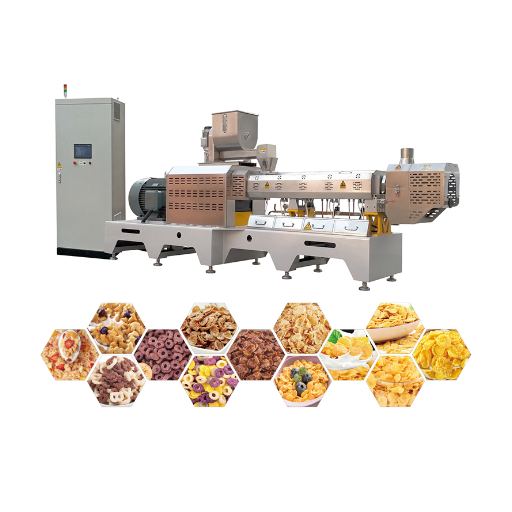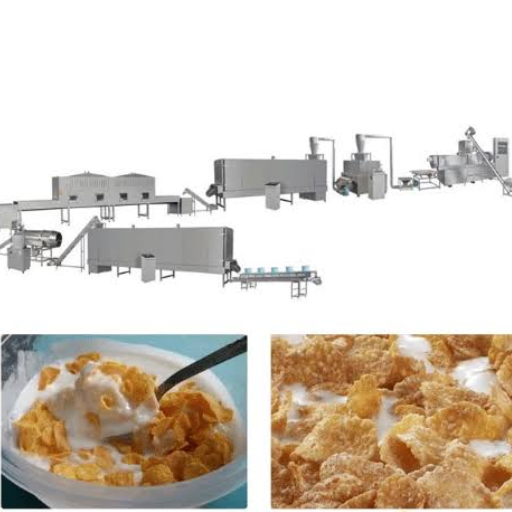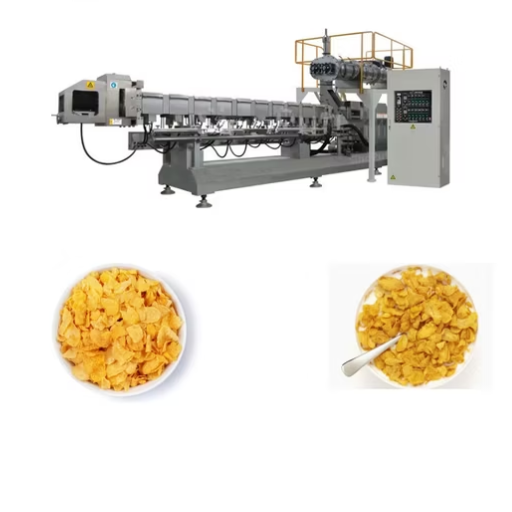
Automated biscuit production is a biscuit line that runs from ingredient dosing through to packed product under programme control, so output follows setpoints rather than operator pace. The decision that matters is not whether to automate. It is which of four levels you are actually buying.
Daniel, a plant manager shopping for a replacement line, had three quotations on his desk in March. All three described a “fully automatic biscuit production line”. The prices were 40% apart.
One line would have run with four operators a shift. Another needed six. The cheapest had no stored recipes, so every product change meant an engineer standing at the panel turning dials.
He wasn’t comparing automation. He was comparing three different products that happened to share a label.
That’s normal in this market. “Fully automatic” appears on almost every quotation we see, and it means something different on most of them. Suppliers aren’t lying. There’s no agreed definition to lie against.
You already suspect the price gap isn’t just build quality. You’re right. This guide separates the four levels, shows what each one automates at each station, and gives you the specification list that makes quotations comparable.
Key Takeaways
- “Fully automatic” is not a standard. Four levels exist, and the level should be named on the request for quotation before price is discussed.
- The biggest gains on a biscuit line come from scrap, changeover time and energy, not from cutting headcount.
- Reject confirmation and stored recipes are the two cheapest upgrades that change daily performance.
- Bakery and snack lines typically run at 55 to 68% OEE, and the loss is mostly availability, not speed.
- Below a certain changeover frequency, higher automation levels do not pay back, and a well-documented simpler line is the better buy.
What Is Automated Biscuit Production?
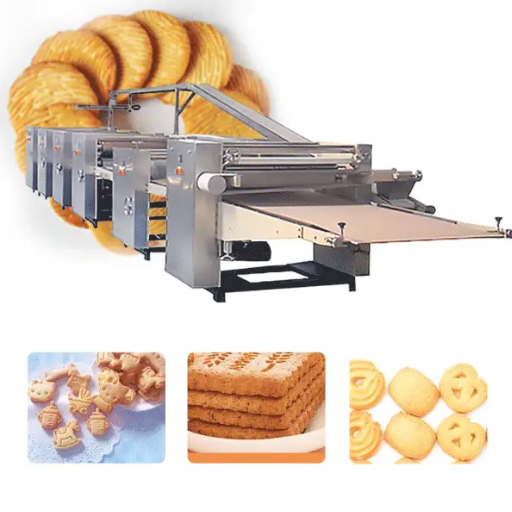
Automated biscuit production is the operation of a biscuit line under programmed control, from ingredient dosing through to packed product, with sensors feeding back on weight, temperature, position and speed so the line corrects itself instead of waiting for an operator to notice.
That covers six areas: dosing and mixing, forming, baking, cooling and handling, inspection, and packaging. It doesn’t cover recipe design, cleaning, maintenance, or the judgement call about whether a batch is good enough to ship.
The word “automated” is doing a lot of work in that sentence. On one quotation it means the conveyors run on motors. On another it means the line stores 40 recipes and changes over without a fitter. Both get called fully automatic.
If you want the full picture of how the stations fit together before you go further, our guide to walks the whole line.
Comparing quotations now? Send us what you have and we will tell you which level each supplier is actually offering. .
The Four Levels of Biscuit Line Automation
Biscuit production line automation isn’t one feature, and these labels aren’t in a standard. There’s no ISO number for “fully automatic”, which is exactly why the phrase causes so much trouble. The four levels below are a working model. They match what quotations actually contain once you strip out the adjectives.
| Level | What runs automatically | What the operator still does | Who it suits |
|---|---|---|---|
| 1. Mechanised | Motors, conveyors, oven band, mixers | Sets every speed and temperature by hand. No recipe memory | Single-product plants, low volume |
| 2. Sequenced | Start and stop interlocks, fixed sequence, alarms on a PLC and HMI | Adjusts setpoints. No stored recipes | Plants running one product family |
| 3. Recipe-driven | Stored recipes, servo setpoints, closed-loop temperature and weight control, automatic changeover of speeds and temperatures | Supervises the changeover, corrects dough | Multi-product plants with regular changeovers |
| 4. Connected | Everything in level 3, plus logging, OEE, traceability, vision inspection with feedback, remote diagnostics | Manages exceptions, maintenance and quality decisions | Export contracts, audits, 24/7 running |
<!– IMAGE: schematic of a biscuit line with the control layer drawn as a band beneath the five stations, intervention points marked above. Alt: “Biscuit production line diagram showing five stations and the PLC control layer beneath them” –>
The step from level 1 to 2 is mostly wiring and interlocks. The step from 2 to 3 is where money starts to move, because recipes replace memory. The step from 3 to 4 is about proof: what the line recorded, and whether you can show it to a customer or an auditor.
Here is the rule that saves the most money in this category. Name the level on the request for quotation, and ask every supplier to confirm it in writing or decline it. A supplier who can name the level can defend the price. A supplier who cannot is selling you adjectives.
What Each Section of a Biscuit Line Automates
Automated biscuit production isn’t one system. It’s a set of local decisions, and each station has one control that matters more than the rest.
Dosing and Mixing
Load cells weigh dry ingredients, flow meters or metering pumps dose liquids, and the PLC records the batch. On a level 3 line the recipe calls the weights, so the operator confirms rather than calculates.
The control that matters is dosing accuracy, and whether the supplier quotes a static figure or a dynamic one. Static accuracy is measured on a stationary scale. Dynamic accuracy is measured while material is actually flowing into the mixer, which is the number that affects your dough.
Forming, Sheeting and Cutting
Servo-controlled gauge rolls set sheet thickness, and the cutter or moulder runs at a speed matched to the oven band. Scrap returns to the sheeter instead of the floor.
Ask two questions here: how long a die change takes, and whether the roll gaps are motorised or manual. A line with manual gaps is a level 2 line wearing a level 3 brochure.
Baking
Independent top and bottom zone control is the real dividing line. A single-loop oven holds an average temperature. A zoned oven holds a profile, which is what separates a biscuit with even colour from one with a dark edge and a pale centre.
<!– VIDEO: embed biscuit line footage here. Replace this comment with the real YouTube embed URL before publishing. –>
Band speed is the second control. If you change speed without changing zone temperatures, you change the bake. The two must move together, and on a level 3 line they do. Our guide to covers sizing and fuel choice in detail.
Cooling, Stacking and Handling
Cooling looks passive and is not. Residence time, air movement and end-point temperature decide whether biscuits pack without checking or condensation. Servo lane guides then align product for stacking.
The specification item is cooling length and the end temperature the supplier guarantees, not the conveyor’s width.
Inspection and Reject Handling
Metal detection, checkweighing and vision inspection are the usual three. The control that is almost always missing from the quotation is reject confirmation: a sensor that proves the reject actually left the line, and an alarm if it did not.
Without confirmation, you have a detector and a hope. This is the cheapest upgrade in the entire article and the one most often left out.
Packaging and Line Synchronisation
Packaging is usually the bottleneck, not the oven. A line that bakes at 900 kg/h and packs at 700 kg/h runs at 700. Sandwiching capacity shows how wide the range gets: builders quote from several hundred up to 4,800 sandwiches a minute.
Ask how packaging speed is matched to oven speed, what protocol carries the signal, and how long a format change takes. If the answers are vague, the line will be paced by the packing hall.
What “Fully Automatic” Still Leaves to People
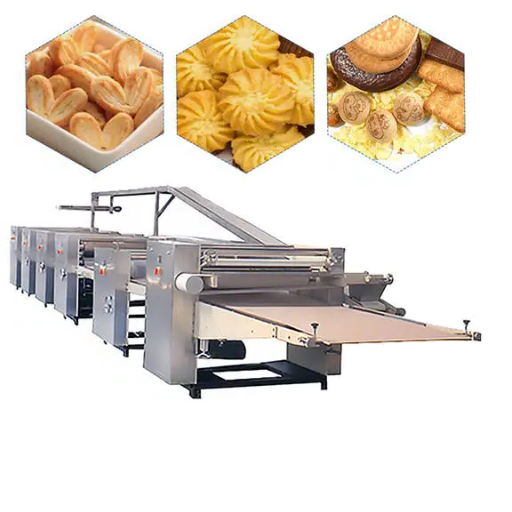
Every automated line still needs people. The honest list is short and rarely appears in a brochure.
- Dough correction. Flour absorbs water differently batch to batch. Someone still watches the sheet and adds water or flour.
- Die and format changes. A well-designed line makes this fast. It doesn’t make it automatic.
- Jam clearing. Product wedges under a belt or in a transfer. Someone opens a guard.
- Cleaning and allergen changeover. Washdown, dry cleaning and swab verification remain manual work.
- Quality decisions. Whether a batch is acceptable is a judgement, not a sensor reading.
Priya runs a plant with 14 product changes a week. Her new line was sold as fully automatic. It still needs a fitter at the die head for about 25 minutes each change.
Her conclusion was blunt: “I stopped counting the operators I thought I would save and started counting the minutes I got back.” That reframing is the whole economics of this decision, and it is where the next section goes.
If a supplier won’t map these intervention points in the quotation, they are either unfamiliar with their own line or hoping you won’t notice until commissioning.
What Automation Pays Back, and When It Doesn’t
Four savings are real. In rough order of size on a biscuit line:
- Waste and scrap. Removed by tighter dosing, weight control and reject logic.
- Changeover time. Removed by stored recipes and motorised setpoints.
- Energy. Removed by zone control, burner modulation and heat recovery.
- Labour redeployment. The smallest of the four, and the one most often used to sell the project.
Labour is usually the smallest saving, which is the opposite of how these projects are sold.
The arithmetic behind automated biscuit production isn’t complicated. Write it down before you approve the purchase order.
Annual saving = (scrap avoided × annual output value) + (changeover hours recovered × hourly line value) + energy saved + labour redeployed.
Here is one line of it, with illustrative numbers. A line making 600 kg/h, running 20 hours a day for 300 days, produces about 3,600 tonnes a year. If scrap sits at 3% and a proper weight-control and recipe package halves it, that is 54 tonnes of dough a year. At a dough cost of $0.60 per kg, you avoid roughly $32,000 in material, before counting the labour and energy spent making it twice.
Changeover usually adds more. At 40 minutes and 14 changes a week, you spend about nine hours a week at the die head. Cutting that to 25 minutes gives back around three and a half hours a week, or roughly 175 hours a year. Multiply by what an hour of line time is worth to you.
Documented upgrades show the same pattern from the other direction. One biscuit maker reported output rising from 2.5 to 3.0 tonnes an hour, gas use falling from 44 to 28 standard cubic metres per tonne, and weekly unplanned downtime dropping from 5 or 6 hours a week to zero. Those are the manufacturer’s figures, not independently audited. They point at availability and energy, not headcount.
That matches what the benchmarks say. Bakery and snack lines typically run at 55 to 68% OEE, with the top quartile near 82% and world class at 85% or more. The same benchmark set found the average line suffered 8.6 minor stops an hour against 2.2 on best-in-class lines. TEEPTRAK’s 2026 benchmark puts food and beverage at 55 to 65% typical and 80 to 85% world class, and notes that fewer than 15% of lines sustain it.
Read those numbers plainly. The gap is availability, not speed. Levels 3 and 4 exist to close an availability gap you can already measure, which is also how you should justify them. If you want the wider data picture, our guide to covers what to log and why.
Automated biscuit production doesn’t pay back when the loss isn’t there to remove. One product, low volume, a handful of changeovers a month, a stable recipe, and a settled crew: the arithmetic usually fails. A level 2 line with good documentation will serve you better than a level 4 line with a training problem.
Send us your product, capacity and changeover pattern, and we will tell you which level is worth paying for, including when the answer is the cheaper one. .
The Specification Checklist
Put these items on the controls page of the purchase order for any automated biscuit production line. If a supplier can’t answer one, that’s information too.
| Item | What to ask for | Red flag |
|---|---|---|
| Automation level | Confirmed by level, in writing | “Fully automatic” with no definition |
| Dosing accuracy | Static and dynamic figures, plus the test method | One percentage with no basis |
| Recipe management | Number of recipes, changeover sequence, who can edit | Setpoints changed by hand at the panel |
| Reject confirmation | Sensor-verified reject, alarm if the reject fails | “Vision inspection” with no reject logic |
| Data export | Format, protocol, retention period | Data visible on the HMI, never exported |
| Documentation | I/O list, electrical drawings, PLC backup, calibration schedule | “Documentation available” |
| Spare parts | List with lead times, agreed before shipment | List provided after delivery |
| Factory acceptance test | Agreed test at the works, using your product | “Tested at our works” with no protocol |
Each of these items costs money. That is why two automated biscuit production lines that look identical on paper can differ by 40% on price. Recipe management is engineering time. Reject confirmation is a sensor and logic. A factory acceptance test with your dough is a day of production you are asking the builder to spend.
For the control layer itself, including panel construction, sensor ratings and washdown, our covers what belongs in the electrical room. If you are still shortlisting builders rather than comparing quotes, covers how to read their references.
Why Automated Biscuit Lines Underperform in Year One
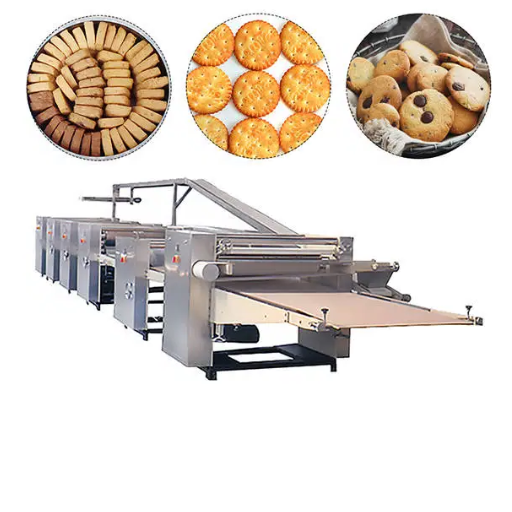
Tomasz signed for the cheapest of three lines. It had metal detection, exactly as quoted. It did not have reject confirmation, and the reject flap stuck in week three. Six weeks of product shipped before anyone checked.
Most early failures follow that shape. They are not mechanical. They are specified in, and they show up in the first months.
Sensors sited where they cannot be cleaned. A load cell under a guard that traps flour drifts. You get false rejections, then operators bypass the check. Cleanability is a design requirement here, not a cleaning routine, and the EHEDG hygienic design standards explain why crevices and trapped product cause both drift and contamination.
Recipes copied from another dough. Setpoints from a short dough run on a developed dough produce scrap until someone re-tunes. Budget commissioning time for it.
Packaging not speed-matched. The line runs at packing speed, and the oven’s capacity is never used. Nobody notices, because the oven is doing what it was told.
Undocumented controls. Without an I/O list and a PLC backup, every fault becomes a specialist call. Response time stops being your decision.
None of these requires better machinery. They require better specification, which is cheaper.
Frequently Asked Questions
What does “fully automatic” mean on a biscuit production line? It means whatever the supplier intends. Ask for the level, the recipe count, and whether reject handling is sensor-confirmed. Those three answers separate a genuinely automatic line from a mechanised one.
How much does an automated biscuit production line cost? There’s no list price, because the variables are too wide. Band width, oven length and fuel, number of stations, automation level and packaging scope move the figure more than brand does. We quote against your specification, and we will tell you which line items are driving the number.
How many workers does an automatic biscuit line need? Fewer than a manual line, and rarely as few as the brochure implies. Plan for operators at dough, forming, oven and packing, plus maintenance cover. The honest answer depends on changeover frequency and how much cleaning stays manual.
Can you retrofit automation onto an existing biscuit line? Often, yes. Controls retrofits are usually cheaper than mechanical ones: new PLC, drives and recipe management on sound mechanics. It makes sense when the oven and forming section are still accurate and the losses are in changeover and documentation.
What PLC is used on a biscuit production line? Siemens S7, Allen-Bradley, Omron and Mitsubishi all appear in this market. Biscuit line PLC control comes down to three things more than it comes down to brand: whether your maintenance team can support it locally, whether spares are available, and whether the program is documented and handed over.
Conclusion
Automated biscuit production comes in four levels, and the phrase on the quotation does not tell you which one you are buying. Mechanised, sequenced, recipe-driven, connected: each adds something specific, and each costs something specific.
The decision isn’t “automate or not”. It’s “which loss am I trying to remove, and which level removes it”. If you can’t name the loss, you can’t justify the level.
So name the level on the request for quotation. Ask every supplier to confirm it or decline it. Then compare prices, because at that point you are finally comparing the same thing.
If you would rather start from the product than the paperwork, tell us what you make, how much of it, and how often you change.