FCL vs LCL vs OOG comes down to three simple rules: choose LCL for shipments under roughly 12–15 CBM, choose FCL when you can fill most of a 20ft or 40ft container, and choose OOG when your cargo exceeds standard container dimensions. For food machinery buyers, the wrong choice can add thousands of dollars in hidden fees, delay production startup by weeks, or even damage equipment before it reaches your floor.
Most shipping guides stop at FCL and LCL. That works for shoes or electronics. It does not work for a 3-meter-tall drying oven, a palletized extrusion line, or a single pasta extruder shipped with spare parts. This guide explains how each shipping mode applies specifically to food processing machinery so you’ll know how to quote, plan, and receive your equipment with confidence.
Key Takeaways
- LCL is usually the cheapest option for food machinery shipments under 12–15 CBM, such as single extruders, spare parts, or sample machines.
- FCL becomes more cost-effective above 12–15 CBM and gives you a sealed container, faster transit, and lower handling risk.
- OOG shipping handles oversized equipment that will not fit inside a standard container, typically cargo over 2.59 m high, 2.35 m wide, or 12.05 m long.
- Always compare all-in door-to-door quotes, not just ocean freight rates, because CFS fees, THC, demurrage, and dimension surcharges can change the cheapest-looking option.
- Shandong Loyal Industrial provides container loading plans, crating guidance, and CE-certified documentation to help every shipment clear customs smoothly.
What Do FCL, LCL, and OOG Mean?

FCL (Full Container Load), LCL (Less than Container Load), and OOG (Out of Gauge) are the three main ocean freight options for food machinery. FCL means you book an entire container for your cargo. LCL means your cargo shares container space with other shippers. OOG is for cargo that exceeds standard container dimensions and requires special equipment such as flat racks or open-top containers.
Before you can choose a shipping mode, you need to know what each acronym actually covers. They describe how much container space you buy and whether your cargo fits a standard box.
FCL (Full Container Load)
Full Container Load (FCL) means you book an entire shipping container exclusively for your cargo. No other shipper shares the space. A standard 20ft container holds about 33 CBM, a 40ft container holds about 67 CBM, and a 40ft high-cube container holds about 76 CBM.
FCL works well for complete food production lines or multiple machines shipped together. Because the container is sealed at origin and opened only at destination, handling points are minimal and security risk is lower.
LCL (Less than Container Load)
Less than Container Load (LCL) means your cargo shares container space with shipments from other companies. You pay only for the volume or weight you use, typically charged per CBM or per metric ton, whichever is greater.
LCL suits smaller machinery purchases: a single mixer, a set of spare extruder screws, or a sample machine sent for testing. It keeps upfront costs low, but the cargo moves through a consolidation warehouse at origin and a deconsolidation warehouse at destination, which adds handling and transit time. If you’re testing a new supplier, LCL is often the safest way to start.
OOG (Out of Gauge)
Out of Gauge (OOG) cargo is freight that physically cannot fit inside a standard six-sided container because of its dimensions or weight. Common thresholds are height over 2.59 m, width over 2.35 m, or length over 12.05 m. OOG shipments travel on specialized equipment such as flat racks, open-top containers, or platform containers.
For food machinery, OOG often applies to large dryers, cooling tunnels, heavy mixers, or fully assembled units that cannot be broken down. According to Allison Shipping, OOG cargo requires accurate dimensions, weight, center of gravity, and often a lashing plan before a carrier will accept the booking.
FCL vs LCL vs OOG: Side-by-Side Comparison
The fastest way to compare the three modes is to look at volume, cost structure, speed, and risk side by side.
| Factor | LCL | FCL | OOG |
|---|---|---|---|
| Best for | Shipments under 12–15 CBM | Shipments over 12–15 CBM | Cargo exceeding standard container dimensions |
| Cost model | Per CBM or weight/measure | Flat rate per container | Priced per shipment based on size, weight, route |
| Typical 2026 China→USA rates | 80–80–180/CBM base; 150–150–380/CBM all-in | 1,600–1,600–2,300 (20ft); 2,900–2,900–3,900 (40HQ) | Quoted individually; surcharges apply |
| Transit time | Slower; adds 5–10 days for consolidation | Faster; direct port-to-port | Variable; depends on permits and special stowage |
| Handling risk | Higher; shared space, more touchpoints | Lower; sealed container | Higher; cranes, lashing, special equipment |
| Security | Moderate; more access points | High; single seal | Moderate; exposed on flat racks |
| Documentation | Standard + consolidation manifest | Standard + VGM certificate | Standard + lifting diagrams, lashing plan, photos |
The crossover point between LCL and FCL usually sits around 12–15 CBM. Below that, LCL is generally cheaper. Above that, the flat rate of a full container wins on both cost and speed. OOG is not a volume decision at all; it is a dimensional decision. If the machine will not fit in a box, you need special equipment regardless of how much space is left inside a standard container.
When to Choose FCL for Food Machinery
FCL is the right choice when your order fills enough of a container to beat LCL pricing, or when the machinery justifies the extra security and speed of a dedicated container.
Typical FCL Scenarios
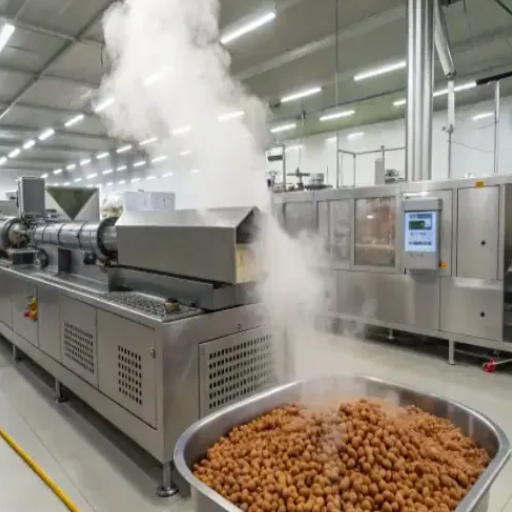
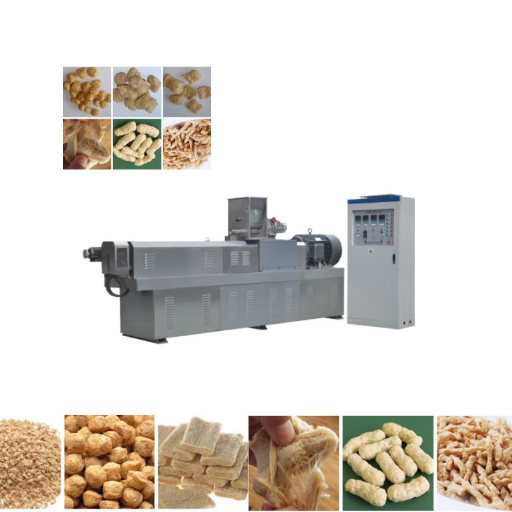
- A complete snack food machinery line including extruder, dryer, flavoring drum, and packaging machine.
- A pasta production line with mixer, extruder, cutter, and drying racks.
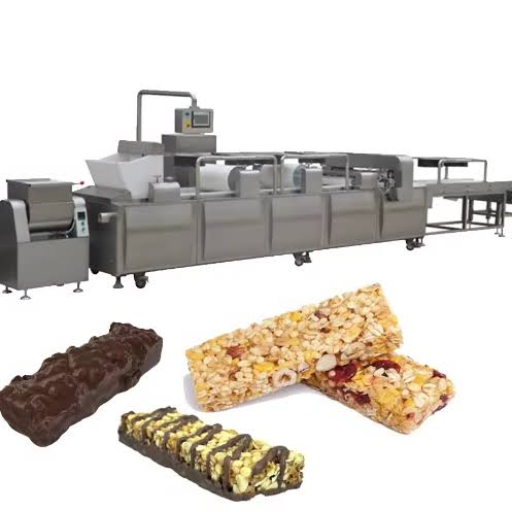
- A protein bar production line with mixing, forming, cooling, and wrapping modules.
- A bread crumbs production line with grinding, sifting, drying, and packaging modules.
- Multiple machines ordered together to supply a new factory or expand an existing one.
Why FCL Works for These Loads
A sealed container protects equipment from moisture, contamination, and unnecessary handling. Customs clearance is usually simpler because the entire container belongs to one consignee. Transit times are also shorter because the container moves directly from origin port to destination port without consolidation stops.
Mini-story: Maria’s Biscuit Expansion
Maria runs a mid-sized bakery in Colombia. In early 2025, she ordered a full biscuit production line from China to expand into sandwich cookies. Her forwarder quoted LCL at roughly 140/CBMfor18CBMofcratedequipment,totalingabout140/CBMfor18CBMofcratedequipment,totalingabout2,520 before destination fees.
A 20ft FCL quote was 1,850port−to−port.MariachoseFCL,savedover1,850port−to−port.MariachoseFCL,savedover700 on freight, received the sealed container two weeks faster, and started production without unpacking mixed cargo at a shared warehouse.
When to Choose LCL for Food Machinery

LCL shines when your shipment is too small to justify a full container. It lets you preserve cash flow and test equipment before committing to a larger order.
Typical LCL Scenarios
- A single replacement extruder or auxiliary machine.
- Spare parts, dies, molds, or cutting blades.
- A sample machine sent for recipe trials or factory validation.
- Small auxiliary equipment such as conveyors, metal detectors, or minor packaging units.
Why LCL Makes Sense Here
Paying for an entire 20ft container when you only use 4 CBM is wasteful. LCL lets you pay only for the space you occupy. It’s also a smart way to test a new supplier or product line before ordering a complete food production line.
The trade-off is time and handling. Your cargo waits at a consolidation facility until the forwarder has enough cargo to fill the container. At destination, it waits again for deconsolidation. According to Maersk, this consolidation and deconsolidation process typically adds several days to the overall transit.
When to Choose OOG for Food Machinery
OOG is the only option when standard containers are physically too small. For food machinery, this usually happens with large dryers, cooling tunnels, mixers, or any unit left assembled for faster installation.
What Makes Cargo OOG
A standard 40ft high-cube container has internal dimensions of roughly 12.03 m long × 2.35 m wide × 2.69 m high. Cargo becomes OOG when it exceeds any of those limits. Common triggers include:
- Height over 2.59 m after crating.
- Width over 2.33–2.35 m.
- Length over 12.05 m.
- Weight over roughly 26,500–28,000 kg.
OOG Equipment Options
| Equipment | Best For |
|---|---|
| Flat rack container | Over-width or over-length machinery |
| Open-top container | Over-height cargo loaded from above |
| Platform container | Very heavy or awkwardly shaped pieces |
| Breakbulk (LOLO) | Cargo that cannot fit any container and is lifted directly onto the vessel |
As Packair notes, OOG shipments require specialized lashing, crane loading, and often road permits for over-dimensional land transport. Planning must start early because carrier approval and stowage planning take longer than standard container bookings.
Mini-story: Chen’s Cooling Tunnel Problem
Chen manages logistics for a pet food plant in Southeast Asia. His new cooling tunnel was 3.1 m tall after crating, clearly too large for a standard container. His first forwarder suggested disassembling the unit, which would have added $8,000 in reassembly costs and two weeks of downtime. Instead, Chen booked the tunnel on an open-top OOG container. The unit arrived intact, was lifted directly into the factory, and connected to the production line within 48 hours.
Cost Comparison: FCL vs LCL vs OOG
Freight rates change constantly, but understanding the cost structure helps you compare quotes apples-to-apples. Don’t let a low base rate hide the real landed cost.
2026 Illustrative Rates
Based on current forwarder market guides, including SUAID Global:
- LCL China→USA: 80–80–180/CBM base ocean freight; all-in landed cost often 150–150–380/CBM.
- FCL China→US West: 1,600–1,600–2,300 for a 20ft container; 2,900–2,900–3,900 for a 40HQ.
- FCL China→Europe: 1,900–1,900–2,600 for a 20ft container; 3,100–3,100–4,300 for a 40HQ.
- OOG: Quoted individually; expect dimension and weight surcharges, special equipment fees, and possibly permit costs.
Break-Even Example
Imagine you are shipping 16 CBM of crated machinery at an LCL rate of $100/CBM:
- LCL ocean freight: 16 × 100=100=1,600
- Origin CFS and handling: ~$200
- Destination CFS and unpacking: ~$300
- LCL total: ~$2,100
A 20ft FCL quote for the same lane might be $1,850 port-to-port plus local charges. At 16 CBM, FCL is already competitive and often cheaper once you add destination fees.
Hidden Costs to Watch
LCL-specific fees:
- CFS charges at origin and destination.
- Handling and securing at the consolidation warehouse.
- Destination unpacking, THC, and documentation.
- Minimum charges that round small shipments up to 0.5 or 1.0 CBM.
FCL-specific fees:
- Origin and destination THC.
- Demurrage and detention if the container sits too long.
- Chassis and fuel surcharges.
OOG-specific fees:
- Dimension and weight surcharges.
- Specialized crane or forklift handling.
- Lashing, dunnage, and securing materials.
- Over-dimensional road permits and escorts.
iContainers emphasizes that the lowest ocean freight rate rarely equals the lowest total cost. Always ask your forwarder for an all-in door-to-door quote that lists every line item.
Required Documents for Each Shipping Mode
The paperwork is similar across modes, but OOG shipments need extra details.
Common Documents
- Commercial invoice: Declares value and buyer/seller details.
- Packing list: Lists every crate, dimensions, weight, and contents.
- Bill of lading (B/L): The contract between shipper and carrier.
- Certificate of origin: Used for duty preferences or customs classification.
- Cargo insurance certificate: Recommended for high-value machinery.
FCL-Specific Documents
- VGM certificate: Required before the container can be loaded.
- Container loading plan: Shows how crates are arranged inside the container.
LCL-Specific Documents
- Consolidation manifest: Lists all shipments sharing the container.
- House bill of lading: Issued by the consolidator.
OOG-Specific Documents
- Accurate cargo dimensions and weight.
- Center of gravity and lifting-point diagrams.
- Lashing/securing plan approved by the carrier or surveyor.
- High-resolution cargo photos from multiple angles.
At Shandong Loyal Industrial, we provide packing lists, commercial invoices, and CE-related documentation for every shipment. For OOG cargo, we also supply crate dimensions and photos to help your forwarder book the right equipment.
How to Prepare Food Machinery for International Shipping

Proper preparation protects your investment and reduces customs delays.
Cleaning and Protection
Remove all food residue, oils, and debris to prevent quarantine issues. Apply rust inhibitor to unpainted metal surfaces and seal electrical components against moisture.
Crating and Securing
Use ISPM-15 certified wooden crates for countries that require heat-treated wood. Match crate dimensions to your shipping mode: compact for LCL, cube-efficient for FCL, and lifting-point accessible for OOG.
Labeling and Documentation
Label every crate with buyer details, net and gross weight, metric dimensions, handling instructions, and CE marking plates.
Moisture Control
Ocean containers experience temperature swings that create condensation. Place desiccant packs inside crates, especially near electrical cabinets and motors. Vibration pads also protect sensitive components.
Common Mistakes to Avoid
Even experienced buyers make these errors when shipping machinery internationally.
1. Underestimating Chargeable Volume
LCL rates are based on chargeable volume, not just the machine’s footprint. Crating, pallets, and bracing can add 20–40% to the total CBM. Get accurate crate dimensions before you request a quote.
2. Ignoring Destination Charges
A cheap ocean freight rate can disappear under destination CFS fees, unpacking charges, storage, and customs broker fees. Ask for a door-to-door breakdown.
3. Booking OOG Too Late
OOG cargo needs carrier approval, special equipment, and sometimes port surveys. Start the booking process at least two to three weeks earlier than a standard FCL shipment.
4. Skipping the Container Loading Plan
For FCL, a loading plan prevents shifting and damage. It also helps customs inspectors verify contents quickly if the container is scanned.
5. Forgetting Peak Season Timing
Rates can spike 30–50% in Q4 and around Chinese New Year. If your timeline is flexible, shipping during off-peak months can reduce costs significantly.
Which Shipping Mode Is Right for Your Order? FCL vs LCL vs OOG Decision Framework
Use this decision framework the next time you import food machinery.
- Measure your cargo accurately in crated form, including length, width, height, and weight.
- Check the largest dimension against standard container limits. If any dimension exceeds them, you need OOG.
- Calculate total CBM. If it is under 12 CBM, request an LCL quote. If it is over 15 CBM, request an FCL quote. Between 12 and 15 CBM, request both and compare all-in totals.
- Ask for all-in door-to-door pricing that includes origin handling, ocean freight, destination charges, and customs clearance.
- Factor in timeline and risk. FCL is faster and more secure. LCL is cheaper for small loads. OOG is unavoidable for oversized units.
Mini-story: David’s First Import
David, a snack startup founder in Nigeria, ordered his first corn puff snack production line in 2024. The supplier quoted ocean freight, but David did not realize it excluded destination charges. When the cargo arrived, he faced unexpected CFS and customs fees that added 18% to his landed cost. On his second order, David requested an all-in FCL door-to-door quote, planned the container loading with the supplier, and budgeted accurately from day one.
FCL vs LCL vs OOG FAQs
What is the difference between FCL, LCL, and OOG shipping?
FCL means you book an entire container exclusively for your cargo. LCL means your cargo shares a container with other shippers and you pay per CBM. OOG is for cargo that exceeds standard container dimensions and ships on flat racks, open-top containers, or platform containers.
Is LCL or FCL cheaper for food machinery?
LCL is usually cheaper under 12–15 CBM. FCL becomes more cost-effective above that threshold. Always compare all-in door-to-door quotes.
What counts as OOG cargo for food processing equipment?
Cargo is OOG when it exceeds standard container limits after crating, typically over 2.59 m high, 2.35 m wide, or 12.05 m long. Large dryers and cooling tunnels often qualify.
How do you ship oversized food processing machinery?
Oversized machinery ships on flat racks, open-top containers, or platform containers. It requires accurate dimensions, lifting diagrams, a lashing plan, and often road permits.
What documents are needed for FCL, LCL, and OOG shipments?
Common documents include a commercial invoice, packing list, bill of lading, and certificate of origin. FCL needs a VGM certificate, LCL needs a consolidation manifest, and OOG needs photos and a lashing plan.
How do I prepare food machinery for international shipping?
Clean all residue, apply rust inhibitor, use ISPM-15 certified crates, label every crate, add desiccant packs, and include CE marking plates.
Conclusion
Choosing between FCL vs LCL vs OOG isn’t just about finding the lowest freight rate. It’s about matching your cargo’s size, value, and timeline to the right shipping mode. Use LCL for small or test shipments, FCL for full production lines, and OOG for anything that exceeds standard container dimensions.
For food machinery buyers, the decision has real consequences. The right mode protects your equipment, shortens startup time, and keeps landed costs predictable. The wrong mode leads to delays, damage, and surprise fees. That’s why it pays to plan before you book.
At Shandong Loyal Industrial, we ship CE-certified machinery to clients in over 50 countries. Whether you need a single extruder by LCL, a complete food production line by FCL, or an oversized dryer on an OOG flat rack, our team helps you plan the shipment from factory floor to your door.
Ready to get started? Contact us today for a detailed machinery quote and shipping guidance tailored to your project.