Marcus came across a significant deal, or so he thought. The recently purchased extrusion line for the newly built snacks facility arrived as scheduled and was cheaper than initially stated. Within half a year, they produced a serious alert when the team opened the barrel for routine clean up: the inner surface showed patches of reddish-brown rust.
The supplier had guaranteed “food grade stainless steel.” What we have today is 201 grade polished steel. For Marcus, this meant that the production would have to be stopped, the entire barrel replaced and even worse, the already produced and delivered products were most likely contaminated.
If you ever find yourself in the showroom of a supplier and wonder if the beautiful equipment which looks new now, will remain so in a year’s time when faced with salt, acid and steaming pressure – you are not alone. Determining which food grade machinery materials shall be used is among the critical food manufacturing decisions. It is because such determinants impacts on product danger, regulatory standards constraints, equipment durability and cost of ownership in general.
This tutorial aims to help you find adequate materials for machine parts that are subject to possible damage. The guide is clear and precise in the way the FDA, CE, and EHEDG materials requirements differ. It offers an easy-to-use guide to scrutinize statements made by suppliers. It also takes into account that different materials are to be selected, processed, and used in relation to the end product – from snacks to pet food to pasta manufacturing.
What Makes a Material “Food Grade”?
The term “food grade” is not a marketing label. It is a legal and technical classification that means a material is safe for direct or indirect contact with food under intended use conditions. For food grade machinery materials, this classification depends on three things: the material does not transfer harmful substances to food, it resists corrosion and degradation under processing conditions, and it can be cleaned to hygienic standards without degrading.
Regulatory Standards That Define Food Grade
In the United States, the Food and Drug Administration (FDA) governs FDA compliant machinery materials through 21 CFR. This regulation lists substances that are generally recognized as safe (GRAS) for food contact and sets migration limits for chemicals that could leach into products. If you are selling into the US market, every material that touches food, from extruder barrels to conveyor belts, must comply with these standards.
Europe operates under a different framework. EU Regulation 1935/2004 requires that materials do not release substances into food in quantities that could endanger human health or change food composition. Specific measures like EC 10/2011 govern plastics, while metals are assessed under national legislation aligned with the framework regulation. For manufacturers exporting to Europe, understanding these requirements is essential.
NSF International adds another layer of confidence. NSF/ANSI standards, particularly NSF/ANSI 51 for food equipment materials, provide third-party verification that a material has been tested for safety and cleanability. Many major food retailers and auditors expect NSF certification as a baseline requirement.
The CE Connection
CE marking on machinery is not just about electrical safety. The Machinery Directive 2006/42/EC includes specific hygiene requirements that dictate material choice. Equipment must be designed so it can be cleaned and disinfected without deterioration. For Shandong Loyal Industrial, this means every food processing machine we build uses materials that satisfy both the safety and hygiene dimensions of CE compliance.
Stainless Steel Grades for Food Processing Equipment: Choosing Food Grade Stainless Steel for Machinery
Stainless steel accounts for over 70% of all materials used in food contact equipment manufacturing. It dominates the industry because it offers an unmatched combination of corrosion resistance, mechanical strength, thermal tolerance, and cleanability. But not all stainless steels are created equal. The grade you choose determines how well your equipment will perform and how long it will last.
304 Stainless Steel: The Industry Workhorse
The common variety of steel used in most food processing equipment is 18/8 or 304 stainless steel, its composition consists of about 18% chromium and 8% nickel. This chemical combination results in a sturdy passivation film that provides protection against rusting and some common cooking acids. For such construction parts as beams, hoppers, guards that are not designed to be in aggressive chemical environments, 304 is the best and even the cheapest solution.
There are drawbacks to the 304 however. It cannot perform well in chloride-rich areas like factories that put a large quantity of salt in their products or wash down with strong solutions. Acidity in food with high temperatures can lead to pitted corrosion of the 304 steel over prematurely long time periods. It is always good to know when to use 304 and when alternative materials already need to be included in the concurrence analysis.
316 and 316L Stainless Steel: Superior Corrosion Resistance
316 grade steel contains small percentages of molybdenum (2-3%) on top of what is available in the 304 grade steel formula, which makes the steel about 20% more resistant to corrosion in chlorides than 304. This is not a minor issue for food processors of salty snacks, marinated or high acids containing products; it constitutes the difference between a ten year engine and an eighteen month major overhaul.
The ‘L’ in 316L is a designation of low carbon. Ordinary 316 can suffer carbide precipitation in the welding heat affected zone, which compromises the corrosion resistance of the welded regions. The low carbon version of the alloy addresses this problem; hence, 316L is the most appropriate material for welded components, in particular extrusion barrels, mixing kettles as well as piping system.
At Shandong Loyal Industrial, we specify 316L for all high-stress food contact surfaces in our advanced extrusion systems. The added material cost pays for itself many times over in reduced maintenance and longer service life.
304 vs 316: When to Choose Which
| Factor | 304 Stainless Steel | 316 Stainless Steel |
|---|---|---|
| Corrosion resistance | Good for neutral pH foods | Excellent for acidic, salty, or high-temp applications |
| Relative cost | Lower baseline cost | Higher by approximately 20-30% |
| Best applications | Frames, guards, non-contact hoppers | Extrusion barrels, dies, welded contact surfaces |
| Weldability | Good, but standard grades may sensitize | 316L minimizes carbide precipitation at welds |
| Typical service life | 10-15 years in moderate conditions | 15-20+ years in aggressive environments |
The right choice depends on what you are processing, not on your budget alone. If your product is neutral pH pasta dough or plain biscuits, 304 may be entirely sufficient for most components. If you are extruding salty snacks or high-protein pet food with acidic preservatives, 316L is not a luxury. It is a necessity.
Want to explore which grade fits your production goals? Contact our engineering team for a customized material recommendation based on your specific recipe and process conditions.
Beyond Stainless Steel: Other Critical Food Grade Materials
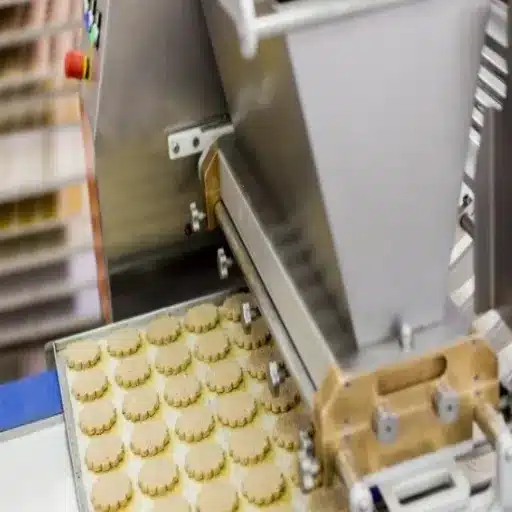
Stainless steel may dominate, but it is not the only food grade machinery material that matters. Seals, coatings, and engineering plastics play equally important roles in machine performance and food safety.
Food-Safe Coatings and Surface Treatments
Mold release coatings such as PTFE and food grade coatings for food machinery materials are frequent on molds, dies, and forming plates for the reasons that adherence to these surfaces will result in defects in the final product or increases the necessity of cleaning. Only certified coatings application apliccations.
The only exception is where the FDA clear coated appliances are new because any flaking or mechanical wear is likely to compromise the coating and result in cross-contamination with food.
Passivation and electropolishing are used to new stainless steel assist plate areas passivate. The process removes any ferritic iron and enhances the coating of chromium oxide layer. The latter approach goes beyond being a simple coating as it eliminates a controlled amount of the metal surface which reduces the roughness of the minute peaks where microorganisms can adhere.
Seals, Gaskets, and Elastomers
Engineering plastics have become an integral part of food processing machinery. All gaskets, o-rings, and seals in a food production machine must be food approved and able to withstand the contents of the container as well as the cleaning materials. Silicone rubber has high thermal resistive properties and is therefore used extensively in components which are regularly exposed to steam. EPDM is stable in acids and bases but softens and winds in oils and fats. Viton (FKM) is superior in oil and extreme temperature applications to most other materials and therefore used to enhance sealing of fryers and extruders.
Inadvertently using an inappropriate elastomer is both common and expensive. The silicone seal in a fat fryer, such as the ones we supply will expand and tear apart in just a few months. If an EPDM seal is subjected to extensive and harsh alkaline cleaner, it will quickly chip and become leaky. With respect to different zones of the process line, there is no less emphasis on the correct choice of the seal material than there is on the choice of the metallic joints.
Engineering Plastics in Food Machinery
In the manufacture of wear strips, guide rails, bushings and other elements where wear is particularly significant but the load is low, ultra-high-molecular-weight polyethylene (UHMW-PE), nylon and PEEK are used. This is because they are highly resistant to wearing, slides easily and, in some instances, suitable in contact with food as they meet the required FDA standards. These are particularly in application when metal products with surfaces that rub against each other would pose a risk of metal dust contamination within the packaging and conveyor sectors.
Materials worn in these sectors are usually determined by the types of machinery incorporated in such lines generally referred to us food grade machinery materials.
Material Selection by Machinery Type
The best material for your equipment depends on what that equipment does. A material that works perfectly in a pasta mixer may fail quickly in a pet food extruder. Here is how to match food grade machinery materials to specific machine categories.
Extrusion Systems
Extrusion subjects materials to extreme heat, pressure, and abrasion. The barrel liner and screw must resist mechanical wear from abrasive fillers like bran, fiber, and mineral fortificants, while also resisting corrosion from steam, acids, and salts. For this reason, many high-performance extruders use bimetallic barrel liners: a 316L stainless steel outer shell with a hardened, wear-resistant inner lining.
Die plates and cutters face similar challenges, plus the added requirement of dimensional precision. A corroding die plate does not just fail hygienically. It produces inconsistent product shapes and weights, leading to quality control problems and waste.
Snack Production Lines
Snack manufacturing creates some of the most aggressive material environments in food processing. Fryer components are exposed to hot oil, thermal cycling, and caustic cleaning chemicals. Oven interiors must withstand high temperatures without warping or releasing oxides that could affect flavor. Conveyor frames and belts must balance mechanical strength with easy cleanability.
For snack producers, 316L is the standard for any oil-contact or high-temperature component. Conveyor systems often use 304 frames with UHMW-PE wear strips and FDA-compliant modular plastic belts. The combination gives you strength where you need it and hygiene where it counts.
If you are planning a snack production expansion, see our complete guide to snack production line equipment and how material choices affect long-term operating costs.
Pet Food Processing Equipment
Pet food formulations are surprisingly aggressive on machinery. High-protein recipes, meat slurries, and acidic preservatives create a perfect storm for corrosion. Dry extrusion generates abrasive dust and high mechanical loads. Wet extrusion introduces steam, water, and heat that accelerate material degradation.
Elena, a production manager at a pet food facility in Southeast Asia, learned this the hard way. Her first extrusion line used 304 stainless steel barrels to save on upfront costs. Within two years, pitting corrosion had degraded the barrel surface so badly that product was sticking and burning.
She replaced the barrels with 316L bimetallic liners. The upgrade cost 25% more initially, but her maintenance budget dropped by 40% in the first year alone. Product quality stabilized immediately.
Pasta Production Lines
Pasta production is relatively gentle on materials compared to extrusion or frying, but it has its own requirements. Dough contact surfaces must be exceptionally smooth to prevent sticking. Drying racks and cutters need good moisture resistance. Because pasta dough is typically neutral pH and low in salt, 304 stainless steel is usually adequate for most pasta equipment components.
However, if you produce flavored or fortified pasta with acidic ingredients like tomato powder or spinach extract, you should consider 316L for all direct food contact surfaces. The small additional cost is good insurance against unexpected corrosion.
Hygienic Design and Surface Finish Requirements for Food Machinery
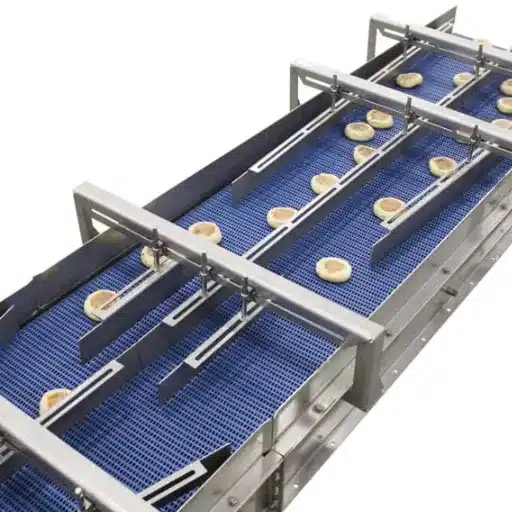
Even the best hygienic design materials food machinery uses will fail if components are poorly finished or badly designed. Hygienic design ensures that materials can actually be cleaned to the standard their chemistry promises.
Understanding Surface Roughness (Ra Values)
Surface roughness is measured in micrometers as an Ra (roughness average) value. For food contact surfaces in most processing applications, the target is Ra ≤ 0.8 μm. Surface roughness above Ra 1.6 μm can harbor bacteria and biofilms, making smooth finishes critical for food safety.
In applications with strict hygiene requirements, such as infant formula or ready-to-eat products, electropolished surfaces with Ra ≤ 0.4 μm are often specified. These ultra-smooth surfaces not only resist bacterial adhesion but also clean faster and with less water and chemicals, reducing operating costs and environmental impact.
Design Principles That Support Material Performance
Material choice and design are inseparable. Even 316L stainless steel will corrode if water and product residue collect in crevices. The European Hygienic Engineering and Design Group (EHEDG) publishes guidelines that every food equipment buyer should understand.
Key principles include eliminating dead spaces and sharp internal angles where product can accumulate, using continuous welds that are ground smooth to the surrounding surface, and designing drains and slopes so liquids cannot pool. At Shandong Loyal Industrial, our equipment design team applies these principles from the first sketch. Because a material is only as hygienic as the design it is formed into.
How to Evaluate Your Supplier’s Material Claims
Not every supplier who claims “food grade stainless steel” is telling the whole truth. As Marcus discovered, some suppliers polish low-grade steel and pass it off as premium material. Here is how to protect your business.
Documentation to Request
Make sure that the company has provided three sets of documents before appending your signature on the purchase order. First, a mill test certificate (MTC) which proves the nature of the stainless steel used by specifying how much its chemistry of chromium, nickel, and molybdenum exceeds what is specified or even falls short of it. Third-party compliance certificates from certifying agencies, like the NSF, SGS, and others. Finally, the inspection reports state the measured Ra as opposed to providing reassurance in vague words.
Such requests are customarily granted by a reliable company, in most cases. Their refusal, a drawn-out process of waiting, or submitting partial documents, however, is a reason for concern.
Red Flags to Watch For
Be cautious of providers required to meet specific standards who instead throw terms such as ‘food safe metal’ which do not mean anything. Beware of the replacement of 304 steel with 201 or 430 stainless steels, as they do not cost as much and in most food processing place are not permitted. 201 steel is composed of manganese rather than nickel and, thus, is more corrosion susceptible than 304. As for 430 steel, it is a ferritic type steel which contains no nickel, and in aggressive environments like those with acidic solutions or salt, corrosion resistance is very low.
Another red flag is inability of the supplier to furnish documentation for traceability purposes. If a manufacturer does not provide you with the information of which steel mills were used to produce the steel part of your equipment, then there is no way for you to ascertain the capacity of that particular helmet.
On-Site Verification Tips
If you visit a supplier’s factory, bring along a molybdenum assay kit. These cheaper chemical tests are able to tell 304 from the 316, easily enough on the shop floor. In addition, inspect the weld visually in terms of its quality. ‘Food grade machinery materials’ require thorough welding: full penetration and smooth grinding of the beads. Crappy positioned weld beads complemented by air gaps and porosity or aggressive grinding are indicators of ‘shortcuts’.
Conclusion
Selecting the right food grade machinery materials is not a detail to leave to your supplier. It is a strategic decision that shapes product safety, regulatory compliance, maintenance costs, and equipment lifespan for the next decade or more.
Here are the key takeaways to remember:
- Match the grade to the application. 304 stainless steel is excellent for structural and neutral-pH applications. 316L is essential for acidic, salty, or high-temperature processing.
- Demand documentation. Mill test certificates, third-party compliance certificates, and surface finish reports are non-negotiable.
- Look beyond the metal. Seals, coatings, and engineering plastics are just as critical to machine performance and hygiene.
- Design and material work together. Even premium 316L will fail in a poorly designed machine with crevices and rough welds.
- Verify on-site when possible. Simple spot tests and visual inspections can save you from expensive surprises later.
With over 10 years of experience building CE-certified food processing lines for clients in more than 50 countries, Shandong Loyal Industrial understands that the right material in the right place makes all the difference. Whether you need a snack extrusion line, a pet food production system, or a complete pasta manufacturing plant, we design every machine with materials matched to your product, your process, and your market’s regulatory requirements.
Ready to choose the right food grade machinery materials for your next production line? Contact us today for a detailed consultation and custom proposal tailored to your production goals.