
When comparing 304 vs 316 stainless steel food equipment, most manufacturers should choose 304. It offers excellent corrosion resistance at a reasonable cost for snack extruders, bakery conveyors, and standard processing lines. Upgrade to 316 only when your production environment involves salt, chlorides, strong acids, or aggressive cleaning chemicals, where its 2-3% molybdenum content provides critical protection against pitting and crevice corrosion.
That distinction costs most manufacturers thousands of dollars. Some pay for unnecessary upgrades. Others face premature equipment failure.
When Rajesh Patel, a snack producer in Mumbai, sourced his first corn puff snack production line in 2023, his supplier pushed 316 stainless steel across the entire system. The premium added $12,000 to his quote. Two years later, his equipment shows no corrosion. But 304 would have performed just as well in his dry, low-salt environment. He paid for protection he never needed.
This guide gives you the knowledge to make the right material choice. We will walk through the chemical differences, real-world equipment applications, cost implications, and the exact documentation you should demand from your manufacturer.
Key Takeaways
- 304 stainless steel handles roughly 90% of food processing applications at the lowest cost, including dry foods, bakery, standard dairy, and most snack production.
- 316 stainless steel justifies its 20-40% premium only in salt-heavy, acidic, or chloride-rich environments like seafood processing, brine systems, or coastal facilities.
- The “L” designation (304L, 316L) matters for welded equipment because low carbon content prevents weld decay and maintains corrosion resistance at joints.
- Surface finish quality can matter more than grade choice, a well-finished 304 surface outperforms a poorly finished 316 surface.
- Always request material test reports (MTRs) and surface roughness verification from your equipment manufacturer to confirm food-grade compliance.
What Makes Stainless Steel “Food Grade”?
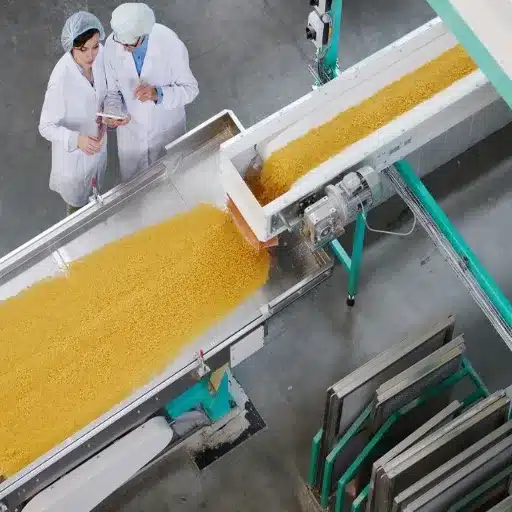
There are three criteria that food grade stainless steel should meet. They should be resistant to corrosion by food acids and cleaning solvents. It stays non-reactive so it does not change product taste or safety. It provides a smooth surface that bacteria cannot hide in.
Both 304 and 316 belong to the austenitic stainless steel family. These steels are popular in food manufacturing because they form easily, weld well, and resist corrosion. They contain nickel. This stabilizes the crystal structure. It also helps the metal handle repeated heating and cooling without degrading. Ferritic grades like 430 lack this nickel content. They cannot match the durability of austenitic steels in demanding food applications.
Food-grade stainless steel must meet regional safety standards. In the United States, the FDA oversees this under 21 CFR. Europe uses EU Regulation 1935/2004. China requires GB 4806.9-2016 compliance. The NSF/ANSI 51 standard certifies complete equipment for food safety. Both 304 and 316 meet these standards when finished correctly.
However, compliance goes beyond the alloy number on the certificate. Manufacturing quality matters. Surface finish matters. Welding quality matters. Post-fabrication passivation matters too. These factors determine whether your equipment truly meets food-grade standards.
Food Grade Stainless Steel 304 vs 316: At-a-Glance Comparison
Before diving into specific applications, here is the side-by-side breakdown every procurement team needs at their fingertips:
| Property | 304 / 304L Stainless Steel | 316 / 316L Stainless Steel |
|---|---|---|
| Chromium | 18-20% | 16-18% |
| Nickel | 8-10.5% | 10-14% |
| Molybdenum | 0% | 2-3% |
| Corrosion Resistance | Excellent for general use | Superior against chlorides, acids, salt |
| Relative Cost | Baseline | 20-40% higher |
| Machinability | Easier; less tool wear | Slightly tougher; more tool wear |
| Weldability | Good (304L for heavy welds) | Good (316L for heavy welds) |
| Max Temperature | Up to ~870°C | Up to ~800-925°C |
| Food-Safe Compliance | FDA, EU, NSF/ANSI 51 | FDA, EU, NSF/ANSI 51 |
| Best For | General processing, bakery, dairy, dry snacks | Seafood, brine, acidic foods, coastal facilities |
This table gives you the headline facts. The rest of this guide explains when each grade wins in real production environments, and when manufacturers try to sell you more than you need.
The Critical Difference: Molybdenum Explained
The 2-3% molybdenum in 316 is the single most important factor in your decision. Without getting lost in metallurgy, here is what it does.
Stainless steel resists rust because chromium forms a thin oxide layer on the surface. This is called the passive layer. It heals itself when scratched. That is why stainless steel lasts decades in most food applications.
But chlorides attack this layer. Chlorides come from salt, brine, seawater, and many industrial sanitizers. They create tiny pits. These pits deepen over time. Eventually they perforate the metal.
Molybdenum strengthens the passive layer against chloride attack. Think of it as backup for the steel’s natural defenses. In environments with little salt, that backup sits idle. In salt-heavy or harsh chemical environments, it prevents catastrophic failure.
According to the British Stainless Steel Association, chloride-induced pitting is the most common failure mode in food processing equipment that was under-specified for its environment. A single pit in a storage tank can contaminate an entire batch and force unplanned production shutdowns.
When to Choose 304 Stainless Steel for Food Equipment
Choose 304 for approximately 90% of standard stainless steel food processing equipment grades applications. It is the workhorse grade of the food industry for good reason.
304 excels in these specific equipment types and environments:
- Extrusion systems processing dry or mildly moist ingredients, corn puff snacks, breakfast cereals, textured vegetable protein
- Baking and dry goods equipment, bread crumb production, biscuit lines, cracker conveyors
- Standard dairy processing, milk handling, cheese vats, yogurt fermentation (non-acidic stages)
- Beverage production, water, juice, soft drink handling where pH remains near neutral
- General conveying and storage, dry ingredient hoppers, bucket elevators, packaging feed systems
- Work surfaces and structural frames, tables, guards, enclosures in standard washdown environments
At Shandong Loyal Industrial, our standard snack food machinery lines use 304 stainless steel for the majority of components. This includes extruder barrels, die assemblies, cooling conveyors, and drying systems. For manufacturers producing dry snacks, baked goods, or standard pasta, 304 provides decades of reliable service without the unnecessary cost of 316.
Chen Wei opened a bread crumbs production line in Guangzhou. He worried that 304 might not survive the humid climate. Five years later, his equipment shows no corrosion. His facility stays dry indoors. His product contains minimal salt. The savings from choosing 304 over 316 paid for an automated packaging line.
When to Choose 316 Stainless Steel for Food Equipment
Specify 316 when your equipment faces salt, chlorides, strong acids, or aggressive cleaning protocols. The 20-40% premium for food grade 316 stainless steel pays for itself by preventing corrosion failures that halt production and contaminate product.
316 is non-negotiable for these applications:
- Seafood processing, fish filleting lines, shellfish handling, brine freezing systems where salt exposure is constant
- Meat processing with blood or brine contact, curing chambers, brine injection systems, blood collection equipment
- Acidic food production, tomato sauce, citrus juice, vinegar, pickled vegetables, kimchi, sauerkraut fermentation
- Soy sauce and fermented products, high-salt fermentation tanks with extended acidic exposure
- Coastal or high-humidity facilities, atmospheric chlorides from sea air accelerate corrosion even without direct salt contact
- Aggressive CIP (Clean-In-Place) systems, facilities using chlorine-based sanitizers, caustic soda, or phosphoric acid washes at high temperatures
A seafood processor in Vietnam learned this the hard way. Their food production line used 304 for everything, including brine tanks and conveyors. Seawater rinses exposed the equipment to constant chlorides. Within 18 months, pitting appeared. Replacing those components with 316 cost three times more than specifying 316 from the start. The downtime cost even more.
For facilities processing salty or acidic snacks, seasoned nuts, salt-and-vinegar chips, or soy-sauce-flavored extruded snacks, we offer customizable 316 upgrades on contact surfaces and brine-exposed components. Our engineering team evaluates your specific recipe, cleaning protocol, and facility location to recommend the precise components that need 316 rather than defaulting to it across the entire system.
304L vs 316L Food Equipment: When Low Carbon Matters
The “L” in 304L and 316L stands for low carbon, specifically, carbon content below 0.03% compared to the standard 0.08% maximum. This matters enormously for one reason: welding.
During welding, carbon can combine with chromium. This happens at the weld boundaries. The result is chromium carbide formation. It depletes chromium near the weld. This weakens the passive layer. The condition is called sensitization.
A sensitized weld becomes a bacterial hiding spot. It is also a structural weak point.
Specify 304L or 316L for:
- Welded storage tanks and pressure vessels
- Process piping and manifold assemblies
- Equipment frames with many welded joints
- Any component where weld integrity affects hygiene
The cost gap is small. Typically just 5-10%. That is cheap insurance for welded equipment. At Shandong Loyal Industrial, we default to 304L for all welded frames and tanks.
Surface Finish: Why It Matters as Much as the Grade
Here is a truth most equipment buyers miss: a well-finished 304 surface outperforms a poorly finished 316 surface. The alloy matters, but the surface matters too.
Bacteria need hiding places. A rough surface provides crevices. Biofilms grow there. Corrosion also starts at surface defects, pits, and scratches.
For hygienic food contact, industry guidelines specify Ra ≤ 0.8 μm. That is approximately a No. 4 finish. For high-protein or sticky products, smoother finishes of Ra ≤ 0.4 μm work better. The EHEDG guidelines for hygienic design confirm this. Surface finish and passivation matter almost as much as alloy selection.
Passivation is a chemical treatment after fabrication. It removes free iron particles introduced during cutting, welding, and grinding. Without it, those iron particles rust. This creates contamination and starting points for corrosion. Every food-grade stainless steel component should be passivated before delivery.
When evaluating equipment, ask two questions. What is the surface roughness of food-contact surfaces? Was the equipment passivated after fabrication? Suppliers who cannot answer precisely are not delivering truly food-grade equipment.
Stainless Steel Grade Selection by Equipment Type
Different equipment faces different challenges. Here is how to match the grade to the machine:
Extrusion Systems
Standard corn puff snack production lines and protein extruders typically use 304 for barrels, screws, and dies. The extrusion process generates heat and pressure, but the ingredients are generally dry or mildly moist. Upgrade to 316 only for salt-heavy savory recipes or acidic protein blends.
Frying and Drying Systems
Fried snack production lines use 304 for oil tanks, conveyors, and hoods in standard applications. The oil itself is not corrosive. Specify 316 for components exposed to brined pre-treatments or salt-dust environments.
Mixing and Blending Equipment
Dry mixers for bakery premixes or protein powders use 304. Wet mixers handling acidic marinades, tomato-based sauces, or brined ingredients benefit from 316 on contact surfaces.
Pasta and Macaroni Lines
Our pasta production lines use 304 for standard durum wheat processing. The dough is mildly acidic but not aggressively corrosive. For gluten-free or specialty pasta with high salt content, 316 is available as an upgrade.
Conveying Systems
Conveyors moving dry ingredients use 304 frames and belts. Conveyors in wet washdown areas, especially with salt exposure, benefit from 316 construction.
Storage Tanks
Tank grade depends entirely on contents. Water and neutral beverages: 304. Acidic sauces, brines, or fermented products: 316 or 316L. Always specify L grades for welded tanks.
Want to discuss which grade fits your specific production goals? Contact our engineering team for a free material selection consultation based on your recipes, cleaning protocols, and facility location.
Cost Analysis: Total Cost of Ownership
The upfront material cost difference between 304 and 316 ranges from 20-40%. For a complete protein bar production line, that premium might add $8,000-15,000 to the total equipment cost. But the real calculation is lifecycle cost.
Consider a seafood processing facility choosing between 304 and 316 for their brine tank system:
| Cost Factor | 304 Stainless Steel | 316 Stainless Steel |
|---|---|---|
| Initial equipment cost | $45,000 | $58,500 (30% premium) |
| Expected lifespan in brine environment | 3-5 years | 12-15 years |
| Replacement cost (one cycle) | $45,000 | $0 |
| Downtime cost per replacement (3 days) | $12,000 | $0 |
| 10-year total cost | $102,000 | $58,500 |
In aggressive environments, 316 does not just last longer, it eliminates replacement costs, avoids production downtime, and prevents contamination incidents that damage brand reputation.
Conversely, for a bakery producing dry bread crumbs in an inland facility, specifying 316 across the entire line adds cost with no measurable benefit. 304 will last 15+ years in that environment. The smart procurement decision matches the grade to the actual conditions, not the maximum conceivable risk.
How to Verify Food-Grade Claims from Your Manufacturer
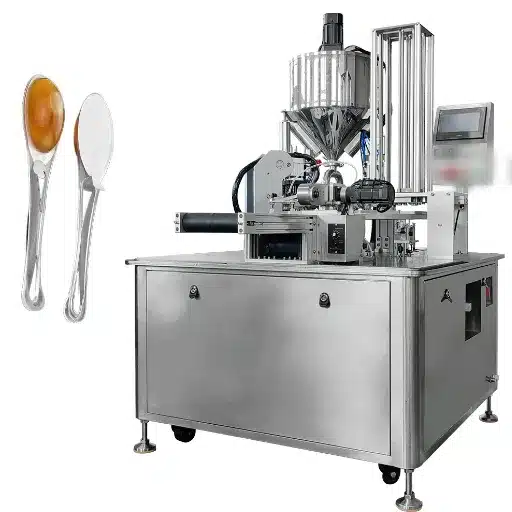
Not every supplier who stamps “304” on a quotation delivers genuine food-grade stainless steel. Here is the documentation you should demand:
1. Material Test Report (MTR) with Spectral Analysis
The MTR must include direct-reading spectrometer results verifying the actual chemical composition. Look for chromium, nickel, and, for 316, molybdenum percentages. The report should reference a traceable heat number.
2. Surface Roughness Certification
Request Ra value verification for all food-contact surfaces. A reputable manufacturer can provide profilometer readings. Be skeptical of vague claims like “mirror finish” without numerical data.
3. Migration Test Reports
For export to regulated markets, request compliance documentation. GB 4806.9-2016 testing for China exports, EU declarations for European markets, or NSF/ANSI 51 certification for North American sales.
4. Passivation Documentation
Confirm that post-weld passivation was performed and what standard was followed. ASTM A967 is the common specification for passivation of stainless steel parts.
5. Weld Quality Records
For welded tanks and piping, request weld maps and inspection reports. X-ray or dye-penetrant testing should verify integrity on pressure-boundary welds.
At Shandong Loyal Industrial, we provide full material traceability on every production line. Each heat number is documented. Surface roughness is verified before shipment. CE certification confirms compliance with European safety standards. We encourage every customer to review these documents before accepting delivery. Transparency is not optional in food equipment manufacturing.
Frequently Asked Questions
Is 304 or 316 better for food equipment?
304 is better for roughly 90% of food equipment. It resists corrosion in standard environments at the lowest cost. Choose 316 only for salt-heavy, acidic, or chloride-rich environments like seafood processing, brine systems, or coastal facilities. For most snack, bakery, and dairy applications, 304 performs identically to 316 at 20-40% lower cost.
Are both 304 and 316 considered food grade?
Yes. Both grades are widely accepted as food-grade stainless steel. They comply with FDA, EU Regulation 1935/2004, GB 4806.9-2016 (China), and NSF/ANSI 51 standards. Neither contains toxic heavy metals. However, food-grade certification depends on manufacturing quality, not just the alloy number. Surface finish, welding quality, and passivation matter too.
What is the main difference between 304 and 316 stainless steel?
The critical difference is molybdenum. 316 contains 2-3% molybdenum. 304 contains none. Molybdenum gives 316 superior resistance to chloride-induced pitting and crevice corrosion. Without it, 316 would perform no better than 304.
Is 316 worth the extra cost for food processing?
Only in aggressive environments. The 20-40% premium pays for itself when equipment faces salt, acids, or harsh chemicals. In standard environments, 316 offers no advantage. Calculate total cost of ownership. A 45,000304systemthatneedsreplacementin5yearscostsmorethana45,000304systemthatneedsreplacementin5yearscostsmorethana58,500 316 system that lasts 15 years in brine conditions.
When should I use 304L or 316L instead of standard grades?
Specify L grades for all welded equipment. The low carbon content (below 0.03%) prevents sensitization at weld joints. Standard grades risk chromium carbide formation during welding. This weakens corrosion resistance near welds. The cost increase is minimal, typically 5-10%.
Can 316 stainless steel rust?
No stainless steel is completely rust-proof. But 316 is highly resistant. Under extreme conditions, prolonged saltwater immersion or strong acid exposure may eventually cause surface discoloration. 316 resists corrosion significantly longer than 304 in harsh environments.
What surface finish is needed for food-grade stainless steel?
Food-contact surfaces should have a roughness of Ra ≤ 0.8 μm. That is about a No. 4 finish. For high-protein or sticky products, smoother finishes of Ra ≤ 0.4 μm work better. Passivation after fabrication is also essential.
Common Mistakes When Specifying Stainless Steel for Food Equipment
Even experienced procurement teams make these errors:
Assuming 316 is always better. It is not. In dry, low-chloride environments, 316 offers no functional advantage over 304. You are paying for protection you do not need.
Ignoring surface finish requirements. A rough 316 surface corrodes faster than a smooth 304 surface. Always specify Ra values, not just alloy grades.
Overlooking welding quality. Poor welds create crevices where bacteria thrive and corrosion initiates. Weld quality matters more than alloy choice for hygienic design.
Forgetting the L designation on welded equipment. Standard 304 or 316 in welded tanks risks sensitization and premature weld decay. The minimal cost increase for L grades is cheap insurance.
Choosing based on price alone without lifecycle analysis. The cheapest option today can become the most expensive option over a decade. Calculate total cost of ownership, not just purchase price.
Conclusion
304 stainless steel is the right choice for most 304 vs 316 stainless steel food equipment decisions. It resists corrosion in standard environments, machines and welds easily, and keeps costs reasonable. Upgrade to 316 only when salt, chlorides, strong acids, or aggressive cleaning chemicals are part of your daily production reality.
The best procurement decisions balance three factors: the chemistry of your products, the intensity of your cleaning protocols, and the atmospheric conditions of your facility. Get any of these wrong, and you either overspend on unnecessary alloy upgrades or under-spend and face premature equipment failure.
At Shandong Loyal Industrial, we have spent over a decade building food production lines for manufacturers in more than 50 countries. We know that every production environment is different, and the right material specification depends on understanding your specific challenges. Whether you need a standard 304 line for dry snack production or a fully customized 316 system for aggressive marine environments, our engineering team designs equipment that lasts.
Ready to specify the right stainless steel grade for your next production line? Request a detailed quotation and our engineers will evaluate your recipes, facility conditions, and cleaning protocols to recommend the optimal material specification for your investment.