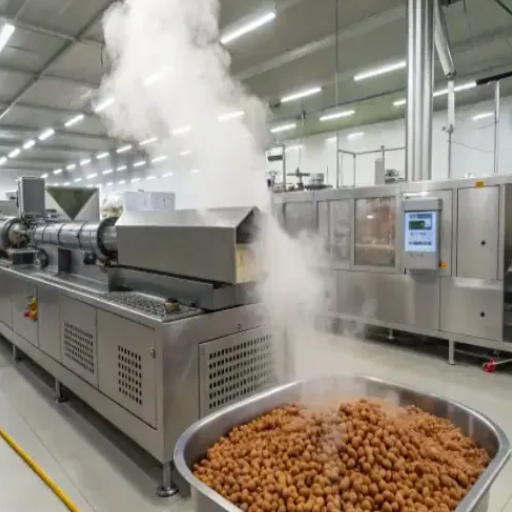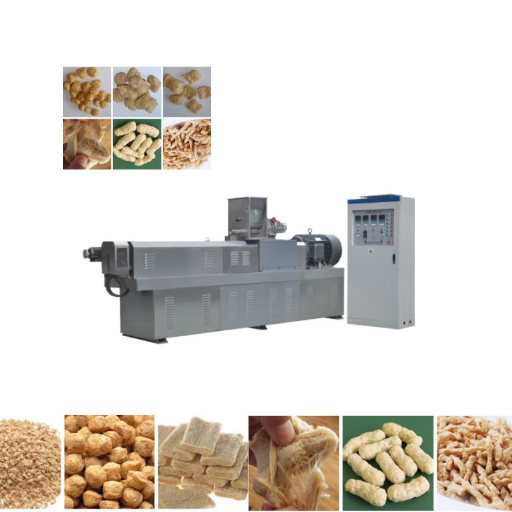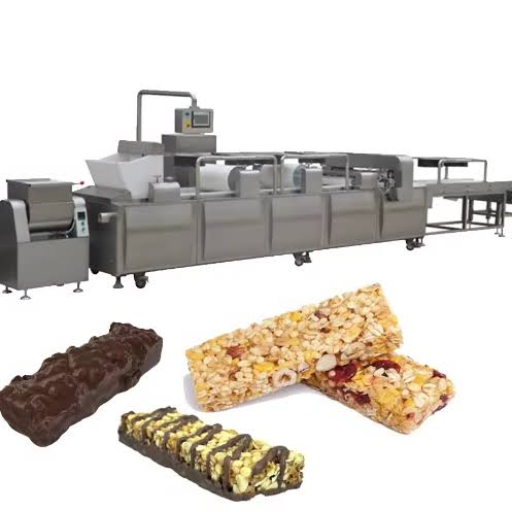
Biscuits – crunchy, golden, and utterly delicious – are one of those popular snacks that are loved by millions worldwide. But have you ever wondered about the process of how biscuits are converted into those delicious baked goods from a bag of raw ingredients? This article gives you an enthralling backstage tour of the biscuit manufacturing procedure. From picking the right ingredients to making exact dough mixtures, along with baking and packaging – each step guarantees quality and consistency with every bite.
🏭 Biscuit Production Lines Overview

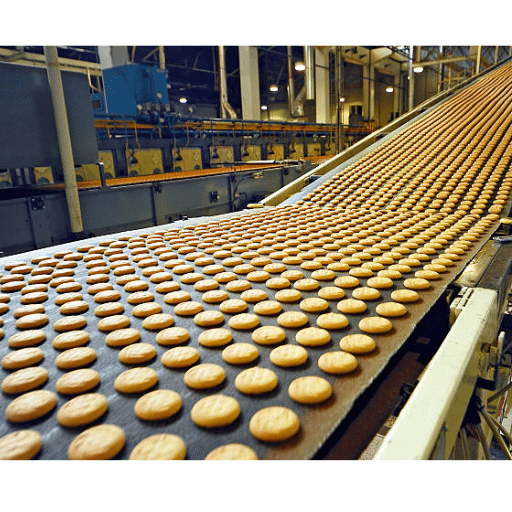
The biscuit production line is a flexible set-up designed for mass production while maintaining consistency and quality. Modern biscuit production is highly automated and streamlined to ensure uniformity, quality, and efficiency throughout the manufacturing process.
Key Production Stages:
- Dough Preparation: Precise mixing of flour, sugar, fats, and other ingredients
- Shaping: Using cutters or molds to form desired shapes
- Baking: Industrial ovens with controlled temperature and humidity
- Cooling: Conveyor belt cooling to stabilize structure
- Quality Control: Inspections to meet quality standards
- Packaging: Automated packaging systems
- Distribution: Loading for global market delivery
📊 Types of Biscuit Production Lines
| Production Line Type | Characteristics | Key Features | Market Trend |
|---|---|---|---|
| Hard Biscuit Lines | Forceful and precise process with intensive mixing, lamination, and baking | Automated lamination systems, energy-efficient ovens | Focus on quality optimization and resource minimization |
| Soft Biscuit Lines | Gentle treatment with short mixing times and low-temperature baking | Advanced ingredient metering systems | Emphasis on consistency and waste reduction |
| Cookie & Crackers Lines | Hybrid production with flexible equipment for various shapes and sizes | Sensor-based technology, AI enhancements | Customization and efficiency optimization |
| Gluten-Free & Specialty Lines | Health-conscious products with specialized separation mechanisms | Cross-contamination prevention systems | Growing consumer demand for allergen-free options |
⚙️ The Detailed Manufacturing Process
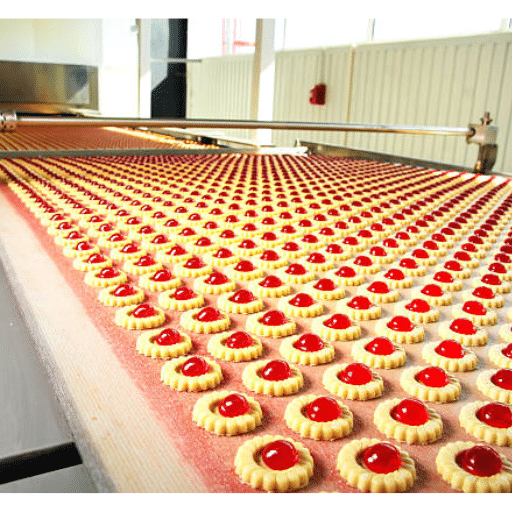
1. Mixing and Dough Preparation
The foundation of quality biscuits lies in proper ingredient combination and dough preparation:
- Primary Ingredients: Flour, sugar, butter, leavening agents, flavorings (vanilla, cocoa)
- Health Alternatives: Whole grain flours, natural sweeteners, non-dairy fats
- Process: High-speed mixers ensure uniform consistency
- Quality Control: Temperature monitoring (must not exceed 25°C)
2. Forming and Shaping
Precision shaping ensures uniformity and visual appeal:
- Equipment: Rotary molding machines, roller sheeters, wire-cut systems
- Shapes: Round, rectangular, or customized designs
- Benefits: Consistent texture and shape requirements
3. Baking Process
The critical transformation from dough to finished biscuit:
Oven Comparison:
| Feature | Tunnel Ovens | Traditional Ovens |
|---|---|---|
| Operation | Continuous conveyor system | Batch-based processing |
| Temperature Control | Multiple zones (160°C – 260°C) | Single temperature control |
| Best For | Large-scale commercial production | Artisan baking, customization |
| Energy Efficiency | 30% more efficient | Higher energy per unit |
4. Cooling and Stabilization
Critical phase for texture development and shelf life:
- Method: Controlled conveyor cooling systems
- Importance: Prevents moisture buildup and quality deterioration
- Impact: Proper cooling increases product stability by 25%
5. Packaging
Final protection and presentation:
- Technology: Vacuum or nitrogen flushing systems
- Innovation: Biodegradable and resealable packaging
- Quality Control: Leak detection systems for each package
🔬 Quality Control in Biscuit Production

Critical Control Points
| Stage | Quality Parameter | Standard Range | Testing Method |
|---|---|---|---|
| Raw Materials | Flour Moisture Content | 14-15% | Moisture analyzers |
| Dough Preparation | Temperature Control | ≤25°C | Automated temperature sensors |
| Baking | Internal Temperature | 160°C – 260°C | Infrared sensors |
| Final Product | Moisture Content | 2-4% | Moisture analyzers |
| Packaging | Seal Integrity | 100% airtight | Leak detection systems |
Quality Control Methods
- HACCP (Hazard Analysis and Critical Control Points): Science-based system for hazard identification and control
- Statistical Process Control (SPC): Statistical tools for monitoring and controlling processes
- Automated Vision Systems: AI-powered detection of color, shape, and surface defects
- Supply Chain Traceability: Blockchain technology for ingredient tracking
- Real-time Monitoring: IoT sensors for continuous quality assessment
🚀 Innovations and Emerging Trends
Technology Advancements
- Automation & AI: Smart production systems reducing human error and improving efficiency
- Predictive Maintenance: Machine learning algorithms preventing equipment downtime
- 3D Food Printing: Complex shapes and personalized biscuits at scale
- Real-time Analytics: Data-driven optimization of production parameters
📊 Efficiency Impact: Smart automation can increase production efficiency by 30% while reducing operational costs by 20%.
Market Trends
| Trend Category | Key Developments | Market Growth |
|---|---|---|
| Health-Conscious Products | Low-calorie, gluten-free, high-protein, probiotic varieties | 5.8% CAGR (2023-2030) |
| Sustainability | Eco-friendly packaging, energy-efficient production | 62% consumer preference for eco-brands |
| Personalization | Customized flavors, dietary-specific products | Growing demand for tailored offerings |
| Premium Indulgence | Belgian chocolate, exotic nuts, gourmet ingredients | 7% growth in premium segment |
🌍 Global Biscuit Varieties
Popular International Types
🇬🇧 Digestive Biscuits (UK)
Slightly sweet with wheaty flavor, perfect with tea. Recent trends show increased demand for gluten-free and high-fiber variants.
🇫🇷 Macarons (France)
Delicate, colorful treats with global appeal. Search trends show growing interest in exotic flavors like matcha and unique combinations.
🇺🇸 Oreos (United States)
Global brand leader in sandwich cookies. Continuous innovation with limited-edition flavors and vegan alternatives.
🇮🇳 Marie Biscuits (India)
Simple, lightly sweet biscuits popular for their versatility and affordability. Growing search interest for recipe applications.
Manufacturing Specialties
Sandwich Biscuits
- Structure: Two biscuit layers with cream, jam, or filling
- Popular Varieties: Chocolate, vanilla, salted caramel
- Market Trend: Peak interest during back-to-school and holiday seasons
Wafer Biscuits
- Process: Thin batter sheets sandwiched with cream fillings
- Popular Flavors: Vanilla, chocolate, hazelnut
- Emerging Trends: Matcha, exotic fruit flavors
💰 Cost-Effective Manufacturing Solutions

Key Strategies
- Advanced Automation: Robotics and AI systems reducing labor costs and human errors
- Predictive Maintenance: Minimizing equipment downtime and repair costs
- Ingredient Optimization: Quality raw materials with cost-effective sourcing
- Energy Efficiency: Heat recovery systems and renewable energy integration
- Waste Reduction: Optimized production processes minimizing material waste
References
-
Foods Machine – What is the Biscuit Making Process Like in the Factory?: Insights into the complex and ongoing process of biscuit manufacturing in factories.
-
Reading Bakery Systems – Biscuit Manufacturing Process: Information on equipment and techniques to make biscuit production more efficient and cost-effective.
-
KVIC Online – Biscuit Making (PDF): A project profile detailing the stages of biscuit making, including ingredient mixing and preparation.
-
Making.com – Biscuit Manufacturing Equipment: A detailed overview of the primary processes involved in biscuit production, including mixing, forming, baking, and cooling.
Frequently Asked Questions (FAQ)
How can the biscuit production process be automated?
Automation in biscuit production involves the installation of high-tech machinery in production operations from mixing to cutting and baking. This automated system would enable the manufacturer to make efficient use of manpower, reduction in labour costs, and a consistent preparation of biscuits.
What does the biscuit line mean to biscuit manufacture?
The biscuit lines are an integral part of the biscuit manufacturing process consisting of an interconnected series of machines which mix dry and liquid ingredients, form the biscuit dough, cut, and finally bake the product. This arrangement of processes helps increase productivity at output while ensuring consistent quality of biscuit products.
What is the importance of the cutting process in the biscuit production?
It cuts the biscuit dough to different shapes to accommodate the required biscuit structure. It can be adapted to various formes to make different types of biscuit so as to satisfy particular customer demands and quality parameters.
What role does the moulder play in biscuit production?
The moulder shapes biscuit dough into uniform pieces, and these biscuit shapes are important in achieving the desired texture and taste. By using a moulder, manufacturers can ensure consistency in their product offerings-a requisite of customer acceptance and brand loyalty.
What are the stages of biscuit processing?
The normal biscuit processing would include the stages of mixture of raw materials, dough forming, cutting, baking, and cooling. At every stage, time and temperature will have to be monitored and controlled so that the product could be baked properly and obtain that crumbly texture, which the buyer would expect of a very good biscuit.
What sorts of biscuits can the biscuit manufacturing process produce?
The manufacturing process of biscuit produces almost all varieties of biscuit including sandwich biscuits, wafer biscuits, and traditional crunchy varieties. Manufacturers can prepare a kind of product that is complimentary to various tastes and preferences in the confectionery market on the basis of ingredients and manufacturing processes.
How are quality control systems ensuring the efficiency and quality of biscuit production?
Quality control systems assess and to some degree monitor all aspects of the manufacture of biscuits from the selection of raw material to the packaging of the product. With such rigorous quality checks at various points of biscuit manufacture, the producer can ensure that their biscuits are of an established quality standard with the desired taste and texture and hence an increase in consumer satisfaction.
What raw materials are needed for the production of biscuits?
The basic raw materials for making biscuits consist of wheat flour, sugar, fats, and leavening agents. The ingredients, along with the exact measurement of the dry and liquid ingredients, are very important to ensure that the dough for biscuit is stable and is easy to convert into good quality biscuits.