What are Granola Bars?

Granola bars are portable, nutrient-dense snacks composed primarily of rolled oats, nuts, seeds, dried fruits, and binding agents such as honey or syrup. These versatile snacks cater to a wide range of dietary preferences and nutritional needs, making them a popular choice for:
- Quick energy during workouts or outdoor activities
- Convenient on-the-go meals for busy schedules
- Balanced nutrition combining carbohydrates, healthy fats, and fiber
- Satisfying snacks for both adults and children
Market Importance and Industry Trends
Granola bars represent a significant category in the snack industry, serving diverse consumer needs for convenience, nutrition, and versatility. Recent market data reveals several key trends:
Increase in searches for “gluten-free oats”
Growth in “high-protein granola bars” searches
Rise in “low-sugar granola bars” interest
Increase in “superfood snacks” searches
Key Ingredients in Granola Bar Manufacturing
Primary Base Ingredients
| Ingredient Category | Common Options | Primary Function | Market Trend |
|---|---|---|---|
| Whole Grains | Oats, Quinoa, Brown Rice | Fiber content and texture base | 35% increase in gluten-free options |
| Nuts & Seeds | Almonds, Walnuts, Chia, Flax | Protein, healthy fats, omega-3s | 28% growth in high-protein searches |
| Natural Sweeteners | Honey, Maple Syrup, Dates | Binding and sweetening | 43% increase in low-sugar alternatives |
| Superfoods | Matcha, Acai Berries, Goji | Enhanced nutrition profile | 30% rise in superfood interest |
| Flavor Enhancers | Dark Chocolate, Coconut, Vanilla | Taste improvement | 25% growth in natural flavors |
Binder Selection for Optimal Results
Key Insight: According to 2023 consumer research, 65% of health-conscious consumers prefer granola bars bound with natural ingredients like honey and nut butter, aligning with clean-label trends.
Popular binder options include:
- Honey: Natural sweetness with excellent binding properties
- Nut Butters: Adds protein while providing structural integrity
- Date Paste: Naturally sweet, sugar-free vegan option
- Brown Rice Syrup: Ideal for gluten-free formulations
- Agave Syrup: Plant-based alternative with neutral flavor
The Manufacturing Process: Step by Step
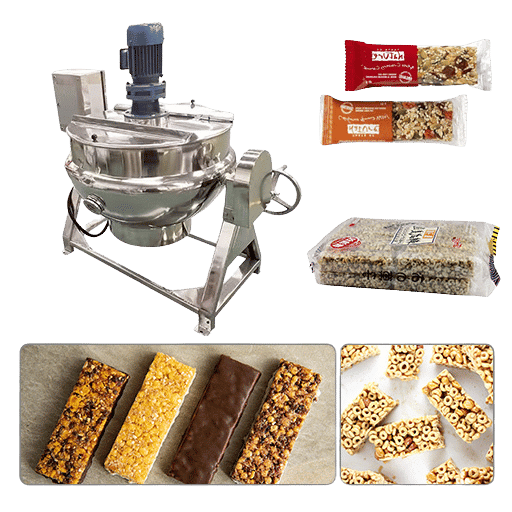
Step 1: Ingredient Selection and Preparation
All raw materials including oats, nuts, dried fruits, sweeteners, and flavorings are carefully selected according to specific recipe requirements. Ingredients undergo thorough cleaning, sorting, and precise measurement to ensure consistent formulation.
Step 2: Mixing and Blending
Dry ingredients are combined in large-scale mixers while liquid components (honey, syrups, oils) are heated and prepared as binding agents. The dry and wet ingredients are then thoroughly mixed to achieve uniform coating and distribution.
Step 3: Forming and Shaping
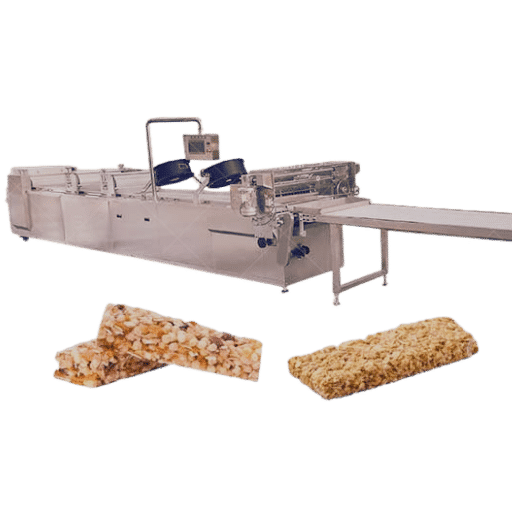
The mixed granola is evenly spread onto sheets or passed through rollers to achieve desired thickness. Specialized machinery cuts the mixture into uniform bars, ensuring consistent size and weight across all products.
Step 4: Baking or Setting
Depending on the product type, bars either undergo controlled baking to develop texture and flavor, or are allowed to set naturally. Optimal conditions typically involve 325°F (163°C) for 20-25 minutes.
Step 5: Cooling and Coating (Optional)
Bars are cooled in controlled environments (45-55°F with 50-60% humidity) to ensure proper texture development. Optional chocolate or yogurt coatings are applied using enrobing techniques.
Step 6: Quality Control and Packaging
Each batch undergoes rigorous quality assessment for texture, appearance, weight, and nutritional content. Approved bars are individually wrapped and labeled with nutritional information and branding.
Advanced Production Techniques
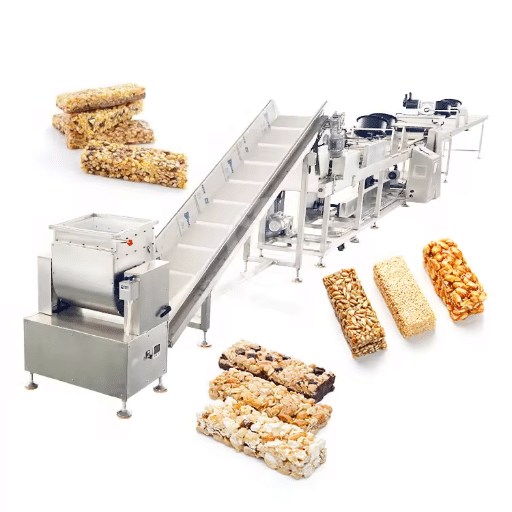
Moulding Technology
Modern moulding equipment offers several advantages:
- Consistent shape, size, and weight control
- Reduced production waste by up to 15%
- Improved efficiency with 20-30% faster production
- Capability to produce 300 bars per minute
- Non-stick surfaces for continuous operation
Enrobing for Chocolate Coating
The enrobing process involves passing bars through a flowing curtain of liquid chocolate, creating uniform coating thickness. Key factors include:
- Precise temperature control to prevent bloom
- Consistent chocolate viscosity
- Proper tempering for glossy finish
- Uniform coating distribution
Cooling Tunnel Systems
Advanced cooling tunnels feature:
- Multi-zone temperature controls
- Automated conveyor systems
- 30% improvement in production speed
- 20% energy conservation
- Prevention of thermal shock to products
Quality Control Measures
Consistency Monitoring
Modern quality control employs:
- AI-powered inspection systems
- Real-time monitoring technology
- Automated anomaly detection
- Uniform size and weight verification
- Ingredient distribution analysis
Nutritional Testing
Advanced analytical methods include:
- Near-Infrared Spectroscopy (NIR): Rapid macronutrient analysis
- Gas Chromatography (GC): Detailed compound identification
- Mass Spectrometry (MS): Precise molecular analysis
- AI Analytics: Pattern recognition and anomaly detection
- Blockchain Integration: Transparent testing data tracking
Visual and Texture Assessment
Quality assessment focuses on:
- Color uniformity across batches
- Surface appearance consistency
- Texture evaluation using sensory panels
- Advanced imaging techniques
- Consumer preference alignment
Equipment Requirements
| Equipment Type | Primary Function | Key Features | Production Impact |
|---|---|---|---|
| Industrial Mixers | Ingredient blending | Variable speed, temperature control | Uniform distribution |
| Forming Equipment | Shape creation | Adjustable thickness, automated cutting | Consistent sizing |
| Ovens/Dryers | Texture development | Precise temperature, convection systems | Optimal texture |
| Enrobing Lines | Coating application | Temperature control, even distribution | Professional finish |
| Cooling Tunnels | Temperature stabilization | Multi-zone cooling, humidity control | Product stability |
| Packaging Systems | Product protection | Automated wrapping, labeling | Extended shelf life |
Health and Sustainability Considerations
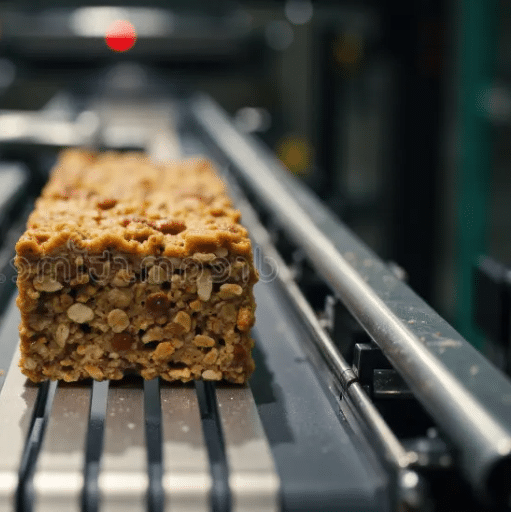
Consumer Trend: 63% of consumers actively seek snacks that promote wellness, focusing on gut health, immunity, and sustained energy levels.
Health-Focused Ingredients
- Plant-Based Proteins: Pea and rice proteins for vegan formulations
- Natural Sweeteners: Monk fruit, stevia, and dates for reduced sugar content
- Fiber-Rich Components: Oats, chia seeds, and flaxseeds for digestive health
- Allergen-Free Options: Gluten-free and nut-free formulations
Sustainability Practices
- Organic and non-GMO ingredient sourcing
- Eco-friendly packaging materials
- Energy-efficient production processes
- Minimal processing techniques
- Transparent supply chain management
References
-
Genemco – Understanding the Process of Making Granola Bars on an Industrial Scale: A detailed exploration of the steps involved in large-scale granola bar production, from sourcing ingredients to packaging.
-
Making.com – Granola Bars Making Equipment: Insights into the granola bar production process, including mixing, forming, baking, and cutting, with a focus on quality control.
-
Loyal Food Machine – The Ultimate Granola Bar Production Line Guide to 2024 (PDF): A comprehensive guide to automated systems in granola bar production, covering ingredient handling to final packaging.
Frequently Asked Questions (FAQ)
What are the main stages in the granola bar production line?
Main stages in the granola bar production line comprise of ingredient selection, mixing, baking, cutting to bar-sized pieces, and packaging. Each stage is important for flavor and texture consistency and for efficient production.
How does the production process for granola bars guarantee the high quality of the product?
The production process for granola bars requires that each stage is monitored for ingredient development pathways during mixing and baking time and temperature controls. By ensuring quality control through the entire process, manufacturers can reliably produce top-quality granola bars that customers expect.
What equipment is needed to produce granola bars successfully?
To successfully produce granola bars, essential equipment includes mixers, ovens, forming apparatus, and guillotines for cutting. It is crucial that every piece of equipment operates within the production line to bestow upon the bars their desired shape and texture.
What is the importance of enrobers in production?
Enrobers are usually used for coating granola bars with chocolate or other coatings. Apart from flavor, Mr Karanth explained that enrobed bars are also visually appealing, hence consuming bars becomes a pleasure. Enrobing is an important process in confectionery production.
How does the bar production process accommodate different snack bars?
The bar production process may be altered to accommodate various types of snack bars, including protein bars, muesli bars, and regular granola bars. Through the appropriate choice of raw materials and adjustments to the production line, the manufacturer will target several consumer preferences.
What are the advantages of using a twin screw extruder in manufacturing granola bars?
The twin screw extruder facilitates mixing and processing of ingredients so that the blend is uniform. This creates more consistent granola bars, potential for less waste during production, and ideally suited for large-scale operations.
How are granola bars guaranteed quality-wise?
Great control measures were practiced all along in the manufacturing process of granola bars to assure the quality consistency of granola bars. These control measures verify the quality of raw material industries; processes in various conditions, and specifications concerning the finished product that is instructed upon to maintain the quality of granola bars in each production.
What kind of granola narratives do shops use to influence consumer decisions?
Granola stories that relate to its nutritional advantage, sustainability of sourcing, and way of artisanal production all strongly affect consumer decisions. Such narratives can also bind the customer to the brand and convert a target of the environmentally-conscious consumers into partners in shaping their granola with care.